A 10 by 12 gazebo gives you 120 square feet of outdoor living space—the perfect balance between feeling spacious and fitting in most backyards. It’s large enough for a dining set for 6-8 people or a full lounge area, making it one of the most versatile and popular sizes available.
What a 10 by 12 Gazebo Means for Your Space
"10 by 12" isn't just a measurement; it's a dedicated outdoor room. Think of it as adding a bonus space to your property—an open-air office, a dining room, or a private retreat. This footprint creates a distinct zone in your yard, a true destination separate from the house.
Its versatility is why the 10 by 12 is a top choice. You get a significant upgrade from a cramped 10x10 without needing the massive yard required for larger models. If you're comparing sizes, see our guide to a slightly smaller alternative: the 10 x 10 screened canopy.
Visualizing the Footprint
Let’s translate 120 square feet into practical layouts. This space is large enough to arrange furniture without feeling cluttered.
You can easily set up:
- A dining area with a rectangular table for six or eight guests.
- An outdoor living room with a loveseat, two armchairs, and a coffee table.
- A relaxation zone with two chaise lounges and a side table.
- For a business, it fits a premium four-person table or a self-serve beverage station.
This quick guide shows what fits.
What Fits Inside a 10x12 Gazebo
| Use Case | Typical Layout | Estimated Capacity |
|---|---|---|
| Backyard Dining | Rectangular table with chairs | 6-8 people |
| Outdoor Lounge | Loveseat, 2 armchairs, coffee table | 4-5 people |
| Hot Tub Cover | Standard 4-6 person hot tub | 4-6 people |
| Restaurant Patio | Two 2-person tables or one 4-person table | 2-4 people |
| Event Booth | Product display table and standing room | 8-10 people |
This adaptable size works for everything from family dinners to commercial use.
This blend of space and efficiency makes it a best-seller. Mid-sized gazebos account for roughly 41% of global gazebo revenue in a market valued at over $2.2 billion. The 10 by 12 model is a favorite for homeowners and businesses looking to maximize their outdoor real estate. You can explore more gazebo market trends at marketintelo.com.
The takeaway is simple: a 10 by 12 gazebo isn't just a structure. It's a flexible foundation for your outdoor vision, empowering you to host, relax, or dine in a defined, sheltered space.
Choosing the Right Gazebo Materials and Style
Choosing the right material for your 10 by 12 gazebo is about balancing aesthetics, durability, and maintenance. Some materials are lightweight and flexible, while others are built for year-round exposure.
For example, a restaurant manager might choose a sleek, low-maintenance aluminum frame for their patio. It resists rust and is easy to clean, maintaining a professional look. A rustic event venue, however, might prefer the natural warmth of cedar to create a classic, inviting atmosphere for a wedding.
Not sure if you need a dining space or a lounge? This quick guide can help you decide.
As you can see, the 10x12 footprint is a true sweet spot, perfectly sized for either a dedicated dining setup or a comfortable lounge area.
Common Gazebo Frame Materials
The frame is your gazebo's skeleton. Each material offers distinct advantages.
- Wood: Cedar and pine offer timeless, natural beauty that blends into any landscape. Wood is sturdy but requires periodic staining or sealing to protect against weather and insects.
- Aluminum: Lightweight, affordable, and rust-proof, aluminum is a great modern option. It’s easy to assemble but may be less stable than steel in high-wind areas.
- Steel: For maximum strength and durability, steel is the top choice for permanent, year-round structures. Look for powder-coated finishes to prevent rust.
- Vinyl: The lowest-maintenance option. Vinyl won't rust, rot, or fade, making it a true "set it and forget it" choice, though its aesthetic is not for every backyard.
The material you choose directly impacts long-term upkeep. A wood gazebo might cost $7,600 or more and require yearly maintenance, while a steel or aluminum model typically only needs occasional cleaning.
Hardtop vs. Soft-Top Roofs
The roof is as critical as the frame, defining your gazebo's performance in sun and rain.
A soft-top gazebo uses a fabric canopy, ideal for seasonal use. It provides excellent sun protection and can be removed for storage during the off-season or before a storm. This makes it a flexible and affordable choice.
A hardtop gazebo has a solid roof made of steel, aluminum, or polycarbonate. These are built to withstand sun, rain, and snow, creating a true four-season outdoor room. A hardtop is a permanent investment in a reliable, all-weather extension of your property.
Making the Business Case for a 10 by 12 Gazebo
For any business with outdoor space, a 10 by 12 gazebo is a strategic investment that can turn an empty patio into a profit center.
That 120-square-foot footprint is a new revenue stream. For a restaurant, it’s another four-person table or a pair of two-tops. During a dinner rush, that extra seating means more sales and shorter wait times, directly boosting profits.
More than just extra seats, a well-appointed gazebo creates a premium, sheltered atmosphere. It's the kind of space that encourages guests to linger, order another round of drinks, or add dessert. This elevated experience can become your competitive advantage.
From Footprint to Profit Center
A 10 by 12 gazebo monetizes outdoor areas that would otherwise sit unused. You now have a defined, bookable space perfect for small private parties, romantic dinners, or exclusive corporate events.
This versatility extends your busy season. A hardtop gazebo offers reliable shelter from surprise showers or intense summer sun, making your outdoor area dependable for more of the year. Add an outdoor heater, and you can keep revenue flowing well into the fall.
A 10 by 12 gazebo isn’t a cost—it’s a revenue engine. By adding just one table, a restaurant can often increase revenue by 10–20% per seating during peak hours. That turns a simple structure into a high-return investment.
The market recognizes the value of these outdoor assets. The outdoor living structure market was valued at over USD 2.3 billion in 2024 and continues to grow. The 10 by 12 size hits a sweet spot for businesses; it provides 20% more coverage than a standard 10x10 model with a minimal price increase, making the ROI hard to ignore. To see the data, you can read more about outdoor living structure market growth.
Creating a Memorable Atmosphere
Beyond revenue, a gazebo enhances your brand's story. It acts as a visual landmark—a feature that guests will remember, photograph, and share on social media.
- For Hotels: A private poolside cabana or a quiet reading nook elevates the resort experience.
- For Event Venues: The perfect spot for a wedding cake display, welcome drink station, or photo booth.
- For Restaurants: Market it as the "best seat in the house," a unique table people request when booking.
Adding a 10 by 12 gazebo is a smart business move. It taps into the outdoor dining trend to boost your capacity, delight guests, and create a unique, profitable space that pays for itself.
Preparing Your Site For A Perfect Installation
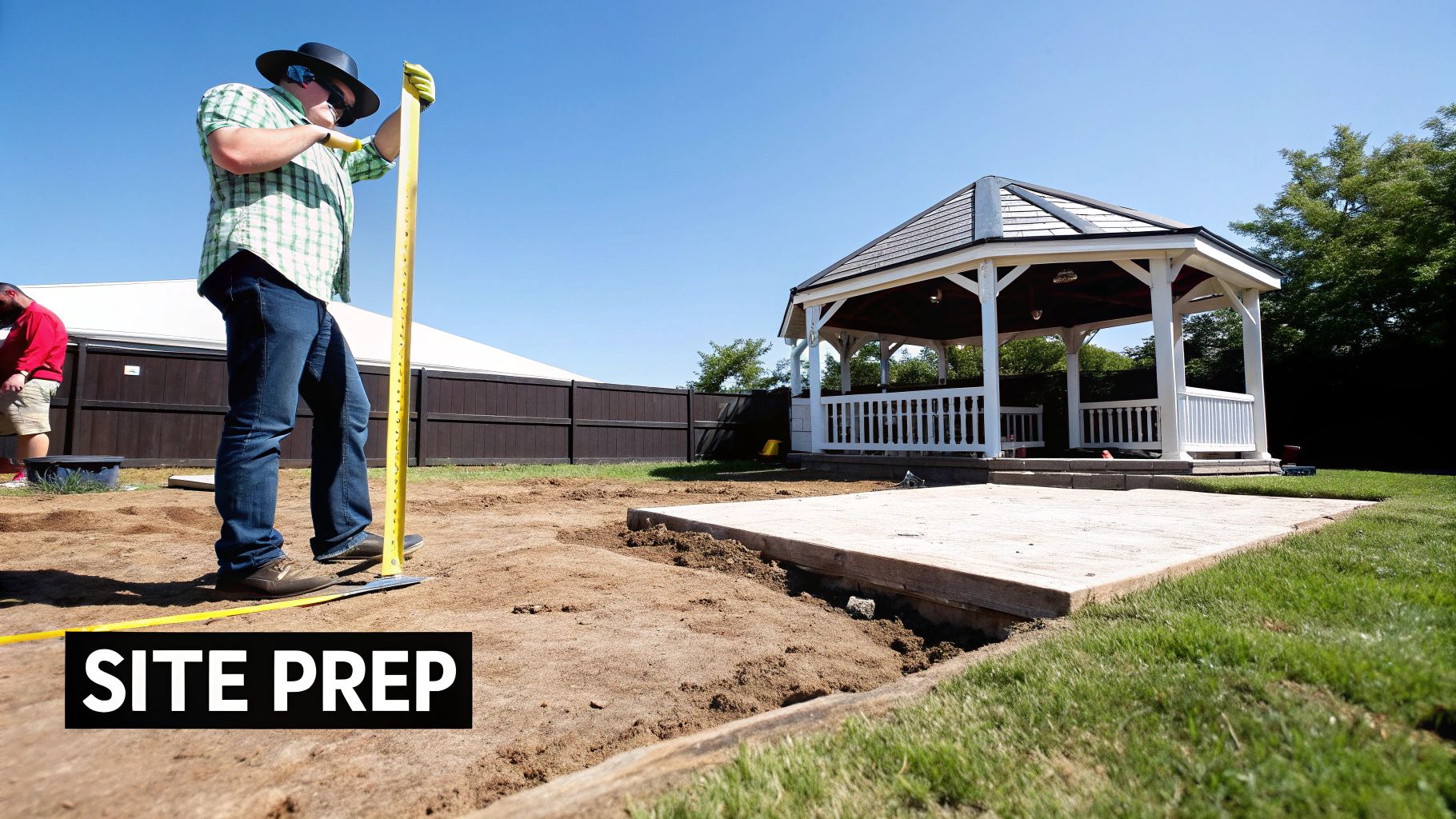
A great gazebo requires a solid foundation. Just like a house, your 10 by 12 gazebo needs a stable, level base to remain safe and durable for years. Rushing the site prep is a recipe for future problems.
Proper preparation prevents wobbly legs, an uneven floor, and poor water drainage that can damage the structure over time. It’s the essential work that ensures a quality result.
Choosing The Ideal Location
Where you place your gazebo is as important as the gazebo itself. Before breaking ground, walk your property and consider these factors:
- Sun and Shade: Track the sun’s path. Do you want a sunny spot for morning coffee or a shady retreat from the afternoon heat?
- Wind Direction: Note the prevailing wind. Placing the gazebo near a tree line or wall can create a natural windbreak, making the space more comfortable.
- Drainage: Avoid low spots where water collects after rain. A slightly elevated location is ideal for keeping the base dry and preventing rot or rust.
For food service, a smart location can even help reduce pests. Learn more about creating a bug-free zone with our guide on outdoor fans to keep bugs away.
Leveling The Ground And Building The Base
This step is non-negotiable: your gazebo needs a perfectly level base. A slight incline puts uneven stress on the frame, leading to warped joints, misaligned roof panels, and an unsafe structure.
You have several excellent options for the foundation:
- Concrete Slab: The gold standard for a permanent, durable base. A concrete slab provides a rock-solid, level surface that is easy to clean and offers the best anchoring against weather.
- Paver Patio: For a more decorative look, pavers are a great choice. When installed correctly over a compacted base of gravel and sand, they create a beautiful and stable foundation.
- Reinforced Deck: If placing your gazebo on a deck, you must ensure it can handle the weight. A hardtop gazebo is heavy and will likely require extra support posts or joists directly beneath its footprint.
Use this checklist to guide you through the process.
Site Preparation Checklist
This checklist will help ensure your site is prepped for a smooth and secure installation.
| Step | Key Consideration | Pro Tip |
|---|---|---|
| 1. Select Location | Check sun, wind, and drainage patterns. | Mark the four corners with stakes and string to visualize the footprint before you commit. |
| 2. Clear the Area | Remove all grass, rocks, and debris. | The cleared area should be at least one foot larger than the gazebo on all sides for working room. |
| 3. Level the Ground | Use a long level and shovel to create a flat surface. | For uneven ground, dig out high spots and add compacted fill to low spots. |
| 4. Choose Foundation | Decide between a concrete slab, pavers, or a deck. | A concrete slab offers the most stability, especially in windy regions. |
| 5. Install Foundation | Pour concrete, lay pavers, or reinforce the deck. | Ensure your foundation is perfectly level before it sets. Double-check with a level. |
| 6. Check Utilities | Call 811 before digging to locate underground lines. | This free service prevents dangerous and costly accidents with gas, water, or electric lines. |
Following these steps sets you up for a gazebo that you'll enjoy for years.
A critical part of site prep is long-term stability. It's wise to consider how to prevent soil erosion on your property to protect your gazebo's foundation.
Checking Local Codes And Permits
Before you start, call your local building department. While a 120-square-foot structure often doesn't require a permit, every municipality is different. It’s better to ask first than to risk fines or removal orders.
If you have a Homeowners' Association (HOA), check their guidelines too. They often have specific rules about colors, placement, and styles for outdoor structures. A quick review can save you a major headache.
Turning Your Gazebo Into an Outdoor Oasis
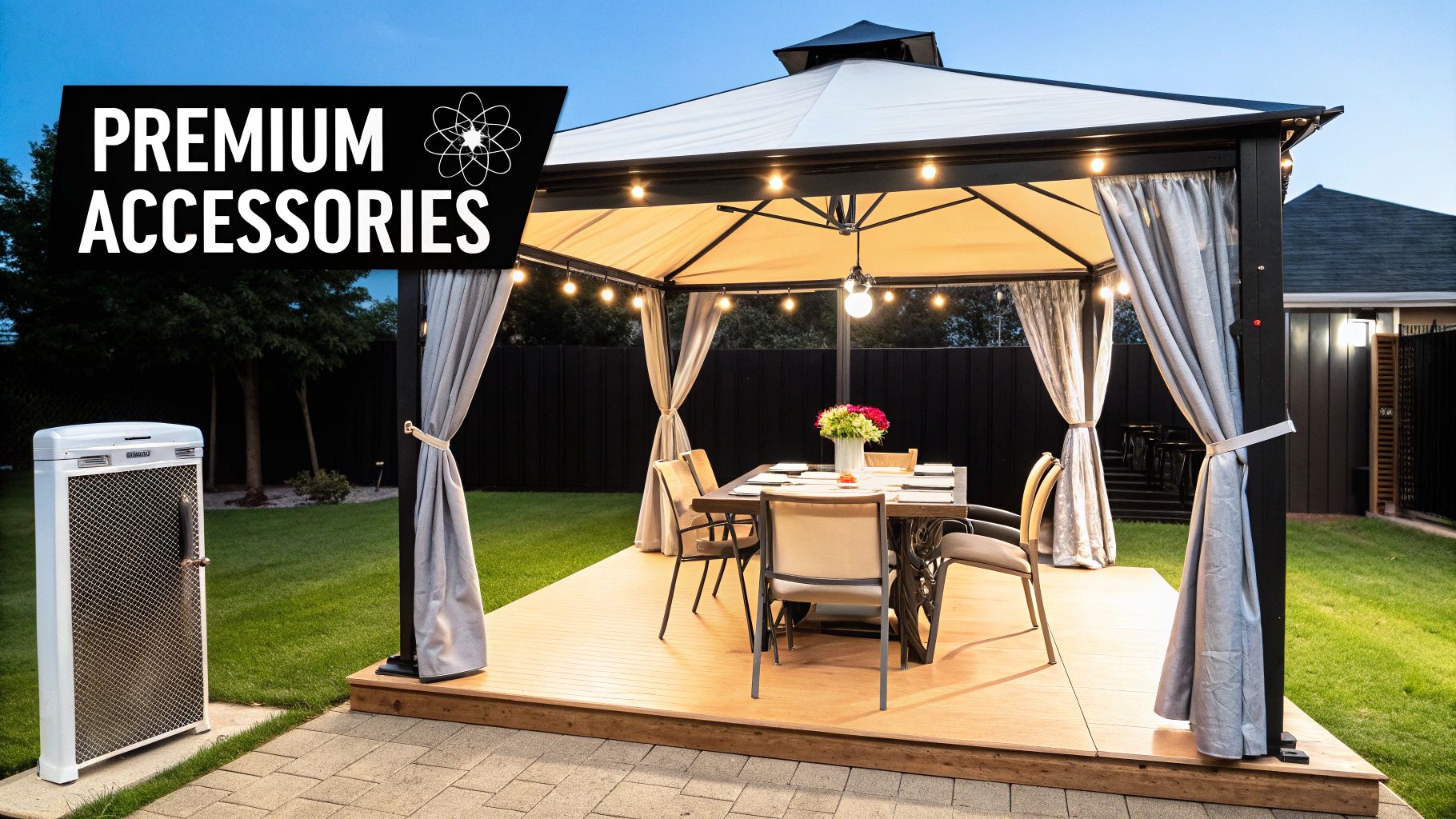
A bare 10 by 12 gazebo is just the beginning. The magic happens when you add the right accessories, turning a simple structure into a true outdoor destination. These thoughtful touches create an inviting atmosphere. Think of your gazebo as a blank canvas—accessories bring the scene to life.
With a few smart additions, you can extend your gazebo's use through different seasons and times of day. Integrated lighting, outdoor heaters, and privacy curtains can transform your space into the go-to spot for gatherings or a profitable patio for a restaurant.
Dialing Up the Comfort and Vibe
Creating a five-star feeling is about anticipating needs. The right accessories make your gazebo a place where guests want to relax and linger.
- Lighting: String lights or elegant lanterns cast a warm, welcoming glow. For a permanent solution, hardwired, outdoor-rated sconces or pendants look fantastic.
- Heating: An infrared patio heater or a stylish fire pit makes your gazebo cozy on cool evenings, extending your outdoor season.
- Privacy and Shade: Curtains or retractable screens provide an instant sense of intimacy. They also offer extra protection from wind, sun, and light rain.
- Air Circulation: To keep things comfortable on warm days, the best outdoor ceiling fans make a world of difference by creating a gentle breeze.
Solving the Pesky Problem of Outdoor Dining
One of the biggest challenges of outdoor dining is dealing with flies and other pests. Nothing ruins a meal faster. This is where specific accessories become invaluable.
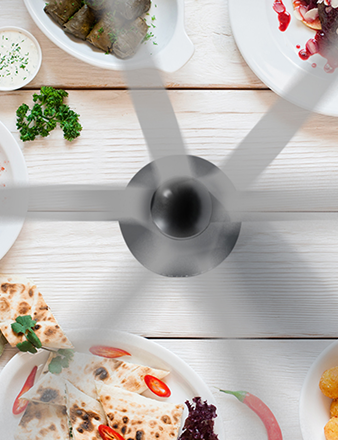
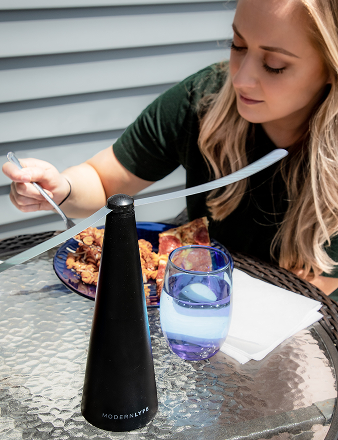
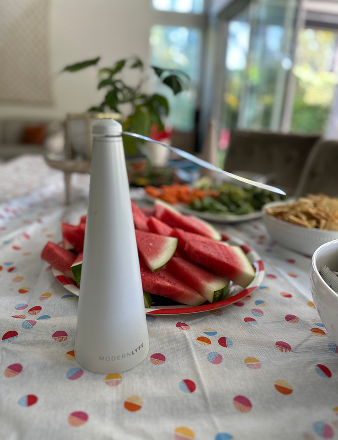
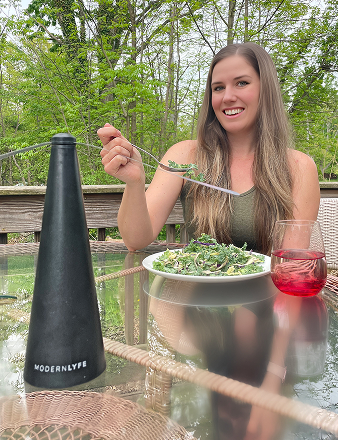
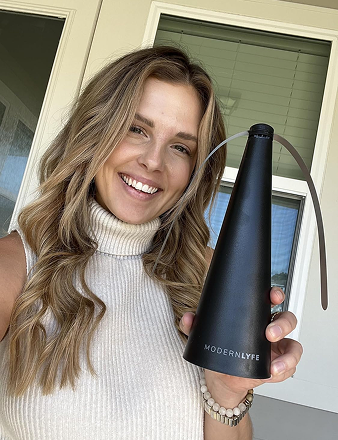
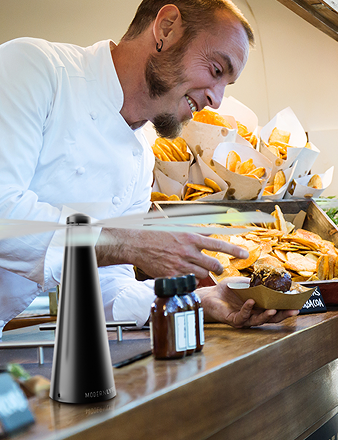
Instead of chemical sprays or loud zappers, modern solutions can protect your guests elegantly. Modern Lyfe's innovative table-mounted fly fans are designed for this exact problem. These quiet, bladeless fans create a gentle air current that establishes a bug-free zone right over the dining table.
By placing just two to four of these subtle fans inside a 10 by 12 gazebo, you can create a protected "micro-environment." It's a simple, effective fix that addresses guest comfort and modern hygiene expectations without killing the mood.
For any business, this attention to detail sets you apart. With the pop-up gazebo market valued at USD 3.0 billion in 2024, more events are moving outdoors. A clean, pest-free dining experience is a surefire way to stand out.
A well-accessorized space shows you care about quality and comfort. For more ideas on perfecting your open-air setup, check out our complete guide to outdoor entertaining accessories.
Still Have Questions About 10x12 Gazebos?
Even with research, a few questions often come up when you're ready to buy a 10 by 12 gazebo. Let's cover the most common ones to help you make a confident choice.
This is your final check. We'll cover assembly, weather, and maintenance so you know exactly what to expect.
How Tough Is the Assembly on a 10 by 12 Gazebo?
It depends on the model. Most kits are designed for DIYers, but this is not a solo project. You'll need at least one other person, and the job can take from a few hours for a simple canopy to a full weekend for a heavy-duty hardtop.
Before starting, lay out all the parts and read the instruction manual completely. If you've invested in a high-end, permanent structure, consider hiring a professional. They'll ensure it's anchored correctly, perfectly level, and built to last.
Will This Gazebo Hold Up in Wind and Snow?
A gazebo's durability depends on its construction. Hardtop models with steel or aluminum frames are designed for year-round use and will have official wind and snow load ratings that specify how much they can handle.
A key feature in any all-weather gazebo is a vented or two-tiered roof. This allows strong wind gusts to pass through rather than lifting the roof, adding significant stability.
Soft-top gazebos with fabric canopies are for seasonal use. You must remove the canopy before a major storm or heavy snow to avoid tearing the fabric or collapsing the frame.
What’s the Best Way to Keep My Gazebo Looking Good?
A little maintenance goes a long way. The required tasks depend on the material, but staying on top of them will prevent small issues from becoming major problems.
Here’s a quick guide:
- Metal Frames (Steel/Aluminum): Annually inspect the frame for scratches or chips. A quick touch-up with rust-resistant paint will stop corrosion.
- Wood Frames: Wood requires the most care. Clean and re-stain or seal it every one to two years to protect against moisture, sun damage, and pests.
- Fabric Canopies: Wash the canopy periodically with mild soap and water to prevent mildew. Ensure it is completely dry before storing it for winter.
Regardless of the type, it's a good habit to check and tighten all bolts and screws at the start of each season.
Do I Actually Need a Permit for a 10 by 12 Gazebo?
The answer depends entirely on your location. A 10 by 12 gazebo covers 120 square feet, which is often just under the size requiring a building permit in many areas. But this is not a universal rule.
Even if a permit isn't required, your local government will have rules about property line setbacks, height limits, and foundation requirements. If you're in a neighborhood with a Homeowners' Association (HOA), they will have their own rules as well.
Call your local building department before you buy anything. A five-minute phone call can save you from fines and the hassle of having to remove your new gazebo.
Ready to create an outdoor space that’s as comfortable as it is beautiful? The right accessories can completely change the experience. Check out the full line of quiet, stylish fly fans from MODERN LYFE to keep your gatherings pest-free. Visit us online to find the perfect fan for your new gazebo.