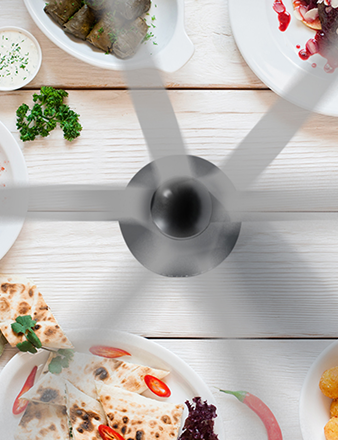
A 100 CFM blower is the engine inside your fly fan, designed to move a specific volume of air. "CFM" stands for Cubic Feet per Minute, and 100 is the sweet spot for modern fly fans. It’s powerful enough to keep bugs away but gentle enough not to blow your napkins off the table.
It's the perfect balance of protection and comfort.
What Does 100 CFM Mean?
Forget the technical jargon. A 100 CFM rating means the fan moves 100 cubic feet of air every minute. To visualize that, picture a box that's roughly 4.5 feet wide, tall, and deep. A 100 CFM blower can replace all the air in that box in just 60 seconds.
This isn’t a chaotic blast of wind like a cheap box fan. A 100 CFM blower creates a focused, steady stream of air—an invisible force field that flies and other small insects can’t penetrate.
Why Air Volume Beats Air Speed
It’s easy to confuse airflow (CFM) with air speed (MPH), but they’re not the same. Speed measures how fast air moves; volume measures how much air moves. When it comes to repelling flies, volume is what matters.
A fan with high speed but low volume might feel strong up close, but its effect fades quickly. It won’t create the broad, protective bubble you need for a patio table. The 100 CFM rating delivers the ideal middle ground:
- Wide Coverage: Moves enough air to shield a typical four-person table.
- Gentle But Firm: The breeze is strong enough to stop a fly but won't disrupt your meal or conversation.
- Quiet Power: It works effectively without the roar of a high-powered industrial fan.
The goal is a consistent, gentle "air curtain" that flies can't cross. A 100 CFM rating provides the right air volume to build and maintain that barrier.
The Science Behind the Breeze
The technology behind this targeted airflow is the centrifugal blower, a cornerstone of everything from home HVAC systems to industrial power plants. It's part of a global market projected to hit USD 8.69 billion by 2025.
The same engineering principles that keep air pure in a high-tech cleanroom are scaled down to create an effective no-fly zone for your backyard barbecue.
A 100 CFM blower isn't about creating a windstorm; it's about smart, strategic air movement. If you're dealing with a larger space, our guide on choosing a fly blower for doors has you covered.
Quick Guide to Fly Fan CFM Ratings
Choosing the right CFM can be tricky. This simple table helps you match fan power to your needs and see how different ratings perform in the real world.
| CFM Rating | Best For | Effective Coverage | Typical Application |
|---|---|---|---|
| 50-75 CFM | Individual use, small spaces | 2-3 foot diameter | A small café table, picnic blanket, desk |
| 100 CFM | Standard dining, small groups | 4-6 foot diameter | A 4-person patio table, food prep area |
| 150-200 CFM | Larger gatherings, commercial patios | 6-8 foot diameter | A 6-8 person table, buffet line, entryway |
| 250+ CFM | Open-air venues, commercial doorways | 8+ foot diameter | Restaurant patios, outdoor bars, events |
For most homes, a 100 CFM fan offers the ideal mix of coverage and convenience, making it the top choice for pest-free meals.
How Airflow Delivers Real-World Performance
On paper, 100 CFM is just a number. But how does it actually stop a fly from landing on your food? It creates an invisible yet effective barrier that pests simply can't cross.
This isn't about blasting your picnic with gale-force winds. A 100 CFM blower is smarter. It generates a steady, consistent "air curtain" around your space. This moving air disrupts the flight patterns of small insects like flies, gnats, and mosquitoes. When they approach, they feel the resistance and fly elsewhere.
Creating Your Personal No-Fly Zone
Think of it as an invisible dome of protection over your table. The 100 CFM rating is engineered to move enough air to shield a standard four-person patio table, creating a protective bubble with a diameter of about 4 to 6 feet.
This is where a purpose-built fly fan outperforms a regular household fan. A standard fan might feel powerful due to high speed (MPH), but it lacks the volume (CFM) to create a wide, stable defensive perimeter. It shoots a narrow jet of air, leaving most of your table exposed. A 100 CFM blower prioritizes air volume for complete coverage.
The secret isn't sheer power; it's strategic airflow. The fan establishes a gentle, persistent barrier that insects find impossible to penetrate, all while leaving your napkins and conversations undisturbed.
The diagram below shows how a 100 CFM blower's key elements—air volume, airflow, and the resulting no-fly zone—work together to keep your space pest-free.
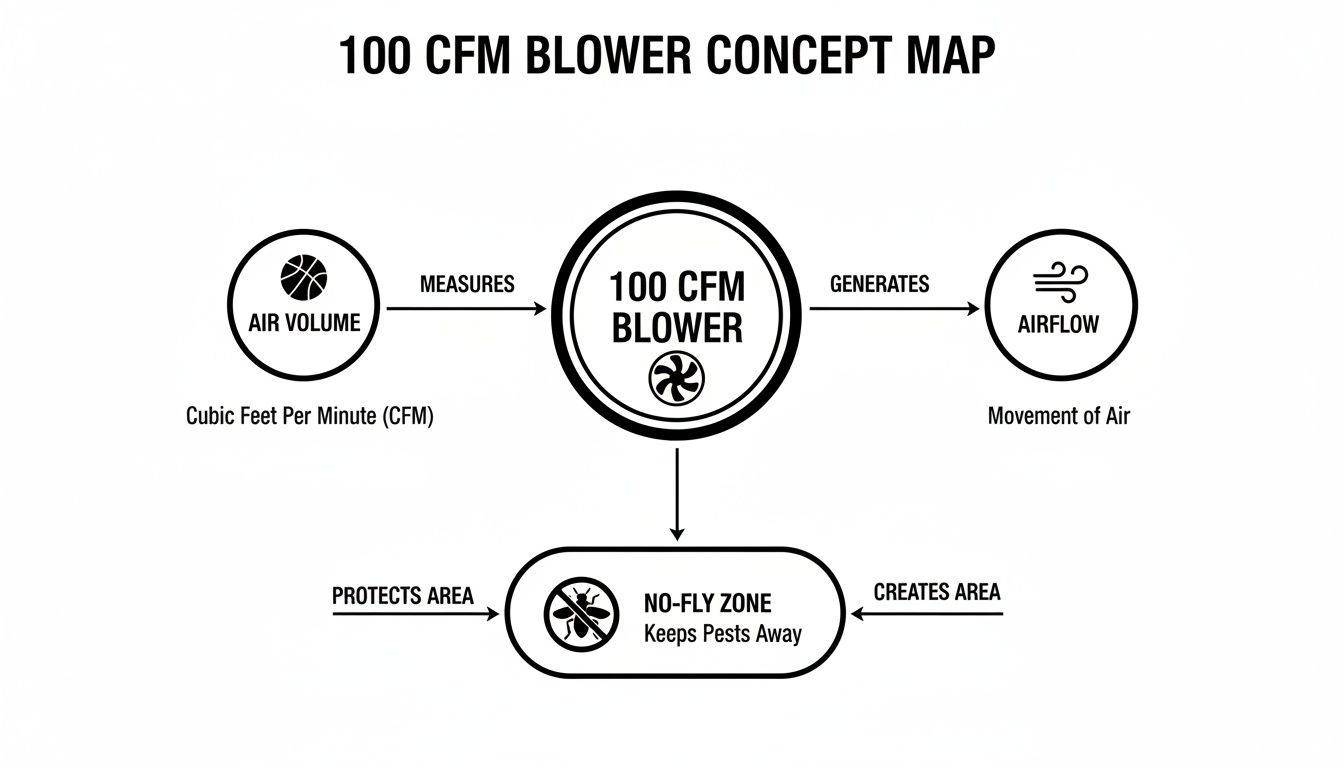
As you can see, the blower's ability to move a specific volume of air generates the widespread airflow needed for an effective pest shield.
What This Looks Like in Practice
Knowing the science is great, but what results can you expect? The right airflow means a more enjoyable, bug-free meal. Here’s what a properly used 100 CFM blower delivers:
- Protected Dining Tables: Keeps flies off plates, drinks, and serving dishes.
- Secure Food Prep Stations: Creates a clean zone around cutting boards and prep areas for better hygiene.
- Uninterrupted Conversations: The airflow is strong enough to stop bugs but gentle enough not to drown out chat or blow away napkins.
- Effective Pest Deterrence: Turns away not just houseflies but also gnats, mosquitoes, and other small flying pests.
This approach works in both homes and restaurants. For more details, our guide on do fly fans work has all the information you need.
Finding the Sweet Spot for Coverage
Performance comes down to placement. You can't just stick a 100 CFM blower anywhere and expect results. For the best coverage, place it centrally on or near the area you want to protect, usually within 2 to 3 feet of the food.
This proximity ensures the air curtain is at its most stable, creating an impenetrable dome right where you need it most. Once you see how easily 100 CFM translates into real-world protection, any outdoor meal can become a peaceful, fly-free occasion.
Balancing Power, Noise, and Portability
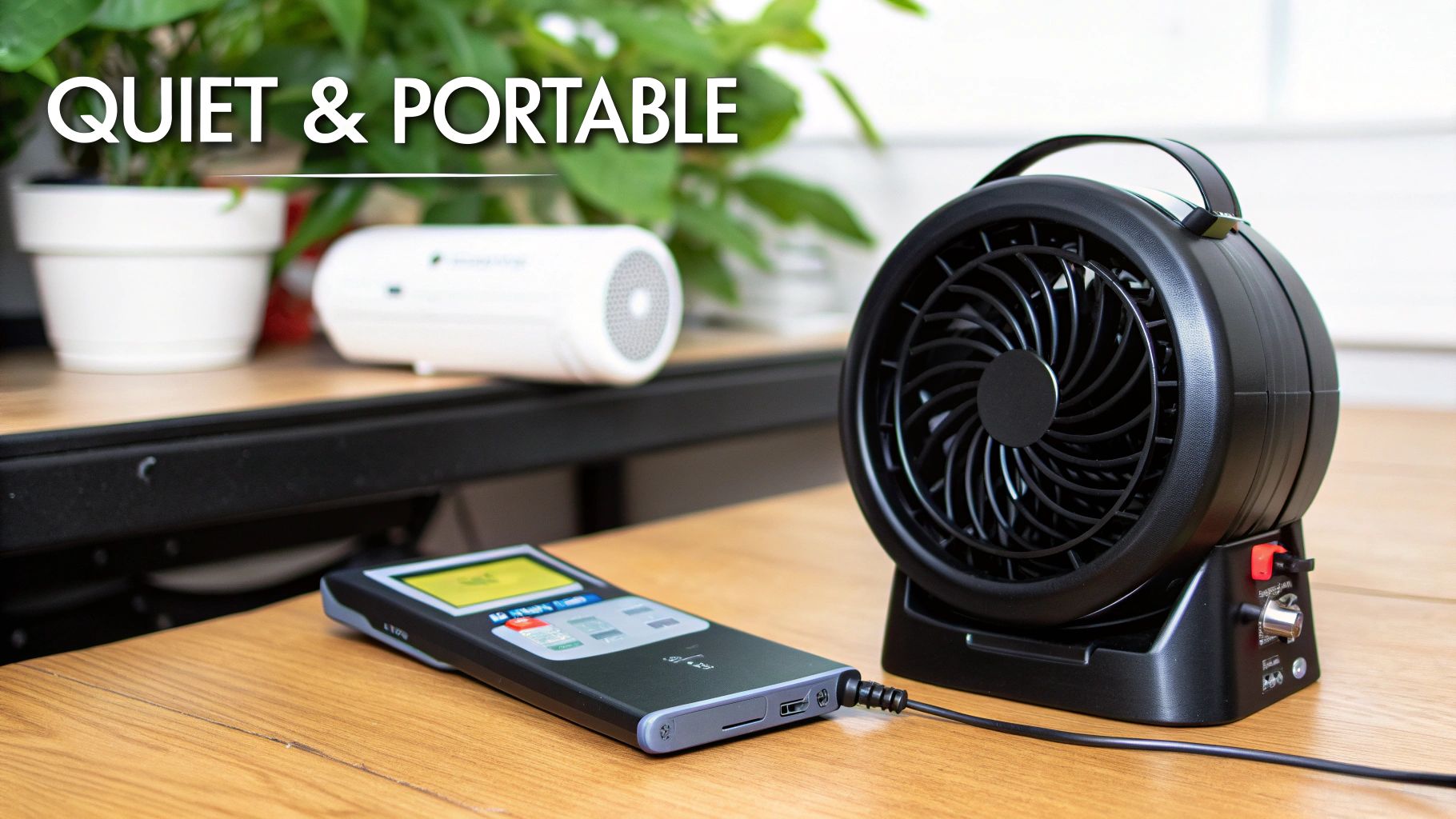
A powerful fly fan is useless if it's too loud for conversation or if the battery dies halfway through your event. The 100 CFM blower hits the sweet spot, balancing effective airflow, minimal noise, and real-world portability.
Understanding this balance is key. A fan for a bustling outdoor café has different needs than one for a quiet family dinner. The 100 CFM rating is calibrated to work beautifully in both scenarios, making it a versatile solution.
The Noise Factor
Nobody wants a fan that sounds like a jet engine on their picnic table. A major advantage of a well-designed 100 CFM blower is its quiet operation. It creates its protective air barrier without becoming the center of attention.
Most quality 100 CFM models operate between 40 and 50 decibels (dB). For comparison:
- 40 dB is like the gentle hum of a modern refrigerator.
- 50 dB is similar to a soft rainfall or a quiet conversation.
This low-key sound profile is intentional. It comes from smart engineering that moves a high volume of air without relying on high-speed blades, which cause that annoying whine.
Power Consumption and Battery Life
For portable fly fans, battery life is everything. The 100 CFM rating is ideal for battery power because it delivers serious fly protection without quickly draining the unit. This efficiency comes from modern, purpose-built motor designs.
The market for high-speed turbo blowers, like those engineered for a precise 100 CFM output, is growing rapidly. These newer designs can offer up to 30% lower power consumption compared to older motors. For a battery-powered fan, that's a huge advantage. You can see this trend shaping the industry in recent market analysis from Grandview Research.
A well-designed 100 CFM blower isn’t just about moving air; it’s about doing so intelligently. By optimizing the motor for this specific airflow, it delivers maximum pest-repelling power with minimal energy draw.
This table gives you a snapshot of what to expect from a typical 100 CFM blower.
100 CFM Blower Performance at a Glance
| Blower Rating | Typical Noise Level (dB) | Est. Battery Runtime | Ideal Placement Distance |
|---|---|---|---|
| 100 CFM | 40-50 dB | 8-10 Hours | 2-4 Feet |
The 100 CFM rating provides a full day's runtime at a conversational noise level while effectively covering a standard dining area.
Realistic Runtime Expectations
What does that efficiency mean for you? With a standard, fully charged battery, a 100 CFM blower will typically run for about 8 to 10 hours.
That’s more than enough time for any situation:
- A Long Dinner Service: Provides protection throughout the entire evening rush.
- An Entire Outdoor Event: Lasts all afternoon at a wedding or corporate picnic.
- A Full Day of Backyard Fun: Keeps your barbecue fly-free from lunch until after sunset.
This reliability means you can turn it on and forget about it.
Portability and Design
The balance achieved by a 100 CFM blower allows for compact, lightweight, and easy-to-move designs. Because it doesn't need a huge motor or a heavy battery, the entire unit can be sleek and unobtrusive.
This makes the fan easy to take to the park, reposition on a buffet line, or store away when you're done. It blends into your setup without demanding extra space or effort.
Choosing the Right Blower: Home vs. Business
Picking the right 100 CFM blower isn't one-size-fits-all. A relaxed backyard barbecue has different needs than a busy restaurant patio. The key is matching the tool to the job.
For home use, comfort and style are priorities. For businesses, it's about durability, efficiency, and customer satisfaction.
The Home User Checklist
When choosing a 100 CFM blower for your home, you’re adding an accessory to your living space. The right choice comes down to convenience, style, and safety.
Ask yourself these questions:
- Does it match my decor? Look for a design that complements your patio furniture. A sleek, modern fan won't feel out of place.
- Is it safe around kids and pets? Prioritize models with soft, flexible blades and a sturdy base to prevent tip-overs or injuries.
- How portable is it? A lightweight, battery-powered model is perfect for moving from the patio table to a picnic. Look for compact, grab-and-go designs.
For homeowners, the ideal 100 CFM blower is an invisible helper. It should blend in, run quietly, and be flexible enough for any spontaneous outdoor gathering.
The Business Operator Checklist
For a business owner, a 100 CFM blower is professional equipment. It must perform reliably day in and day out. The global blower market has seen a huge uptick in commercial use, especially in food service where hygiene is critical. You can see the data in this blower market research from Expert Market Research.
This means your checklist focuses on performance and longevity:
- Can it withstand constant use? Commercial models need to be built tough with durable materials that handle daily wear and tear.
- Will the battery last an entire service? Long battery life is a necessity. Look for blowers offering 8-10 hours of continuous runtime to get through lunch and dinner rushes.
- Is it easy to clean and maintain? To meet health codes, the fan must be simple to sanitize. Smooth surfaces and accessible blades are essential.
- How many units do I need? One 100 CFM blower covers a standard four-top table, but you'll need multiple units for larger tables or long buffet lines.
For restaurants and caterers, the right fly fan setup is critical. To learn more about selecting professional equipment, check out our guide on commercial fly fans.
Whether for a home patio or a professional venue, the goal is the same: a comfortable, pest-free zone. By asking the right questions, you can find the perfect 1_00 CFM blower_ for the job.
Getting the Most from Your Fly Fan

A great 100 CFM blower is a start, but knowing how to use it guarantees a pest-free barbecue. Smart placement and basic upkeep will turn your fan from a neat gadget into the hero of your outdoor gatherings.
Think of the airflow as an invisible shield. Your job is to position the fan to make that shield as strong and wide as possible, right over the food.
Optimal Placement for Maximum Effect
Where you place your fan directly impacts its effectiveness. You need to aim that 100 CFM of airflow where it’s needed most.
Follow these tips to create a powerful, bug-blocking air curtain:
- Height and Distance: Place the fan directly on the table, about 2 to 4 feet from the food. This ensures the air barrier is potent where it matters most.
- Create Cross-Ventilation: For a large table or buffet line, use two 100 CFM blower units at opposite ends to create a cross-breeze that covers the entire surface.
- Angle for Coverage: Tilt the fan so the air moves horizontally across the tabletop. This creates a wide, sweeping curtain of air that protects a larger area.
The most common mistake is placing the fan too far from the food. The protective air curtain from a 100 CFM blower is strongest near the unit, so keep it close to the action.
Simple Maintenance for a Longer Lifespan
A well-maintained fan works better and lasts longer. A few minutes of simple care ensures your 100 CFM blower is always ready to perform season after season.
This easy routine is all it takes to keep your fan in prime condition.
Blade and Battery Care
Clean blades and a healthy battery are the keys to peak performance. Grime on the blades can reduce airflow and strain the motor, while poor charging habits can kill your fan’s runtime.
Follow this quick maintenance checklist:
- Clean the Blades: Every few weeks, wipe the blades with a soft, damp cloth to remove dust and residue.
- Maintain Battery Health: To maximize battery life, recharge it after each major use or when it drops to about 20% capacity. Avoid letting it die completely.
- Store Properly: When not in use, store the fan in a cool, dry place out of direct sunlight to protect the battery and prevent the plastic from becoming brittle.
By mastering placement and sticking to a simple maintenance routine, your 100 CFM blower will be a reliable tool for keeping your space comfortable and pest-free.
How 100 CFM Stacks Up Against Other Blower Ratings
To understand what you’re buying, it helps to compare a 100 CFM blower to other options. The wrong power level leads to disappointment. Too weak, and flies will ignore it. Too strong, and you’ll create new problems.
Let's break down the common CFM ratings to help you find the perfect match.
Too Little Power: The 50 CFM Blower
A 50 CFM blower moves about half the air of a 100 CFM model. While it may seem like a quiet option, its practical use is very limited.
A 50 CFM fan can only protect a tiny zone—a two-foot circle at most. That might cover a single plate or keep gnats off your laptop. It simply lacks the power to protect a four-person table, leaving most of your food and guests exposed.
A 50 CFM blower is like using a cocktail umbrella to shield a picnic table from a downpour. It works for one small spot, but everything else gets wet.
Too Much Gust: The 200+ CFM Beast
At the other extreme are heavy-duty blowers pushing 200 CFM or more. These are powerful machines designed for commercial jobs, like creating air curtains over warehouse doors. They are great at stopping pests, but for a dining table, they're complete overkill.
A 200+ CFM blower on your patio table would cause chaos:
- Flying Napkins: The airflow would send napkins, paper plates, and menus flying.
- Deafening Noise: The motors are loud, killing any chance of a peaceful conversation.
- Cold Food: The powerful breeze would quickly cool down hot dishes.
- Battery Hog: A 200+ CFM motor will drain a battery in no time, making it useless for longer gatherings.
The Sweet Spot: Why 100 CFM Is Just Right
This is why the 100 CFM blower is the gold standard for quality fly fans. It hits the perfect "just right" balance—powerful enough to work effectively without the negative side effects of other options.
A 100 CFM fan moves enough air to shield a standard dining table, yet it's gentle enough that you'll barely notice it's there. It’s the versatile, reliable choice for most patios, picnics, and restaurant tables. You get effective, hassle-free protection every time.
Got Questions About 100 CFM Blowers? We’ve Got Answers.
Even after you have the basics down, practical questions often come up. Let's tackle the most common ones to help you use your fly fan with confidence.
We'll cover everything from food safety to windy conditions.
Are 100 CFM Blowers Safe to Use Around Food?
Absolutely. A well-designed 100 CFM blower is built specifically for this purpose. The fan simply moves the existing air—it adds no chemicals or contaminants.
Unlike bug sprays or citronella candles, a fly fan uses only air to create its protective shield. Plus, the blades on modern fly fans are often soft and flexible, making them harmless if they accidentally touch a hand or a serving spoon.
How Far From the Table Should I Put the Fan?
Placement is key. For a 100 CFM blower, the sweet spot is between 2 and 4 feet from the center of what you want to protect.
If you set the fan too far away, its air curtain weakens, leaving gaps for flies. Placing it closer to the food keeps the airflow strong and steady for the best defense.
This range is close enough to be effective without feeling like you're eating in a wind tunnel.
Does a 100 CFM Blower Work on a Windy Day?
A 100 CFM blower works great in calm weather and light breezes. However, a strong gust can overpower its gentle airflow and create a gap in your no-fly zone.
You can counter this with a few simple tricks:
- Move It Closer: On windy days, position the fan within 1 to 2 feet of the food to concentrate its power.
- Double Up: On a larger table, use two fans at opposite ends to create a more robust cross-breeze.
- Seek Shelter: Set up your table near a wall, fence, or other windbreak if possible.
While it won't win against a hurricane, a 100 CFM blower is more than a match for typical backyard breezes.
Ready to reclaim your meals from pests? The innovative fly fans from MODERN LYFE offer the perfect mix of quiet power and sleek design for any gathering.
Check out the collection and find your perfect fly fan at modernlyfe.com