It starts with one. A single, annoying speck buzzing around your fruit bowl. Before you know it, a cloud has descended. To win the war against fruit flies, you have to understand what attracts them in the first place.
The answer is simple: fermentation. Fruit flies are biologically hardwired to find the alcohol produced by yeast as it breaks down sugar in decaying organic matter.
Why Fruit Flies Are Suddenly Everywhere
Ever walked into a perfectly clean kitchen only to find it swarming with fruit flies? It’s a common frustration. They don't just materialize—they're masters of detection, following an invisible scent trail right to your door.
Think of them as nature’s tiny, hyper-efficient cleanup crew. Their life revolves around finding organic material that's just starting to turn. Their primary target is the sweet, pungent aroma of ethanol, which signals a perfect place to eat and lay eggs.
The Scent Map They Follow
Fruit flies have a powerful sense of smell. They can pick up the faintest whiff of fermentation from impressive distances, using it as a homing beacon to find overlooked spots in our homes.
This "scent map" is created by a few usual suspects:
- Overripe Produce: That bunch of bananas turning brown or the soft apple at the bottom of the fruit bowl is a flashing neon sign.
- Spilled Liquids: A small, sticky puddle of juice, wine, or soda on the counter or floor is a powerful invitation.
- Damp Drains & Garbage Disposals: Bits of food get trapped in the grime inside your pipes, creating a dark, moist, and constantly fermenting buffet.
- Recycling Bins: The sugary film left inside unrinsed beer bottles, wine bottles, and soda cans is a major magnet.
- Wet Sponges & Mops: A perpetually damp dishcloth or mop can start to smell sour. That’s the smell of fermentation, and fruit flies love it.
Here’s a quick table to help you identify the most common things that attract fruit flies.
Top Fruit Fly Magnets in Your Space
| Attractant Source | Common Examples | Why It's a Problem |
|---|---|---|
| Produce | Bananas, tomatoes, apples, onions, potatoes | The moment they soften or bruise, the fermentation process begins, releasing attractive scents. |
| Fermented Liquids | Wine, beer, kombucha, vinegar | These items are already fermented, making them irresistible. Spills or open containers are prime targets. |
| Sugary Spills | Soda, juice, syrup, dropped fruit pieces | Sticky residues provide an immediate and potent food source that draws flies in. |
| Moist Areas & Drains | Sink drains, garbage disposals, wet sponges, damp rags | Trapped organic gunk provides a hidden, moist breeding ground that is often overlooked. |
| Waste & Recycling | Unrinsed bottles/cans, trash cans, compost bins | Leftover sugars and decaying food scraps create a continuous source of fermentation odors. |
Recognizing these hotspots is the key to breaking the cycle and keeping your space clear.
Understanding their behavior is the first step to taking control. By recognizing what attracts fruit flies, you can disrupt their scent map and make your space far less inviting.
Understanding the Rapid Fruit Fly Life Cycle
To get rid of a fruit fly problem, you have to understand their game plan. The adult flies you see are just the visible part of the problem. The real engine driving the infestation is their astonishingly fast reproductive cycle. If you ignore it, you’ll be stuck swatting forever.
A single female fruit fly can lay up to 500 eggs in her short life. She looks for the perfect nursery—usually a piece of fermenting fruit or the gunky organic film inside a drain. These nearly invisible eggs can hatch into larvae in as little as 24 hours.
This is where things get out of hand. The larvae, or maggots, immediately start feasting. After a few days of non-stop eating, they find a dry spot to pupate. A few days after that, they emerge as adult flies, and the cycle begins all over again.
The entire life cycle from egg to adult can be completed in as little as 8 to 10 days. This means a single forgotten banana can generate hundreds of new flies in just over a week.
The timeline below shows just how quickly a couple of scout flies can become a full-blown infestation.
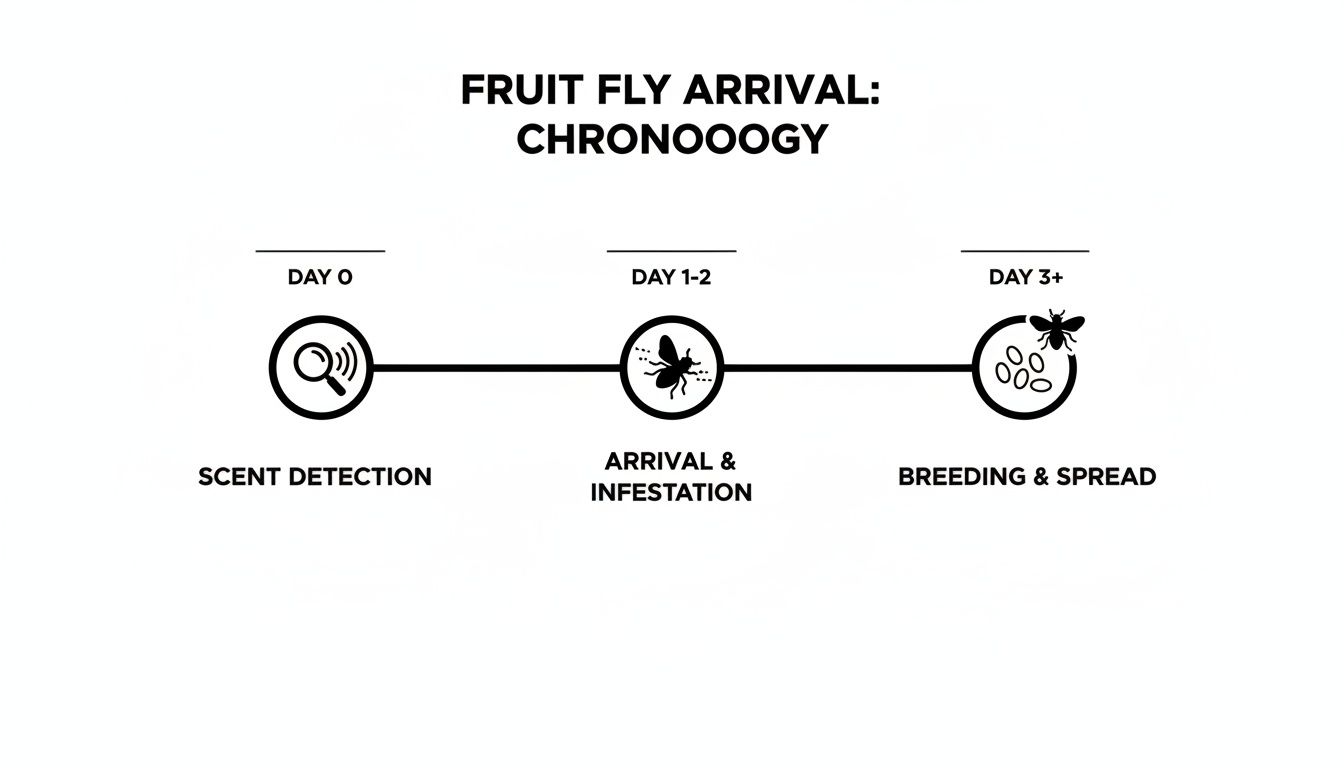
As you can see, the window to act is incredibly small. Once a breeding ground is established, the population explodes.
The Four Stages of Infestation
Breaking down the life cycle makes it clear why aggressive sanitation is the only long-term fix. Your goal isn't just killing the adults; it's destroying the habitat for the other three stages.
- Stage 1: Egg: Laid on moist, fermenting surfaces. They’re nearly impossible to see, which is why proactive cleaning is essential.
- Stage 2: Larva: These tiny, worm-like creatures do all the eating. You’ll find them buried just beneath the surface of rotting produce or in drain slime.
- Stage 3: Pupa: This is the non-moving, transitional stage. Pupae look like tiny, dark capsules and are often found in drier spots near the food source.
- Stage 4: Adult: The final, winged stage has two simple goals: mate and find a new place to lay eggs.
This relentless multiplication makes fruit flies maddeningly persistent. Effective control isn’t about chasing the flyers—it’s about eliminating their breeding grounds. Take away their ability to reproduce, and you stop the next generation before it ever takes flight.
How to Find Fruit Fly Breeding Hotspots
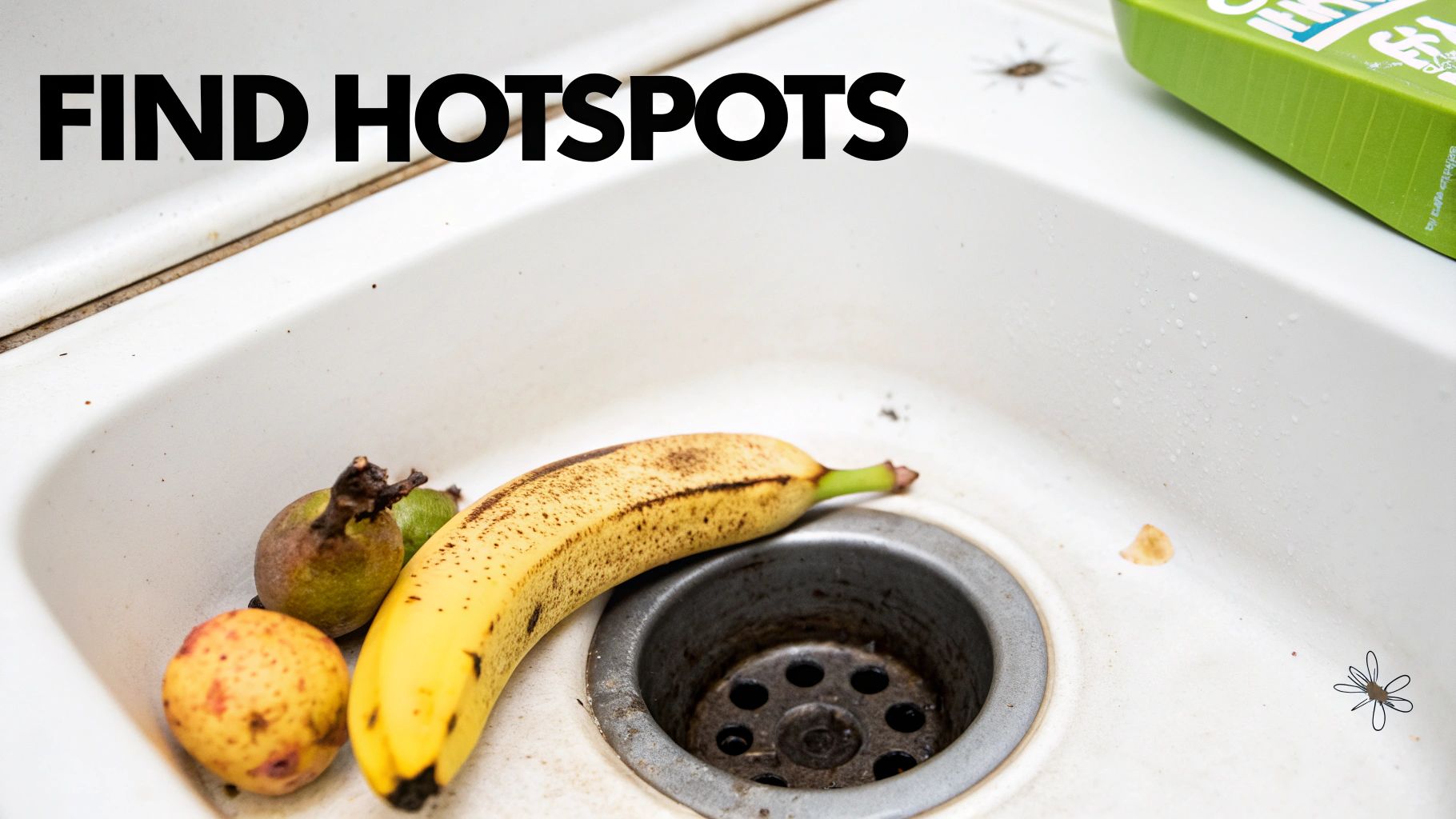
Now that you know how fast fruit flies multiply, it’s time to play detective. The adult flies are the symptom, not the cause. The real problem is a hidden breeding ground where eggs and larvae are developing right under your nose.
Finding this source is the most important step to getting rid of them for good.
Think like a fruit fly. Forget the obvious fruit bowl and hunt for any spot that combines moisture with fermenting organic goo. It’s almost always the forgotten, out-of-the-way places.
The Home Investigation Checklist
Start your search in the kitchen. This is ground zero for most infestations. Go through this list systematically. Grab a flashlight and look for any signs of slime, dampness, or tiny larvae.
-
Drains and Disposals: Look down your kitchen sink drain. That dark, slimy gunk coating the pipes is called biofilm, and for fruit flies, it’s a five-star hotel. Garbage disposals are even worse, as they trap tiny food scraps.
-
Beneath and Around Appliances: Pull out the fridge and peek underneath. Do the same for your dishwasher and stove. Spills, drips, and crumbs collect in these dark spaces.
-
Waste and Recycling Bins: Ever notice that sticky, smelly liquid at the bottom of your trash can? Fruit flies love it. Unrinsed soda cans, beer bottles, and wine bottles in your recycling bin are just as bad.
-
Damp Cleaning Tools: Don't ignore that damp sponge by the sink, a sour-smelling dishrag, or a mop head left in its bucket. If it's wet long enough to get funky, it’s wet long enough to support a fruit fly family.
-
Pantry and Storage Areas: Check that bag of potatoes or onions in the back of the cupboard. Just one rotting vegetable can kickstart a massive infestation. Look for sticky spills from honey or syrup on your pantry shelves.
Commercial and Business Hotspots
In a restaurant, bar, or café, the number of potential breeding sites explodes. The core principles are the same—hunt down moisture and organic buildup—but on a larger scale. Regular inspections are a non-negotiable part of your routine. For a deeper dive, our guide on how to keep flies away from food has more targeted strategies.
In a commercial kitchen or bar, even the smallest oversight can become a major infestation. Constant vigilance is your best weapon against the threat fruit flies pose to your hygiene standards and reputation.
Here are the key areas every business needs to check relentlessly:
- Bar Areas: Beer taps, drain lines, and drip trays under soda fountains are magnets for sugary spills.
- Floor Drains and Mats: The gunk under rubber floor mats and inside floor drains is a premier breeding ground.
- Storage Rooms: Look for spilled syrups, broken condiment packets, or rotting produce in walk-in coolers and dry storage.
- Bussing Stations: Carts and bins for dirty dishes become hotspots fast if they aren't scrubbed clean after every shift.
By methodically searching these areas, you can pinpoint the source of your fruit fly problem and move on to getting rid of them.
Your Essential Sanitation and Prevention Playbook
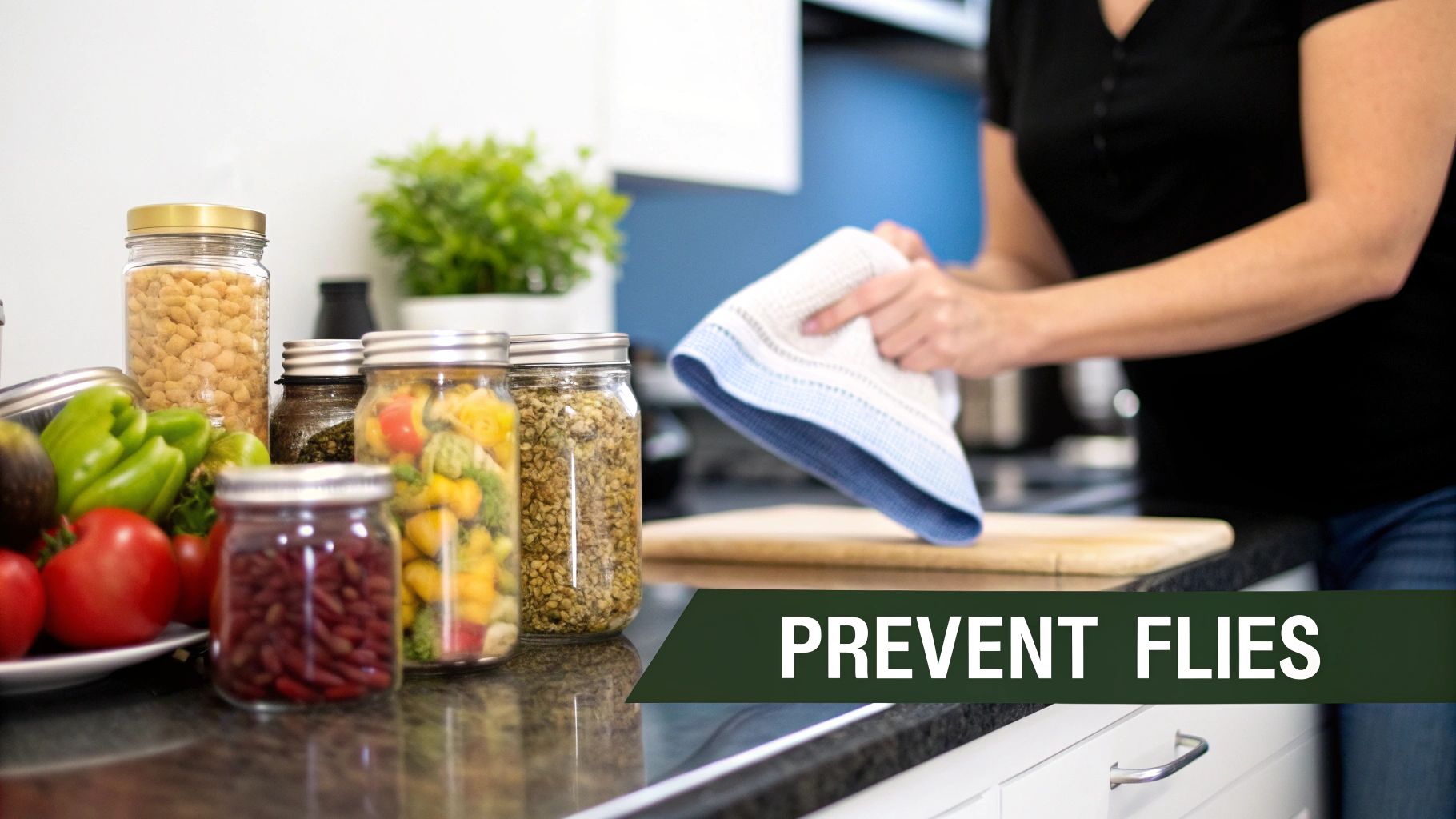
You’ve scouted their territory and found the breeding hotspots. Now it’s time to go on the offensive. The goal is simple: make your space so clean that fruit flies don't even bother. This isn’t about a one-time deep clean; it’s about building consistent habits that shut down their life cycle for good.
Swatting adult flies is a temporary fix. To win, you have to eliminate the conditions that attract them and give them a place to lay eggs. By systematically taking away their food, water, and shelter, you can transform your environment into a no-fly zone.
This strategy is built on strict sanitation. Every crumb, spill, and damp spot is a potential invitation, so attention to detail is your greatest weapon.
Mastering Your Food and Produce
Let’s start with the number one attractant: food. If you can manage this, you’ve won half the battle. A huge part of this is properly storing food to extend its shelf life, which naturally reduces fermenting produce.
Stick to these rules to secure your kitchen:
- Refrigerate Ripe Produce: Once fruits and vegetables are ripe, get them into the refrigerator. The cold halts fermentation and stops the fruit fly life cycle.
- Use Airtight Containers: Store cut produce, leftovers, and pantry staples in sealed, airtight containers. This locks in scents and creates a physical barrier.
- Inspect and Discard: Regularly check your produce for bruises or soft spots. Toss or compost any compromised items immediately to get rid of potential breeding sites.
While they're a minor nuisance in our homes, some fruit fly species are a massive threat to agriculture. Exotic fruit flies attack over 400 different plants and cause losses of more than 1.5 billion kilograms of produce in the U.S. each year, showing their huge economic impact.
Implementing Strict Waste and Water Control
Beyond the fruit bowl, your trash cans and sinks are the next major frontlines. These hidden breeding grounds often keep a fruit fly problem going.
The most overlooked fruit fly hotspots are often wet and out of sight. Drains, trash cans, and damp cloths can sustain a population even in a seemingly spotless kitchen.
Adopt these non-negotiable cleaning habits:
- Empty Trash Daily: Take out your trash, recycling, and compost every night. No exceptions. Make sure all bins have tight-fitting lids.
- Clean Your Bins: Regularly wash and sanitize your trash and recycling bins to get rid of any sticky residue.
- Maintain Your Drains: Once a week, clean your kitchen drains and garbage disposal. Pouring boiling water down helps, but using a stiff brush to scrub the inside of the pipe is more effective at removing biofilm.
- Keep Surfaces Dry: Wipe up spills the moment they happen. Make sure sinks and counters are completely dry after use. Always wring out sponges and hang dishcloths to dry fully.
By making these practices a routine, you systematically remove everything a fruit fly could want.
Effective Trapping and Monitoring Methods
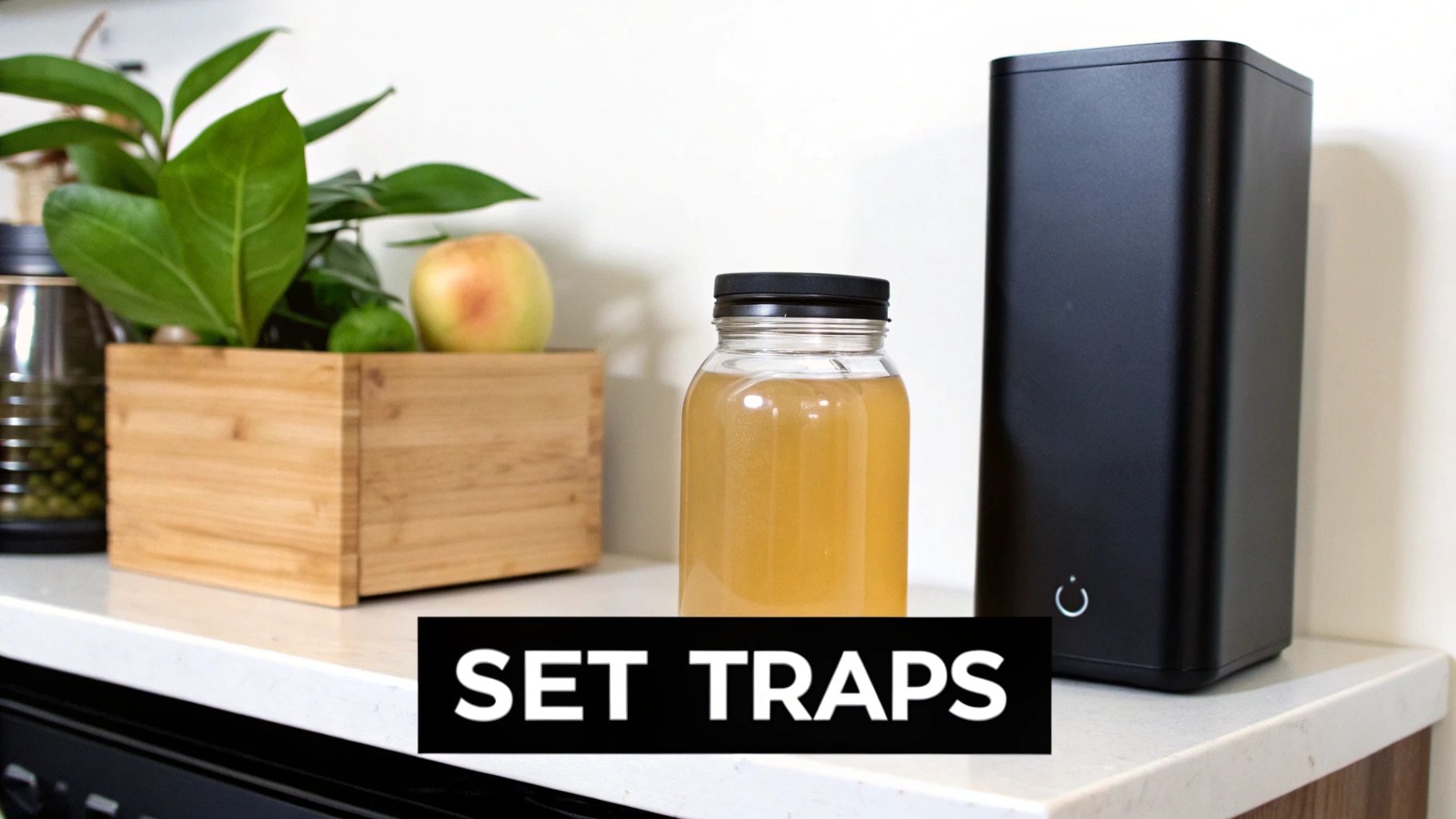
Once you've eliminated their breeding grounds, you still need to deal with the remaining adult flies. This is where trapping comes in. It’s a great way to catch the stragglers and see how well your cleanup efforts are working.
Remember, traps are a support tool, not a replacement for good sanitation. They are part of a bigger plan, working with the cleaning strategies you’re already using. The main idea is simple: attract fruit flies to a trap and keep them away from your food, drinks, and customers.
DIY and Commercial Trapping Solutions
A homemade trap is usually the first line of defense. It’s fast and it works. The classic setup uses a scent that fruit flies can't resist, paired with a design that makes escape impossible.
Here’s how to make a simple, effective trap in minutes:
- The Lure: Grab a small jar and pour in about an inch of apple cider vinegar. The fermented smell is like a dinner bell.
- The Trap: Add one drop of dish soap. This breaks the vinegar's surface tension, causing any fly that lands to sink immediately.
- The Funnel (Optional): Roll a piece of paper into a cone and stick it into the jar's opening. Flies can easily get in, but they'll have a nearly impossible time getting out.
While the common fruit fly is mostly a nuisance, some relatives are serious agricultural threats. The Mediterranean fruit fly, or medfly, is a prime example. It’s one of the world's most destructive pests, infesting 250 to 400 types of fruits, nuts, and vegetables. To understand the scale, you can explore research on the medfly's vast host range.
Modern and Discreet Monitoring
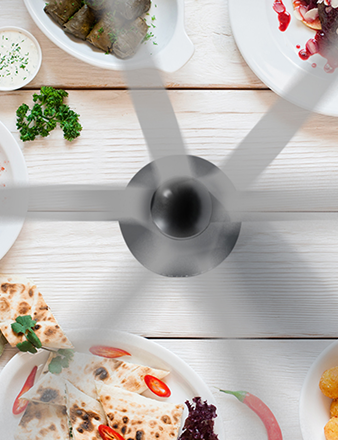
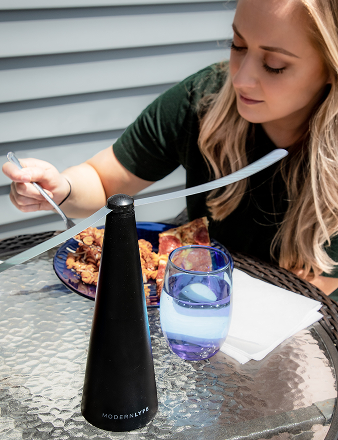
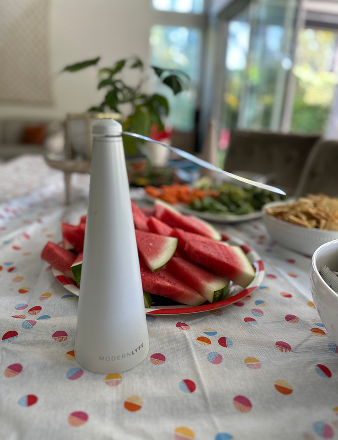
In a restaurant or cafe, an open jar of vinegar and dead flies isn't appealing. This is where modern, discreet solutions shine. Many commercial traps and fly fans are designed to blend into your decor while silently doing their job.
Think of traps not just as a weapon, but as a monitoring system. The number of flies caught tells you if your sanitation is working or if you’ve missed a hidden hotspot.
These devices often use UV light or non-toxic sticky adhesives to capture flies without any odors or mess. Placing them strategically adds a final layer of defense, keeping your space clean and pest-free.
Keeping Your Space Permanently Fly-Free
Once you've dealt with an active infestation, the real work begins. Moving beyond traps and frantic cleanups means shifting from reactive to proactive. The ultimate goal isn't just to get rid of fruit flies; it's to create an environment where they never get a foothold in the first place.
Fruit flies are expert opportunists and hitchhikers. They often sneak into your space by laying nearly invisible eggs on the skin of produce at the grocery store. That one innocent-looking banana can act as a Trojan horse, unleashing a new generation of pests.
Fortifying Your First Line of Defense
The single most effective action is to deal with produce the moment it comes through your door. This simple habit disrupts their primary invasion route.
- Inspect Before You Buy: Take a second to check produce for bruises, nicks, or soft spots. These damaged areas are prime real estate for fruit fly eggs.
- Wash Everything Immediately: As soon as you get home, rinse all produce under cool, running water. This physically washes away any eggs or larvae on the surface.
- Store Smart: Don't let ripe produce sit on the counter. Get it into the refrigerator quickly to slow ripening and halt the development of any missed eggs.
This might seem meticulous, but it’s a scaled-down version of what happens in global agriculture. International trade relies on strict measures to stop pest infestations from crossing borders. You can see how seriously this is taken by reading about the complex phytosanitary measures used in global trade.
A truly fly-free space isn't won in a single battle. It's maintained through consistent, preventative habits that make your environment completely inhospitable to pests.
By combining diligent sanitation with careful produce handling, you’re no longer just fighting fires. You're building a fortress. This vigilance keeps you one step ahead, making your home or business a place where fruit flies simply can't survive.
Your Top Fruit Fly Questions, Answered
Still have a few questions? Let's clear the air. Here are straightforward answers to the most common questions about what attracts fruit flies and how to get rid of them for good.
Why Do I Have Fruit Flies When There’s No Fruit in the House?
This is a classic problem. You've cleared the fruit, but the flies remain. Why?
The truth is, fruit flies are attracted to any fermenting organic material, not just fruit. If you have flies but no produce, they've found a hidden breeding spot. Think about places that stay damp and have a bit of gunk:
- Slimy buildup inside your kitchen sink drain.
- A damp sponge or mop head left sitting out.
- Residue at the bottom of a recycling bin from old soda, beer, or wine.
- Even the soil of an overwatered houseplant can become a breeding ground.
Are DIY Apple Cider Vinegar Traps Enough to Solve the Problem?
Vinegar traps are satisfying because they work. They do a great job of catching adult flies. But they are only one part of the solution.
Traps only deal with adults. They don't touch the eggs and larvae hiding in breeding grounds. For lasting results, you must eliminate the source.
Think of traps as playing defense while you work on your offense—which is a deep clean and prevention. That's the only way to truly break their life cycle.
How Can I Stop Bringing Fruit Flies Home from the Grocery Store?
It's frustrating, but you're often the one bringing fruit flies into your home. They hitch a ride on the produce you buy, usually as microscopic eggs.
The best defense starts at the store. Inspect produce carefully before buying; avoid anything with bruises or mushy spots. Once home, wash everything under cool running water to rinse away potential eggs. Finally, put ripe fruit and vegetables straight into the refrigerator. The cold temperature stops the life cycle in its tracks.
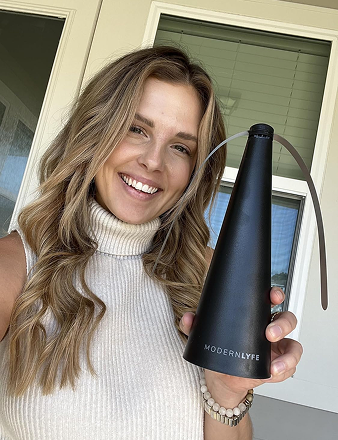
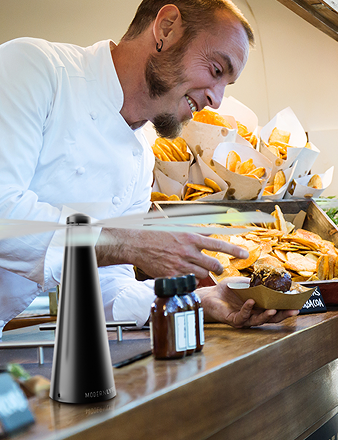
Ready to stop swatting and start preventing? The innovative fly fans from MODERN LYFE create a gentle, protective barrier that keeps flies away from your food and guests. Explore our elegant and effective solutions and enjoy a truly pest-free dining experience.