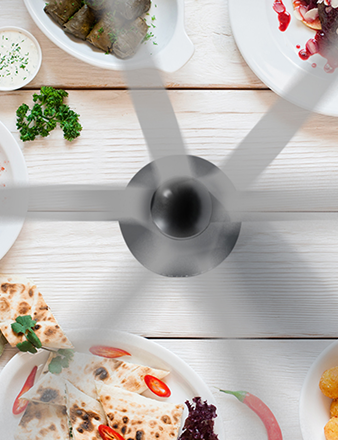
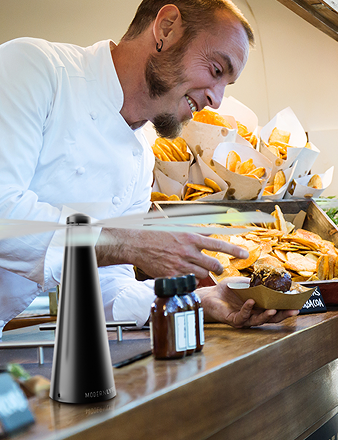
The table is set. The food looks right. Glassware catches the light. Guests settle in, phones come out, and the patio finally feels worth the investment.
Then the flies show up.
That’s the part many operators underestimate. Guests forgive a lot in hospitality. They won’t forgive a fly hovering over bread, landing near a garnish, or circling a buffet spoon. One insect can undo the impression created by good plating, thoughtful service, and expensive outdoor furniture. For home hosts, it does the same thing on a smaller scale. You can grill perfectly and still spend the evening waving a napkin over the salad bowl.
A modern battery operated insect repellent should solve that problem without adding a new one. In food settings, that matters more than people admit. Strong odors, visible traps, chemical drift, and loud electric devices all interfere with the experience you’re trying to protect. That’s why battery-operated fly fans deserve more attention than they get. They fit the job. They deter flies physically, stay visually discreet, and work in the exact places where guests eat.
Why Your Guests Notice Flies Before Anything Else
A fly problem isn’t just a pest problem. It’s a perception problem.
Guests don’t usually inspect your sanitation checklist. They judge what they can see. If flies keep circling a cheese board or touching the rim of a drink, people assume the environment isn’t under control. That judgment happens fast, and it affects restaurants, hotels, wedding setups, food trucks, and backyard hosts in the same way.

Flies ruin the room before they ruin the food
In outdoor dining, the first damage is often emotional. Guests tense up. They start covering plates. Someone makes a joke about the bugs. Then the mood changes.
For operators, that shift is expensive even when no one complains directly. Patio revenue depends on comfort. Event catering depends on presentation. Resorts depend on polished details. A fly problem cuts across all three.
Practical rule: If guests have to defend their plate, your setup is already failing.
Traditional insect control often misses this point because it was designed to kill insects, not protect the dining experience. A wall-mounted zapper may catch pests in a back-of-house corridor. It looks wrong next to a brunch spread. Spray products may work in some conditions, but few hosts want visible spraying around food or guests just before service.
Why battery-powered solutions are getting more attention
This shift isn’t a niche trend. The global electronic insect repellent market was valued at USD 1.4 billion in 2024 and is projected to reach USD 2.4 billion by 2030, growing at a CAGR of 8.1% during 2025 to 2030, according to Deep Market Insights research on the electronic insect repellent market. That growth reflects a move toward non-toxic and environmentally friendly pest control alternatives.
In practice, that means buyers want tools that fit modern spaces. They want mobility, clean presentation, and simple setup. They also want something staff can place exactly where insects become a guest-facing problem, not just where a wall outlet happens to be.
Battery-operated fly fans meet that standard better than most products in this category. They don’t try to turn the table into a treatment zone. They protect the table while preserving the atmosphere.
How Gentle Airflow Creates a Pest-Free Zone
Fly fans work because flies need a stable landing path. Take that away, and the food becomes much harder to reach.
That’s the key idea. A fly fan doesn’t need to blast insects across the room. It only needs to create enough localized airflow and visual disturbance to make approach and landing unreliable. For humans, that air movement feels minimal. For flies, it disrupts the final approach.
Think of a landing attempt in crosswind
A small aircraft can still fly in open air, but landing gets harder in unstable crosswind. Flies deal with the same problem at a tiny scale. When rotating fan blades create a shifting air barrier above plates and serving dishes, the insect can’t line up a clean descent.
That’s why these devices are more useful for flies than many mosquito-focused products. According to Mosquito Sheriff’s review of mosquito repellent gadgets, fans uniquely target flies by creating airflow barriers that disrupt their landing attempts, with some studies showing up to an 80% reduction in fly activity when air velocity exceeds 1.5 m/s. The same source notes that flies can transmit over 65 diseases, which makes them a serious food contamination concern in dining environments.
What the fan is actually doing
A good fly fan is a deterrent, not an exterminator. That distinction matters.
It doesn’t attract insects. It doesn’t electrocute them. It doesn’t vaporize an active ingredient into the air. It makes the landing zone annoying, unstable, and not worth the effort. Flies move elsewhere.
That approach gives battery-operated fly fans several practical advantages in hospitality:
- They protect the eating area directly by disrupting landings over food, glasses, and serving surfaces.
- They stay guest-friendly because there’s no zap, no visible kill cycle, and no treatment smell.
- They fit flexible service layouts since staff can move them from a two-top to a buffet line without changing infrastructure.
If you want a product-level look at that mechanism in action, this guide on whether fly fans work is a useful reference.
Flies don’t need a reason to leave. They just need a reason not to land.
Why this matters more in dining than in general pest control
Restaurants and event venues don’t need every insect on the property eliminated. They need the guest-facing table, platter, and drink station protected during service.
That’s where many traditional products fall short. They’re built around broad-area control or delayed results. Fly fans are built around immediate table-level deterrence. In a patio lunch service or outdoor reception, that’s usually the more relevant job.
Comparing Repellent Technologies for Food Service
Not every battery operated insect repellent belongs near food. That’s the simplest way to frame the buying decision.
In hospitality, the question isn’t just whether a product affects insects. The question is whether it protects the dining experience without creating visual clutter, hygiene concerns, or operational hassle. Most options fall into three groups: fly fans, chemical or heat repellents, and UV light zappers.
Where each technology fits
Fly fans use airflow and blade motion to deter flies from landing. They’re most useful at tables, buffets, bars, and other guest-facing food zones where direct protection matters more than broad property coverage.
Chemical and heat repellents are typically better known in the mosquito category. The Thermacell Adventure, for example, uses a lithium-ion battery to heat a mat containing 5.5% Metofluthrin and creates a 20-foot protection zone primarily for mosquitoes, as described in this Thermacell Adventure product reference. That can be useful on patios, but it also means introducing a chemical agent into the air, which deserves careful consideration near exposed food.
UV light zappers appeal to buyers because they promise visible insect reduction. In guest-facing dining areas, though, they’re often the wrong tool. They can be distracting, unattractive, and poorly matched to the goal of keeping flies away from plates before contact happens.

Repellent Technology Comparison for Dining Environments
| Feature | Battery-Operated Fly Fans | Chemical/Heat Repellents | UV Light Zappers |
|---|---|---|---|
| Primary mechanism | Physical airflow deterrence | Heated active ingredient dispersed into air | Light attraction and electric kill |
| Best target in dining use | Flies around food and drinks | Mostly mosquitoes in surrounding seating zones | General flying insects drawn to light |
| Use near exposed food | Strong fit because no chemical release | Requires caution because active agent is airborne | Poor fit in guest view and food areas |
| Guest comfort | Quiet, discreet, low visual impact | Usually discreet, but some guests may object to chemical exposure | Audible and visually intrusive |
| Aesthetic integration | Easy to place on tables and buffet lines | Better at perimeter or patio edge than on dining surface | Usually looks utilitarian |
| Maintenance style | Recharge or replace batteries, wipe clean | Charge device and replace mats or cartridges | Empty debris and clean device |
| Hospitality value | Protects presentation while guests eat | Helps with mosquito comfort in some layouts | Better suited to non-display areas |
What works and what doesn’t in real service
The most common mistake is choosing a product based on general pest language instead of food-service fit.
For example, a mosquito repeller may be effective for mosquito pressure on a deck or event lawn. That doesn’t make it the right choice for a charcuterie station. A zapper may kill insects over time. That doesn’t mean guests want to hear it or see it near dessert service. A spray may solve an immediate issue before setup. That doesn’t mean staff should use it around active dining.
In food service, the decision usually comes down to this:
- Use fly fans when the priority is keeping flies off food without altering the guest environment.
- Use heat-based repellents when mosquito control matters more than direct food shielding.
- Keep zappers away from the dining experience unless they’re placed in non-guest operational zones.
The right product depends on the right target. Flies over food and mosquitoes around a patio are not the same problem.
A cleaner standard for modern dining
The strongest case for fly fans isn’t that they do everything. It’s that they do one job very well.
They protect the immediate food zone. In hospitality, that’s often the zone that matters most.
Evaluating the Best Battery Operated Fly Fans
A fly fan can fit the category and still fail in service. The units that work on a restaurant table, buffet, or patio are the ones staff can set out fast, clean between turns, and leave in place without making the setup look improvised.
Battery performance matters first because dead equipment gets pulled from rotation. In hospitality, a product that needs mid-shift charging creates labor friction and usually ends up sitting in a drawer. For home use, the same issue shows up during longer outdoor meals when no one wants to stop and swap batteries halfway through dinner.
A useful benchmark from the broader battery-powered repellent category comes from the Traverser portable repeller, which uses a 5000mAh lithium battery and delivers up to 14 hours of runtime with Type-C fast charging, according to Traverser’s product details. It is not a fly fan, but it reflects what buyers now expect from portable pest-control hardware: runtime that covers a meal period or service block, and charging that fits current devices instead of outdated connectors.
For fly fans, apply that standard directly:
- Choose rechargeable or easy-to-manage power options for daily use.
- Check the charging port and cable type because awkward charging slows setup and return-to-service.
- Match runtime to the operating window. A brunch service, a wedding buffet, and a backyard cookout place different demands on battery life.
For buyers comparing form factor, noise, and portability across similar devices, this guide to battery-operated table fans is a useful reference.
What to inspect before you buy
The better fly fans usually separate themselves in small operating details, not dramatic feature claims.
- Base stability: The unit should stay planted on a café table, picnic table, or buffet riser without wobbling when guests bump the surface.
- Blade safety: Soft blades matter in guest-facing spaces, especially where children, sleeves, or server trays pass close by.
- Cleaning access: Staff should be able to wipe the housing and blades quickly after exposure to syrup, grease film, dust, or drink splash.
- Footprint: A compact base protects table space for plates, glassware, condiments, and serving pieces.
- Visual profile: The fan should blend into the setting instead of reading like back-of-house gear.
Noise deserves more scrutiny than many buyers give it. Guests may tolerate a tabletop device if it is quiet and visually restrained. They notice it fast if it buzzes, rattles, or looks like a workaround. That is one reason battery-operated fly fans usually outperform larger portable fans pressed into table duty. The larger units move more air than needed and pull attention away from the meal.
Buy for live service conditions. A unit that feels acceptable on a desk can feel clumsy beside plated food and stemware.
Design affects whether teams keep using it
In restaurants, appearance is an operations issue. If a device looks cheap, bulky, or off-brand for the room, staff delay putting it out until the fly problem is already visible to guests. That defeats the point.
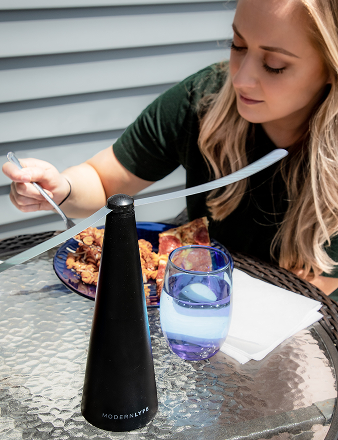
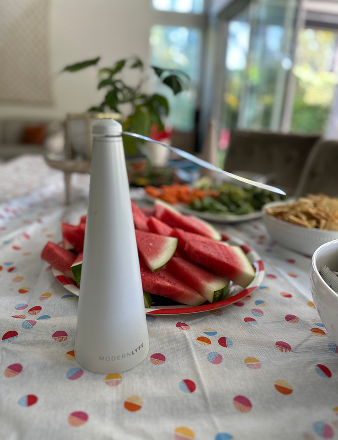
Slim tabletop models usually perform better on this front. One example is the battery-powered table fly fan sold by Modern Lyfe. It is designed for dining surfaces and fits more naturally into a tablescape than equipment meant for utility areas. That matters because consistent use protects food presentation, reduces guest complaints, and supports a cleaner service standard.
Brand protection is a key asset, but only if the product earns table space.
A practical buyer checklist
Before ordering, ask five questions:
- Will it run through the full meal period or service window without intervention?
- Can staff charge it with standard cables and simple handling?
- Does it look appropriate on a set table, patio table, or buffet line?
- Can it be wiped down fast between services?
- Will guests notice fewer flies instead of noticing the device?
If the answer is yes across all five, the fan is probably built for food settings, not just general pest marketing.
Strategic Placement for Flawless Insect Protection
Placement determines whether a fly fan feels effective or disappointing. Most failures come from bad positioning, not bad intent.
Put a fan too far from the food and flies still land. Put it behind a centerpiece and the airflow gets blocked. Put one unit on a long buffet and you leave open approach lanes everywhere else.

Small table setups
For a two-person café table or small bistro setup, place the fan near the centerline of the food zone, not at the far edge. The goal is to protect the area where plates and glasses sit most of the time.
If the table also holds menus, candles, or a floral accent, don’t bury the fan behind them. Keep the rotating blades exposed to open air so the deterrent effect stays consistent.
A simple rule works well here:
- Center-first placement protects both diners better than edge placement.
- Keep it above clutter height so napkin holders and bottles don’t interrupt the airflow field.
- Aim to shield food, not chairs because the plate is the target area.
Longer banquet tables and buffet lines
Rectangular layouts need overlap. One unit at one end rarely protects the full presentation.
On banquet tables, space fans along the food path so their zones meet instead of leaving gaps. On buffets, place them near vulnerable points such as uncovered platters, carving stations, fruit displays, pastries, and plate pickup areas where guests pause and flies tend to hover.
This is also where natural breeze matters. Outdoor airflow can help or hurt. If wind already moves in one direction, position fans so they reinforce that direction around the food instead of fighting it.
Set fly fans the way you’d set lighting. Coverage should feel intentional, not accidental.
A quick visual helps when planning real layouts:
Round tables and event service
Large round tables create a different problem. Food may be concentrated in the middle, but guests approach from all sides. Center placement works best when serving platters stay fixed in the middle. If service is family-style, keep the fan close to the central dishes.
For event coordinators, the bigger issue is often transitional spaces. Cake tables, drink stations, oyster bars, and grazing tables are all high-visibility targets. These aren’t spots where you want loud equipment or visible chemical devices. Compact fly fans fit these moments because they can sit inside the presentation without changing the look.
Common placement mistakes
A few errors show up again and again:
- Using too few units for a wide surface
- Placing fans after flies are already active around the food
- Hiding the fan behind décor
- Ignoring side access points on self-serve stations
- Treating a breezy patio and a sheltered dining room the same way
Good placement is proactive. Set the fans before food arrives, not after guests start swatting.
The Business Case for Investing in Fly Fans
Operators don’t buy insect control for the sake of insect control. They buy protection for revenue, presentation, and repeat business.
That’s why fly fans make sense. They solve a visible problem in a visible way, without making the solution itself feel invasive. In guest-facing service, that matters.

The return is operational before it’s financial
A patio manager doesn’t need a spreadsheet to know that flies affect the meal. The return shows up in fewer interrupted service moments, less guest discomfort, and cleaner food presentation.
For caterers, the value is even more direct. You can’t stage a polished buffet and then ask guests to ignore insects. Fly fans support the brand promise. They help the setup look controlled from the first plate to the last.
For homeowners, the same logic applies. A backyard gathering feels more relaxed when no one has to guard the fruit tray.
Battery power lowers friction
One of the strongest arguments for portable devices is simple deployment. The American Mosquito Control Association notes that battery-operated systems are widely adopted in hospitality because they offer flexible placement without permanent electrical infrastructure, reducing maintenance requirements and total cost of ownership for commercial users, as described on the American Mosquito Control Association’s repellents page.
That matters in real operations:
- Restaurants can move units with the floor plan.
- Hotels and resorts can stage temporary event spaces without extension cords.
- Caterers can protect food in venues they don’t control.
- Food truck operators can add deterrence where power access is limited.
If you’re assessing options specifically for venues and service teams, this commercial fly fan overview is worth reviewing.
Why traditional methods often lose the ROI argument
The old alternatives usually fail in one of three ways.
They’re too aggressive for guest spaces, too ugly for the environment, or too inconsistent where food is displayed. A wall trap hidden near prep may help in the background. It doesn’t protect a patio appetizer. A chemical mosquito unit may improve comfort in lounge seating. It doesn’t specifically solve fly activity over a charcuterie board.
Fly fans win the ROI argument because they match the point of failure. The problem happens at the table. The tool sits at the table.
The cheapest insect product is expensive if staff won’t use it where guests can see the problem.
Brand protection is the real asset
Most hospitality damage isn’t dramatic. It’s cumulative. Guests remember little irritations. They mention them in private, then sometimes in public reviews.
A clean fly-control setup protects more than food. It protects confidence. Staff feel better serving the table. Guests feel better staying longer. Hosts feel less pressure to apologize for the environment.
That’s why a battery operated insect repellent built around guest comfort is easier to justify than many operators think. It’s not a niche accessory. It’s part of maintaining a space people want to sit in.
Your Top Questions About Fly Fans Answered
Are soft-touch blades safe around children and pets
In normal tabletop use, soft blades are designed for incidental contact rather than hard impact. That makes them far better suited to dining environments than exposed electric grids or hot surfaces. Still, they’re not toys. Place them where small children can’t grab and drag the unit across the table.
Do fly fans work on mosquitoes too
Their main advantage is fly deterrence around food. Some airflow-based devices may make conditions less favorable for other weak fliers, but if your main issue is mosquitoes across a larger patio, a mosquito-focused solution is a different category. Don’t buy a fly fan expecting full-yard mosquito control.
Can I use them indoors
Yes, especially in kitchens, breakfast rooms, enclosed patios, sunrooms, and buffet service areas where flies gather around exposed food. Indoors, they often perform more consistently because the environment is more controlled. You still need proper sanitation and waste handling. A fan helps protect the table, not replace housekeeping.
How should I clean and store them
Wipe the housing and blades regularly with a soft cloth after service, especially if the fan sits near grease, syrup, wine, or dust. Store it dry and upright if possible. If the unit uses removable batteries, take them out before long-term storage unless the manufacturer says otherwise.
Do they replace all other insect control methods
No. They solve a very specific problem well. That problem is keeping flies off food and guest tables. Most venues still need broader pest control practices in the background, including waste management, cleaning discipline, and perimeter control. Fly fans work best as the guest-facing layer of a larger hygiene plan.
What’s the biggest mistake buyers make
They buy based on pest category instead of service context. A restaurant table, wedding buffet, and backyard brunch all need protection that feels clean, quiet, and visually acceptable. If the device doesn’t fit the setting, people won’t use it consistently.
Are they worth it for home use
Yes, if you entertain outdoors or keep food out for any length of time. Most homeowners don’t need industrial gear. They need something that can sit next to drinks, fruit, salads, and grilled food without changing the mood of the gathering. That’s exactly where fly fans make sense.
If you want a cleaner way to protect food and guests without turning your setup into a pest-control display, take a look at MODERN LYFE. Their battery-operated fly fans are built for dining tables, buffets, patios, and event service where presentation matters as much as function.