To get rid of flies outside, you have to eliminate their food and breeding sources. It's not about reacting; it's about being proactive. The most effective strategy combines a meticulous cleanup routine, smart use of fans, and a few natural repellents to reclaim your outdoor space.
Understand Why Flies Are in Your Yard
Before you can get rid of flies, you need to understand what attracts them. Your backyard is a five-star resort for flies, offering everything they need to eat, breed, and thrive. Understanding their motivation is the first step to making your space one they'll avoid.
Flies are simple. They're programmed to find three things: food, water, and a safe place to lay eggs. The problem is, our backyards are often full of all three.
Uncover Hidden Fly Magnets
It’s easy to blame a leftover burger on the grill, but flies are drawn to many things you might not notice. These hidden attractants are usually the real reason you have a persistent fly problem.
-
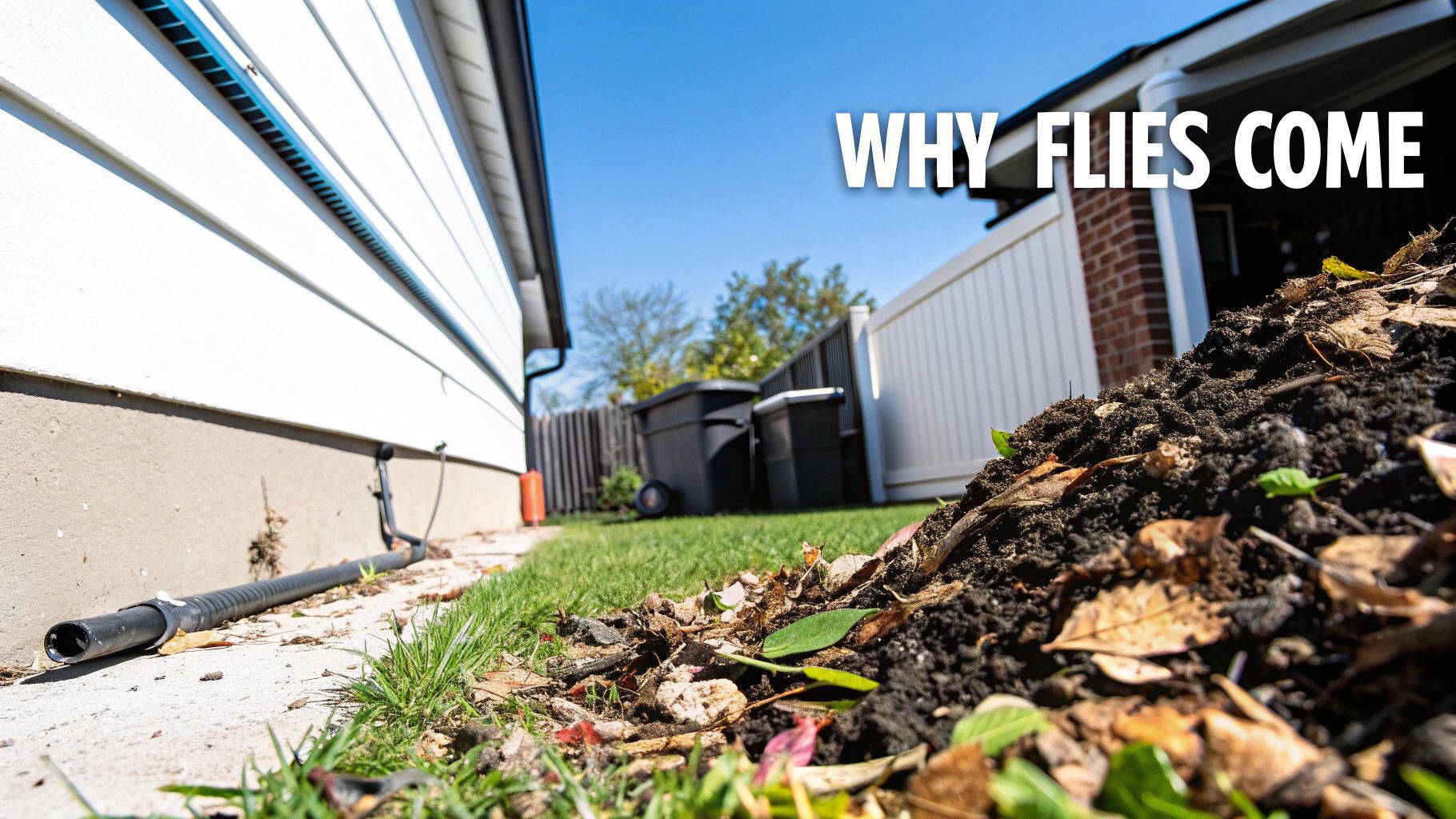
Decomposing Organic Matter: This is the big one. Pet waste, an overflowing compost bin, a forgotten pile of wet leaves, or even damp grass clippings. Clogged gutters filled with rotting debris are another prime breeding ground.
-
Moisture Sources: Flies need water. Any standing water is an open invitation. This could be a stagnant birdbath, a saucer under a potted plant, or small puddles that form after it rains.
-
Garbage and Recycling Bins: Your outdoor trash cans are a huge fly magnet. Even with tight lids, small spills and residue on the outside release odors that pull flies in. When the bin heats up in the sun, it turns the contents into an even more appealing buffet.
Fact: The life cycle of a common housefly is incredibly fast. In warm weather, a female can lay hundreds of eggs that hatch into adults in as little as seven to ten days. That's why a few flies can become a swarm almost overnight.
The Problem with a Fly-Friendly Yard
A messy space is a welcome mat for flies. Every overlooked food scrap or puddle of water fuels their life cycle, keeping them coming back.
By systematically removing these attractants, you break their life cycle and make your yard a place they won’t want to be. This is the foundation of any effective fly control plan and is far more effective than just swatting at them. The goal is to stop the problem at its source.
Create a Fly-Free Zone with Smart Sanitation
The absolute best way to keep flies away outside isn’t a magic spray. It’s simple: make your yard a place they have no reason to visit. Take away their food and shelter, and they're gone. This is ground zero for effective fly control.
Consistent sanitation can reduce your fly problem by up to 80%. It’s all about methodically turning your outdoor space from a fly buffet into a no-fly zone.
Lock Down Your Trash
Your garbage cans are a resort for flies. They offer food, moisture, and warmth. Your job is to shut down the resort.
First, make sure your trash cans have tight-fitting, secure lids. A lid that’s even slightly ajar is an open invitation. Bag all your trash before it goes in the bin. Loose food scraps are a guaranteed recipe for a fly swarm.
Pro-tip: After trash day, rinse the empty bins with a hose. It takes 30 seconds but gets rid of the sticky residue and odor that acts as a long-range beacon for flies.
Securing food sources is critical. Even small spills attract flies, so manage outdoor food areas meticulously. To learn more, read our detailed guide on how to keep flies away from food, which covers everything from picnics to patio dinners.
Scout and Destroy Breeding Grounds
Flies don't just hang out by the trash; they're always looking for places to lay eggs. Eliminating these hidden hotspots is critical for long-term control.
A consistent cleanup routine is your best defense.
- Pet Waste: Don't put this off. Clean up after your pets immediately. A single pile can become a nursery for hundreds of new flies in just a few days.
- Compost: If you compost, manage it actively. Keep the pile turned to speed up decomposition, and always bury fresh food scraps under a layer of dry material like leaves or straw. This simple step locks in odors. Place the compost bin as far from your patio as possible.
- Standing Water: Flies need moisture to reproduce. Once a week, check for standing water in clogged gutters, old tires, forgotten buckets, and even the saucers under your potted plants. Fixing soggy patches in your lawn can also make a big impact.
Make Smart Landscaping Choices
Your garden can either help you or work against you. Dense, overgrown bushes trap moisture and create shady, protected hideouts for flies.
Prune back overgrown bushes and trees to improve airflow and let the sun dry out damp soil. Keeping the lawn mowed and raking up leaf piles or grass clippings also removes potential shelters. This isn't just about curb appeal; it's a practical strategy to make your yard less inviting to pests.
When you put these sanitation steps together, you create a powerful defense that turns your outdoor space back into a place for you to enjoy—not for flies to invade.
Use Airflow as Your Invisible Shield
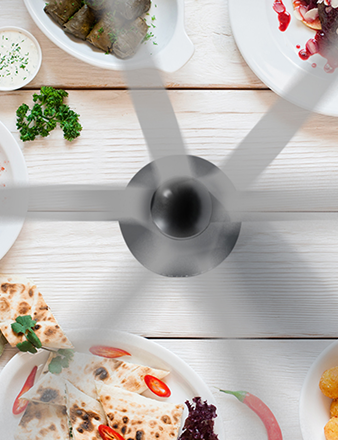
Once you've cleaned up the fly magnets, bring in your secret weapon: a steady breeze. It sounds simple, but creating targeted airflow is one of the most effective, non-toxic ways to keep your outdoor spaces fly-free.
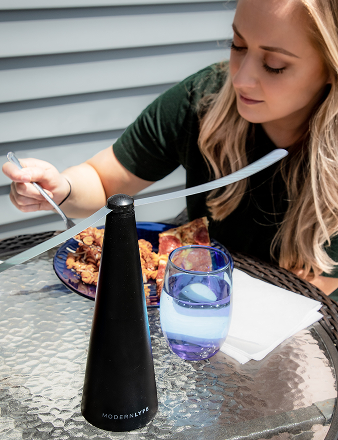
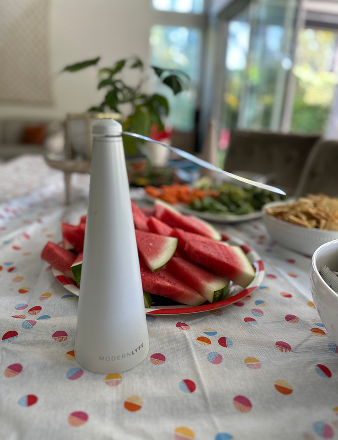
Flies are terrible fliers. Their tiny bodies and large wings make them clumsy in anything but still air. A consistent breeze from well-placed fans creates an invisible force field they simply can't penetrate. It physically stops them from landing on your food or buzzing around your head.
How to Place Fans for Maximum Fly Control
Don't just switch on a fan and hope for the best. You need to set up an aerial roadblock that intercepts flies before they reach you.
Create a curtain of air to protect your main zones. An oscillating pedestal fan is great for an open deck, sweeping back and forth to keep a large area clear. For a covered patio, a ceiling fan can create a consistent downward draft that protects the entire space.
For a dining table, place two box fans at opposite corners, angled to create a constant cross-breeze over the surface. This continuous airflow is a nightmare for flies. If you're looking for the right hardware, our guide on the best outdoor fans to keep bugs away has solid recommendations.
Of course, even the best fan setup can't overcome a messy yard. Airflow is your active defense, but it works best when your sanitation is solid.
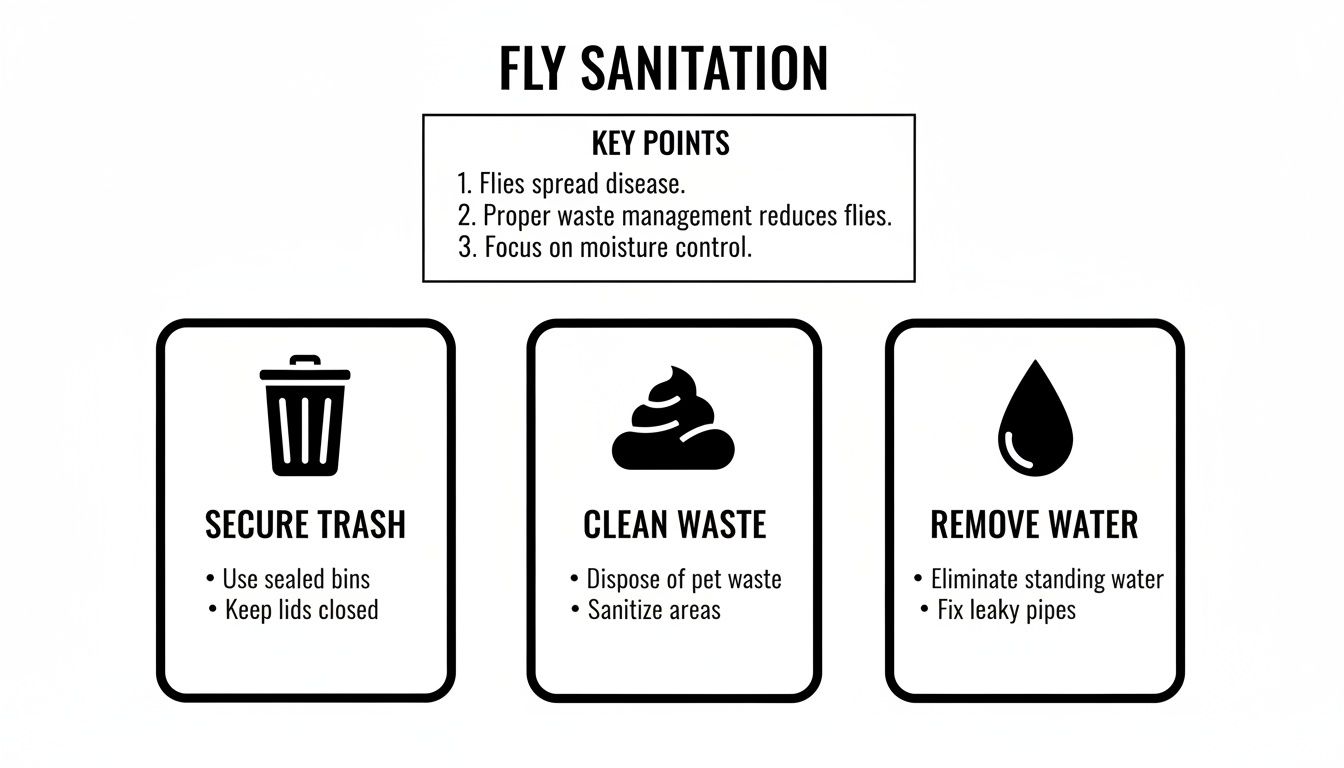
Remember, securing trash, cleaning up pet waste, and eliminating standing water are non-negotiable. These steps remove the "Now Open" sign for flies, drastically reducing the numbers you have to fight in the first place.
The Science Behind the Breeze
This isn't just an old trick; the science is clear. Studies show that an air current moving at 18-20 mph can prevent 80% of house flies from entering a space. You’re not creating a hurricane, just enough turbulence to disrupt their flight. They physically can't navigate it.
Use this guide to create effective no-fly zones in your outdoor areas.
Strategic Fan Placement for Maximum Fly Deterrence
| Outdoor Area | Recommended Fan Type | Optimal Placement Strategy |
|---|---|---|
| Dining Table | 2 Box or Pedestal Fans | Place at opposite corners, creating a cross-breeze over the tabletop. |
| Covered Patio | Ceiling Fan | Use a central overhead fan to create a consistent downward air column. |
| Seating Area | Oscillating Pedestal Fan | Position to sweep air across the main seating zone, especially at leg level. |
| Grill Station | Vornado or Air Circulator | Aim a focused, powerful stream of air to form a barrier in front of the grill. |
Choosing the right fan and putting it in the right spot makes all the difference. It’s about creating a tactical, invisible barrier where you need it most.
Key Takeaway: The goal isn't to blow flies into the next county. You just need to create enough air turbulence to disrupt their flight. A consistent, targeted breeze between the flies and your guests is all it takes.
By combining a clean environment with directed airflow, you’re building a multi-layered defense system. It’s a clean, modern, and incredibly effective way to take back your patio without chemical sprays.
Choose the Right Natural Repellents and Traps
Once your patio is clean and breezy, add some active defenses. This is where you make the space unwelcoming to flies using nature's own toolkit—plants, essential oils, and strategically placed traps. Combining these tactics is the best way to keep flies away outside for good.
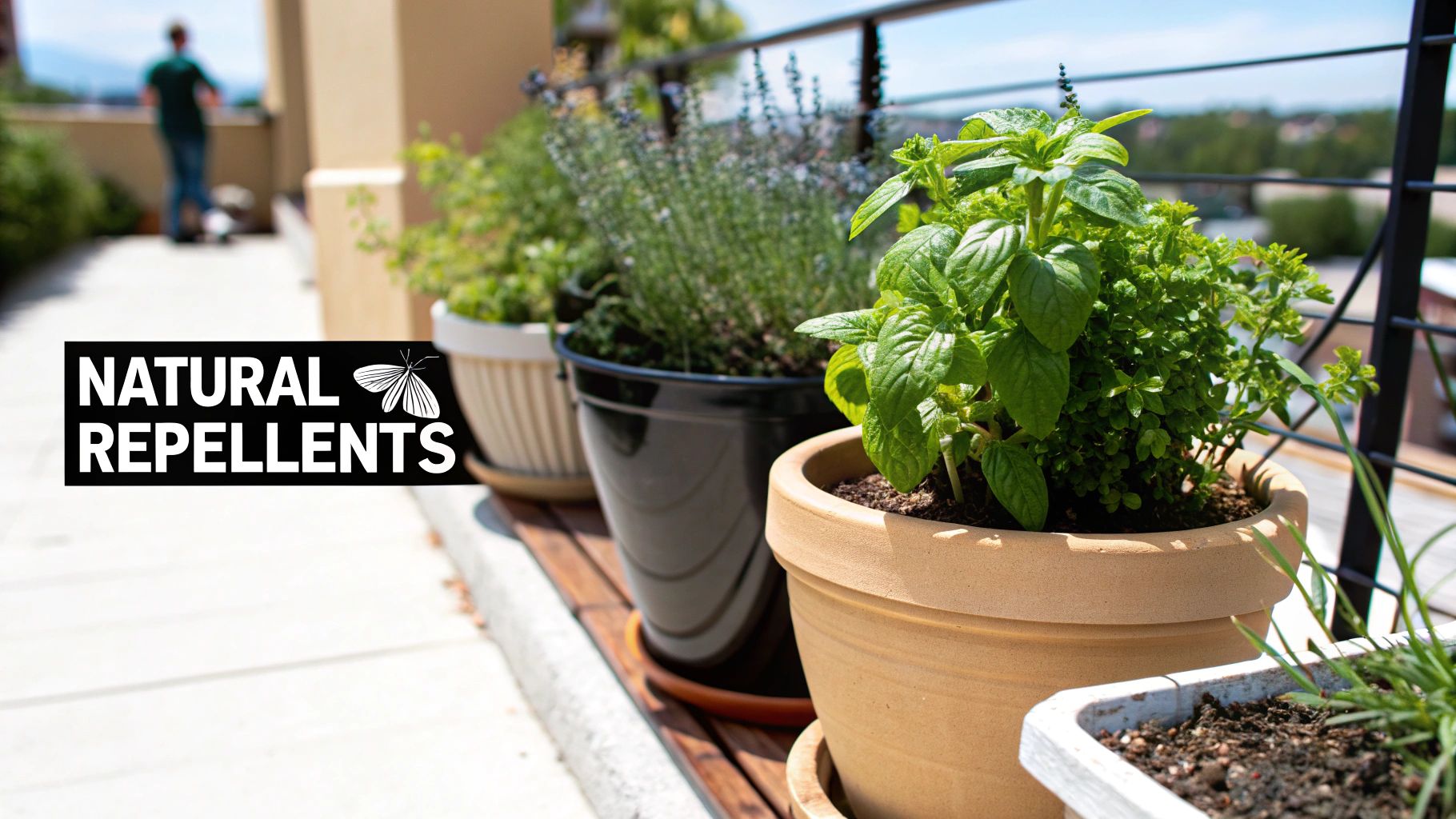
First, plants. You’ve heard that certain herbs can repel flies, and it’s true. Flies rely on their sense of smell, and they hate the powerful aromas of plants like mint, basil, lavender, and rosemary.
The trick is putting them where they'll work. Don't just plant them across the yard. Create a green barrier with container gardens right on your deck or patio. Place pots on tables, along railings, and near seating areas. When the sun or a breeze hits the leaves, they release their fragrant oils, creating a natural no-fly zone.
DIY Repellents and Smart Trapping
You can also make simple, effective repellents using essential oils. Fill a spray bottle with water and add several drops of peppermint, eucalyptus, or lemongrass oil. Shake it and spritz your outdoor furniture, cushions, and around doorways before you head outside. It’s a great chemical-free way to freshen things up while telling flies to buzz off.
Now, let's talk traps. Fly traps work well, but most people use them wrong.
The biggest mistake is placing bait traps right in the middle of your patio. These traps use a potent scent to attract flies, so putting one on your dining table is like sending a dinner invitation to every fly in the neighborhood.
The right way to use traps is to intercept flies before they get to you. Place bait traps along the perimeter of your yard, at least 20-30 feet away from your patio or grill. This approach draws flies away from your living space and toward the trap, cutting down the number that ever makes it to your comfort zone. For a detailed breakdown, our guide on using a liquid fly trap covers placement strategies in depth.
Repellents vs. Traps
When should you use a repellent versus a trap? Think of it this way: repellents push flies away, while traps pull them in and eliminate them. The most effective strategy uses both.
| Method | Best For | Placement Strategy | Key Benefit |
|---|---|---|---|
| Repellent Plants | Creating a pleasant-smelling barrier around seating areas. | In pots directly on patios, tables, and near doorways. | A continuous, low-maintenance deterrent that also looks great. |
| DIY Sprays | Quick, targeted application right before guests arrive. | Lightly misted on surfaces and in the air around your space. | An immediate, temporary, and non-toxic scent barrier. |
| Bait Traps | Actively reducing the overall fly population in your yard. | Hung on fences or stakes 20-30 feet away from living areas. | Captures and removes flies, preventing them from breeding. |
When you combine these natural solutions, you create a powerful layered defense. The plants and sprays make your immediate area a place flies want to avoid, while the traps work in the background to thin the herd. It’s this multi-pronged approach that delivers lasting results.
Advanced Controls for Severe Fly Problems
If you’ve done everything right—cleaned up, set up fans, tried repellents—and the flies are still winning, it's time for more advanced solutions. This is common for large properties or homes near farms, where standard tactics aren't enough.
For severe fly populations, you need to move past simple deterrents and start breaking the fly life cycle at its source.
Here are professional-grade options to help you reclaim your outdoor space.
Biological Controls: Using Nature's Predators
One of the smartest solutions for a massive fly problem is to use Fly Predators. These are tiny, gnat-sized insects that have zero interest in people or pets. Their entire life's purpose is to seek and destroy fly pupae.
Instead of swatting adult flies, Fly Predators work behind the scenes to prevent the next generation from ever emerging. They lay their eggs inside fly pupae, stopping new flies before they can hatch. This makes them a fantastic, chemical-free weapon, especially if you have compost piles, barns, or animal manure nearby.
Using them is simple: just release them near fly breeding hotspots. To maintain control, you’ll need to add a new batch every few weeks during fly season. This ensures you have a standing army ready to intercept the fly breeding cycle.
A study found that consistently releasing Fly Predators can reduce fly emergence by over 80% in places like livestock facilities. Using these beneficial insects can also reduce the need for chemical insecticides by up to 50%. You can learn more about the science behind these biological controls and their impact.
When to Use Heavy-Duty Systems
For large-scale fly problems, you might need a more powerful, automated approach. This is where professionally installed misting systems or commercial-grade bait stations come in.
Here’s a quick rundown of these high-level options:
- Automated Misting Systems: Think of these as a security system against bugs. Installed along your property's perimeter, they release a fine mist of insecticide (often pyrethrins, derived from chrysanthemums) on a timer. This creates a no-fly zone that kills or repels insects. They're effective but require professional installation and maintenance.
- Targeted Bait Stations: These aren't the disposable traps from the hardware store. Professional bait stations are built for high-volume fly control. They use a potent attractant with a fast-acting insecticide to lure and eliminate huge numbers of flies away from your gathering spots.
Moving to these advanced controls is a big step, best reserved for situations where you've exhausted all basic strategies and the flies are still a major issue.
Common Questions About Outdoor Fly Control
Dealing with a persistent fly problem can be frustrating. Here are answers to the most common questions about what really works.
What Is the Single Most Effective Thing I Can Do?
Sanitation. It’s not exciting, but it's the truth. Flies are driven by two things: finding food and finding a place to lay eggs. Take those away, and they have no reason to be there.
This means being relentless about securing trash can lids, cleaning up pet waste immediately, and wiping up food and drink spills. Getting this foundation right makes every other method—from traps to fans—far more effective.
Do Bug Zappers Work for Flies?
No. That zapping sound might feel satisfying, but bug zappers are a terrible choice for fly control. They are indiscriminate, killing thousands of beneficial insects for every one or two flies.
Worse, the "zap" creates a mist of vaporized bug parts that can drift onto your food and tables. You're much better off with targeted solutions like bait traps placed well away from your living space, or physical deterrents like fans.
How Should I Prep My Patio for a Party?
Hosting an event requires a layered defense that starts a day or two before. You can't just set a few things out an hour beforehand.
- The Day Before: Do a full yard cleanup. Scrub the grill, take out the trash, check for standing water, and do a final sweep for pet waste.
- The Day Of: Set up several oscillating fans to create a network of cross-breezes, focusing on food tables and seating areas.
- Natural Touches: Place potted basil, mint, or lavender on your tables as a natural deterrent that looks and smells great.
- Perimeter Defense: As an insurance policy, hang a couple of bait traps along the far edges of your property, at least 30 feet from your guests. They’ll intercept flies before they get close to the party.
Are There Scents That Naturally Repel Flies?
Yes. Flies navigate by smell, and they hate certain strong, aromatic scents. Use this to your advantage.
Herbs like peppermint, basil, lavender, and rosemary are fantastic natural repellents. Essential oils are also powerful; flies hate citronella, eucalyptus, and lemongrass. Plant these herbs in containers around your patio or use a diffuser with a few drops of these oils to create a pleasant, fly-free zone.
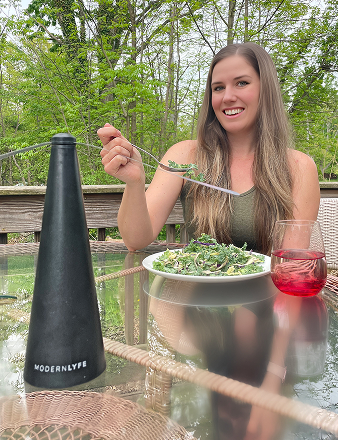
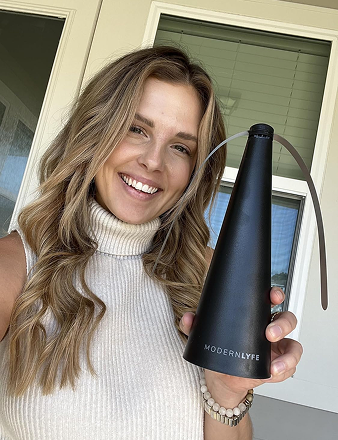
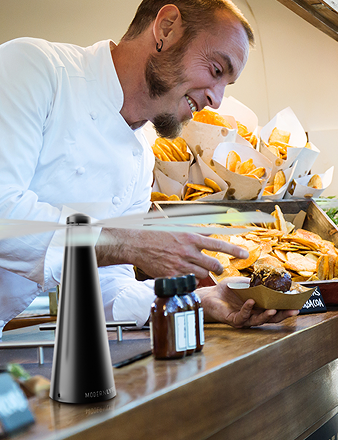
At MODERN LYFE, we believe enjoying your outdoor space should be simple. Our elegant, quiet fly fans create that perfect, pest-free environment for any occasion, from a backyard barbecue to a five-star restaurant patio. Discover how our smart, stylish solutions can elevate your gatherings by visiting MODERN LYFE.