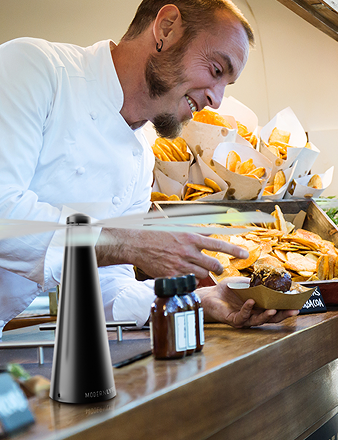
Yes, but their effectiveness is limited. Think of fly repellent candles as a small, temporary scent bubble that makes an area less appealing to flies, not an impenetrable shield.
They work best in calm, controlled conditions. In most real-world scenarios, like a breezy patio or a backyard barbecue, their performance drops significantly.
Setting Realistic Expectations for Fly Repellent Candles
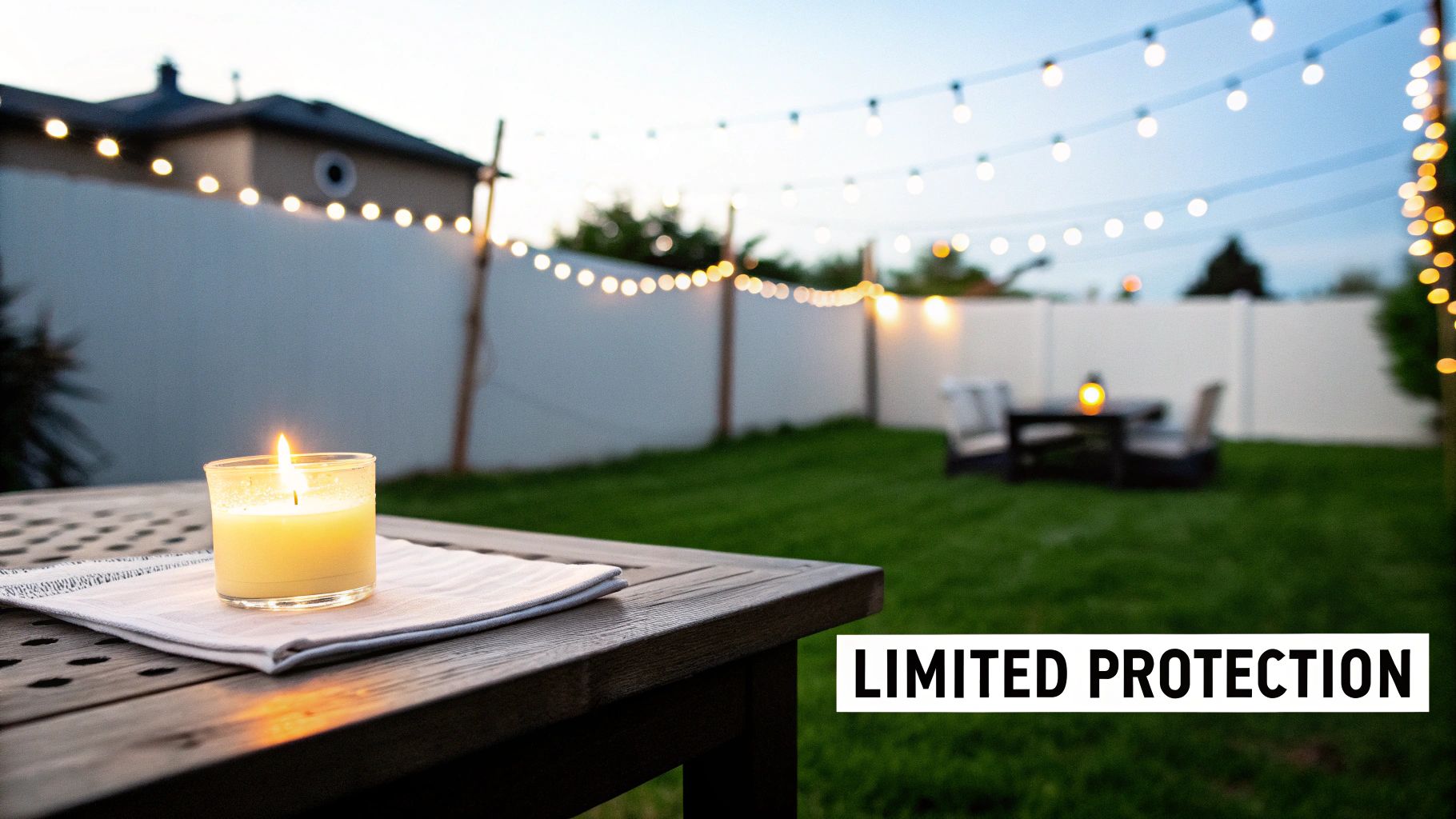
Lighting a fly repellent candle releases a scent that flies dislike. It's a localized, temporary solution with significant limitations you should know before relying on one for your outdoor event.
The protective zone is small, usually just a few feet from the flame. Placing one candle in the middle of a large patio table won't protect guests at either end.
Key Factors That Limit Candle Effectiveness
To get any benefit from these candles, you have to understand what works against them. Their entire defense is based on a fragile scent barrier, easily disrupted by common outdoor conditions.
Here are the main factors that undermine their performance:
- Air Movement: Even a gentle breeze can scatter the repellent scent, leaving your area unprotected. If the air isn't still, the protective bubble is gone.
- Strong Food Aromas: The smell of grilling steak or sweet desserts easily overpowers a candle's fragrance, attracting pests directly to your plate.
- Fly Population Density: If you're dealing with a large number of flies, a single candle lacks the power to deter a determined swarm.
This table gives a quick overview of what impacts a candle's real-world performance.
Fly Repellent Candle Performance At a Glance
| Factor | Impact on Effectiveness | Best-Case Scenario |
|---|---|---|
| Wind/Airflow | High Impact. A light breeze can completely negate the candle's effect. | A calm, windless evening in a sheltered area. |
| Area Size | High Impact. The protective zone is very small, typically just a few feet. | A small table setting for two people. |
| Food Odors | Medium to High Impact. Strong food smells easily overpower the candle's scent. | Drinks or light snacks instead of a full, fragrant meal. |
| Pest Density | Medium Impact. Overwhelmed by large numbers of determined flies. | An area with only a few occasional flies. |
As you can see, the ideal conditions for a fly repellent candle are highly specific.
The core concept is that these candles create a scent barrier. When wind or competing smells compromise that barrier, its ability to repel flies drops dramatically.
Ultimately, it comes down to managing expectations. A citronella candle can be an aromatic addition to a quiet, still evening. But for a busy backyard dinner, a bustling restaurant patio, or any situation needing reliable fly control, you need a more robust solution.
How Scent Creates a No-Fly Zone

Fly repellent candles work on a simple principle: they don't kill flies, but create an invisible, aromatic barrier that flies find confusing and unpleasant.
When you light the candle, the heat melts the wax and releases essential oils like citronella, lemongrass, or peppermint. These vaporized oils form a fragrant cloud that disrupts a fly's ability to navigate.
Overwhelming a Fly’s Senses
Flies rely on their powerful sense of smell to find food, detecting signals like the carbon dioxide we exhale or organic compounds from our meals.
The strong aroma from a repellent candle hijacks their senses. It's like trying to hear a whisper at a loud concert—the essential oil molecules saturate the air, masking the subtle scents that attract flies. The weaker signals from your food and breath get lost in the noise.
This sensory overload has two effects:
- It masks attractive smells, hiding the scent trails that lead flies to you.
- It actively repels them, as flies find the scent itself irritating and avoid the area.
By disrupting a fly's ability to locate a food source, the candle makes your space effectively "invisible" to them. They can't smell you or your food, so they have no reason to stay.
This non-toxic approach is popular. In the United States, the insect-repelling candle market is valued at USD 15.4 million for 2025. Citronella-based options often show 70-80% efficacy at reducing biting insects within a 10 to 15-foot radius under ideal conditions.
Why Citronella Is a Star Player
Citronella is one of the most common ingredients in candles that get rid of flies, and for good reason. It contains compounds like citronellal, geraniol, and limonene, which are exceptionally effective at overwhelming an insect's sense of smell.
While many people find the scent pleasant, this combination is a powerful "keep out" signal for flies.
Of course, its effectiveness depends on concentration and environmental factors like wind. To learn more, read our guide on how citronella candles work against fruit flies. It will help you choose the right product and use it correctly.
The Real-World Limits of Scent-Based Repellents
While the science behind scent-based repellents is sound, their real-world performance is another story. The idea of a protective, invisible scent barrier is appealing, but that shield is far more fragile than most people realize.
Simply put, candles that get rid of flies are only effective in near-perfect conditions. A lively backyard barbecue or a busy restaurant patio is rarely the still-air environment these candles require to function properly.
The Biggest Weakness Is Airflow
The number one enemy of a fly-repellent candle is a breeze. The entire strategy relies on a concentrated cloud of scent. Even a light gust of wind can completely scatter that vapor, eliminating the "no-fly zone."
It's like trying to keep campfire smoke in one spot; the moment the wind picks up, the smoke scatters. The same thing happens to your candle's repellent cloud.
The core issue is simple: if you can feel a breeze, your candle's protective scent has likely already blown away, leaving you unprotected.
This single factor makes them an unreliable choice for open patios, windy decks, or any outdoor space without perfectly still air. For dependable protection, you need a solution that doesn't rely on the weather.
Limited Range and Competing Aromas
Another major drawback is the candle’s small effective range. The repellent scent is strongest right next to the flame and weakens dramatically just a few feet away. A single candle on a large dining table won't protect everyone.
To create a meaningful barrier, you'd need to set up multiple candles, which introduces its own challenges.
Furthermore, the candle's scent is fighting a losing battle against other aromas. Consider the smells at a typical cookout:
- Grilled Meats: The savory aroma of burgers and steaks is a powerful attractant for flies.
- Sweet Desserts: Sugary foods and drinks are a magnet for many insects.
- Side Dishes: Fresh salads and other dishes give off organic scents that flies find.
These food smells can easily overpower a candle’s repellent fragrance. Instead of driving flies away, you create a confusing mix of scents that still leads them to the food. At that point, the candle is little more than a decoration. The open flame also presents a safety risk, and the smoke can be a nuisance for guests.
Choosing Ingredients That Actually Deter Flies
When looking for a candle to keep flies away, the ingredients are critical. Not all scented candles are effective. The science is in the specific essential oil used as the active ingredient. Look past the label and focus on what's proven to work.
These candles are popular because people want safe alternatives to chemical sprays. Valued at USD 1.3 billion in 2023, the global repellent candle market is projected to reach USD 2.5 billion by 2032. In fact, 62% of people prefer natural scents over DEET-based products. You can dig deeper into the repellent candle market trends to learn more.
The Most Effective Natural Repellents
So, what should you look for? Certain essential oils are backed by research for their repellent properties. They work by scrambling a fly's sense of smell, making it difficult for them to locate you or your food.
Look for candles that feature one of these key ingredients:
- Citronella: The undisputed champion. Citronella oil is rich in compounds like citronellal and geraniol, which excel at masking scents that attract flies.
- Lemongrass: A close relative of citronella, lemongrass contains citral and geraniol. It offers a fresh scent while being an effective pest repellent.
- Peppermint: Flies dislike the sharp, invigorating scent of menthol. Peppermint oil is an excellent deterrent for a wide range of insects.
- Eucalyptus: Known for its strong, medicinal aroma, eucalyptus oil contains eucalyptol, which disrupts an insect's ability to find food.
The bottom line is simple: a higher concentration of these active essential oils generally means a more effective candle. If the label just says "fragrance oils," it probably won't do much more than smell pleasant.
Even with the best ingredients, candles have limitations. This visual summarizes the common challenges.
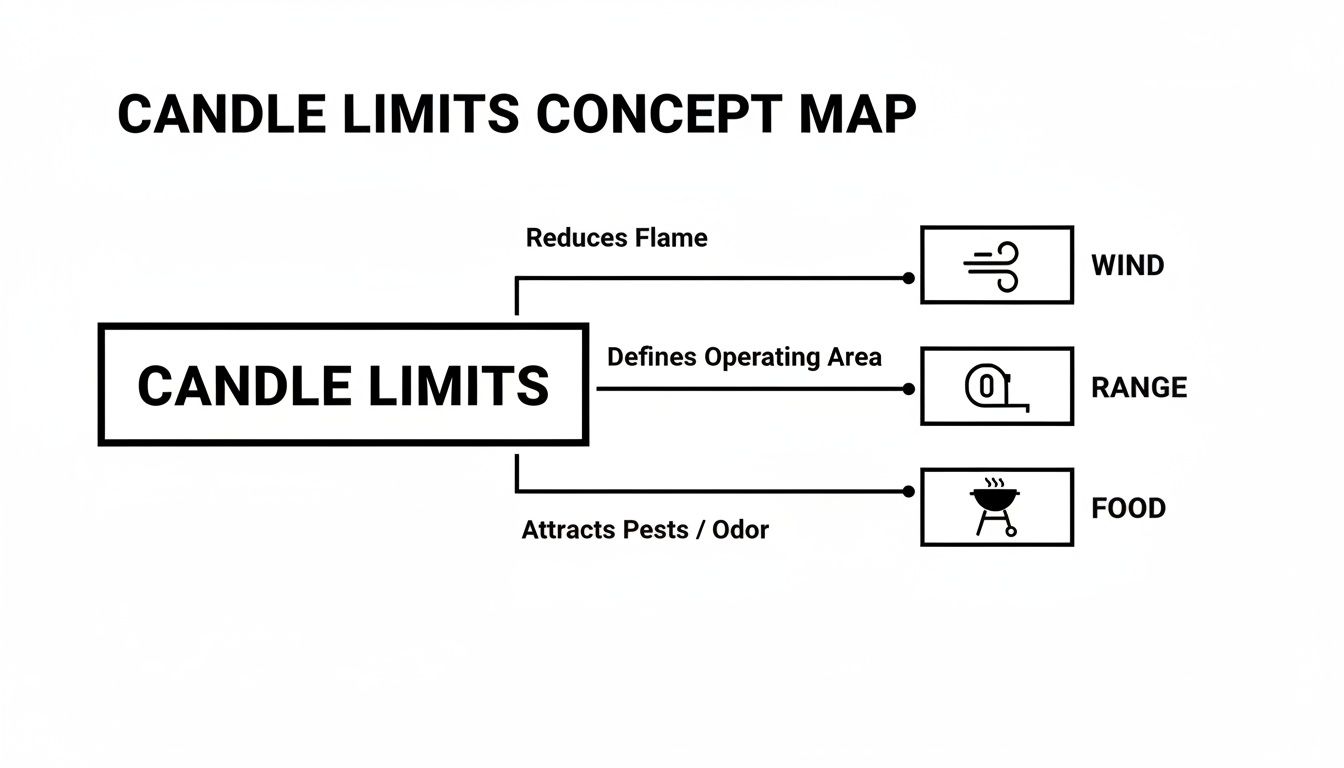
As you can see, wind, limited range, and the strong allure of food are the three main factors that can work against you.
Comparing Popular Fly-Repelling Essential Oils in Candles
To help you choose the right candle, here’s a quick breakdown of the most common active ingredients, their effectiveness, and their best uses.
Comparing Popular Fly-Repelling Essential Oils in Candles
| Essential Oil | Primary Repellent Compound | Effectiveness Level | Best For |
|---|---|---|---|
| Citronella | Citronellal, Geraniol | High | General outdoor use on patios and decks. |
| Lemongrass | Citral, Geraniol | High | Creating a fresh-smelling barrier during meals. |
| Peppermint | Menthol | Medium-High | Small settings where a strong scent is desired. |
| Eucalyptus | Eucalyptol | Medium | Areas near gardens or foliage where insects are common. |
Ultimately, Citronella and Lemongrass offer the most reliable, high-level protection. Peppermint is a great choice for a stronger scent in a contained area, while Eucalyptus provides solid coverage, especially around gardens.
Modern Fly Control Alternatives That Outperform Candles
When fly-repellent candles fail, it’s time to change your strategy. While scents have their appeal, modern physical deterrents offer a more powerful and reliable way to keep dining areas pest-free. These methods don't depend on a fragile scent bubble or perfect weather.
Instead of just masking smells, these tools create an environment where flies can't operate. It’s a shift from passively deterring pests to actively preventing them from landing on your food or bothering guests—a superior level of control.
The Power of Physical Deterrents Like Fly Fans
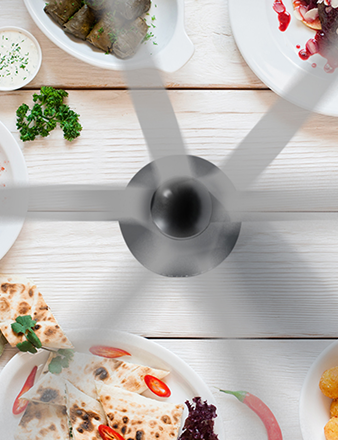
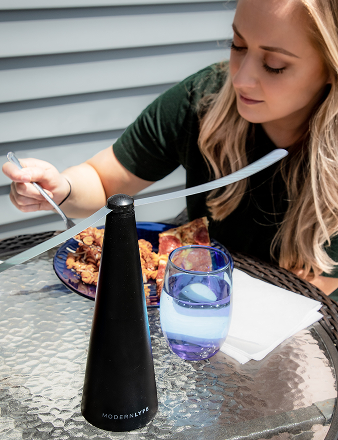
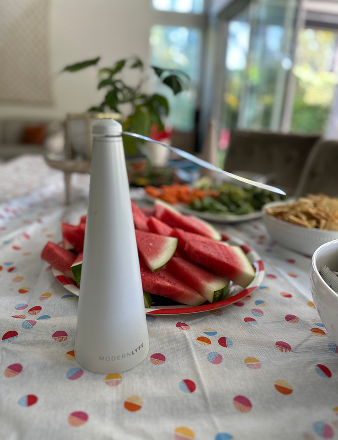
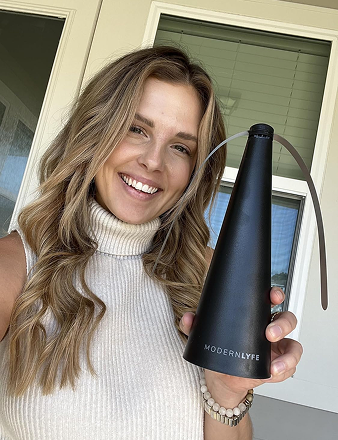
One of the most effective modern alternatives is the fly fan. These devices are simple but incredibly powerful. A fly fan uses soft, spinning blades to create a continuous air current that small insects, especially flies, find impossible to fly through. It's like trying to swim against a strong current—it’s too much effort, so they avoid it.
The fan's design also incorporates a reflective, holographic pattern on its blades, which disrupts a fly’s sensitive compound eyes.
The spinning, light-refracting patterns are disorienting to flies. Their vision registers the moving reflections as a threat, triggering their instinct to flee.
This combination of disruptive airflow and visual intimidation creates a solid no-fly zone without chemicals, smoke, or open flames. To see how this works in various situations, you can learn more about the effectiveness of fly fans and understand why they are a superior choice.
Why Fans Are a Smarter Choice Than Candles
A side-by-side comparison highlights why modern alternatives are the new standard for homes and businesses. While candles can add ambiance, fly fans deliver superior performance by overcoming the exact weaknesses that make scent-based repellents so unreliable.
Here’s why a fan beats a candle:
- Consistent Coverage: A candle's scent is carried away by any breeze, but a fan's air current creates a reliable protective zone, even on windy days.
- Broader Protection: A single fan can protect a much larger area than one candle, easily covering an entire dining table or buffet line.
- Total Safety: With no open flame, no smoke, and no hot wax, fly fans are completely safe to use around children, pets, and food, eliminating fire hazards and irritation from smoke.
- Chemical-Free Operation: Fans create a physical barrier, making them the perfect solution for anyone wanting to avoid chemical sprays or strong fragrances mixing with food aromas.
While a candle can be a nice touch on a calm evening, it's a passive solution with serious limitations. For dependable fly control in any setting, switching to a modern physical deterrent like a fly fan is the most effective move you can make.
Why Hospitality Venues Need a Smarter Fly Strategy
In the hospitality industry, atmosphere is everything. Whether you run a restaurant patio, a hotel balcony, or an event venue, every detail is crafted to create the perfect guest experience. A single persistent fly can shatter that experience, making your space feel unclean and ruining a meal.
This isn't just a minor nuisance; it's a direct threat to your brand's reputation. In the age of instant online reviews, one bad experience with a pest can become a negative comment that deters future customers. Relying on inconsistent methods like candles that get rid of flies isn't worth the risk.
Protecting Your Bottom Line
Investing in reliable fly control isn't an expense; it's a crucial part of protecting your revenue. When guests are comfortable, they stay longer, order more, and leave with a positive impression of your establishment's hygiene—all key drivers of strategies to increase restaurant sales.
Think of reliable fly control as an invisible part of your service standard. Guests may not notice its presence, but they will absolutely notice its absence.
Market data supports this. The global market for repellent candles is expected to reach USD 1,592.6 million by 2025, showing a clear consumer demand for pest-free comfort. You can see the full research on the rise of repellent products for more details.
A modern solution like a fly fan offers the consistency that candles can't match, ensuring every guest receives the high-quality experience you promise. For a closer look at professional-grade options, our guide on fly control for restaurants can help you build a smarter strategy. By moving beyond candles, you actively protect your reputation, guarantee guest comfort, and uphold the high standards that define your business.
Got Questions? We’ve Got Answers.
Still unsure about the best way to handle flies? Here are answers to the most common questions we hear.
Can I Burn Citronella Candles Inside My House?
No. Citronella candles are strictly for outdoor use. They are designed for open, well-ventilated areas where the smoke and soot can dissipate.
Using them indoors creates poor air quality, a fire risk, and potential respiratory irritation. For indoor settings, stick to solutions designed for enclosed spaces, like bladeless fly fans or sticky traps.
How Many Fly Repellent Candles Do I Actually Need for My Patio?
You will need more than you think. A single candle typically covers only a few feet. To protect a small patio table for four, you'll likely need at least 2-3 candles placed strategically to create a perimeter of scent.
Remember, even a gentle breeze can render them useless. For reliable protection regardless of weather, a physical deterrent is a much better choice.
Do Bug Zappers Really Work on Houseflies?
Not very well. Bug zappers may kill an occasional fly, but they are much more effective at attracting and killing other insects like moths and mosquitoes. Houseflies aren't as drawn to UV light.
Plus, you have to deal with the constant zapping noise and the fact that they kill beneficial insects. For areas where people are eating, a deterrent like a fly fan is a smarter choice—it’s quiet, targeted, and doesn’t kill anything.
Ready to stop experimenting with candles and find a solution that works? Discover the sleek and effective fly fans from Modern Lyfe. They create a reliable, fly-free zone for you and your guests. Visit https://modernlyfe.com to find the right model for your home or business.