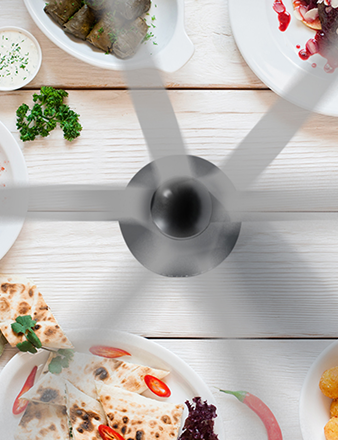
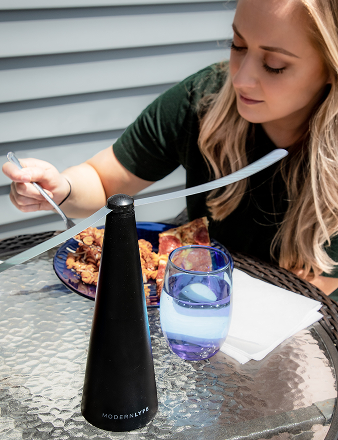
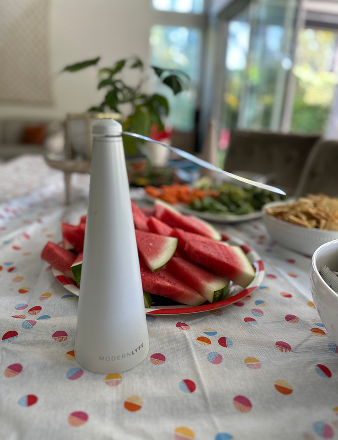
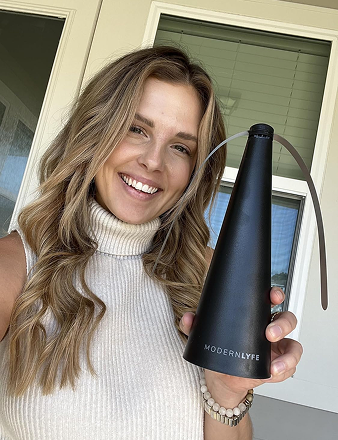
Door fans, often called air curtains, use a simple but powerful principle: they create an invisible stream of air that weak-flying insects like house flies can't penetrate. Think of it as a chemical-free, silent shield guarding your doorway. It's a highly effective way to keep your space pest-free, letting you ditch messy sticky traps and toxic sprays for good.
Why an Air Barrier Is Your Best Bet Against Flies
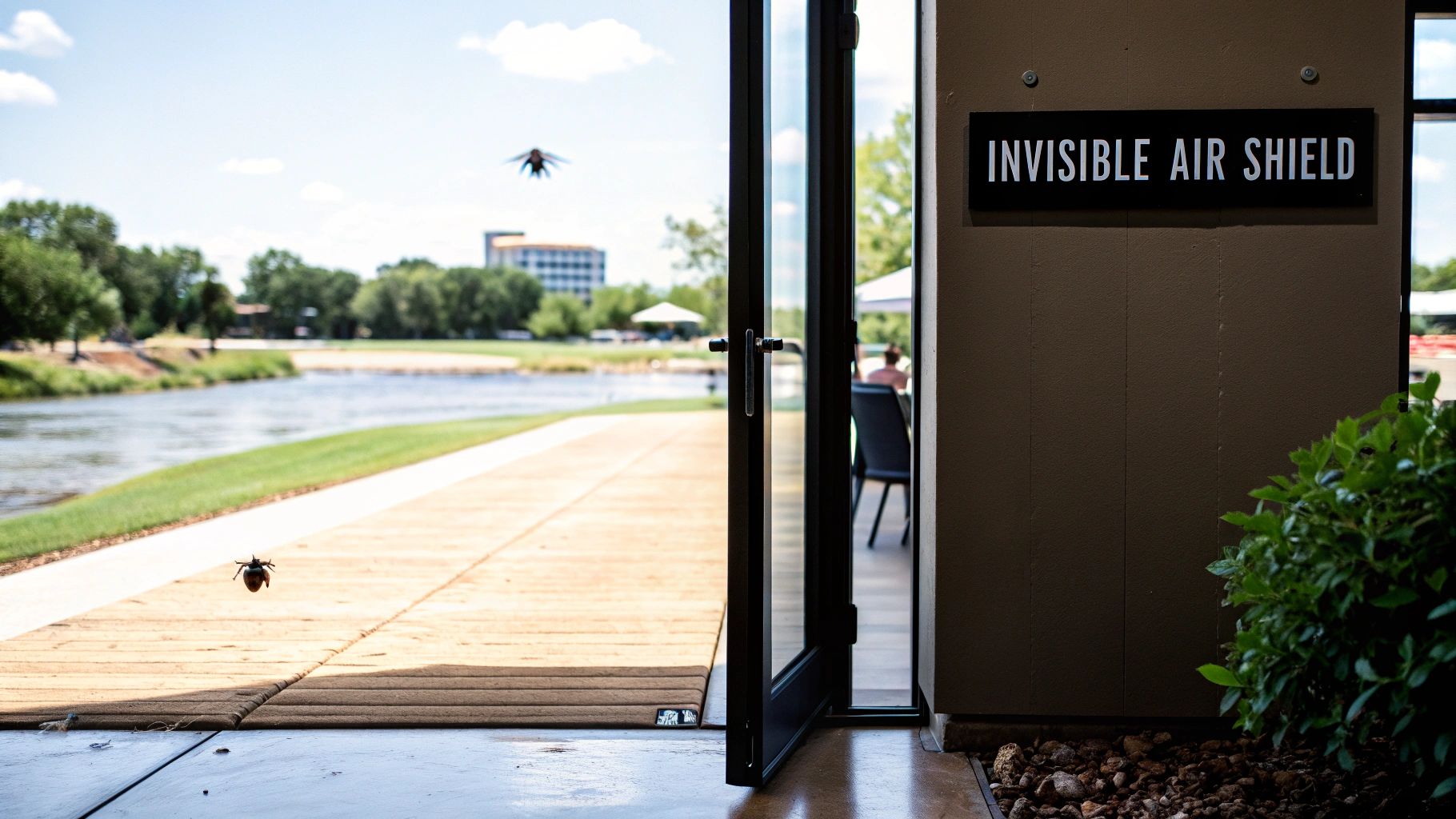
The secret to why this works so well is a fly's natural weakness. Flies are clumsy fliers and struggle against even moderate air currents. A high-velocity wall of air from a door fan physically blocks them from crossing the threshold. It’s that simple.
This constant defense instantly improves the hygiene and vibe of any space. Bug zappers are noisy and gross. Chemical sprays introduce unwanted toxins into your environment. An air barrier, on the other hand, is clean, quiet, and completely unobtrusive.
Real-World Scenarios
Picture a busy restaurant patio on a warm evening. The kitchen door swings open constantly as staff move in and out. Without protection, it’s an open invitation for flies—a disaster for food safety and the guest experience. An air curtain installed above that door creates an impenetrable shield, keeping the kitchen sanitary and diners happy.
The same concept works at home. During a backyard barbecue, people are constantly going in and out of the sliding glass door. A well-placed door fan keeps the inside a comfortable, pest-free zone without you having to play "door police" all afternoon.
The real power of a door fan is its consistency. It’s a proactive solution, not a reactive one. It stops flies before they get inside, rather than dealing with them after they're already buzzing around your head.
Beyond Pest Control
It's no surprise that demand for these solutions is growing. The global market for fans and blowers, including specialized door fans, was valued at USD 7.2 billion in 2025 and is projected to hit USD 9.37 billion by 2029. Much of that growth stems from a greater focus on indoor air quality and sustainable building practices.
And it’s not just about repelling flies. These fans offer other great perks. To learn about wider applications, check out the operational benefits of air curtains, which include significant energy savings.
How to Choose the Right Door Fan for Your Space
Picking the right door fan isn't about grabbing the most powerful one available. The best choice depends on your specific space—a bustling restaurant kitchen has completely different needs than a quiet backyard patio. Getting this decision right is key to creating a fly barrier that actually works without being a nuisance.
First, consider power, measured in Cubic Feet per Minute (CFM). This number tells you how much air the fan can move. A busy restaurant with a wide delivery door needs a high CFM air curtain to create a powerful, invisible shield. For a sliding glass door at home, a much lower CFM will do the trick without sounding like a jet engine.
Getting the Power and Air Velocity Just Right
The goal is an airstream strong enough to stop a fly but not so aggressive that it blasts your customers or guests. A small, portable fan might be perfect for protecting a buffet line at an outdoor party, but it won’t make a dent against flies trying to enter a warehouse loading dock.
Let’s get practical. A restaurant manager with a standard 3-foot-wide kitchen door should look for a fan with a CFM of at least 1,000 to create a solid wall of air. On the other hand, a homeowner trying to enjoy their deck might find that a slim, portable fan with a lower CFM, placed just inside the door, is all they need.
The key is matching the fan's air velocity to the size of your doorway and how often it's used. An underpowered fan on a large, busy entrance is like trying to stop a river with a pebble—flies will just go around it.
It's clear that smart, portable solutions are in high demand. The market for personal portable fans, which includes these versatile fly fans, hit USD 527.3 million in 2024 and is expected to soar to USD 1,225.42 million by 2034. This trend reflects that over 55% of the world's population lives in urban areas where flies are a relentless problem, according to Zion Market Research.
Key Factors Beyond Just Power
While CFM is important, a few other features can make all the difference. Don't overlook these details:
- Noise Level (dBA): A roaring fan in a quiet dining space or living room is a dealbreaker. Check the decibel (dBA) rating—the lower, the better, especially where people are trying to relax or talk. A noisy fan is fine for a stockroom, not your front door.
- Power Source: Commercial air curtains are typically hardwired for reliable power. For home use or temporary setups like a food stall, a battery-operated or plug-in fan offers the flexibility you need.
- Weather Resistance: If your fan will be exposed to the elements on a patio or deck, it must be rated for outdoor use. Look for an IP rating that indicates protection against dust and rain. A standard indoor fan won't survive the weather.
To make things clearer, here’s a quick breakdown to help you match the right features to your needs.
Matching Fan Features to Your Needs
This chart helps you decide what matters most, whether you're outfitting a commercial kitchen or just want to enjoy your backyard in peace.
| Feature | High-Traffic Restaurant Door | Home Patio or Deck | Catering Event Buffet Line |
|---|---|---|---|
| Power (CFM) | High (1,000+ CFM per door) | Low to Medium | Low (focused stream) |
| Noise Level | Medium (efficiency over quiet) | Low (must be unobtrusive) | Very Low (guests nearby) |
| Power Source | Hardwired for reliability | Plug-in or battery-operated | Battery-operated for portability |
| Durability | Heavy-duty, industrial-grade | Weather-resistant, durable plastic | Lightweight and portable |
Ultimately, choosing the right unit comes down to a clear picture of what you need it to do and where.
For businesses, making the right choice is critical for hygiene and customer comfort. Our detailed guide on choosing your commercial fly fan dives deeper into the specifics. Taking the time to consider all these factors will ensure your door fan is a silent, effective guardian, not just another noisy machine.
Placing Your Fan for Maximum Fly Repelling Power
Picking the right door fan is the first step, but where you put it makes all the difference. Proper placement creates a powerful, invisible shield that flies can't breach.
For commercial air curtains, the goal is a solid wall of air covering the entire doorway, from top to bottom. This means mounting the unit directly above the door, as close to the frame as possible.
The angle is also critical. Aim it slightly outward, away from your interior space. This pushes flies back before they can sneak in. An incorrect angle creates turbulence or gaps in the airflow—an open invitation for pests.
Positioning Portable Fans for Patios and Homes
Portable door fans offer more flexibility, but the same principles apply. Don't just place a fan in the general area and hope for the best. For a standard sliding glass door, a good setup is placing one or two fans on the ground just inside the doorway, aimed to blanket the entire opening.
This is where a little hands-on strategy pays off.
Imagine a busy café with a wide patio entrance. A single, high-powered fan might work, but it could feel like a wind tunnel for customers. A smarter approach is to use two smaller, quieter fans—one at each end of the entrance—to create overlapping streams of air. This builds a far more effective and less intrusive barrier.
Here’s a quick look at the thought process, from choosing the right fan to considering its features.
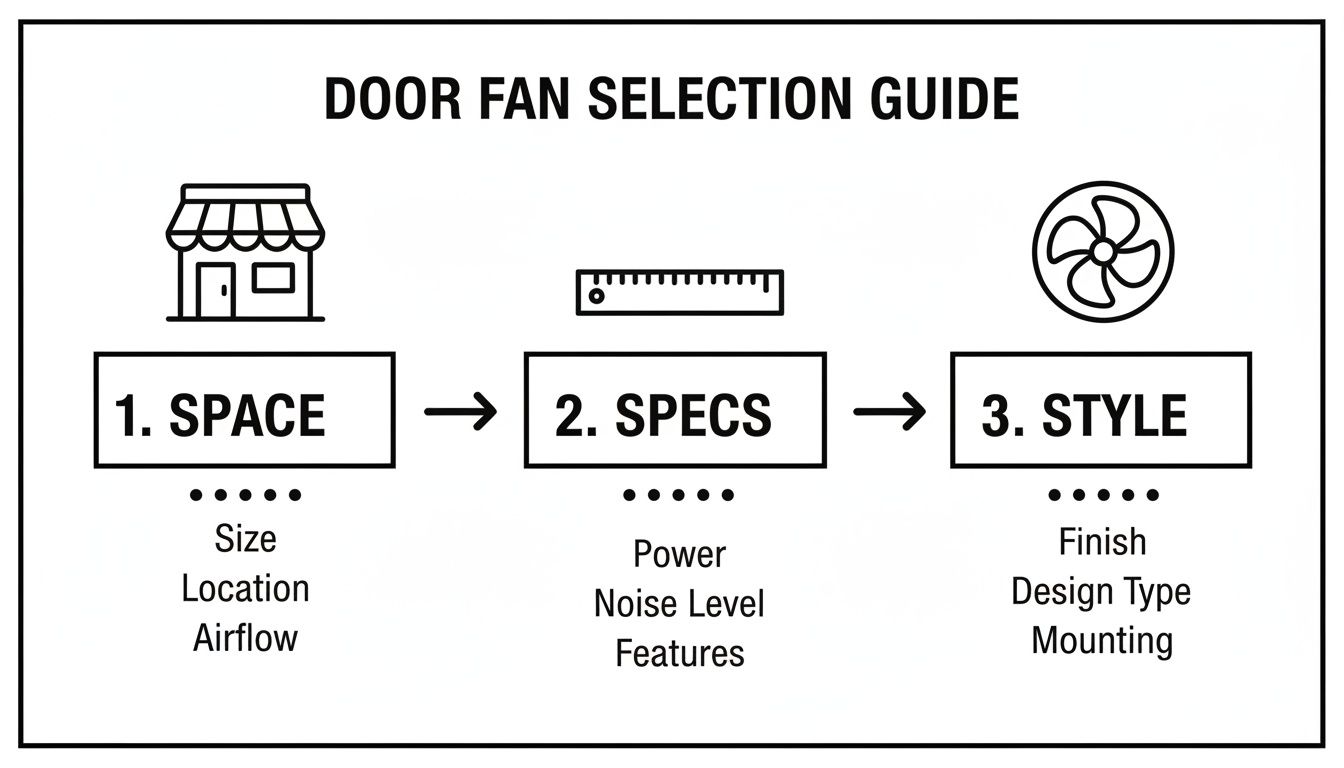
As you can see, it all comes down to analyzing your space, knowing the required specs, and picking a style that fits.
Adjusting for Real-World Conditions
Remember, your fan setup isn't a "set it and forget it" solution. You have to account for the surrounding environment. A breezy day can weaken your air shield, so you might need to increase the fan speed or tweak the angle to compensate. Monitor the airflow, watch where flies are trying to get in, and make small adjustments as needed.
The ultimate test is simple: Is it working? If you still see flies slipping through, the problem is almost always a gap in your air coverage. Don't be afraid to experiment with different positions to find the perfect sweet spot.
This kind of strategic ventilation is critical in the food service industry, where hygiene is non-negotiable. Flies can spread bacteria like E. coli to 70% of the surfaces they land on. A resulting health code violation could cost a business an average of $75,000.
It's no surprise that the ventilation fan market is projected to hit US$ 3.35 billion by 2032, with portable models claiming a huge share. For more specific advice, check out our complete guide to the fly blower for doors to see which models work best with these placement strategies.
Keeping Your Fan Running Like New
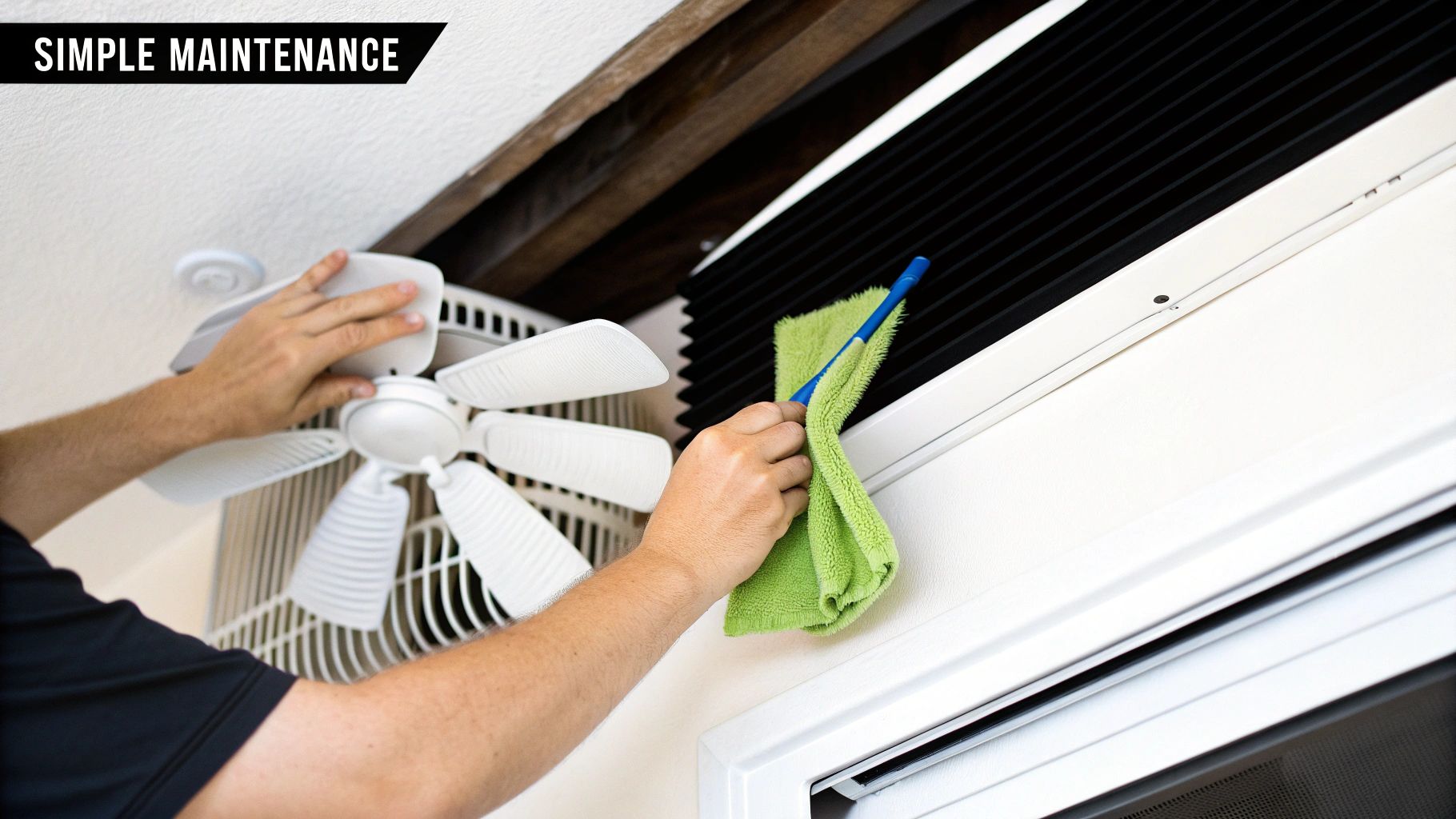
You’ve installed your door fan, and it’s creating an effective invisible barrier against flies. But to keep that air curtain strong, a little upkeep is essential. Just like any hardworking appliance, simple, regular care ensures your fan performs powerfully, season after season.
Over time, dust, grease, and grime will build up on the blades and vents. This isn't just an eyesore; it chokes the airflow. The motor works harder, the air curtain weakens, and soon, you'll see flies getting through. A clean fan is a powerful fan.
The 10-Minute Clean-Up Routine
Getting your door fan back to peak condition is quick. During fly season, check it every few weeks. The most important first step? Always unplug the fan or turn off the power at the circuit breaker. Safety first.
Here’s a simple checklist:
- Clean the Blades: A damp microfiber cloth is perfect for wiping down the blades. For stubborn residue, use a little mild dish soap and water. Avoid harsh chemical sprays, which can damage the finish.
- Vacuum the Vents: Use your vacuum's brush attachment to clear the intake vents and protective grille. This is where dust and debris collect, and removing them is crucial for maintaining strong airflow.
- Check for Blockages: Do a quick visual check. Look for leaves, cobwebs, or other debris caught in the housing that could stop the blades from spinning freely.
That’s it. This entire process should take less than 10 minutes, but the difference in performance is huge.
Tips for Battery-Operated Fans
If you're using a portable, battery-powered model, the goal is preserving battery health. You want it to hold a charge when you need it, not die halfway through an event.
Pro tip for any device with a lithium-ion battery: don't store it completely dead. These batteries last much longer if kept with some charge. If you're packing your fan away for the winter, ensure it has a 50% to 80% charge.
Also, keep it out of extreme heat. Leaving your fan in a hot car or direct sunlight for hours can shorten its battery life. When not in use, store it in a cool, dry spot.
Keeping Things Clean in a Commercial Kitchen
For a restaurant, café, or any commercial business, fan maintenance isn't just about performance—it's about passing health inspections. Cleanliness is non-negotiable, and that includes your air curtains.
The easiest way to stay on top of this is to build it into your existing cleaning schedules. Have staff wipe down the fan units weekly or bi-weekly, alongside other entryway or kitchen fixtures. This makes it a routine task that never gets forgotten.
It's a small job, but it helps maintain compliance, uphold food safety standards, and ensure your customers have a comfortable, fly-free experience.
Troubleshooting Your Door Fan
Even the best door fan can hit a snag. If your invisible shield against flies suddenly seems to have holes in it, don't panic. Most of the time, a few simple checks are all it takes to get it running smoothly again.
The number one complaint is, "My fan is on, but flies are still getting in!" Nine times out of ten, this isn't a broken fan—it's a gap in your air coverage.
Flies are persistent. If they find a weak spot in the air curtain, they’ll push right through. This usually means the fan is poorly positioned, angled incorrectly, or isn't powerful enough for your doorway or current weather. A windy afternoon, for instance, can easily overpower a fan set on low.
Finding the Real Problem
Before you think about repairs or replacements, run through this quick diagnostic. The fix is almost always simple.
- Is the Air Speed Right? Check the fan's setting. Someone might have turned it down. On breezy days or during peak fly season, you'll need to turn it up to maintain a strong barrier.
- How's the Placement? Has the fan been moved? It needs to be centered over the doorway and aimed slightly outward to push insects away. A fan that’s too far from the opening or aimed straight down leaves gaps at the edges.
- Anything in the Way? Look for obstructions. A new sign, a plant, or a stack of boxes can disrupt the airflow and ruin the curtain effect. The air needs a clear path to work.
If you’ve gone through these steps and flies are still getting through, it’s time to look closer at the unit itself.
I can't stress this enough: a quick visual check solves most door fan issues. It's almost always placement or a simple obstruction, not a mechanical failure. A small adjustment can make a massive difference.
What to Do About Weird Noises
Another common issue is a fan that’s suddenly rattling, grinding, or buzzing. Any new noise is your cue to turn the unit off and investigate. Don't ignore a new sound.
First, unplug the fan.
Now, take a close look. Often, the culprit is small debris—a leaf, a bit of plastic, or a paper napkin—sucked into the housing and rattling against the blades. Carefully remove it.
If you don't see any debris, check the hardware. Daily vibrations can sometimes loosen screws over time, causing the unit to rattle. Grab a screwdriver and make sure all mounting brackets and fan blades are secure. A quick tightening usually solves the problem.
Answering Your Questions About Door Fans for Flies
Even with a solid plan, you might have questions. Here are straight answers to the most common ones we hear about using door fans to keep flies out.
Are Door Fans Really Effective Against All Types of Flies?
Yes. Door fans are highly effective against the vast majority of flying pests like house flies, gnats, and drain flies. The powerful, focused stream of air creates an invisible wall they simply can’t push through.
The trick is matching the fan's power to the size of your doorway. A properly sized fan creates a constant, reliable barrier that works around the clock.
The concept is simple. A fly's wings are tiny compared to its body, making it a weak flier in anything but calm air. A door fan generates just enough turbulence at the entrance to make it impossible for them to navigate, so they give up and go elsewhere. No chemicals needed.
While these fans are fantastic for stopping flies from getting in, you might still have a few stragglers inside. For smaller pests, you may need a different approach. This is a great guide on how to catch fruit flies in your home with practical, targeted tips.
Can I Just Use a Regular House Fan Instead?
You could, but it’s not the right tool for the job. While any moving air is better than none, a standard household fan isn't built for this purpose.
The biggest difference is how the air moves. A typical oscillating fan is designed to spread a gentle breeze across a whole room for cooling. This creates a wide, swirling airflow with lots of weak spots that a determined fly can easily push through.
Specialized door fans for flies, or air curtains, are engineered to shoot a concentrated, high-velocity sheet of air straight down, sealing the entire opening. If you want consistent, reliable protection, you need a fan designed specifically for that purpose.
How Much Does It Cost to Run a Door Fan All Day?
It depends on the model. A large, hardwired commercial air curtain will use more power than a small, portable fan for your patio.
The good news is that modern door fans are surprisingly energy-efficient. Many newer consumer models, especially battery-powered ones, use very little electricity. Even commercial units often draw less power than a standard air conditioning system running for the same amount of time.
When you think about it, the small cost to run the fan is minimal compared to what you’d spend on chemical sprays, sticky traps, or the potential loss of business from a fly problem. It's a small investment for a much cleaner and more comfortable space.
Ready to create your own fly-free zone? At MODERN LYFE, we design elegant, powerful fly fans that blend seamlessly into any environment, from a bustling restaurant patio to your own backyard. Explore our collection and discover the perfect solution for your space at https://modernlyfe.com.