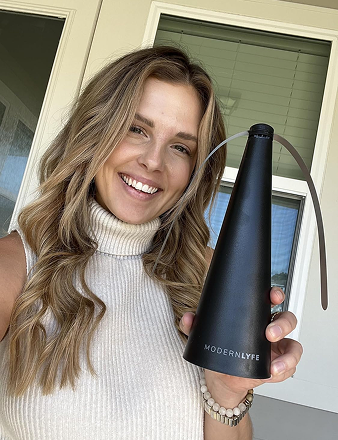
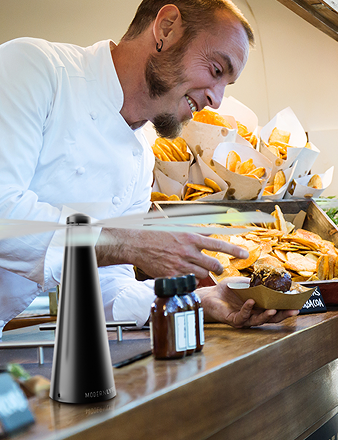
Flies are an unavoidable headache wherever food is served, ruining guest comfort and creating a genuine hygiene risk. When you're faced with these pests, the choice usually comes down to two options: a quick spritz of fly away spray or the constant, quiet protection of a modern fly fan. This guide puts them head-to-head so you can make the right call for your space.
Choosing The Right Fly Repellent For Your Space
Let's be clear: flies aren't just annoying. They carry over 100 different pathogens, making them a serious food safety threat. Whether you're running a restaurant, planning an event, or just hosting a BBQ, keeping flies off the food is non-negotiable. While both sprays and fans have the same goal, their methods are worlds apart.
This guide moves beyond a simple pros-and-cons list. We'll look at which solution actually works best in the real world, from a classy wedding where aesthetics are everything to a casual backyard cookout where you just want something easy and effective.
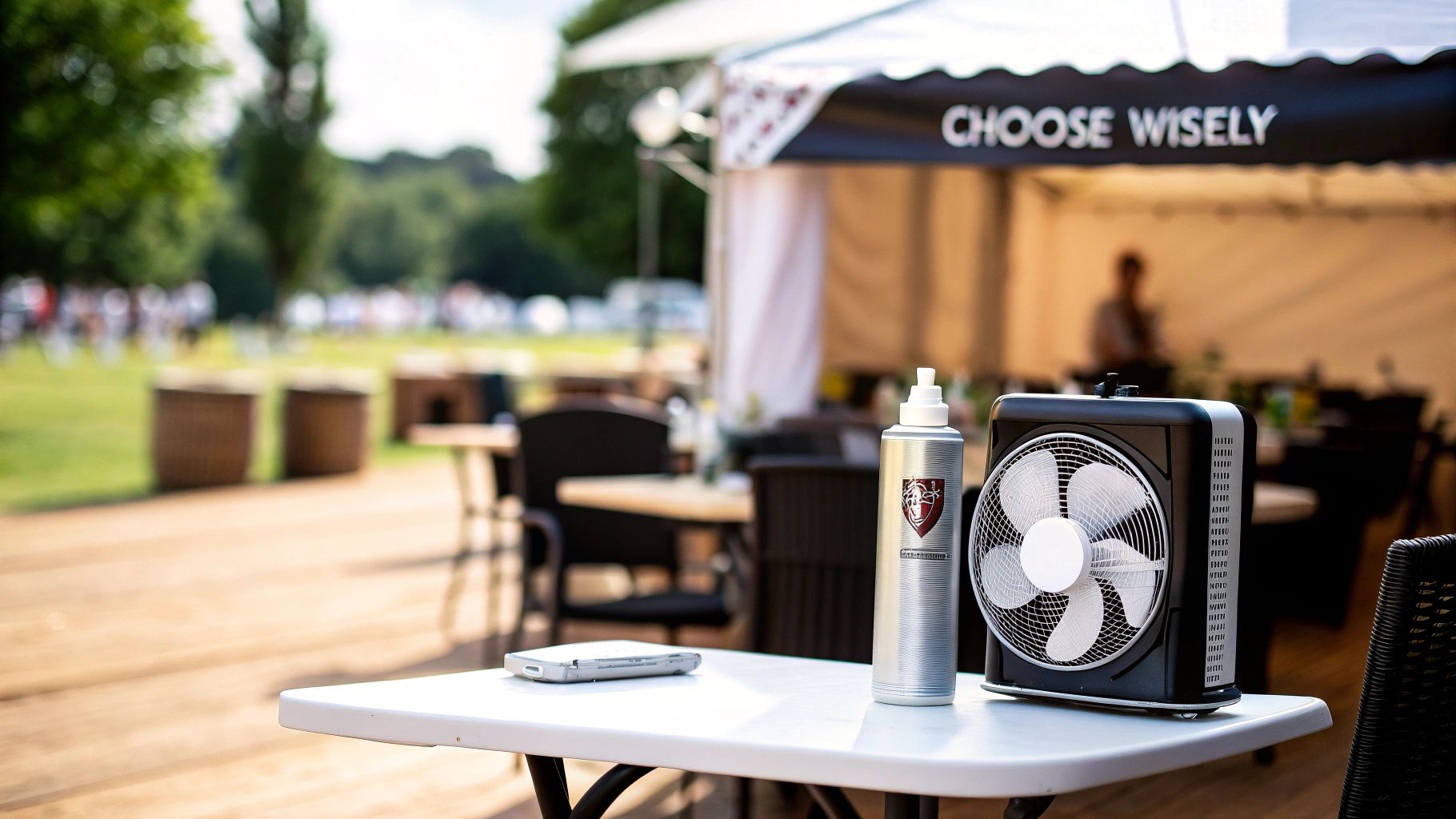
Comparing The Core Methods
To pick the right tool, you need to understand how it works. Each has its own mechanics, benefits, and drawbacks that make it a better fit for certain scenarios. If you want to skip straight to the top picks, you can learn more about the best fly repellent fan models available now.
| Feature | Fly Away Spray | Modern Fly Fan |
|---|---|---|
| Method | Chemical or natural deterrents | Physical air barrier |
| Food Safety | High risk of contamination | Chemical-free & food-safe |
| Guest Experience | Strong odors & residue | Silent, odorless & discreet |
| Sustainability | Disposable, single-use | Reusable, battery-powered |
| Placement | Perimeter only, away from food | Directly on tables & buffets |
This table gives a quick snapshot, but the real story is in how these differences play out. The decision isn't just about getting rid of flies—it’s about protecting your food, ensuring guests have a great time, and choosing a solution that fits your standards.
How Each Fly Repellent Method Works
To figure out which fly repellent is right for you, you need to understand how they work. Chemical sprays and physical fans tackle the problem from completely different angles, and each has its place.
The Chemical Approach: Fly Sprays
A traditional fly away spray is essentially chemical warfare on a tiny scale. When you use an aerosol or pump spray, you release a fine mist of active ingredients like pyrethrins. These compounds are neurotoxins for flies, disrupting their nervous systems on contact. It's a direct, often lethal, way to clear a space.
The demand for these sprays isn't small. The global market hit USD 1.2 billion and is projected to reach USD 2.0 billion by 2033, largely because hotels and restaurants are more focused on hygiene than ever.
The Physical Approach: Modern Fly Fans
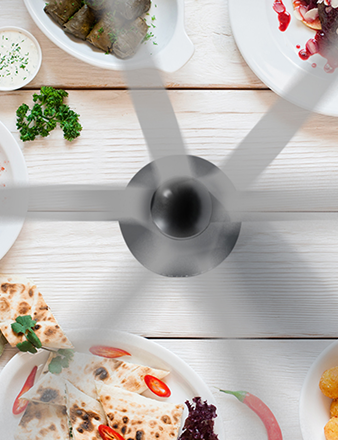
Fly fans take a completely different, non-chemical route. They don't kill anything. Instead, they create a clever no-fly zone to keep pests from ever landing on your food. They do this in two smart ways.
First, the fan’s soft, spinning blades create a gentle but persistent air current. For a tiny fly, navigating this breeze is like trying to land a helicopter in a windstorm. It's too disruptive, so they avoid the area entirely.
Second, most modern fans have a secret weapon: holographic patterns on the blades. As they spin, the patterns refract light, which scrambles a fly’s compound eyes. This visual chaos is disorienting, making them want to be anywhere else.
While these methods are great for house flies, different pests require different tactics. For instance, knowing how to catch fruit flies is another skill entirely. The core difference is simple: sprays attack chemically, while fans create a physical and visual barrier. For business owners, our guide on fly spray for restaurants dives deeper into commercial strategies.
A Head-to-Head Comparison Of Key Factors
When you're keeping flies away, the choice between a fly away spray and a modern fly fan isn't simple. It’s about more than just getting rid of pests; it’s about food safety, long-term cost, and the atmosphere you create for guests. Let's dig into the details to see which one comes out on top.
This image gives you a quick snapshot of how these two very different methods stack up.
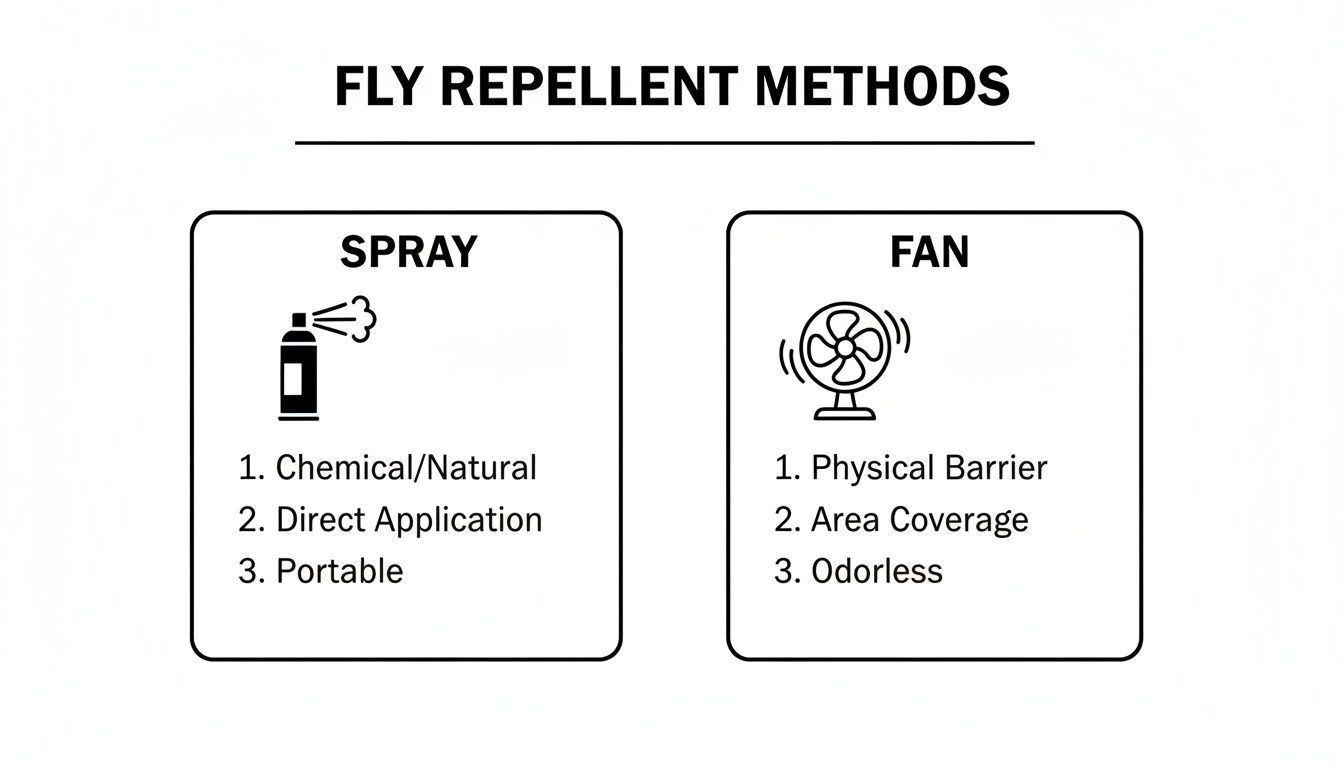
As you can see, the core difference is a chemical approach versus a physical one, and that distinction has major implications for how and where you can use them.
Effectiveness And Coverage Area
Fly away spray delivers an immediate, aggressive punch in a small area. One spritz creates a chemical cloud that can knock down flies on contact, which is great for a quick fix in an enclosed space or for treating hotspots like doorways. The problem? The effect is short-lived. Outdoors, a slight breeze can carry the chemicals away in seconds, forcing you to spray over and over.
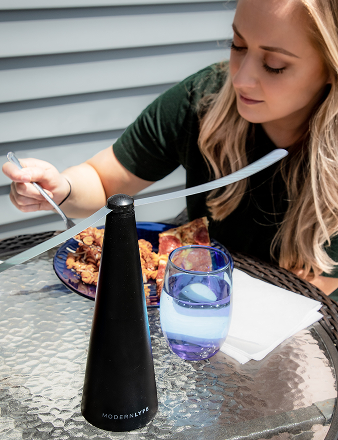
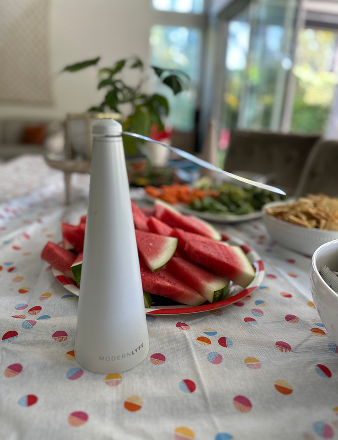
Fly fans create a persistent, protected zone. A single fan establishes a consistent physical barrier over a 3-4 foot radius, perfect for a dining table or buffet station. Its effectiveness doesn't weaken in the wind; in fact, the gentle air movement is the whole point. While a fan won't clear a room of existing flies, it excels at stopping them from ever landing on your food.
Food Safety And Health Concerns
This is the big one, especially in the hospitality business. Spraying any kind of aerosol fly repellent near food is a serious safety violation. The chemicals, whether synthetic or "natural," can drift onto plates, drinks, and serving dishes, creating a clear health risk. That residue can stick around long after the can is gone.
Modern fly fans sidestep this issue completely. Their method is purely mechanical, using soft air currents and light-refracting blades to deter flies without adding a single chemical to the air. This makes them the only truly food-safe option you can place right on dining tables, buffet lines, or kitchen prep areas.
For any restaurant owner or caterer, the choice is simple. A chemical-free solution isn't a preference; it's a non-negotiable for protecting your food and reputation. A can of fly spray near a dining area is a liability.
Long-Term Cost And Sustainability
At first glance, a can of fly away spray is cheap. But it’s a consumable, and those costs add up. For a busy restaurant patio or frequent backyard BBQs, you'll go through cans all season. This disposable model also means more aerosol cans and plastic caps heading to landfills.
A fly fan is a bigger investment upfront, but it's a one-time purchase. It’s a durable, reusable device designed to last for years. The only ongoing cost is batteries or a tiny amount of electricity for recharging. From a green perspective, a single reusable fan is far more sustainable than a pile of empty spray cans. If you're wondering about their real-world performance, get the full story on if fly fans really work from our in-depth guide.
Aesthetics And Guest Experience
Guest experience is everything. Spraying a chemical fog—even away from tables—is jarring. Most fly sprays have a distinct, sharp odor that screams "chemicals," clashing with the aromas of food and souring the dining experience.
Fly fans are designed to be forgotten. They operate silently, are completely odorless, and their sleek, modern designs can complement a table setting. They create a comfortable, pest-free zone so discreetly that your guests might not even notice the technology at work.
Here’s a quick-reference table to put all the key differences side-by-side.
Fly Away Spray Vs Modern Fly Fan At A Glance
This table offers a direct comparison to help you decide which fly repellent solution best fits your needs.
| Feature | Fly Away Spray | Modern Fly Fan |
|---|---|---|
| Method | Chemical repellent (kills or deters with chemicals) | Physical barrier (deters with air and light) |
| Food Safety | High Risk. Cannot be used near food, drinks, or dining surfaces. | 100% Food-Safe. Designed for use directly on tables and buffet lines. |
| Effectiveness | Immediate but temporary. Easily dissipated by wind. | Continuous, consistent protection within a 3-4 foot radius. |
| Guest Experience | Unpleasant chemical odor. Visibly disruptive to the atmosphere. | Silent, odorless, and unobtrusive. Blends into the background. |
| Cost | Low initial cost, high recurring cost as a consumable. | Higher one-time investment, with minimal to no ongoing costs. |
| Sustainability | Disposable. Contributes to aerosol can and plastic waste. | Reusable and durable. A long-term, eco-friendly solution. |
Ultimately, the right choice comes down to your priorities. For quick pest control away from people and food, a spray might work. But for any dining situation—professional or at home—a fly fan offers a safer, more effective, and more pleasant long-term solution.
Which Solution Wins In Real-World Scenarios?
A feature list only tells you so much. To see which fly repellent really comes out on top, you have to put them to the test in high-stakes situations where failure isn't an option. Let's walk through four common scenarios to see how each holds up.

The Outdoor Wedding Caterer
Picture an elegant wedding reception. The atmosphere is everything. Guests are enjoying meticulously prepared food, and the last thing anyone wants is the harsh, chemical smell of bug spray or the sight of someone spraying near the buffet. Here, food purity and guest experience are non-negotiable.
A fly away spray is an immediate non-starter. Its chemical formula is a direct contamination risk, and the act of spraying is disruptive and unsightly. Fly fans are the clear champion. They work silently, are completely odorless, and protect the food without shattering the sophisticated ambiance.
Verdict: Fly Fans. They offer discreet, food-safe protection that preserves the event's high standards.
The Bustling Food Truck
A food truck is a fast-paced, tight-quarters operation focused on efficiency and reliability. The big service window is an open invitation for flies, and the owner needs something that works instantly without interfering with orders.
Placing a fly fan inside the window can create a fantastic air curtain. But the exterior often needs a more aggressive tactic. A quick spritz of fly away spray on the outer frame of the service window—never near the food counter—can establish a solid perimeter defense. It acts fast to keep flies from gathering in the first place.
"For businesses, managing pests is not just about comfort—it's big business. Demand in commercial settings has pushed the fly repellent market from USD 3.96 billion to USD 4.24 billion in just one year, driven by strict food safety standards where flies can contaminate exposed food in minutes. Discover more insights about this growing market on Research and Markets."
Verdict: A Hybrid Approach. Use fly fans to guard the interior counter and use spray carefully on the exterior to create a defensive barrier.
The Upscale Hotel Patio
When guests are on a hotel patio, they're there to unwind and enjoy a premium experience. Any pest control measures must be completely invisible. The solution has to be effective but also blend seamlessly into the decor.
Spraying chemicals where people are eating and drinking is out of the question. Between health concerns and the unpleasant smell, it’s a definite no-go. This is where modern fly fans shine. With sleek designs, they can be placed on each table, providing localized protection without noise or odor. They enhance guest comfort instead of detracting from it.
Verdict: Fly Fans. They deliver silent, elegant, and effective protection that aligns with a luxury guest experience.
The Family Backyard BBQ
At a casual backyard cookout, safety and simplicity are key, especially with kids and pets around. You need a solution that’s easy to set up and reliably keeps flies off the burgers and potato salad.
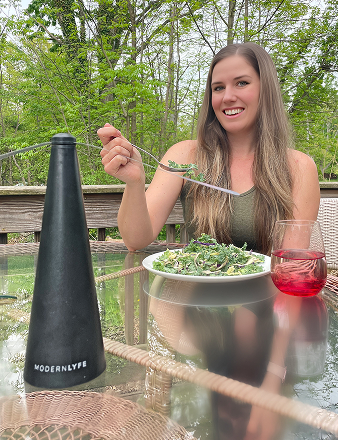
While grabbing a can of fly away spray might seem easy, the risk of overspray landing on food, plates, or picnic tables is too high. Fly fans are a much safer bet. They're portable, often battery-operated, and can be placed exactly where you need them, creating a fly-free zone around the main table without any chemical worries.
Verdict: Fly Fans. Their unbeatable safety and targeted effectiveness make them the clear winner for any family gathering.
So, Which One Should You Choose?
After putting these two fly deterrents head-to-head, the right choice becomes clear. Deciding between a fly fan and a fly away spray isn't just about shooing bugs away. It's about choosing the right standard of care for your space, whether it’s a professional kitchen or your own patio.
Chemical sprays have their place. They offer a fast, aggressive way to treat problem areas like doorways, window sills, and trash cans where flies congregate. But their drawbacks are serious. The risk of chemical contamination, lingering smells, and the need to constantly re-spray make them a non-starter anywhere food is being served.
The Clear Winner For Dining Areas
When it comes to any situation involving food—from a five-star hotel terrace to a simple family barbecue—the modern fly fan is the undeniable champion. It solves the core problems that sprays can't touch.
- Absolute Food Safety: Fans create a physical air barrier, not a chemical one, making them 100% safe to place right next to food.
- A Pleasant Atmosphere: They work silently and without odors, so your dining experience remains undisturbed.
- Smarter Long-Term Cost: A fly fan is a single purchase that lasts for years, making it more sustainable and economical than endlessly buying disposable spray cans.
This decision is about committing to a higher standard of health and quality. The insect repellent market is booming, expected to hit USD 26 billion by 2033. While sprays are a fast-growing part of that market, with a projected 8.2% CAGR, that growth is largely driven by general pest control, not the specialized needs of food environments. You can read the full research about insect repellent market trends to see the bigger picture.
It's An Investment In Your Reputation
Ultimately, this isn't just a practical choice; it's a strategic one. Using a fly fan is a proactive move that signals a modern, thoughtful approach to hospitality and hygiene. You're investing in your guests' experience, the safety of your food, and a more sustainable way of operating.
For any restaurant, caterer, or homeowner who takes safety and ambiance seriously, the fly fan isn't just the better option—it's the only option. It guarantees the only thing your guests will remember is the great food and wonderful atmosphere.
Your Top Questions, Answered
When you're trying to keep flies away from your food, you want straightforward, practical answers. Here are the most common questions people ask about modern fly fans.
Are These Fans Really Effective Against All Kinds of Flies and Bugs?
Modern fly fans are champions against common house flies, fruit flies, and annoying gnats. They work by creating a gentle air current that makes it incredibly difficult for these small insects to land. The reflective blades also create flashes of light that disorient and scare them off.
Will they stop a determined wasp or a big bumblebee? Probably not. Those insects are stronger fliers and aren't as bothered by a light breeze.
The bottom line: For the pests that most commonly ruin a meal, fly fans are a brilliant, non-toxic defense. For bigger, stinging insects, you'll want a backup plan.
How Many Fly Fans Do I Actually Need for My Table or Patio?
Good question. The answer comes down to simple geometry. One quality fly fan creates a protected bubble with a radius of about 3 to 4 feet.
Here’s how that translates to real-world setups:
- A standard round or square table (4-6 people): One fan in the middle should do the trick.
- A long rectangular table (8+ people): You’ll want two fans. Space them about 4 to 5 feet apart to create overlapping zones of protection.
- A large buffet spread: Use one fan for every 4-5 feet of your food display to create a continuous, invisible barrier.
Think of it as creating a complete shield of moving air over any spot where food is exposed.
Can I Use a Fly Fan and a Fly Spray at the Same Time?
Yes, and when done right, it's a powerful combination. The key is to think in zones and use each one strategically for maximum effectiveness and food safety.
Here’s the two-part strategy:
- Fly Fans for Food Zones: The fans go directly on dining tables, buffet lines, and food prep counters. This is your 100% food-safe area where you should never use chemical sprays.
- Fly Spray for Perimeters: Use your spray on outer defenses like window sills, door frames, and around trash cans—the places where flies tend to gather or enter.
This "inside/outside" approach is incredibly effective. The spray reduces the overall fly population, while the fans provide the critical last line of defense right over the food.
What’s the Battery Life Like on a Typical Modern Fly Fan?
Battery life is where these modern fans really shine. Most quality models run for a solid 20 to 30 hours on one set of AA batteries.
That kind of runtime is a game-changer. It means you can set them out before a long event, an all-day barbecue, or a weekend of service and forget about them. Rechargeable versions offer a similar runtime on a full charge, making them a super reliable, set-it-and-forget-it solution.
Ready to step up to a solution that's food-safe, looks great, and actually works? Check out the curated collection of fly fans at MODERN LYFE. See for yourself how simple it can be to create a welcoming, fly-free experience for your family and guests. Find the perfect fan for your space by visiting us today at https://modernlyfe.com.