A patio service can look flawless right up to the moment the first fly circles a guest’s drink. The linens are pressed, the buffet is plated, the light is right, and then the room shifts. Guests start waving napkins. Staff start hovering. Food that looked abundant suddenly looks exposed.
That’s why fly control in food service can’t be treated as an afterthought or a back-of-house-only problem. A fly at a carving station, brunch spread, poolside snack bar, or wedding dessert table affects more than comfort. It changes how guests judge cleanliness, quality, and care.
The old answer was usually ugly traps, harsh sprays, or a constant scramble with covers and towels. Those tools still have a place in some settings, but they’re rarely enough on their own, and they often work against the atmosphere you’re trying to create. A better approach is layered, discreet, and designed for both hygiene and presentation. That’s where a modern food safe fly repellent strategy matters.
The Uninvited Guest at Every Table
Outdoor dining has a predictable weak point. It usually shows up just after service starts, when plated food sits still long enough to attract attention. A rooftop brunch, hotel terrace dinner, catered garden wedding, or backyard barbecue can all run into the same problem. Flies don’t care that the event is elegant.

In practice, the damage starts before anyone complains. Guests notice movement over the food. Servers get pulled off service to swat or relocate plates. Hosts feel pressure to fix the issue in real time. If you manage events or hospitality spaces, you already know that once flies become visible, the guest experience turns reactive.
The good news is that this problem is manageable when you stop treating it like a single-product purchase. A strong setup starts with sanitation and entry control, then adds table-level protection that doesn’t make the space feel industrial. If you want a practical starting point, this guide on how to keep flies away from food covers the everyday basics.
Practical rule: If guests can see the fly control more clearly than they see the table design, the setup needs work.
It's not just about killing flies. It's protecting food while keeping the setting calm, polished, and easy for staff to run. That means choosing methods that fit the environment instead of forcing a warehouse solution into a dining experience.
What Food-Safe Fly Repellent Really Means
“Food-safe” gets used loosely. In food service, that causes mistakes. A product can be appropriate for use around food environments without being something you’d ever apply directly over exposed food. That distinction matters.

Think in safety zones
The easiest way to evaluate any food safe fly repellent is to divide the space into zones.
Zone one is on-food. Almost nothing belongs here except physical protection, such as lids, domes, wraps, or serving systems that shield the food itself.
Zone two is food-contact surfaces. This includes prep counters, bars, buffet rails, tabletops, and service equipment. Products used here need very specific labeling and ingredient safety profiles.
Zone three is near-food airspace. Dining tables, buffet perimeters, host stands, patio seating, and open service zones fall into this category. Non-contact methods like airflow, screens, and carefully selected ambient controls make the most sense for this zone.
A lot of bad decisions come from mixing up those zones. Staff see “safe for food areas” and assume that means “safe to spray anywhere.” It doesn’t. Label language, application method, and surface type all matter.
What GRAS and EPA language actually tells you
Two terms come up often in this category. GRAS means “Generally Recognized as Safe.” In practical terms, it signals that a material is recognized as acceptable for certain uses under defined conditions. It is not a free pass to use a product any way you want.
EPA registration matters for repellents and insect-control products because it tells you the product has gone through the regulatory path required for its intended claims and use pattern. In hospitality, that’s the difference between a product that belongs in a managed program and one that belongs nowhere near service.
The safest fly-control program is the one your staff can apply correctly every time, even during a rushed shift.
The history behind this framework goes back much further than most operators realize. The Institute of Food Technologists’ historical look at food safety notes that U.S. food safety regulation began with the 1906 Pure Food and Drug Act and the Federal Meat Inspection Act, and that the 1938 Federal Food, Drug, and Cosmetics Act introduced safe tolerances for unavoidable substances and standards for food quality. That framework shaped how food-area products are evaluated today. The same source notes that U.S. repellent usage was forecast to reach 339.67 million users by 2023, which helps explain why the market is crowded and why label discipline matters.
What food-safe usually looks like in the real world
For most restaurants, hotels, caterers, and event teams, a food safe fly repellent strategy usually means choosing from three broad approaches:
- Physical separation: Covers, screens, enclosed dispensers, and protected service formats.
- Non-contact deterrence: Airflow systems and placement strategies that keep flies from settling.
- Targeted chemicals for the right zone: Used only where labels allow, and never as a substitute for sanitation.
What doesn’t work is relying on one dramatic fix. If drains are dirty, trash lids stay open, syrup stations are sticky, and patio food sits still in warm air, no spray or gadget will carry the whole load.
A good manager reads “food-safe” as an operations standard, not a marketing phrase.
Comparing Your Fly Repellent Options
There isn’t one universal answer. The right fly-control setup depends on where the flies are showing up, how visible the solution will be to guests, and whether the area is a prep zone, buffet line, or open table setting.

The short version
Some methods look strong on paper but create new problems in service. Sticky strips can catch flies, but they also catch the eye. Strong sprays can knock insects down fast, but timing, ventilation, and surface restrictions make them hard to use elegantly during live service. Airflow systems don’t kill, but they keep tables usable without changing the atmosphere.
Here’s the practical comparison I use in food environments.
| Method | Effectiveness | Food Safety | Guest Experience | Best For |
|---|---|---|---|---|
| Physical barriers | Strong when coverage is complete | Excellent | Neutral to positive if integrated well | Buffets, pastry displays, prep stations |
| Airflow systems | Strong in localized zones | Excellent | Strong, because they’re quiet and low-profile | Dining tables, outdoor bars, buffet edges |
| UV and glue traps | Useful for population reduction away from service | Good when placed correctly | Poor if visible to guests | Back-of-house, service corridors, hidden corners |
| Chemical sprays | Can deliver immediate knockdown | Varies by label and use area | Mixed, often poor during service | Kitchens, drains, waste zones, pre-service treatment |
| Air curtains and screened entries | Strong for denying entry | Excellent | Positive if installed well | Rear doors, delivery access, patio transitions |
Physical barriers
Mesh covers, domes, enclosed dispensers, and screened service setups are still some of the cleanest tools available. They’re simple, they don’t create residue, and they don’t rely on timing. For buffets and dessert displays, they should be your first line of defense.
Their weakness is obvious. They only protect what they cover. Open carving stations, plated banquet service, and actively used drink garnishes still need something else layered on top.
Airflow systems
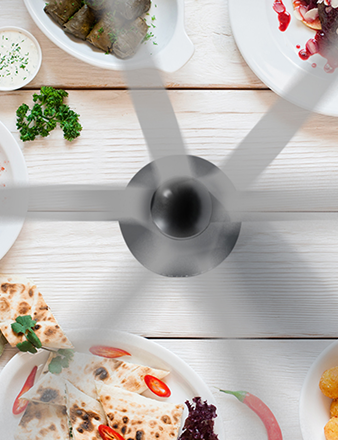
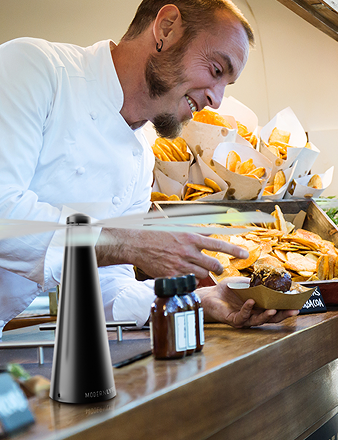
This category includes table fly fans and doorway air curtains. In guest-facing spaces, airflow has a major advantage. It repels without looking punitive. No odor. No visible chemical film. No sticky catch tray in the sightline.
For hospitality teams trying to keep a patio, brunch line, or wedding setup polished, this is often the best bridge between hygiene and aesthetics. The method is localized, though. If you have a broad area with multiple attractants, you still need sanitation, waste control, and entry management working in the background.
Traps
UV glue boards and other trap systems can help lower insect pressure, especially indoors. They belong away from dining focal points. Used well, they support the overall program. Used badly, they become part of the problem because guests notice them.
Don’t put a visible trap where you’re trying to signal freshness, cleanliness, or luxury.
That usually means keeping them out of direct sight lines from tables, bars, host stands, and buffet fronts.
Chemical options
Chemical control isn’t automatically wrong in food service. It just needs to be highly specific. The most important trade-off is that fast knockdown often comes with stricter application rules.
Nyco NPX Bug Contact Eliminator is one example of a product positioned for food-contact settings. It is described as a Green Seal GS-20 certified bug spray using pH-neutral, FDA GRAS ingredients, allowing direct application on food contact surfaces with no residue. By contrast, Zero In Food Service Flying Insect Killer uses pyrethrum, a natural botanical from chrysanthemums, for fast knockdown in food handling areas, but it requires covering food during application because of how it works. That’s a meaningful operational difference.
What works where
Use this quick filter when choosing a method:
- For buffet lines: Start with covers where possible, then add airflow at open sections and keep chemical use for pre-service or back-of-house support.
- For restaurant patios: Favor airflow and denial-of-entry tactics. Traps and sprays usually create a visual or sensory penalty.
- For bars and beverage stations: Focus on cleanup speed, covered garnishes, drain maintenance, and localized deterrence.
- For prep and dish zones: Hidden traps, targeted sanitation, and approved chemical tools often make more sense than guest-facing solutions.
- For weddings and catered events: Choose solutions that disappear into the design. Guests remember tablescapes, not your pest-control plan.
If your current approach depends on one loud tool or one nightly spray round, it’s probably doing too much work in the wrong place.
The Science of Airflow Why Fly Fans Work
A fly doesn’t approach food the way a guest does. It tracks scent, movement, heat, and landing opportunity. That means even modest air disturbance can break the sequence. When you create a consistent current over a plate, drink, or serving area, the fly has a harder time stabilizing, orienting, and landing.

Why this works in dining spaces
The appeal of airflow is that it solves a behavior problem without introducing a contamination problem. You’re not coating surfaces. You’re not scenting the air. You’re changing the micro-environment around the food.
Imagine trying to walk a straight line in a steady crosswind. You can still move, but your approach becomes less precise. For flies, that loss of precision matters. A table, platter, or drink rim becomes much harder to target.
That’s why table-level fly fans often perform better in service than people expect. They don’t need to clear the whole patio. They only need to make the immediate landing zone unreliable.
Why elegant airflow beats clunky deterrents
In guest-facing service, the best solution is often the one that doesn’t announce itself. A low-profile fan can sit on a table or buffet without making the setting feel industrial. That matters in hotels, resorts, weddings, and design-conscious patios where visible pest control can undercut the whole presentation.
Placement also changes performance. If you’re already thinking about ambient air movement in a room or covered terrace, these ideas on creative ceiling fan placement are useful because they show how airflow design can support both comfort and visual balance.
For operators who want a close look at how tabletop systems function in real use, this breakdown of whether fly fans work gives a practical overview.
A quick visual helps here:
Where airflow has limits
Airflow isn’t a substitute for sanitation. If a trash area is open, drains are active breeding spots, or sweet residue is left on service surfaces, fans won’t solve the root issue. They’re strongest as a guest-facing shield.
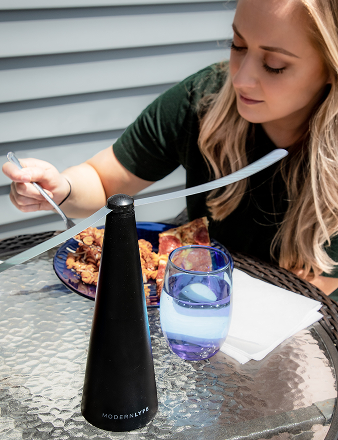
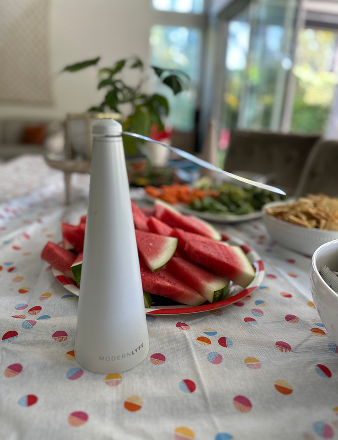
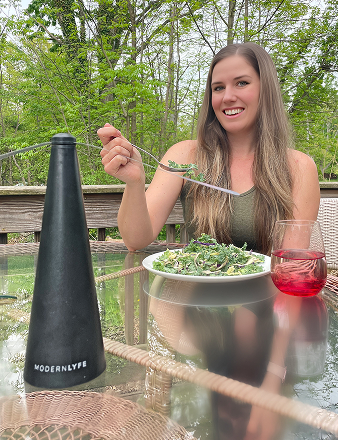
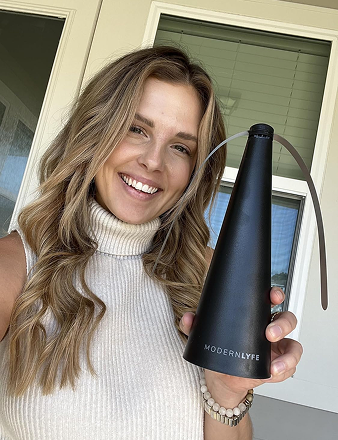
That’s also where a product like the Modern Lyfe fly fan fits. It’s a battery-operated tabletop option designed to create localized air disruption around food and dining setups without introducing chemicals into the service area.
Use airflow where guests see and judge the environment. Use deeper control methods where the insect pressure starts.
Implementing a Fly Control Strategy in Your Business
A usable program has to survive a real shift. It has to work during setup, during service, and during cleanup. If your staff can only execute it perfectly when the room is empty, it isn’t a dependable system.
Build your layers in the right order
Start with the causes, not the devices.
First, reduce attraction. Keep waste covered, clear bus tubs fast, clean syrup and alcohol residue, and stay on top of drains and floor moisture. Second, deny entry with door discipline, intact screens, and controlled openings. Third, protect service zones with table-level or buffet-level deterrents that don’t interfere with the guest experience.
That order matters because visible flies usually mean one of two things. Either they’re breeding nearby, or they’re entering too easily.
Buffet lines
Long buffets create dead-air pockets where flies can settle, especially around fruit, carved proteins, pastries, and sauces. Don’t place one deterrent at the center and assume the whole line is covered. Treat the buffet as a sequence of landing zones.
A practical setup looks like this:
- At the ends: Add protection at both ends of the buffet because those edges often get the most open-air exposure.
- At open focal points: Place table fans near carved meats, dessert stations, or uncovered garnish areas where food stays visible longest.
- Behind the scenes: Keep hidden traps and any approved chemical support away from guest sightlines and never over exposed food.
Patio tables and open-air dining
Individual tables need a different logic. The goal isn’t blanket coverage. The goal is to protect the active eating space without making the tabletop feel cluttered.
Use low-profile devices near shared plates, charcuterie boards, bread service, or drinks that linger. Keep them out of direct guest reach but close enough to influence the table center. Staff should know which tables need them most, usually family-style service, brunch tables, and anything with sweet beverages or fruit.
If staff have to debate where a device goes every shift, placement hasn’t been standardized well enough.
Weddings and catered events
Event teams need fly control that disappears into the styling. White plastic shields, hanging strips, or exposed electrical traps rarely belong in an upscale reception. Build the plan into the tablescape from the beginning.
Use concealed or design-compatible tabletop deterrents at buffet ends, cake displays, and grazing tables. Walk the venue before setup and note doors, landscaping, water features, and trash routes. Those details often predict where pressure will build first.
For larger venues with production kitchens or service corridors, entry control matters as much as tabletop protection. Teams reviewing infrastructure options can learn from examples of hygienic high-speed door systems that help reduce open-door exposure in food-related environments.
Daily operations that keep the plan alive
A good fly-control program is operational, not decorative. Assign ownership.
Use a simple routine:
- Before service: Check batteries or power sources, wipe device surfaces, inspect buffet covers, and confirm doors and screens are functioning.
- During service: Watch hotspots. Reposition only when needed. Clear dirty plates, spills, and bus bins quickly.
- After service: Clean all devices, empty traps that are out of guest view, log any recurring problem area, and reset for the next shift.
Staff training should be short and concrete. Show them where each control belongs, what never gets sprayed, and what signals a sanitation issue rather than a device issue. The less guesswork they face, the more consistent the result.
Safety Regulations and Compliance in Food Service
Pest control fails inspections when teams improvise. Compliance starts with one rule. Use products exactly as labeled for the area where they’ll be used.
What managers need to verify
If you use a chemical repellent or insect-control product in food service, confirm three things before it ever reaches the floor:
- Label fit: The product must be intended for the specific use area, such as food-contact surfaces, food-handling areas, or non-food zones.
- Application limits: Staff need to know whether food must be covered or removed, whether surfaces require drying time, and what ventilation rules apply.
- Training and records: Application should be restricted to trained staff, and actions should be documented in your pest-control log.
Operators often encounter issues. A product may be effective in a dumpster area or drain zone and still be completely wrong for a prep counter, buffet rail, or open beverage station.
Why approved actives matter
Longstanding active ingredients have remained in commercial use because regulators and operators need predictable safety profiles. This review of insect repellent history and safety notes that DEET, developed in 1946 and EPA-registered since the 1950s, has been a dominant repellent active ingredient for over 60 years. The same source notes its efficacy against Stomoxys calcitrans, or stable flies, which are associated with an estimated $432 million in annual U.S. livestock losses. It also identifies other EPA-approved options such as picaridin and oil of lemon eucalyptus.
For food service managers, the lesson isn’t “spray DEET everywhere.” It’s that approved actives, used correctly and in the right context, exist within a regulatory framework for a reason. Safety comes from fit, label compliance, and staff discipline.
Common compliance mistakes
These are the failures I see most often in real operations:
- Using the wrong product in the wrong zone: Back-door spray brought into front-of-house service.
- Spraying during live service: Staff react to a visible fly instead of following the plan.
- No documentation: There’s no record of what was applied, when, where, or by whom.
- No tie to food safety systems: Pest control sits outside routine sanitation review.
A repellent isn’t compliant because it worked once. It’s compliant because it was approved, applied correctly, documented, and verified.
If your operation uses HACCP-based controls, connect pest management to that system rather than treating it as a separate maintenance issue. This overview of what HACCP food safety means is a useful refresher for managers building that link.
What inspectors want to see
Inspectors generally look for control, not theatrics. They want evidence that you understand where pests are entering, what products are being used, whether staff are trained, and how exposed food is being protected.
That means your program should show:
- clear product selection,
- correct storage of pest-control materials,
- consistent cleaning and waste management,
- service-area protection that doesn’t contaminate food,
- and written logs that support your decisions.
A polished dining room doesn’t offset a sloppy pest-control process. The paperwork, training, and placement all need to line up.
Your Food-Safe Fly Control Checklist
Good fly control is repetitive by design. The point is to make clean conditions and smart deterrence routine, not heroic.
Daily checks
- Clear attraction fast: Wipe spills immediately, especially sugary drinks, beer residue, syrup, sauces, and fruit juice.
- Control waste: Keep indoor bins closed, empty them before overflow, and don’t leave bus tubs parked near guests.
- Protect food in motion: Cover or shield items during prep, staging, and breaks in service.
- Watch entry points: Keep doors from being propped open and report damaged screens or sweeps the same day.
- Reset guest-facing devices: Make sure tabletop or buffet deterrents are clean, charged, and in place before service begins.
Weekly checks
- Deep-clean hotspots: Focus on drains, bar mats, under-counter corners, utility sinks, and the space behind waste containers.
- Inspect all control tools: Replace worn covers, clean hidden traps, and test powered devices.
- Review patterns: Note where flies keep appearing. Repeated activity at one patio corner or one buffet end usually points to an environmental cause.
- Audit staff habits: Confirm that approved products are stored correctly and that nobody is freelancing with the wrong spray.
Before events and busy services
- Walk the site early: Check doors, landscaping edges, trash locations, standing water, and likely airflow dead zones.
- Map table protection: Decide in advance where fans, covers, and support tools will go.
- Stage backup power: Keep spare batteries or charging plans ready for any portable units.
- Brief the team: Tell staff which zones are protected by airflow, which stations must stay covered, and what to do if flies appear mid-service.
- Assign one owner: One supervisor should make the calls, so the response stays consistent.
The standard to aim for
Your fly-control setup is working when guests barely notice it, staff don’t need to improvise, and food stays protected without turning the space into a pest-control display. That usually means fewer visible reactions, cleaner service rhythms, and a room that still feels welcoming.
The strongest food safe fly repellent program isn’t built on one product. It’s built on layered control, good placement, disciplined sanitation, and solutions that match the environment.
If you want a fly-control option that fits modern tablescapes and open-air dining without adding chemicals to the service area, take a look at MODERN LYFE. Their tabletop fly fans are designed for restaurants, hotels, catered events, and home entertaining where food protection and presentation need to work together.