You know the moment. The linen is straight, the garnish is clean, the buffet looks full but not crowded, and the guest finally leans in to enjoy the plate you worked hard to present. Then a single fly starts circling the table.
That one detail can flatten the whole impression.
In food service applications, operators spend real effort on plating, lighting, timing, and service flow. A fly cuts across all of it. Guests don't separate pest activity from food quality, sanitation, or brand standards. They just see a lapse. For restaurants, hotels, caterers, food trucks, and event teams, that's why fly control has to be treated as part of presentation and comfort, not just back-of-house hygiene.
That One Fly Can Ruin Everything
A patio server drops a beautiful brunch spread. The eggs are hot, fruit is fresh, and coffee service is moving well. Then a guest starts waving a napkin over the table instead of eating. At a wedding, the same thing happens at the dessert display. In a hotel lounge, it happens near the host stand where drinks and small bites sit for pickup.
Nobody remembers that the flatware was polished.
They remember that they had to defend their plate.
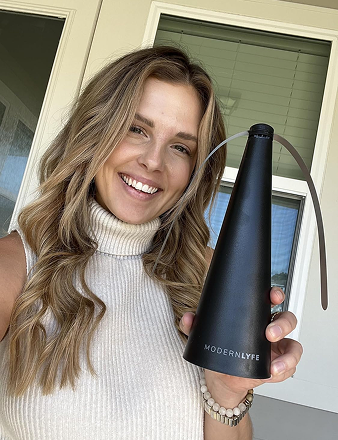
That's why the best operators don't treat insect control as a last-minute reaction. They build it into the setup, the same way they think about shade, music level, tray stands, and replenishment paths. A modern fly fan isn't trying to solve every pest issue in the building. It solves a very specific guest-facing problem. It protects the moment when food is visible, service is live, and perception is fragile.
A fly near a guest table doesn't read as a minor nuisance. It reads as a failure to control the environment.
That matters most in the spaces where food is exposed and guests are forming opinions fast. Buffet lines, outdoor bars, host stands, pass shelves, and service windows all have the same weakness. They sit at the intersection of food, airflow, traffic, and waiting time. If you care about presentation, you have to care about what happens in those few feet of space.
The Business Case for Proactive Insect Control
The numbers alone should reset how seriously operators take this. The USDA's Economic Research Service reported that food sales at foodservice outlets reached $1.52 trillion in 2024, and 58.9% of total U.S. food expenditures went to food away from home, a record high, according to the USDA food service market segments data. That means restaurants, catering operations, hotels, and similar venues aren't a side channel in how people eat. They are the channel.
When that much spending depends on trust, small presentation failures stop being small.
Why guest perception matters more than operators think
A guest doesn't inspect your cleaning log. They read the room. They notice whether the buffet feels calm or chaotic, whether the outdoor cocktail hour feels polished or improvised, whether the pastry display looks protected or exposed. In that environment, flies create two problems at once.
First, they interrupt comfort. Second, they signal weak control.
That second part is what hurts brand value. Operators often frame insect control as a sanitation line item, but guests experience it as a quality line item. If the environment feels unmanaged, the food feels less premium. That's true even when the kitchen is running well and the product itself is strong.
Table stakes versus brand standards
Keeping pests away is basic. Doing it in a way that supports service is where the real business case sits. A noisy, awkward, or unstable device can fix one issue and create another. Good guest-area insect control should support these outcomes:
- Cleaner presentation: Guests can focus on the plate, not the environment around it.
- Less staff distraction: Servers stop improvising with napkins, domes, or constant repositioning.
- Stronger review protection: People are far less likely to fixate on a pest issue that never reaches the table.
- Better fit for premium service: The setup looks intentional instead of patched together.
For operators comparing options, this practical guide to fly control for restaurants is useful because it keeps the conversation grounded in service realities instead of generic pest talk.
Practical rule: If the solution makes the table look worse, sound worse, or feel cluttered, it's not a front-of-house solution.
ROI isn't only about avoiding a problem. It's about protecting the value of everything else you already paid for. Food, labor, décor, event design, and service training all lose impact when one visible pest steals the guest's attention.
Mapping Fly Fans to Food Service Applications
The best use cases are easy to spot once you stop thinking like a pest-control vendor and start thinking like an operator. Fly fans work best where food is exposed, guests are stationary, and staff can't hover over the setup every second.

Guest-facing stations with exposed food
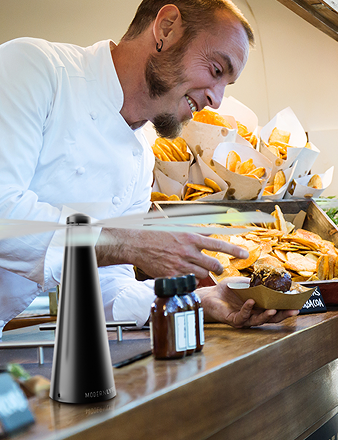
Buffets are the obvious starting point. The risk isn't just that food is uncovered. It's that buffets stay exposed over a service window, often with guests moving slowly and lids opening constantly. A fly fan helps most when placed at interruption points, carving out protected zones rather than trying to cover the entire line with a single unit.
Dessert tables are similar, but the stakes are even more visual. People photograph them. If guests see flies near pastries, fruit tarts, or cake slices, the display stops reading as elegant and starts reading as vulnerable.
A few high-value placements:
- Buffet corners and gaps: These are the spots where coverage often drops and pests find easy access.
- Carving and finishing stations: Food sits visible while the attendant interacts with each guest.
- Pastry and fruit displays: Light items and decorative arrangements need protection that doesn't block the presentation.
Service points where traffic pulls pests in
Host stands, pickup counters, and service windows often get missed because they aren't “food displays” in the traditional sense. But they're magnets for brief exposure. Drinks wait there. Appetizers land there. Guests gather there. Doors open and close nearby.
Food trucks are a strong example. The service window is compact, hot, and busy. Staff can't waste motion swatting the air while managing tickets. A compact fan near the handoff point can do more than a bulky workaround because it protects the exact zone where guests and plated items meet.
For operators planning placements in dining environments, this overview of fly fans for tables is especially relevant because table-level coverage behaves differently from perimeter control.
Outdoor hospitality zones
Patios, pool decks, rooftop lounges, and wedding cocktail hours create a different challenge. Air movement is less predictable, and aesthetics matter more. You need tools that hold position and don't visually interrupt the setup.
Use fly fans in outdoor food service applications where guests linger and where open items stay in one place long enough to attract attention:
| Area | Main vulnerability | Best use of a fly fan |
|---|---|---|
| Patio dining tables | Guests stay seated with exposed food | Table-level comfort and plate protection |
| Outdoor bars | Garnishes and drinks sit in the open | Protect the service surface |
| Banquet stations | Long service windows and repeated opening | Layer coverage across the line |
The common thread is simple. Put coverage where the guest sees the food, not just where the food starts.
Practical Placement and Operation Guide
Placement is where most operators either get value from fly fans or waste them. One fan in the wrong place becomes a prop. Several fans in the right places become part of the service system.

Build zones, not single points
Long buffet lines need overlap. Don't place one fan in the middle and assume the entire run is covered. Break the line into protection zones based on the moments when food is open and guests pause.
That usually means placing units near the beginning of the line, at any exposed specialty station, and near the end where desserts or breads sit longer. In restaurant service, the same idea applies to host stands and pickup shelves. Protect the actual touchpoint.
Three placement habits work well in practice:
- Keep devices close to the target area: A fan that's too far from the food may move air without protecting the service zone.
- Watch guest sightlines: Don't block labels, floral design, or plating details with bulky placement.
- Stabilize every unit: If a device shifts during service, staff will stop trusting it and move it aside.
Respect sanitation workflow
Many otherwise useful tools prove inadequate in this context. NSF food equipment standards emphasize cleanability and sanitation for food-contact and food-adjacent devices, and for buffet or event use, equipment should support low-maintenance operation and stable placement according to the NSF food equipment standards portfolio. In practical terms, that means front-of-house insect control should be easy to wipe down, simple to reposition, and designed so it doesn't interfere with temperature checks or cleaning routines.
If staff have to work around the device to sanitize the station, the device is in the wrong spot.
That matters in prep-adjacent zones too. If a pass shelf, expo counter, or satellite beverage station gets cleaned repeatedly through service, the fan has to fit that rhythm. Operators should be able to remove it, wipe the area, and reset it without changing the station layout.
A helpful visual reference on integrated guest-area protection is below.
Plan for power and duration
Battery management is part of event planning, not an afterthought. If your outdoor reception runs from setup through dessert, assign someone to verify charge status before service starts. Don't discover a dead unit once the line opens.
For all-day use, operators usually do best when they:
- Charge as part of pre-event prep: Treat fans like any other service tool.
- Assign backup units: Especially for remote stations or outdoor weddings.
- Store them with the event kit: If they live in a random drawer, they won't be ready when needed.
The strongest setups are boring in the best way. They run smoothly, stay out of the way, and become one less thing staff have to think about.
Boosting Guest Experience and Your Bottom Line
Most discussions about food service applications focus on logistics. Is food available. Is it stocked. Is the line moving. Those matter, but they don't define the full guest experience. The more useful lens is comfort, presentation, and dignity.
A frequently missed point in public food access discussion is that availability alone doesn't measure service quality, menu fit, line speed, or guest experience, as reflected in the USDA Food Access Research Atlas context. Hospitality operators already know this intuitively. Guests don't judge the meal only by whether food exists. They judge whether the environment respects them.
Why comfort changes perceived value
A pest-free dining setup feels more premium, even when the menu hasn't changed. The same salad, same dessert, same cocktail garnish will land differently if guests can relax and eat without interruption. That's why fly control belongs in the same conversation as tabletop design and service pacing.
This shows up in several ways:
- Guests stay engaged with the meal: They notice flavor and presentation instead of disruption.
- Staff can protect the mood: They aren't forced into visible, improvised pest management.
- Premium positioning feels credible: The environment matches the promise on the menu.
The repeat business connection
Repeat business usually doesn't hinge on one heroic moment. It comes from the accumulation of small signals that tell guests you run a tight operation. A clean host stand, a calm patio, a protected brunch spread, and a comfortable dessert station all say the same thing. This place pays attention.
The dining experience feels dignified when guests can focus on the people and the food, not on defending the plate.
That's the primary commercial value. Fly fans don't create loyalty on their own. They protect the conditions that let hospitality do its job. For restaurant managers, that can preserve the atmosphere of outdoor seating. For hotels, it can support banquet polish. For caterers, it can keep a carefully designed event from slipping into visible annoyance.
Real World Examples in Hospitality
The easiest way to judge any fly-control tool is to ask whether it still works when service gets messy. Not in a showroom. In the middle of brunch, during a summer wedding, or on a crowded festival line.
Hotel banquet brunch
A banquet manager running a large brunch usually has multiple pressure points at once. Chafers need monitoring, coffee service needs refilling, and guests spread across omelet, pastry, fruit, and dessert stations. The weak spots are usually the pretty ones. Fruit platters, pastry displays, and garnish-heavy stations attract attention from both guests and pests.
In that setting, portable fly fans make sense because they can be assigned to exposed stations without changing the overall room design. The setup stays elegant, and the team doesn't have to improvise with covers that flatten the visual appeal.

Food truck festival service
A food truck has almost no spare space and no margin for clumsy equipment. The service window is the brand. It's where tickets are called, food gets handed off, and guests decide whether the operation looks sharp. If flies gather there, the problem is immediate and public.
That's why low-maintenance, easy-to-deploy tools matter so much in mobile food service applications. Recent investment trends in the food sector emphasize resilient and repeatable operating capacity, pointing toward solutions that are portable and easy to deploy across formats, as described by the Los Angeles County Food Equity Fund overview. That logic fits festival service perfectly. Staff need tools they can set, trust, wipe down, and pack fast.
Wedding catering and outdoor presentation
Outdoor catering is where aesthetics and function collide. A wedding caterer might build a stunning antipasti display, a seafood station, or a dessert table, only to spend the event discreetly managing exposure. Guests won't see the workaround plan. They'll see whether the display still looks calm and protected.
When caterers design around presentation, they often borrow ideas from premium retail food styling as well. Looking at visual references such as IFM Gourmet Dubai specialties can help teams think more critically about exposure, surface composition, and how to preserve a high-end food presentation under real service conditions.
What works in these scenarios is rarely flashy:
- Quiet operation so the device doesn't fight the ambiance
- Portable form so teams can adapt as stations move
- Low-maintenance use so service staff aren't babysitting equipment
- Visual restraint so the protection doesn't overpower the setup
The winning tool is the one guests barely notice and staff quietly rely on.
Choosing the Right Fly Fan for Your Business
The right fly fan for food service applications should solve the guest problem without creating an operations problem. That sounds obvious, but it's where cheap consumer-grade options usually fail. They wobble, look out of place, need constant attention, or don't hold up through repeated service.
The broader food service market is projected to grow from $4.03 trillion in 2025 to $7.63 trillion by 2034, according to the Department of Labor data spotlight on food service jobs and market growth. If you expect more volume, more events, or tighter quality expectations, durable professional-grade equipment is the smarter buy.
What to evaluate before you order

Use a simple checklist.
- Noise level: If guests can hear it, it belongs somewhere else.
- Base stability: A fan on a banquet table or patio surface can't slide around once service starts.
- Battery and power fit: Match the unit to your service duration and whether outlets are realistic.
- Cleanable surfaces: If syrup, dust, or food residue collect easily, staff will hate using it.
- Visual design: Guest-facing tools should blend into the setting, not advertise themselves.
- Deployment flexibility: The best unit works at brunch, on patios, at buffets, and during off-site catering.
Buy for repeated use, not a one-time fix
Operators get the best value when they purchase with repetition in mind. Don't ask whether the fan can help on one event. Ask whether your team can use it across restaurant tables, outdoor receptions, lobby food displays, and temporary service stations without changing how they work.
If you're comparing options, this guide to commercial fly fans is a practical place to pressure-test what matters for hospitality use.
Bottom line: Choose the model your staff will actually deploy every time exposed food and guest comfort overlap.
If you want a fly-control solution that supports presentation as much as hygiene, MODERN LYFE offers quiet, elegant fly fans built for dining tables, buffets, events, and hospitality service. They fit the practical needs operators care about most: clean design, easy placement, low-maintenance use, and reliable protection that helps guests stay focused on the food, not the flies.