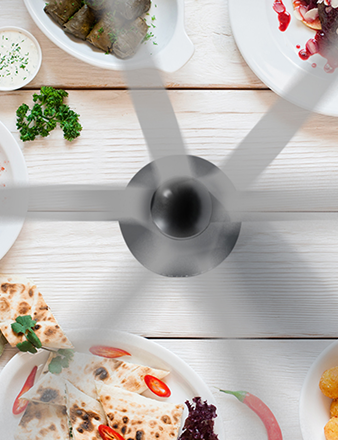
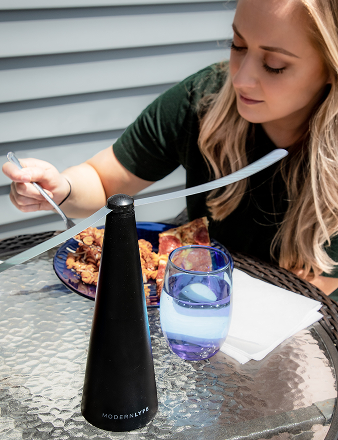
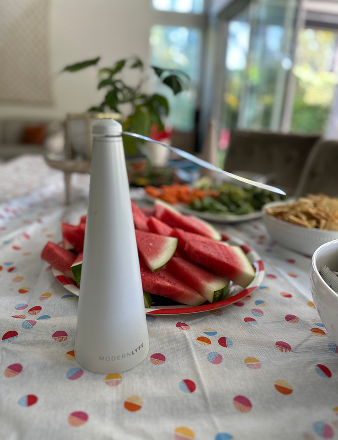
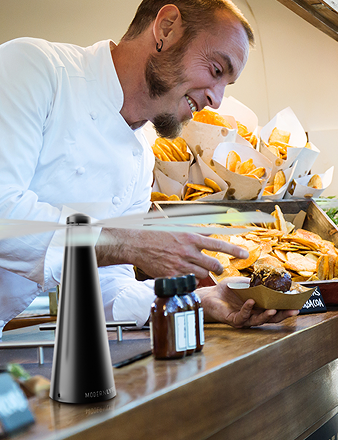
An OFF bug repellent fan creates an invisible, odorless shield against mosquitoes and other flying pests. By circulating a repellent, it establishes a protected zone, making it a non-intrusive solution for outdoor patios, events, and dining where guest comfort is paramount.
A Modern Standard for Guest Comfort
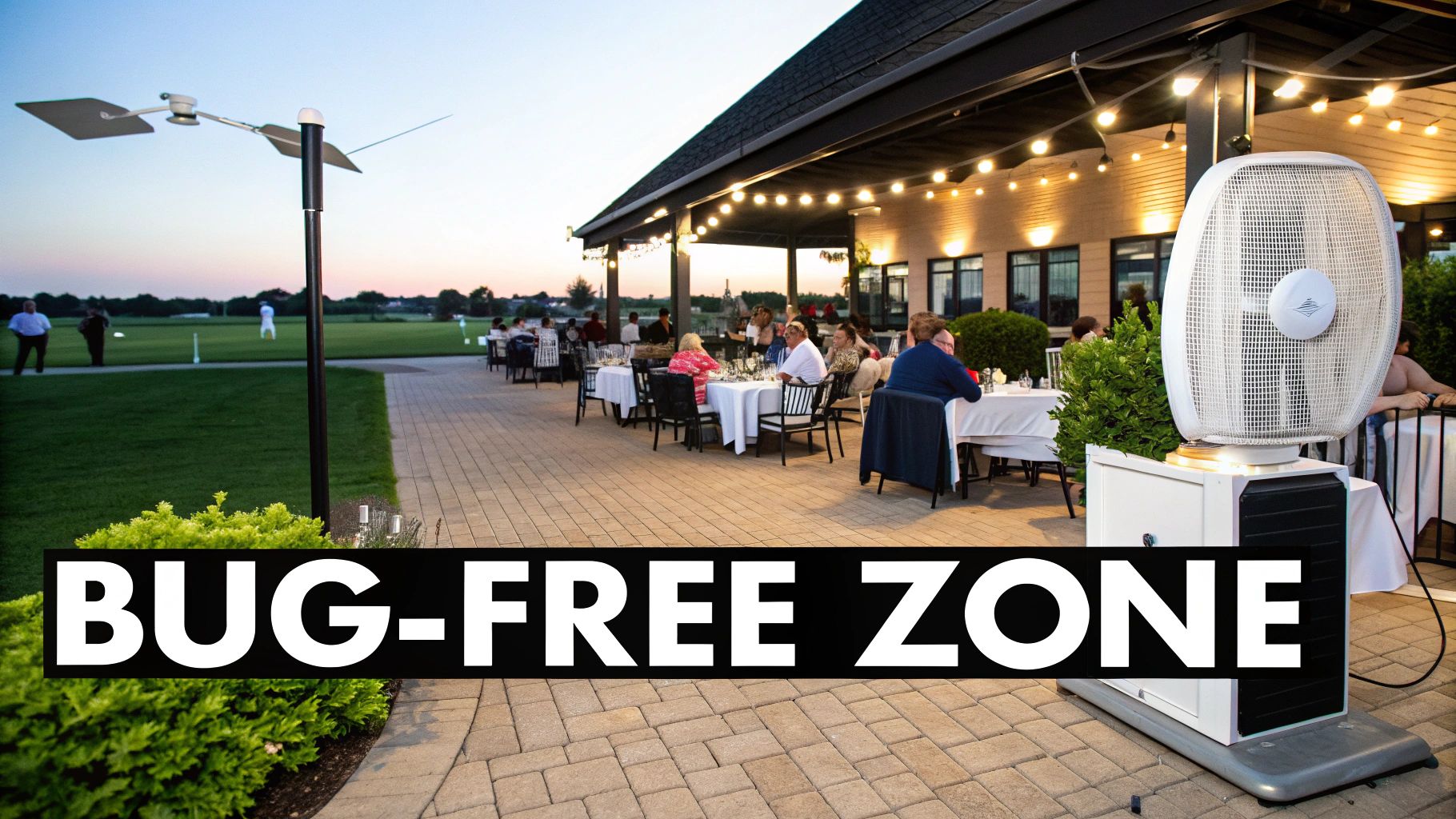
In hospitality and event planning, the goal is to curate a perfect guest experience. We focus on every detail, from lighting to layout. Yet, one small annoyance can ruin it all: bugs.
Old-school solutions are often as disruptive as the pests they target. Sticky sprays, smoky candles, and loud zappers detract from the atmosphere. The OFF bug repellent fan is a game-changer because it works silently and effectively, elevating the guest experience instead of disrupting it.
Why Standard Methods Fail
For restaurant patios or outdoor weddings, conventional bug control often creates more problems than it solves.
- Topical Sprays: Asking guests to apply chemical sprays is awkward. Many have sensitive skin or dislike the greasy feel and chemical smell.
- Citronella Candles: Their protective range is small, and a slight breeze renders them useless.
- Bug Zappers: The constant buzzing and loud zaps are the opposite of a relaxing, elegant ambiance.
This guide is a professional playbook, filled with practical advice to integrate these fans into your operations for flawless outdoor events.
The demand for better, less intrusive insect control is a significant and growing market. The global insect repellent industry reached approximately USD 5.57 billion in revenue in 2024 and is projected to climb to USD 8.28 billion by 2030. This trend confirms that consumers are actively seeking smarter solutions.
If you're curious about the science behind these devices, learn more in our guide on the effectiveness of fly fans.
Strategic Fan Placement for Maximum Effectiveness
Simply turning on a bug repellent fan isn't enough. Proper placement is the single most important factor for success. Think of it as creating overlapping zones of protection that form an invisible barrier against pests.
The strategy is based on airflow. Mosquitoes, flies, and gnats are weak flyers, so even a gentle, consistent breeze makes it nearly impossible for them to navigate. A bug fan creates a cone of protected air; your job is to aim these cones where they will have the greatest impact.
Map Your Protective Zones
Before an event, walk the space and identify where guests will congregate. These are your target areas. Don't scatter fans randomly—build a defensive perimeter.
Key areas to secure include:
- Dining Tables: The primary focus for any outdoor meal.
- Buffet Lines & Food Stations: Flies are drawn to food, making these spots critical to protect.
- Lounge Seating: Any area where guests will be seated for extended periods.
- Entryways: A strategically placed fan can prevent bugs from following guests inside.
Focusing on these key zones creates a network of protection that covers the entire guest experience without anyone noticing the hardware.
Elevation and Airflow Dynamics
A common mistake is placing fans directly on the ground. While insects fly low, elevating the fan on a small table or stable surface improves dispersal.
The ideal placement height is 1-3 feet off the ground. This allows the fan's airflow to circulate repellent at the level of your guests' legs and torsos, creating a more effective shield.
An elevated position helps the air current mix more efficiently, protecting a wider area and keeping the fan out of foot traffic.
Always consider the natural breeze. Position your fans so the wind helps carry the protected air towards your guests. For a deeper dive into the mechanics, learn more about a fly repellent fan in our detailed guide.
Ensure fans have a clear, unobstructed path. Physical barriers like planters, walls, or thick bushes can block airflow. On a restaurant patio, this might mean one fan per four-top table, placed on a nearby ledge to ensure every diner is covered.
Here is a quick reference for common setups:
Optimal Fan Placement Scenarios
| Venue Type | Primary Placement Goal | Key Placement Locations | Pro Tip |
|---|---|---|---|
| Restaurant Patio | Protect individual dining tables | On a small stand or ledge near each table, just outside arm's reach. | Use 1 fan per 2-4 person table for maximum, non-intrusive coverage. |
| Outdoor Wedding | Create a bug-free "bubble" for guests | At dance floor corners, near the bar, and along buffet lines. | Place fans on elevated surfaces like side tables to disperse air over seated guests. |
| Hotel Poolside Bar | Keep pests from drinks & seating | On the bar top between serving stations and next to lounge chair clusters. | Point fans away from cocktail napkins and light garnishes to prevent blow-away. |
| Corporate Event | Secure food stations and networking areas | Around catering tables, high-top tables, and outdoor breakout seating. | Position units to create a protective "curtain" at the main event entrance. |
A few minutes of planning your fan placement is the difference between a minor annoyance and a perfect guest experience.
Powering Your Fans Without Creating Hazards
For bug fans to be effective, they must stay on. This requires a reliable power plan that is both safe and aesthetically pleasing.
Your first choice is between battery-operated and plug-in models. This decision impacts everything from placement to safety. Understanding technical details, like the differences between DC and AC fans, can also help you choose a more energy-efficient model suited to your venue.
The Freedom of Battery-Operated Fans
Battery-powered units offer complete placement freedom, making them ideal for outdoor venues with limited outlets. They also provide a clean, professional look with no trip hazards from cords.
The main consideration is battery life. For a four-hour event, a six-hour battery is sufficient. For all-day festivals, you need a solid plan: have fully charged backup batteries ready and a schedule for swapping them out. Find more tips for managing cordless power in our guide to battery-operated table fans.
A Tip from the Field: Don't trust the battery life listed on the packaging, as it's usually based on the lowest setting. Test units at the speed you intend to use. A higher setting on a breezy day drains a battery much faster than expected.
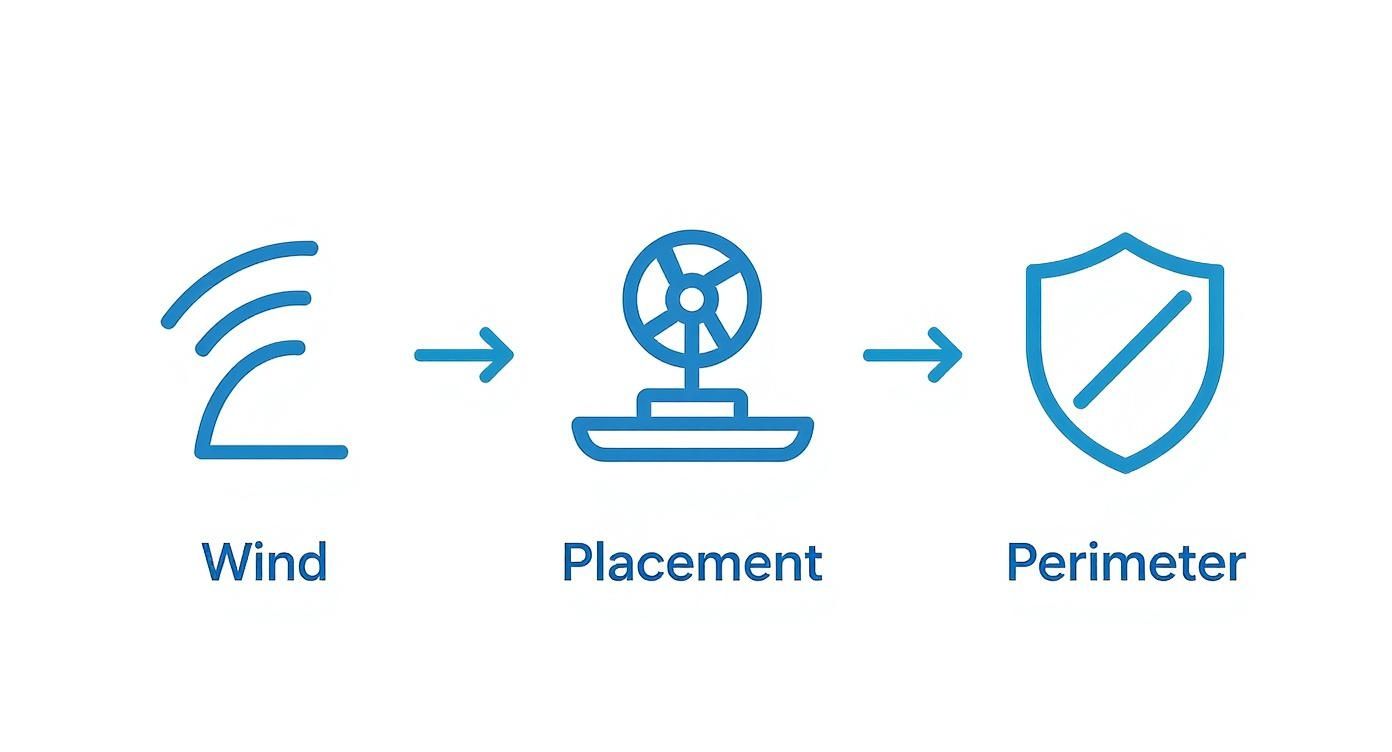
Strategic fan placement is part of a larger system designed to protect your guests, not just a matter of turning on a device.
Managing Cords and Cables
Plug-in fans offer continuous power but introduce the challenge of cable management. A stray extension cord is an eyesore and a major liability. The goal is to make cords disappear.
Here are proven techniques for managing cables professionally:
- Hug the Edges: Run outdoor-rated extension cords along walls, deck perimeters, or tent poles where people won't walk.
- Go Undercover: Use high-quality gaffer tape to secure cords flat to the ground, then cover them with a rug or runner.
- Bring Your Own Power: For locations without outlets, a portable power station is a game-changer, providing clean, silent power anywhere.
The U.S. insect repellent market reached USD 376.9 million in 2024 and is projected to grow to USD 540.6 million by 2030. This growth signals that guests expect a comfortable, pest-free experience, and a reliable power strategy is essential to delivering it.
Integrating Fans Into Your Event Decor
A bug repellent fan is a functional tool, not a centerpiece. Ideally, guests feel its effect—a bug-free zone—without noticing the device itself. The art is to make this practical equipment blend seamlessly into your event's aesthetic.
Your goal is seamless integration. A fan placed in the middle of a curated tablescape can cheapen the look. Instead, think like a designer to camouflage it.

Camouflage Without Compromise
Hiding fans is simple, but there is one rule: never block the airflow. The fan must circulate repellent to be effective.
Here are a few effective concealment methods:
- Decorative Baskets: Place the fan inside a stylish, open-weave basket that is slightly larger than the unit.
- Floral and Greenery Shields: Tuck the fan behind a low, full floral arrangement or a group of potted plants. The foliage acts as a screen while allowing air to pass through.
- Custom Wraps: For high-end events, use custom vinyl wraps or fabric sleeves that match your event’s color palette or branding.
Incorporate fan concealment into your table design alongside other decorating ideas for dinner parties to create a cohesive atmosphere.
Managing the Soundscape
A single bug fan is nearly silent. However, multiple fans can create a cumulative hum. At a lively reception with music, this sound will blend into the background.
For a quiet wedding ceremony or an intimate dinner, this subtle noise can be a distraction.
Position fans so their sound becomes ambient white noise, not a focal point. Avoid placing them directly on guest tables at ear level.
A better approach is to shift them to the outer edges of the table or place them on a small, nearby stand. This simple change reduces perceived noise for guests while maintaining the bug-repelling bubble. By considering both visual and auditory elements, you ensure the technology works without interrupting the moment.
Keeping Your Fans Event-Ready and Safe
A bug fan is only effective if it works when you need it. Proactive maintenance and safety protocols are essential for a seamless guest experience. A fan that fails mid-event undermines the comfort you've worked to create.
Regular upkeep prevents unexpected failures. A simple pre- and post-event checklist will keep every unit in optimal condition. These are simple, repeatable steps that guarantee performance and extend the life of your equipment.
The Pre-Event Maintenance Checklist
A quick inspection before each use can prevent major problems. This routine takes only a few minutes per fan but is critical for reliability. A clean fan moves more air, and a full repellent cartridge ensures uninterrupted protection.
Adopt this practical routine for your team:
- Wipe Down Blades and Vents: Dust and pollen reduce airflow. A quick wipe with a soft, damp cloth clears the blades and vents.
- Check Repellent Levels: Always check the repellent cartridge. A half-full cartridge might last through a short event, but for an all-day function, start with a fresh one.
- Test Fan Operation: Power on each fan for a few seconds. Ensure it runs smoothly and listen for unusual rattles or whines—early warnings of a problem that needs fixing before guests arrive.
Refill Strategy and Safety Protocols
Running out of repellent mid-event is unprofessional. Create a refill schedule based on the cartridge's lifespan. If a cartridge is rated for 40 hours, log its installation and schedule its replacement. Always keep backups in stock.
Safety is paramount, especially with children present. Spinning fan blades and curious hands are a dangerous combination.
Your first line of defense is smart placement. Put fans on stable, elevated surfaces where they won't be knocked over. For plug-in models, manage cords properly. Use gaffer tape to secure wires flat to the floor and run them along walls or under rugs to eliminate trip hazards.
The demand for safer insect control has grown significantly. The global insect repellent market grew at a CAGR of over 6% between 2019 and 2024, driven by public health concerns and a desire for user-friendly products. Learn more about trends in natural insect repellent solutions at futuremarketinsights.com.
Quick On-Site Troubleshooting
Even with perfect preparation, issues can arise. Equip your staff with a simple troubleshooting guide to handle common problems discreetly.
- Fan Won't Start? First, check the power source. For battery models, ensure the battery is secure or swap in a fresh one. For corded fans, confirm it's plugged in at both the fan and the outlet.
- Weak Airflow? This is typically caused by dirty blades or blocked vents. A quick wipe-down usually resolves the issue.
- Repellent Not Spreading? Ensure the cartridge is clicked in correctly. If the model has a heating element, check that it's functioning.
By implementing these simple maintenance and safety habits, you ensure every bug fan is an asset that enhances the guest experience.
Frequently Asked Questions
Even with meticulous planning, on-site questions arise. Here are answers to common questions about using bug repellent fans.
How Many Fans Do I Need For My Space?
The number of fans depends on your layout. The goal is to create overlapping zones of protection with no dead spots.
Under calm conditions, a single fan can cover a zone of roughly 15 to 20 feet in diameter. One fan is usually sufficient for a standard four-person table. For larger events like wedding receptions, a more strategic approach is needed.
Here is a breakdown based on experience:
- Long Buffet Tables: Place one fan every 8-10 feet along the guest-facing side.
- Seated Dining Areas: A good baseline is one fan for every 4-6 guests, positioned between tables to maximize coverage.
- Open Lounge Areas: Create a perimeter by placing fans at the corners of the seating arrangement, pointing them slightly inward.
Always bring more fans than you think you need. It's better to have extras than to have an unprotected area.
Is The Repellent Safe Around Food And Children?
Yes, when used correctly. The active ingredient in OFF! fan refills is a synthetic pyrethroid, a man-made version of a repellent found in chrysanthemum flowers, effective in very low concentrations.
The fan disperses an odorless, invisible vapor that repels mosquitoes. It is considered safe for use around people, including children and pets, when following the manufacturer's directions.
The Bottom Line: The fan disperses repellent into the air, not onto guests or their food. This spatial approach makes it ideal for dining events, as the active ingredients do not come into contact with plates or people.
Always place fans on a stable surface where they won't be easily knocked over by children or guests.
Can I Use The Fan Indoors?
Using an OFF bug repellent fan indoors is not recommended. These devices are designed and EPA-registered for outdoor use with ample air circulation.
In an enclosed space, the vapor can become too concentrated. For indoor flies, a simple fan circulating plain air is usually enough to disrupt their flight.
These units are excellent for transitional spaces, such as under a large event tent with open sides, as long as there is good natural airflow.
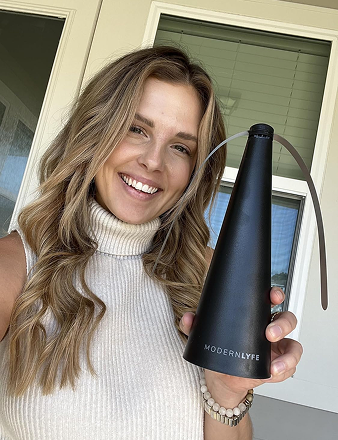
Ready to create the perfect, buzz-free atmosphere for your guests? MODERN LYFE fans are designed for professionals—they're quiet, effective, and stylish enough to blend with your decor.
Explore our collection of bug repellent fans and elevate your guest experience today.