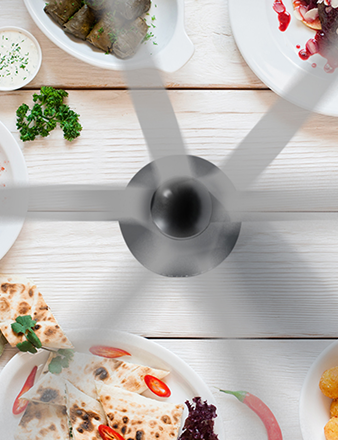
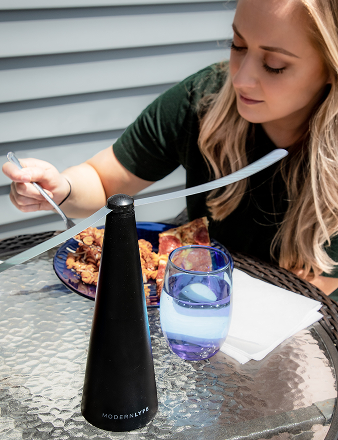
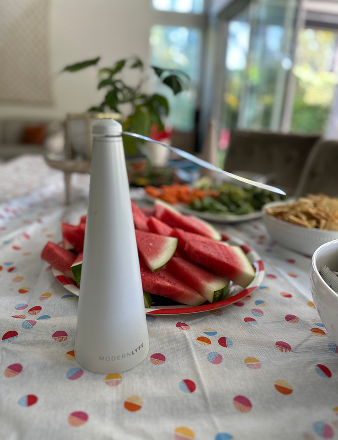
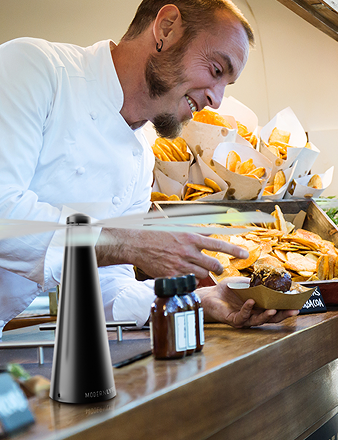
It’s a simple but highly effective method for comfortable outdoor dining and events: using a powerful fan to repel mosquitoes. The steady airflow does two things: it physically blows the weak-flying pests off course, making it impossible for them to land, and it disperses the carbon dioxide you exhale, which is what attracts them in the first place.
The Secret to Mosquito-Free Outdoor Dining

Imagine a perfect evening on your patio—great food, better company. The last thing you want is a swarm of mosquitoes crashing the party. We've all tried the standard solutions: sticky chemical sprays and smoky citronella candles that never seem to work well enough and often ruin the atmosphere.
There’s a better, chemical-free way. A strategically placed fan creates an effective, invisible barrier against these pests. It’s not about brute force; it’s about using simple physics to outsmart them.
Why Airflow Is a Mosquito's Worst Enemy
Mosquitoes are notoriously weak fliers. A light breeze is like a hurricane to them. A fan generating just a few miles per hour of wind speed is more than enough to stop them from reaching you, creating a personal no-fly zone.
The fan's real advantage is how it disrupts a mosquito's tracking system. They hunt by detecting the carbon dioxide (CO2) we exhale. A fan's breeze instantly dilutes and scatters that CO2 trail, making you effectively invisible to nearby mosquitoes.
Key Takeaway: Fans provide a one-two punch for mosquito defense. They physically block weak-flying insects while scrambling the CO2 signals they use for targeting.
This is why professional event planners and restaurant owners rely on fans as a primary defense. It keeps guests and food safe without harsh chemicals or overpowering smells. While you're focused on comfort, choosing the best materials for outdoor furniture also contributes to creating a space that’s both inviting and durable.
The Growing Demand for Better Solutions
Consumers are shifting toward smarter, non-chemical pest control. The market for mosquito control products, including fan-based repellents, was valued at USD 319 million and is projected to reach USD 397 million by 2034. This trend reflects growing concerns about mosquito-borne illnesses and a higher demand for comfortable guest experiences.
Consider this: a staggering 40% of outdoor dining complaints at U.S. hotels are related to insect problems, causing a significant drop in customer satisfaction.
Whether you're hosting a backyard barbecue or a large wedding, using fans to deter mosquitoes is one of the most reliable ways to ensure everyone stays comfortable.
Choosing the Right Fan for Your Outdoor Space
Selecting the right fan is about more than aesthetics; it’s about choosing the right tool to create a comfortable, mosquito-free zone. Here’s what matters.
The most important metric is CFM (Cubic Feet per Minute), which measures how much air the fan moves. Higher CFM means a stronger breeze, which is exactly what you need to overpower a mosquito's flight. For a small bistro table, a fan in the 500-1000 CFM range is sufficient. To protect a larger dining area or buffet line, aim for a more powerful model rated at 1500 CFM or more.
Power Versus Peace and Quiet
A high-powered motor is great for generating mosquito-busting wind, but it often comes with noise. A loud fan can ruin the atmosphere of a dinner or event. The goal is to find the balance between powerful performance and quiet operation.
Look for fans that specify their noise level in decibels (dB). Anything below 50 dB is quiet enough to fade into the background, allowing for normal conversation. Many modern fans feature brushless motors, which deliver strong, steady airflow without excessive noise.
The Case for Portability
For dynamic spaces like a restaurant patio or a catered event, portability is essential. This is where battery-operated fans excel. They offer the freedom to be placed anywhere, eliminating the need for outlets and the trip hazard of extension cords.
A great portable fan should offer at least 6-8 hours of run time on a medium setting—enough to last through an entire dinner service or event without a recharge.
This flexibility allows you to adapt quickly. If the wind shifts or guests move, you can reposition the fans in seconds to ensure the airflow is always where it’s needed most. We take a closer look at top models in our guide to the best OFF! Insect Repellent Fan choices available.
Use this quick-reference guide to match fan features to different settings.
Fan Feature Comparison for Different Venues
| Venue Type | Recommended CFM | Key Feature | Example Scenario |
|---|---|---|---|
| Small Cafe Patio | 500-1000 CFM | Quiet Operation (<50 dB) | Creating a comfortable zone around a two-person table without disrupting conversation. |
| Restaurant Terrace | 1500+ CFM | Battery-Powered | Placing multiple fans around tables and adjusting as parties change. |
| Outdoor Wedding | 2000+ CFM | Long Battery Life (8+ hrs) | Protecting the head table, cake display, and guest seating for the entire reception. |
| Backyard BBQ | 1000-1500 CFM | Portability & Durability | Moving the fan from the grill area to the dining table to keep guests protected. |
This table provides a solid starting point for determining which specifications will best serve your needs.
Why Fan-Based Solutions Are Gaining Ground
While traditional repellents like citronella candles still hold market share, fan-based solutions are rapidly gaining popularity. Consumers are actively seeking non-chemical options, especially in environments with children and pets.
This is a serious issue—mosquitoes are responsible for spreading 17% of all infectious diseases worldwide, according to a mosquito control market report. Choosing the right fan isn't just about avoiding annoying bites; it's a practical step toward creating a safer, more enjoyable outdoor experience.
Mastering Fan Placement for Maximum Mosquito Protection
You have the right fan, but placement is just as critical. The goal is to move from a "blast them with air" mindset to one of strategic, gentle airflow.
Think of it as creating an invisible, protective dome over your space. You want a consistent, low-level breeze that weak-flying mosquitoes simply can't navigate. Even a subtle current is enough to throw them off course and keep them away.
This flowchart breaks down the core priorities for selecting the right tool for the job.

The key is to balance power with practicality. A fan that’s deafening or tied to an outlet isn't a functional solution for a real-world dining or event setup.
Creating Your Mosquito-Free Zone
The most effective technique is to aim the airflow downwards and outwards from the perimeter of the protected area. This creates a gentle curtain of air that pests cannot cross. A common mistake is pointing a fan directly at guests, which creates an annoying wind tunnel that blows napkins and chills food.
Instead, place fans on the ground or on low stands around the edge of your patio. Aim the fan heads up slightly so the breeze arches over the area before settling. This provides wide coverage without a direct, irritating blast.
Pro Tip: For a standard 8-person round table, place two small, battery-operated fans on opposite sides at the edge of the table. Aim them to create a subtle cross-breeze just above ankle height—a primary target for mosquitoes.
Proven Layouts for Common Scenarios
Every space is unique, but these strategies are a reliable starting point for nearly any outdoor gathering.
- For Individual Tables: On a restaurant patio or for a small dinner, a portable fan placed on each table is ideal. This creates a personal bubble of protection for each group.
- For the Buffet Line: A buffet is a magnet for insects. Set up a line of two or three floor fans along the guest side, keeping them low and angled slightly away from the food. This builds an air shield that deters insects without cooling hot dishes.
- For a Large Seating Area: For a wedding reception or large party, think in terms of a defensive perimeter. Place larger fans at the corners of the main seating area, pointing inwards. The goal is overlapping air currents that create a comprehensive no-fly zone.
Common Placement Mistakes to Avoid
Even the best fans are useless if placed incorrectly. Avoid these common errors.
The biggest mistake is aiming fans too high. People often do this for comfort, but the air sails over the mosquitoes, which fly low to target ankles. Keep the airflow close to the ground.
Another issue is creating pockets of still air. Placing fans only on one side of a patio leaves the other side unprotected. Create overlapping zones of airflow to ensure there are no weak spots.
Finally, don't place fans too far away. Every fan has a limited effective range. To be strong enough to deter a mosquito, the fan must be reasonably close to the people it's protecting.
Blending Fans Seamlessly with Your Event Design

When you're planning an event, a clunky, industrial fan can ruin the aesthetic. Fortunately, modern mosquito fans are designed to merge powerful pest control with sophisticated design.
The key is to integrate fans into your decor from the start. Instead of a last-minute addition, they can become a subtle, functional element that enhances the guest experience.
Making Fans Invisible in Plain Sight
Your mosquito protection should feel intentional. Modern portable fans are available in sleek finishes like matte black, brushed nickel, or clean white, making it easy to match your color scheme.
Here are a few ways to integrate them into a setup:
- Incorporate into centerpieces: A small, elegant fan can be discreetly placed within a floral arrangement or next to other decorative items.
- Match with linens: Choose a fan color that complements your tablecloths or runners to blend into the tablescape.
- Use as subtle accents: Position fans near potted plants or other decor around the perimeter to make them feel like part of the planned scenery.
By choosing designs that match your event's theme, you ensure your mosquito solution is effective but nearly invisible.
Striking a Balance Between Function and Form
A fan’s primary job is to keep mosquitoes away, a critical function in professional settings where hygiene is paramount. In the hospitality industry, an estimated 25% of foodborne incidents are linked to pest contamination. Fans are a first line of defense.
Their airflow can disrupt mosquito landing patterns by up to 80%. This is a significant benefit, especially as over 60% of hospitality managers now view insect barriers as a top priority for guest safety.
The best approach is a fan with a quiet, brushless motor and a minimalist design. This provides the protective airflow you need without the distracting noise or visual clutter of a high-end atmosphere.
Ultimately, success comes from considering function and form together. A holistic approach to your outdoor living space design helps create an environment that is not just beautiful and comfortable, but also intelligently protected from pests.
Pairing Fans with Other Deterrents for a Complete Strategy
Fans are your primary defense against mosquitoes, but a layered strategy is even more effective. This is especially true in humid climates or near standing water, where mosquitoes thrive.
Combining airflow with a few other simple tactics creates a pest-free zone that mosquitoes can't penetrate. This integrated approach disrupts their ability to breed, find you, and fly.
Make Your Space Unwelcoming to Mosquitoes
The best way to boost your fan's effectiveness is to eliminate the things mosquitoes need to survive.
A few proactive adjustments can make a huge difference:
- Eliminate Standing Water: This is the #1 rule of mosquito control. Mosquitoes can lay hundreds of eggs in a tiny amount of water. Scout your property for any standing water in birdbaths, gutters, empty pots, or buckets.
- Adjust Your Lighting: Mosquitoes are drawn to bright, cool-toned lights. Swapping standard outdoor bulbs for yellow "bug lights" or amber-colored LEDs makes your patio a far less attractive target after dark.
Add Botanical Defenses
Certain plants produce scents that mosquitoes naturally avoid. Placing a few of these around your patio or event space adds a subtle, effective layer of protection.
For an outdoor wedding, a planner was concerned about mosquitoes. We positioned several well-placed fans, then lined the dining perimeter with large, decorative pots of lavender and rosemary. The combination of the breeze and the pleasant scent kept bugs away while adding to the elegant decor.
Consider adding these plants to your setup:
- Citronella: A classic for a reason. Its strong, citrusy scent helps mask the CO2 and body odors that attract mosquitoes.
- Lavender: Beautiful and calming, but a major deterrent for mosquitoes. Studies have shown its essential oil is an effective repellent.
- Marigolds: These flowers contain pyrethrum, a compound found in many commercial insect repellents, and add a vibrant pop of color.
When you combine the physical barrier of a fan with smart environmental and natural deterrents, you create a formidable defense.
Answering Your Questions About Using Fans for Mosquito Control
Getting the details right is what separates a peaceful evening from one spent swatting pests. Here are answers to common questions about using fans for mosquito control.
The most frequent question is about coverage: how far does a fan's protection reach? This depends on the fan's power, measured in CFM (Cubic Feet per Minute). A small tabletop fan might create a protective zone of a few feet, perfect for a bistro setting. A more powerful pedestal fan can easily protect a 10 to 15-foot area, making it ideal for a larger dining table.
Do Fans Still Work in Bad Weather?
Yes, but you may need to adjust your strategy. Mosquitoes are often more aggressive in high humidity, so you might need to increase the fan speed.
If it's already breezy, you might think a fan is redundant. However, natural wind is unpredictable. A fan delivers a consistent, targeted airflow exactly where you need it, creating a reliable no-fly zone that a random breeze cannot.
You're not trying to create a hurricane. A gentle, steady breeze of just a couple of miles per hour is enough to disrupt a mosquito's flight and disperse the CO2 plumes that guide them to you.
Sorting Out Power and Safety
Practical concerns like battery life and safety are top priorities for event hosts. A good-quality portable fan will typically provide 6 to 10 hours of runtime on a medium setting, more than enough for an evening event. Just be sure to check the specifications and fully charge them beforehand.
For safety, especially with children or pets present:
- Look for safer blade designs. Many new fans feature soft, flexible blades or are "bladeless," stopping instantly on contact.
- Check for a stable base. A wobbly fan is a hazard. Ensure it has a wide, sturdy base that won't tip easily.
- Manage cords. If you're not using a battery-powered model, tape down or cover any cords to eliminate tripping hazards.
Ultimately, using fans for mosquitoes is one of the most practical and effective strategies available. By understanding these key details, you can set them up with confidence and ensure your outdoor gatherings are remembered for the right reasons.
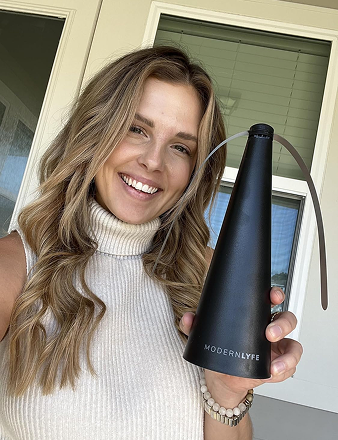
Ready to create a truly mosquito-free outdoor experience? The fans from MODERN LYFE are designed to blend style with powerful, quiet performance, making them the perfect solution for any event. Explore our collection and find the right fan for your space today.