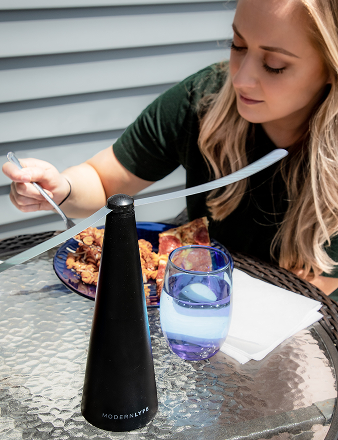
It's the classic summer problem: you create the perfect patio space, but you can't enjoy it because of mosquitoes. The solution is simpler than you think. An outdoor fan for mosquitoes is a highly effective way to reclaim your space. It works by creating a breeze strong enough to overwhelm their weak flying skills while scattering the CO2 we exhale—the primary scent they use to find us.
Reclaim Your Patio From Mosquitoes
Nothing ruins a backyard barbecue or a quiet evening faster than mosquitoes. While many people turn to chemical sprays or bug zappers, a powerful fan offers a silent, chemical-free alternative that actually works. This guide is your plan for taking back your favorite outdoor spots from these pests.
The demand for effective mosquito control is huge and growing. The global market for these products was valued at USD 418.2 million and is expected to climb to USD 529.7 million. That's a lot of people looking for a way to get rid of bugs.

Why a Fan is Your Best Defense
What makes a fan so effective against such a persistent pest? It exploits two of the mosquito's biggest weaknesses.
- They're Weak Fliers: Mosquitoes are incredibly weak flyers. A moderate breeze is too much for them to handle, making it impossible to navigate and land for a bite.
- They Follow Your Scent: Mosquitoes track the carbon dioxide (CO2) you exhale. A fan disrupts and blows away this CO2 trail, effectively making you invisible to them.
By simply moving the air, you create an invisible shield that mosquitoes can't penetrate. It’s a simple solution for an annoying problem.
Creating Your Bug-Free Zone
This guide will show you how to pick the right fan and place it in the perfect spot for maximum effect. Forget complicated gadgets or smelly chemicals. A steady breeze is your best tool.
Once you have pests under control, you can focus on upgrading your space. A fan is just one piece of the puzzle. To truly elevate your patio, explore other great outdoor entertaining accessories that create a comfortable and inviting atmosphere. With the right setup, your patio can finally become the relaxing retreat you've always wanted.
How a Simple Breeze Beats Mosquitoes
Ever notice you get fewer mosquito bites on a windy evening? That's not a coincidence. This simple observation is the secret behind why a good outdoor fan is one of the most effective mosquito-fighting tools available.
Instead of chemicals or zappers, a fan uses a mosquito's own biology against it. By creating a steady breeze, you exploit two fundamental weaknesses in their ability to hunt, creating a powerful no-fly zone around your favorite outdoor spot.
Exploiting Their Weak Flight
First, mosquitoes are terrible flyers. They are incredibly lightweight and fragile in the air, which makes them extremely vulnerable to wind.
Imagine trying to fly a paper airplane in a stiff breeze—it just gets tossed around. A mosquito is in the same position. It simply doesn't have the strength or mass to fight against a steady current of air.
Studies show that wind speeds as low as 2 mph are enough to make it nearly impossible for a mosquito to fly and navigate. Almost any decent outdoor fan can produce that airflow, effectively building an invisible wall these pests can't cross.
Creating a Cloak of Invisibility
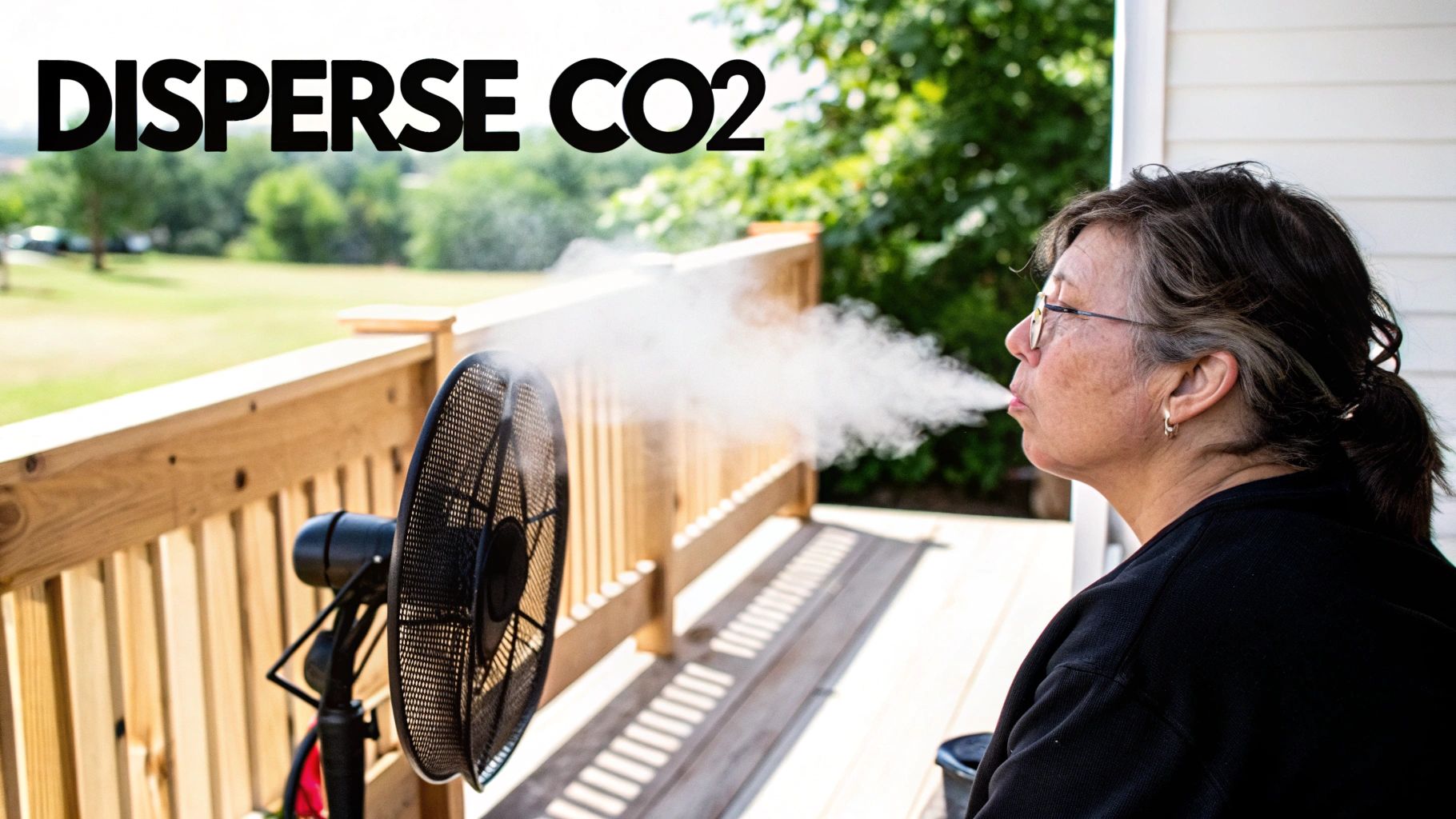
The fan does more than just blow them away; it also makes you invisible to them. Mosquitoes don't hunt by sight. Their primary tool for finding a meal is their ability to detect the carbon dioxide (CO2) we release with every breath.
As you sit on your patio, you constantly exhale a concentrated plume of CO2. Mosquitoes can lock onto this trail from over 100 feet away and follow it like a homing beacon right to you.
This is where the fan works its real magic.
The breeze from the fan immediately captures your CO2 cloud, breaks it apart, and scatters it. Without a concentrated trail to follow, mosquitoes get confused and can't pinpoint your location. You're effectively hidden in plain sight.
It’s like scrambling their GPS. The fan doesn't just put up a barrier; it removes the signal they need to find you.
The Science of Disruption in Action
This combination of physical and sensory disruption is what makes a fan so effective. It’s a simple, elegant solution that uses basic physics to create a comfortable, bite-free zone.
Here's how it works:
- Physical Barrier: The airflow is too strong for these weak flyers to push through, keeping them at a distance.
- Sensory Jamming: The breeze disperses your CO2 and other body odors, scrambling the scent trails mosquitoes rely on to hunt.
- Cooling Comfort: As a bonus, the breeze keeps you cool and helps evaporate sweat—another scent that attracts mosquitoes.
This combination makes an outdoor fan for mosquitoes a practical and powerful way to take back your deck or patio. There are no chemicals, strange smells, or refills to worry about. Just turn it on and enjoy a more comfortable, pest-free outdoor experience.
Choosing the Right Outdoor Mosquito Fan
Selecting an outdoor fan to keep mosquitoes away isn't about style. Not all fans are created equal, especially when it comes to surviving the elements and delivering enough power to clear the air. To get real results, you have to focus on the specs that matter for fighting bugs.
This is a bigger deal than ever for homeowners and businesses. The global market for mosquito control is already worth USD 676.0 million and is expected to grow to USD 2,300.84 million in the near future. That jump proves one thing: people are serious about taking back their outdoor spaces and want solutions that work.
The Most Important Metric: CFM
When comparing fans, one number is more important than any other for mosquito control: CFM, or Cubic Feet per Minute. This tells you exactly how much air the fan moves. The higher the CFM, the stronger and more far-reaching the breeze.
Think of it like horsepower in a car. A fan with a high CFM rating creates a powerful current of air that mosquitoes can't fly through. It also does a much better job of scattering your scent (the CO2 you exhale), making you harder for them to find.
For a typical patio or deck, look for a fan with at least 2,000 CFM. That's an excellent starting point for creating a reliable bug-free zone.
A weak fan might feel nice up close, but it won’t create the broad, protective barrier you need to keep an entire area clear of mosquitoes. Prioritizing a high CFM is the single best move you can make.
Outdoor Safety Is Non-Negotiable
Never use an indoor fan outside. It's a significant safety risk. Indoor fans aren't built to handle humidity, dew, or rain. Moisture can cause short circuits, rust, and serious electrical hazards.
Always check for a UL Wet Rating. This certification means Underwriters Laboratories has tested and approved the fan's motor and wiring to be completely sealed against direct contact with rain and water.
- Wet-Rated Fans: This is the gold standard. You can install these in totally exposed areas like pergolas, open decks, and patios without worrying about weather.
- Damp-Rated Fans: These are suitable for covered spaces like screened-in porches or covered patios, where the fan is shielded from direct rain but still exposed to humid air.
Choosing a UL Wet-Rated fan isn’t just a recommendation—it’s a critical safety measure.
Comparing Different Fan Types
Outdoor fans come in several different styles, and the right one depends on your space and how you use it. Let's break down the options.
To find the perfect fan for your space, you'll need to weigh the pros and cons of each type. This table helps clarify which style is the right match.
Comparing Outdoor Fan Types for Mosquito Control
| Fan Type | Best For | Pros | Cons |
|---|---|---|---|
| Pedestal Fans | Patios, decks, and open areas needing flexible coverage. | Highly portable and adjustable, allowing you to aim airflow exactly where it's needed. | Can take up valuable floor space and may be a trip hazard in high-traffic areas. |
| Wall-Mounted Fans | Smaller patios, covered porches, and outdoor kitchens. | Saves floor space and can be positioned to create widespread, consistent airflow from above. | Less portable once installed; has a more limited range of motion compared to pedestal fans. |
| Misting Fans | Hot, dry climates and large, open-air venues like restaurant patios. | Provides powerful mosquito control while also significantly cooling the air with a fine mist. | Requires a continuous water source and may be less comfortable in already humid climates. |
Sometimes, a smaller, more focused solution is all you need. For keeping bugs off a dining table or a small seating area, you can learn more about the best outdoor table fans.
Ultimately, the best fan combines a high CFM, a UL Wet Rating for safety, and a design that fits your layout. Get those three things right, and you'll be well on your way to a comfortable, bite-free retreat.
Strategic Fan Placement for a Bug-Free Zone
Getting a powerful outdoor mosquito fan is a great start, but its effectiveness depends entirely on smart placement. It's not enough to just turn it on; where you put it determines whether you get a nice breeze or a true bug-free sanctuary.
Think of it less like cooling and more like setting up a defensive perimeter. The goal is to create an invisible, continuous barrier of moving air that mosquitoes cannot cross. This requires a little tactical thinking about wind direction, seating arrangements, and your fan’s effective range.
Fortunately, mastering this is simple.
By following a few core principles, you can maximize your fan's impact and ensure your patio, deck, or backyard party stays comfortable and bite-free.
The Golden Rule of Fan Placement
If you remember only one thing, make it this: place your fan upwind of your seating area.
This means the breeze should blow from the fan, across the space you want to protect, and then away from you. This setup achieves two critical things at once.
First, it creates that powerful buffer of moving air. Mosquitoes are weak fliers and can't push through a steady current. Any bug trying to approach from upwind gets blown away.
Second, this setup whisks away the carbon dioxide (CO2) you exhale before it can alert mosquitoes. The upwind placement sends your scent trail downwind, far away from your group, making you practically invisible to pests.
The most common mistake is placing the fan downwind. It feels cool, but it does almost nothing to stop mosquitoes. In fact, it blows their primary attractant—your CO2—right back into the area you're trying to protect.
Creating Overlapping Zones of Protection
For larger patios or bigger gatherings, a single fan might not be enough. The solution isn’t a bigger fan, but using multiple fans to create overlapping zones of airflow. This ensures there are no "dead spots" where mosquitoes can find a calm path to sneak through.
Here’s how to set up your defenses:
- For a Rectangular Patio: Place one fan at each of the two upwind corners. Angle them slightly inward to create a cross-breeze that covers the entire seating area.
- For a Round Seating Area: Position two or three fans around the upwind side, all aimed toward the center. This creates a protective dome of air.
- For a Long Deck: Set up a series of fans along the upwind edge, spaced about 10-15 feet apart. This creates a continuous curtain of air, like an invisible screen door.
When choosing your fans, it's a good idea to think about airflow, safety, and the right type for your space. This visual guide breaks down the key steps.

As the infographic shows, a systematic approach—focusing first on performance (airflow), then safety, then style—will lead you to a much more effective solution.
Common Placement Mistakes to Avoid
Even the best fan won't work if it's set up incorrectly. Avoiding these common mistakes is just as crucial as following the golden rule.
- Placing the Fan Too High: Mounting a fan high on a ceiling might seem like a good way to cover a large area, but the breeze often passes over your head. The airflow needs to be at body level to physically block mosquitoes.
- Positioning it Too Far Away: Every fan has a limited effective range. If you set it up too far from your seating area, the breeze will be too weak to make a difference by the time it reaches you. You should be able to feel a steady, gentle wind.
For a deeper dive into different fan models and their strengths, check out our comprehensive guide on outdoor fans to keep bugs away. By pairing the right equipment with a little strategy, you can finally take back your backyard.
Keeping Your Fan in Fighting Shape
Your outdoor mosquito fan works hard, battling dust, pollen, and humidity. Like any good tool, a little regular upkeep is all it takes to keep it running effectively.
Consistent maintenance isn't just about protecting your investment. It’s about making sure your fan is always ready to create a powerful, mosquito-free zone when you need it.
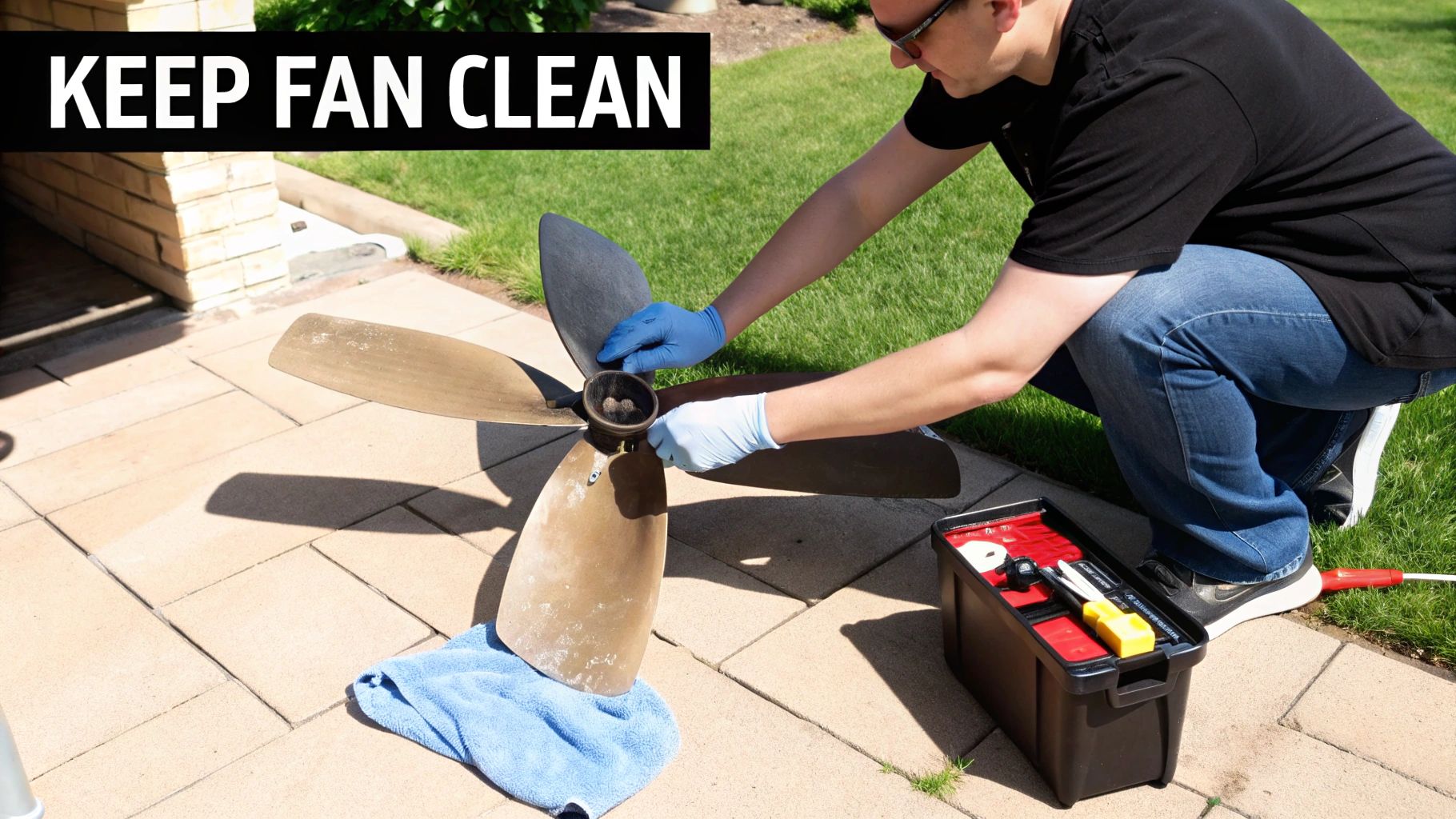
A quick, 15-minute tune-up at the beginning of the season can make all the difference. A clean fan is a powerful fan, and a well-maintained one gives you peace of mind.
Your Seasonal Maintenance Checklist
First, always unplug the fan before cleaning or inspecting. Safety is non-negotiable. Once the fan is disconnected, run through these simple checks to keep it in prime condition.
A quick wipe-down every few uses is a great habit, but a deeper clean at the start and end of the season is key to longevity.
- Wipe Down the Grilles and Blades: Use a damp cloth with a little mild soap to clean the front and back grilles. You'd be surprised how much gunk can build up, restricting airflow by as much as 20-30%. Then, carefully wipe each blade. Caked-on dust can throw the blades off-balance, putting extra strain on the motor.
- Inspect the Power Cord: Outdoor cords take a beating. Check the entire cord for cracks, frays, or weak spots caused by sun and weather. If you see any damage, don't use the fan. Contact the manufacturer about a repair or replacement.
- Check for a Solid Stance: For a pedestal fan, give it a little shake. Is the base secure? Is the pole tight? A wobbly fan is a hazard, especially with kids or pets around.
A fan with dirty blades has to work much harder to push air. This not only makes it less effective against mosquitoes but also burns out the motor over time.
Smart Off-Season Storage
When the weather turns cold, properly storing your fan is the best way to ensure it's ready for next spring. A few easy steps now will save you hassle later.
Find a dry, clean spot—a garage, shed, or basement is perfect. The goal is to avoid places with extreme temperature swings or high moisture.
- Do One Last Clean: Before you put it away for the winter, give it a final, thorough cleaning. This stops grime from settling into the motor and other internal parts.
- Cover It Up: If you have the original box, use it. If not, a large plastic bag or an old sheet will work. This keeps out dust and moisture.
- Store It Somewhere Dry: Never leave your fan outside to face snow and ice. Storing it in a protected spot prevents rust and keeps the motor safe from corrosion.
Taking these simple steps ensures that the moment the weather warms up, your fan will be ready to perform just as well as the day you bought it.
Your Mosquito Fan Questions, Answered
Even after doing your research, a few questions always come up when choosing an outdoor fan. Let’s cover some of the most common ones.
This is your final checklist to ensure you’re getting the right fan and using it for maximum effect.
How Much Power Do I Really Need?
The most important spec is CFM, or Cubic Feet per Minute. It's a direct measure of how much air the fan moves. While there isn't a single magic number for every patio, you're aiming for a breeze that can hit around 10 MPH—the sweet spot for knocking weak-flying mosquitoes out of the air.
For a typical patio, look for a fan with at least 2,000 CFM. That's a solid baseline for creating a bug-free zone. Anything more powerful just gives you a larger, more reliable bubble of protection.
Can't I Just Drag My Indoor Fan Outside?
Absolutely not. This is a huge safety hazard. Indoor fans aren't built to withstand humidity, dew, or a surprise rain shower, creating a recipe for disaster.
Crucially, any outdoor fan must have a UL 'wet' or 'damp' rating. This isn't just a suggestion; it's a certification that means the motor and electrical components are sealed and protected from moisture. This prevents rust, short-circuiting, and the real risk of electrical shock.
Do Misting Fans Give Me an Edge?
Misting fans can add another layer of defense. The strong breeze does the heavy lifting by physically blowing mosquitoes away and scattering the CO2 you exhale. But the mist introduces a new weapon: cooling.
The drop in temperature makes the area less inviting for pests that thrive in hot, still air. They're a fantastic choice for dry, scorching climates, though they can make things feel a bit clammy in areas with high humidity.
Is a Fan a Silver Bullet for Mosquitoes?
A good fan is one of the most effective tools for creating a comfortable, bite-free area, but it's not a silver bullet. The best results always come from a multi-pronged approach.
Think of your fan as the star player on a team. For total yard defense, back it up with a few simple habits:
- Eliminate Standing Water: Once a week, dump out any water from buckets, birdbaths, old tires, or clogged gutters. This is where mosquitoes lay their eggs. No water, no new mosquitoes.
- Keep Your Yard Tidy: A mowed lawn and trimmed bushes get rid of the shady, damp spots where adult mosquitoes rest during the day.
When you pair a powerful fan with basic yard maintenance, you create a defense that’s tough for any mosquito to beat.
Ready to reclaim your patio with a stylish and effective solution? MODERN LYFE offers a range of expertly designed fans that keep your gatherings comfortable and pest-free. Discover the perfect addition to your outdoor space by visiting https://modernlyfe.com.