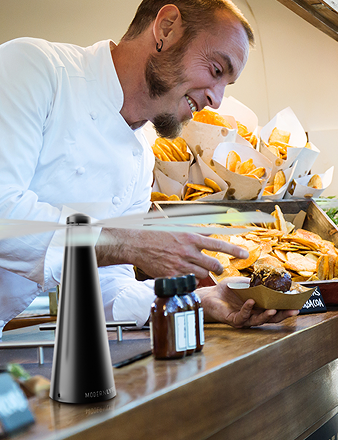
A patio can look ready right up until the first few mosquitoes show up, and then service gets awkward fast. Guests start swatting, staff start apologizing, and the whole setup feels worse than it looked ten minutes earlier. An outdoor fan to keep mosquitoes away can help, but only if it's treated like a tool with a real airflow target, not a decorative extra.
Why Outdoor Fans Change the Mosquito Equation
A host can do everything right, lights dimmed, drinks chilled, table set, and still lose the patio to mosquitoes the second the evening gets still. That's because mosquitoes don't need much help to find people, and they're not trying to land in calm air if they can avoid it. Move the air across the seating zone, and you make the job harder for them in ways that matter.
The fan changes what mosquitoes can read
Mosquitoes use moving cues, odor cues, and landing opportunities to complete the approach. In a Central Michigan wetland field experiment, an electric fan directed about 0.6 m/s of DEET-treated air at a human subject reduced mosquito orientation by 74%, landing by 75%, and probing by 70% compared with no wind or DEET (study details). That's not magic, it's disruption. The airflow makes it harder for mosquitoes to finish the sequence that ends with a bite.
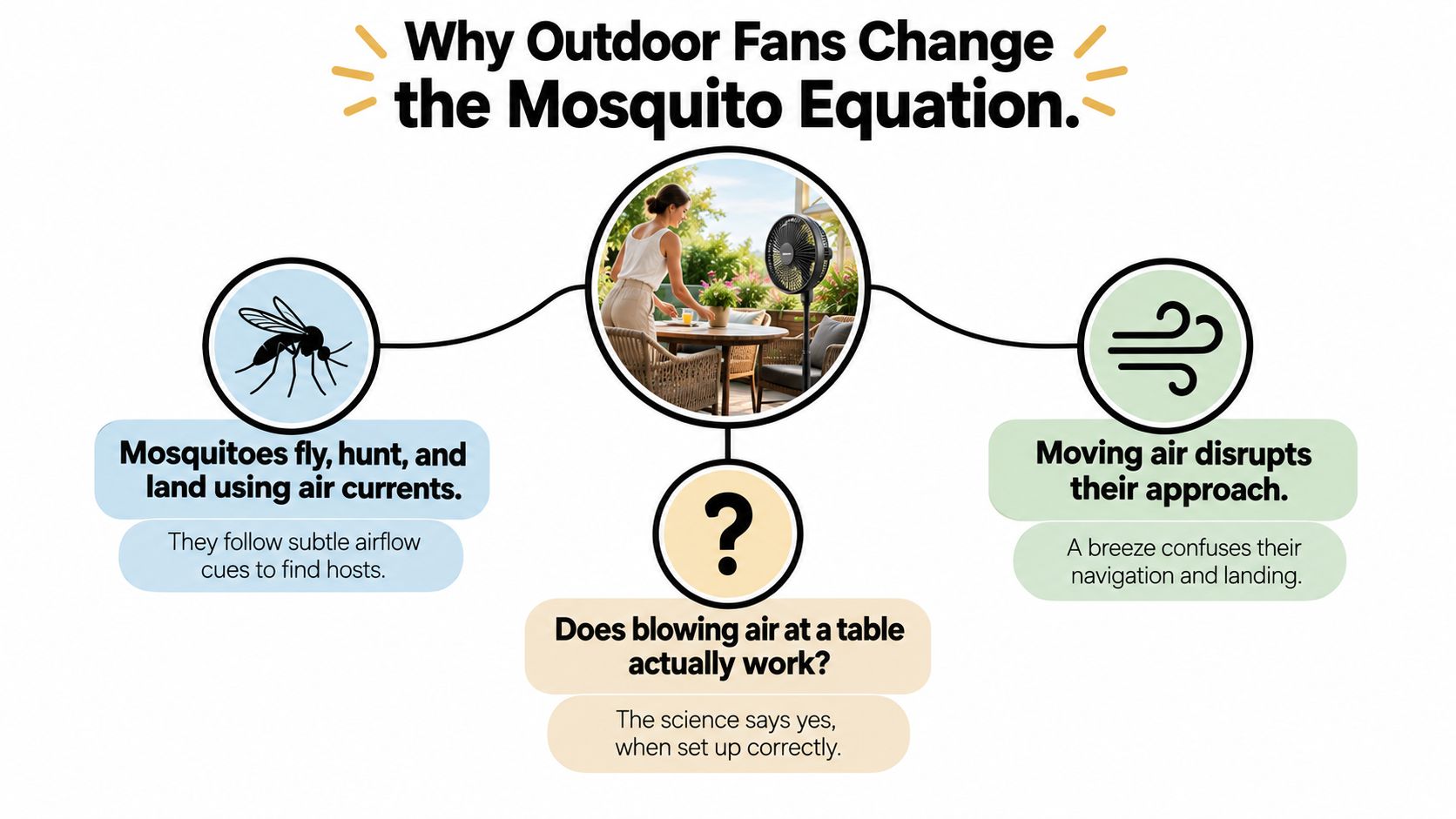
The practical takeaway is simple. A fan doesn't erase mosquitoes from the property, it creates a local zone where approach, landing, and probing become harder. That's why a fan placed beside a patio table can feel far more useful than one moving air somewhere else in the yard.
Practical rule: if the breeze isn't reaching the guest's chair, it isn't doing the job.
For a deeper companion piece on the same topic, this guide on outdoor fans and bugs is worth a look.
How Moving Air Actually Stops Mosquitoes
The useful part of fan-based mosquito control comes down to two things, and they work together. First, airflow spreads out the carbon-dioxide and body-odor trail that mosquitoes follow. Second, it can push past the mosquito's own flight envelope, so the insect has a harder time holding position long enough to land.
Odor gets diluted before it becomes a target
A five-hectare Michigan field study from June to September 2000 used 51 cm electric floor fans and found that trap captures of CO2-baited mosquitoes declined steadily as wind speed rose from 0 to 3.7 m/s, while tripling the CO2 release rate roughly doubled captures at every wind level (field study). That combination tells you something important about patio service, the air stream matters because mosquitoes are following a plume, not a blank space. If the plume gets spread out, the target gets harder to lock onto.
Weak airflow is not a barrier
Controlled research has also shown that host-seeking flight can remain steady at low air velocities, which is why a fan pointed the wrong way doesn't do much. A useful design benchmark is about 0.5 to 1.0 m/s at the occupied perimeter, measured where people sit rather than at the fan outlet (field benchmark). That matters more than the label on the box. The chair gets protected, not the motor.
If you're trying to solve heat and mosquito pressure at the same time, a practical home cooling help resource can also be useful for broader comfort planning around outdoor living areas.
For a related operational angle, this mosquito-control fan guide fits well with patio and hospitality use cases.
Placing the Fan for Real Patio Coverage
A fan only works when the air crosses the right part of the room, and outdoors that means the guest zone, not the ceiling line. I've seen plenty of setups where the fan feels strong standing next to it, then does almost nothing at the far chair. That's the mistake to avoid.
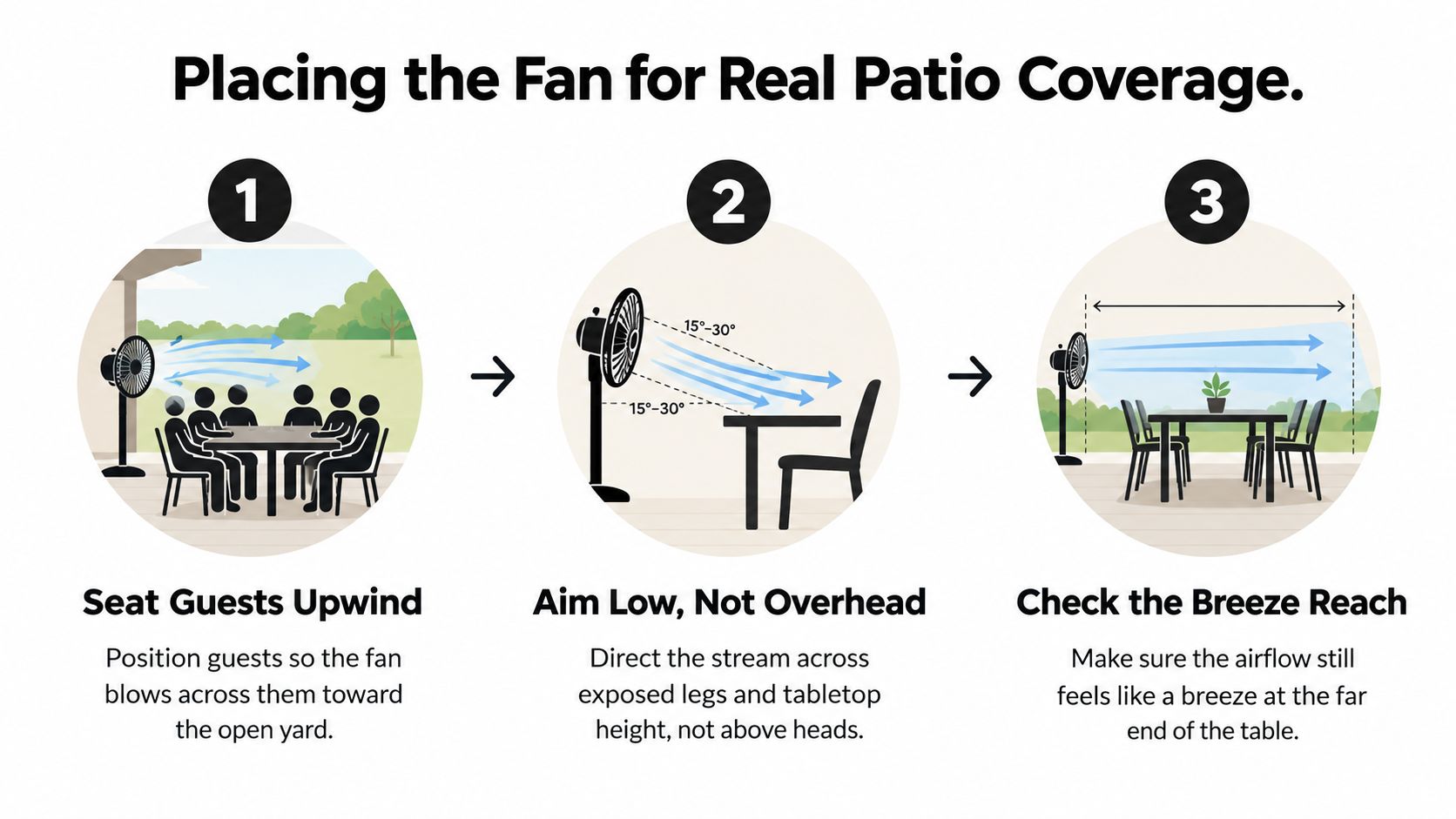
Aim across the body, not over the heads
Place the fan on the upwind side or the side mosquitoes are likely to come from, then aim it across exposed legs and tabletop height. The stream should travel through the seating zone, not float harmlessly above it. If you're running a buffet, the same rule applies, the airflow needs to cross the serving edge where hands and faces stay longest.
A steady breeze across the occupied edge beats a stronger blast that misses the people.
Recheck the setup after you add umbrellas, risers, decorative screens, or extra chairs. Those objects create dead zones, and mosquitoes know how to use them. A ribbon, a strip of napkin, or a simple handheld anemometer can tell you whether the airflow still reaches the far seat.
Keep the breeze continuous
Don't cycle the fan on and off during service. Mosquitoes use pauses, sheltered corners, and any still-air gap they can find. The fan has to stay on for the whole exposure window, especially when the table is full and people aren't moving much.
If you're designing the layout from scratch, design your Austin backyard with airflow in mind instead of treating the fan as a patch for a bad plan.
Choosing the Right Fan for Your Setup
Usable airflow at the guest's seat matters more than fan volume or a sleek housing. A pedestal fan, tabletop fan, clip-on model, and ceiling fan each fit a different service layout, so choose the format around the space first.
| Fan Format | Best Setting | Coverage Focus |
|---|---|---|
| Pedestal fan | Open patios and larger dining sets | Cross-flow across a wider seated zone |
| Tabletop fan | Intimate dining tables and small terraces | Targeted airflow at guest height |
| Clip-on fan | Food trucks, service stations, compact bars | Narrow, directional coverage where space is tight |
| Ceiling fan | Covered pavilions and pergolas | Broad overhead movement, often better as a comfort layer than a mosquito barrier |
A pedestal fan is the simplest option for pushing air across a table edge and through a wider seating zone. A tabletop fan works well when the table is small and you can place it without crowding plates or service items. Clip-on models fit when floor space is gone, which is common in bar service and mobile setups. Ceiling fans help with comfort under cover, but they usually need another fan or a cross-breeze to do real mosquito work.
For a product-selection perspective, this outdoor fan buying guide for mosquitoes is a practical companion.
Dialing In Speed, Direction, and Coverage
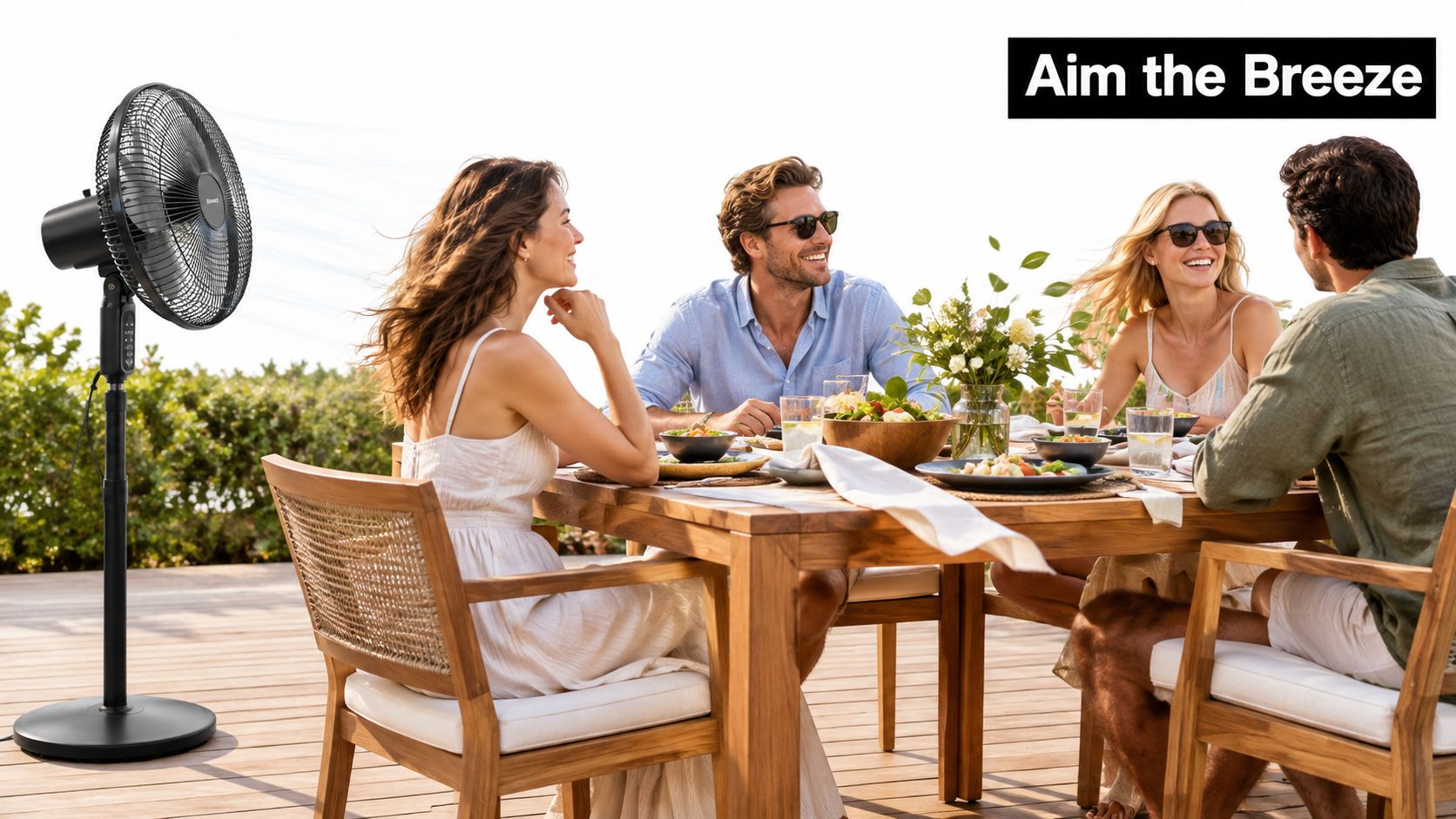
The setup is only right when the breeze still reaches the far side of the table. That is the point where mosquito control becomes usable during service. Too little airflow leaves the ends of the table exposed, while too much sends napkins and menu cards moving.
Verify the breeze where people sit
Check airflow at seat height, not at the fan grille. A ribbon tied to a chair, or a smartphone anemometer at the far end of the table, gives a better read than guessing from the patio edge. If the guest at the end barely feels a breeze, mosquitoes can use that still pocket.
Add a second fan only when the first cannot span the zone
Long tables, buffet lines, and outdoor receptions often need overlapping airflow. One fan can cover a compact dining set, but a long service line usually needs a second unit to carry the cross-flow through the full seating area. If paper menus slide, napkins lift, or drinks start to move, the airflow has crossed from useful to disruptive and should be turned down.
Don't give mosquitoes a pause to exploit
Mosquitoes do not need much of an opening. A fan that shuts off between courses or during a speech gives them the still air they need to return. Keep the airflow on for the full service window, then shut it down only after guests leave the space.
When a Fan Is Not Enough
A fan helps most when the evening is warm, still, and people are clustered around food. It helps less when mosquito pressure is high and the rest of the yard is still full of breeding or resting sites. Dusk to dawn is a high-activity window, and public-health guidance still recommends layering protection instead of betting everything on airflow (public-health guidance).
Add the layers that actually change risk
Wear long sleeves when the setting allows it, use an EPA-registered repellent, and treat standing water as a maintenance issue, not an afterthought. The CDC also recommends removing or managing water sources, including emptying and scrubbing items that hold water on a weekly basis, and using outdoor spray in dark, humid resting spots under patio furniture or in similar areas, while following label directions (CDC prevention guidance). That's the part a fan can't do.
Know the difference between airflow and a spatial repellent
A plain fan moves air. It does not become an insecticide, and it doesn't automatically act like a repellent product. EPA guidance says outdoor spatial repellents may use a fan or another dispersal mechanism, but they depend on the label, the area covered, wind conditions, and the product's own instructions (EPA guidance). That distinction matters for hospitality service because guests should never assume every fan-based device works the same way.
If you manage restaurants, events, or home gatherings, the honest pitch is this, use the fan for local comfort, then back it up with the rest of the mosquito plan.
A Quick Pre-Event Fan Setup Checklist
Start with the upwind side of the table or service area, then aim the airflow across exposed legs and tabletop height. Confirm that the breeze still reaches the far chair, and adjust if umbrellas, decor, or buffet pieces create dead spots. Leave the fan running the entire time guests are in the zone.
Pair that setup with repellent, long sleeves when appropriate, and standing-water control on the property. On the nights when mosquitoes are at their worst, the goal isn't a mosquito-free yard, it's a comfortable zone where guests can eat without swatting.
MODERN LYFE helps hospitality teams and homeowners build cleaner outdoor service moments with practical fan-based insect control. If you're planning patios, receptions, or backyard dining and want a clearer way to think about airflow and guest comfort, visit MODERN LYFE to see how the approach fits your setup.