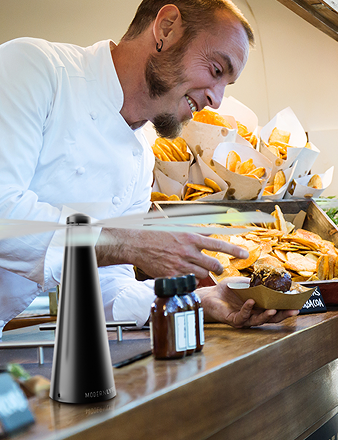
You're standing at checkout with a purchase you need, not a random impulse buy. Maybe it's patio equipment for your restaurant, a set of table fly fans for wedding season, a replacement freezer for your food truck, or a major appliance for your home. The problem isn't whether the item matters. The problem is paying for it all at once without squeezing payroll, inventory, or your monthly budget.
That's where payment plan options help. They let you turn one large hit into a series of smaller decisions. Done well, that protects cash flow and keeps your plans moving. Done poorly, it creates the kind of slow financial stress that shows up a few months later, when the low monthly payment doesn't feel so low anymore.
Making Big Purchases More Manageable
A restaurant owner spots the right upgrade for an outdoor dining area. It solves a problem, improves guest comfort, and supports service during busy evenings. But buying everything upfront would eat into the same cash needed for produce orders, staffing, and utilities. So the question becomes: buy later, or buy now with a payment plan that fits the business?
That same math shows up at home. A homeowner planning a backyard graduation party needs equipment now, not three months from now. A caterer heading into wedding season needs gear before the first event, not after the peak dates are gone. In both cases, timing matters just as much as price.
Digital checkout has made these choices much easier to access. McKinsey's 2025 Global Payments Report says global payments revenue reached $2.5 trillion, while cash fell to 46% of worldwide payments, with digital wallets and account-to-account payments expanding the rails that modern installment options use.
Why this matters for real purchases
Payment plans work a lot like prep in a professional kitchen. You're not changing the meal. You're changing how the work gets staged so service runs smoothly. Instead of one giant upfront payment, you spread the burden in a way your budget can handle.
That's why merchants now offer more than one checkout path. Some plans are built for speed. Others are built for larger purchases and steadier repayment. If you want a merchant-side view of one common model, this breakdown of how Splitit works for merchants is useful because it explains the operational side, not just the customer pitch.
A good payment plan should make the purchase easier to manage, not harder to understand.
The first question to ask
Before comparing lenders or checkout buttons, ask one plain question: Do I need a lower payment, or do I need lower total cost?
Those two goals aren't always the same. If you mix them up, you can end up choosing a plan that feels comfortable today but costs more than expected later.
The Six Main Types of Payment Plans Explained
Some payment plans are simple and predictable. Others are flexible but easier to misuse. The fastest way to get clear is to treat each plan like a different service model. A fixed tasting menu is not the same as an open bar tab, even though both involve paying for food and drink.

Installment plans
This is the cleanest model. You buy the item now and repay it in equal scheduled payments over a set period.
Stripe's guide to payment plans for businesses notes that installment plans are usually structured as fixed, scheduled payments, which makes them easier to budget for. That's why they're common for equipment, furnishings, home goods, and other purchases where predictability matters.
A simple example is buying several patio accessories and paying the same amount each month until the balance is done. You know the date, the amount, and the finish line.
Revolving credit
This is the credit card model. You have a borrowing limit, you spend up to it, you repay, and then you can borrow again.
That flexibility can help with uneven business expenses, but it can also blur the true cost of one specific purchase. If you use the same line for repairs, supplies, fuel, and equipment, it gets harder to track what your patio upgrade or catering gear is really costing you.
Deferred payment
Deferred payment means you buy now and start paying later, or you delay part of the payment.
This can be helpful when you need a little breathing room before cash starts coming in from bookings or seasonal sales. It's common in retail checkout financing and in some business-to-business invoicing arrangements. If you handle supplier terms or account-based sales, Steingard Financial's net 30 guide gives a practical explanation of one delayed-payment structure businesses often encounter.
Subscription model
A subscription is recurring payment for continued access, service, or replenishment.
This works better for software, maintenance plans, service contracts, or consumables than for one-time equipment ownership. In a hospitality setting, think of this like paying monthly for reservation software or inventory tools rather than paying once for a physical product.
Lease-to-own
Lease-to-own sits between renting and buying. You make periodic payments to use the item, and depending on the agreement, you may have the option to purchase it later.
This can fit high-cost business equipment when preserving cash matters more than immediate ownership. But it needs careful reading. Some lease-to-own agreements feel affordable month to month while carrying a much higher overall cost.
Usage-based billing
Usage-based billing ties your payment to actual consumption.
For hospitality operators, this structure is familiar even outside financing. Utility bills, cloud software, and some service contracts already work this way. It can be fair when usage rises and falls with business volume, but it's not ideal if you need a perfectly fixed monthly budget.
Where BNPL fits
Buy Now, Pay Later usually sits under short-term installment or deferred-payment models. It's become mainstream. The Consumer Financial Protection Bureau reported that six major BNPL firms in the U.S. served 53.6 million consumers and originated $45.2 billion in loans in 2023 in its BNPL market report.
Practical rule: Use short, fixed plans for purchases you can clearly repay from near-term income. Use more flexible structures only when the purchase cycle or your cash flow is less predictable.
Comparing Your Payment Options Head-to-Head
The right plan depends less on marketing language and more on four things: cost, ownership, credit impact, and flexibility. If you compare those directly, the fog clears fast.
Payment Plan Option Comparison
| Plan Type | Best For | Typical Cost | Ownership | Credit Impact |
|---|---|---|---|---|
| Installment plan | Specific purchases with a clear payoff window | Often straightforward, may include interest or fees depending on term | Usually yes once paid according to terms | Varies by provider and reporting practice |
| Revolving credit | Ongoing spending needs and short-term flexibility | Can become expensive if balances carry | Yes for purchased item, but debt remains separate | Often tied closely to credit usage and payment behavior |
| Deferred payment | Buyers expecting cash soon and needing short breathing room | Can be low cost if paid within terms, costly if not | Usually yes | Varies by provider |
| Subscription model | Services, support, software, or replenishment | Ongoing recurring cost | Usually no ownership of underlying service | Usually limited unless tied to financing or collections |
| Lease-to-own | Expensive equipment when preserving cash matters | Can be higher overall than buying outright | Sometimes only after completing all terms or purchase option | Varies by agreement |
| Usage-based billing | Costs that rise and fall with actual use | Variable, less predictable | Usually not tied to ownership | Usually limited unless financing is involved |
Why fixed schedules feel easier
Stripe notes that fixed, scheduled installment plans reduce ambiguity, while short-term plans are often interest-free and longer-term plans may add interest or financing fees to cover risk and delayed cash flow, as explained in its earlier-cited business payment plan guidance.
That budgeting benefit is real. When your payment amount stays the same, you can treat it like rent, internet, or payroll software. It becomes part of the monthly rhythm instead of a surprise.
The tradeoffs that matter most
If ownership is your priority, installment plans are usually cleaner than subscriptions and many leases. If flexibility matters more than precision, revolving credit or usage-based structures may feel easier, but they can also make future obligations harder to predict.
For business buyers, this often comes down to one practical question: Will this item produce value for a long enough period to justify the structure I'm choosing? A short-lived need shouldn't lock you into a long obligation. A durable tool you'll use every week may justify a more formal payment plan.
When the payment structure is easy to explain in one sentence, it's usually easier to manage in real life too.
Which Payment Plan Is Best for You
Different buyers need different answers. A restaurant owner buying for service flow isn't making the same decision as a homeowner buying for one event. A caterer with seasonal income has a different risk profile than a resort manager with steady bookings.

For restaurants and hospitality venues
If you're outfitting a patio, buffet area, or outdoor dining setup, avoid treating a business equipment purchase like random everyday spending. Revolving credit is easy, but it can bury the true cost inside a larger card balance.
A structured installment plan or merchant financing option usually makes more sense for a business asset. It gives you a defined payoff path and cleaner budgeting. For example, if you're comparing table-ready insect-control gear, MODERN LYFE offers battery-operated fly fans designed for restaurants, hotels, caterers, and home gatherings, and that kind of operational purchase is often a better fit for a dedicated plan than a general-purpose credit card.
For caterers and seasonal operators
If your income swings during the year, your plan should respect that reality. The principle behind income-driven repayment is that payments should match ability to pay, and the IHEP overview of income-driven repayment highlights why that matters for people with unstable or seasonal income.
That same logic applies outside student loans. If you're a caterer who earns heavily during wedding season and slows down later, look for plans that offer flexibility, deferment, or a repayment schedule that lines up with your cash cycle. A rigid payment can feel manageable in June and painful in January.
For homeowners and one-off buyers
If you need one or two items for a backyard event, small upgrade, or household replacement, a short-term installment or BNPL-style plan is often the simplest path. The key is keeping the term short enough that the purchase doesn't linger in your budget long after the event is over.
Don't overfinance a small purchase. If the item solves a temporary problem, you don't want the payments becoming a long-term fixture.
A simple decision filter
Use this quick filter before you choose:
- If the purchase helps generate revenue: lean toward structured business financing or installments.
- If your cash flow rises and falls: favor flexibility over the absolute lowest advertised monthly payment.
- If the purchase is small and immediate: short-term checkout installments usually keep things simplest.
- If you're unsure what your budget can really handle: spend a few minutes mastering financial planning so you're choosing from a plan, not from stress.
How to Evaluate and Apply for a Payment Plan
A payment plan should survive a basic stress test before you apply. If the terms only look good when everything goes perfectly, the plan is too fragile.

Start with your own numbers
Write down what monthly payment fits comfortably, not optimistically. Then ask how the purchase will be paid if sales dip, bookings move, or an unexpected repair lands in the same month.
A plan that only works in your best month isn't a good plan.
Review the terms line by line
Use this checklist:
-
Monthly payment amount
Know the exact scheduled payment and due date. -
Repayment length
A longer term lowers the payment, but it can raise the total cost. -
Interest and fees
APR is the yearly cost of borrowing expressed as a rate. If fees exist, ask whether they're included in that figure or added separately. -
Late payment consequences
Check for penalties, default terms, and whether one missed payment changes the entire agreement. -
Early payoff rules
Some plans let you pay ahead freely. Others don't reward early repayment.
Read the agreement like a catering contract. The important part isn't the headline price. It's what happens when timing changes, someone cancels, or a payment arrives late.
A quick visual summary can help while you compare providers:
Prepare before you submit
Applications usually move faster when you already have your basics ready. Depending on the provider, that may include identification, business details, income information, or bank and payment method details.
Keep your answers consistent across forms. Small mismatches can slow approval or trigger extra review.
Ask one final question
Before signing, ask: If I had to explain this plan to a business partner or family member in two sentences, could I do it clearly?
If not, pause. Confusing financing rarely becomes clearer after you accept it.
Payment Plan Scenarios Good and Bad
Two buyers can choose plans with similar monthly payments and end up in very different places.
The savvy caterer
A caterer needs new event equipment before peak season. She chooses a short-term installment plan with clear dates and a payoff window she can cover from booked events. She treats each payment like a prep list item. Scheduled, expected, and tied to actual revenue timing.
The result is calm cash flow. The purchase supports the business, and the plan ends before the off-season squeeze begins.
The overwhelmed restaurant manager
A restaurant manager sees a low monthly offer and signs quickly without focusing on total cost, fees, or the full term. The payment looks manageable at first. Later, the agreement feels like a slow leak. It lasts longer than expected, costs more than expected, and limits room for other operating expenses.
The trap is simple. The lowest monthly payment can be the most expensive choice overall. The Student Loan Borrower Assistance guide on choosing a payment plan makes this broader point clearly: lower payments often mean a longer repayment horizon and more interest over time.
The lesson
A good plan fits both the purchase and the buyer's real cash pattern. If either side is mismatched, the friction shows up later.
Cheap per month and cheap overall are not the same thing.
Frequently Asked Questions About Payment Plans
Can you pay off a payment plan early
Sometimes, yes. Check the agreement for prepayment terms. Some providers allow early payoff with no penalty. Others may limit the benefit or structure the plan so you don't save much.
What happens if you miss a payment
It depends on the provider. You may face a late fee, lose promotional terms, trigger collections activity, or damage your credit if the account is reported. Don't assume a small missed payment stays small.
Will multiple payment plans hurt your credit
They can, depending on the provider, the number of plans you take on, and how those accounts are reported. Even when a single plan seems manageable, several at once can crowd your monthly budget.
Do you need business credit for merchant financing
Not always. Some providers consider business history, owner information, revenue, or banking activity instead of relying only on formal business credit. Ask how the evaluation works before applying.
Is the lowest monthly payment the best option
Usually not by default. The best plan is the one you can afford comfortably and understand fully, with a total cost that still makes sense for the purchase.
If you're buying for a restaurant patio, catered event, buffet line, or backyard gathering, MODERN LYFE offers practical products built for those settings, along with flexible checkout options that can make a needed purchase easier to manage.