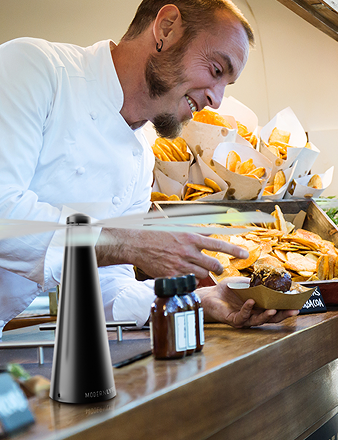
Searching for a shoo fly fan? You probably noticed you can’t buy one. That's because it’s not a real product. The term is a popular phrase for any fan used to keep flies away from food. The real solution is simpler and more effective than any mythical gadget: targeted air movement.
The Truth About the Shoo Fly Fan
If you've searched online for a "shoo fly fan," you either found a confusing mix of devices or came up empty. There’s a good reason for that—the “shoo fly fan” as a distinct product is a myth. It lives in our language, not on store shelves.
The name itself is brilliant. It’s catchy and perfectly describes the goal: to "shoo" flies with a fan. The phrase is so clear that it’s become the go-to term for protecting a meal from pests, even if the product people imagine isn't real.
Where Does the Name Come From?
The phrase likely originates from "shoofly pie," a sweet molasses dessert from Pennsylvania Dutch country. Legend says the pie's sticky surface was a magnet for flies, forcing people to constantly wave or "shoo" them away. It's a charming story, and the name stuck.
Over time, the action of "shooing flies" from a pie became associated with the technology used for the same job. This connection, however, is purely anecdotal. Historical and culinary archives show the term is almost exclusively tied to the dessert, not a device. You can discover more about the fascinating lore of shoofly pie to see how this myth likely started.
The Real Solution Hiding in Plain Sight
While you can't buy a product that doesn't exist, the principle behind it is solid. Using a fan to keep flies away is an incredibly effective, chemical-free method. Any fan that creates a steady, gentle breeze can act as a powerful fly repellent.
The key takeaway: You aren't looking for a single, mythical product. You are looking for a category of fans specifically designed to create an environment where flies can't operate.
This shift in thinking is a game-changer for restaurants, hotels, and event venues. It lets you stop chasing a phantom product and start focusing on what actually works: the science behind effective air-based fly control. The goal is to find a device that excels at three things:
- Disrupting Flight: Creates an invisible air barrier that makes it nearly impossible for flies to navigate and land.
- Dispersing Scents: Scatters food aromas that attract pests, cloaking your buffet from their senses.
- Ensuring Safety: Features soft, flexible blades that are completely safe around food, guests, and children.
This guide will walk you through the real tools that do the job of the mythical shoo fly fan. We'll break down the science of why a simple breeze defeats flies and help you find the actual products that will keep your dining areas pest-free.
Why Air Movement Is a Fly's Worst Enemy
Ever wonder why a slight breeze sends flies scrambling? It’s not your imagination. A gentle current of air is a powerful, disorienting force for a common housefly. Understanding why is the secret to keeping them away from your food without chemicals.
A fly is a masterful aviator, but it's built for calm conditions. Its tiny body and delicate wings are designed for precision in still air. Introduce a steady breeze, and its entire system is thrown into chaos.
The Science of Disruption
A consistent airflow from a fan creates a zone of turbulence. For a fly, this is like trying to land a small plane in a hurricane. The unpredictable air currents make stable flight nearly impossible.
The fly is forced to constantly correct its course and flap its wings harder just to stay airborne, burning significant energy. This battle makes it incredibly difficult to focus on landing on your food. It’s a simple deterrent that uses basic physics instead of poison.
Think of the fan's airflow as an invisible forcefield. Flies are wired to take the path of least resistance. When they encounter that turbulent air, their instinct is to turn back and find a calmer spot.
This is why a well-placed shoo fly fan is so effective. The gentle, consistent air movement establishes a no-fly zone that pests are biologically programmed to avoid. Your food stays safe, and your guests stay happy.
Scrambling Their Senses
It's not just about flight disruption. The fan's breeze also interferes with a fly's sense of smell. Flies don't see food from a distance; they follow its scent. A sizzling steak or fresh fruit releases aromatic particles that act like a trail for pests.
A fan obliterates that trail. The moving air scatters these scent molecules, diluting the smell so much that a fly can no longer lock onto the source. Your meal becomes invisible to them.
- It breaks the scent trail: The fan disperses aromas, leaving no clear path for a fly to follow.
- It creates confusion: Without a concentrated scent, flies can't pinpoint the food's location.
- It protects a wider area: This scent-scattering effect helps keep flies away from the general area of your table.
This one-two punch—disrupting their flight and jamming their sense of smell—makes air movement a brilliant strategy. It tackles both the fly's physical ability to approach and the sensory cues that lured it in. You can see more on how this works in our guide on whether fly fans work.
An Effortless and Safe Solution
The best part is how simple and safe this method is. Forget chemical sprays that contaminate food or sticky traps that are just plain gross. A fan adds nothing harmful to the environment. There are no toxic fumes, no sticky residues, and no ugly traps ruining your table setup.
For restaurants, caterers, and hotels, this is a clean, professional way to maintain high hygiene standards. For home use, it means enjoying a meal in peace without constantly swatting at pests. It’s an elegant solution that cleverly uses a fly’s own biology against it.
Choosing an Effective Fly Repellent Fan
The right fan for keeping flies away is not a standard desk fan. While any fan moves air, those designed for food protection have specific features that make them far more effective.
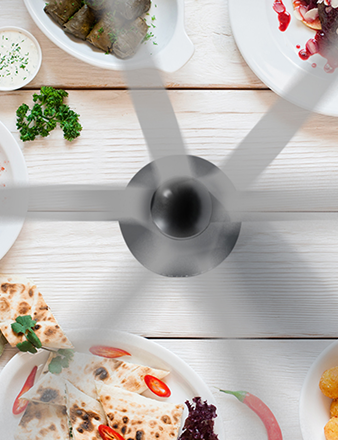
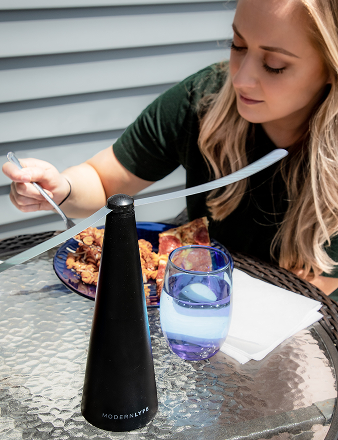
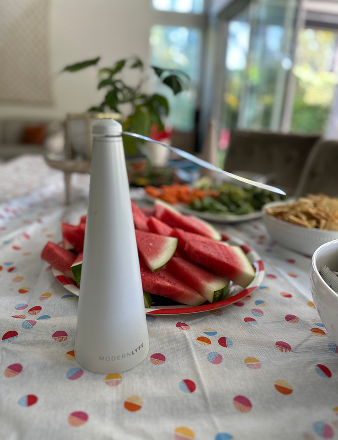
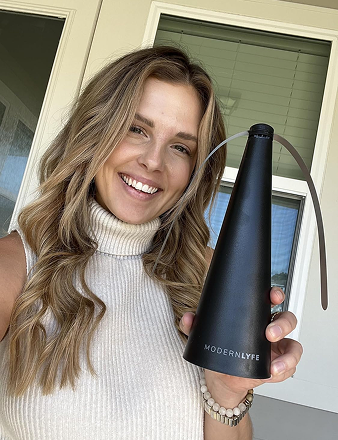
The most obvious difference is the blades. A normal fan has hard, rigid blades spinning at high speed inside a cage. A proper shoo fly fan has soft, flexible blades that are completely exposed. This design is intentional, built for safety and maximum fly-deterring power.
Blades, Safety, and Design
The hallmark of a great fly repellent fan is its soft-touch blades. They are engineered to be completely harmless. If a hand gets in the way, the motor is designed to stop instantly, causing no injury.
This built-in safety makes them perfect for busy environments like buffet lines, outdoor patios, and family gatherings. You can set them right next to the food without a bulky safety cage.
Many blades also feature a clever design element: reflective, holographic patterns.
- Disorienting Patterns: These shiny patterns bend and reflect light in a chaotic, unpredictable way.
- Irritating to Flies: A fly's compound eyes are extremely sensitive to this scattered light and perceive it as a danger signal.
- A Two-Pronged Attack: This visual chaos works with the gentle breeze, creating both a physical and a visual barrier that flies avoid.
This smart combination elevates a simple fan into a specialized pest-control tool.
This infographic breaks down how the fan’s constant airflow makes it impossible for flies to land.
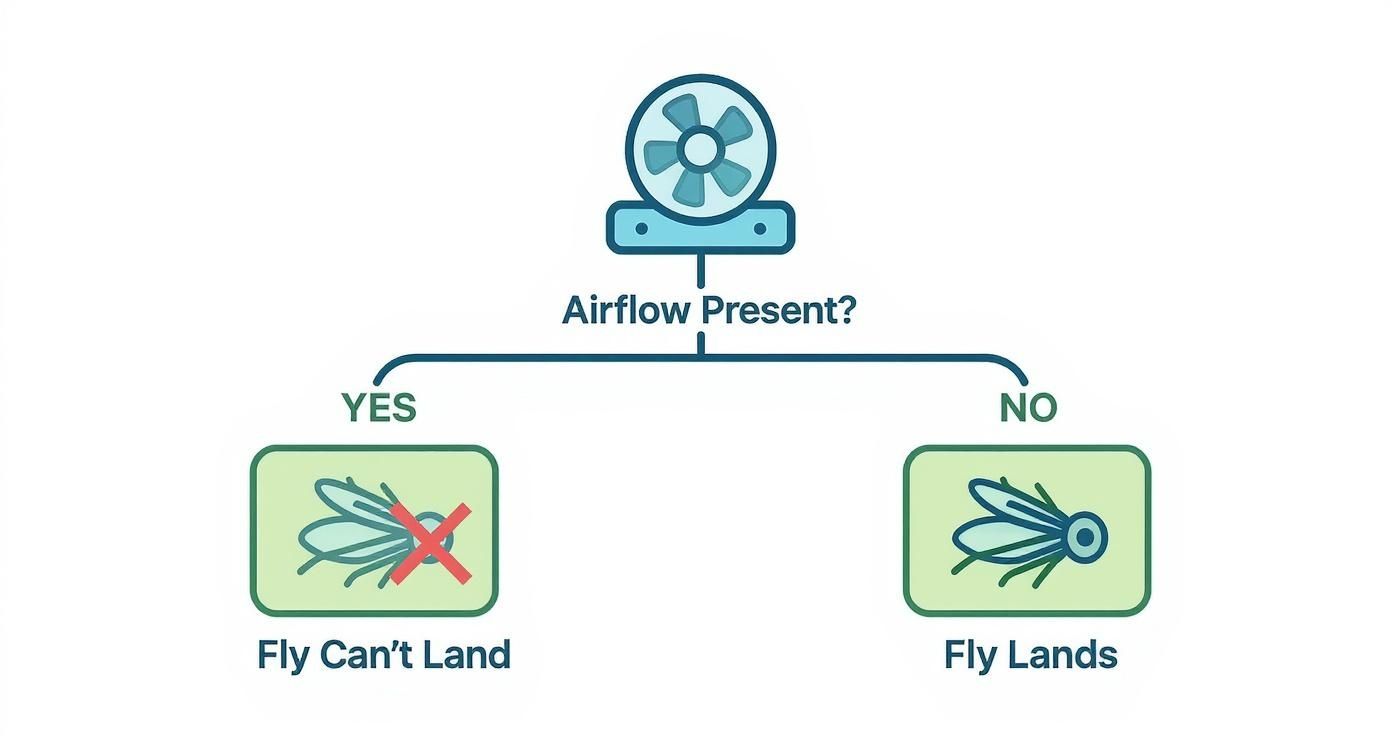
As you can see, the gentle current of air is the key. It physically stops the fly from ever touching down.
Power Source and Portability
The fan's power source determines its usefulness. For hospitality and event planning, adaptability is critical.
Battery-Operated Fans
These are the kings of convenience. With no cords, they are the go-to choice for:
- Al fresco dining on a restaurant patio
- Catered events at remote outdoor venues
- Picnics, barbecues, and tailgates
- The center of a large dining table where cords are an eyesore
Most run on common AA batteries and provide hours of protection. The cordless design keeps your setup clean and free of tripping hazards.
USB-Powered and Plug-In Fans
For fixed locations, a USB or traditional plug-in model is a reliable option. Think of a permanent buffet station, a coffee shop counter, or a drink station at an event hall. They deliver consistent power without requiring battery changes.
The best choice depends on your needs. For maximum flexibility, battery power wins. For a "set it and forget it" solution, a plug-in model is perfect.
Making the Right Selection
When choosing a fan, look beyond sheer power. The real value is in the features that make it safe and effective around food and people. A top-tier shoo fly fan is quiet, safe to the touch, and portable enough to blend into the background while creating an invisible shield against pests.
This quick comparison can help you decide what to look for based on your needs.
Fly Repellent Fan Feature Comparison
| Feature | Importance for Buffet/Tabletop | Importance for Outdoor Patio | Key Considerations |
|---|---|---|---|
| Soft-Touch Blades | High - Essential for safety with guests reaching for food. | High - Prevents injury if bumped by guests or staff. | Non-negotiable for any fan used near people. |
| Battery Power | High - Avoids messy and hazardous cords on tables. | Very High - Outlets are often scarce or poorly placed outdoors. | Look for long battery life (8+ hours) to last an entire shift or event. |
| Holographic Blades | Medium - Adds an extra layer of visual deterrence. | High - More effective in bright, unpredictable outdoor light. | This visual deterrent complements the airflow, especially in open areas. |
| Quiet Operation | High - Must not interfere with conversation or ambiance. | Medium - Background noise can mask some fan sound. | A low decibel level is crucial for maintaining a pleasant atmosphere. |
| Compact Footprint | Very High - Table space is prime real estate. | Medium - More space is available, but it shouldn't be intrusive. | The fan should protect the food, not get in the way of it. |
This table provides a solid starting point. By focusing on the right combination of blade design, power source, and safety, you can find a device that does its job perfectly.
For a deeper dive into specific products, check out our guide on the best fly repellent fan models.
Real-World Uses for Fly Repellent Fans
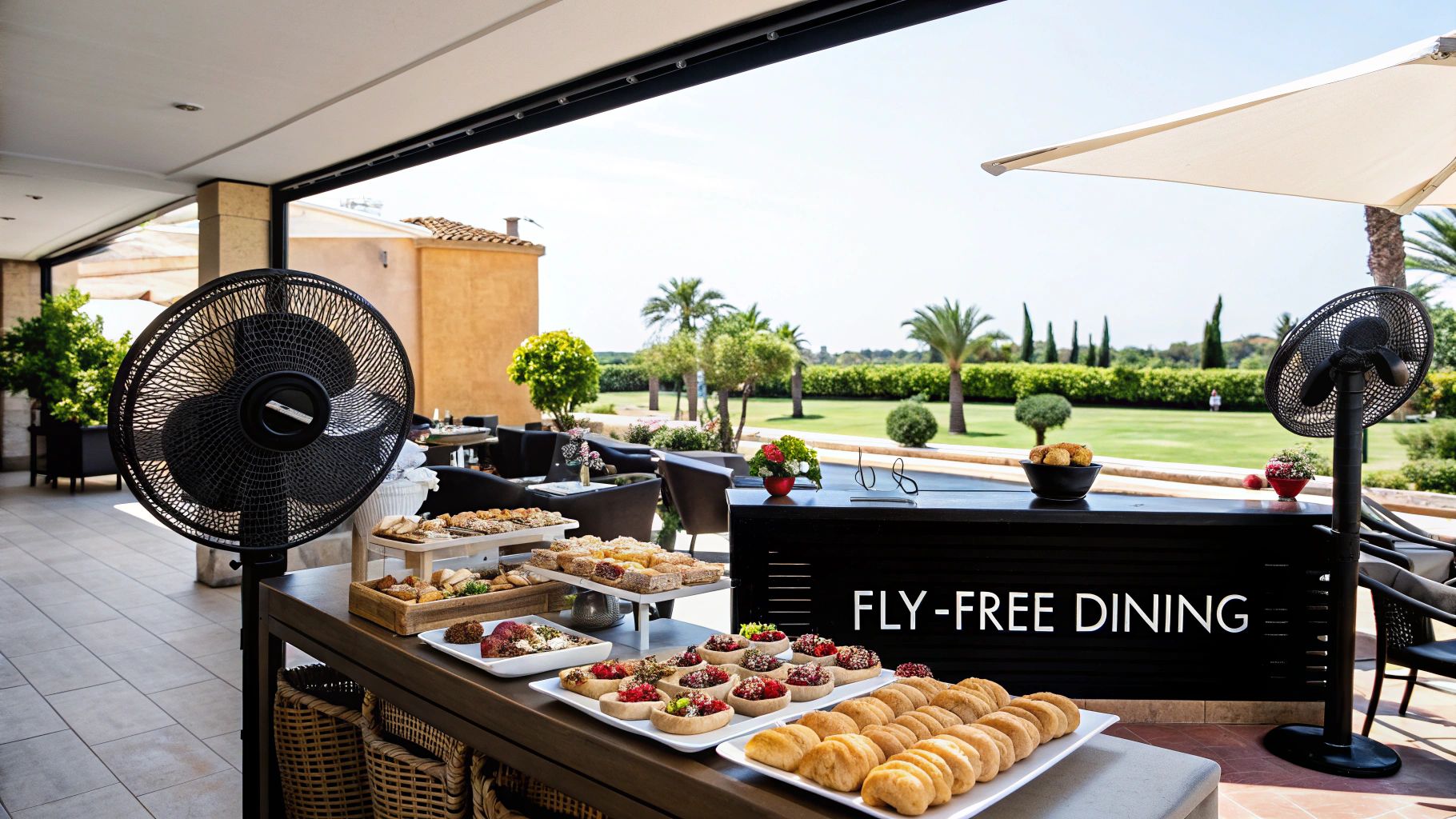
Understanding the science is one thing, but seeing these fans in action is where their value becomes clear. These devices have become a go-to tool in the hospitality industry, solving an age-old problem with an elegant and quiet solution.
From a busy restaurant patio to a perfect wedding reception, a well-placed shoo fly fan can transform the guest experience. Professionals are ditching smelly citronella candles and ugly fly traps for the clean power of moving air. Here are a few real-world situations where these fans are game-changers.
The Hotel Brunch Buffet Perfected
Imagine a hotel brunch spread with flaky pastries, fresh fruit, and charcuterie boards. The last thing anyone wants is a swarm of flies ruining the presentation and making guests question hygiene.
This is the ideal job for a tabletop shoo fly fan. They're small, silent, and battery-powered, so you can place them directly on the buffet line. They create invisible air shields over each platter, forming a barrier pests can't cross.
- Strategic Placement: A single fan protects a radius of about three to four feet, making it perfect for placing between high-value items like desserts and fruit displays.
- Unobtrusive Operation: They run so quietly you won't even notice them, preserving the atmosphere and allowing guests to talk without annoying buzzes.
- Enhanced Food Safety: By stopping flies from landing, these fans serve as a crucial first line of defense in food safety—a top priority for any food service establishment.
A study in the Journal of Medical Entomology confirmed that even a gentle air current is enough to significantly disrupt house fly activity. For a hotel, this is a win-win: guests enjoy their food in peace, and the hotel reinforces its reputation for quality and cleanliness.
Elevating the Outdoor Dining Experience
Everyone loves a restaurant patio, but they are prime real estate for flies. A single persistent fly can ruin an al fresco meal, leading to unhappy customers and bad reviews. The solution is using either larger oscillating fans or a few smaller tabletop units.
By placing fans strategically around the edge of a patio, a restaurant can create a gentle but constant cross-breeze. This subtle airflow makes the entire dining area an uncomfortable place for flies to navigate.
The goal isn’t to create a windstorm. It's about generating a subtle, consistent airflow that feels pleasant to guests while being an impassable obstacle for flies. You're making the environment itself hostile to pests.
For individual tables, the fix is even easier. Many restaurants now offer a portable shoo fly fan for each party seated outside. This small touch shows a high level of customer care, putting guests in control and guaranteeing a fly-free meal. Our complete guide on using fly fans for tables offers more placement tips for restaurant owners.
From Outdoor Weddings to Corporate Picnics
Large outdoor events present a greater challenge for fly control. Caterers for weddings, picnics, or reunions must keep massive amounts of food safe and appealing for hours. This is where the portability of battery-operated fly fans truly shines.
A good catering team can set up an entire defense system in minutes, regardless of the location.
- Buffet Lines: Place a fan every three to four feet down the entire buffet to create an unbroken "air curtain."
- Drink Stations: Sugary drinks are a magnet for pests. A dedicated fan at the bar or beverage station is non-negotiable.
- Cake and Dessert Tables: The wedding cake is often the star of the show. Protect it with its own fan to ensure it stays picture-perfect.
- Guest Dining Tables: Placing fans on guest tables not only keeps their food safe but also adds to their comfort on a warm day.
This proactive approach signals professionalism. It lets the food be the main attraction without the distraction of swatting at flies, ensuring the event is remembered for the right reasons.
Best Practices for Fan Setup and Placement
Having the right fan is only half the battle; how you use it makes all the difference. To maximize effectiveness, you need to create an invisible barrier that flies can't cross.
Think of the fan's airflow as an active defense system. With the right setup, you can turn that quiet current into a strategic "air curtain" that shields your food, drinks, and guests.
Creating an Effective Air Curtain
The secret to making these fans work is creating overlapping zones of air movement, leaving no gaps in your defense. For a typical four-to-six-person dining table, a single shoo fly fan in the middle usually covers the entire surface.
For long buffet lines or multiple tables, one fan isn't enough. A simple rule of thumb ensures a truly protective perimeter.
A single tabletop fan creates an effective air shield in about a 3 to 4-foot radius. To protect a long buffet, place one fan every 3 feet. This ensures their air currents overlap, leaving no calm spots for flies to land.
This simple technique creates a continuous wall of turbulent air along your entire food display, delivering professional results and keeping your whole spread secure.
How Many Fans Do You Need?
Using the right number of fans is key. Too few fans can be as ineffective as having none at all.
Here’s a quick guide:
- Standard Round Table (4-6 people): One fan in the center is perfect.
- Long Rectangular Table (8+ people): Use two fans, one toward each end, to create overlapping air zones.
- Buffet Line: Follow the "one fan per 3-4 feet" rule. An 8-foot banquet table needs at least two, but preferably three, fans for full coverage.
- Outdoor Patio with Multiple Tables: For general protection, larger oscillating fans can create a broad breeze. For focused protection, giving each table its own shoo fly fan is the best approach.
This method ensures effective coverage without cluttering your space.
Essential Maintenance for Peak Performance
A poorly maintained fan won't be effective. Like any equipment, your shoo fly fan needs a little care to perform at its best. A few simple habits will guarantee it's reliable when you need it.
Follow these tips to keep your fans in top working order:
- Keep the Blades Clean: Dust, pollen, and grease can build up on the blades, slowing them down and weakening the airflow. Wipe them with a soft, damp cloth weekly or after a major event.
- Check Your Batteries Before Every Use: For battery-powered models, this is non-negotiable. Always start a shift or event with a fresh set of high-quality batteries to avoid failure during service.
- Store Them Properly: When not in use, keep your fans in a clean, dry place. This prevents dust from settling in the motor and protects the delicate holographic patterns on the blades from damage.
From Myth to Method: Making Sense of the "Shoo Fly Fan"
We started by trying to define the shoo fly fan—a product that's more of a concept than an actual item. It's a classic case where a popular phrase perfectly captures an idea but doesn't point to a specific gadget. The myth is more famous than the reality.
The name's origin likely traces back to Pennsylvania Dutch baking and the legendary shoofly pie. The story goes that bakers constantly had to “shoo” flies away from the gooey molasses dessert. It’s a memorable image that highlights the age-old problem of protecting food from pests. While it's more folklore than fact, you can read more about the history of shoofly pie to see how this delicious myth took shape.
From Folk Tale to Functional Tool
While you can't buy a literal "shoo fly fan," the principle behind it is sound. The modern solution is a category of purpose-built fans designed to create a fly-free zone using air movement. We’ve graduated from a quaint myth to a proven, scientific method for pest control.
The key lesson is that the most powerful solutions are often the simplest. By understanding that a gentle breeze disrupts a fly’s ability to fly and smell, you can protect dining areas without harsh chemicals or ugly zappers. This is the real-world answer to the problem the old folk tale described.
The real win isn't finding a mythical product, but applying a simple, effective principle. The goal is to create a comfortable, pest-free atmosphere using the power of air movement—turning a simple fan into a sophisticated defense system.
The Clear Benefits of This Modern Approach
Adopting this method offers three significant advantages for any home or business. It’s not just about eliminating bugs; it’s about creating a better, more professional experience.
- Improved Hygiene: Preventing flies from landing on food cuts off germ transmission at the source, keeping everything safer and more sanitary.
- Enhanced Guest Comfort: A fly-free zone allows guests to relax and enjoy their meal without the constant distraction of swatting away pests.
- A Chemical-Free Solution: This approach is completely safe around food, people, and the environment, representing a clean, professional standard everyone can appreciate.
Frequently Asked Questions
You might still have a few questions about using a shoo fly fan. We've answered the most common queries with straightforward, practical advice to help you get started.
Safety and Operation
Are these fans safe around children and pets?
Yes, absolutely. Modern fly repellent fans are designed with safety as a top priority. Unlike traditional fans, their blades are made from a soft, flexible material that is completely harmless to touch.
They also include a crucial auto-stop feature. The moment a blade touches an object—like a child's hand or a pet's nose—it immediately stops spinning. This makes them a worry-free choice for busy patios and family gatherings.
How many fans do I need for my patio table?
It depends on the table size and the amount of food. For a standard 4-6 person dining table, one or two fans is a great starting point. Placing one in the middle usually works, but two fans create overlapping air currents that leave no gaps for flies.
For a long buffet or banquet table, a good rule of thumb is to place one fan every 3-4 feet. This creates a continuous, invisible barrier of moving air, ensuring your entire spread is protected.
Effectiveness Against Other Pests
Do these fans also work on mosquitoes?
To a degree, yes. While engineered to deter weak fliers like houseflies, the gentle breeze from a shoo fly fan can also annoy mosquitoes. Mosquitoes are lightweight and struggle to navigate through air currents, which can disrupt their flight path and make it harder for them to land.
However, this is not a dedicated mosquito-killing machine. It is a fly deterrent first and foremost. For a serious mosquito problem, you'll see better results using the fan alongside proven solutions like dedicated mosquito repellents or traps.
Ready to create a comfortable, fly-free dining experience? Explore the collection of elegant and effective fly fans from MODERN LYFE and find the perfect solution for your home, restaurant, or next event. Visit https://modernlyfe.com to see our products.