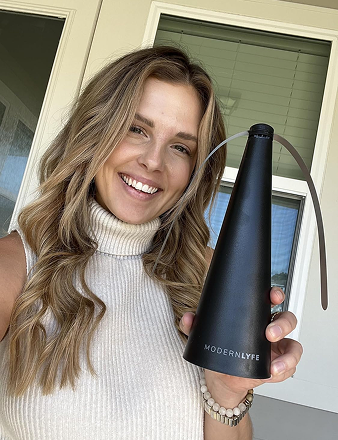
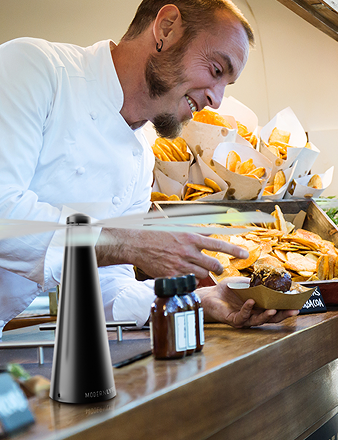
Flies aren't just annoying—they're a direct threat to hygiene and a fast way to ruin a guest's experience. When it comes to the different types of fly traps, the options range from old-school sticky paper and baited containers to high-tech UV zappers and whisper-quiet fan-based deterrents. Each one is built for a specific job in a specific place.
Why the Right Fly Trap is Non-Negotiable
A single fly landing on a dining table or a catering spread instantly destroys the perception of cleanliness. For restaurant owners, event planners, or anyone hosting a gathering, getting rid of pests is about protecting your reputation, not just sanitation.
A one-size-fits-all approach to fly control is a recipe for failure. The right tool depends entirely on the environment.
Understanding the different types of fly traps and how they work is a critical part of maintaining optimal kitchen hygiene, especially in food service. A sticky trap covered in dead insects might be acceptable in a storage area, but it's a repulsive sight in a dining room. Likewise, the loud "zap!" of an electric bug killer ruins a quiet, relaxing atmosphere.
The Growing Demand for Better Solutions
The push for smarter, more effective fly control has ignited the industry. As businesses prioritize hygiene, the global fly trap market is projected to grow from USD 294.1 million in 2025 to USD 517 million by 2035. This growth signals a clear shift toward advanced, chemical-free solutions that meet modern standards. You can learn more about the future of the fly trap market.
This guide breaks down the main types of fly traps available, giving you a clear, no-nonsense overview to help you choose the right one. We'll cover the pros and cons of each method to determine what works best for your specific needs.
The challenge is finding a fly control method that works without destroying the guest experience. It's a balance between effectiveness and subtlety.
Traditional Sticky and Baited Traps
When you think of a fly trap, you probably picture a sticky ribbon or a baited container. These are the classic workhorses of fly control, built on a simple principle: lure and capture.
Adhesive traps, like fly paper, are brutally effective. They use a surface coated in a super-sticky, non-toxic glue. When a fly lands, it's stuck for good.
Baited traps are more cunning. They typically use a container or bag filled with a powerful attractant. Flies, unable to resist the scent, crawl inside through a one-way entrance and are trapped permanently.
The Honest Pros and Cons
These traditional traps have their place, but it’s crucial to acknowledge their significant downsides, especially in a business or hospitality setting. They are not a one-size-fits-all solution and can easily create more problems than they solve.
Key Advantages:
- Low Cost: Sticky and baited traps are cheap, making it easy to deploy them in multiple locations.
- Simplicity: No plugs, no batteries, no complex setup. Just hang them or set them down.
- Ideal for 'Backstage' Areas: They effectively reduce fly populations in non-public areas like garages, attics, or near dumpsters.
However, these upsides come with serious trade-offs. The very features that make them work also make them a terrible choice for any guest-facing area.
A traditional fly trap in a dining area is a 'billboard for pests.' It might solve one problem by catching flies, but it creates a new one by showcasing them to your guests.
Why Aesthetics and Hygiene Are Deal-Breakers
Let's be blunt: the biggest problem with these traps is how they look. A sticky ribbon covered in dead and dying flies is disgusting. A plastic jug filled with insect carcasses isn't much better. In a restaurant, hotel, or at a catered event, that’s an instant appetite-killer and a massive red flag about your cleanliness standards.
Furthermore, many baited traps stink. The powerful odor is designed to attract flies from a distance—the last thing you want drifting through a dining room or patio. As you consider your options, you'll see how these older methods compare to newer, more discreet solutions. For a complete overview, see our guide on choosing the best food fly trap for your home.
The final verdict? Reserve traditional traps for behind-the-scenes use, far away from anyone whose experience matters.
Electric and UV Light Fly Traps
Moving beyond sticky paper, you'll find the high-tech solutions common in commercial kitchens. Electric and UV light fly traps are the workhorses of indoor fly control, using science to attract and eliminate flies with high efficiency.
The concept is brilliantly simple. Many insects, including common houseflies, are naturally drawn to specific wavelengths of ultraviolet (UV) light. These traps emit that light, acting as an irresistible beacon. Once a fly investigates, its journey ends swiftly.
This is why these systems dominate the commercial sector. Market research shows that businesses like restaurants, hotels, and food processing plants are the biggest buyers, driven by strict health codes. To stay compliant, they rely on electric and UV traps. For more details, explore the latest commercial fly trap market trends.
Zappers vs. Glue Boards: A Crucial Distinction
Not all UV traps work the same way. The key difference is how they eliminate the flies—a critical detail for any business owner.
- Electric 'Zappers': The classic bug zapper. A fly touches a high-voltage grid and is instantly electrocuted, often with a loud "ZAP!"
- Silent Glue Board Units: A far more discreet option. These use the same UV light to attract flies, but instead of an electric grid, the insects get stuck on a sticky glue board hidden inside the unit.
The right choice depends on placement. Both are effective, but their impact on the guest experience is night and day. One is noisy and messy; the other is silent and contained.
The power of UV traps is their proactive nature. Instead of waiting for a fly to land, they actively lure pests away from sensitive areas like food prep counters and dining tables.
Pros and Cons for Your Business
While electric and UV traps are industry mainstays, they come with clear trade-offs. They are perfect for some areas and completely wrong for others.
Key Advantages:
- High Effectiveness: These units excel at clearing flies from indoor spaces, running 24/7 with minimal supervision.
- Chemical-Free Operation: They work without sprays or baits, a major advantage in any food-handling environment.
Significant Downsides:
- Audible Noise (Zappers): The loud zap is disruptive and unacceptable in dining rooms, lobbies, or other guest areas.
- Contamination Risk: Zappers can scatter tiny insect parts, creating a hygiene risk near food.
- Industrial Appearance: Most units are built for function, not style. Their clunky, commercial look clashes with curated decor.
Ultimately, these powerful devices are the champions of back-of-house operations. They are ideal for keeping kitchens, storage rooms, and loading docks clean. But for any area where a customer might see or hear them, you need a different solution.
To make the choice clearer, let’s compare these technologies side-by-side.
Comparing Common Fly Trap Technologies
| Trap Type | Mechanism | Best For | Guest-Facing Suitability |
|---|---|---|---|
| Traditional Traps | Sticky paper or baited containers. | Outdoor patios, garbage areas, entry points away from guests. | Low. Visually unappealing and can have odors. |
| Electric/UV Traps | UV light attracts; electric grid or glue board captures. | Kitchens, back-of-house, storage areas, food prep zones. | Low to Medium. Zappers are too loud/messy. Glue board models can be discreet but still look industrial. |
| Fan-Based Deterrents | Creates an air barrier that flies cannot penetrate. | Entrances, open-air dining, patios, service windows. | High. Discreet, chemical-free, and prevents flies from ever entering the space. |
This table highlights a key point: no single fly trap is perfect for every situation. A layered approach, using the right tool for the right area, is the most effective strategy for keeping your establishment fly-free.
The Modern Solution: Fan-Based Deterrents
Instead of dealing with flies after they've already arrived, what if you could stop them from ever landing? That’s the simple, elegant concept behind modern fan-based deterrents. This method shifts the focus from reactive trapping to proactive prevention.
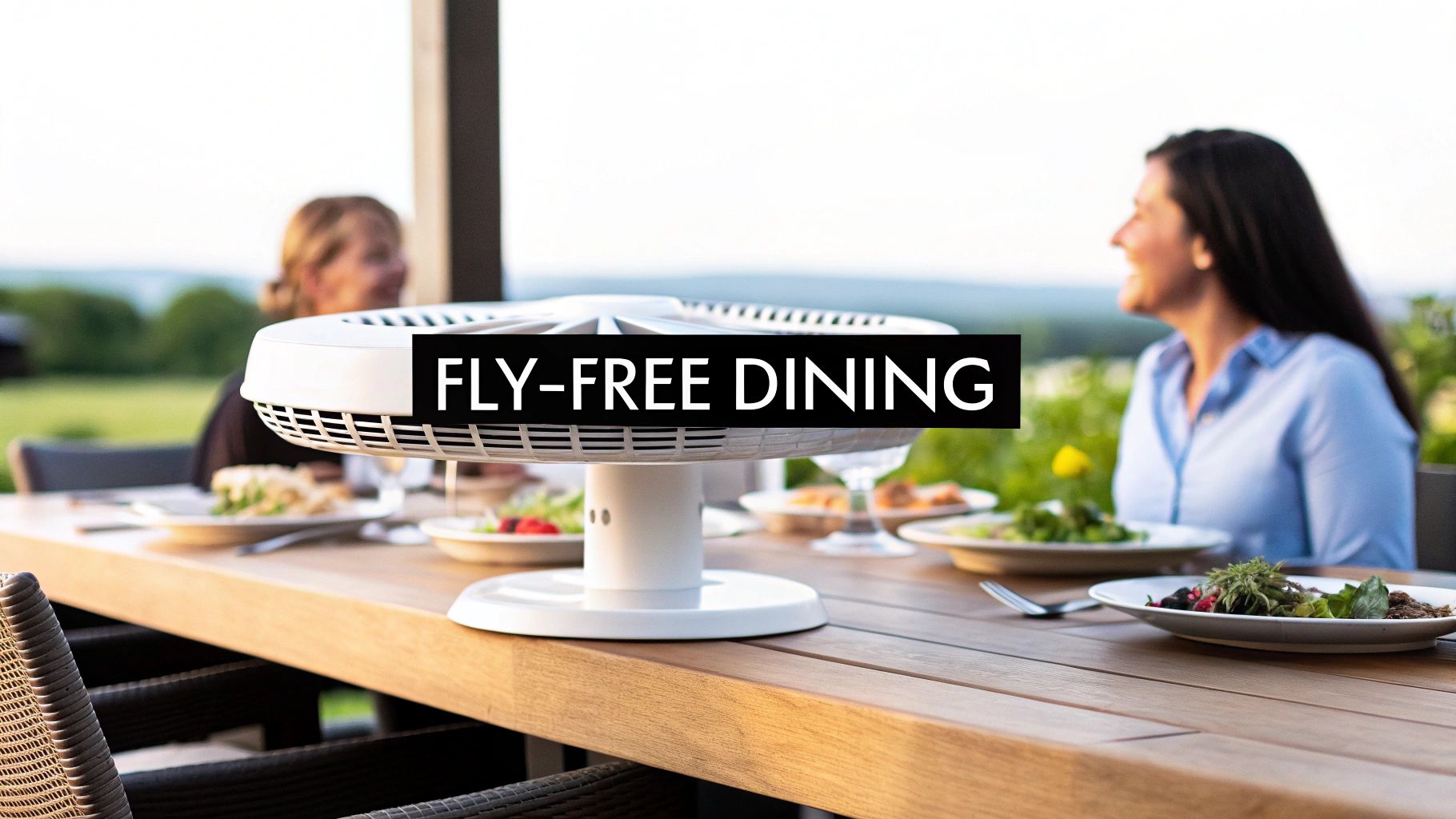
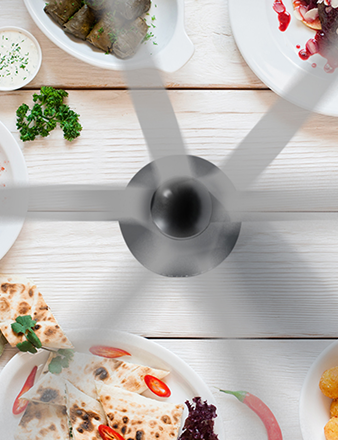
These aren't ordinary fans. They are engineered to exploit a fly's natural weaknesses. The soft-touch blades create a gentle, consistent air current that is barely noticeable to humans but feels like a windstorm to a fly, making it impossible to land.
This subtle disruption is enough to keep them away from your food and your guests.
The Science of a No-Fly Zone
The genius behind these devices is their dual-action design. It's not just the air currents. The fan blades are fitted with holographic patterns that catch and refract light as they spin.
To a fly’s sensitive compound eyes, this creates a constant, irritating visual disturbance—like a disorienting hall of mirrors. This confusing light show, combined with the unstable air, signals danger and forces the fly to steer clear. The result is a highly effective, localized no-fly zone right where you need it most: on your dining table, buffet line, or outdoor bar.
The goal is simple: make the immediate environment unwelcoming to flies before they become a problem. It’s a completely hygienic solution with no dead pests, no chemicals, and no zapping sounds—just clean, protected space.
This approach sidesteps the biggest problems of other traps. Unlike sticky paper, there are no gruesome fly carcasses. Unlike zappers, they are whisper-quiet. And unlike chemical baits, they are 100% odor-free and safe to use directly next to food.
The Ideal Solution for Guest-Facing Areas
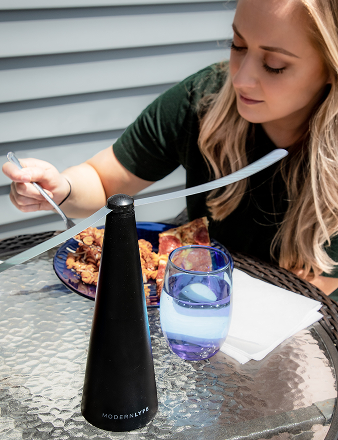
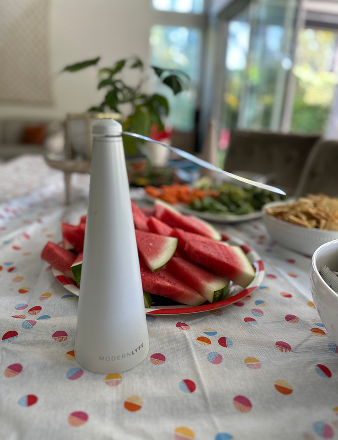
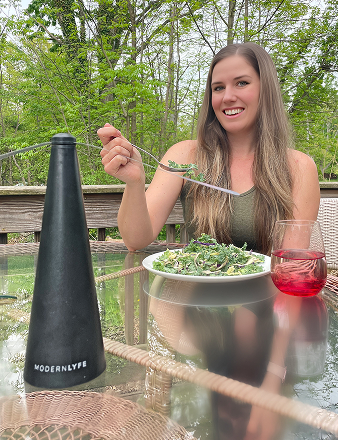
When protecting the guest experience is the top priority, fan-based deterrents are in a class of their own. Their sleek, modern designs blend seamlessly into any decor, from a high-end restaurant patio to a casual backyard barbecue. They are the best solution for any situation where food and people mix.
Key Benefits of Fly Fans:
- Completely Hygienic: No dead insects, scattered parts, or contamination risk.
- Silent and Discreet: They operate without any buzzing or zapping, preserving the ambiance.
- Aesthetically Pleasing: Modern designs complement table settings instead of creating an eyesore.
- Chemical-Free Safety: Perfectly safe to use around food, children, and pets.
These devices represent a smarter, more sophisticated way to handle pests in sensitive environments. By focusing on deterrence, they protect both the hygiene and the atmosphere of your space. To see how these elegant devices can transform your next gathering, explore the benefits of a modern fly trap fan and learn how it provides the final layer of defense for a pleasant, fly-free experience.
Optimizing Placement for Maximum Effectiveness
Choosing the right fly trap is only half the battle. Even the best trap is useless if it’s in the wrong spot. Strategic placement turns a good product into a great solution, ensuring you get the most out of every device.
Think of it like setting up speakers at a party. You wouldn't just toss them in a corner; you'd place them where the sound will carry perfectly. Fly traps work the same way—each type has a sweet spot where it performs at its peak.
Where to Place Traps That Lure and Capture
For traditional sticky and baited traps, the goal is interception. You want to catch flies before they get anywhere near your main event. Think of these as your first line of defense.
- Guard Entrances: Position them near doorways, open windows, and trash areas to catch flies as they try to enter.
- Keep Them Away from People and Food: This is crucial. These traps are an eyesore, and baited ones can smell. Always place them out of sight and a good distance from dining tables and food prep stations.
UV light traps actively draw flies in, so you need to minimize competing light sources to make your trap the most appealing beacon in the room.
The secret to a successful UV trap is making it the most attractive light source in the area. Place it away from sunny windows, open doors, and bright overhead lights that can distract flies.
Mount these units 3 to 5 feet off the ground, right in the typical flight path for houseflies. Remember, the goal is to draw flies away from sensitive spots like the kitchen line, not to place the trap directly above them.
Perfecting Your Protective No-Fly Zone
Fan-based deterrents work by repelling, not attracting. Their placement is all about creating and protecting specific zones, like a dining table or a buffet spread.
The strategy is offensive. Place one or more fans directly on the surface you want to protect. Their air currents and shimmering blades create an invisible barrier that flies won't cross. For a typical four-person table, one fan in the middle is sufficient. For a larger buffet or banquet table, place a fan every 4-6 feet to create a continuous fly-free zone.
Learn more about mastering these devices in our complete guide on the modern fly repellent fan.
A little upkeep goes a long way. Use this simple checklist to keep everything working perfectly:
- Sticky Traps: Check them often and replace them every 1-2 weeks or when full.
- UV Glue Boards: Swap these out monthly, as the adhesive can lose its stickiness.
- Electric Zappers: Unplug and clean the grid weekly to remove insect debris.
- Fly Fans: A quick wipe of the blades and a battery check before each use is all it takes.
Building Your Perfect Fly Control Strategy
Effective fly control isn't about finding a single magic bullet. It’s about building a smart, layered defense system for your business or home. A truly fly-free zone requires the right tools in the right places.
Forget a simple "this vs. that" mindset. The best approach combines powerful, heavy-duty solutions where they're needed most with subtle, elegant options in guest areas. This layered strategy ensures maximum effectiveness and a seamless customer experience.
For example, a high-voltage UV zapper is a workhorse in a commercial kitchen or back-of-house storage area. It works around the clock to eliminate flies at entry and breeding points, which is essential for maintaining hygiene behind the scenes.
Creating a Guest-Friendly Final Layer
In the dining room, on the patio, or near a buffet, the rules change. Here, guest comfort is paramount. This is where discreet, fan-based deterrents excel, forming the critical final layer of your defense. They protect the immediate space around guests and their food without being noticed.
A layered strategy is non-negotiable. It uses aggressive trapping methods behind the scenes while deploying subtle, preventative measures in guest-facing areas to protect the atmosphere and ensure total hygiene.
Of course, traps are only one part of the equation. A comprehensive plan must include prevention. Simple actions, like reducing food waste, can dramatically reduce the attractants that draw flies in, making your traps even more effective.
This decision tree helps visualize how to choose the right fly trap based on location and proximity to food.
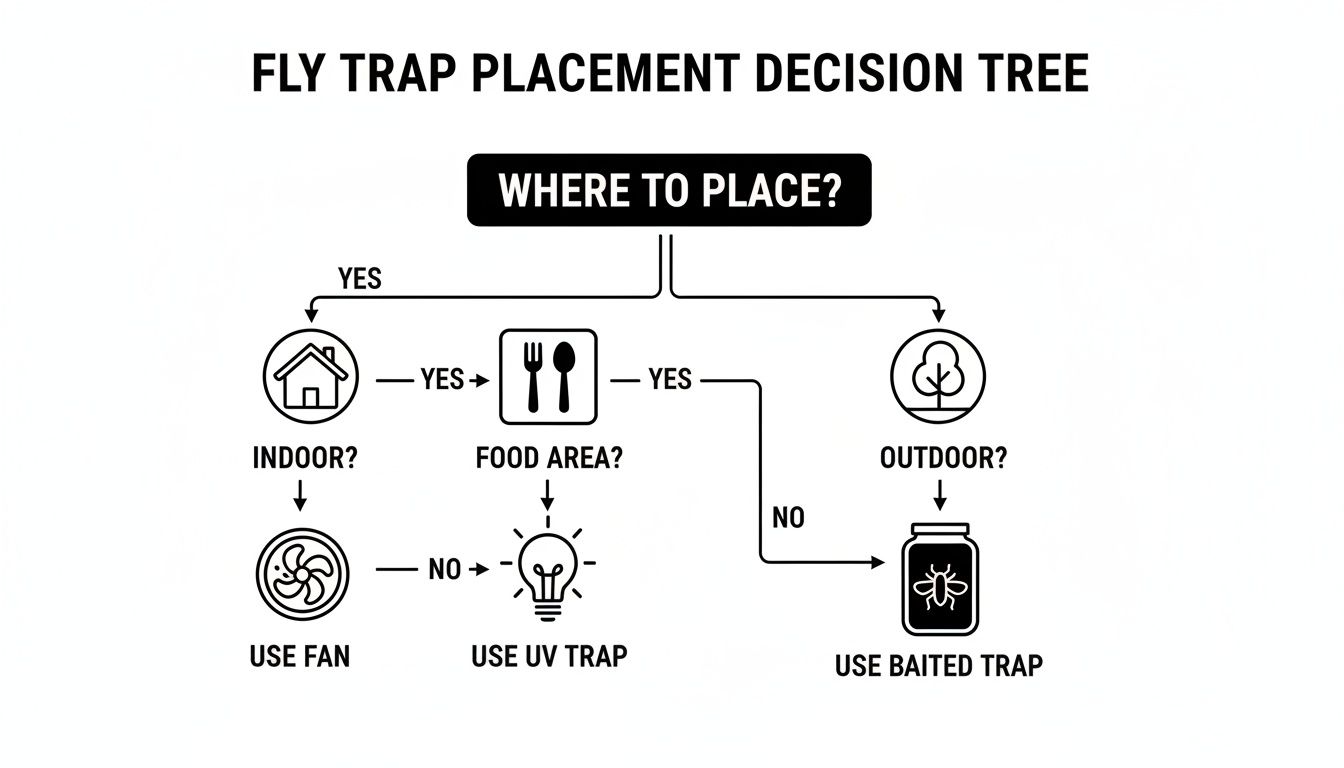
As you can see, when dealing with areas where guests and food come together, preventative fan-based solutions are the clear winner. Other traps have their place, but they serve different purposes in different locations.
Common Questions About Fly Traps
Even with a solid plan, questions can arise when choosing the right fly trap. Let's address a few of the most common ones.
Do Fly Fans Actually Work on Food Tables?
Absolutely. Fly fans are highly effective at protecting food due to fly biology.
First, the soft blades create a constant, gentle air current. While barely noticeable to us, it’s like a windstorm for a fly, making it impossible to land.
Second, the blades often have a holographic pattern that reflects and refracts light, disorienting a fly's compound eyes. This confusing visual disturbance drives them away. It’s a perfect, chemical-free way to protect dining tables and buffets.
What’s the Best Fly Trap for a Commercial Kitchen?
A commercial kitchen requires a multi-layered defense to meet health codes. The gold standard is a combination of UV light traps with silent glue boards (not zappers).
Place these away from food prep areas to lure any flies that get inside away from sensitive surfaces. Then, add a discreet fly fan at the pass-through window or service counter as a final line of defense, stopping flies before they reach your guests.
Can I Use an Outdoor Fly Trap Inside?
We strongly advise against this. Never use a trap designed for outdoor use inside your business or home.
Outdoor traps use powerful, smelly attractants to pull flies from a wide area. Bringing one indoors sends a powerful invitation to every fly in the neighborhood. You'll end up drawing more flies inside and creating a terrible odor. Always use traps designed for their intended environment.
Ready to create the perfect fly-free atmosphere for your guests? Explore the elegant and effective solutions from MODERN LYFE. See how our innovative fly fans can elevate your dining experience.
Visit us at https://modernlyfe.com to find the perfect fit for your restaurant, event, or home.