When fruit flies show up, you want them gone fast. The good news? Finding effective traps is easy. You can buy them from major online retailers like Amazon and big-box stores like Walmart and Home Depot, or even your local grocery store.
Your Quick Guide to Finding Fruit Fly Traps
The moment you spot those tiny pests buzzing around your fruit bowl, the goal is simple: get them out. You have plenty of options, and your decision comes down to a simple trade-off: speed versus selection.
If you need a fix now, a quick trip to a local store is your best bet. If you can wait a day or two, shopping online gives you a massive variety of brands, styles, and bulk-buying deals you won’t find on a shelf.
Quick Comparison: Where to Buy Fruit Fly Traps
This table breaks down the pros and cons of the most common places to buy fruit fly traps, helping you decide what works for you.
| Purchase Channel | Typical Selection | Price Range | Key Advantage |
|---|---|---|---|
| Online Marketplaces | Extensive; includes specialty and bulk options. | $$ - $$$ | Unbeatable variety and competitive pricing. |
| Big-Box Retailers | Limited; focuses on popular, well-known brands. | $ - $$ | Immediate availability for a quick fix. |
| Hardware & Garden Centers | Curated; often features heavy-duty or eco-friendly traps. | $$ - $$$ | Access to specialized and higher-quality products. |
Each option has its perks. A trip to the store offers an instant solution, while a few clicks online can land you a better deal or a more specific type of trap.
This isn't a niche problem—it's a huge market. The global fruit fly control market was valued at around USD 520 million in 2024 and is projected to grow. That number proves how many people are looking for reliable solutions, which is why traps are available in so many places. You can explore market trends and drivers in detailed industry reports if you're curious.
Bottom line: If you're dealing with a full-blown invasion and need relief now, head to a local retailer. For more specific needs, better prices, or stocking up for the future, online is the way to go.
Knowing these key differences will help you find the fastest path to a fly-free home. Let's dive deeper into each option so you know exactly what to expect.
Shop for Fruit Fly Traps Online
When you've got fruit flies, the last thing you want is another errand. This is where online shopping excels. The internet is always open, putting an incredible variety of traps at your fingertips—far more than any physical store could stock.
You can browse everything from heavy-duty solutions for a serious infestation to discreet, decorative traps that blend into your home's decor. It’s no surprise e-commerce is the go-to for so many. In North America, where home hygiene is a priority, buying traps online is second nature.
Navigating Major Online Marketplaces
Most of us start our search at giants like Amazon or eBay. These platforms are massive digital marketplaces where dozens of brands compete for your attention. This competition is great for you, as it makes comparing products and prices incredibly simple.
The real advantage? Customer reviews. You get thousands of unfiltered opinions from people who have already tested the traps in their own homes.
-
Filter Your Search: Don't just type "fruit fly trap." Use filters to narrow results by price, brand, customer rating, and even features like "non-toxic" or "reusable."
-
Read the Reviews: Look beyond the star rating. Dig into comments from people dealing with the same issue as you. Are flies swarming your kitchen compost? Or hanging out near a sink drain? Finding feedback from someone in the same situation is priceless.
Beyond the Big Names
While big marketplaces are a great start, don't overlook specialized pest control websites. These expert-run sites often stock professional-grade products and unique, eco-friendly alternatives you won't find anywhere else. They’re perfect if you're looking for something with a bit more power.
Online shopping gives you control. It allows you to move beyond the limited shelf space of a local store and find a trap that perfectly matches your needs, budget, and home decor.
Many of the best online options are reusable, saving you money and keeping you prepared for the next invasion. Once you have the trap, you just need bait. We have a great resource on how to manage fruit fly trap refills to keep them working at peak performance.
Finally, becoming a better online shopper will help in your pest control quest. A savvy shopper's guide to the best online finds can give you smart strategies for spotting quality and value, no matter what you're buying.
Find Traps at Local Retail and Grocery Stores
When a fruit fly problem starts, it escalates quickly. One day you see a few, the next it’s a swarm. In those moments, waiting for an online order isn't an option.
This is where your local big-box retailer or grocery store saves the day. The biggest advantage is speed. You can spot the problem in the morning and have traps set up by lunch. Plus, you can see the product before you buy it—no surprises about its size or quality.
Where to Look in Big-Box and Grocery Stores
So, you're in the store. Where do you start? Head straight for the pest control aisle, usually located near household cleaning supplies or the gardening section.
Here’s a quick cheat sheet for common stores:
- Walmart and Target: Look in the same aisle where you'd find ant bait and roach sprays. You’ll almost always see brands like Terro and Raid.
- Home Depot and Lowe's: These stores are goldmines for pest control, with large, dedicated sections. Start with indoor pesticides, but also check the gardening department.
- Grocery Chains (Kroger, Safeway, etc.): Larger supermarkets have a household goods section. Traps are typically with cleaning supplies or, ironically, near the produce section.
If you're lost, just ask an employee. They can point you in the right direction in seconds.
Pro Tip: The tradeoff for convenience is selection. Your local store probably carries only the two or three most popular brands. If you're looking for a specific decorative trap or a non-toxic formula, your options will be limited compared to online.
Easy access is a big reason the market for these products is so strong. The global fly trap market was valued at around USD 310 million in 2024 and continues to grow, largely because people want simple, chemical-free solutions they can grab on their way home. You can dig deeper into the fly trap industry research report for more details.
When you need to get rid of fruit flies now, nothing beats a quick trip to the store. You sacrifice a wider selection for speed, but when you're dealing with a swarm, it's a trade worth making.
Upgrade Your Approach with a Modern Fly Fan
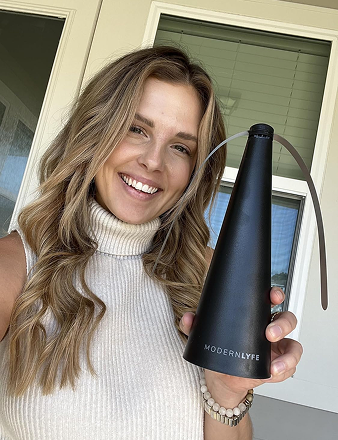
Sticky papers and bait jars aren't exactly stylish. While they work, they don't look great on a clean kitchen counter or an outdoor patio. What if you could stop fruit flies from ever landing in the first place? That's the modern, elegant strategy behind fly fans.
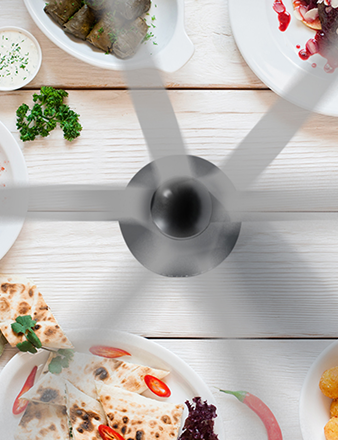
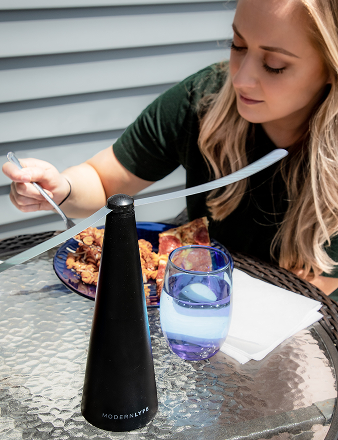
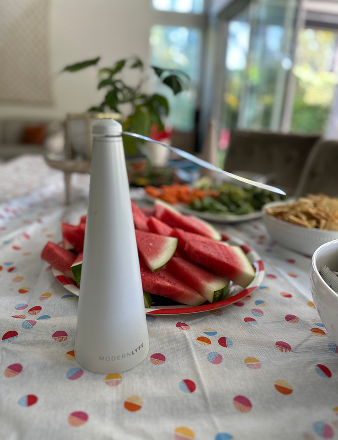
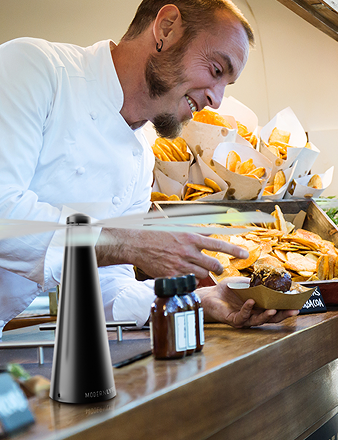
Instead of luring flies into a trap, these devices create a gentle air current that acts as an invisible barrier. This simple breeze disrupts the flies' flight patterns, making it nearly impossible for them to land on your food or drinks. It's a proactive approach that repels pests rather than capturing them, keeping your space clean and free from dead flies.
A Chemical-Free and Silent Solution
One of the biggest benefits of a fly fan is its simplicity and safety. There are no chemical attractants, no sticky surfaces, and no messy spills. This makes them a fantastic choice for dining tables, food prep stations, and any area where kids or pets are present.
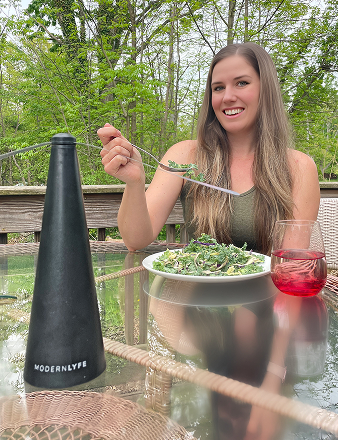
Best of all, you'll barely notice it's there. Modern fly fans from companies like Modern Lyfe are engineered to be discreet. Their whisper-quiet operation won't interrupt a conversation or spoil the ambiance of a meal, whether it’s a backyard barbecue or a busy restaurant. See how a fly fan can fit into your home or business.
A fly fan doesn’t just solve a pest problem; it preserves the aesthetic of your space. It's a functional tool that acts like decor, blending in while keeping unwanted guests away.
This approach flips the script on pest control. Instead of hiding an ugly trap, you can place a stylish fan right in the center of the action where it's needed most.
Traditional Traps vs. Modern Fly Fans
How does this modern solution stack up against traditional traps? Let's break down the key differences.
| Feature | Traditional Fruit Fly Traps | Modern Lyfe Fly Fans |
|---|---|---|
| Method | Lures and captures flies | Repels flies with air currents |
| Aesthetics | Often utilitarian and can be unsightly | Sleek, modern design that blends in |
| Reusability | Disposable or requires frequent rebaiting | Fully reusable; often rechargeable |
| Safety | May use chemicals or sticky adhesives | 100% chemical-free and safe to the touch |
| Placement | Best placed near problem areas (sinks, trash) | Designed for use directly on tables/counters |
It's less about which one is "better" and more about which tool is right for the job. While a traditional trap is good for catching flies near a source like a drain, a fly fan excels at protecting a specific area, like your dinner table, without chemicals or clutter.
How to Choose the Right Fruit Fly Trap
Knowing where to buy a fruit fly trap is one thing, but picking the right one is another. With so many styles—from sticky paper to high-tech fans—the best choice depends on your specific situation. It’s about matching the tool to the job.
First, gauge the size of your fly problem. Are you dealing with a few stragglers around the fruit bowl, or is it a full-blown infestation near your sink and trash? A minor issue can often be solved with a small, disposable trap. But for a larger swarm, you'll need something more powerful, or even multiple traps in key locations.
Disposable vs. Reusable Traps
The classic debate is convenience versus long-term value. Each has its place.
-
Disposable Traps: These are your go-to for a one-off problem. Set them out, and once they're full or the bait dries up, just toss the whole thing. They're simple with zero cleanup, but the cost can add up if fruit flies are a recurring issue.
-
Reusable Traps: These usually cost more upfront but save you money in the long run. When full, just empty, clean, and add fresh bait. For a closer look, you can learn how to keep your food fly trap working like new.
This chart compares two popular chemical-free options—a standard sticky trap and a modern fly fan—on reusability and aesthetics.
The takeaway is that while both get the job done, fly fans pull ahead on aesthetics and reusability, making them a better choice for high-traffic areas like a dining table or kitchen island.
Factoring In Aesthetics and Safety
Finally, think about where you'll place the trap. If it’s sitting on your kitchen counter, you’ll want something discreet or even stylish, like a fly fan. For a spot under the sink or in the garage, a basic sticky trap works just fine.
No matter what you choose, safety is the top priority. If you have kids or pets, a non-toxic, chemical-free trap isn't just a good idea—it's essential. Always read the label to ensure the product is safe for your home.
Got Questions? Let's Talk Fruit Fly Traps
So, you know where to buy a fruit fly trap. But a few practical questions always come up before you check out. Answering them now will save you headaches and ensure you solve your fruit fly problem for good.
First up: "How long does a trap last?" It depends. Most liquid bait traps work for up to 30 days. Sticky traps are effective until they’re covered in flies.
For anyone with kids or pets, the big question is safety: "Is this safe to have on my counter?" Thankfully, the answer is usually yes. The vast majority of traps are 100% non-toxic. To be certain, always check the packaging for phrases like "pet-safe" or "chemical-free."
Making Sure Your Trap Actually Works
Buying a trap is only half the battle. Placement is everything. Think like a fruit fly: they seek moisture, fermenting smells, and old food. Placing your trap in the right spot is how you win.
For the best results, set up traps in these fly hotspots:
- By the fruit bowl: This is ground zero for fruit fly activity.
- Next to the kitchen sink: Drains attract them with moisture and food scraps.
- Near trash cans and compost bins: This is a buffet for fruit flies. A trap here is a must.
The trick is to intercept them. Think about their flight path—from a drain where they might be breeding to the bananas they want to land on. Placing a trap in that path is key to catching more of them, faster.
By knowing how long your trap lasts, ensuring it's safe for your home, and placing it in the smartest spots, you can turn a simple purchase into a seriously effective solution.
Tired of messy traps and chemicals? For a modern approach that keeps flies away without killing them, check out the stylish fly fans from MODERN LYFE. They look great and keep your space pest-free. See how they work at https://modernlyfe.com.