When you have a fruit fly problem, you need a solution, not a scavenger hunt. Luckily, fruit fly traps are easy to find. You can get them at most major retailers, from big-box stores and home improvement centers to your local grocery store.
For hospitality businesses needing heavy-duty options or bulk quantities, specialty pest suppliers and online marketplaces like Amazon are your best bet.
Your Quick Guide to Buying Fruit Fly Traps
In a cafe, hotel, or restaurant, fruit flies aren't just an annoyance—they're a threat to your hygiene standards and reputation. Knowing where to find the right traps is the first step in taking back control.
The market for these solutions is booming. Valued at USD 540 million in 2024, it's expected to more than double by 2033. For business owners, this growth is good news. It means more variety, from simple glue boards to smart traps. There's a solution for every situation, as detailed in this fruit fly trap market report.
With so many products available, your buying options are more diverse than ever. Let's break down where to look and the pros and cons of each.
Comparing Your Purchasing Options
If you just noticed a few flies and need a quick fix, a local big-box or home improvement store is the fastest move. They stock ready-to-use products perfect for stopping a small problem before it grows.
But for larger operations or persistent infestations, you'll get better value and results from specialized sources.
Here are the main channels:
- Commercial Pest Suppliers: These are the pros. They offer professional-grade traps with stronger attractants and higher capacities, perfect for a high-traffic kitchen, bar, or dining area.
- Online Marketplaces: Websites like Amazon offer endless options, competitive prices, and user reviews to help you compare brands and models.
- Direct from Manufacturers: If you manage multiple locations or need to stock up, buying direct can unlock significant bulk pricing and give you access to their newest products.
The goal isn't finding one "best" place to buy traps. It's about matching the source to your needs—balancing urgency, budget, and the scale of your pest problem.
This comparison table lays out the good and the bad for each channel, helping you decide where to go first.
Where to Source Fruit Fly Traps: A Quick Comparison
This table summarizes the best purchasing channels, highlighting the key advantages and disadvantages for hospitality professionals.
| Purchasing Channel | Best For | Pros | Cons |
|---|---|---|---|
| Big-Box & Grocery Stores | Immediate, small-scale needs | Convenient and widely available | Limited selection, consumer-grade only |
| Home Improvement Stores | A wider selection of consumer products | Dedicated pest control aisles | May lack professional-grade options |
| Online Marketplaces | Price comparison and variety | Huge selection, competitive pricing | Can be overwhelming, shipping delays |
| Commercial Pest Suppliers | Professional, high-volume needs | Expert advice, potent formulas | Higher cost per unit, less accessible |
| Direct from Manufacturer | Bulk orders and best pricing | Bulk discounts, latest products | Minimum order quantities may apply |
Ultimately, having a variety of purchasing options is a huge advantage. Whether you need one trap now or a case of 100 for the quarter, there’s a supplier ready to help.
Where to Buy Your Fruit Fly Traps
Knowing what to buy is half the battle; knowing where is the other. The best place to source traps depends on a few key factors: the size of your problem, how fast you need a fix, and your budget. For anyone in hospitality, getting this right is crucial for keeping things running smoothly.
Let's walk through your options, from quick fixes to long-term solutions.
Big-Box and Home Improvement Stores
When you see that cloud of fruit flies buzzing around the bar, you need a solution now. Places like Walmart, Target, Home Depot, and Lowe's are perfect for grabbing a quick, off-the-shelf fix to contain a small flare-up.
- Pros: The biggest advantage is convenience. You can have a trap in hand within an hour, which is ideal for an unexpected, small-scale infestation.
- Cons: You sacrifice selection for speed. These stores mostly carry consumer-grade products that may lack the power or capacity needed for a commercial kitchen.
Think of these stores as the first-aid kit of pest control—great for an immediate problem, but not the cure for a chronic issue.
Online Marketplaces and Direct from Manufacturers
When you have more time to plan, going online opens up a world of options. Marketplaces like Amazon offer a massive selection, letting you browse user reviews, compare prices, and find specialty traps you won't see in stores. This is where you'll find everything from discreet decorative traps to powerful UV light systems.
Buying direct from the manufacturer is another smart move, especially for multi-location businesses or persistent fly problems. It often gives you access to bulk pricing, and some even offer subscriptions so you never run out.
When you buy direct, you're not just getting a box of traps. You're tapping into the company's expertise and getting their latest technology, which can be a game-changer for keeping your establishment spotless.
Top pest control companies are always innovating. For instance, Ecolab launched eco-friendly fruit fly controls in 2020, and in 2023, BASF introduced advanced pheromone-based traps. Staying on top of these developments gives you an edge. For a deeper dive, check out the full fruit fly control market analysis.
Commercial and Specialty Pest Supply Stores
For high-stakes hospitality environments, nothing beats a commercial supply store. These shops cater specifically to businesses like yours, offering professional-grade products and expert advice.
The traps you find here are built for commercial use—they have stronger attractants and larger capacities designed to handle a busy kitchen or bar. While the upfront cost per trap might be higher, their effectiveness and durability often deliver a better return on investment.
Choosing the Right Trap for Your Environment
You know where to buy a fruit fly trap. Now, which one is right for your space? This isn't a one-size-fits-all problem. A trap that works in a quiet hotel lobby will be useless in a bustling kitchen. It’s all about matching the tool to the job.
You wouldn't use a tiny hand shovel for a major excavation. Likewise, a small decorative trap won't make a dent in the fly population at a busy restaurant bar.
Making a smart choice is critical for keeping your establishment pest-free. This flowchart breaks down the buying process based on your urgency and the scale of the problem.
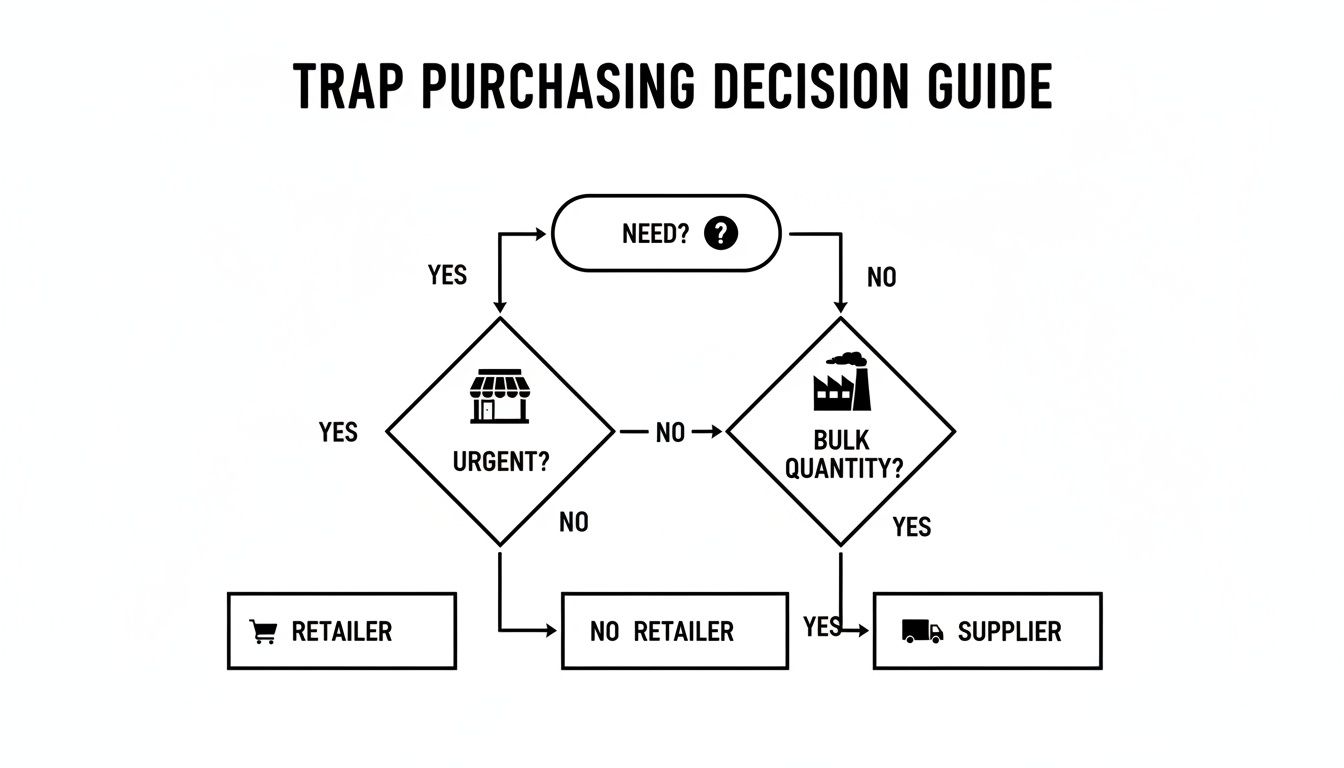
As you can see, if you need a trap immediately, a local store is your best bet. For larger, ongoing needs, it’s smarter to use a specialized supplier who can handle bigger orders.
Key Factors for Trap Selection
Before you buy, run through a quick mental checklist. Ensuring a trap meets these criteria will help you get a solution that actually works for your team and your operational standards.
-
Trap Type and Location: First, consider the trap's design and where it will go. Sticky traps are silent and discreet, making them great for front-of-house areas. Liquid bait systems are highly effective but are better suited for kitchens or storage areas. For pure power, UV light traps are ideal for back-of-house zones where aesthetics don't matter.
-
Capacity and Maintenance: A busy restaurant bar can fill a small trap in hours. Check the manufacturer's specs for area coverage and pest level. Also, be realistic about maintenance—how often will your staff need to replace the attractant or glue board?
The best trap is useless if it isn't maintained. A full or expired trap is just countertop clutter, so pick a system with a maintenance routine your team can stick to.
Use this checklist to compare options and find the best fit for your needs.
Feature Checklist for Selecting a Fruit Fly Trap
| Feature | Key Questions to Ask | Best For... |
|---|---|---|
| Trap Type | Front-of-house or back-of-house? Does it need to be silent and discreet? | Sticky/UV Traps: Front-of-house. Liquid Traps: Kitchens, bars, storage areas. |
| Capacity | How large is the area? How severe is the fruit fly problem? | High-Capacity: Commercial kitchens, busy bars, high-traffic service areas. |
| Maintenance | How often does it need service? Is it easy to clean? | Low-Maintenance: Businesses with limited staff time; set-and-forget solutions. |
| Attractant | Is the attractant non-toxic and food-safe? Does it use a proven lure? | Food-Safe Attractants: Any area near food prep, service, or dining tables. |
| Safety | Is it discreet enough to avoid guest tampering? Are electrical parts exposed? | Enclosed/Discreet Designs: Public-facing areas like lobbies, cafes, and dining rooms. |
| Aesthetics | Does the design blend with my decor, or does it look industrial? | Stylish/Modern Designs: Upscale restaurants, hotel lobbies, and boutique cafes. |
This checklist helps you think through the practical realities of using a trap in a commercial setting, steering you toward a solution that will perform long-term.
Safety and Attractant Effectiveness
In a food service business, safety is non-negotiable. Any trap placed near food prep areas must use non-toxic, food-safe attractants. The most reliable traps use a proven mix of apple cider vinegar, fruit scents, or specific pheromones that attract flies without health risks. To learn more, explore our detailed breakdown of what makes an effective fly trap for fruit flies.
Different markets have different preferences. In Japan and South Korea, businesses often prefer wall-mounted UV systems with smart sensors. In China and India, high-volume, low-cost bait traps are a common choice for covering large areas affordably. The "best" solution always depends on your specific context.
Smart Sourcing and Bulk Buying Strategies
In hospitality, how you buy is as important as what you buy, especially for essentials like pest control. A smart sourcing strategy saves you money and keeps your business protected.
For any multi-location restaurant, large hotel, or busy catering company, buying in bulk is a clear win. Just like stocking your pantry, the cost per unit drops significantly. Bulk buying turns a recurring expense into a predictable, budget-friendly line item.
Finding the Best Channels for Bulk Orders
When you're ready to buy in larger quantities, your local big-box store isn't the right place. You need suppliers who specialize in business-to-business (B2B) sales and understand the demands of a commercial environment.
Your best bets for a good deal are:
- Wholesale Suppliers: These distributors buy directly from manufacturers in massive quantities and can offer serious discounts on case or pallet orders.
- Direct-from-Manufacturer Programs: Many top pest control brands have programs for commercial clients. Cutting out the middleman often gets you the best price and direct access to their product experts.
A good bulk purchasing deal does more than save money upfront. It creates a reliable supply line, ensuring you never run out of the tools needed to defend your reputation.
Leveraging Subscriptions and Seasonal Promotions
Look into subscription services. Many online suppliers and manufacturers now offer automated, recurring deliveries at a discount. This "set it and forget it" approach keeps your stockroom full and takes one more task off your plate. This is especially useful for consumables, so check out our guide on ordering fruit fly trap refills for your business.
Finally, pay attention to the calendar. Fruit fly activity spikes in warmer months, and suppliers often run promotions before the busy season. Timing your bulk purchase to align with these sales can lead to significant savings. A little forward-thinking goes a long way.
Integrating Modern Fly Control Alternatives
Effective pest control is about more than just setting traps. While traps handle existing flies, you also need to stop them from becoming a problem in the first place. This protects your food, your atmosphere, and your guest experience.
It's a simple mindset shift: move from reacting to a problem to proactively preventing it. Create an environment where flies can't spoil the ambiance you've worked hard to build.
Moving Beyond Traps with Proactive Solutions
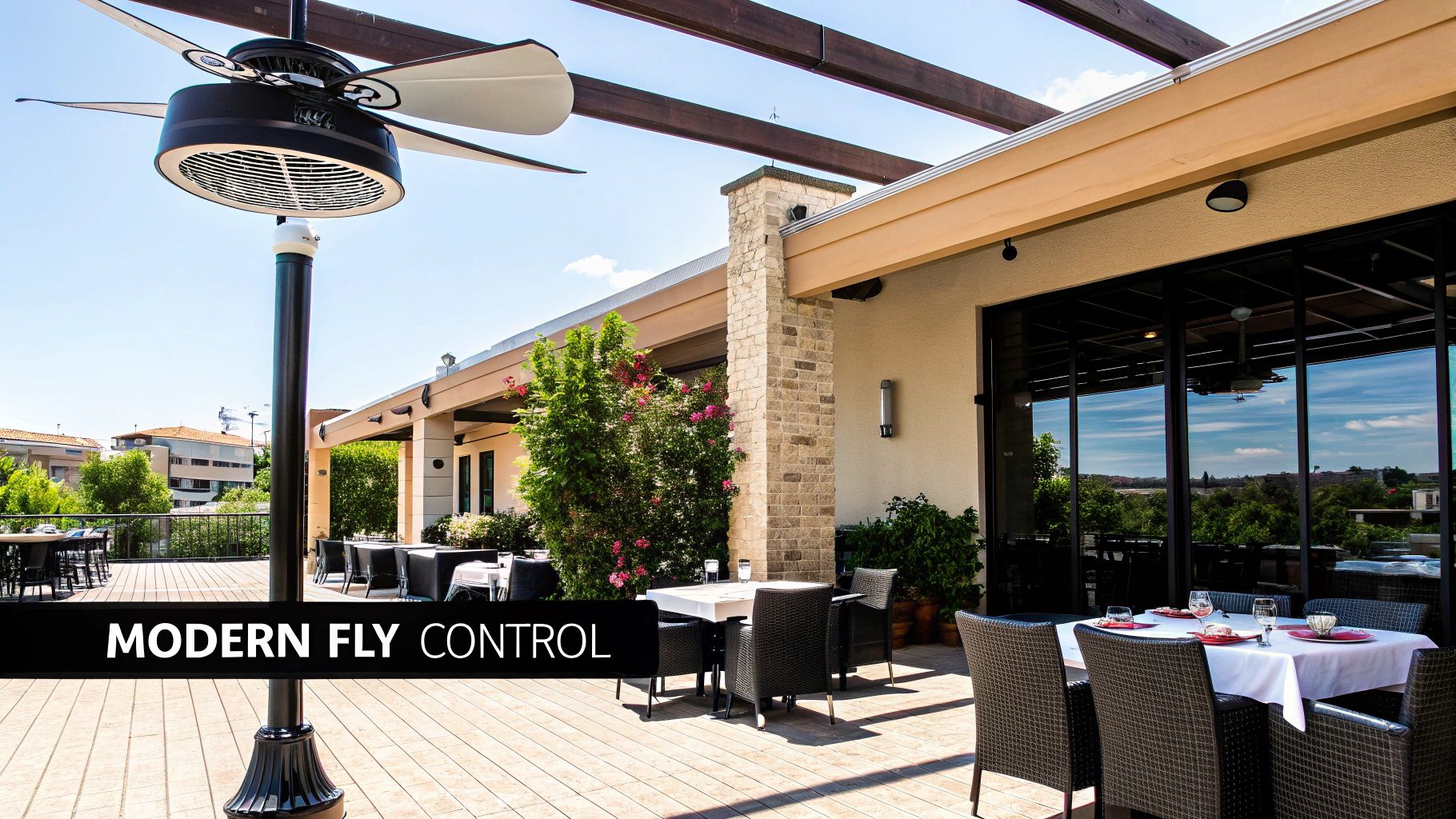
The smartest fly control approach is creating a defensive barrier. This is critical in guest-facing areas like dining rooms, patios, and buffets where a sticky trap is out of place. The goal is to stop flies before they land on a plate or a wine glass.
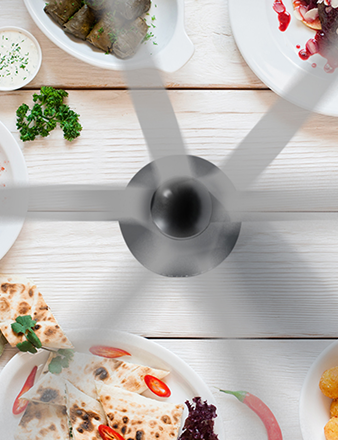
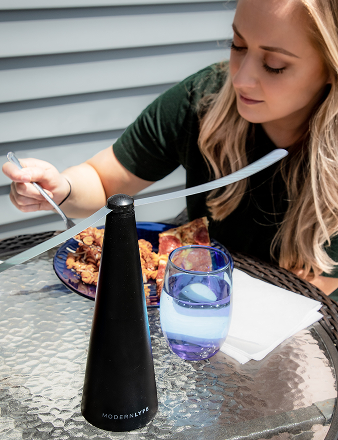
One of the best non-trap solutions is the fly fan. These devices create a gentle air current that makes it nearly impossible for small insects like fruit flies to fly or land nearby.
Think of a fly fan as an invisible shield for your tables. It establishes a no-fly zone that protects guests and their food without chemicals, odors, or the unpleasant sight of a trap. It's a proactive defense that shows you care about hygiene and comfort.
When you use solutions like these, you’re not just managing pests—you’re elevating the hospitality you provide.
Integrating Fly Fans into Your Environment
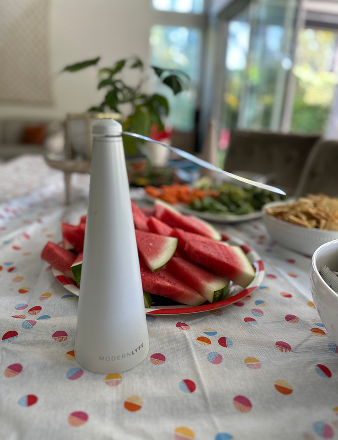
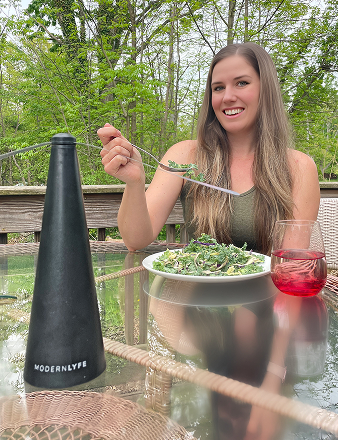
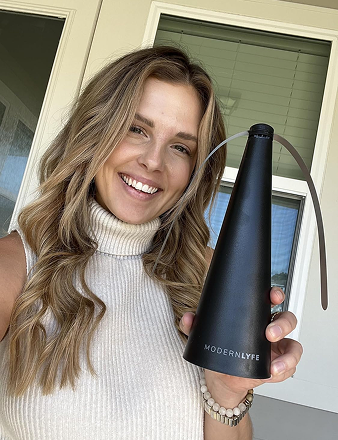
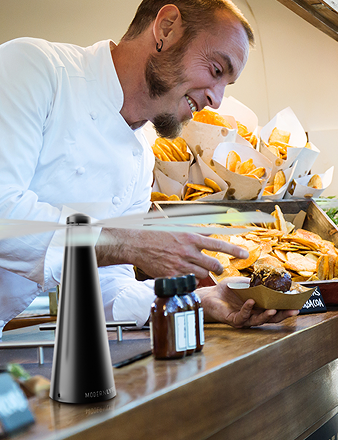
Modern fly fans are designed to blend in. Sleek, quiet, and often battery-operated, today's models from brands like Modern Lyfe fit perfectly into an upscale dining setting. To learn more about how they work, check out our detailed guide on the benefits of a fly fan for your business.
Here are a few ways to use them:
- On Dining Tables: A single, quiet fan can keep an entire table clear of pests.
- At Buffet Stations: A few fans along the buffet line will keep food displays pristine.
- Near Bar Areas: They are perfect for stopping flies from hovering around drink garnishes and open bottles.
This strategy works hand-in-hand with traps. Keep traps in the back-of-house—kitchens, storage rooms, and near drains—to eliminate flies at the source. Use fly fans out front to maintain a flawless guest experience.
Of course, the best defense starts with removing what attracts flies in the first place. Alongside trapping, simple preventative measures like using proper fruit storage methods can dramatically reduce populations.
Finding Local Suppliers and Professional Services
When a fruit fly problem explodes overnight, you don't have time to wait for shipping. You need a fix now. Knowing where to find traps locally can be a lifesaver for your business.
The quickest way to get started is with a smart local search. Use terms that cut through the noise.
Effective Local Search Tactics
Skip generic searches. To find what your business needs, be specific. Try these search terms:
- “Restaurant pest control supplies near me”
- “Commercial fruit fly traps in [Your City]”
- “Janitorial supply store with pest control”
This simple trick helps you bypass consumer-grade products and find suppliers that cater to businesses. The same principle applies when looking for other necessities, as shown in this guide for finding food packaging supplies near me. And don't forget—many national suppliers have "store locator" features on their websites to direct you to the nearest professional retailer.
Knowing When to Call a Professional
Sometimes, even the best traps aren't enough. If an infestation is stubborn or growing rapidly, it's a red flag that the problem is deeper than a simple trap can solve.
If you're constantly replacing traps but the fly population isn't shrinking, you likely have a hidden breeding ground in a drain, under a floorboard, or inside a wall.
At this point, buying more traps is a waste of money. The smartest move is to call a professional pest control service. They have the expertise to find and eliminate the source of the infestation, saving you time, money, and your reputation.
Got Questions? We've Got Answers.
When you're dealing with fruit flies, you need clear, direct answers. Hospitality professionals face unique challenges, from busy kitchens to elegant dining rooms where guest experience is everything. Here are answers to common questions about using fruit fly traps in a commercial setting.
Getting the right information helps you make decisions quickly. Knowing the difference between trap types or how often to service them can make or break your pest control plan.
Are Professional-Grade Traps Really Better Than What I Can Buy at the Store?
In a commercial environment? Yes, absolutely. Think of it like a chef's knife versus a standard kitchen knife. Both cut, but one is designed for performance, durability, and heavy use.
Professional-grade traps are built to a higher standard. They typically have a larger capacity and use more powerful attractants formulated for commercial settings. They are also made from tougher materials to survive the chaos of a busy kitchen or bar.
A standard consumer trap might work for a few fruit flies at home, but it won't keep up in a restaurant. For lasting results, go pro.
How Often Do I Need to Change These Things?
This depends on the trap type and the severity of your fly problem. A good rule of thumb is:
- Disposable traps (sticky and liquid) should be replaced every 2 to 4 weeks. If they fill up faster, change them sooner—a full trap is a useless one.
- Reusable traps need more attention. Refill the liquid attractant about once a week to keep it potent.
Always check the manufacturer's instructions. Following their recommendations is the best way to keep your spaces protected.
Can I Use Fly Fans and Traps at the Same Time?
Not only can you, but you should. Using them together creates a powerful one-two punch that covers all your bases.
Fly fans, like those from Modern Lyfe, are your first line of defense in guest-facing areas. They create a gentle air barrier that keeps flies from landing on tables, buffets, or patio seating.
Meanwhile, place your traps in the background—in hotspots like near floor drains, behind the bar, or in storage rooms. The traps work silently to capture flies at their source. It's an integrated approach that gives you total coverage.
Ready to create a truly fly-free zone for your guests? The innovative fly fans from MODERN LYFE offer a stylish and effective solution to protect your dining areas. Explore the collection and elevate your guest experience today.