A catering pickup is due in 20 minutes. Your prep cook is ladling soup into deli containers, someone else is portioning fruit, and a driver is already asking which lids are safe to stack in the van. If the containers are right, service stays calm. If they’re wrong, you get warped rims, leaking lids, messy labels, and food that shows up looking cheaper than it is.
That’s why 1 quart plastic containers matter more than most new operators think. They sit in the background, but they touch prep, storage, transport, presentation, and waste control every day.
In a restaurant, they shape mise en place and walk-in organization. In catering, they decide whether a sauce arrives intact or coats the inside of a cambro. In outdoor service, they become part of your hygiene system, not just your storage system. If you buy them only by invoice price, you miss the full cost.
The useful question isn’t “Which quart container is cheapest?” It’s “Which one holds up in my operation without creating extra labor, spoilage, or guest-facing problems?” That’s a different decision.
Beyond the Box An Introduction
A new restaurant owner usually notices containers only after something goes wrong. The first signal is often small. A lid pops during delivery. A batch of cut fruit gets watery because the wrong container trapped too much moisture. Staff overfill soup because “1 quart” sounded straightforward, then the lids won’t seat cleanly. One cheap purchasing decision turns into repeated cleanup, wasted product, and slower line work.
That pattern shows up in nearly every food business. Lunch spots use quart containers for sauces, chopped veg, proteins, and dressings. Caterers rely on them for transport and backup prep. Food trucks use them because they stack well and move fast. Hotels use them behind the scenes even when guests never see them.
The problem is that product listings make these containers sound interchangeable. They aren’t.
Two containers can share the same nominal size and behave very differently in service. One might handle hot fill better. Another might show food more clearly in a grab-and-go cooler. A third may seem fine until repeated washing leaves it cloudy, cracked, or misshapen. Operators don’t lose money because they picked “a plastic container.” They lose money because they picked the wrong one for the job.
Food safety also changes the conversation. A tight workflow depends on reliable storage, but hygiene standards don’t stop at temperature logs and sanitizer buckets. They include how food is covered, moved, staged, and protected during service. If you’re reviewing your systems, it’s worth tightening your broader food service hygiene standards at the same time you review your packaging.
The right quart container saves labor. The wrong one creates tiny problems all day long.
The operators who handle this well usually do three things:
- They match the container to the menu item. Soup, berries, chopped herbs, and cookie dough don’t behave the same.
- They evaluate lids as seriously as bases. A good container with a weak lid is still a weak system.
- They think in cost per use. Purchase price matters, but so do leaks, breakage, rewashing, and replacement speed.
That’s the lens that makes 1 quart plastic containers worth choosing carefully.
Decoding the 1 Quart Standard
“1 quart” sounds exact. In practice, it isn’t.
The label tells you the nominal capacity, not the amount you can safely and efficiently use in real service. That difference matters more than most operators expect.

Why 32 ounces doesn’t always act like 32 ounces
A 1-quart container is designated as 32 oz., but usable capacity changes with the product inside. A cited example from a produce container reference notes that a container labeled 1 quart may hold only about 16 oz of strawberries by weight, a 50% variance, because irregular shapes and air gaps waste space inside the package (sustainableproducecontainer.com).
That’s the cleanest way to think about quart containers in food service. They measure volume. Your menu items don’t always behave like liquids.
A smooth tomato soup gets close to nominal capacity. Chunky chili won’t. Cut melon, pasta salad, or roasted cauliflower create dead space. Leafy greens look full before they’re heavy enough to hit your intended portion. If you freeze product, you also need headspace. If you transport product, you need anti-slosh room.
The mistake that throws off costing
New operators often make one assumption: one quart equals one serving standard. That leads to portion drift.
Use this quick filter instead:
- Dense liquids usually fit closest to stated volume.
- Chunky or irregular foods need practical testing, not label trust.
- High-motion transport items need extra headspace.
- Cold prep with garnish or toppings often needs visual room so the product still looks intentional.
Practical rule: Never build event ordering or menu costing from nominal container size alone. Test with the actual food.
The physical dimensions also vary by material and design. A round polypropylene container may have slightly different dimensions than an HDPE pry-off version. These differences, while appearing small, can still affect usable space because wall thickness and base shape differ, as noted in product references.
A better way to standardize
If you want consistency, build a fill chart for your kitchen.
A simple one works:
| Menu item | Container label | Fill line used by staff | Lid-safe for transport | Notes |
|---|---|---|---|---|
| Tomato soup | 1 quart | Near top with headspace | Yes | Hot-fill protocol |
| Chicken salad | 1 quart | Lower than nominal top | Yes | Avoid compression |
| Cut fruit | 1 quart | Visual fill line | Sometimes | Check liquid pooling |
| Roasted vegetables | 1 quart | Test batch required | Yes | Irregular volume |
This takes a little setup, but it prevents overfill, under-portioning, and ugly presentation. A quart container is a tool, not a promise. Treat it that way.
The Material Matrix Choosing Your Plastic
Material choice changes how a container performs in heat, cold storage, display, and repeated handling. That’s where most buying mistakes happen.

What matters in the kitchen
For most 1 quart plastic containers, the useful comparison is PP vs. HDPE vs. PET. Operators don’t need polymer theory. They need to know what survives hot food, what looks best in retail display, and what gives the fewest headaches in prep.
A key temperature point comes from a packaging reference: HDPE containers have a maximum safe fill temperature around 171°F, while polypropylene is generally limited to 160°F (thecarycompany.com). That gap matters if you’re hot-filling soups, sauces, or cooked sides.
Plastic Container Material Comparison
| Attribute | Polypropylene (PP) | HDPE | PET |
|---|---|---|---|
| Heat handling | Good for many hot applications, but lower than HDPE in the cited reference | Best choice here for hotter fill use | Better treated as a cold or ambient display choice |
| Cold storage | Common in prep use | Strong in cold and freezer-oriented use | Often chosen more for presentation than hard back-of-house use |
| Clarity | Usually serviceable, not premium display clarity | More utilitarian look | Best when food appearance drives the sale |
| Rigidity | Good all-around workhorse | Rigid and durable feel | Can present well but isn’t my first pick for rough handling |
| Best use case | General prep and storage | Hot fill, sturdy back-of-house use | Grab-and-go salads, parfaits, cold retail items |
How I’d choose by operation
If you’re portioning hot product, HDPE deserves serious attention. The cited thermal range gives it a practical edge where temperature abuse can warp lesser containers or force staff to wait too long before packing.
If you need a broad, flexible standard for prep, PP often lands in the middle. It’s familiar, widely used, and works well when you’re not pushing heat limits.
If the container is customer-facing, PET usually wins on appearance. A bright grain bowl, layered dessert, or fruit cup sells better when the packaging is clear and sharp.
That’s the fundamental trade-off:
- HDPE for hotter fill and sturdier handling
- PP for everyday prep versatility
- PET for cold presentation and visual merchandising
Buy for the station, not for the catalog category.
One more issue belongs in this discussion. Disposal and recycling are part of the operating picture, especially if your business burns through volume. If you want a useful industry read on broader plastic recycling challenges and opportunities, it helps frame why “recyclable” on a product page doesn’t always translate into easy recovery in practice.
What doesn’t work
The worst move is trying to make one material do every job.
Don’t use your display container as your hot-fill container. Don’t assume your freezer prep container is also your best front-of-house package. And don’t let staff mix lookalike containers from different materials without clear rules. That’s how you get warped lids, bad labeling habits, and inconsistent customer presentation.
Lids Seals and Food Safety Performance
The base gets most of the attention. The lid determines whether the system works.
A weak seal creates three expensive problems fast. Leakage. Shorter holding quality. Contamination risk during transport or outdoor service.

Not all seals protect the same way
In day-to-day food service, you’ll usually see a few lid styles:
- Snap-on lids are fast and familiar. They’re fine for many prep tasks, but quality varies a lot by manufacturer.
- Plug-style or tighter-seat lids usually perform better in transport because they grip more intentionally.
- Hinged formats can be convenient in service, but they aren’t my first choice when movement, stacking, or repeated reopening is part of the job.
For indoor prep, a decent snap fit may be enough. For delivery, off-site catering, and shuttle transport between kitchen and venue, that standard often isn’t enough. Staff need a lid that seats consistently even when containers are filled quickly by different people.
Outdoor service changes the standard
Many sellers become unhelpful at this point. They describe lids as “tight” or “leak-resistant,” but that doesn’t answer the question operators have: does the setup protect food well enough in a fly-prone environment?
A cited reference on similar deli containers notes 20-30% air permeability in lab testing, which is not enough to treat these containers as a meaningful pest barrier in outdoor service. The same source notes that pairing containers with fly fan solutions can reduce related food waste by 15-25% in hospitality settings (webstaurantstore.com).
That matters for buffet lines, garden weddings, food truck windows, barbecue service, and poolside setups. A lid that feels snug in the hand may still allow enough airflow to make it unreliable as your only defense.
A sealed container helps. It doesn’t replace active protection in outdoor food service.
If your team handles outdoor events, this belongs inside your broader HACCP food safety thinking. The container is one control point. It shouldn’t be the only one.
A practical lid check before you buy in volume
Test lids with your real menu and your real movement.
- Fill the container with the actual product. Water tests don’t tell the whole story with oil, acid, pulp, or chunks.
- Stack and transport it. Put it in the van, cambro, or speed rack setup you already use.
- Open and reseat it repeatedly. Weak rims show up fast under real staff handling.
- Use it outside if you serve outside. Wind, humidity, and repeated opening change the outcome.
The best lid isn’t the one with the boldest claims. It’s the one your staff can close correctly, quickly, and consistently.
Best Uses in Food Service Operations
A good container choice becomes obvious when you tie it to the job, not the spec sheet.

Restaurants and prep kitchens
In a restaurant kitchen, 1 quart plastic containers work best when they support speed and visibility. Dressings, sauces, cut vegetables, beans, grains, batched garnishes, and backup mise en place all fit the format well.
For back-of-house use, I’d keep the focus on three things:
- Stacking discipline
- Clear labeling space
- Container consistency across stations
If the sauté station uses one lid type and garde manger uses another that looks similar, mistakes happen. Standardization matters more than operators think.
Repeated-use questions also deserve attention. A cited reference notes FDA concerns that microplastic leaching can increase 2-5x after 50 commercial wash cycles at 140°F, and it also reports that 40% of restaurant managers in industry surveys said PP or HDPE containers cracked after 3-6 months of use (staples.com). That doesn’t mean every reusable plastic container is unsafe or unusable. It means repeated commercial use has limits, and retirement rules should be deliberate.
Caterers and off-site event teams
Caterers need containers that survive movement, holding, and staging. That usually favors sturdier options over prettier ones for anything behind the scenes.
Use quart containers for:
- Cold sauces and dressings that need clean portioning on-site
- Prepped garnishes that can be staged in batches
- Side components that need transport without exposing the full pan
- Backup product for replenishing buffets without dragging extra bulk equipment
For guest-facing items, clarity still matters. If a parfait or layered salad is being sold or displayed, use the container that makes the food look worth the price. If it’s a utility container behind the line, durability wins.
Here’s a useful visual on practical food storage workflows in action:
Food trucks and outdoor service
Food trucks need compact packaging that opens fast and stores tight. Quart containers are useful for pre-portioned toppings, slaws, pickles, salsas, batter components, and cold-hold backups. But trucks also deal with vibration, heat, and limited replacement inventory. A mediocre container becomes a daily annoyance.
For outdoor buffet and market service, the right answer is usually a system, not a single product. Use the quart container for batching and short-term protection, then combine it with active service controls for exposed food time. Operators get into trouble when they expect one lidded plastic container to solve transport, display, hygiene, and long-duration outdoor holding all at once.
Retire containers earlier than feels economical if rims deform, plastic clouds heavily, or cracks start around the lid seat. The labor and risk cost is higher than the replacement cost.
The best use case for quart containers is narrow and practical. Prep. Store. Move. Portion. Refill. Once you ask them to be a permanent serving vessel under pressure, their weaknesses show.
Smart Sourcing and Cost Management
The invoice price is only the first number. The true cost sits in how often the container fails, how much space it consumes, and whether it creates extra labor.
That’s why smart buyers treat 1 quart plastic containers like any other operating asset. They ask how many uses they’ll get, what failure looks like, and whether the product fits the flow of the kitchen.
Think in cost per use
A slightly pricier container can be cheaper in practice if it stacks cleanly, seals reliably, and doesn’t crack early. A bargain option gets expensive when staff double-lid it, overhandle it, or avoid using it for certain menu items because they don’t trust it.
Look at procurement through this lens:
- Purchase cost matters, but so does how many containers get discarded from cracks, stains, or warped rims.
- Storage cost matters if bulk buying turns your dry storage into a maze.
- Operational cost shows up when mismatched lids slow prep or create rework.
- Waste cost appears when a cheap seal turns sellable food into cleanup.
For larger format storage, it also helps to compare where quart containers stop making sense and where other vessels take over. This practical guide to a 10-gallon food grade bucket is useful for thinking about that handoff in prep systems.
Buy from suppliers who fit your volume and cadence
Local restaurant suppliers are useful when you need quick replenishment and sample testing. Bigger online vendors can make sense when your specs are locked and your storage is organized. General packaging suppliers can also be useful for comparing format options when you’re balancing shipping, lead times, and stock depth across multiple packaging categories.
The mistake is buying too much before your kitchen has validated the container. Order samples. Test lids. Run the product through hot fill, cold hold, stacking, and transport first.
Sustainability belongs in the cost conversation
Plastic purchasing also sits inside a larger waste problem. Global plastic production rose from 2 million metric tons in 1950 to over 450 million metric tons annually by 2019, and by 2015 cumulative plastic waste had reached 6,300 million metric tons, with only 9% recycled according to Our World in Data. For operators, that doesn’t create a simple answer, but it does make waste reduction, right-sizing, and longer useful life worth taking seriously.
The strongest purchasing habit is simple. Buy fewer types. Test them hard. Reorder only what your staff uses well.
FAQ Your Quick-Answer Container Guide
Are these containers dishwasher safe in a commercial machine
Sometimes, but “dishwasher safe” is too broad to trust on its own.
Commercial machines use harsher heat and detergent conditions than most consumer claims imply. If you reuse quart containers, inspect them constantly. Retire anything with rim distortion, stress lines, odor retention, heavy clouding, or cracks near the lid seat. For many operations, reusability works best for back-of-house prep, not for indefinite rotation.
Can I microwave food in these containers for customers
Only if the specific container is clearly rated for that use by the manufacturer and the material is appropriate. In practice, many operators avoid relying on a general-use quart container as a customer reheating vessel unless the product spec is very clear.
If there’s any doubt, transfer the food to a verified microwave-safe format. That avoids melted containers, off odors, and customer complaints.
What are the best options for custom branding or labeling
For most operators, labels are the cleanest answer.
Use waterproof labels for retail or refrigerated product. Use dissolvable kitchen labels for internal rotation. If your staff hand-mark containers, designate one part of the lid or sidewall for dating so labels don’t end up on sealing surfaces.
What works best depends on how the container is used:
- Retail display benefits from clean front-facing branding.
- Production kitchens need date, item name, allergen notes, and initials.
- Catering teams need labels that survive condensation and transport.
How do I properly recycle these containers at my business
Start local, not theoretical. Check what your municipality or waste hauler accepts. Then train staff to empty, rinse, and sort containers correctly. Dirty plastic usually ruins the effort before it leaves the building.
The scale of the challenge is real. In the US, 14.5 million tons of plastic containers and packaging waste were generated in 2018, while the recycling rate for PET bottles was 29.1% and for HDPE natural bottles was 29.3%, according to the EPA’s containers and packaging data. That’s why businesses should treat recycling as one part of a broader plan that also includes reducing waste, choosing the right format, and avoiding unnecessary replacement.
What’s the biggest mistake buyers make with 1 quart plastic containers
They buy by unit price and assume all quart containers perform the same.
That mistake usually leads to a second one. They standardize too early. Test first. Then commit.
When should I throw reusable containers away
Discard them as soon as they stop performing cleanly and predictably.
That includes:
- Cracked walls or rims
- Lids that no longer seat evenly
- Persistent staining or odor
- Warping after heat exposure
- Cloudiness that makes product identification harder
A container that “still sort of works” usually costs more than it saves.
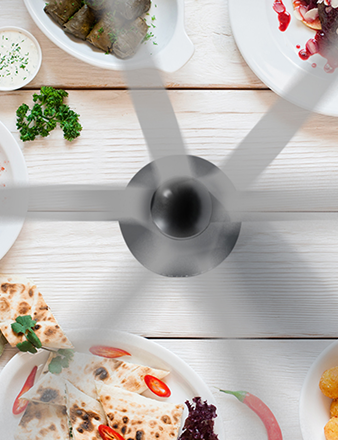
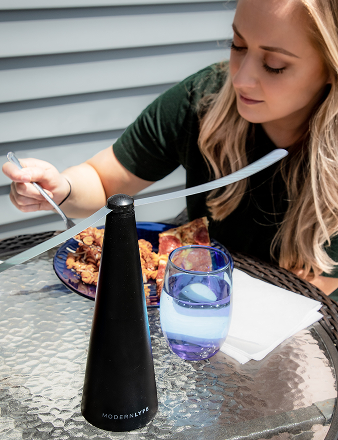
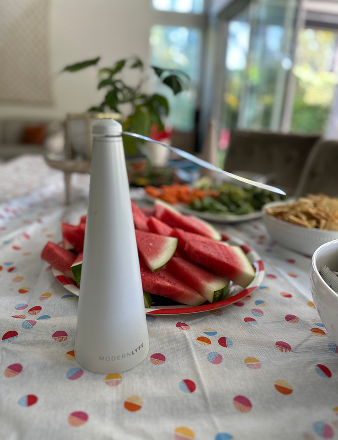
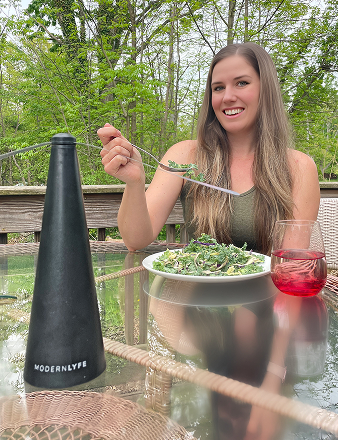
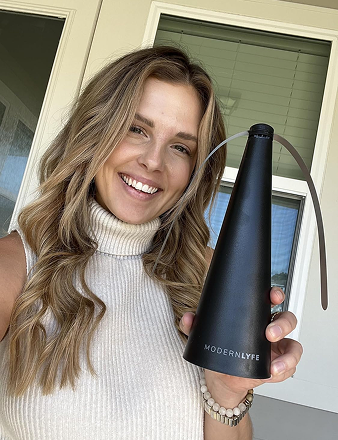
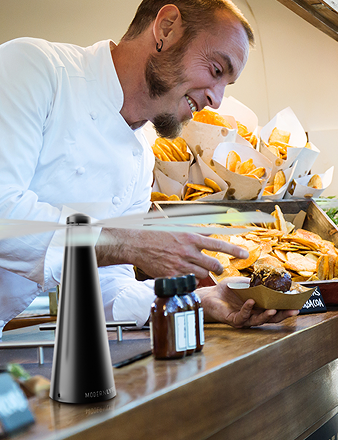
If you run buffets, patios, catered events, food trucks, or any outdoor food setup where flies become part of the operating problem, MODERN LYFE offers fly fans built for cleaner presentation and better food protection. They’re a practical add-on for hospitality teams that want to reduce pest pressure without cluttering the guest experience.