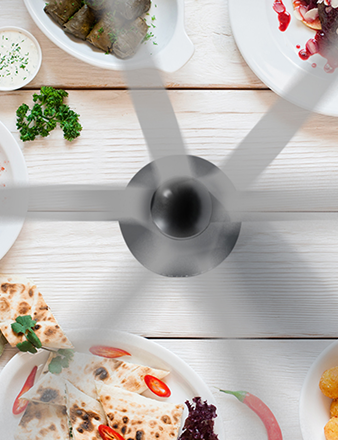
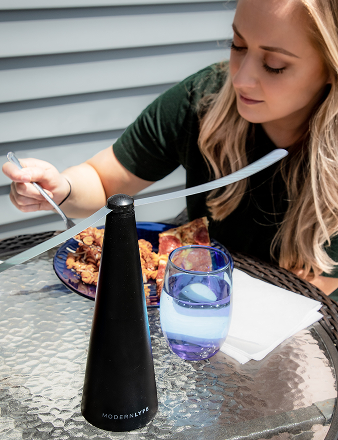
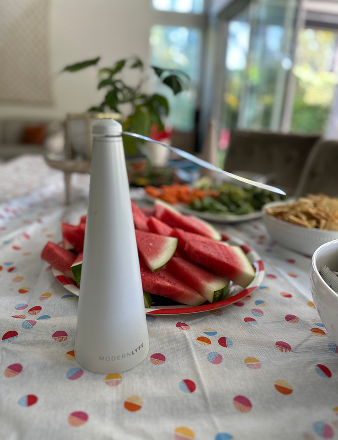
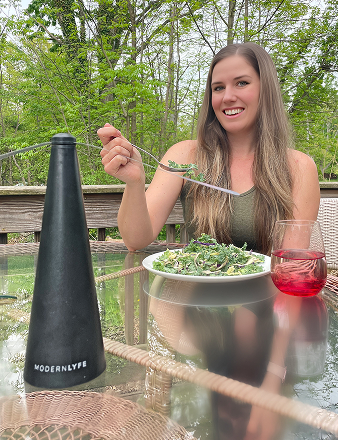
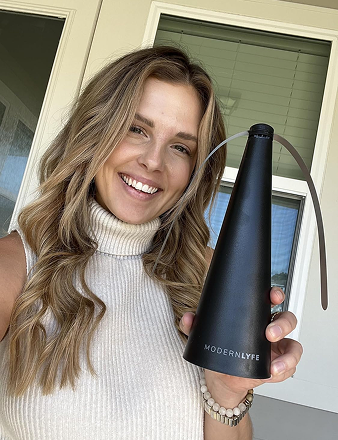
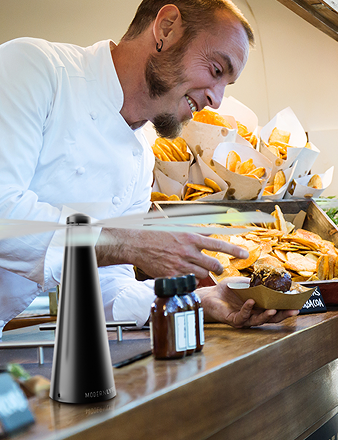
Forget the old saying about not touching something with a 10-foot pole. For hospitality pros, a 10 ft pole isn't for keeping things away—it's the secret to a flawless, pest-free outdoor event. It’s the best way to mount Modern Lyfe fly fans over buffet tables, patios, and seating areas.
The result is a comfortable, fly-free zone that’s effective and completely out of your guests' way.
A New Angle on Outdoor Pest Control

If you're a restaurant owner, event planner, or just love to entertain, it's time to rethink the 10 ft pole. In our world, it's your best tool for creating a perfect atmosphere.
Mounting a Modern Lyfe fly fan on a tall, sturdy pole elevates your pest control. It’s a simple move with huge advantages over placing a fan on a table or using a shorter stand.
Why Go High? The Benefits of Pole Mounting
The biggest win is expanded coverage. Positioning a fan high above a food station or dining area creates a wider cone of air. This gentle breeze protects a larger space than a fan sitting on a table. The result? You need fewer fans, which means less clutter and lower costs.
Another huge plus is unobstructed access. With the fan safely overhead, guests can mingle and serve themselves without dodging tabletop gadgets. It keeps your buffet line moving and your tables free for dining. It simply looks more professional and elegant.
This isn't just about aesthetics; it's about safety. Raising the fans eliminates a trip hazard and keeps spinning blades far from curious kids or pets.
The right mounting option can make or break the guest experience. While table fans have their place, they often fall short in professional settings. Here's a quick look at how the options stack up.
Fly Fan Mounting Options At A Glance
| Mounting Method | Coverage Area | Flexibility | Guest Interference |
|---|---|---|---|
| 10 ft Pole | Wide & targeted | High | Minimal to None |
| Tabletop | Small & localized | Low | High |
| Low Stand | Moderate | Moderate | Moderate |
| Clamp Mount | Varies by surface | High | Can be obstructive |
As you can see, the 10 ft pole offers the best mix of wide coverage and minimal disruption, making it the top choice for most events.
A Fun Fact on Poles
It's interesting how a simple pole is a cornerstone in so many industries. The global utility poles market—the supports for power lines—was valued at USD 47.45 billion in 2026 and is projected to hit USD 71.31 billion by 2033. It’s a bit different from event poles, but it's a neat reminder of how critical these simple structures are.
Of course, a pole-mounted fly fan is just one part of a solid pest management strategy. For a complete approach, combine tactics. For instance, understanding the pest control benefits of screens can help you create a multi-layered defense against unwanted insects.
How to Choose the Right 10 Ft Pole for Your Needs
Picking the perfect 10 ft pole for your fly fan setup is about more than height. It's about matching the pole's features to your specific use. The ideal pole for a permanent restaurant patio is different from what a mobile caterer needs for a weekend event.
Think of it this way: a caterer setting up for a one-day wedding needs something light, portable, and quick to assemble. A collapsible aluminum pole is the perfect fit—light enough for a gear bag but stable enough to mount a fly fan for the entire event.
Material Durability and Portability
Your first big decision is the material, which usually comes down to steel or aluminum. They serve very different purposes.
-
Steel Poles: These are your heavy-duty workhorses. They're incredibly durable, weather-resistant, and offer the best stability, making them ideal for permanent patio installations or windy areas.
-
Aluminum Poles: This is the clear winner for portability. Aluminum is much lighter than steel, making it the go-to for event professionals who are constantly setting up and tearing down. Many are also telescopic, collapsing for easy transport.
Industry trends confirm the need for strong materials, especially outdoors. Steel's 74.40% material lead in the larger utility pole market shows its resilience. While your fly fan pole isn't holding up power lines, the same principle of strength and security applies. For a setup you can count on, material strength is everything.
Load Capacity and Base Stability
Beyond the material, get serious about two safety factors: load capacity and the base. The pole's load capacity is the maximum weight it can safely support. An overloaded pole is wobbly at best and a serious hazard at worst. Always check the manufacturer's specs to ensure it can handle your fan.
Pro Tip: I always recommend choosing a pole with a load capacity at least 25% higher than the fan's weight. That extra buffer provides peace of mind against a gust of wind or an accidental bump.
The base is your foundation, so it’s just as crucial.
-
Freestanding Bases: These wide, heavy bases are perfect for flat, solid surfaces like a patio, deck, or indoor floor. Look for ones where you can add extra weight, like sandbags, for more stability.
-
Anchored Bases: If you're setting up on grass, dirt, or other soft ground, an anchored or stake-style base is the only way to go. These drive directly into the ground, creating a much more secure footing than a freestanding base can on uneven terrain.
So, for a restaurant with a permanent outdoor dining space, a heavy-duty steel pole with a bolt-down flange base is your ultimate solution. But if you’re a homeowner looking to keep flies away from a backyard BBQ, a lightweight aluminum pole with a weighted freestanding base offers the perfect mix of performance and flexibility.
Getting these details right ensures your 10 ft pole is safe, effective, and reliable. Pairing the right pole with our innovative Modern Lyfe Fly Fan is the key to a truly pest-free space.
A Practical Guide to Safe Mounting and Positioning
You've got your 10 ft pole. Now for the critical part: mounting your Modern Lyfe fly fan safely and positioning it for maximum effect. This is all about safety—it's non-negotiable.
Start by attaching the fan head to the pole. This is one area where you can't cut corners. You need a rock-solid connection between the fan's mount and the pole.
An adjustable clamp is your best tool here. I always recommend one with a rubberized grip. That rubber padding is crucial: it prevents slipping and protects your pole from scratches.
This flowchart maps out the pole selection process. It's a great visual for understanding how each choice—material, capacity, and base—builds on the last to create a setup you can trust.

Achieving Perfect Placement
Once the fan is clamped tight, it's time for placement. Where you put the pole makes all the difference. For a buffet line or a dining table, center the fan directly over the action.
This position creates a wide cone of air covering the whole table, keeping it clear of pests. I aim to have the fan blades at least 7 to 8 feet off the ground. That clearance is key to keeping the fan out of anyone’s way.
Safety First: Don't skip the "shake test." Once mounted, give the pole a firm but gentle shake. If you see any wobble, sway, or slip, take it down and start over. This five-second check can prevent a huge headache later.
Managing Cords and Final Checks
The last piece of the puzzle is the power cord. A loose cord is a trip hazard waiting to happen. Run the cord straight down the 10 ft pole, securing it with gaffer tape or reusable Velcro ties every foot or so. From there, run it along the ground to your power source, taping it down securely anywhere people will be walking.
Before you're done, run through one final check:
- Is the pole standing straight? Use a small level to be sure. On uneven ground like a lawn, you might need to dig the base in slightly on one side to get it perfectly vertical.
- Is the fan centered? The fan head should be directly over the pole's center, not hanging off to one side. An off-center load is a major tipping risk.
- Are all clamps tight? Give the main fan clamp one last check to make sure it's completely snug.
For a closer look at the hardware, check out our guide on using a 1 inch pipe clamp. It’s full of extra tips for all sorts of setups. Get these steps right, and your fly fan will be a safe and effective workhorse for your event.
Troubleshooting Common Setup and Performance Issues
Even with the best plans, things can go wrong on site. You're setting up for a big event, and suddenly, the fan pole is wobbling or the airflow isn't right. Don't panic. Here’s your field guide for fixing common snags with your 10 ft pole setup.
Let’s start with the most common anxiety: a wobbly pole. That slight sway can look alarming, but the fix is usually simple.
First, check the ground. Is it truly as level and solid as you thought? A subtle slope or soft patch of grass can throw the entire pole off-kilter. If possible, move it to a better spot.
If you’re stuck with your location, you can still create a solid foundation.
- On soft ground: For poles with a stake, just drive it deeper. If you're using a freestanding base, slide a sturdy piece of plywood underneath to distribute the weight and stop it from sinking.
- On hard surfaces: If you feel a slight rock on a patio or deck, add weight. Ensure every part of the base is making contact first, then weigh it down.
I can't stress this enough: sandbags are your best friend. In my experience, one or two 15-20 lb sandbags across the base legs will fix over 90% of stability issues on hardscapes. It’s a simple trick for instant peace of mind.
Fine-Tuning Fan Performance
What if the pole is rock-solid, but the fan isn't doing its job? If you're dealing with poor coverage or strange noises, a few quick adjustments can make all the difference.
The Problem: The Fan Isn't Covering the Whole Area
This is almost always a height and angle issue. Modern Lyfe fans push a cone-shaped column of air. If that cone isn't landing where you need it, you need to adjust its starting point.
Try raising the fan higher on the 10 ft pole. Moving it up creates a wider circle of air coverage below. For more targeted airflow, simply tilt the fan head down to direct it exactly where it's needed.
The Problem: The Fan is Making a Weird Noise
A properly mounted fan should be whisper-quiet. A rattle, click, or buzz means something has come loose. Don't ignore it. Power down the fan and run this quick checklist.
- Check the Clamp: Nine times out of ten, the noise comes from a clamp that isn't fully tightened. Give it another turn to secure it.
- Inspect the Blades: A leaf, confetti, or stray decor caught in the fan can make a racket. Do a quick visual inspection to ensure the blades are clear.
- Secure the Power Cord: A loose power cord can vibrate against the metal pole and create a constant, annoying buzz. Use tape or a zip tie to secure the cord tightly against the pole.
Getting these details right on-site is what separates a stressful event from a smooth one. A few quick fixes are usually all it takes to get your fly fan working perfectly, so you can focus on your guests, not the gear.
Advanced Setups for Specific Venues and Events

Once you have the basics down, you can start adapting your setup for specific venues. A restaurant patio has different needs than a wedding tent or a backyard barbecue. A one-size-fits-all approach won't cut it.
The real magic happens when you move beyond a single 10 ft pole and start thinking about how multiple fans can work together. The goal is to create a seamless, bug-free bubble that feels like a natural part of the environment, not a clunky afterthought.
For Restaurant Patios
On a restaurant patio, consistency and ambiance are everything. You need a permanent or semi-permanent installation that feels integrated.
- Placement is Key: Scan your space for natural mounting points. Can you tuck a pole mount next to a large planter, secure it to a railing, or place it near a structural column?
- Match Your Vibe: Choose poles with a finish that complements your decor. A matte black pole can disappear against a dark railing, while brushed bronze might match your light fixtures.
- Rethink Your Power: For a truly professional setup, run low-voltage wiring discreetly to each pole. This eliminates the daily headache of charging batteries or tripping over extension cords.
It's easy to see a 10 ft pole and think "keep away," but these poles are becoming the backbone of a booming infrastructure market. Smart utility poles are on track to become a USD 25.17 billion industry by 2034. For a restaurant owner, this trend means more reliable and integrated power grids are coming, making it even easier to keep your fly fans running seamlessly. You can read more about the growth of the smart pole market on fortunebusinessinsights.com.
For Caterers and Large Events
If you're a caterer, your world is all about speed and efficiency. For a big wedding or corporate gala, you need to cover a huge area without wasting a minute. The strategy is to be modular and quick.
Creating a "go-kit" is a game-changer. Stock it with several lightweight, collapsible aluminum poles. Here’s a pro tip: pre-assemble the fan mounts onto each pole before you get to the venue. This simple step can shrink a 10-minute setup per pole down to just two minutes on-site.
Another trick is to use brightly colored gaffer tape to mark spacing intervals on your power cords. This helps your crew lay out the power grid quickly, safely, and evenly every time.
Of course, solid planning starts before event day. Effective venue sourcing and management are essential. A good venue coordinator can help you map out power sources and the best spots for your 10 ft pole setup well in advance.
For Homeowners
As a homeowner, you have the most creative freedom. Instead of just sticking a pole next to the grill, make it a stylish part of your backyard. Think of it as a functional design element.
You could use a sleek, modern pole as a focal point in your poolside lounge area or mount it directly to a deck post near the dining table. For extra flair, wrap the pole with string lights. It provides a cool breeze and beautiful ambient lighting all at once.
If you're looking for more inspiration, our guide on outdoor vendor booth ideas has clever tips that work just as well for home entertaining.
Answering Your 10 Ft Pole Setup Questions
No matter how well you plan, practical questions always come up. I’ve set up hundreds of these poles for everything from five-star restaurants to backyard weddings. Here are straight-to-the-point answers to the questions I hear most.
This is the real-world advice that separates a wobbly, ineffective setup from a rock-solid, professional one.
What’s the Best Clamp for Attaching the Fan to the Pole?
The only choice is an adjustable C-clamp or a pipe clamp with rubber padding. Don't consider one without it. The rubber protects your pole's finish and, more importantly, it grips the pole so the fan doesn't slide down or shift.
Before you buy, check the clamp's weight rating. You want one that can handle significantly more weight than the fan itself. When in doubt, the user manual for your Modern Lyfe fan will have specific recommendations you can trust.
How Do I Keep a 10 Ft Pole from Tipping Over on a Windy Day?
Wind is the one thing you can't ignore. For any freestanding pole, weight is your best friend. I always carry a set of heavy-duty sandbags or dedicated weight bags to drape over the base. Never assume the pole is heavy enough on its own—a strong gust can turn it into a hazard in a split second.
Here's my hard rule: if wind gusts over 15 mph, it's time to bring it all down. No event is worth the risk of equipment toppling onto your guests.
A pro tip: If possible, set up the pole near a wall, a thick hedge, or a column. Using existing structures as a natural windbreak gives you a huge advantage and an extra layer of stability.
Can I Mount Two Fans on the Same 10 Ft Pole?
I get asked this constantly, and my answer is almost always a firm no. Most standard event poles are designed with a single center of gravity. Attaching one fan balances the load. Adding a second one creates an unpredictable, top-heavy situation that’s begging to tip over.
Unless you have a pole specifically engineered by the manufacturer for multiple, balanced attachments, just don't do it. Stick to the one-fan-per-pole rule. It’s the only way to be sure your setup is safe and stable.
How Far Apart Should I Space the Poles for a Long Buffet?
For a long buffet line, the goal is to create an unbroken curtain of air. Based on my experience, the sweet spot for spacing is placing a pole-mounted fan every 8 to 12 feet.
This overlap ensures the cones of air from each fan intersect, leaving no gaps for pests to sneak through. My method is to start with a pole at each end of the table, then stand back and see where the gaps are, filling them in until the entire length is covered. You can feel the seamless barrier of air when you get it right.
Ready to create a flawless, pest-free environment at your next event? Explore the elegant and effective solutions offered by MODERN LYFE. Visit https://modernlyfe.com to find the perfect fly fan for your needs.