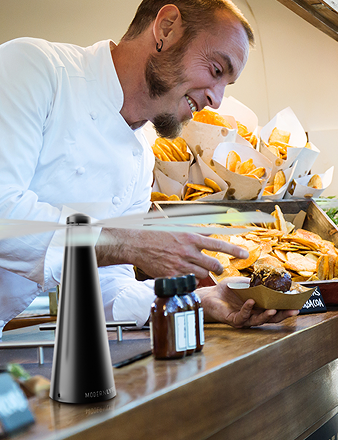
The classic 10-inch box fan is a simple, reliable tool. For restaurants, caterers, or anyone hosting a backyard barbecue, it’s more than just a way to cool down. This compact workhorse is a highly effective way to move air, keep guests comfortable, and—most importantly—keep flies away.
Its small size and low energy use make it the go-to solution for countless situations.
The Workhorse of Airflow and Comfort
Think of the 10-inch box fan as the silent MVP for any event or hospitality space. While it's a familiar household item, its professional uses are often overlooked. It's a simple fix for common problems, from a stuffy dining room to a swarm of flies on the patio.
While large air conditioners handle heavy lifting, these smaller fans deliver targeted, efficient airflow. That’s where their real value lies.
For a restaurant owner, a few of these fans can create a gentle breeze on a patio, keeping diners happy and flies off their plates. For a caterer, a couple of fans can form an invisible shield around a buffet table, protecting food without chemicals. It’s a simple, effective strategy.
More Than Just a Cooling Device
Any fan moves air, but the way a 10-inch box fan does it makes it so useful. It’s not just about cooling people down; it’s about eliminating stagnant air, which offers significant benefits.
- Pest Control: The steady airstream is like a hurricane for small insects. Flies and mosquitoes can't fly through it, so they learn to stay away.
- Fresher Air: By circulating air, the fan helps eliminate lingering food odors and prevents a room from feeling stale. Your guests will notice the difference.
- Low Energy Costs: These fans use minimal electricity, often less than 50 watts. You can run them all day without a major impact on your power bill.
A single 10-inch box fan can move over 1,000 cubic feet of air per minute (CFM). That’s enough to create a powerful "air curtain" that boosts comfort and hygiene, especially for outdoor dining.
This guide will help you get the most out of this simple yet powerful tool. We'll cover the specs, the best ways to use it in hospitality, and how it compares to more specialized equipment.
Understanding the Tech Specs
When you look at a 10-inch box fan, the specs on the box can be confusing. Terms like CFM, watts, and decibels don't always paint a clear picture of how the fan will perform on your restaurant patio or at a BBQ. Let's cut through the jargon and focus on what these numbers mean for you.
Understanding these metrics is key to choosing a fan that solves your problem, whether it's keeping guests cool or protecting food from flies.
Airflow: What CFM Tells You
The most important spec for any fan is its CFM, or Cubic Feet per Minute. This simply measures how much air the fan moves. A higher CFM means a stronger breeze, which is exactly what you need for both cooling and pest control.
A fan with a low CFM might feel nice up close, but it won't do much else. In contrast, a fan pushing 1,000 CFM or more is a different machine. It can create an invisible "air curtain" strong enough to stop flies from landing on a buffet table. To learn more about airflow ratings, check out our guide where you can learn more about what 100 CFM means in our detailed article.
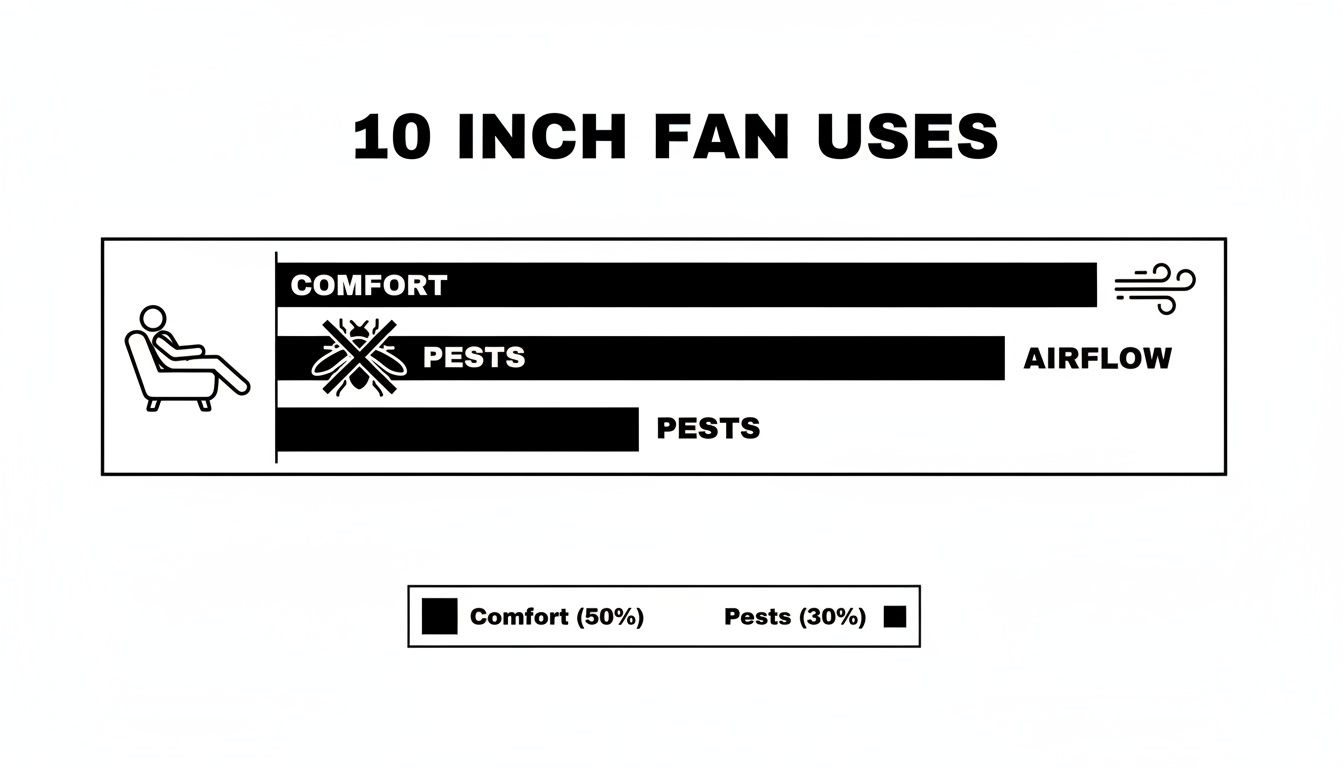
The fan’s ability to move a high volume of air is what makes it so versatile, turning it from a simple comfort item into a practical pest control tool.
Here's a quick summary of what you can expect from a typical 10-inch box fan.
10-Inch Box Fan Performance at a Glance
| Specification | Typical Range | What This Means for You |
|---|---|---|
| Airflow (CFM) | 800 - 1,200 CFM | Strong enough for cooling small areas and creating a barrier against flies. |
| Power Use | 25 - 45 Watts | Extremely energy-efficient, costing just pennies to run for hours. |
| Noise Level | 40 - 55 Decibels | A noticeable hum, but not loud enough to disrupt conversation or ambiance. |
| Weight | Under 5 lbs | Lightweight and easy to move wherever you need it. |
This table provides a solid baseline for comparing models and understanding their real-world capabilities.
Power, Noise, and Portability
For any business owner, operating costs are a key concern. The good news is that a 10-inch box fan is incredibly cheap to run, typically using just 25-45 watts. To put that in perspective, running one for 8 hours costs about $0.03—a fraction of what an air conditioner would cost.
Of course, power is only one part of the equation. Most 10-inch box fans operate between 40 and 55 decibels (dB). 40 dB is like the hush of a library, while 55 dB is similar to a normal conversation. In a busy setting like a patio or an event, you'll hear it, but it easily blends into the background.
Finally, don't overlook the physical design. These fans are light, usually under 5 pounds, and have a slim profile. This makes them easy to pick up, place where needed, and store away. For dynamic environments, that portability is a major advantage.
Using Your Fan in Hospitality and Events
Knowing the specs is one thing, but seeing how a 10-inch box fan solves real-world problems is what matters. For anyone in hospitality or planning a party, this fan is a workhorse. It's a direct solution to common issues like guest discomfort, bugs, and stuffy air.
Let's get practical and explore where this device makes a real difference. From a busy restaurant patio to a catered wedding, smart fan placement can transform the atmosphere.
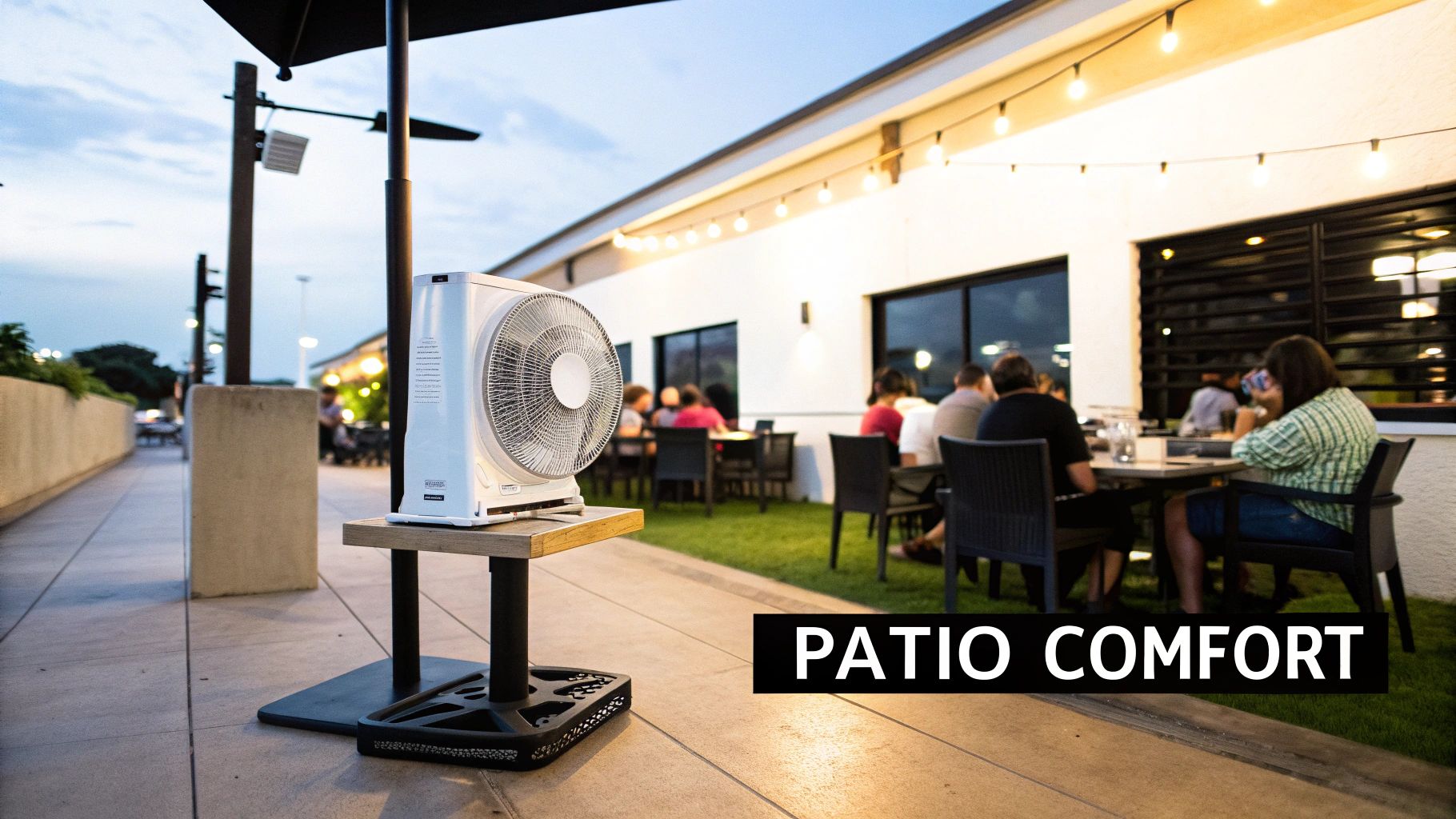
The Restaurant Patio's Best Friend
Imagine a perfect summer evening with your restaurant's patio packed. The only problem? The air is still, and flies are targeting your diners' plates. It’s the kind of annoyance that can ruin an otherwise great experience.
This is where strategically placed 10-inch box fans come in. By setting them up around the dining area, you create a gentle, consistent cross-breeze that works wonders.
- Keeps Guests Cool: The airflow provides immediate relief from the heat, making the patio feel more comfortable without the noise and expense of industrial fans.
- A Natural Fly Repellent: The same breeze is highly effective against flies and gnats. They can’t navigate the moving air, creating a chemical-free shield around your guests.
With this simple fix, an uncomfortable space becomes inviting, encouraging guests to stay longer.
Protecting the Buffet Line
If you're a caterer, keeping food pristine is your top priority. An outdoor buffet is a magnet for flies, which is both unhygienic and unprofessional. A 10-inch box fan is a subtle but powerful tool to have.
The impact is measurable. A 10-inch box fan pushing 1,000–1,800 CFM can disrupt fly patterns by 50–60% within a 10-foot range. For a caterer, setting up four fans around a buffet can reduce fly landings by 45%, protecting food safety and trimming waste costs by $200–$500 per event.
Place fans at either end of the buffet table, angled to skim a layer of air just over the food. This creates an "air curtain" that insects can't penetrate. For more presentation tips, read our guide on how to set up buffet tables.
Pro Tip: Set fans on low, stable stands. You want the airflow above the dishes, not blowing directly on hot food and cooling it down too fast.
Improving Air Quality at Events
Whether you're in a tented wedding reception, at a backyard BBQ, or in a stuffy hall, air circulation is key. A 10-inch box fan is the perfect size for tackling the stale, heavy air that makes a room feel claustrophobic.
Place them in corners or near doorways to pull fresh air in and push stagnant air out. This constant circulation helps remove heat, food smells, and the general stuffiness that builds up with a crowd. It’s a small detail that your guests will definitely appreciate.
Mastering Fan Placement for Safety and Performance
Having a 10 inch box fan isn't enough; knowing where to put it is the secret to unlocking its full potential. The right placement doesn't just maximize airflow—it’s critical for safety at your event.
With a few smart strategies, you can turn your fan from a simple cooling device into a high-performance tool. The goal is to create airflow that works with your space, not against it.
Strategic Placement for Maximum Impact
Where you set up your fan directly affects the results. A fan in the wrong spot might just circulate hot air, but a well-placed one can cool a room, create a cross-breeze, or establish a bug-free zone. It all comes down to understanding airflow.
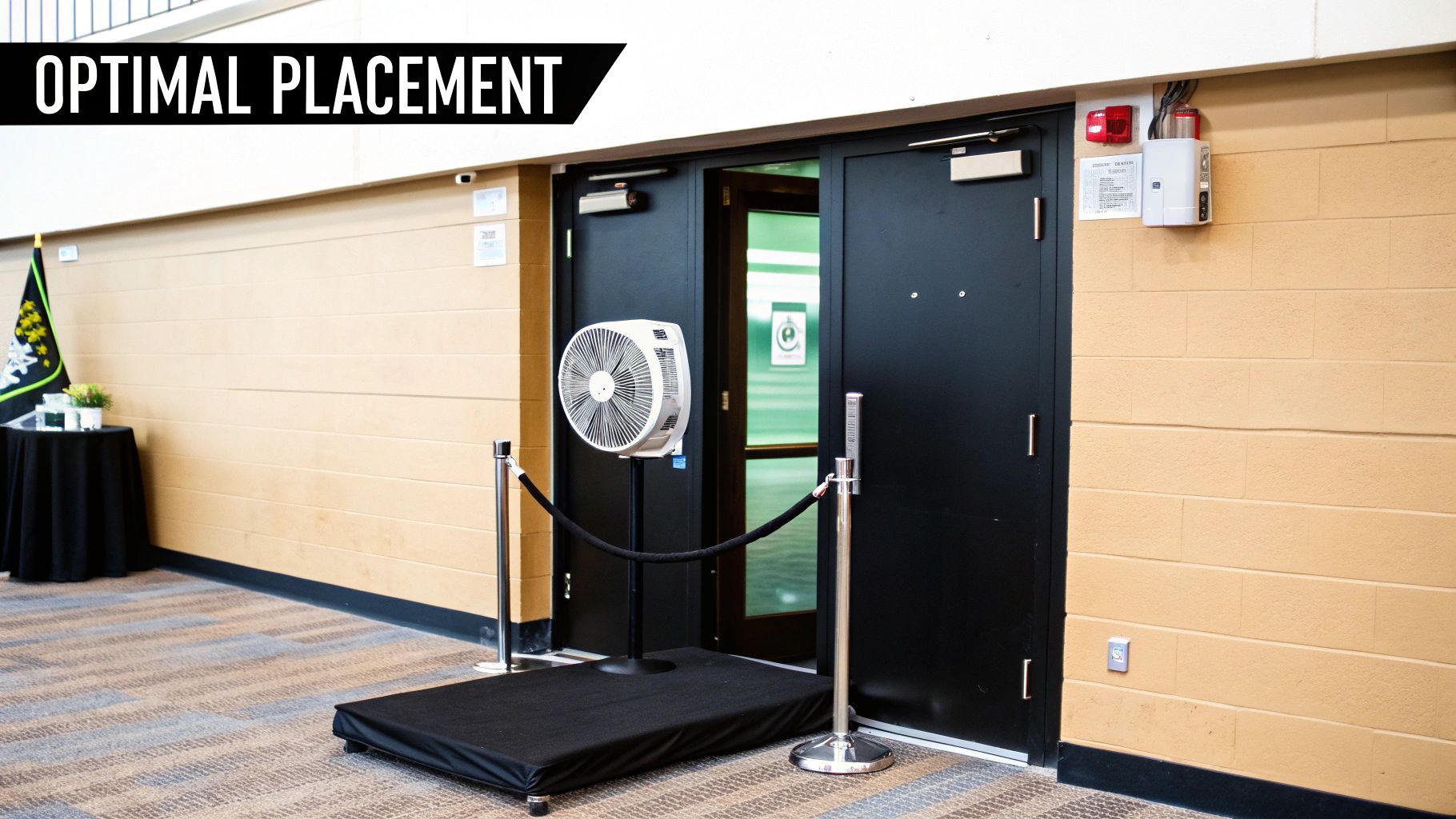
Creating a cooling cross-breeze is one of the most effective techniques. Place one fan facing into a room near an open window, then place another facing out on the opposite side. This simple setup pulls cool, fresh air in while pushing stale, hot air out.
The best trick for pest control is creating an 'air curtain.' Position a 10 inch box fan near a doorway or at the edge of a patio to build a wall of moving air that small insects can't fly through. It effectively seals the area from pests.
This is a great method for protecting buffet lines and outdoor seating without relying on chemical sprays.
Essential Safety Rules
While performance is important, safety is non-negotiable, especially in a busy restaurant, hotel, or backyard. A fan is an electrical appliance, and a little caution goes a long way in preventing accidents.
Before plugging it in, assess the environment. A few simple precautions can be the difference between a helpful tool and a hazard.
Follow these fundamental safety guidelines every time:
- Find a Stable Surface: Always place your fan on a solid, flat surface where it won't wobble or tip over. Avoid soft grass or uneven ground.
- Manage the Cord: Run the power cord along walls or safely under rugs to prevent trips. Never leave a cord stretched across a walkway.
- Keep It Dry: Electricity and water don't mix. Position your fan away from pools, sprinklers, or drink stations where it could get splashed.
- Protect Little Hands: The moving blades are a danger. Keep fans well out of reach of small children and pets.
How to Choose the Right Fan for Your Needs
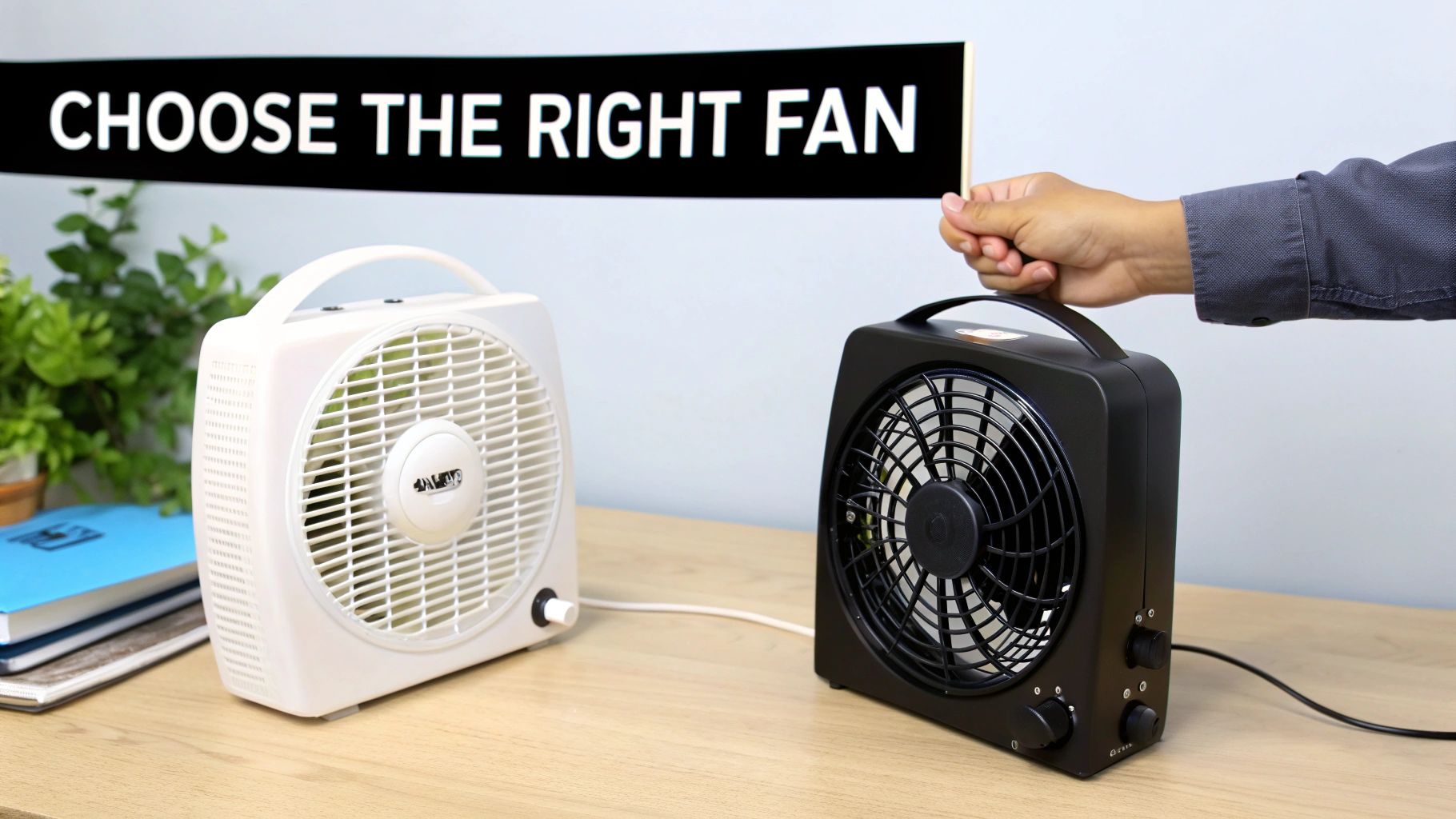
Choosing the right 10-inch box fan isn’t about grabbing the first one you see. It’s about matching the fan’s features to your specific needs, whether that's keeping a patio comfortable or protecting a buffet line.
Let’s walk through the key decisions so you can choose with confidence.
Corded vs. Battery-Operated: Power vs. Freedom
The first choice is between a corded model and a battery-operated one. This comes down to a simple trade-off: Do you need constant, reliable power, or the freedom to place the fan anywhere?
A traditional corded fan is a workhorse. Plug it in for uninterrupted airflow. There’s no risk of the power dying mid-event, making it a great choice for fixed spots near an outlet.
On the other hand, battery-operated fans offer incredible flexibility. You can place them in the middle of a dining table, at the far corner of a patio, or anywhere an extension cord would be a tripping hazard. For dynamic event spaces, that freedom is a game-changer.
To help you decide, here’s a quick comparison of a standard box fan and a purpose-built hospitality solution.
Decision Matrix Corded vs. Battery-Operated Fans
| Feature | Corded Box Fan | Battery-Operated Fly Fan (like Modern Lyfe) |
|---|---|---|
| Portability | Limited by cord length; requires an outlet. | Excellent. Place it anywhere without restrictions. |
| Power Source | Consistent power from an electrical outlet. | Rechargeable battery; offers hours of use per charge. |
| Placement | Restricted to areas near power sources. | Unrestricted; perfect for centerpieces and remote tables. |
| Safety | Cord can be a tripping hazard. | Cordless design eliminates trip hazards completely. |
| Best For | Stationary use, workshops, indoor rooms. | Outdoor dining, buffets, catering, events, home gatherings. |
Ultimately, your primary use case will guide your decision. If the fan will stay in one spot near a wall, corded is simple. If it needs to move with the event, battery power is the clear winner.
Airflow vs. Noise: Performance vs. Ambiance
Next is the balance between a powerful breeze and a peaceful environment. These two features are often at odds. Do you need a blast of air to fight off pests and heat, or is a quiet hum more important for your atmosphere?
A fan with a high CFM rating will excel at creating an air curtain, but it will also generate noise. In a loud, bustling outdoor market, this isn't an issue. But for an intimate dinner or a quiet hotel lounge, a constant drone can be distracting.
Think about your main goal to find the right balance:
- For Pest Control: Go for a higher CFM. A stronger breeze is far more effective at keeping flies and mosquitoes away from food and guests.
- For Ambiance: If you just need gentle air circulation in a quiet setting, look for models advertised as "whisper-quiet" or those with low decibel (dB) ratings.
Build Quality and Durability
Don't forget to check the fan's construction. A fan used for events or catering needs to be tough enough to handle being moved around. A well-built fan will survive transport and prove to be a better long-term investment.
Look for sturdy plastic that won't crack and a stable base that prevents tipping.
The grille design also matters. A good grille is safer and easier to clean—a must for keeping your equipment hygienic. The market for these fans is growing; the centrifugal box fan segment was valued at $7.7 billion in 2023 and is projected to reach $12.4 billion by 2031. This growth is driving better designs, with 70% of new models now featuring more efficient motors. You can learn more about centrifugal box fan market trends to see where the industry is headed.
When a Specialized Fly Fan is the Smarter Choice
A 10 inch box fan is great for moving air, but sometimes it's more power than you need. For certain situations, especially in hospitality, a purpose-built fly fan is a much more elegant and effective tool.
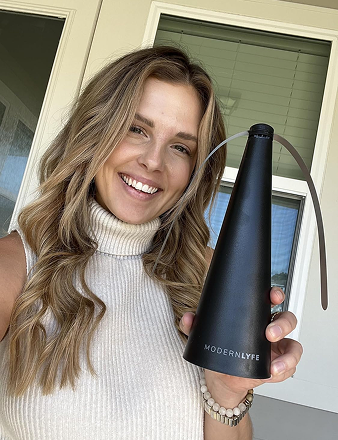
While a box fan can create a breeze across a patio, its size and power can be overkill for a single dining table. This is where a specialized fly fan, like those from Modern Lyfe, proves its worth. They are designed for precision, not brute force.
The Power of a Purpose-Built Design
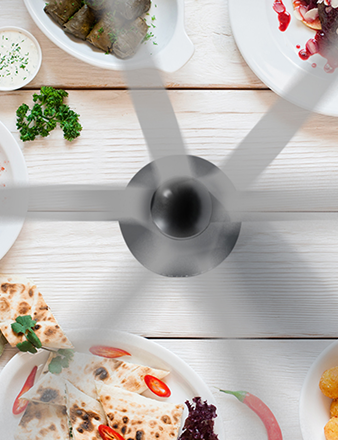
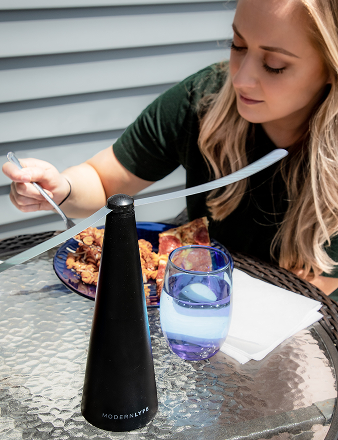
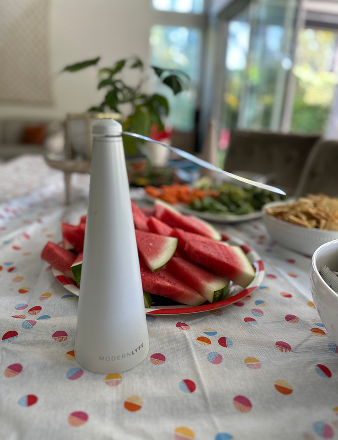
Think about the atmosphere you're trying to create. A bulky box fan humming on the floor with a tangled cord can detract from an event's look and feel. A small, battery-operated fly fan, however, can sit directly on a buffet or dining table and blend in seamlessly.
These specialized fans have key advantages that a standard 10 inch box fan can't match:
- Whisper-Quiet Operation: They are engineered to be extremely quiet, so they won’t disrupt conversations or spoil the ambiance.
- Targeted Protection: The gently spinning blades create a localized air disturbance that keeps flies from landing on food, but isn't strong enough to blow napkins away or cool down hot dishes.
- Ultimate Portability: Being battery-powered gives you total freedom. Place them anywhere you need them—as a centerpiece, on a remote catering station, or on a picnic blanket—no outlets required.
The real difference is focus. A box fan is designed for broad airflow and cooling. A modern fly fan is engineered specifically for food protection, offering a quiet, stylish, and effective defense right where you need it.
This targeted approach is critical in settings where details matter. If you're curious about the science, our guide explains how these clever devices work to keep flies away.
Ultimately, it depends on your goal. If you need to move a large volume of air to cool down a big area, the 10 inch box fan is your best bet. But for protecting a meal with style and precision, a specialized fly fan is simply the better tool for the job.
Got Questions? We’ve Got Answers.
When it comes to using a 10 inch box fan, a few common questions always come up. Let's tackle them so you can get the most out of your fan, whether it's for a backyard BBQ or a busy restaurant patio.
Clearing up these final details will help you use your fan safely and effectively.
Are 10 Inch Box Fans Effective at Keeping Flies Away?
Yes, they are. A 10 inch box fan is a powerful, chemical-free way to keep pests away. The constant stream of air, often over 1,000 CFM, creates a turbulent zone that small insects like flies can't navigate.
While it's not a traditional repellent, this "air barrier" makes it nearly impossible for them to land on your food or guests. It’s a simple, proven method for keeping a buffet line or dining area clear.
Is It Safe to Leave a Box Fan Running All the Time?
It's always best to avoid leaving any electrical appliance running completely unattended for long periods, especially outdoors. Although modern fans have safety features, it's good practice to check on them periodically during an event.
If you run one inside overnight for white noise, make sure it's on a flat, stable surface with nothing blocking the airflow. And always secure the cord so no one trips over it in the dark.
What's the Best Way to Clean This Thing?
A little maintenance keeps your fan working like new. The most important rule? Always unplug it first!
- Quick Dust-Off: Use a vacuum cleaner’s brush attachment to quickly remove dust from the grilles.
- A Deeper Clean: For more grime, wipe down the blades and outer case with a damp cloth and a drop of mild soap.
- The Crucial Part: Be careful not to let any water drip into the motor. Let it air dry completely before plugging it back in.
A quick wipe-down once a month during heavy use is all it takes. This simple habit helps your 10 inch box fan run efficiently for years by preventing dust buildup that can strain the motor.
For a modern, elegant solution designed specifically to protect your dining experience from pests, check out the purpose-built fly fans from Modern Lyfe. You can find the perfect addition to your table right here: Modern Lyfe Fly Fans.