A good bar fruit fly trap is essential, but it won't solve your problem alone. The real secret to a fly-free bar is a two-part attack: smart trapping combined with relentless sanitation.
Think of it this way: your traps are your defense, catching flies already in the air. Your cleaning routine is your offense, destroying the places they breed. You need both to win.
Why Fruit Flies Love Your Bar
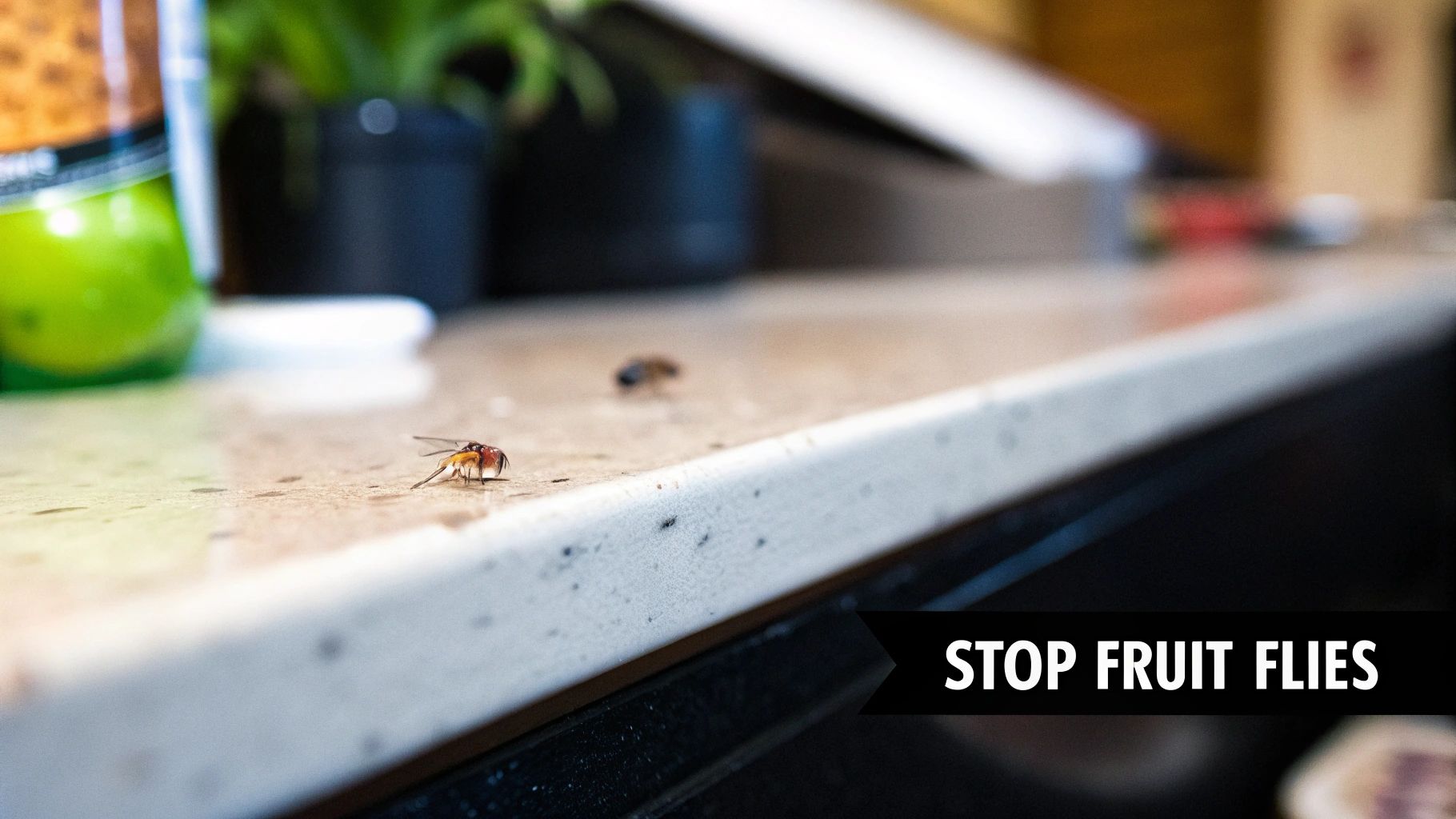
Let's be clear: your bar is a five-star resort for fruit flies. It has everything they want: moisture, sugar, and fermenting organic matter to lay their eggs in. They're not just a nuisance; they're a direct threat to your reputation and a major hygiene risk.
To build an effective defense, you have to understand the enemy. These tiny pests are drawn to countless things you have behind your bar right now.
The Perfect Breeding Grounds
Your bar is a buffet for fruit flies. All they need is a thin layer of moist, fermenting goo to lay hundreds of eggs, which can hatch in as little as 24 hours.
Here are the most common trouble spots:
- Spills and Residue: Splashes from the soda gun, sticky rings under bottles, and stray juice spills. They all add up.
- Garnishes: That tray of lemons, limes, and cherries on the bar top is a massive invitation.
- Damp Drains: Floor and sink drains are the worst offenders. They collect organic sludge, creating a dark, damp nursery.
- Bar Mats and Drip Trays: The beer residue and dampness trapped under mats and in drip trays is a major fly magnet.
This isn't a small problem. The global demand for fly traps hit 16.9 million units in 2023, with a huge portion going to hospitality businesses seeking effective solutions.
The Core Strategy: A bar fruit fly trap is non-negotiable for catching adult flies, but its true power is unlocked only when you attack their breeding grounds through rigorous sanitation. One without the other is a temporary fix.
When you combine consistent trapping with a targeted cleaning routine, you create an environment where flies can't get a foothold. You stop reacting to a fly problem and start preventing one from ever happening.
Finding the Right Fruit Fly Trap for Your Bar
Choosing a fruit fly trap isn’t one-size-fits-all. A high-end cocktail lounge needs something different from a busy neighborhood pub. You have to consider your bar's layout, aesthetic, and how bad your fly problem is.
Some traps are discreet and silent. Others are heavy-duty workhorses for unseen corners. Knowing where you’ll put them and how much time you have for upkeep will guide your choice.
Here's a breakdown of the most common commercial traps to help you find the right fit for your needs.
Commercial Fruit Fly Trap Comparison
| Trap Type | Best For | Pros | Cons |
|---|---|---|---|
| Discreet Sticky Traps | Customer-facing areas like bar tops, host stands, and garnish stations. | Silent, odor-free, and very discreet. | Less effective for major infestations; needs frequent replacement. |
| Powerful Liquid Bait Traps | High-traffic "hot spots" like under sinks, near beer taps, and soda guns. | Highly effective at attracting and catching large numbers of flies. | Can be visually obvious; requires regular refilling. |
| Modern UV Light Traps | Back-of-house, kitchens, and storage areas. | Chemical-free, long-lasting, and catches a wide range of flying insects. | Higher initial cost; "zapper" models can be unsanitary. |
Each of these has its place. The trick is using them strategically. Now, let's get into the specifics of each type.
Discreet Sticky Traps
Think of sticky traps as your undercover agents. They're masters of stealth, often designed as small strips or decorative objects you can tuck away. Their biggest advantage is being completely silent and odor-free, making them perfect for front-of-house areas.
Imagine you're running a craft cocktail bar where details matter. You could place a small sticky trap on the underside of the bar near the garnish station or behind the POS system. Flies are lured in by a subtle attractant or simply land on the glue board during flight.
They aren't a silver bullet, though. Their glue can get covered in dust or moisture, making them useless. You'll need to check and replace them regularly. They’re great for keeping a low-level fly situation under control, but they won't solve a full-blown infestation alone.
From the Field: Use sticky traps for discreet control in customer-facing zones—the main bar, host stands, or by the espresso machine. They're your first line of defense for a light fly presence.
Powerful Liquid Bait Traps
When you need to bring out the big guns, liquid bait traps are your go-to. These are the workhorses you deploy near the source of the problem. They use a potent, non-toxic liquid lure—a fermented, sweet-smelling concoction—to draw flies in. Once inside, they can't escape and drown.
The sheer effectiveness of a liquid trap is its main advantage. The attractant is scientifically formulated to be irresistible to fruit flies, pulling them away from your top-shelf spirits. You can dive deeper into the science behind the most effective fruit fly lures in our dedicated guide.
Think about the wet, sugary environment under your beer taps or around the soda gun. Placing a durable, spill-proof liquid trap on a low shelf in that area can capture an incredible number of flies, hitting the population right at its source. While they work wonders, they are more noticeable and require regular refilling.
Modern UV Light Traps
For back-of-house areas, kitchens, and storerooms, UV light traps offer a powerful, chemical-free solution. These units use a specific wavelength of ultraviolet light to attract flying insects, including fruit flies, onto a hidden glue board or an electric grid.
It’s critical to choose the right kind of UV trap. Avoid loud "zapper" models anywhere near staff or guests. They're disruptive and can create a fine mist of insect parts, which is unsanitary.
Instead, opt for silent UV traps that use replaceable sticky boards. These are perfect for mounting on a wall in the kitchen, near dry storage, or by the back door. Placed correctly, they act as an interceptor, catching flies before they make it into the main bar area.
Strategic Trap Placement for Maximum Impact
You've got a quality fruit fly trap, but its success hinges on where you put it. Tossing one on the bar top and hoping for the best is a waste of time. You need to think like a fly and cut them off at their favorite hangouts—the damp, sugary spots they can't resist.
When you get the placement right, your trap becomes an active hunter. The goal is to get it directly in their flight path, close to the sources drawing them in. This not only snags more flies but also shows you where you need to focus your cleaning efforts.
Think of your trap strategy as a progression. You might start with simple sticky traps to identify problem areas, then move to liquid bait or UV traps for heavy-duty control.
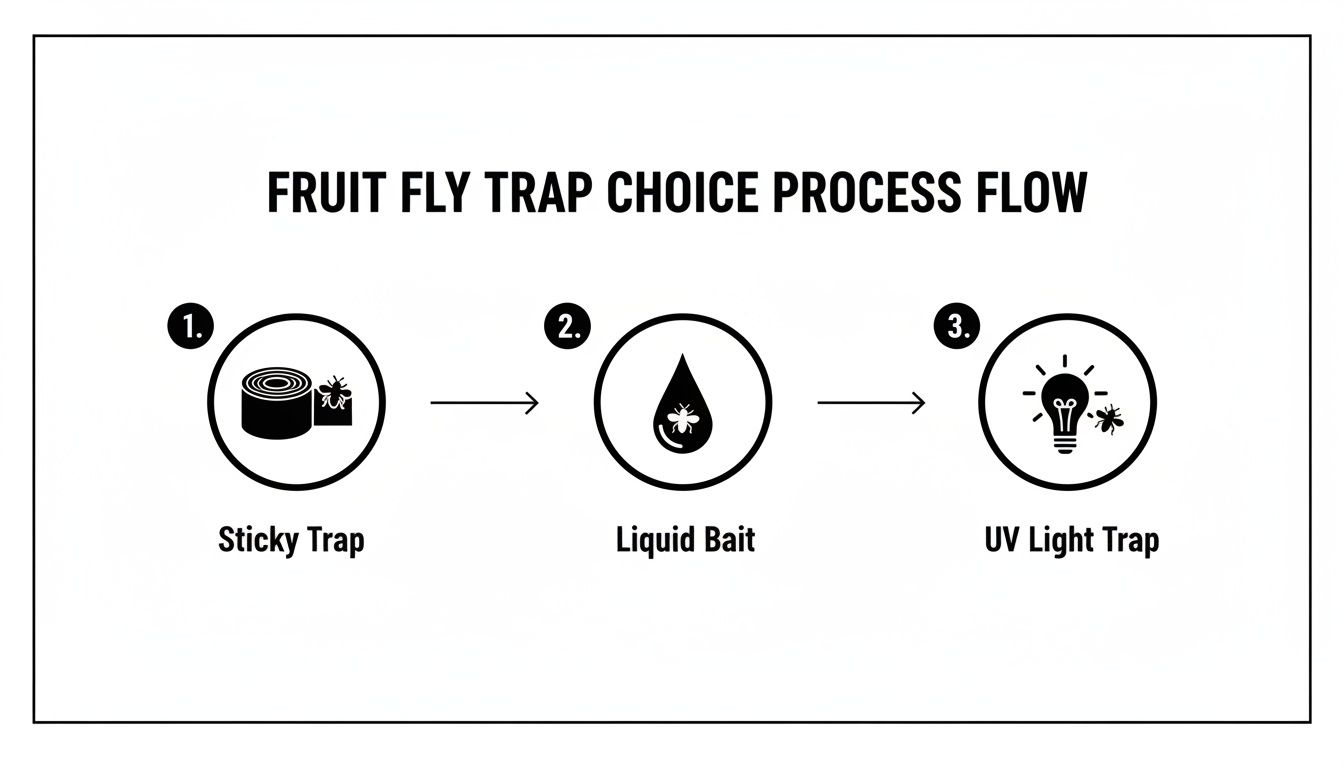
Often, the best approach is a mix, using different traps for different areas and infestation levels.
Pinpointing Your Bar's Fly Hotspots
Every bar is different, but fruit flies are creatures of habit. They almost always flock to the same kinds of places. Your job is to scout these zones and set traps for the biggest impact.
Where do they congregate?
- Near Soda Guns and Drip Trays: The constant sticky residue and moisture is ground zero.
- Around Floor Drains: Drains are notorious breeding grounds. A trap nearby catches adults as they emerge.
- At the Garnish Station: Open fruit is an all-you-can-eat buffet. A discreet sticky trap tucked here works wonders.
- Under Sinks and Ice Wells: These dark, damp spots are perfect for flies to hide and lay eggs.
Here’s a real-world example: place a small sticky trap on the underside of the bar near the ice well. It’s invisible to customers but perfectly positioned to catch flies drawn to condensation. Or, put a liquid fly trap with bait on a low shelf near your beer taps to target one of the biggest problem areas.
Pro Tip: The best spot for a trap is near a food or moisture source but away from drafts. Strong airflow from vents or fans can scatter the trap's scent, making it far less effective.
Common Placement Mistakes to Avoid
Even the best fruit fly trap will fail in the wrong spot. A few common mistakes can render your efforts useless, letting the fly population explode right under your nose.
Steer clear of these pitfalls:
- Placing traps in direct airflow. A trap under an AC vent or next to a fan is a no-go. The air current blows the attractant away, so flies can't find it.
- Positioning traps too high. Fruit flies tend to hang out low. Keep your traps below counter level for the best results.
- Relying on just one trap. In most bars, a single trap won't cut it. You need to deploy several to cover all identified hotspots, especially in a larger layout.
The Power of Sanitation in Fly Prevention
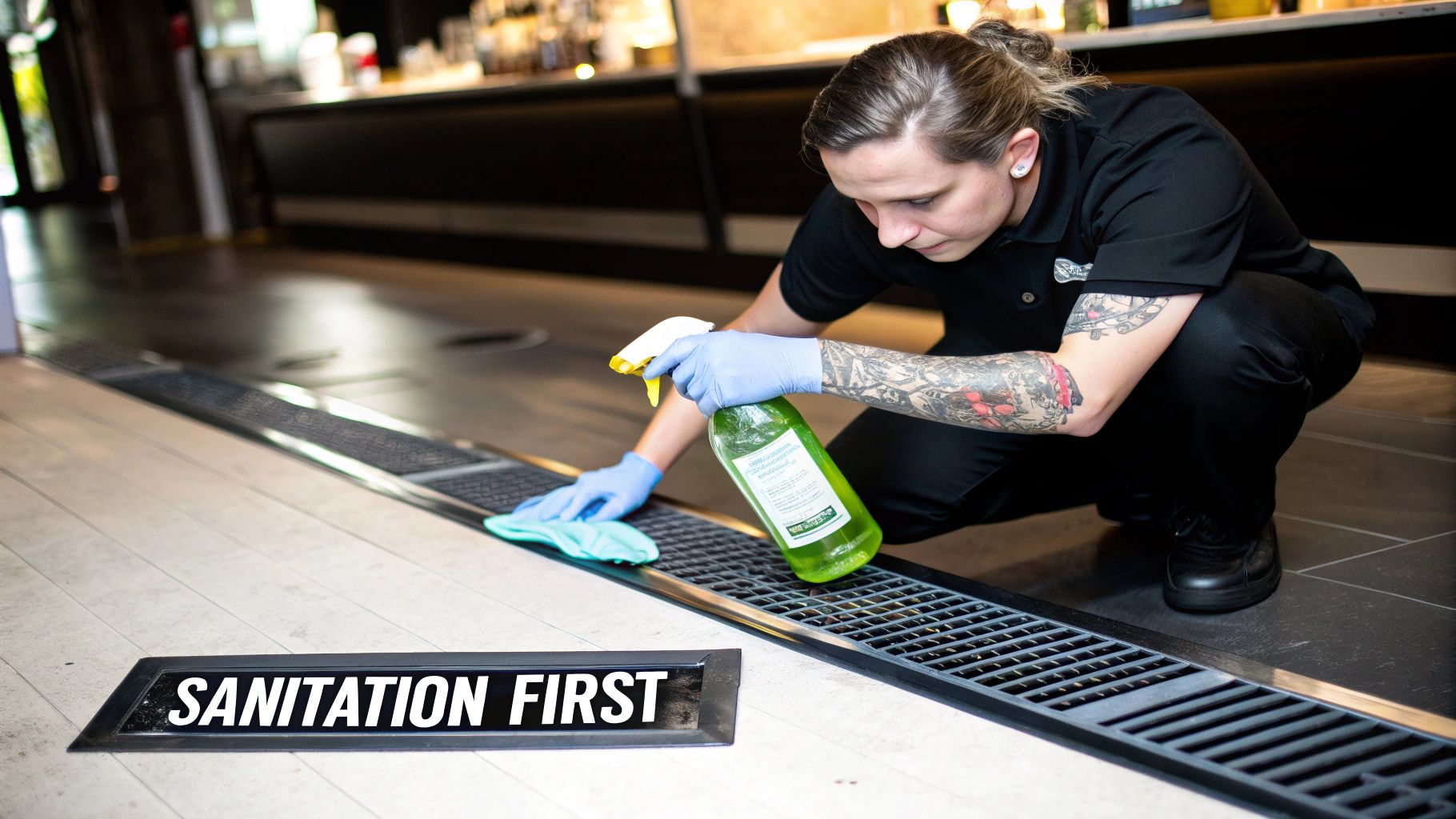
Let's be direct: a bar fruit fly trap is a great tool for catching adults, but it will never solve the problem on its own. Traps are your defense; sanitation is your offense. Without a relentless cleaning strategy, you’re just bailing water out of a sinking boat. The flies will simply breed faster than you can catch them.
Sanitation isn't about looking clean. It's about systematically destroying the breeding grounds that let a few flies become an infestation overnight. A single drop of spilled beer is all it takes for them to lay hundreds of eggs. This is why sanitation is your most powerful weapon.
Your Bar Sanitation Checklist
Forget just wiping down counters at closing. To make your bar inhospitable to flies, your team needs a daily, targeted checklist that hits all their favorite hideouts.
- Beer Drip Trays and Soda Guns: This is ground zero. Sticky, fermented residue is a feast. Disassemble and deep-clean them daily with hot, soapy water. Scrub every nozzle, hose, and tray.
- Bar Mats: Lift and wash bar mats every single day. The dark, damp space underneath is a prime breeding ground. Wash them thoroughly and let them dry completely.
- Garnish Stations: All fruit must go into sealed, refrigerated containers overnight. At the end of a shift, toss any leftover garnishes.
- Liquor and Syrup Bottles: Wipe down every bottle, paying close attention to sticky drips. Use pour spout caps or screens to physically block flies from crawling inside.
This strict protocol isn’t just about flies; it aligns with increasingly stringent food-safety regulations.
Sanitation is not a chore; it’s a strategy. Every cleaning task eliminates a potential breeding site, breaking the life cycle and starving the population. A clean bar makes every trap you own ten times more effective.
Attacking the Unseen Enemy: Drains and Bins
Even with a spotless bar top, your drains could be breeding an army of flies. The organic slime inside drainpipes is the perfect nursery for their larvae. Pouring hot water down them won't cut it.
You need a more robust approach. Physically scrub the inside of the drains with a stiff, long-handled brush weekly to dislodge buildup. Then, use an enzymatic or microbial drain cleaner. These products use beneficial bacteria to eat the gunk that harsh chemicals like bleach leave behind.
Beyond daily wipe-downs, use a quality surface sanitiser spray to ensure every surface is truly disinfected.
Finally, get meticulous with your trash. Always use bins with tight-fitting lids, empty them every night, and wash the bins regularly to remove residual slime.
Building an Unbeatable Fly Defense System
If you're serious about keeping your bar spotless, a bar fruit fly trap is just the beginning. The real pros build a complete defense that attacks fruit flies from every angle. It's about shifting your mindset from catching flies to stopping them from ever getting inside.
This is where you combine your trapping strategy with modern tools like specialized air fans. When these two elements work together, your pest control becomes a seamless, highly effective system. You’re no longer just trapping flies; you're engineering an environment where they can't survive.
The Genius of an Air Curtain
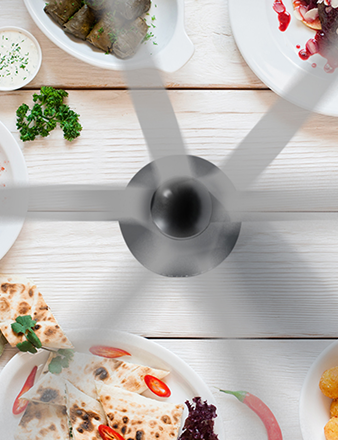
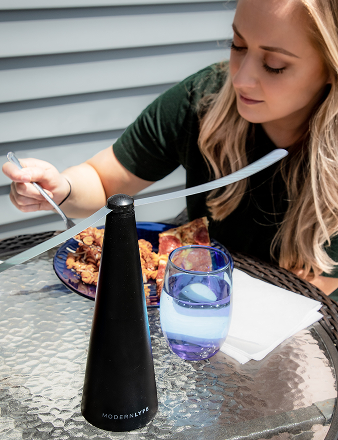
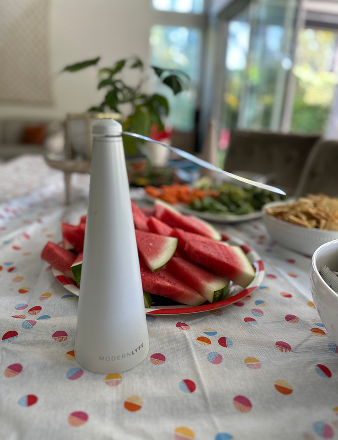
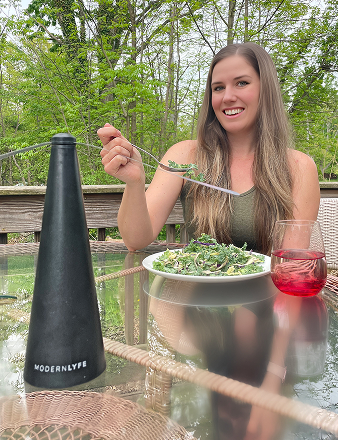
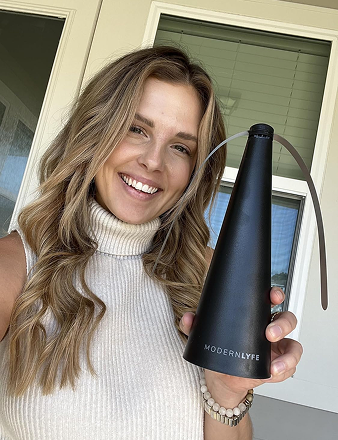
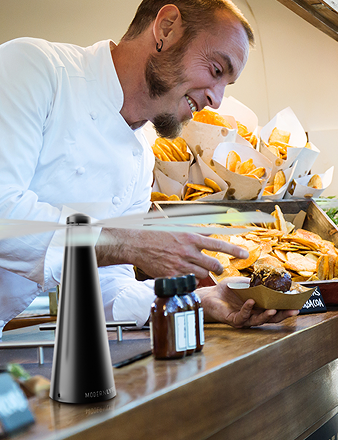
Think of specialized air fans, like those from Modern Lyfe, as your bar's invisible bouncer. They create a powerful "air curtain" over doorways, pass-through windows, and other open service areas.
This invisible barrier creates a downward stream of air that makes it nearly impossible for weak fliers—like fruit flies—to cross the threshold. It’s a brilliantly simple concept with a massive impact.
Picture your main entrance or kitchen door swinging open during a chaotic Saturday night. Every time it opens, it’s an invitation for pests. An air fan mounted above that door shuts down that entry point.
By setting up this proactive barrier, you drastically cut down the number of flies that even make it inside. This lets your traps focus on the few stragglers, making your whole system incredibly efficient.
Combining Fans and Traps for Total Control
The real magic happens when you use fans and traps in tandem. The goal is to position them strategically to create a comprehensive defense grid that covers every vulnerability.
Here’s a battle-tested strategy:
- Guard the Gates: Mount a powerful fly fan over every high-traffic entrance, especially back doors and patio doors. This is your perimeter defense.
- Set the Ambush: Place your most reliable traps (liquid bait or UV models) near internal hotspots—floor drains, soda gun holsters, and garnish trays.
- Dominate the Zone: The fans act as the primary shield, keeping most flies out. Your traps then become the special ops team, silently eliminating any intruder that slips past.
By layering an air barrier with well-placed traps, you create a system that is both ruthlessly effective and completely invisible to your guests. The fans are sleek and quiet, and the traps do their work out of sight.
This integrated approach is the new standard in hospitality for smart, non-chemical pest control. The proof is in the numbers. The global fly trap market was valued at USD 310 million in 2024 and is expected to climb as more businesses adopt these strategies. Get more insights into the growing demand for professional pest solutions by checking out the research on Deep Market Insights.
Your Fruit Fly Trap FAQs
Even the best plans can hit a snag. Let's tackle some of the most common questions bar managers have about fruit flies.
How Quickly Will These Traps Start Working?
You should see the first flies investigating your traps within a few hours. That's your first sign that the placement and bait are working.
But don't expect an overnight miracle. Seeing a real drop in the population usually takes 24 to 48 hours. This gives the trap time to catch the adult flies currently in your bar. To truly get a handle on the problem, leave the traps out for a full week to catch the next generation as they hatch.
Pro Tip: Remember, traps are only half the battle. They work fastest when you're also waging war on breeding grounds. If you're not scrubbing drains and cleaning spills, you're just catching today's flies while tomorrow's are on the way.
Are DIY Traps Good Enough for a Professional Bar?
No. A cup of apple cider vinegar might work for a few flies at home, but it's not going to cut it in a commercial bar for a few key reasons.
Professional traps use powerful, slow-release attractants engineered to stand out in a room full of competing smells like beer and citrus. Your DIY concoction can't compete. They're also built to be discreet and durable, not a messy science experiment on your back bar.
Ultimately, using professional-grade tools is about upholding health and safety standards. It shows you're serious about sanitation, which is non-negotiable in this business.
My Traps Are Full, but I Still See Flies. What's Going On?
This is a classic problem. Full traps are a good thing—it means they're working. The real issue? The flies are breeding faster than your traps can catch them.
This is a dead giveaway that you have a hidden breeding ground. It's time to start a deep-cleaning investigation.
Get aggressive and check these hotspots:
- Floor Drains: Pop the covers and scrub out any gunk.
- Under Bar Mats: That sticky, damp residue is a fly paradise. Clean it daily.
- Liquor Bottles: Wipe down every single bottle, especially syrupy liqueurs.
- Garbage Bins: Make sure they're not just emptied, but actually cleaned. Lids must be tight.
Once you find and destroy their nursery, your traps will finally get the upper hand.
What About UV Light Traps or Zappers?
UV light traps can be a fantastic tool, but you have to use them correctly. First rule: a loud, buzzing zapper has no place in your front-of-house. It's disruptive, gross, and a huge turn-off for guests. Zappers belong strictly in the back, far away from customers.
For customer-facing areas, a much better option is a silent UV trap that uses a glue board. These give you all the fly-attracting power of UV light without the noise or potential health code violations near food and drink stations.
Ready to create a truly fly-free zone? Modern Lyfe designs sleek, powerful fly fans that complement your trapping strategy, building an unbeatable defense for your bar. See how they work at https://modernlyfe.com.