A compact battery fan usually lists between $9 and $30. Feature-rich portable fans commonly land at $30 to $80, and larger or specialty rechargeable units run from about $110 to $200.
Cheaper cells didn't create that spread. Average battery prices fell 8% during 2025, and lithium-iron-phosphate packs averaged more than 40% below nickel-manganese-cobalt alternatives per kilowatt-hour, according to the International Energy Agency's battery cost review. The cell is the commodity. The air is the product.
What buyers pay for is hours of air at the speed they'll run, quiet at the distance guests sit, and coverage wide enough to reach the food rather than the chair backs. Read a listing that way and a $17 fan can beat a $200 model on a patio table, while the $200 unit earns its price only where a big motor and a big housing are the point.
The rest of this analysis treats the sticker as one input among four: high-speed runtime, noise, coverage, and battery service life. It holds one line throughout. A fan supplements fly control around food. It doesn't replace covers, cleaning, or screens.
What a Battery Fan Price Is Really Buying

A ten-dollar fan and a hundred-dollar fan can both be sensible buys, but for different jobs. At an outdoor table, the relevant comparison is not just the sticker: it is how many hours of useful airflow reaches the food or guests at the speed you will use.
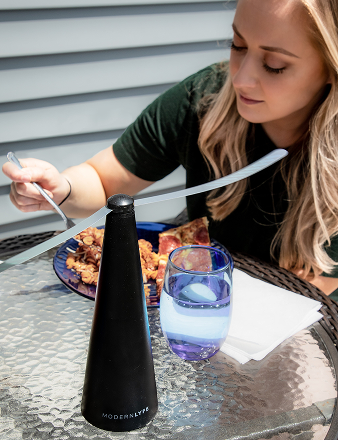
A couple dining outdoors while using a portable handheld fan and a white electric table fan.
What the sticker bundles. A battery fan price reflects its motor, battery setup, runtime at high speed, noise at conversational distance, and airflow coverage. A lower-priced model may suit a narrow personal breeze; a higher-priced one may improve some of those factors, but the right value depends on which matter for the setting.
Three jobs hide inside one product category
A personal breeze for one guest in a deck chair calls for a narrow stream of air over a few hours. Table air movement is a coverage problem: airflow needs to reach exposed food across a buffet or a four-top throughout service. Large-format comfort for a tent or terrace calls for a bigger motor and sturdier housing, though added airflow does not necessarily bring proportionally longer runtime.
Rechargeable battery fans are now a standard personal-fan purchase, so a built-in battery pack is no longer, by itself, an upgrade worth paying extra for. Compare the time the fan can run at the speed you need with the area it can reach. The useful measure is cost per high-speed hour of air directed toward the food or table, not runtime alone.
The reframe: a fan's price only means something next to the speed you will run it at and the area you need covered.
Match the price to the job. A compact unit can be a practical choice for a short personal breeze, while a buffet that stays open for four hours needs airflow that can cover the food for the service. Even then, a fan supplements fly control. Covers, cleaning, and screens still matter.
Battery Fan Price Bands You Can Check Today
Place any listing into one of these bands before you read its spec sheet. Every figure is a listing benchmark, not a controlled average, so use it to orient a decision rather than to settle one.
Battery fan price bands in recent listings (recent U.S. listings, market analysis and independent tests)
| Band | Typical price | Where seen | What the money usually buys |
|---|---|---|---|
| Entry handheld | $8.99 to $17.09 | Amazon and Walmart listings, including a 5-inch portable at $17.09 | Short personal cooling |
| AA-battery fan | $14.99 (typical $17.99) | Amazon listing | Basic cordless breeze on replaceable cells |
| Common compact cluster | about $15 to $30 | Frequent U.S. retail listings | Everyday portable use |
| Clip-on two-pack | $29.99 (about $15 each) | Amazon rechargeable listing | Two personal fans for one shared price |
| Home Depot spread | $9.98 to $170.05 | Same retailer, different formats | Basic accessory up to large specialty fan |
| Feature-rich portable | about $30 to $80 | Developed-market positioning | Longer runtime, quieter running, timers, design |
| Flagship handheld | about $120 or more | Market analysis upper tier | Premium positioning beyond basic airflow |
| Compact camping rechargeable | about $20 to $80 | Independent camping tests | About 4 to 4.5 hours at high speed |
| Heavier hybrid camping fan | about $110 | Independent camping tests | More airflow in a larger body |
| Full-size rechargeable | about $200 | Independent camping tests | About 2 hours at maximum output |
| Wearable neck fan | $79.99 | TORRAS COOLIFY 3, 2025 retail | Personal cooling worn on the body |
What the entry band buys
Amazon search results turned up battery-operated fans at $8.99, $19.98, $23.74, $23.99, $24.18, $26.98, and $39.90, alongside an AA-battery model at $14.99 against a typical $17.99 and a two-pack of rechargeable clip-on fans at $29.99, or roughly $15 per unit, per the current battery-operated fan listings on Amazon. Walmart showed a 5-inch portable battery fan at $17.09.
One retailer can cover most of that range alone. Home Depot listings displayed battery-powered fans at $9.98, $29.97, and $170.05, a spread of more than seventeen times between the entry product and the specialty unit in the same category.
Where the upper bands begin
Market analysis of the handheld category puts feature-rich products in developed markets at about $30 to $80, with flagship models at $120 or more (DataIntelo's handheld fan market report). Wearables fit the same logic. A TORRAS COOLIFY 3 portable rechargeable fan retailed at $79.99 in 2025 (DataIntelo's portable neck fan report), which buys a device worn on the body rather than a fan that sits on a table.
Above $100 the product changes shape rather than gaining endurance. The hybrid and full-size rows above are bigger motors in bigger housings, so the money goes into airflow and structural strength.
Benchmark rule: a listing price shows what a seller is asking. Runtime at your speed shows what you're getting.
The same bands hold for our own line. The Pink Fly Fan sells for $29.99 against a regular $34.99, the White Fly Fan is on sale at $29.99, and the Fly Fan for Tables lists at $99.99 against a regular $139.99. Those are compact-band and coverage-band prices, which is where most hospitality buyers land.
Prices change without notice, so check the live listing before you decide a band is out of reach or a bargain is real. Then test the band against the job: runtime at the speed you'll use, noise where guests sit, and reach across the surface you're protecting.
Features That Push a Battery Fan Price Up
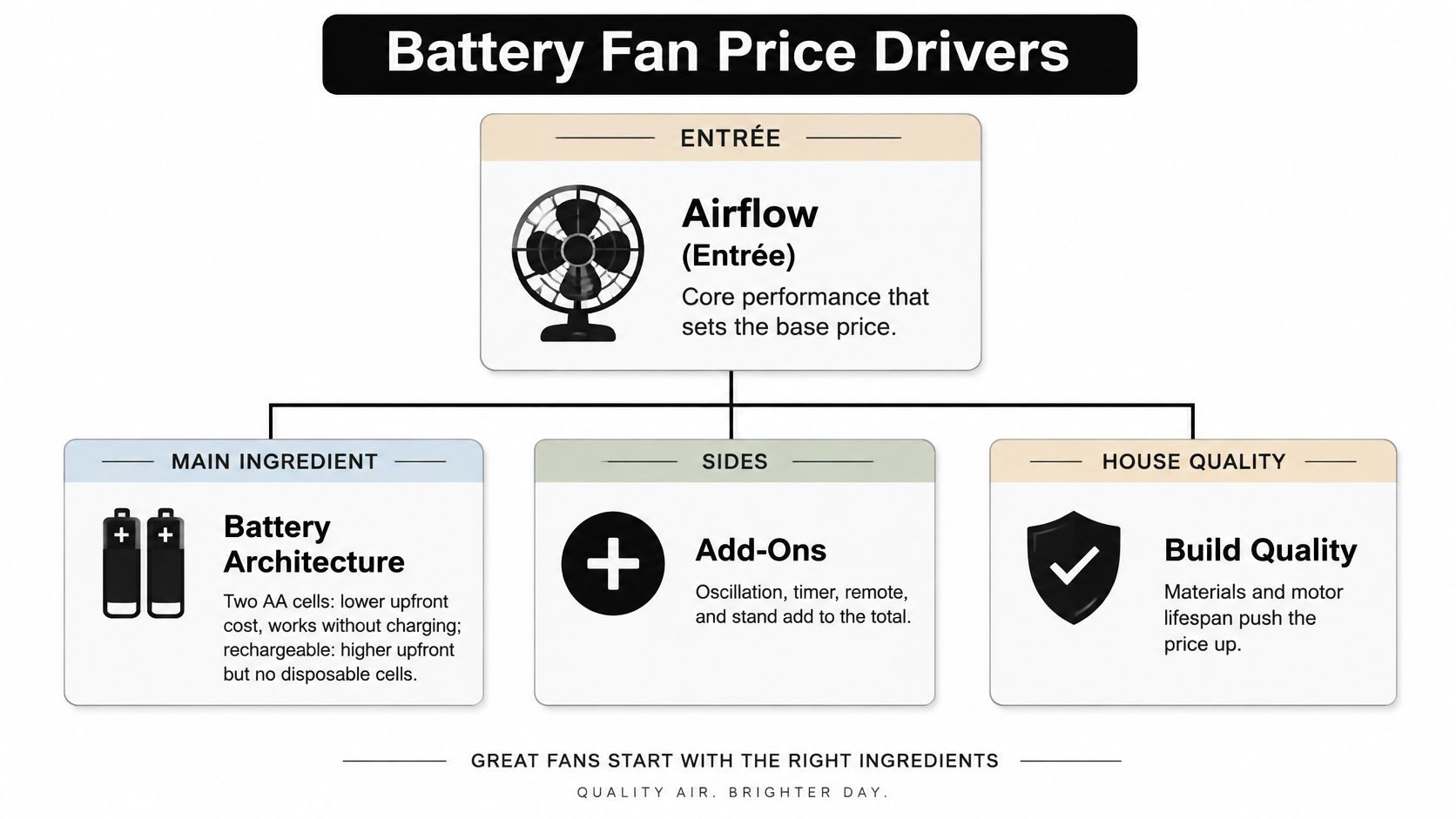
Read a battery fan price the way you read a restaurant check. Airflow is the entrée. Everything else adds to the total without changing the main course, and the hierarchy is easiest to see laid out.
Battery architecture changes the running bill
A fan on two AA cells costs less at the till and keeps working when no charger is within reach. Every replacement adds to the running cost, and a cell that dies mid-service ends that fan's shift. A rechargeable pack costs more up front and removes repeat cell buying, which is why battery type, capacity, and expected service life all move the total value. Our Fly Fan for Tables runs on either the included USB cable or two AA batteries, which aren't included, so the choice of which bill to pay stays with the buyer.
Runtime claims fall apart at top speed
In one independent test a compact fan with a 10,000 mAh battery ran for about five to six hours at maximum speed and lasted substantially longer at lower settings, and the reviewer described the top setting as nearly hairdryer-loud (The Independent's portable fan testing). The speed your staff select decides whether the claim on the box survives a full service. Our table fan runs for over 8 hours per charge and includes an automatic safety stop.
Noise is a line item, not a preference
Westlake, Florida limits outdoor sound to daytime levels of 78 dBA in residential zones and 85 dBA in mixed-use zones, and the ordinance states that noise-creating blowers or power fans may operate only when muffled enough to meet the zone standard (Westlake noise ordinance). A venue near homes is buying compliance, not just comfort. Where quiet carries the decision, quietest fans for bedrooms shows how low noise figures look on paper, which lets you compare a dBA claim against a marketing word.
Add-ons move the total too, and they draw from the same pack:
- Lighting and misting add cost and consume energy that would otherwise become airflow.
- Timers and displays earn their place on an unattended buffet and waste money on a table someone serves all evening.
- Airflow direction vents are cheap to make and useful when the food surface sits below the fan head.
For the placement side of the decision, battery-operated table fans is a useful companion read. A fan meant to keep flies off exposed food is priced for reach, quiet running, and a pack that lasts the shift, not for pocket size.
Cost per Useful Hour Instead of Sticker Price
One division turns a sticker into a comparison. Take the purchase price, divide it by the tested runtime at the maximum speed you intend to use, and you get cost per high-speed hour.
- Note the price you'd pay today, shipping included.
- Find the tested high-speed runtime, not the longest low-speed claim printed on the box.
- Divide price by hours and compare that number across candidates.
Independent testing found compact rechargeable models priced around $17 running for more than five hours at maximum speed, while other small fans priced below $15 reached roughly 13 to 17 hours only at low speed (CNN Underscored's portable fan testing). The first can be scored. The second can't, because no high-speed figure exists to divide by.
Cost per high-speed hour from tested examples
| Example | Price | Tested high-speed runtime | Cost per high-speed hour |
|---|---|---|---|
| Compact rechargeable fan | about $17 | more than 5 hours | under $3.40 |
| Small fan under $15 | under $15 | not published, about 13 to 17 hours at low speed only | cannot be scored on high-speed hours |
| Full-size rechargeable fan | about $200 | about 2 hours | about $100 |
Airflow is the second gap. Small tabletop fans commonly deliver about 200 to 500 CFM, and a 5 W fan can run for roughly two days while still moving too little air for meaningful commercial use (battery-powered fan comparisons). A cheap fan that can't move air around a buffet usually means buying two or three of them, and the saving disappears at the second unit.
Ask for battery capacity in watt-hours rather than milliamp-hours. Watt-hours account for voltage, so packs compare fairly across products; milliamp-hours don't. How long batteries last covers the service-life side of the same arithmetic.
Cost per useful hour = purchase price ÷ tested hours at the speed the shift actually runs.
Apply it to a buffet. If one weak fan forces a second unit or a can of spray, the cheapest listing carries the highest total cost of the three. Write three numbers beside any listing before you buy: price, tested high-speed hours, and whether one unit covers the table.
Real Fans from Pocket Breeze to Table Service
The useful fan price depends on what the air has to reach. A personal breeze, a larger camping fan, and airflow directed across a food table are different purchases, even when their prices overlap.
A pocket or clip fan for one person. The $15 to $30 band buys a personal breeze for a hike, a cruise cabin, or one guest who runs warm. Compare tested hours at high speed, not just a headline runtime. A compact fan can look impressive at low speed and deliver a weak stream when turned up.
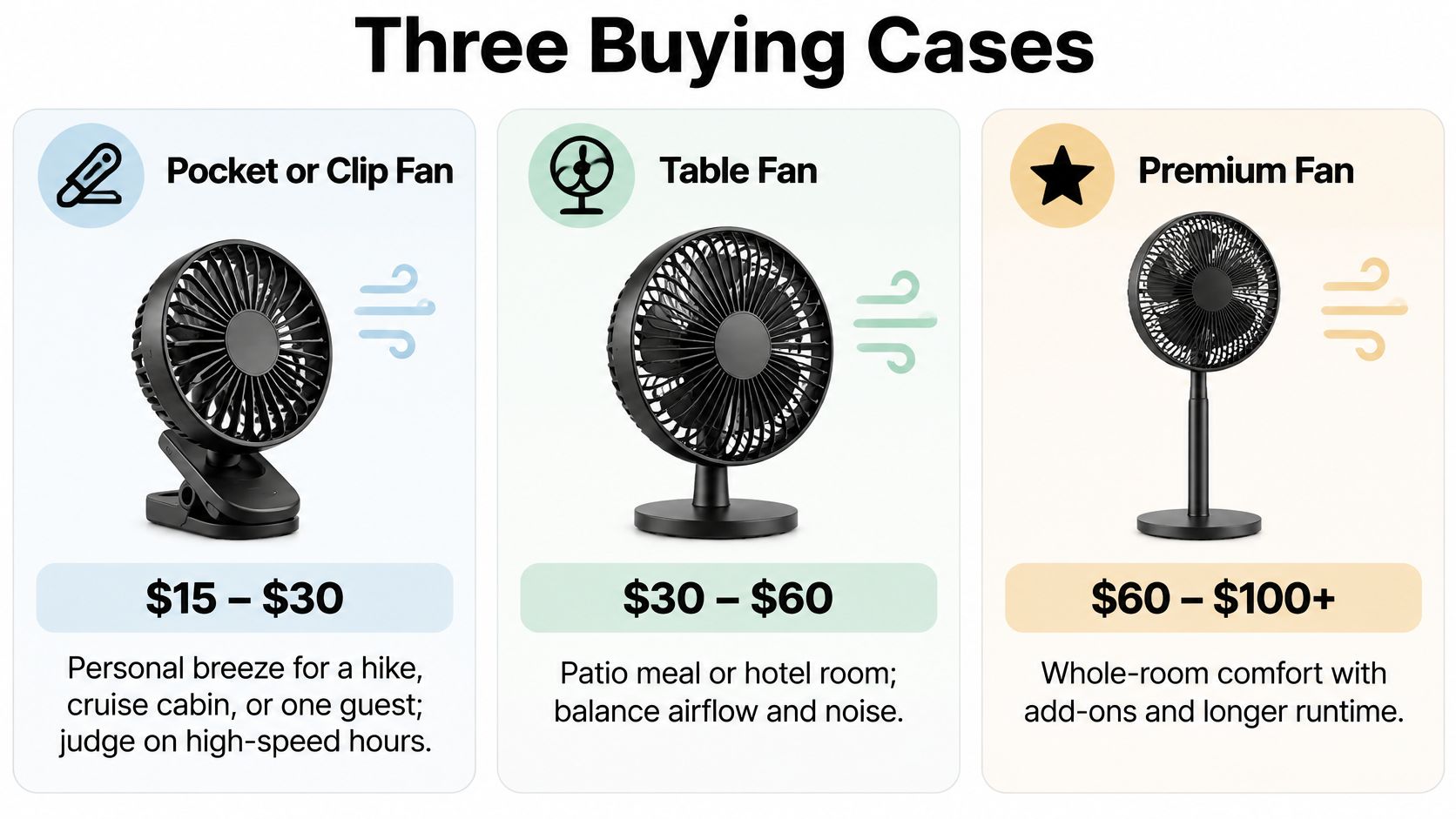
A heavier hybrid or full-size rechargeable. Independent camping-fan tests put compact rechargeable models at approximately $20 to $80, a heavier hybrid at about $110, and a full-size rechargeable at roughly $200. Many compact products ran around four to 4.5 hours at high speed, compared with about two hours for the largest model at maximum output (Outdoor Life's camping fan tests). More airflow requires a larger motor, stronger components, and more power. Price can buy greater air volume without extending runtime.
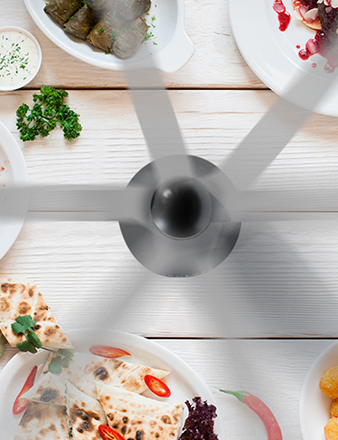
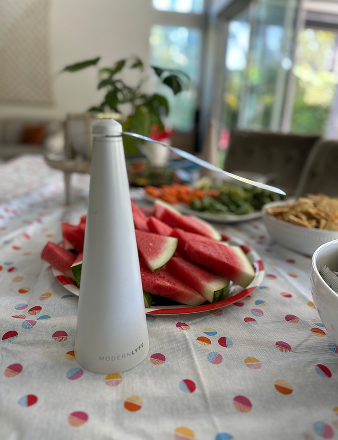
A table fan for food service is a coverage purchase. Ask whether airflow reaches the food surface and how many units each station needs. The Grey Fly Fan comes in Single Pack, Two Pack, Four Pack, and 8 Pack options, with the Four Pack labelled Most Popular and the 8 Pack labelled Best Value. Count stations, then consider whether the air reaches the food or table. The useful cost is the price per high-speed hour of airflow where it is needed, not just the sticker price.
Add battery service life to the price
Rechargeable packs lose capacity with repeated daily cycling. A $35 to $60 rechargeable fan may cost less than a $100-plus model while still covering the needed area, but capacity loss can reduce the hours it remains useful. Conversely, a table fan that serves a full shift can justify a higher purchase price if its airflow reaches the food throughout service.
Before a bulk order, run a sample at the intended speed and time it. Check recharge duration, listen for noise at guest distance, and compare capacity after repeated use. These checks help assess whether the price buys useful service rather than nominal runtime.
The format is easier to judge in motion than on a spec sheet.
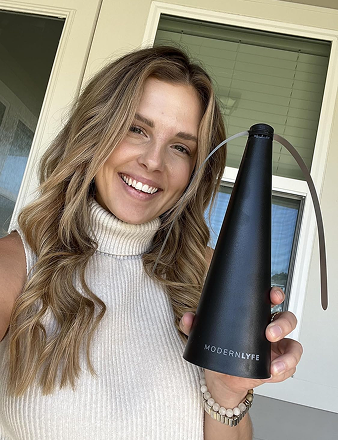
Customer feedback illustrates the trade-offs: one buyer says the fan is very effective and quiet enough to enjoy meals outside in peace; another says its battery life is excellent and it is easy to use. For table-service options, Modern LYFE battery-powered fly fans are designed for indoor and outdoor use around food. Airflow can supplement food covers, cleaning, and screens, but it does not replace them.
When a Higher Price Still Does Not Stop Flies
The question that follows every price comparison deserves a blunt answer. No, spending more on a fan does not replace the rest of a fly-control plan.
Public-health guidance for restaurants notes that moving air can make it harder for flies to land on exposed food and can help dry areas prone to standing water. The same document recommends covering food, cleaning spills, maintaining trash lids, removing standing water, and repairing screens (Texas Department of State Health Services fly-control guidance.pdf)). Airflow is a supplementary barrier. A quieter motor or a premium pack doesn't become a pesticide because the price went up.
Build the full operating cost in plain items before comparing models:
- Purchase price, including shipping, which we calculate at checkout for the Fly Fan for Tables.
- Cells or charging, whether that's AA replacements through the season or electricity for a rechargeable pack.
- Wipe-down time, because a fan next to food collects what the room throws at it.
- Placement, since a fan in the wrong spot moves air past the food instead of across it.
- Covers and lids, which stay in the plan whatever the fan costs.
Then answer the deployment questions a price page never asks. One fan rarely serves a long buffet. Air has to reach the food surface, not just the guest's face. Noise has to stay low enough for a table to hold a conversation. Outdoor wind can erase a light breeze, so a still tent and an open patio are different tests.
The line to hold: airflow is a barrier, not a replacement for sanitation and exclusion.
The appeal of a fan beside food is that it isn't a spray. Our fans are described as an odor-free alternative to bug repellents, and that advantage holds only while the cleaning and covering hold too. Restaurants, hotels, caterers, markets, and home barbecues all live under the same rules. The right-priced fan earns its keep beside the plan. It doesn't subtract the plan from the budget.
Match the Fan to the Shift Before You Buy
Start with the shift, then pick the band.
- A few hours for one person: compact band, judged on high-speed hours and weight in a bag.
- A patio meal or a hotel buffet: a coverage job, so buy reach and quiet before you buy features. The compact band won't carry it.
- One home table: a single color fan at the entry price handles it, with a pack of spares if the table runs all summer.
- A catering line: count stations and buy packs, not individual units, so every station gets the same fan on the same runtime.
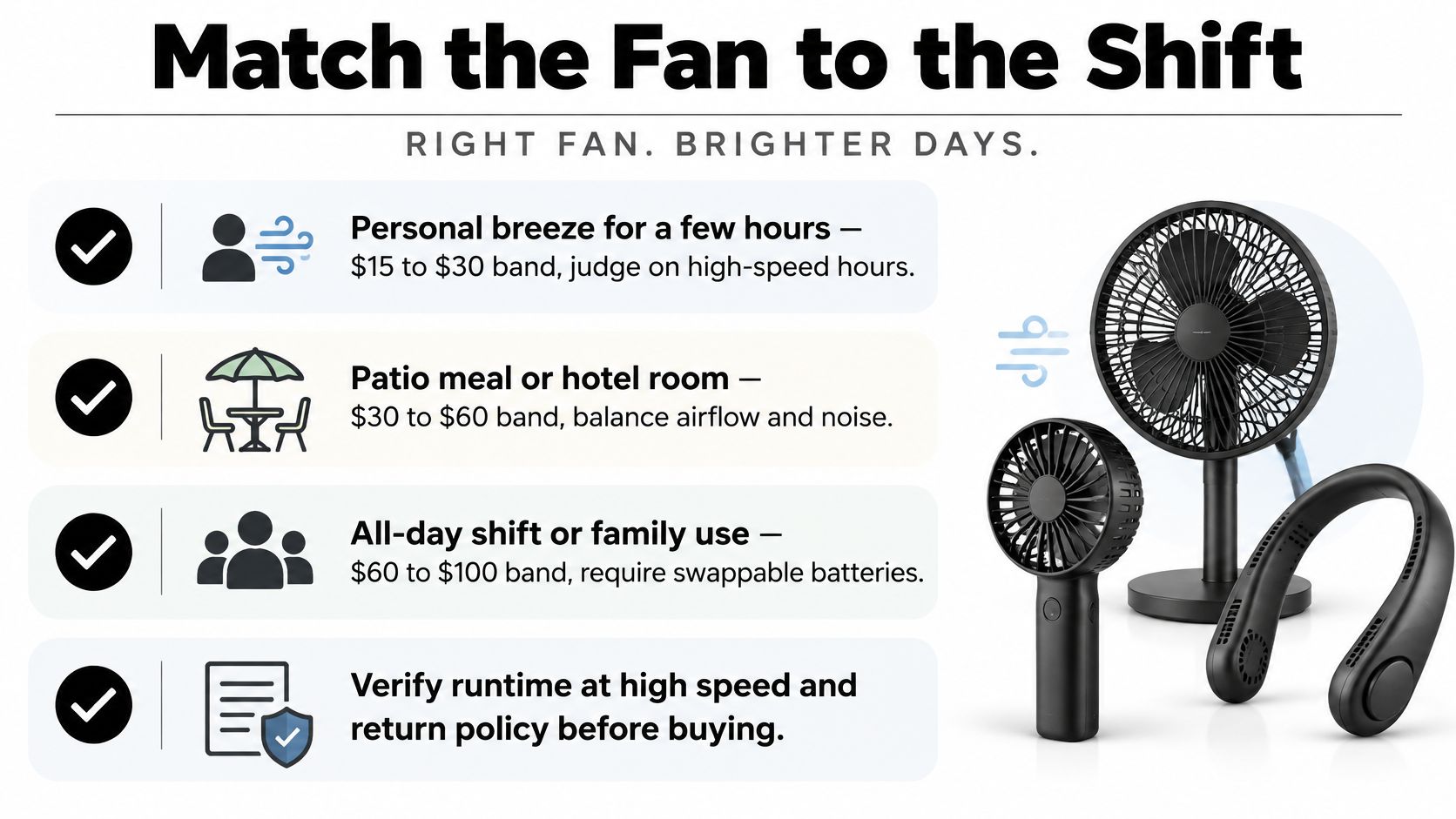
The table model is the step up when full-shift runtime and dual power matter more than pocket size. Confirm its specs on the live listing before you buy, because availability and pricing move.
Four checks settle it before money changes hands:
- Time the fan at the speed you'll use. Not the eco setting, and not the turbo burst.
- Stand where guests sit and listen. If you have to raise your voice, the table won't linger.
- Confirm the breeze reaches the food, not only the nearest chair or the guest's shoulder.
- Read the live listing for price, shipping, and return terms, since prices change without notice.
Buying direct has a few practical advantages here. Code MODERN takes 10% off at checkout, shipping for the Fly Fan for Tables is calculated at checkout, and every fly fan comes with an extended warranty, so a bulk order isn't a one-way bet.
Keep the fly-control plan from the previous section in place either way. The fan supplements it. The right battery fan price is the one that fits the shift without requiring a second fan bought in a hurry.
MODERN LYFE builds battery-operated table fly fans for restaurants, hotels, caterers, and home patios, with runtimes that hold through a full service and blades quiet enough to keep the conversation going. If you're pricing a fan against a fly plan, compare the per-shift math on the models we sell rather than the sticker alone. Visit MODERN LYFE to see current prices, pack options, and the extended warranty that comes with every fan.