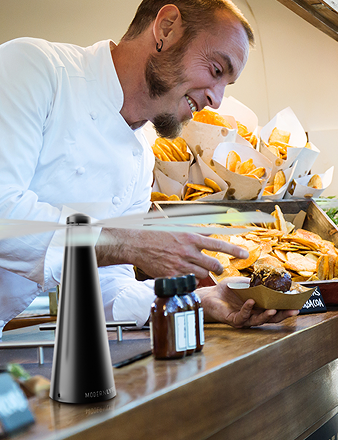
You're halfway through an outdoor reception when a fly lands on the charcuterie board. Someone waves a napkin, another guest moves the plate, and a staff member starts apologizing. The problem isn't dramatic enough to stop service, but it's disruptive enough to change how guests remember the meal.
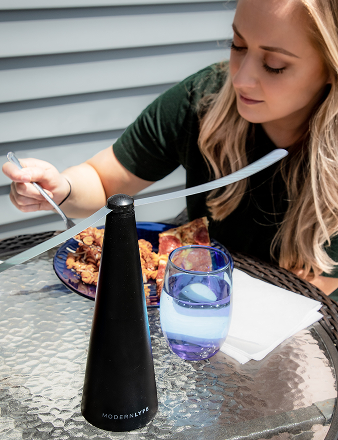
Battery powered fly fans are a practical response to that specific moment. They're compact, cordless devices that create localized moving air around tables, buffets, bars, and food stalls. The goal isn't to cool the whole patio or eliminate every insect on the property. It's to make the immediate space around food less attractive and less navigable to flies.
That distinction matters. A tabletop fan can be useful where an outlet is inconvenient, a power cord looks messy, or a small dining area needs discreet protection. It won't replace covers, sanitation, perimeter traps, or sensible venue airflow. Used correctly, though, it becomes a clean-looking part of a layered outdoor food-service setup.
What Battery Powered Fly Fans Actually Do at Your Table
A battery powered fly fan creates a small moving-air zone over or around the food it protects. Consumer guidance for outdoor dining recommends placing fans around the meal area to form a perimeter, while another fly-control source explains that even a slight breeze can deter flies because they struggle to fly in stronger moving air. See the practical guidance from Fly Away for the basic moving-air principle.
At a backyard barbecue, that might mean placing one fan near the serving platter instead of directly beside the grill. At a wedding, it could sit at the end of a buffet line where guests won't notice it until they notice the absence of constant swatting. On a restaurant patio, the same approach works best when the fan protects a defined table or compact cluster rather than being asked to cover the entire dining section.
The cordless format changes the setup more than many buyers expect. Staff can place a unit where airflow is useful, not where the nearest wall outlet happens to be. You avoid extension cords crossing walkways, power strips under elegant tables, and last-minute cable checks before guests arrive.
What the device is, and what it isn't
These products are localized insect deterrents, not commercial air movers. Retail and independent product descriptions generally place them in the tabletop or hanging category, with compact designs around 7 to 10 inches and low-power operation, as reflected in the Vornado Fly Move product listing.
That footprint is an advantage at a two-person table, buffet corner, bar top, or market stall. It's a limitation in an exposed field, a large rooftop, or a crowded patio where wind and guest movement disperse the protected area.
Operational rule: Protect the food zone, not the whole venue.
The best candidate is any setup where food is stationary, guests are close together, and staff need freedom to position equipment quickly. If your main problem is a single dessert table, buffet, or outdoor dining cluster, a cordless fly fan deserves consideration. If flies are coming from overflowing waste bins or an uncontrolled kitchen door, solve that source first.
How the Soft Blade and Battery Design Actually Work
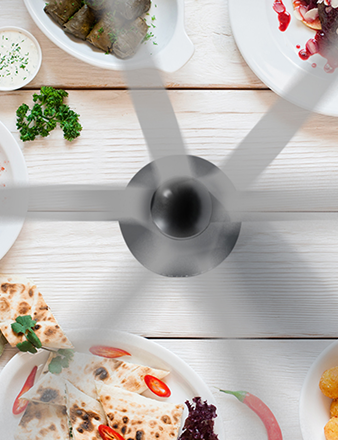
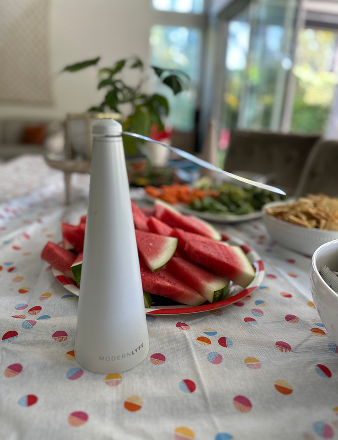
The operating idea is simple. A rotor spins soft blades, and those blades create a curtain of moving air over a plate, tray, or tabletop. Flies approach the food, encounter disrupted airflow, and may turn away rather than land.
The blades matter because these units operate in guest-facing spaces. ShooAway, created by Australian industrial designer Andrew Smith after he noticed flies swarming food at a summer barbecue in 2008, became known for a battery-powered fly-repelling fan with soft blades designed to stop on contact. By 2024, the product had branches in Australia and the United States and sales described as global, an example of how a hospitality nuisance developed into an international consumer product. The history is documented by Core77.

Why the power source changes the operating routine
The simplest models use 2 AA batteries, supporting placement on tables, buffet lines, and stalls without a nearby outlet. A neutral product explanation describes this two-AA format for portable fans, while a comparable tabletop listing also specifies installation with 2 AA batteries. That makes disposable-battery models easy to deploy, but not automatically easy to manage at scale.
Rechargeable lithium-ion models shift the burden from battery replacement to charging discipline. They can make sense for operators who run frequent events and already maintain a charging station. Dual-power models add USB operation, which can help during longer service periods, but buyers need to inspect the product instructions closely. Some listings state that USB power disconnects the batteries when the unit is plugged in, so USB support doesn't necessarily mean the batteries charge while the fan runs.
For a useful primer on how battery design affects portable equipment, review battery technology advances. The point for operators is practical: power choice affects prep work, storage, replacement schedules, and whether staff can keep a unit running through service.
Portability comes before raw airflow
Battery powered fly fans prioritize compact size, quiet operation, and easy placement over the force of a large mains-powered fan. That's the defining compromise. More airflow consumes more energy, while longer runtime generally requires lower output or a larger battery.
A neutral industrial benchmark illustrates the tradeoff with self-contained battery fan platforms. One unit delivered 10,420 to 16,510 CFM on mains power, and battery operation reduced airflow by about 8% on the smaller model. The same benchmark listed runtime of 20 minutes at full speed versus 1 hour 30 minutes at 60% on one unit, and 45 minutes at full speed versus 3 hours 30 minutes at 60% on another. These figures come from the Tempest battery fan cut sheet, not from a tabletop fly-fan test, but they show why buyers must compare output and runtime together.
Why Hospitality Operators Choose Cordless Fly Fans
Hospitality operators don't buy cordless equipment because “portable” sounds modern. They buy it because cords create real service problems. On a patio, the closest outlet may sit behind a wall, across a guest walkway, or beside a door that staff use constantly. At an elegant reception, extension strips and cable covers can undermine the table design while adding another trip hazard.
A cordless unit lets the floor manager position airflow beside the food instead of positioning food around the power infrastructure. That flexibility is especially valuable during temporary service, when a caterer may need to turn a lawn, courtyard, terrace, or parking-lot edge into a functional dining area within a short setup window.
The second gain is guest perception. Flies around food create a hygiene concern and an immediate comfort problem. One industry article claims flies can carry more than 100 pathogens and may transmit bacteria such as E. coli and Salmonella when they land, as described in this outdoor food fly-control reference. A fan doesn't sanitize food or remove the source, but it can help keep insects from landing in a localized service area.
The operational value beyond pest deterrence
A well-placed unit can reduce the number of interruptions that staff handle manually. Servers spend less time waving insects away from plates, resetting disturbed presentations, or explaining why a buffet tray has moved. That doesn't guarantee better reviews or faster turnover, but it removes a recurring source of friction from the guest experience.
The visual benefit also matters. A compact black or neutral fan can disappear into a table design more easily than an extension cord, a large floor fan, or a chemical spray. If you're coordinating a reception, pair that thinking with other discreet tabletop equipment, such as stylish wedding table lamps from ABC Hire.
| Use Case | Cordless Pain Point Solved | Guest Experience Gain |
|---|---|---|
| Restaurant patio | Outlet access and cable traffic | A cleaner, less cluttered table area |
| Outdoor buffet | Long temporary service lines | Food presentation stays easier to manage |
| Wedding reception | Cords conflicting with décor | Protection that blends into the tablescape |
| Bar top | Limited counter space near outlets | Flexible placement beside garnishes or snacks |
| Market stall | No reliable mains connection | Localized protection without a power hunt |
The business case is strongest when the nuisance is localized and the venue values presentation. It's weaker when the issue is poor waste control, a heavy infestation, or wind that overwhelms a small air curtain.
Matching the Right Setup to Your Audience
A fly fan should match the service pattern, not just the buyer's budget. A restaurant with permanent outdoor seating needs a repeatable routine. A homeowner hosting one barbecue needs fast placement and simple controls. A wedding planner needs quiet equipment that won't compete with the design.

Restaurant owners and managers
A patio manager usually benefits from several small protection zones rather than one powerful fan at the edge of the section. Place units near food-bearing tables, shared condiment points, or a compact outdoor service station. Choose a quiet model with soft blades and a finish that suits the restaurant's furniture.
For a busy dining room that rotates equipment between shifts, rechargeable or dual-power operation can simplify preparation, provided someone owns the charging routine. AA models remain workable when staff can keep fresh batteries in a clearly labeled service kit.
Hotel and resort event coordinators
A hotel coordinator may use a fan at a buffet, welcome-drink station, dessert display, or reception table. The priority is fast repositioning between events and an appearance that doesn't make the venue feel improvised.
For a courtyard reception, test the setup before guests arrive. A fan that works beside a sheltered buffet may underperform at the open end of the lawn, where crosswinds disperse its local airflow.
Caterers and wedding planners
Caterers need equipment that travels, stores easily, and doesn't damage the visual plan. Soft blades are essential because guests, children, and staff may reach across the table. A compact unit with a quiet motor is more suitable than a bulky utility fan that dominates the centerpiece.
A planner handling an outdoor wedding should also protect the food presentation with covers and smart tray placement. The fan is an unobtrusive support tool, not the centerpiece of the pest-control plan.
Homeowners hosting barbecues
Home use favors simplicity. One or two AA-powered units can be useful around a serving table, drinks station, or patio dining area. A homeowner shouldn't spend time creating a complex power map for a short gathering, but should still keep the fan away from candles, children's reach, and blocked corners.
Food truck and market vendors
Vendors often work without convenient outlets and need to protect a narrow service zone. A fan can sit near packaged food, produce, or a payment-side display, as long as it doesn't obstruct transactions or blow lightweight packaging away.
For market use, choose portability first, then assess runtime and battery replacement access. A unit that takes seconds to reposition is more useful than one with impressive specifications that staff leave packed away.
Selection Criteria That Actually Matter When Buying
Product listings often lead with “cordless,” “quiet,” or “portable.” Those labels are useful, but they don't tell you whether the unit will survive a service shift or fit beside a centerpiece. Evaluate the fan as a small piece of operating equipment.

Start with power and runtime
First, identify whether the fan uses disposable AA batteries, a rechargeable battery pack, USB power, or a combination. A two-AA model is straightforward for occasional use, while a rechargeable model can make more sense for frequent events. Dual-power equipment offers placement flexibility, but check whether USB operation charges the internal battery or runs the fan while disconnecting the cells.
Runtime should be listed at specific speed settings. Don't treat a low-speed runtime as proof that the unit will last through a full-speed service period. The battery-operated table fan guide offers useful context for comparing portable fan formats.
Judge airflow against the environment
A fly fan needs enough moving air to affect its immediate food zone, but stronger airflow usually increases energy demand and can disturb napkins, menus, candles, or lightweight packaging. Ask where the unit will sit before choosing the highest-output option.
A compact device is more useful on a two-person table than a large fan that forces guests to talk over motor noise. For exposed patios, test airflow in the actual location rather than trusting a product photograph.
Inspect the guest-facing details
Use this buyer's checklist while comparing listings:
- Noise level: Listen for motor whine, rattling, or speed changes. Quiet matters beside conversations and plated service.
- Blade safety: Look for soft, flexible, shatter-resistant blades designed for contact.
- Footprint: Measure the space beside plates, serving trays, centerpieces, and payment equipment.
- Weight and stability: A light unit should still sit securely when guests brush past a table.
- Finish: Choose a design that fits the room, patio furniture, or event palette.
- Controls: Staff should be able to start, stop, and change speed without a complicated sequence.
- Warranty support: Confirm registration requirements, replacement options, and who handles service.
Buyer's warning: “Cordless” describes power access, not unlimited runtime.
A missing battery specification, vague runtime language, flimsy blades, loud operation, or unclear warranty support should stop the purchase until the seller provides answers.
Placement, Setup, and Everyday Maintenance
Set the fan beside the food zone, not directly in the center of the guest's place setting. On a round table, position it near the edge and angle the airflow across the shared plate area. At a long buffet, place units where guests approach from open ends, then check that platters, risers, and floral arrangements don't block the moving air.
Bars need a different approach. Keep the unit away from spills, garnish trays, and the bartender's working path. At a patio cluster, place fans where they protect the table group without creating a wind tunnel between furniture, walls, or large umbrellas.
A practical setup routine
- Test before service: Run each unit in its intended location. Check noise, stability, airflow direction, and whether napkins or menus move excessively.
- Keep clear of hazards: Don't place a fan beside open flames, candles, hot equipment, or a location where liquid can splash into the housing.
- Protect the air path: Don't hide the fan behind a centerpiece or push it under a ceiling fan that changes the airflow pattern.
- Track power: Mark rechargeable units as charged, and store spare AA batteries with the event kit if your model uses them.
- Clean between uses: Turn the unit off, remove its power source when appropriate, and wipe dust from the housing and soft blades with a suitable dry or lightly damp cloth.
Battery swaps should happen away from food preparation surfaces. For rechargeable models, assign charging to a specific person or closing checklist rather than relying on memory. Guidance in this battery replacement guide can help structure that routine.
If performance drops, test a fresh battery or fully charged pack before assuming the motor has failed. Rattling usually points to loose components, debris, or an unstable surface. Weak battery life can also come from running high speed continuously, so compare behavior across settings before replacing the unit.
Where Fly Fans Underperform and What to Pair Them With
Battery powered fly fans aren't a universal fix. They underperform in large open fields, on extremely windy rooftops, in high-volume commercial kitchens, and near trash-heavy back-of-house zones where the insect source is stronger than a small localized air curtain.
Wind is the clearest limitation. A tabletop unit can create useful movement over a plate, but outdoor gusts may disperse that effect before it reaches the food. Heavy fly activity creates another problem. A fan may discourage landings in its immediate area, but it won't eliminate a population attracted by exposed waste, standing water, food residue, or an open service door.

Build a layered prevention stack
Use the fan as one layer among several:
- Cover food: Keep trays and perishables covered until the last practical moment. Refrigerate perishables promptly, following the combined outdoor-dining guidance summarized by Chef's Resource.
- Control the perimeter: Consumer Reports guidance recommends placing simple pesticide-free fly or yellowjacket traps at property edges at least a week before an event. Keep traps away from guest tables and food service.
- Manage waste aggressively: Close bins, remove food waste, clean spills, and keep back-of-house doors from standing open unnecessarily.
- Plan airflow: Shelter buffet lines where possible, avoid placing food in a direct crosswind, and use the fan to reinforce a defined protection zone.
- Manage adjacent odors: Odor control won't replace sanitation, but facilities teams evaluating options may also benefit from a practical resource on choosing an air deodorizer for facilities.
The right expectation is simple: a fly fan manages exposure at the table. It doesn't repair a sanitation failure or turn a windy field into a protected dining room.
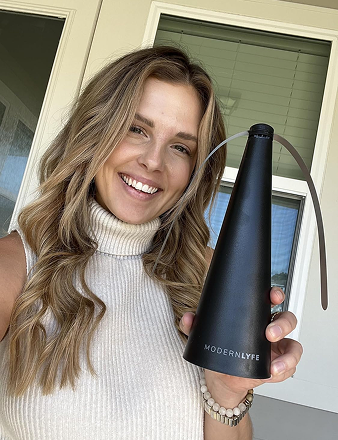
MODERN LYFE offers battery-operated fly fans that run on 2 AA batteries or USB power, with a portable format suited to restaurants, hotels, caterers, outdoor markets, and home gatherings. Review the available MODERN LYFE options, then choose the power setup and placement plan that fit your service routine.