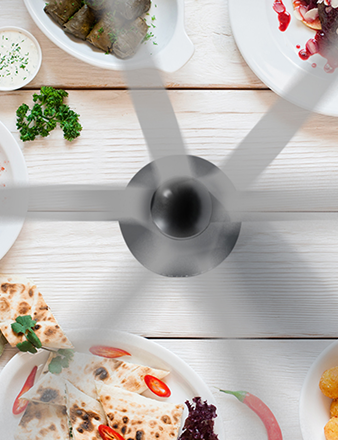
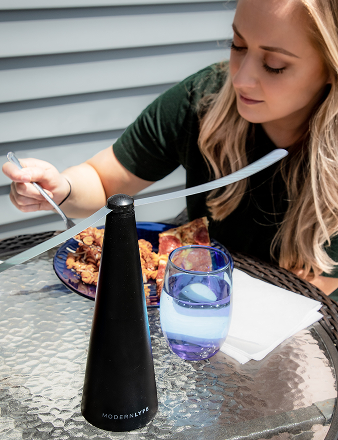
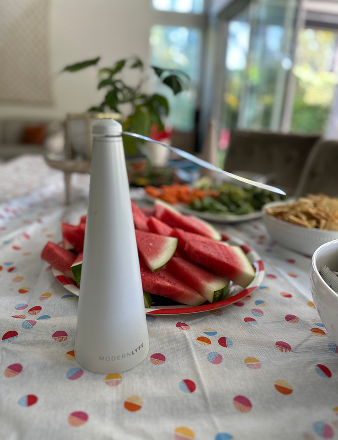
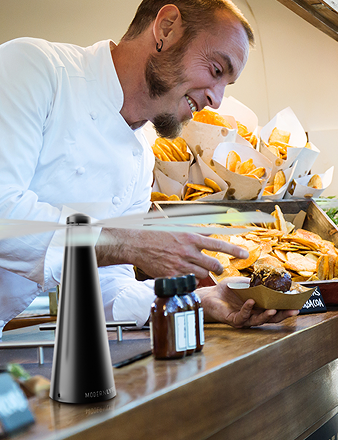
A battery problem rarely shows up when the room is quiet and the stakes are low. It shows up during dinner service, on a patio at sunset, or halfway through a wedding reception when the fly fan slows down, the table lamp fades, and your staff starts swapping devices instead of serving guests.
That's why battery technology advances matter far beyond electric cars. In hospitality, battery performance affects how long devices run, how often your team has to recharge them, how many backups you keep on hand, and how much attention staff must spend on equipment that should work reliably. If you run a restaurant, hotel, catering operation, or outdoor venue, better batteries don't feel like a lab story. They feel like fewer interruptions.
The Hidden Power Drain on Your Guest Experience
A common hospitality failure looks small from the outside. A host notices that the outdoor table lamp on the far end of the patio is dim. A server sees that the fly fan near a dessert station has stopped spinning. Someone grabs a charger, then realizes the charging station is already full, or the spare unit wasn't topped off after the last event. Guests don't know the battery is the issue. They just notice the service gap.
That's the hidden power drain. It isn't only the device going down. It's the extra staff motion, the rushed workaround, the visual inconsistency, and the feeling that operations are a step behind. Battery-powered gear is supposed to remove friction. Weak battery performance puts it back into the room.
Small devices create big operational headaches
Fly fans, table lights, repellent devices, and other portable tools often get treated as accessories. In practice, they support the guest experience in very direct ways. They protect food presentation, make outdoor seating more comfortable, and help teams set up spaces where power outlets aren't practical.
Practical rule: If a portable device matters during service, its battery is part of your operations plan, not an afterthought.
The useful shift is that battery technology has changed much faster than many operators realize. Over the past 30 years, battery costs have fallen by 99 percent, while the energy density of top-tier cells has risen fivefold. For every doubling of deployment, battery costs have decreased by 19 percent (RMI battery analysis).
Why that matters on the floor
In plain terms, batteries can now deliver more useful power in less space, at lower cost than they could before. That doesn't guarantee every battery-powered hospitality product is excellent. It does mean buyers should stop assuming all portable devices are short-lived compromises.
If you've been evaluating battery gear based on old experiences, it's worth revisiting what long-life power can look like in practice, especially in products built for repeated service use. A useful reference point is this guide to 10-year battery expectations for portable devices, because it reflects the question operators ask. Not “what chemistry is inside?” but “will this keep working season after season?”
The New Power Playbook Behind Modern Batteries
Modern battery performance comes down to three changes. Better chemistry. Better packing of energy into the same space. Better durability over repeated charging.
If that sounds abstract, think of a battery like a fuel tank, a refill system, and a maintenance schedule combined into one part. New battery technology advances improve all three.
Chemistry changed the ceiling
The chemistry inside the battery determines how much energy it can hold, how safely it can operate, and how quickly it can charge. One of the clearest examples is solid-state battery design.
Solid-state battery technology replaces the conventional liquid electrolyte with a solid one, enabling significantly higher energy density, targeting 500–550 Wh/kg, improved safety by eliminating flammability risks, and ultra-fast charging capabilities (Amprius on solid-state battery technology).
That matters because liquid electrolytes have long forced tradeoffs. Manufacturers could chase performance, but safety and packaging complexity stayed in the conversation. Solid electrolytes change that design logic. They open the door to batteries that store more energy in compact formats while reducing some of the risks associated with overheating.

Energy density means more runtime, not more jargon
Energy density sounds technical, but the operational meaning is simple. More energy density means more power in the same footprint, or the same power in a smaller, lighter package.
For hospitality, that changes product design in useful ways:
- Longer runtime in the same form factor. A tabletop device doesn't need to become bulkier just to last through a shift.
- Lower visual clutter. Designers can keep portable lighting and fan units compact instead of building around oversized battery compartments.
- Easier handling for staff. Lighter devices are simpler to carry, reset, store, and deploy across multiple tables or stations.
Advanced battery technology also enables devices to store energy more efficiently and with greater power density by using new electrode materials, battery chemistry, and battery management systems, allowing longer operation at higher voltages for more reliable performance (Applied Engineering on advanced battery technology).
A simple way to visualize this is to compare it with lightweight electric mobility devices. If you want to see how compact battery design changes what a product can do, it helps to explore electric go karts at Punk Ride, where battery size, weight, and power delivery directly shape usability. The same design logic applies to hospitality gear, even if the speeds and stakes are very different.
Lifecycle is where the real savings show up
Many buyers stop at runtime. Smart operators look one step further and ask how many charging cycles the battery can handle before performance drops enough to become a problem.
That's where newer materials and architectures matter. A battery with strong cycle life doesn't just last longer in a single shift. It stays useful across months and years of routine charging. That reduces replacements, cuts downtime, and lowers the odds that one event-ready device turns into an unreliable spare.
Better battery tech doesn't only make devices run longer today. It keeps them serviceable much longer before your team has to replace them.
Some of the clearest breakthroughs aren't even aimed at hospitality first. They emerge from broader battery research and then flow downstream into smaller commercial products. That's why business owners should pay attention to the trend line, not just the current spec sheet.
From Lab to Lobby Real-World Hospitality Impacts
The battery story becomes practical when you translate it into a shift manager's checklist. How long will the device run? How fast can it return to service? Is it safe to use around guests? Will it still perform next season?
Those questions now have better answers than they did a few years ago, especially for small portable devices that used to inherit second-tier battery technology from larger categories.
Longer runtime changes staffing, not just specs
When a battery-powered device runs longer, your team makes fewer emergency swaps. That sounds minor until you stack those interruptions across a busy patio, buffet line, or multi-zone event.
A fly fan that stays active through service protects more than food. It protects staff attention. A portable table lamp that lasts through setup, dining, and breakdown eliminates the need to rotate charging inventory in the middle of guest-facing hours. Some mosquito repellent devices are already being designed around higher-capacity batteries specifically to extend runtime for off-grid use, showing how battery improvements support longer operating windows in compact products (Trend Hunter on battery-powered mosquito repellers).

A useful real-world example comes from the patio category. The Patio Max features a 12-hour rechargeable battery paired with a long-lasting repellent supply and charging dock, which shows how current battery design can support operation windows aligned with actual use patterns (Wirecutter's mosquito control gear review).
Cost breakthroughs in EVs matter to small devices too
Most coverage of battery technology advances stays in the vehicle lane. Hospitality buyers should care because battery pricing and performance improvements at that scale eventually influence the economics of smaller commercial products.
While most news focuses on EVs, 50–60% battery cost reductions, from $120–$150/kWh down to $50–$80/kWh, have major implications for hospitality. They could enable portable devices with 2–3x longer lifespans at current prices (battery cost discussion in this video reference).
That doesn't mean every fan or table lamp will instantly become cheaper. It means manufacturers have more room to choose better cells, improve durability, or hold pricing steady while increasing usable life. For operators, that can shift the value equation from “buy cheap and replace often” to “buy dependable and replace less.”
Safety and charging both improve the guest-facing side of service
Safer battery architectures matter in hospitality because your devices sit close to people, fabrics, food, and décor. Lower thermal risk is not just a technical upgrade. It supports cleaner deployment in indoor dining rooms, terraces, cabanas, and event tables where reliability and discretion matter.
Some mosquito repellent lamps already combine photovoltaic panel technology with rechargeable battery systems to support off-grid operation without external power dependence, which points to a broader design trend. Portable devices are becoming more self-sufficient, easier to place, and less tied to outlet access (Dataintelo on mosquito repellent lamps).
For operators, the “so what?” is straightforward:
- Fewer charging bottlenecks during prep and reset
- More flexible placement where cords would look messy or create hazards
- Less mid-service intervention from staff
- Better consistency across guest-facing spaces
Smarter Procurement Choosing the Right Battery-Powered Gear
Buying battery-powered gear on sticker price alone is one of the easiest ways to create hidden operating cost. The cheaper unit can become the expensive one if it dies early, charges slowly, or forces your team to keep extra replacements in circulation.
A better buying method is to treat battery performance as part of total cost of ownership. In hospitality, that means asking what the device will cost in staff time, replacement frequency, charging management, storage, and service disruption over its useful life.
What to ask before you buy
Most product listings highlight convenience. Fewer tell you what matters after month six. Procurement gets smarter when you push vendors on the battery itself.

Use a shortlist like this during evaluation:
- Ask about cycle life. The critical question isn't only how long a device runs when it's new. Ask how long the battery remains useful after repeated charging.
- Ask what chemistry is used. Vendors don't need to turn your team into battery engineers, but they should be able to explain the battery type and why it fits the application.
- Ask about charging workflow. Can your staff recharge units easily between shifts, or does the charging process create a new bottleneck?
- Ask about field replacement. If the battery degrades, can it be serviced or swapped, or does the whole device become waste?
- Ask about warranty clarity. Battery support terms often reveal how much confidence a manufacturer has in long-term performance.
Durability changes the financial picture
Next-generation battery research offers significant potential. Next-gen nanowire batteries have demonstrated 200,000-cycle durability, a 33x improvement over standard batteries at around 6,000 cycles. For a daily-use hospitality device, that could mean eliminating battery replacements for over a decade, drastically reducing long-term costs and maintenance (Gray on new battery technologies).
You won't see that exact performance in every commercial tabletop product today. But it sets a direction for procurement. Battery durability is no longer a niche engineering concern. It's becoming a purchasing filter with real budget impact.
Buy for the number of service days a device can survive, not only the number of features listed on the box.
Disposal and replacement policy matter too
Battery procurement doesn't end when the shipment arrives. Operators also need a plan for damaged, aging, or retired batteries. That's why responsible end-of-life handling should sit inside your sourcing process, not outside it. If you're building a more sustainable replacement program, Reworx Recycling battery solutions offer a useful reference for what organized battery recycling can look like in practice.
For smaller accessories and backup inventory, rechargeable formats can also reduce repeat purchasing. This guide to 1.5 V rechargeable AA options is worth reviewing if your operation still relies heavily on disposable cells in supporting equipment.
A simple procurement lens
| Question | Weak purchase | Strong purchase |
|---|---|---|
| Runtime over service window | Barely covers one use period | Matches real operating hours |
| Charging workflow | Complicated or slow for staff | Easy to integrate into reset routines |
| Battery longevity | Unclear or poorly documented | Clearly positioned for repeated use |
| Replacement plan | Whole unit may become waste | Battery life and end-of-life are considered |
That's the difference between buying a device and buying a reliable operating tool.
Future-Proofing Your Operations What Is Coming Next
Battery purchasing is starting to look less like commodity buying and more like technology planning. That's happening because the market is moving quickly, and the next wave of gains won't only come from raw battery chemistry. They'll come from how batteries are managed, monitored, and integrated into products.
The market context is hard to ignore. The global Battery Technology Market is projected to grow from USD 252.13 billion in 2025 to USD 431.65 billion by 2030, at a CAGR of 11.4%, driven by trends such as solid-state batteries, sodium-ion innovation, and AI-driven battery management systems (MarketsandMarkets battery technology outlook).

AI will matter even in small commercial devices
Business owners often hear “AI” and assume it belongs in software, not hardware. In battery systems, AI-driven management can help monitor charging behavior, preserve battery health, and make better use of stored energy over time.
In hospitality gear, that could show up in very practical ways. Devices may become better at preventing deep discharge, managing charging patterns, and maintaining more stable output instead of fading unpredictably near the end of a cycle. You don't need to run an engineering department to benefit from that. You only need devices that stay dependable longer.
Material changes will expand your choices
Chemistry innovation also means buyers may get more options beyond today's mainstream cells. Sodium-ion and other emerging approaches could widen the supply base and support products built for different priorities, such as cost control, improved safety, or easier sourcing.
That doesn't mean you should chase every new spec. It means you should avoid locking your purchasing habits to assumptions from older battery generations. A portable device category that once felt disposable may soon support much stronger long-term economics. Businesses already thinking about renewable energy options for operations will recognize the pattern. Better energy systems usually get more useful when storage improves.
A short industry overview helps frame where development is heading:
What operators can do now
You don't need to predict the entire battery market. You need a short list of moves that keep your operation flexible.
- Audit your current battery gear. Identify which devices create the most charging friction, downtime, or replacement churn.
- Ask vendors better questions. Battery type, expected life, and charging behavior should be part of routine evaluation.
- Standardize where possible. Fewer charging systems and battery formats usually mean easier staff training and less confusion.
- Watch for service-friendly design. Products that support long-term use, safe charging, and responsible disposal will age better operationally.
The operators who adapt early won't do it because battery technology is exciting. They'll do it because smoother service is profitable.
Powering the Future of Your Guest Experience
The biggest shift in battery technology advances isn't that batteries are getting more impressive on paper. It's that battery performance is becoming operationally visible in everyday hospitality work. When devices run longer, charge faster, stay safer, and need fewer replacements, your team spends less time managing equipment and more time managing the guest experience.
That changes how you should think about portable tools. A fly fan isn't just a fan. A table lamp isn't just a light. A battery-powered device is a small service system. If the battery underperforms, the whole experience gets shakier. If the battery is well chosen, the device becomes almost invisible in the best way. It does its job without demanding attention.
The hospitality angle has also become clearer. Innovations first pushed by EVs and large-scale energy storage are beginning to reshape the economics and practical value of smaller devices. That means better runtimes, stronger lifecycle performance, and fewer compromises in products used on patios, banquet tables, buffet stations, and outdoor events.
The smartest battery decision isn't about chasing the newest headline. It's about choosing gear that reduces interruptions, maintenance, and replacement pressure over time.
If you're reviewing equipment this year, battery quality should be on the checklist alongside design, noise level, portability, and appearance. The businesses that treat power as part of guest experience will be better positioned to deliver consistent service, especially in spaces where mobility and presentation both matter.
Start with the devices your team touches most. Check what fails early, what charges poorly, and what creates unnecessary staff work. That's usually where the next operational win is hiding.
If you're ready to upgrade the guest experience with battery-powered tools built for real hospitality use, MODERN LYFE is a smart place to start. Their fly fans are designed for restaurants, hotels, catering setups, and outdoor gatherings where quiet performance, clean presentation, and reliable operation matter every day.