Ever put fresh rechargeable batteries in a device, only for the “low battery” light to pop up almost immediately? It’s a common frustration, and the problem isn’t your gadget—it’s a hidden voltage gap.
Most rechargeable AA batteries only deliver 1.2 volts. That’s a small but critical drop from the 1.5-volt standard of disposable alkalines, which is what most electronics are designed for.
The 1.5V Difference: Why Your Devices Underperform
Powering a 1.5V device with a 1.2V battery is like putting regular fuel in a car that needs premium. It might run, but you'll never get the performance it was built for. That tiny 0.3-volt difference is why your high-drain electronics—digital cameras, portable fans, and kids' toys—can feel sluggish or die without warning.
Many gadgets are designed to shut down or show a low battery warning when the voltage drops below a certain point, often around 1.25V. A standard NiMH rechargeable starts at just 1.2V and goes down from there. A true 1.5V rechargeable AA battery, however, delivers the full, consistent power your device expects from start to finish.
Understanding the Voltage Gap
This voltage gap is the real culprit behind countless tech headaches. It’s why your battery-operated fly fan might spin a little slower, or why a game controller disconnects at a critical moment.
Your device isn't being difficult; it's just misreading the signals. When it sees the lower voltage from a 1.2V cell, it assumes the battery is almost dead, even if it's fresh off the charger.
The core problem: many electronics equate voltage with power. A 1.2V rechargeable battery starts in what the device considers the "red zone," triggering premature low-battery alerts and shutdowns.
This mismatch is why upgrading matters. A true 1.5V rechargeable AA isn't a minor tweak; it's about giving your electronics the right fuel. By delivering the steady voltage they were designed for, you get reliable, consistent performance every single time.
To understand why 1.5V became the gold standard, learn more about the traditional 1.5 V alkaline battery. It ensures your gadgets run at peak performance, just as the engineers intended.
Breaking Down Battery Chemistry
When you buy rechargeable batteries, you're buying a specific technology. The chemistry inside dictates its performance, and each type has its own pros and cons. To get the power your devices need, you have to understand the main players.
The Old Guard: NiMH and NiZn
For years, the most common rechargeable has been the Nickel-Metal Hydride (NiMH) battery. It’s a workhorse, but its voltage is only 1.2V. That’s fine for a TV remote or wall clock, but in power-hungry electronics, it causes problems. For a deep dive, we've covered the specifics of the 1.2 volt rechargeable battery in more detail.
You might also find Nickel-Zinc (NiZn) batteries. They pack a punch, starting around 1.6V. The problem is they often have a shorter lifespan and require special chargers, making them a finicky choice for most people.
The New Standard: Lithium-ion
This is where things get interesting. The real game-changer is Lithium-ion (Li-ion) technology—the same chemistry that powers your smartphone. What makes a Li-ion 1.5V rechargeable AA special isn't just its power, but how it's delivered. These batteries have tiny, sophisticated circuits built right in.
This internal voltage regulator is the secret sauce. It ensures the battery delivers a rock-solid, consistent 1.5 volts from the moment you put it in until it’s nearly drained.
A Li-ion AA battery doesn’t just start at a higher voltage; it maintains that voltage throughout its entire cycle. This eliminates the performance drop-off and premature low-battery warnings common with 1.2V NiMH cells.
This chart drives the point home. It shows how a device reads voltage to determine battery life.
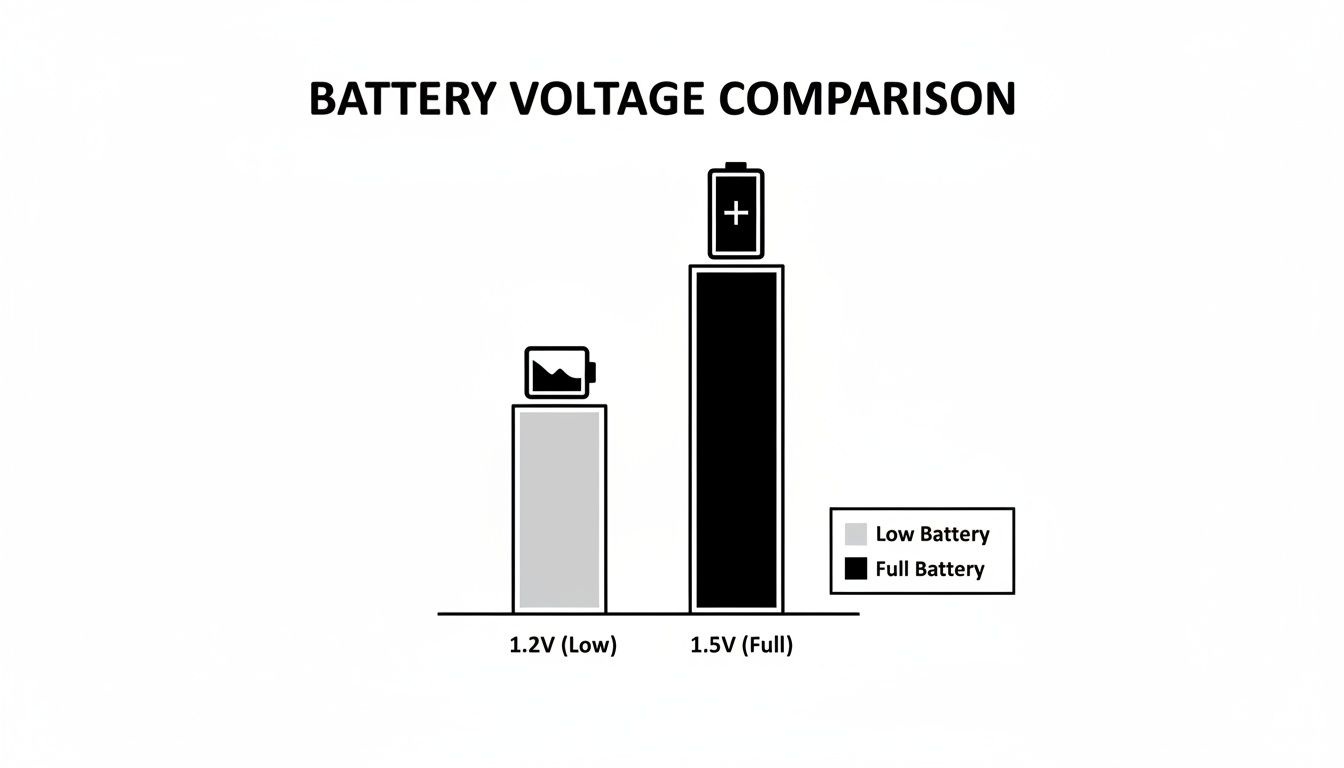
As you can see, your electronics are designed to see 1.5V as "full." When they see 1.2V, they often think the battery is already dying, even when it's freshly charged.
This is why Li-ion technology is taking over. For anyone who relies on high-performance gadgets, from photographers to hospitality pros, these batteries are becoming essential. Top-tier models offer impressive capacities of 3000-3600mWh, which translates to 68% better performance in modern devices.
Take something like the Modern Lyfe fly fans. They need consistent power to keep spinning effectively. A 1.2V battery might start strong, but its voltage will quickly droop, weakening the fan's performance. A 1.5V Li-ion battery keeps it running at full speed, making it the perfect choice for keeping an event space comfortable and pest-free.
Here’s a quick comparison of the three main chemistries to help you visualize the differences.
Rechargeable AA Battery Chemistry Comparison
| Feature | Lithium-ion (Li-ion) | Nickel-Zinc (NiZn) | Nickel-Metal Hydride (NiMH) |
|---|---|---|---|
| Nominal Voltage | 1.5V (Constant) | 1.6V (Drops quickly) | 1.2V (Drops gradually) |
| Voltage Consistency | Excellent; maintains 1.5V until depleted. | Poor; high initial voltage that falls off. | Fair; voltage declines steadily during use. |
| Cycle Life | Very Good (1,000+ charges) | Fair (Fewer cycles than other types) | Good (500-1,000 charges) |
| Charger Type | Requires a dedicated Li-ion charger. | Requires a specific NiZn charger. | Can use most standard NiMH chargers. |
| Best For | High-drain devices, electronics requiring steady voltage. | Specialized high-voltage applications. | Low-drain devices (remotes, clocks). |
Ultimately, choosing the right chemistry comes down to what you're powering. While NiMH still has its place, the consistent power and reliability of Li-ion make it the clear winner for any modern, demanding device.
Matching the Right Battery to Your Device

Using the wrong battery is like putting diesel in a car that needs unleaded fuel. It might fit, but you’re setting yourself up for poor performance. The secret to getting the most out of your gadgets is understanding their power needs.
Your battery-operated electronics fall into two camps: low-drain and high-drain.
Low-drain devices are the marathon runners—they sip power slowly over long periods. Think wall clocks, TV remotes, and basic smoke detectors. They don't need a sudden jolt of energy, which is why they work fine with standard 1.2V NiMH batteries.
High-Drain Devices Need Consistent Power
High-drain devices are the sprinters, demanding a huge burst of power to work correctly. This category includes digital cameras, powerful toys, game controllers, and high-performance tools like our Modern Lyfe fly fans.
These power-hungry gadgets are very sensitive to voltage. When a traditional 1.2V NiMH battery is under a heavy load, its voltage can sag, and the device might mistakenly think the battery is dead. This is what causes your game controller to die mid-session or your camera flash to fail. This is exactly where a true 1.5V rechargeable AA battery, especially a lithium-ion model, shines.
A constant-voltage 1.5V Li-ion battery acts like a tiny, regulated power supply. It delivers a steady stream of energy from start to finish. This rock-solid output allows high-drain devices to run at their peak without sputtering.
Take a digital camera. Its flash needs a quick, powerful jolt of electricity to recharge between shots. A 1.2V NiMH battery struggles to deliver that power consistently, making you wait longer. A 1.5V Li-ion battery provides that steady voltage for rapid, reliable recycling every time.
How to Identify Your Device Needs
Not sure if your gadget is a casual sipper or a power guzzler? Here’s a quick way to tell.
- Does it have a motor or moving parts? Portable fans, electric toothbrushes, and remote-controlled toys are classic high-drain examples.
- Does it produce bright light or loud sound? High-lumen flashlights, portable speakers, and electronic musical instruments are definitely in this camp.
- Does it have a digital screen? Handheld game consoles, GPS units, and digital cameras are all high-drain.
- Is it a simple, set-it-and-forget-it device? TV remotes, wall clocks, and basic calculators are almost always low-drain.
By identifying your device’s needs, you can avoid compatibility headaches. For any gadget that requires strong, sustained power, a 1.5V rechargeable AA is the clear winner.
Smart Charging and Storage Habits
Getting the most out of your 1.5V rechargeable AA batteries isn't just about using them—it's about how you care for them. Think of it as protecting your investment. A few simple habits can be the difference between getting a handful of uses and hundreds of reliable charge cycles.
The most important rule is this: always use the charger designed for your batteries. It's tempting to grab any old charger, but 1.5V lithium-ion cells have sophisticated internal circuits. Using an incompatible charger, like one meant for NiMH batteries, can fry those electronics, slash their lifespan, or even become a safety risk.
Busting Old Battery Myths
You've probably heard about the "memory effect"—the old problem where batteries "forgot" their full capacity if you didn't fully drain them before charging.
Good news: for modern 1.5V lithium-ion batteries, the memory effect is a total non-issue. Thanks to their advanced chemistry, you can top them off whenever you want.
In fact, the best practice today is the opposite of the old advice. You should avoid draining your lithium-ion batteries to zero. Letting them die completely stresses the internal components and can shorten their lifespan. It's much healthier for the battery to recharge it when it gets low, rather than waiting for your device to power down.
Best Practices for Long-Term Storage
What you do with batteries in a drawer matters. If you're storing them for a few weeks or months, a little prep goes a long way.
- Store at a Partial Charge: Never store batteries completely full or empty. The sweet spot is around a 40-50% charge. This puts the least amount of stress on the battery's internals, minimizing capacity loss over time.
- Keep Them Cool and Dry: Heat is the ultimate enemy of battery health. Find a cool, dry spot away from direct sunlight. The absolute worst place to leave them is in a hot car.
- Use a Protective Case: Tossing loose batteries into a drawer is a recipe for disaster. If the metal terminals touch a coin or keys, they can short-circuit. A simple plastic case prevents this and keeps them organized.
Following these rules ensures your gear, like battery-operated table fans, is always ready when you need it. A little care ensures your 1.5V rechargeable AA batteries will provide consistent power for years.
The Smarter Switch: Saving Money and the Planet
Switching to a 1.5V rechargeable AA battery is more than a power upgrade—it’s a smart move for your wallet and a win for the environment. Yes, rechargeables cost more upfront, but that initial investment pays you back fast.
Think about a gaming controller or a high-powered flashlight. They chew through disposable batteries, creating a constant expense. Rechargeables end that cycle. A single rechargeable battery can be powered up hundreds of times, turning a recurring cost into a one-time purchase.
The Long-Term Financial Payoff
The numbers don't lie. After just a few recharges, the cost-per-use plummets, quickly becoming cheaper than constantly buying disposables. Over the lifespan of one rechargeable battery, the savings are massive—you could easily slash your long-term battery spending by up to 80%.
Think of it this way: by ditching single-use batteries, you're pre-paying for years of power at a steep discount. That’s a no-brainer for families, businesses, or anyone who uses a lot of electronics.
Reducing Your Environmental Footprint
Beyond the financial perks, the environmental benefits are huge. Every year, billions of disposable batteries end up in landfills, where they can leak toxic chemicals into our soil and water.
Choosing a 1.5V rechargeable AA solution directly combats this. For every rechargeable you use, you prevent hundreds of disposables from becoming waste. This simple choice helps reduce the massive environmental impact of electronic waste.
This isn't just a niche idea; it's a global shift. The market for rechargeable batteries was valued at a staggering $135.3 billion in 2025 and is on track to hit $354.1 billion by 2035. That growth shows a clear, worldwide demand for more sustainable power. You can read the full research on the rechargeable battery market to see the trend for yourself.
Every time you charge a battery instead of throwing one away, you're taking a powerful step toward a cleaner future.
How to Choose Your Next Set of Batteries
Ready to buy? Stepping into the world of 1.5V rechargeable AA batteries can feel like decoding a secret language. But once you know what to look for, picking the right ones is simple.
The biggest confusion is the capacity rating. You'll see numbers followed by either mAh (milliamp-hours) or mWh (milliwatt-hours). They both measure energy, but they don't tell the same story when comparing batteries with different voltages.
Reading the Label: mWh vs. mAh
Think of mAh as the size of a fuel tank. A bigger number means a bigger tank. But what really matters is how much energy is in that tank, and that’s where mWh comes in. A 2500mAh battery at 1.2V holds less total energy than a 2500mAh battery at 1.5V.
Because of this, mWh is the best metric for comparing a 1.2V NiMH battery to a 1.5V lithium-ion one. It levels the playing field.
For a true apples-to-apples comparison of battery power, always look for the mWh rating. It’s calculated by multiplying voltage by mAh (Volts x mAh = mWh), giving you a clear picture of the battery’s total energy output.
This focus on total energy is why the market is shifting. The global rechargeable market is expected to surge from $135.3 billion in 2025 to a massive $354.1 billion by 2035. This growth is driven by high-capacity cells offering up to 3600mWh—perfect for devices like Modern Lyfe fly fans that need steady voltage. You can learn more about the expanding battery market and see the trend for yourself.
Look for Built-In Safety Features
Beyond raw power, safety is critical. Any good 1.5V rechargeable AA lithium-ion battery will have safety circuits built right in. These aren't just nice-to-haves; they protect your expensive electronics.
Here's what to look for:
- Overcharge Protection: Stops the battery from overheating if left on the charger too long.
- Over-Discharge Protection: Prevents the battery from draining to a point where it can be permanently damaged.
- Short-Circuit Protection: Instantly cuts power if a short is detected, stopping dangerous overheating.
One final, crucial tip: always use the charger that came with your batteries. It's a non-negotiable rule. Those chargers are designed for that specific battery chemistry and internal circuitry. Using the wrong one is a recipe for damaged batteries and a voided warranty.
Got Questions? We've Got Answers
Thinking about upgrading to 1.5V rechargeable AA batteries? It's a smart move, but it's natural to have questions. Let's tackle the most common ones.
Can I use my old NiMH charger for new 1.5V lithium batteries?
No, and this is critical for safety. Plugging a 1.5V lithium-ion AA battery into a charger designed for NiMH batteries is a recipe for disaster. It can damage the battery, wreck the charger, and even pose a safety risk.
Why? These newer lithium batteries have smart internal circuits that manage voltage. They need a charger built to communicate with that technology.
Always use the dedicated charger that came with your batteries or one approved by the manufacturer. It's the only way to charge them safely and get the long life they're designed for.
Will these 1.5V rechargeable batteries work in all my devices?
For almost anything that takes a standard AA battery, yes. They are a perfect drop-in replacement for any 1.5V alkaline and are especially great in devices that draw a lot of power, like digital cameras, high-performance toys, or our Modern Lyfe fly fans.
There's just one quirk to be aware of. Some older devices have simple battery gauges that just measure voltage. Because these lithium batteries deliver a strong, consistent 1.5V right until the end, that gauge might read "full" for a long time and then suddenly drop to "empty." The device will work flawlessly—often better than ever—but you won't get the gradual "low battery" warning you're used to with fading alkaline cells.
What's the real difference between mAh and mWh for battery capacity?
Great question, because it gets to the heart of measuring a battery's true power. Let's use an analogy.
Imagine you're comparing two cars:
- mAh (milliamp-hours) is like knowing the size of the gas tank. It tells you how much charge the battery can hold.
- mWh (milliwatt-hours) is like knowing the total distance you can drive on a full tank. It measures the battery's total energy output.
Because different batteries have different voltages (1.2V NiMH vs. 1.5V lithium), comparing their mAh ratings isn't a straight comparison. The mWh rating is the great equalizer—it accounts for both capacity and voltage to give you the most accurate picture of how much work the battery can do. For a true apples-to-apples comparison, always look at the mWh.
Ready to give your devices the consistent, powerful energy they need? From Modern Lyfe fly fans to your most demanding electronics, switching to reliable, rechargeable power is a game-changer.