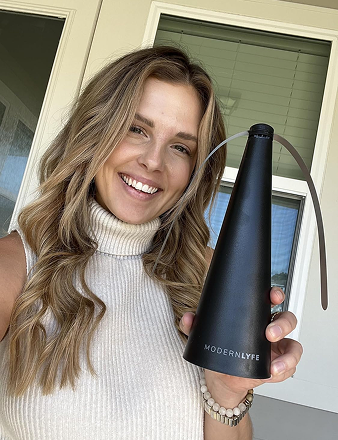
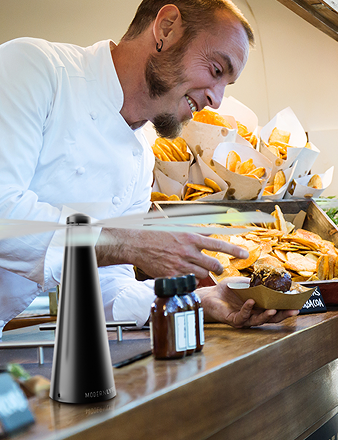
The buffet is ready, the patio is full, and the extension cord is creating a trip hazard between the bar and the food table. Guests are warm, staff are moving quickly, and flies keep drifting toward uncovered dishes. A battery operated tower fan can address part of that problem by delivering localized airflow without taking up the visual or physical space of a conventional floor fan.

Cordless cooling makes sense in restaurants, hotels, catering operations, food trucks, outdoor markets, and private homes where outlets aren't always near the service point. It also gives event teams more control over presentation. A slim vertical unit can sit beside a buffet or along a patio edge without the broad footprint of a pedestal fan.
This guide focuses on the decisions that matter in real service conditions. You'll learn how tower airflow works, why battery capacity doesn't tell the whole story, when a compact fan is a better choice, and how to place and maintain equipment around guests and food. The same attention to atmosphere that helps hotels create a welcoming morning coffee at hotels experience also applies to outdoor comfort, where small operational details shape the guest's impression.
Introduction to Cordless Cooling for Modern Hospitality
At an outdoor lunch, wedding reception, or hotel terrace service, the nearest outlet may sit far from the place where guests feel warm. Cables then compete with guest movement, table layouts, and staff routes. A battery-operated fan separates airflow from that fixed power point, allowing teams to position relief where the service needs it.
A tower design adds a practical presentation benefit. Its tall, narrow body can stand beside a buffet, near a host stand, or along a dining-area edge while leaving more of the sightline open than a broad pedestal fan. Airflow will not solve every source of discomfort, and it never replaces safe food handling. It can, however, make a warm service area more manageable and help discourage flies from settling near exposed food.
Practical rule: Choose placement around the service flow first, then choose the fan. A cordless product only helps if staff can reach its controls, guests won't knock it over, and the airflow reaches the area that needs it.
The buying decision starts with speed-specific runtime, not maximum breeze alone. A team needs to know how long the fan can run at a tolerable setting, whether oscillation improves coverage enough to justify extra power use, and whether one vertical unit is easier to store and place than several compact fans.
A lower speed may suit a quiet patio table, while a higher setting may be useful during a busy buffet service. Battery capacity is only the size of the fuel tank. The selected speed determines how quickly that supply is used, much like a vehicle consumes fuel differently in slow traffic and on an open road.
The same tradeoffs apply at home. A host may want quiet airflow near a patio dining table, while a caterer may need a focused stream beside a buffet line. Event duration, cooling-zone size, noise tolerance, and how often the fan must move should guide the choice.
The market context shows why cordless cooling deserves attention. One industry report estimates that battery-operated fans account for 31.8% of portable fan sales and about $1.53 billion in revenue in 2025, while the broader portable-fan market is projected to grow at a 6.9% CAGR (portable fan market estimate). Tower fans remain a narrower format, placing a battery-operated tower fan between a broad cordless category and a specialized vertical design. The same attention to atmosphere used to create a welcoming morning coffee at hotels experience also supports thoughtful outdoor comfort.
What a Battery Operated Tower Fan Is and How It Works
During an outdoor reception, a guest may need relief beside the dining area while staff rearrange the buffet zone. A battery operated tower fan handles that temporary demand by storing electricity in a rechargeable or replaceable battery, sending power to a motor, and moving air through a tall housing. Without a permanent wall connection, staff can place it where cooling is needed.
The tower body creates a vertical airflow zone. A compact circular fan directs air from a smaller head, while the narrow tower outlet spreads moving air across a taller section. Some models oscillate from side to side, sweeping air across a wider area. Actual coverage still depends on motor strength, outlet design, selected speed, and oscillation range.

The basic airflow path
Air enters through intake openings. The motor turns internal blades or an impeller, then the moving air exits through the front grille. Controls adjust speed and, where included, oscillation, timers, or operating modes. A remote control can help when the fan sits beside guests or food service, because staff can change settings without reaching across a table.
Battery chemistry shapes how the fan fits into service. Lithium-ion batteries are common in portable cooling equipment because they store substantial energy without making the unit as cumbersome as older battery designs. Runtime still varies with speed, motor load, oscillation, and other functions. A low setting sips power like a narrow stream, while a high setting uses the battery faster to produce stronger airflow. For related design considerations, see these battery-powered cooling fans.
Why tower form changes placement
A compact fan usually serves one person or a small surface area. A tower can form a taller airflow zone while using less floor width, which may suit a restaurant table, event display, or narrow service passage. Its vertical shape can also make storage and placement simpler when floor space is limited.
The tradeoff is directional control. A compact fan is often easier to aim precisely, while a tower may distribute air more broadly and some cordless models may omit oscillation. Choose according to the service zone, the required speed, and how long the fan must run, rather than choosing by appearance alone.
Key Features That Determine Performance and Guest Comfort
A product page can make a fan look capable without answering the operational questions that matter during service. Compare models by asking how each feature changes the guest experience, staff workload, and time between charges.
Battery life and capacity
Look for speed-specific runtime, not only a battery capacity figure. A larger battery may support longer operation, but the result still depends on motor draw, selected speed, oscillation, lighting, and other features. A unit that runs for a long period at low speed may be more useful for a reception than one that delivers a strong burst and needs charging during service.
Battery capacity examples in the market range from 2,000 mAh to 8,000 mAh, with listed runtimes ranging from roughly 3 to 6 hours at higher output and up to 12 to 20 hours at lower settings (tower fan battery examples). Treat those figures as product-specific examples, not a universal promise.
Noise and conversation
Noise matters more at a table than in a workshop. A fan beside a registration desk, dining table, or wedding ceremony area needs to provide relief without competing with speech. If a manufacturer doesn't provide a clear noise specification, listen to the unit at the speed you expect staff to use, not only at its quietest setting.
For a deeper look at how fan design affects sound, review quiet fan technology. A low setting that guests can tolerate for hours may be more valuable than maximum output that forces people to raise their voices.
Airflow and oscillation
Airflow should match the physical problem. A buffet line may need a moving stream across several positions, while a food truck worker may need a directed breeze at one station. Oscillation can broaden coverage, but it also introduces another moving function that can increase power use.
Placement and portability
Check whether the fan has a stable base, a carrying handle, remote storage, or a design that can sit on a floor without blocking routes. A slim tower may fit a narrow patio edge, but it still needs clearance around intake and outlet openings. Portability is useful only when staff can move the unit safely between charging, storage, and service locations.
Durability and outdoor exposure
Outdoor use brings dust, moisture, spills, transport, and accidental knocks. Don't assume that “cordless” means weatherproof. Check the manufacturer's care instructions, keep the unit away from standing water, and use a covered location when conditions are uncertain.
Controls and visual design
Simple controls reduce training time. Speed buttons, oscillation controls, battery indicators, and a timer should be easy to understand during a busy event. Appearance also matters in hospitality. A discreet tower can support a polished setup better than a bulky unit that draws attention away from the table or display.
Most important tradeoff: Peak airflow is only one part of performance. For an event, the better fan is often the one that provides acceptable airflow quietly for the entire service window.
Use the specifications as a shortlist, then test the physical experience. Put the fan where it will operate, select the intended speed, listen from guest distance, and check whether the air reaches the target area without disturbing menus, napkins, or table settings.

Understanding Real Battery Runtime by Speed and Power Draw
Battery capacity is a poor standalone buying metric. The same battery can produce very different results depending on how hard the motor works, which speed you select, and whether oscillation runs continuously.
Higher speed increases blade movement and air delivery, but it also increases electrical demand. The relationship isn't a simple sliding scale. A fan can use much more energy at high speed than at low speed, so the runtime difference may be larger than buyers expect.
One tower-fan manual lists about 2 hours on high, 5 hours on medium, and 8 hours on low (tower-fan runtime manual). General portable-fan guidance in the same source indicates that a 10,000 mAh class battery may fall to roughly 3 to 4 hours on high but reach about 12 to 15 hours on low. These examples demonstrate the operating pattern, not a guaranteed result for every product.
| Speed Setting | Estimated Runtime | Power Implication |
|---|---|---|
| High | About 2 hours in one tower-fan manual, or roughly 3 to 4 hours for a 10,000 mAh class portable-fan example | Highest airflow demand and fastest battery depletion |
| Medium | About 5 hours in one tower-fan manual | A compromise between stronger cooling and endurance |
| Low | About 8 hours in one tower-fan manual, or roughly 12 to 15 hours for a 10,000 mAh class portable-fan example | Lower draw, longer operation, and often more suitable for quiet continuous service |
The practical lesson is straightforward. If a restaurant needs a fan beside a buffet for an extended period, staff may get better results from a lower speed with occasional repositioning than from maximum power throughout the event. If guests need immediate relief in a hot outdoor queue, high speed may be appropriate for shorter periods, followed by a lower setting once the area feels comfortable.
Oscillation adds another variable. A sweeping airflow can cover more people, but a constantly moving mechanism may increase power consumption compared with a fixed direction. Motor efficiency also matters, which is why two fans with similar battery ratings can behave differently.
Before buying, ask the supplier for runtime at each speed and with oscillation enabled. The battery runtime guide can help frame that conversation. A claim such as “all-day battery” has little value unless you know the speed, mode, and feature settings behind it.
Choosing Between Tower and Compact Fans for Events
The tower format isn't automatically the right choice. It solves a specific placement problem, while a compact fan solves a different one. Hospitality teams should match the shape of the fan to the size and movement of the cooling zone.
A tower makes sense when airflow needs to reach more than one seated or standing position and the equipment must blend into a visible setup. Its vertical body can provide a taller stream and fit beside a buffet, patio wall, reception area, or service station. A compact fan is easier to carry, pack, and aim at one person, which may make it more useful for a food truck worker, backstage staff member, or guest at a small table.
| Event need | Tower fan | Compact fan |
|---|---|---|
| Buffet or reception line | Better suited to a tall, shared airflow zone | Usually focused on one position |
| Food truck station | Can take more space than necessary | Easy to place close to the worker |
| Outdoor dining patio | Slim appearance and broader positioning options | Flexible for individual tables |
| Transport between venues | Requires more storage planning | Easier to pack and carry |
| Quiet guest experience | May offer more control features, depending on model | Often simpler, but not automatically quieter |
| Battery planning | Can use more power when covering a wider zone | May preserve flexibility through targeted use |
Recent review coverage describes battery-powered tower fans as compact and capable of up-to-five-hour battery life, while noting that at least one tested model lacked oscillation (battery-powered tower fan review coverage). That combination captures the format's central compromise. You may gain a tidy vertical profile, but you shouldn't assume broad coverage or extended operation without checking the specific controls and runtime.

For camping, temporary service, or mobile outdoor work, comparing camping fan power options can clarify whether you need a freestanding unit or a smaller device that travels with the operator.
Choose a tower when presentation, vertical airflow, and shared coverage matter. Choose a compact fan when the airflow target is personal, the equipment must move constantly, or storage space is limited. For some venues, the most practical setup may combine formats, using a tower for a guest zone and compact units for staff positions.
Setup Placement Maintenance and Safety Essentials
Good operation starts before the fan is switched on. Walk the service area and identify the exact zone that needs airflow. Place the unit beside, rather than directly in, the guest path, keep intake and outlet openings clear, and make sure the base sits on a stable surface.
At a buffet, aim airflow across the front or along the line without blowing directly onto uncovered food, napkins, menus, or lightweight table decorations. At a patio, position the fan so the breeze reaches the seating zone without creating a narrow obstacle between chairs. Staff should know where the controls are and who is responsible for checking the battery during service.
Build a charging routine
Charge the unit before deployment and store its charger with the fan. A reviewed rechargeable tower model lasted over 9 hours in mixed testing and up to 20 hours on its lowest setting, but a full charge took more than 7.5 hours (rechargeable tower-fan review). That makes pre-event charging essential when a replacement unit isn't available.
- Before service: Confirm the battery indicator, controls, base stability, and charging cable.
- During service: Use the lowest effective speed and check the remaining charge during a natural staff rotation.
- After service: Switch the fan off, recharge it according to the manual, and store it in a dry, protected location.
Keep the unit clean
Dust and food debris can collect around grilles and air paths. Follow the manufacturer's cleaning instructions, disconnect power before cleaning, and don't spray liquid into the housing. A simple cleaning log can help hotels and caterers keep equipment ready without adding a complicated maintenance task. The same disciplined approach used for commercial extractor fan care works well here, although the fan's own manual remains the controlling reference.
Protect guests and equipment
Don't place the fan near standing water, unstable furniture, hot cooking equipment, or areas where cables and bags can catch the base. Inspect the housing, grille, controls, and charging port for damage before use. Outdoor conditions can change quickly, so move the fan under cover if rain or splashing becomes likely.
Register the warranty when applicable and keep the purchase record. If the fan develops unusual noise, overheating, charging problems, or mechanical movement, remove it from service and contact the manufacturer's support channel instead of improvising a repair.
Making the Right Choice for Your Venue and Guests
A useful buying decision starts with the cooling zone, not the product category. For shared guest areas, assess whether a tower's vertical profile and possible oscillation justify its storage and battery demands. For one worker or one table, a compact fan may provide more useful placement flexibility.
Next, set the operating expectation. If the event needs quiet, continuous airflow, prioritize speed-specific runtime, low-noise operation, stable placement, and simple charging. If the need is short, intense relief, maximum airflow may carry more weight. In either case, check how the fan behaves with oscillation enabled rather than relying on battery capacity alone.
Durability and appearance matter alongside airflow. A restaurant, hotel, or wedding venue needs equipment that can sit neatly within the setup, survive repeated handling, and remain easy to clean. A home host may place more emphasis on portability and storage, while a caterer may value consistent controls that different staff members can operate without training.
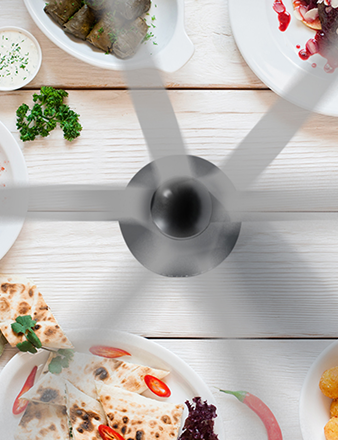
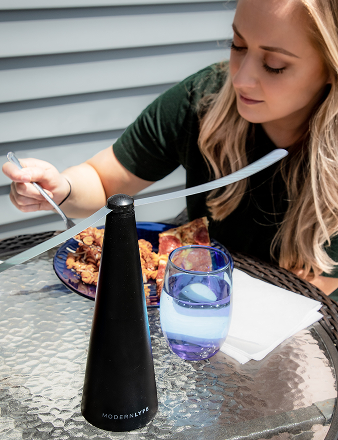
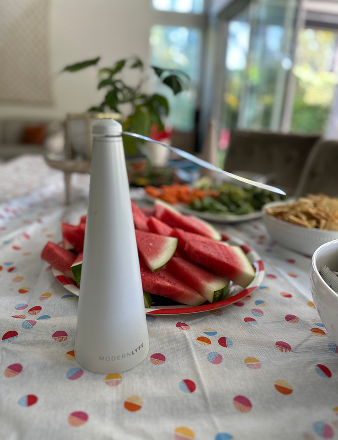
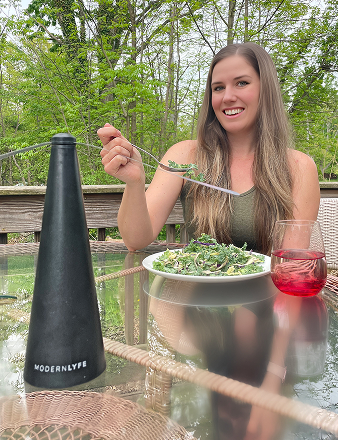
Modern Lyfe's battery-powered fly fans are another relevant tool for dining tables, buffet lines, patios, and events. They use airflow as part of an insect-protection setup, so they address a different task from a cooling tower fan and can be evaluated alongside it when food presentation and guest comfort overlap.
Choose the format that matches the job, verify the runtime at the speed you'll use, and create a charging and cleaning routine before the first event. That approach gives guests a more comfortable setting without forcing staff to redesign the service around cords.
Visit MODERN LYFE to explore battery-operated fly fans designed for restaurant tables, hotel events, buffets, patios, and home gatherings. Review the available options, then choose a cordless setup that supports cleaner food presentation and more comfortable outdoor service.