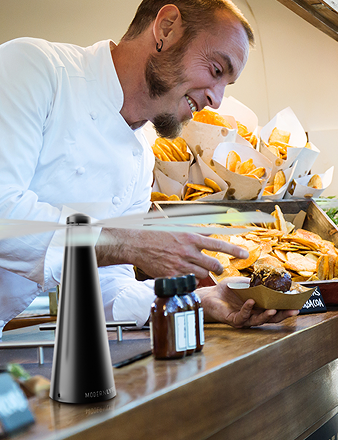
A patio can look perfect and still feel wrong.
You know the scene. The lighting is warm, the glassware is polished, guests lean in to talk, and then a fan starts buzzing from the corner like a small appliance fighting for attention. Nobody comments on it directly, but shoulders tilt, voices rise, and the room loses some of its ease. In hospitality, comfort is rarely one thing. It's temperature, airflow, sound, and the absence of distractions all working together.
That's why quiet fan technology matters more than many operators realize. It isn't just about cooling people down or keeping air moving. It's about protecting conversation, preserving mood, and avoiding the cheap mechanical feel that noisy equipment can inject into an otherwise premium setting.
Setting the Scene for Uninterrupted Ambiance
A restaurant owner sets up for evening service on the patio. The heaters are off, the air is still, and a little airflow would make the space more comfortable. Someone wheels out a standard fan. It does move air, but it also adds a rough mechanical hum that cuts across the music and bounces off hard surfaces.
That's the problem quiet fan technology solves. It treats airflow as part of the guest experience, not as a separate utility.

Modern systems have become far more refined than the loud box and pedestal fans many operators still picture. Modern quiet fan technology achieves acoustic outputs as low as 18 dBA on low-speed settings, with ultra-quiet systems operating in the 20–35 dBA range, which engineers define as nearly silent or a soft hum comparable to background noise. This is often achieved with brushless DC motors that reduce vibration and power consumption, according to quiet standing fan market analysis.
Why hospitality notices sound faster than other industries
In a warehouse, fan noise may be acceptable if the job gets done. In a dining room, terrace, or wedding reception, the standard is different. Guests aren't only trying to stay cool. They're trying to talk without strain, hear the music at the intended level, and settle into an atmosphere that feels deliberate.
A noisy fan creates three immediate problems:
- Conversation gets harder: Guests speak louder to overcome the sound, which raises the room's overall noise floor.
- The space feels less polished: Even expensive décor can feel undermined by a budget-sounding mechanical buzz.
- Staff lose control of ambiance: Music, speech, and airflow start competing instead of supporting one another.
A fan can help comfort while quietly damaging atmosphere. That contradiction is common in hospitality spaces.
Quiet equipment changes the room
When a fan is well designed, guests usually don't notice the machine itself. They notice that the patio feels better. Food service feels calmer. A buffet feels cleaner and more controlled. An outdoor wedding dinner feels less sticky without sounding like a workshop.
That's the true value of quiet fan technology. Good units disappear into the experience. They still move air, but they don't ask for attention while doing it.
The Science of Silence How Quiet Fan Technology Works
Most quiet fan technology comes down to three engineering choices. The motor, the blades, and the way the fan manages vibration. If one of those parts is weak, the fan may still look modern but sound rough in real use.

The motor sets the baseline
Start with the motor. A Brushless DC motor, often shortened to BLDC, is the quiet fan equivalent of the smooth drivetrain in an electric car. It doesn't have the same kind of friction and chatter that older motor designs can produce.
The strongest setups pair BLDC motors with Fluid Dynamic Bearings, or FDB. The most effective quiet fan technology uses BLDC motors paired with Fluid Dynamic Bearings, which eliminate friction and hum while reducing power consumption by up to 70% compared to standard AC motors; this combination enables noise levels as low as 17.6 dBA at 1,200 RPM, according to this silent fan cooling guide.
If you want a practical way to think about it, an older motor with cheaper bearings is like rolling a cart over rough gravel. A BLDC motor with FDB is closer to gliding over smooth ice.
For buyers comparing spec sheets, this matters because a fan can look premium on the outside while hiding ordinary internals. Product pages that discuss motor design and bearing type usually give you a better sense of quality than pages that only advertise “powerful airflow.” This is also why real-world performance in fan systems matters more than a polished product photo.
The blades decide what the air sounds like
Air itself can be noisy when a fan handles it badly.
A poorly shaped blade chops the air into turbulence. That turbulence creates the choppy whoosh and pressure fluctuations people often describe as harsh or busy. Better blades are shaped to guide the air more smoothly, so the movement feels softer and sounds less intrusive.
The easiest analogy is an airplane wing. Good blade design doesn't fight the air. It manages it.
Bearings and housing stop small vibrations from becoming audible
Some noise doesn't come from the air at all. It comes from tiny vibrations in the moving parts. Those vibrations travel through the frame and turn into a buzz, rattle, or persistent hum.
That's why better fans use bearing systems designed to stay stable over time, and why the casing matters too. A rigid, well-built housing can prevent the whole assembly from amplifying small imperfections.
Practical rule: If a fan needs to spin faster to do the same job, it usually has less efficient blades, a weaker motor setup, or both.
Smart control is part of silence too
A fan doesn't need to run at full intensity all the time. Better systems use speed control to match airflow to the actual need. When demand is low, the fan stays low. When heat builds, it ramps up.
That approach is quieter because it avoids unnecessary high-speed operation. It also feels more refined. Instead of hearing abrupt changes, guests experience a steadier environment.
Decoding Noise Beyond Decibels to Perceived Loudness
Many buyers stop at one number. They look for the lowest dB or dBA rating and assume they've found the quietest option. That's understandable, but it misses the part people react to in restaurants and event spaces.
A fan can measure relatively low and still be annoying.

Volume and annoyance aren't the same thing
There's a big difference between broadband airflow noise and tonal noise.
Broadband noise is the soft, even whoosh you might expect from air moving smoothly. Tonal noise is the narrow, repeated hum or whine that makes people glance toward the machine. One blends into the room. The other pokes through it.
That's the hidden trap in fan buying. Existing content rarely addresses why a fan rated at 24 dB can still be disruptive in acoustic-sensitive hospitality settings due to tonal noise. Industrial research shows that high-efficiency silencing technology can eliminate tonal noise at the source, a problem solved by aerodynamic blade designs and advanced motor types that create laminar airflow, the quietest form of air movement, as explained in this fan noise reduction analysis.
Why restaurants feel tonal noise so strongly
A restaurant isn't judged like a mechanical room. Guests don't score the fan for technical compliance. They react emotionally. A low hum behind a two-top table can be more disruptive than a slightly louder but softer airflow sound near a walkway.
Here's why operators get tripped up:
- Specs often simplify the story: One decibel figure can hide how the fan sounds across different speeds or under real load.
- Hard surfaces amplify character: Glass, tile, metal, and walls can make hum more noticeable.
- Conversation is sensitive to pattern: Human ears tune in quickly to repeated tones.
The best quiet fan doesn't just sound softer. It sounds less irritating.
What to listen for in a demo or review
If you can hear a unit in person, don't ask only, “Is it loud?” Ask:
- Does it hum? A steady motor tone is often the problem.
- Does the sound change abruptly between speeds? Sudden jumps feel intrusive.
- Is the airflow smooth or choppy? Uneven air movement often comes with rougher acoustics.
That shift in thinking matters. In hospitality, the right question isn't just how many decibels a fan produces. It's whether the sound quality supports the room.
The Business Case for Silence in Hospitality Settings
Quiet fan technology isn't only an engineering upgrade. It's an operational choice that protects the product you sell, which is the guest experience.
A noisy fan cools the room while making the room feel cheaper. A quiet one improves comfort without announcing itself.

Guest comfort is the first return
For dining and event settings, the threshold is strict. A fan qualifies as quiet for noise-sensitive dining or event spaces when it operates at or below 20 dB, a threshold significantly lower than the 30–40 dB typical of standard household fans. Background noise above 25 dB can interfere with guest conversation and perceived service quality, according to this guide to quiet fan decibel levels.
That matters because restaurants don't want guests working to hear one another. The best service sequence in the world can't compensate for a table where people keep repeating themselves.
Quiet airflow helps the room look more intentional
Silence has brand value.
When guests notice that an outdoor patio feels comfortable without obvious mechanical noise, they interpret the whole environment as more considered. That perception supports premium pricing, better reviews, and stronger word of mouth, even if nobody explicitly says, “The fans were excellent.”
Food hygiene and comfort often work together
In buffet lines, catering stations, and open-air dining, operators often need airflow for practical reasons, not just thermal comfort. Air movement can help create a cleaner-feeling food presentation and make service zones less attractive to flies, especially outdoors.
The challenge is doing that without adding the kind of noise that makes a setup feel improvised. Reliability matters here as much as acoustics. Buyers should pay attention to build quality, service support, and long-term consistency, which is why product reliability in hospitality gear deserves as much scrutiny as style or price.
Energy use matters, but the acoustic payoff is what guests notice
Many quiet designs also use more efficient motor systems. That's good for operators who run equipment for long stretches during lunch, dinner, events, and resets.
But from a business perspective, the acoustic benefit lands first. Guests don't inspect the motor. They notice whether the space feels relaxed, whether staff need to raise their voices, and whether the atmosphere matches the brand promise on the menu, website, and reservation page.
A loud fan solves climate and creates friction. A quiet fan solves climate and protects revenue-producing ambiance.
How to Choose the Right Quiet Fan for Your Venue
Buying a quiet fan gets easier when you ignore marketing language and focus on build choices that affect sound. “Silent,” “whisper,” and “ultra-quiet” can mean almost anything if the product page doesn't explain how the fan achieves it.
The best approach is to shop like an engineer and listen like a host.
Start with the drive system
If a fan is meant for dining or meeting areas, check how it moves. Ultra-quiet wall-mount fans designed for dining areas use direct-drive motors with fewer moving parts, offer multiple speed settings with a designated quiet setting, and often feature a totally enclosed motor that acts as a sound-dampening barrier, according to industrial quiet fan product guidance.
That gives you three useful filters right away:
- Direct-drive motor: Fewer moving parts usually means fewer opportunities for extra noise.
- Multiple speeds: You need control, especially during service peaks and quieter late-evening periods.
- Quiet setting: A manufacturer that names a quiet mode is at least acknowledging acoustic use cases.
Know what to scan for on the product page
Not every listing is detailed, but better listings usually mention the parts that matter. Look for these terms first:
- BLDC motor: This suggests a quieter and more efficient motor architecture.
- Fluid Dynamic Bearings: A good sign that the fan is built to limit vibration.
- Aerodynamic blade design: Useful when it reflects actual engineering, not just styling language.
- Enclosed or dampened motor housing: Helpful in spaces where radiated noise matters.
If a page avoids all technical details and only says the fan is “powerful,” that's a warning sign.
Match the fan to the job
Different hospitality uses call for different trade-offs.
| Venue need | Best question to ask |
|---|---|
| Patio dining | Will this stay unobtrusive during conversation-heavy service? |
| Buffet line | Can it run for long periods without a tiring hum? |
| Wedding or event use | Is it easy to place where guests won't notice it visually or acoustically? |
| Semi-permanent install | Does the mounting style support a stable, low-vibration setup? |
Don't ignore the power source trade-off
Portable battery-operated fans are convenient. That's why operators like them for moving between buffet lines, host stands, bars, and event stations. But portability and consistent low-noise performance aren't always the same thing.
Plug-in or fixed systems often have an easier time maintaining stable operation because they aren't dealing with changing battery conditions. For venue owners, the practical question is simple: do you need mobility first, or do you need the most stable acoustic performance possible?
If the fan will live in one location for most of its life, a more fixed and robust setup is often easier to keep quiet over time.
Use your ears before you use your wallet
If possible, test the fan at the speed you'd use during service. Don't evaluate it empty in a warehouse and assume it will sound the same against glass, tables, and guests.
Listen for hum, not just loudness. The hum is usually what people remember.
Optimal Placement and Maintenance for Lasting Silence
Even a well-engineered fan can sound worse if it's placed badly or left dirty. Quiet fan technology works best when the installation supports it.
Placement comes first. In dining spaces, don't aim a fan where guests will hear the motor directly at close range if you can redirect airflow across the space instead. On buffet setups, placing small units to create a cross-breeze often works better than pointing one fan straight down the center line.
Placement mistakes that create extra noise
A few common choices make fans seem louder than they are:
- Hard-corner placement: Corners can reflect and concentrate sound.
- Wobbly surfaces: A shaky host stand, hollow table, or loose shelf can amplify vibration.
- Overpowered positioning: If the fan is too close to guests, you'll need less airflow but hear more of the machine.
A useful maintenance habit is simple: wipe the blades and housing regularly. Dust buildup can throw off balance, and imbalance often shows up first as added noise.
If a previously quiet unit develops a new buzz, hum, or rattle, check the mount, the surface, and any debris before assuming the motor has failed. In these situations, understanding common fan motor noise causes can save time and keep a minor issue from becoming a replacement decision.
Clean blades, firm mounting, and stable placement usually do more for long-term quiet operation than people expect.
Your Quiet Fan Technology Purchasing Checklist
The smart way to buy is to treat quietness as a combination of sound level, sound quality, and mechanical design. A low number on a box doesn't guarantee a better dining experience. The right motor, blade design, housing, and control strategy are what turn a fan into something guests barely notice.
Use this checklist when comparing options.
Quiet Fan Spec Checklist
| Feature | What to Look For | Why It Matters |
|---|---|---|
| Motor type | Brushless DC motor or direct-drive design | Helps reduce vibration, friction, and mechanical noise |
| Bearing system | Fluid Dynamic Bearings when available | Supports smoother operation and less wear-related hum |
| Noise rating | A low dBA rating suited to quiet hospitality use | Gives a baseline for sound output, though it isn't the whole story |
| Sound character | Reviews or demos that mention smooth airflow instead of humming or whining | Tonal noise is often more disruptive than overall volume |
| Blade design | Aerodynamic or airflow-optimized blades | Better blade design can reduce turbulence and harsh airflow noise |
| Speed control | Multiple speeds or a dedicated quiet setting | Lets staff reduce noise during conversation-heavy service |
| Housing and build | Enclosed motor or dampened construction | Helps limit radiated noise and vibration |
| Placement fit | A form factor matched to patio tables, buffets, walls, or service zones | A good fit is easier to position quietly and effectively |
| Maintenance access | Easy-to-clean surfaces and accessible blades | Simple upkeep helps preserve quiet operation over time |
| Reliability | Clear support, durable construction, and consistent operation | A fan that stays quiet is more valuable than one that starts quiet |
The short version is simple. Buy the fan that disappears into the room. If guests notice the comfort and not the machine, you chose well.
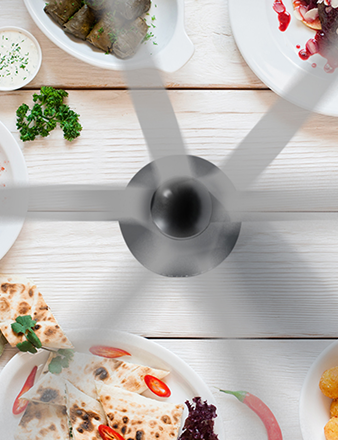
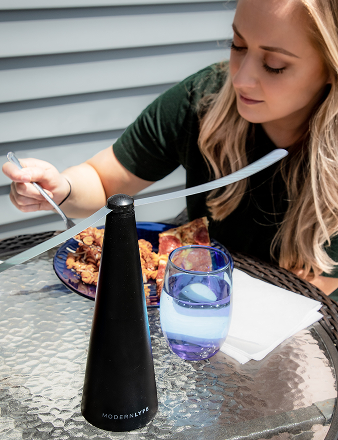
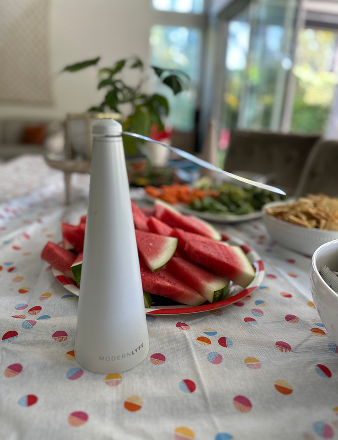
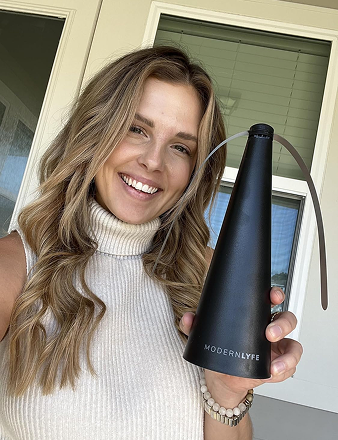
If you're looking for a refined way to protect food and guest comfort in dining and event settings, explore MODERN LYFE. Their fly fans are built for hospitality spaces that need elegant, unobtrusive insect control without disrupting the atmosphere you worked hard to create.