The brunch is moving fast. Plates are leaving the kitchen, guests are returning to the buffet, and then flies begin circling the fruit, pastries, and chilled salads. Staff wave napkins, guests complain, and the event planner starts looking for a solution that won't add chemicals, cables, or another noisy appliance to the room.
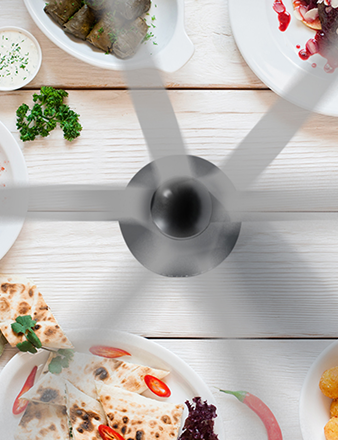
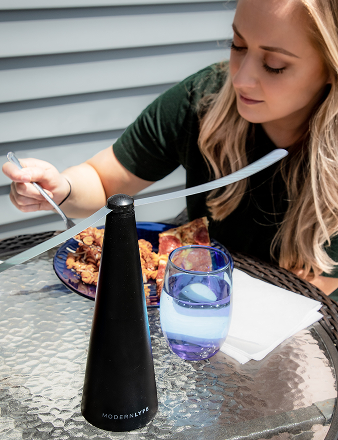
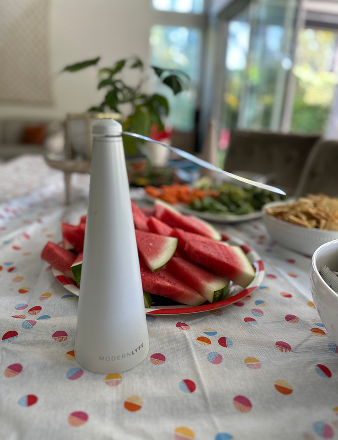
Battery powered fly fans for food can help in that exact moment. They create a localized airflow pattern that disrupts fly landing behavior around a table, buffet edge, or catering station. They aren't cooling fans, insecticides, or a replacement for food protection. Used correctly, they're a discreet last-meter comfort layer that helps protect the guest experience while sanitation, exclusion, and proper food handling do the heavier safety work.
Why Flies Crash Your Service and How Fly Fans Help
An outdoor reception exposes every weakness in a service setup. Doors open repeatedly, food sits within reach of guests, bins may be nearby, and even a well-run kitchen can't eliminate every insect from an open-air environment. A single fly landing on a tray can trigger more concern than the actual number of insects would suggest, because guests see the risk immediately.

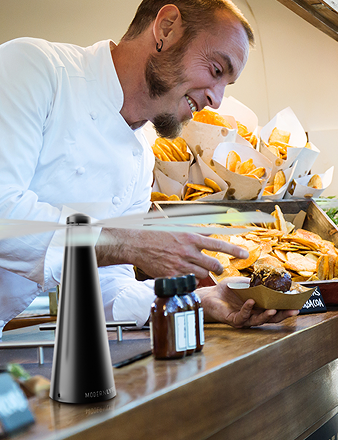
A tabletop fly fan addresses the narrow space between exposed food and approaching insects. Its blades create moving air over the serving area, making it harder for flies to settle on food. A cordless unit is especially useful when a buffet sits in a garden, a food truck serves from a temporary stall, or a wedding planner is working in a venue with limited outlets.
That benefit is operational, not magical. Restaurant guidance recommends leaving food uncovered for as short a time as possible and protecting it with lids or washable net protectors to reduce contamination risk. The same hospitality guidance recommends keeping doors and windows closed where practical, fitting screens, cleaning spills immediately, and sealing bins away from entrances, all of which shows that fly control is a layered hygiene practice rather than a single-device fix. (Bromley food safety guidance)
Practical rule: Use a fly fan to protect the exposed perimeter, not to excuse uncovered food, poor waste control, or an open back door.
Choose this solution when you need quiet, visible, portable protection at the guest-facing edge of service. It fits temporary and mobile operations particularly well. If flies are appearing throughout the kitchen, around drains, or near waste storage, treat that as a pest-control problem first and a fan-placement problem second.
The Real Food-Safety Risk Flies Create
Flies aren't merely unpleasant around food. Houseflies can transfer bacteria from contaminated surfaces to food through direct contact, and they can also contaminate food through vomit from the crop and excretion from the alimentary canal. That mechanism makes exposed buffet food a genuine hygiene concern, not just a matter of presentation. (Housefly contamination review)

Ecolab reports that houseflies can harbor more than 200 pathogens, including cholera, typhoid fever, diphtheria, dysentery, E. coli, and Salmonella. The same industry source notes research showing that houseflies could transfer E. coli to food in as little as five minutes, a useful reminder that a short service window can still expose uncovered dishes. (Ecolab food-safety overview)
The practical risk rises wherever prepared food remains open and accessible. Buffet lines, banquet tables, pastry displays, outdoor bars with garnishes, and catering stations all create high-visibility contact points. A fan doesn't sterilize food or remove contamination that has already occurred. It helps reduce the opportunity for flies to land in the first place.
For operators, that distinction matters during inspections and internal audits. Food-safety guidance emphasizes protecting food, controlling insects with approved devices, avoiding unsuitable placement over food-preparation areas, and preventing dead insects from falling onto exposed food. It also recognizes that screened or fanned outdoor dining areas may be acceptable for fly control, subject to the applicable local requirements. (Vermont food-service regulations)
If your written food-safety plan treats fly fans as the primary control, revise it. Treat them as one physical barrier within a system that also covers lids, screens, cleaning, waste, drainage, and staff response.
For a broader overview of practical hygiene controls, see this guide on preventing food contamination.
Key Features to Evaluate Before You Buy
Product pages often emphasize blade design and portability. For food service, the useful questions are simpler: How long will it run, how much air will it move across the serving zone, and will guests notice it?
Start with runtime, not the casing
One commercial fly fan uses a 1200 mAh rechargeable battery with inductive charging and is advertised to last an entire working day. Other rechargeable table fans use 2000 mAh cells and claim up to 20 hours of continuous runtime. Those figures come from product specifications, not a universal performance guarantee, so treat them as planning benchmarks and test the unit in your own service conditions. (Gardigo rechargeable fly fan)
| Battery Capacity | Typical Runtime | Best Use Case | Operational Consideration |
|---|---|---|---|
| 1200 mAh rechargeable cell | Advertised for an entire working day | Shorter restaurant services, receptions, and single-shift buffet use | Confirm the actual shift length and recharge the unit before deployment |
| 2000 mAh rechargeable cell | Claimed up to 20 hours of continuous runtime | Extended events, mobile catering, and repeated service windows | Longer runtime can reduce charging interruptions and battery-swapping labor |
A quick lunch service doesn't need the same reserve as an all-day hotel buffet. For weddings and conferences, ask whether staff can recharge between service periods. If the answer is no, prioritize a larger battery, a spare unit, or a charging arrangement outside the guest area.
Judge airflow by coverage
The mechanism is airflow disruption, not maximum fan speed. Guidance for commercial air-barrier systems documents air speeds around 3.05 m/s at the serving edge, with higher airflow in larger installations, showing why stable airflow across the food perimeter matters. (Gardigo commercial air-barrier guidance)
A tabletop fan with an impressive speed claim can still perform poorly if it points away from the food zone or sits too low. Look for adjustable placement, a stable base, and a blade pattern that creates a consistent air envelope over the exposed edge.
Noise is the final filter. Hospitality-facing pest guidance warns that noisy devices can be a drawback in customer areas. Ask for a demonstration, listen at normal table distance, and reject any unit that competes with conversation or service announcements. A slightly less forceful fan that guests tolerate is more useful than a powerful device staff switch off.
Compare models with battery-operated table fan guidance before you buy, but make your final decision from the actual service layout.
Where Battery Fans Excel and Where They Fall Short
Battery power earns its place when the service location moves or lacks reliable electricity. A wedding planner can position fans along a temporary buffet without running cords across a walkway. A food truck operator can protect a condiment or display table away from the vehicle. A market vendor can create a localized airflow layer without modifying the stall.

These are strong use cases because portability solves a real constraint. Battery fans also avoid trip hazards, preserve the appearance of a formal reception, and let staff reposition protection as the buffet layout changes. For occasional outdoor service, that flexibility can matter more than maximum airflow.
Permanent installations deserve a different decision. A restaurant with a fixed patio may prefer a corded device, a properly designed air curtain, screened openings, or structural exclusion. Those options can reduce charging work and provide more consistent coverage, especially where the fan must operate repeatedly or continuously.
A battery is valuable when it removes a problem. If electricity is already available and the setup never moves, it may simply create another task.
Sustainability belongs in the purchase conversation. Product pages rarely quantify replacement frequency, battery-life costs, or total waste from disposable batteries, so buyers should ask vendors for clear information rather than assume portability is automatically the greener choice. Rechargeable cells, replaceable components, and responsible end-of-life handling are more practical sustainability criteria than marketing language.
The Texas guidance also cautions that noisy devices can be unsuitable in guest areas, which reinforces the need to balance control strength with customer comfort. (Texas fly-control guidance.pdf))
Use battery fans for temporary events, pop-up service, remote tables, and power-limited patios. Consider corded systems or structural controls for fixed dining areas, high-wind locations, and operations that need uninterrupted coverage.
Placement and Maintenance Best Practices
Placement determines whether the fan protects food or merely stirs air beside it. Build a stable air envelope across the serving perimeter, with the device positioned so airflow crosses the approach path rather than blowing harmlessly into open space. The supplied setup guidance recommends positioning the fan 2 to 3 feet above food to create a downward air envelope, but local rules and the specific equipment design must govern the final arrangement.
Never place a device where insects, debris, or a loose component could fall directly onto exposed food. Regulatory guidance emphasizes approved insect-control devices, appropriate separation from food-preparation areas, and prevention of dead insects landing on food. Keep fans beside or above the service boundary only when the placement is permitted and the unit remains secure.
Use a simple service routine
Before each shift, staff should inspect the base, blades, charging status, and controls. Consistent blade speed matters more than running a partially charged fan that gradually loses airflow during the busiest part of service.
A practical checklist looks like this:
- Positioning: Set the fan to cover the exposed edge of the buffet, table, or catering counter.
- Power: Charge rechargeable units fully, or install fresh approved batteries before service.
- Airflow: Confirm that the fan creates a noticeable, stable envelope across the food zone.
- Guest comfort: Listen from the nearest customer position and move the unit if it interferes with conversation.
- Food protection: Keep lids, washable net protectors, and covered trays available even when the fan is operating.

Clean blades and guards on a routine that matches the service environment. Grease, dust, and food particles can reduce airflow efficiency, so wipe the unit with an appropriate cloth and follow the manufacturer's cleaning instructions. Don't immerse electrical components or spray cleaner directly into the motor housing.
Store fans dry, protected from crushing, and with rechargeable units maintained according to the manufacturer's battery guidance. Label charging cables and assign responsibility for charging. A fan left in a storeroom with a depleted battery isn't a control measure, it's unused equipment.
Integrating Fly Fans Into Your Broader Pest Strategy
A fan belongs at the last meter, where insects approach exposed food and guests. It shouldn't be the first response to a fly problem that begins at a drain, dumpster, loading door, spoiled produce, or standing water.
Food-service guidance recommends keeping doors and windows closed where possible, fitting screens, cleaning spills immediately, sealing bins, and keeping waste away from entrances. Public-sector and industry guidance also emphasizes removing breeding sites, including drains, garbage containers, spoiled produce, and standing water. Those controls reduce the pressure that reaches the dining area in the first place. (Ecolab large-fly program results)
Commercial programs can produce measurable results when operators combine physical and environmental controls. One large-fly program in quick-service restaurants reported an average 49% decrease in large flies caught at participating restaurants compared with control locations. That result supports systematic pest management, not the idea that a tabletop fan alone will solve an infestation.
A recent expert review found that no peer-reviewed studies were known to verify fly-fan efficacy. Operators should therefore value these products for practical deployment, guest comfort, and anecdotal operating experience, while avoiding unsupported claims about guaranteed prevention.
Use a layered plan:
- Exclude: Repair screens, close doors, and seal entry points.
- Remove attractants: Clean spills, manage drains, protect produce, and seal waste.
- Protect food: Use lids, washable net protectors, and approved control devices.
- Deploy locally: Place battery fans at the exposed service edge.
- Escalate: Bring in qualified pest professionals when fly pressure persists.
For a wider facilities perspective, the Facility Management Insights pest control guide offers useful context on managing pest risks across operational spaces. Operators can also review integrated pest management principles before adding fans to a written control program.
Making Your Purchase Decision
Start with the service pattern, not the product photograph. A restaurant running a short lunch service can prioritize quiet operation, fast charging, and compact placement. A hotel hosting repeated outdoor receptions needs dependable all-shift runtime, charging discipline, and enough units to protect each exposed food zone without forcing staff to move equipment during service.
Use this decision filter:
- Service type: Temporary buffet, food truck, wedding reception, patio, or fixed restaurant station.
- Runtime need: Match the advertised operating window to the longest service period, then allow time for setup and delays.
- Placement: Confirm that the base fits beside the food display and that the airflow can cross the serving edge.
- Sound: Test the unit near guests. A device that's annoying will be switched off.
- Charging: Check whether the package includes the required charging method and whether staff can recharge between services.
- Cleaning: Look for accessible blades and guards that staff can wipe without damaging the motor.
- Support: Review warranty registration, response times, spare-part availability, and return conditions before ordering.
Don't buy by venue size alone. A small reception with several separated food points may need more localized coverage than a larger event with one consolidated buffet. Walk the setup, mark every exposed station, and decide whether each point needs its own fan or can share coverage without creating blind spots.
MODERN LYFE offers quiet, battery-operated table fly fans for restaurants, hotels, catering events, outdoor receptions, and home gatherings, with support that includes warranty registration and dedicated assistance. Consider them alongside corded fans, screens, air-barrier systems, and sanitation improvements, then select the option that fits your actual service pattern rather than the most attractive product claim.
Visit MODERN LYFE to review table fly fans designed for mobile dining and event setups. Choose a model based on your runtime, noise, placement, and charging needs, then add it to a documented food-safety and pest-control routine before your next service.