Buying the trap that catches the most flies sounds sensible. Near food, it can be the wrong decision. The best fly traps balance measured catch, insect containment, and the job you need done, whether that's monitoring a kitchen, reducing adults around bins, or keeping flies off a buffet.
Best Fly Trap by Setting for Restaurants, Events and Homes
No single fly trap wins everywhere. Choose according to whether food is exposed, whether guests sit nearby, and whether you need to capture adults or measure activity.
A restaurant dining room and a waste store shouldn't use the same purchasing criteria. In the dining room, containment and discreet placement matter. Around bins, bait performance and a workable cleaning routine deserve more attention.
Quick-pick fly trap by setting
| Setting | Best-fit approach | Key reason | Avoid |
|---|---|---|---|
| Dining room or buffet line | Table fan or trap placed well away from food | Keeps flies off food without an open device near service | Baited trap beside tables |
| Kitchen or food prep area | Enclosed or covered glue-board trap | Contains dead insects and fragments near exposed food | Open UV grid above prep surfaces |
| Outdoor patio or market stall | Bait trap set downwind of seating | Draws flies away from guests | Trap placed in the eating zone |
| Home barbecue or garden party | Light or bait trap at the perimeter | Intercepts flies before they reach the food table | Trap next to the grill |
| Waste store or bin area | Bait trap combined with sanitation | Traps adults while reducing breeding | Trap used alone with no waste control |
| Monitoring fly activity | Sticky or pheromone monitor | Shows trends and species mix | Using a monitor as a population fix |
Choose the operating zone first
For dining rooms and buffet lines, keep open capture devices out of the food-service zone. A tabletop deterrent addresses food contact without putting bait or a visible collection of dead insects beside diners.
In kitchens and preparation rooms, favor enclosed or covered glue-board designs, but don't mistake a cover for permission to install the device anywhere. Give staff clear access for inspection without reaching across ingredients, clean utensils, or equipment.
For patios and market stalls, start with bait traps downwind and outside the seating footprint. Check the actual airflow around walls, awnings, and neighboring stalls rather than assuming the prevailing wind reaches every table.
Match the device to the task
At a home barbecue, place a light or bait trap toward the perimeter rather than beside the grill. Keep the attraction point separate from the place where guests collect uncovered food.
In a waste store, assign someone responsibility for both the trap and the surrounding bins. Sweet Home Cleaning Service's daily and weekly janitorial tasks can help turn cleaning into named, repeatable jobs rather than an occasional response to visible flies.
For monitoring, use consistent locations and record what staff find. Sticky or species-targeted pheromone monitors are useful inspection tools, but a readable catch doesn't establish that the surrounding population is under control.
Practical rule: Mark the food zone, guest zone, and waste zone on a simple floor plan before choosing a device. Don't make the trap's attraction point the place you're trying to protect.
How Each Fly Trap Type Catches Flies
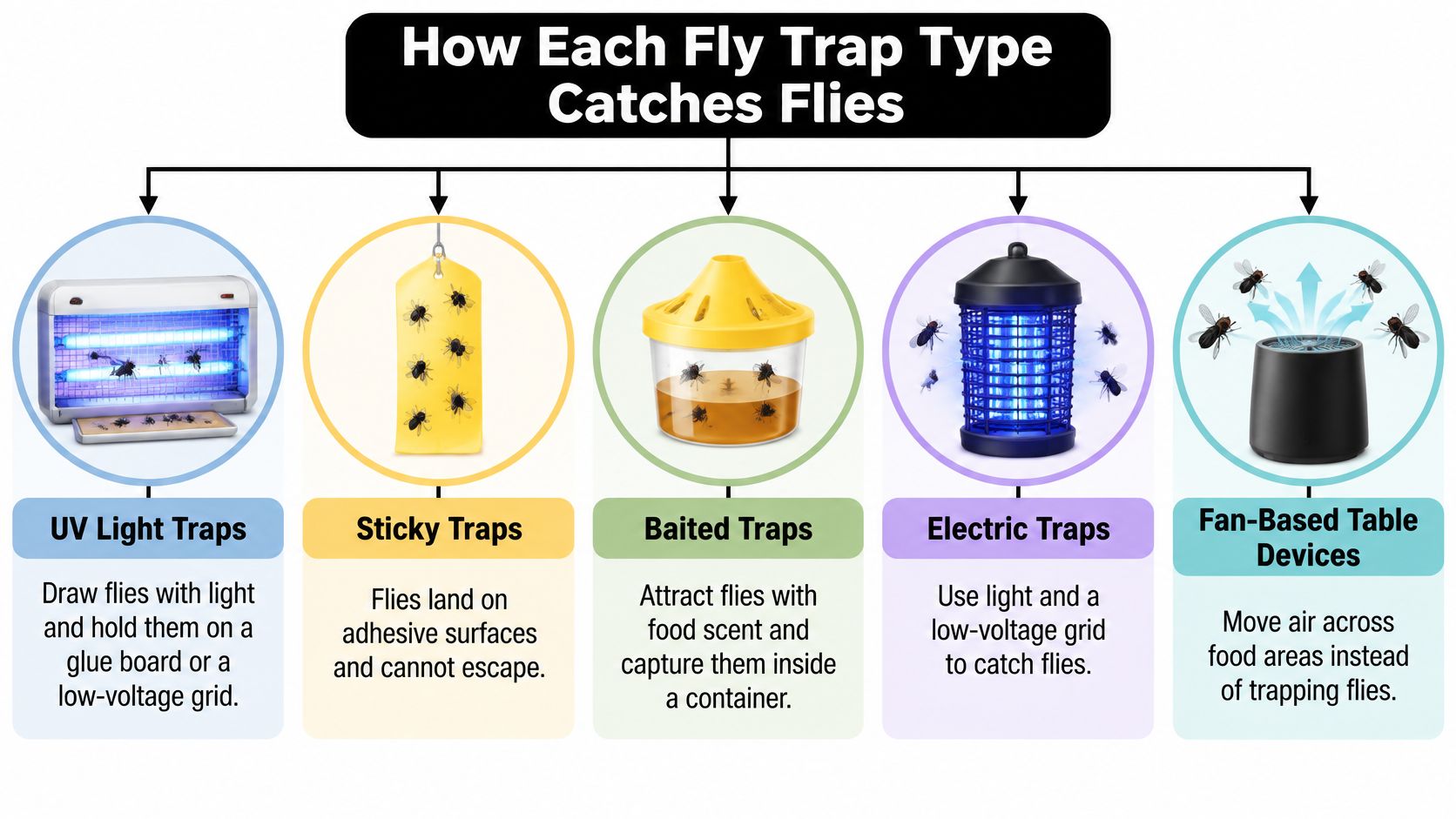
UV light traps draw flies toward a light source, then retain them on a glue board or kill them on an electric grid. Their performance depends on the fly species, the light that reaches the room, and the capture mechanism, not the wattage printed on the box.
A controlled UV-trap trial found that commercial devices captured 38% and 76% of released house flies after four hours, compared with 3% and 18% of stable flies over the same interval. That difference makes species identification more useful than choosing the brightest-looking fixture.
The mechanisms below require different placement and servicing decisions.
Compare the capture mechanism
Fly trap types compared by mechanism, strengths and limits
| Trap type | How it catches | Strengths | Limits |
|---|---|---|---|
| UV light trap with glue board | Light draws flies onto an adhesive board | Useful against house flies; an open front lets more UV reach the room | Board needs replacing; light visible outside can attract flies toward entrances |
| UV light trap with electric grid | Light draws flies onto a low-voltage grid | Kills flying insects without adhesive | Insects or fragments require containment; keep away from prep surfaces |
| Baited jug trap | Odor attractant lures flies into the jug | Strong early catches in suitable conditions | Catch falls as bait deteriorates |
| Sheltered bait strip | Bait under cover draws flies to the strip | Strongest-catching bait format in the dairy field comparison | Needs bait refresh and placement away from seating |
| Sticky cylinder or hanging strip | Flies land on an adhesive surface; added attractant isn't essential | Simple and low-tech | Adhesive becomes covered; lower catches than sheltered bait in the dairy comparison |
| Pheromone monitor | A species-targeted lure draws flies to a capture surface | Useful for tracking target species and trends | Don't treat monitoring catches as proof of population reduction |
| Homemade PET bottle trap | Bait draws flies through an entry opening | Inexpensive to assemble | Weak comparative performance; visual design and bait pairing matter |
Baited traps rely on an attractive odor and a structure that retains approaching flies. Sheltered bait strips expose bait differently from jugs, so the container and lure should be evaluated as a system rather than interchangeable parts.
Sticky traps retain flies when they land. Pheromone monitors add a targeted lure, while electric-grid devices introduce a separate containment problem after the insect reaches the grid.
Don't confuse attraction with suitability
Open-front UV designs can improve light exposure, but visibility isn't the only purchasing criterion. Our guide to choosing a UV light trap for flies helps frame the choice between light delivery, adhesive capture, and placement.
Homemade bottle traps illustrate the same principle: a cheap container isn't automatically an effective trap, and a strong lure can disappoint in an unsuitable body. Match the mechanism to the species and setting before comparing catch totals.
Measured Capture Results Across Trap Types
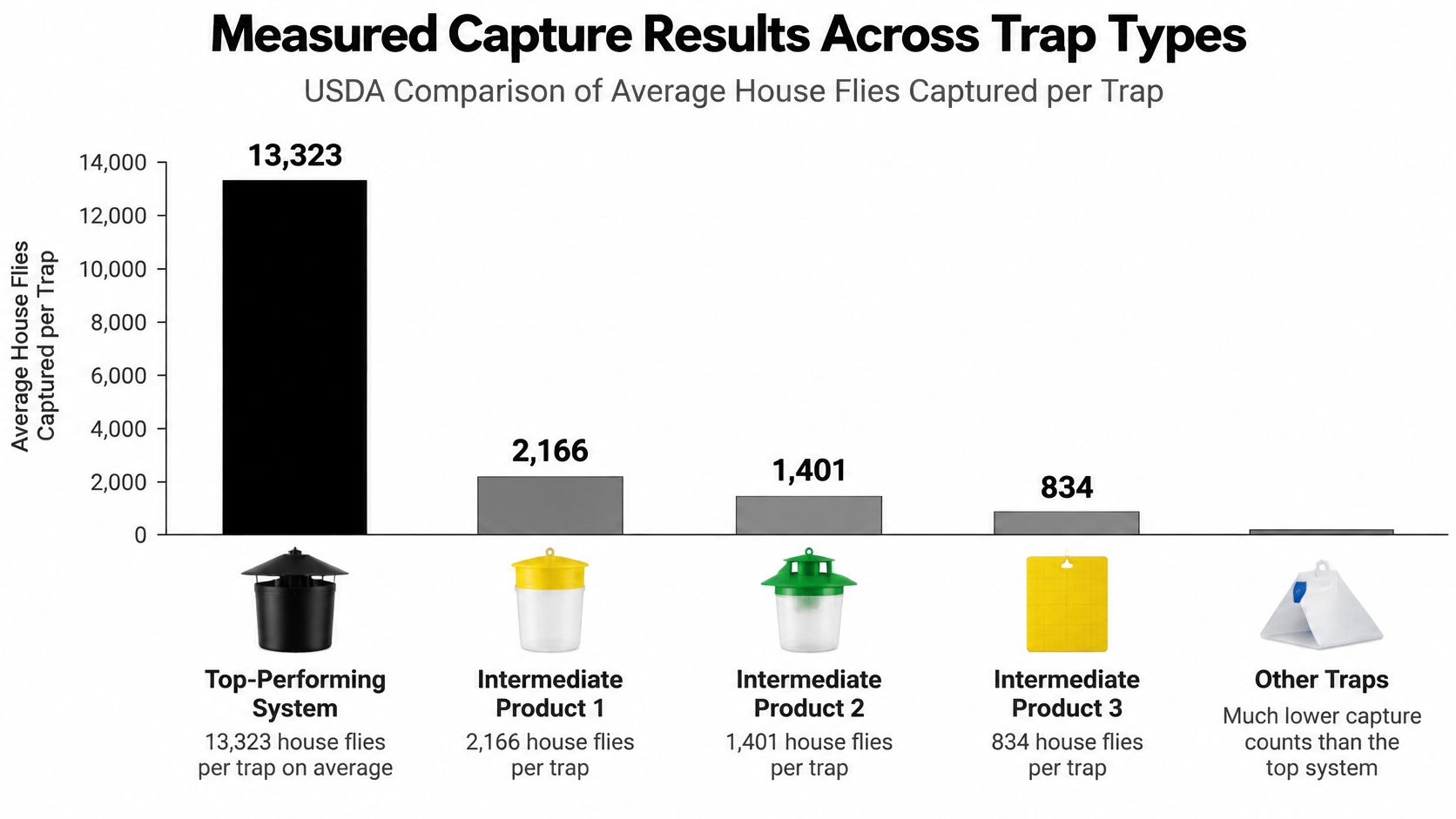
The strongest-performing system averaged 13,323 house flies per trap in a USDA Agricultural Research Service comparison of nine commercial baited traps on Florida dairy farms. Intermediate products captured 834 to 2,166 flies per trap, while the remaining tested products caught fewer than 300.
A spread that wide inside a single trial supports choosing a tested trap-and-attractant combination over an untested one. It still leaves open which device belongs beside a restaurant buffet, because a high field catch says nothing about where the trap should sit relative to food.
Keep the units separate
A separate USDA dairy-farm field comparison reported 2,920 to 5,462 house flies per baited jug per day during the first two days, 5,659 to 8,814 per sheltered bait strip per day, and 515 to 679 per sticky cylinder per day. Daily field catches answer a different question than the proportion of released flies captured in a controlled room.
Measured catches and capture rates from published trials
| Trap type | Species | Measured result | Time basis |
|---|---|---|---|
| Top-performing commercial bait system | House fly | 13,323 flies per trap | Average from nine-trap comparison |
| Intermediate commercial bait products | House fly | 834 to 2,166 flies per trap | Same nine-trap comparison |
| Remaining tested products | House fly | Fewer than 300 flies per trap | Same nine-trap comparison |
| Baited jug trap | House fly | 2,920 to 5,462 flies per trap per day | First two days of field trial |
| Sheltered bait strip | House fly | 5,659 to 8,814 flies per trap per day | Field trial on dairy farms |
| Sticky cylinder | House fly | 515 to 679 flies per trap per day | Field trial on dairy farms |
| Commercial UV trap A | House fly | 38% of released flies | Four hours, controlled room |
| Commercial UV trap B | House fly | 76% of released flies | Four hours, controlled room |
| Commercial UV traps A and B | Stable fly | 3% and 18% of released flies | Four hours, controlled room |
The UV rows come from the controlled-room trial covered under trap mechanisms, so they sit outside any head-to-head ranking with outdoor bait devices. Comparisons only hold among devices tested together; dairy-farm totals and laboratory capture percentages cannot merge into a defensible universal ranking.
Treat bait and body as a matched system
In the nine-trap comparison, exchanging attractants between trap types sharply reduced captures relative to their intended pairings. The same trial found improved bottle-trap catches when tops were painted black, and greater attraction to molasses-based bait than to honey, maple syrup, or jaggery.
The dairy field comparison found that combining commercial attractants improved catches beyond the expected additive result. An interaction like that justifies following the manufacturer's pairing rather than mixing products at random or ignoring their directions.
A trap's catch belongs to the complete setup: species, location, trap body, attractant, and service interval. Remove those details and the number loses purchasing value.
Ask suppliers for results from a comparable environment and the exact lure used. For your own evaluation, record an initial 48-hour observation window as a practical test protocol, then continue through later service intervals. A strong opening catch followed by deteriorating bait reads differently than sustained capture, and the biggest number in this table is the wrong guide for a trap that has to sit near food.
Maintenance, Bait Life and Sanitation Costs
Traps remove adults; sanitation tackles the conditions that produce them. A device can keep filling while an operator leaves the breeding material untouched, making an impressive catch look more reassuring than it should.
A 2023 household investigation found insects in 150 of 200 randomly selected homes and reported that light traps accounted for 26.7% of collected house flies, compared with 25.9% for sticky oil papers. Those are shares of the collected flies in that investigation, not restaurant-wide control rates or proof that either method eliminated an infestation.
Budget for the service routine
Routine upkeep and hidden costs by trap type
| Trap type | Routine upkeep | Replacement or bait | Hidden cost |
|---|---|---|---|
| UV light trap with glue board | Check the board at least weekly in busy kitchens; inspect sooner under heavy fly pressure | Replace once covered or ineffective | Staff time and board stock |
| UV light trap with electric grid | Clean the grid and collection tray on a documented schedule | Use the model's specified grid service or replacement instructions; no universal lifespan | Safe cleaning access near food |
| Baited jug or bait strip | Inspect catch and bait every few days | Refresh on a defined schedule and when bait deteriorates | Bait purchases and recurring service |
| Sticky cylinder or hanging strip | Inspect for dust and covered adhesive | Replace when covered or no longer effective | Frequent replacement in high-fly areas |
| Pheromone monitor | Compare lure age with its labeled service period | Replace the lure on schedule | Inspection labor without demonstrated population control |
These are practical starting routines, not universal manufacturer intervals. Shorten checks when boards fill quickly, bait dries out, or staff notice renewed fly activity.
A restaurant should assign trap servicing to a named role rather than assume the closing team will notice every device. Keep replacement boards and bait in stock, and record when staff change them so the next person doesn't judge performance using an exhausted lure.
Calculate the monthly operating cost
Count service visits, bait refills, replacement boards, and discarded adhesive traps. Add the staff time spent accessing devices, cleaning collection areas, disposing of catches, and recording results.
Our guide to operating a fly trap with bait can help buyers separate the initial device purchase from the recurring work. A low purchase price doesn't establish a low operating cost if staff must repeatedly empty, wash, and refill it.
Before adding another trap, inspect bin lids, bag leaks, food residue beneath equipment, and the route waste takes through the building. Correcting a missed cleaning task may be more useful than increasing capture capacity around the same unresolved source.
Table Fans as a Trap-Free Option for Dining Areas
A table fan deters flies rather than catching them. That trade-off can suit dining areas, where the immediate objective is preventing contact with food, not collecting insects beside guests.
A tabletop device belongs in the food-protection plan, not in the trap-count ranking. Its useful outcome is fewer fly contacts during service, which requires a different check from counting dead insects.
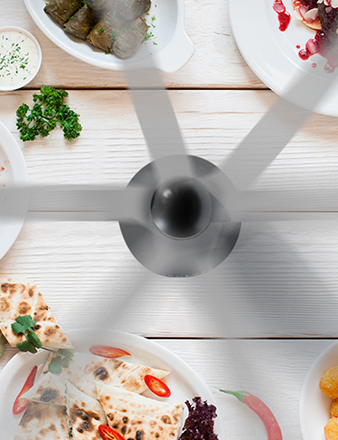
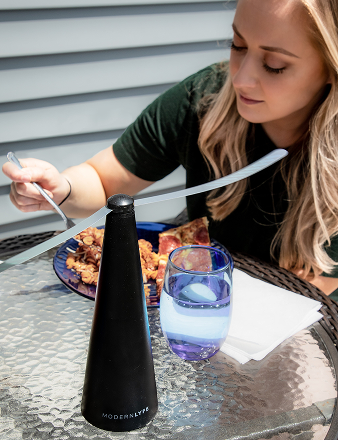
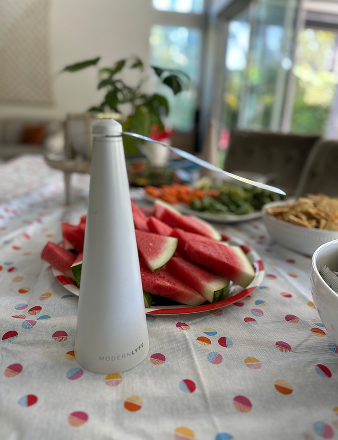
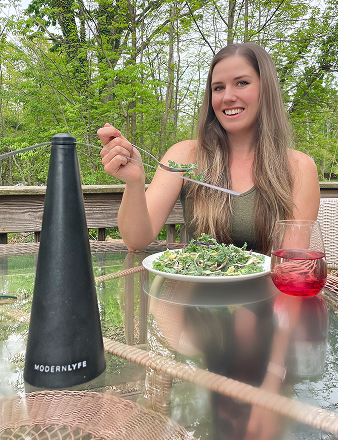
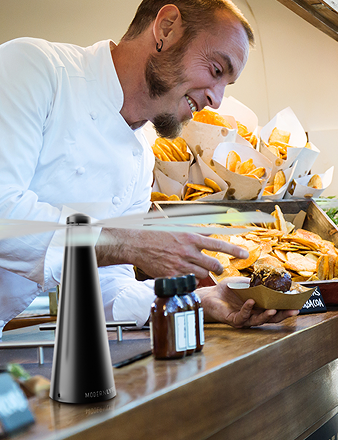
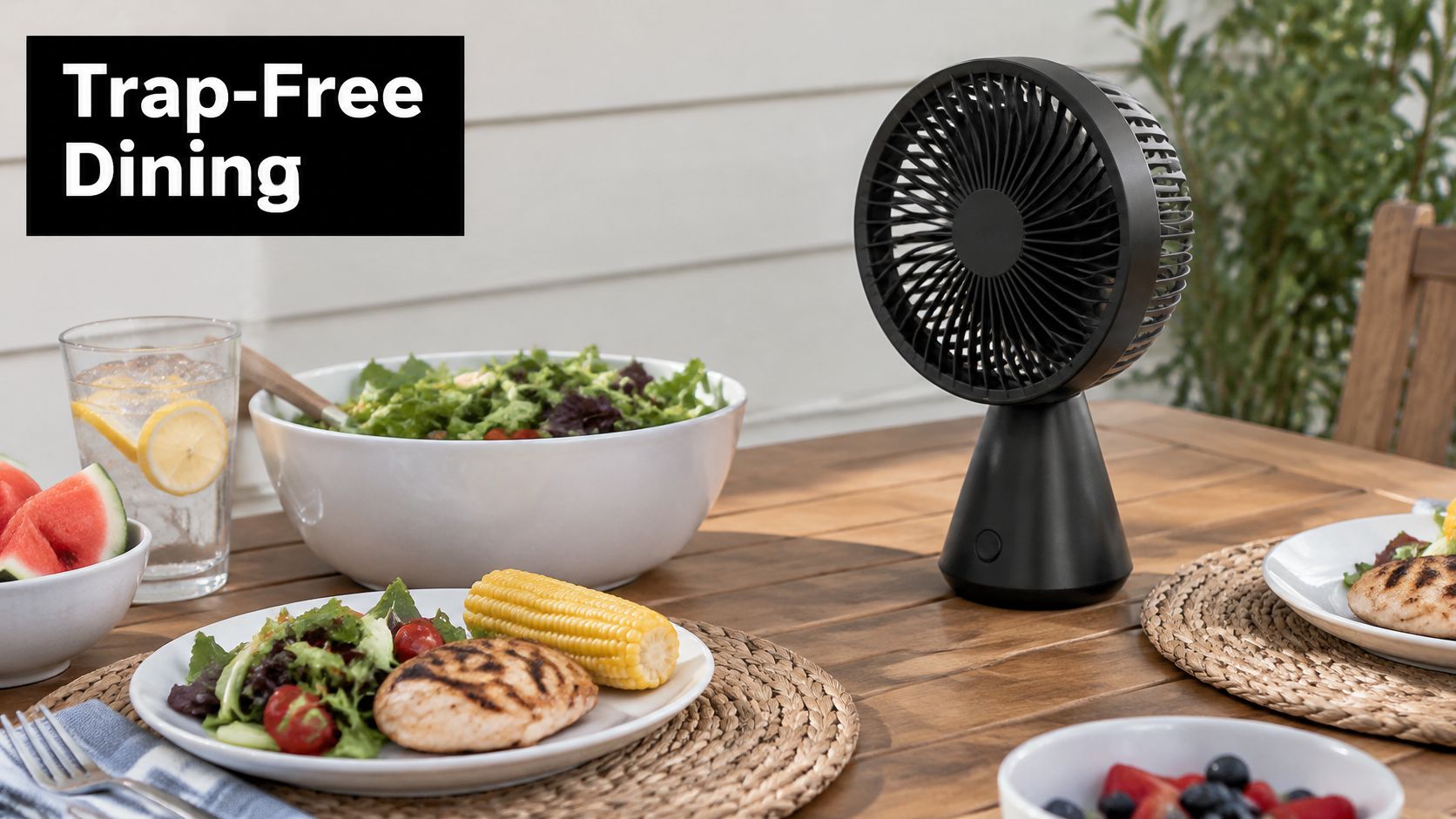
The dining setup below illustrates the intended use.
What our fan offers
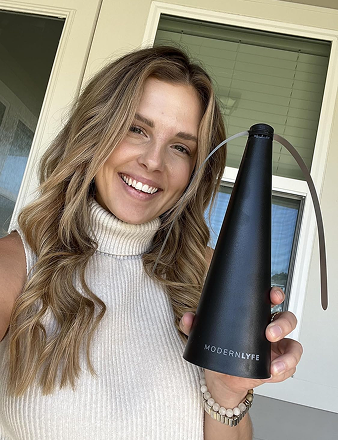
MODERN LYFE's Fly Fan for Tables is listed as a rechargeable fan for indoor and outdoor use that keeps flies and pests away from food. We describe it as an odor-free alternative to bug repellents, with an automatic safety stop and operation lasting over eight hours per charge.
Our listed power options are the included USB cable or two AA batteries, which aren't included. These are product specifications, not independent trial results, and they shouldn't be read as a guarantee of identical protection in every breeze or table arrangement.
The fan doesn't catch or kill flies, and it doesn't remove breeding sources. For a closer look at that distinction, our guide to whether fly fans work addresses their role around food.
Test the food zone during service
Place the device where its operating area covers the exposed dishes without blowing loose debris toward plates. At buffet lines, check the ends of the display as well as the center; at food trucks, check the customer handoff area rather than only the preparation counter.
For outdoor receptions and barbecues, reassess placement when staff move platters or guests rearrange tables. Don't assume a position that worked before service still protects the food once the layout changes.
The demonstration shows the tabletop format in use.
Service check: Compare fly contact with food during comparable periods with and without the fan. Keep the dishes, location, and observation method as consistent as practical.
Record landings and food contact, not just whether flies remain visible elsewhere. If flies still reach exposed dishes, reposition the fan, improve covers, or change the service layout rather than assuming the device has solved the problem.
Food-Safety Placement and Buying Checklist
The highest-catch trap can still be the wrong choice near food. A device that attracts flies toward service or releases insect remains over clean equipment creates a problem that its catch count won't reveal.
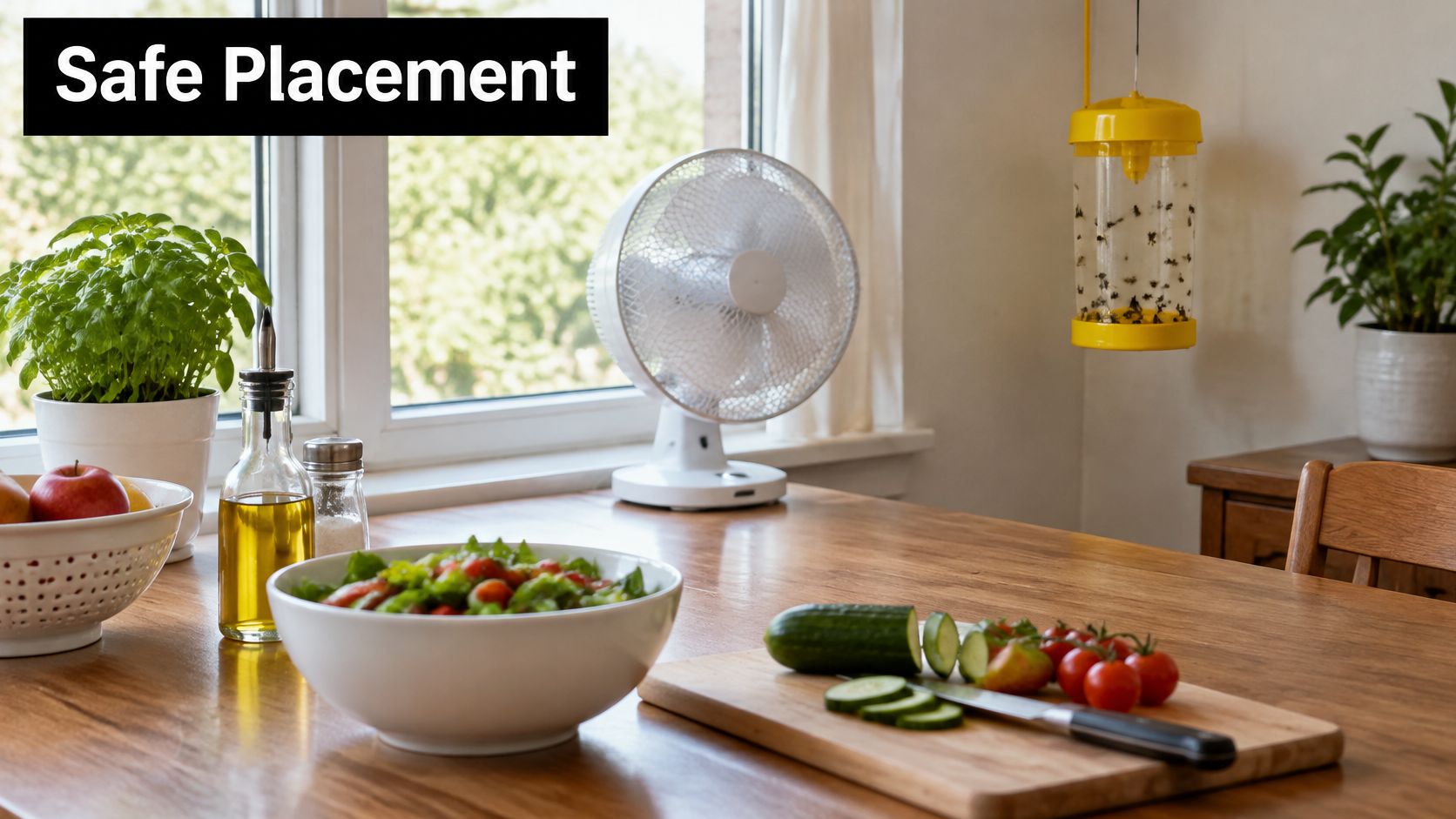
Bromley public-health guidance warns that UV insectocutors visible through windows or doors can attract flies from outside, and that dead insects may fall from collection trays onto preparation surfaces. Position a device to intercept flies inside the premises without making it an exterior beacon or placing its collection area above food.
The placement below illustrates separation from preparation work, not a universal installation height or distance.
Prevent contact and contain the remains
Flies aren't merely untidy visitors. Illinois Department of Public Health guidance reproduced in an FDA-hosted document explains that house flies regurgitate stomach contents onto food to liquefy it and may defecate on food and surfaces.
A peer-reviewed quantitative analysis hosted by the FDA identifies bacterial concentration, contact duration, and the food's attractiveness as factors affecting contamination. That supports reducing both access to food and the time flies spend contacting it, rather than treating every landing as an identical exposure.
The FDA Food Code requires devices that electrocute or stun flying insects to retain insects inside the device and prohibits locating them over food-preparation areas. Installation must prevent dead insects or fragments from reaching exposed food, clean equipment, utensils, linens, and unwrapped single-service or single-use articles.
Choose by objective, not lure sophistication
For monitoring, prioritize repeatable placement and an interpretable catch. A field investigation at a waste-processing facility found that sticky traps accounted for 49% of captured flies, while pheromone traps accounted for 4%, showing why a specialized lure shouldn't automatically outrank a simple adhesive device.
Those shares don't prove that pheromone monitors are useless. They show that a targeted lure isn't a substitute for checking whether it captures the flies present at your site.
For reducing adults near service, choose a contained trap outside the exposed-food zone. Where the immediate need is tabletop deterrence, evaluate a fan by food-contact observations instead of trap totals.
For budget comparison, our Fly Fan for Tables has a listed sale price of $99.99 USD and regular price of $139.99 USD. Prices can change without notice; compare the intended setup and power arrangements as well as the purchase price.
For locating a breeding source, inspect the environment before buying more equipment. Follow waste movement, examine drains and organic residue, look for standing water, and check entry points; don't select locations solely because a trap is conspicuous or convenient.
Canes Cleaners' top-to-bottom kitchen cleaning steps offer a useful way to organize that inspection around actual cleaning work. Assign responsibility for moving accessible equipment and checking neglected edges rather than recording only that the visible floor was mopped.
Ask these questions before installation
- Which fly species are present? Keep photographs or representative catches for identification. Don't assume a house-fly result applies to small flies associated with drains or produce.
- How far is the device from food? Map the actual preparation and service footprint, including temporary buffet extensions. There isn't a universal safe distance established by these trials.
- How does it contain dead insects? Inspect covers, trays, adhesive-board access, and the route remains could take toward food or clean supplies.
- How will staff clean it? Make sure they can isolate and service the device without reaching over preparation work or carrying an open collection tray through service.
Log catches during an initial 48-hour operational check, then continue across later servicing periods. Record food-contact observations separately, because a rising trap count alone can't tell you whether guests' plates are better protected.
Check suitability against local requirements, manufacturer instructions, and the operation's hazard-control plan. A product described as food-safe doesn't establish that every installation is compliant.
MODERN LYFE offers indoor and outdoor fly fans for tables, giving restaurants, caterers, and home hosts a trap-free option for protecting the dining zone. Visit MODERN LYFE to compare tabletop options, then test your chosen setup during service alongside a documented sanitation routine.