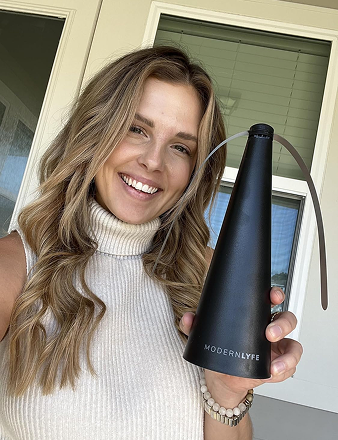
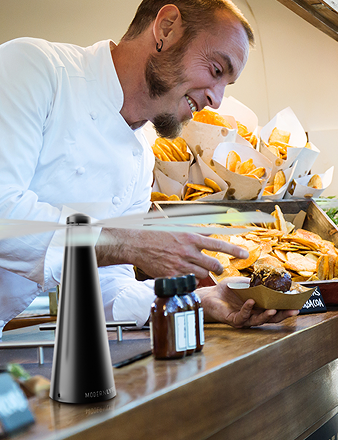
A reception can be perfectly timed, beautifully plated, and fully staffed, then one fly starts circling the buffet and suddenly that’s what guests remember. The same thing happens on restaurant patios. Service is smooth until a few flies settle near drinks, bread baskets, or garnish stations, and the room shifts from polished to careless in seconds.
That’s why so many operators look at a uv light trap for flies first. It’s familiar, food-safe in the right setup, and easy to understand. Plug it in, let the light attract insects, and reduce pressure over time.
That part is true. The hard part is knowing where a UV trap helps, where it falls short, and what to use when the setting is more dynamic than a closed prep room. If you’re managing a patio, buffet line, tented wedding, food truck service, or open-air cocktail hour, the answer usually isn’t one device. It’s the right mix of devices placed in the right zones.
Setting the Scene for a Fly-Free Experience
You’ve probably seen the pattern. Lunch service starts clean. Doors open and close all afternoon. A busser props open the back entry for one delivery. By early evening, a few flies are working the dining room perimeter and one keeps drifting toward the dessert display.
At an event, it’s even less forgiving. A garden reception can look flawless at setup, then heat, sweet drinks, and exposed food bring flies into guest-facing space fast. Coordinators often reach for whatever sounds most proven, and UV traps usually top that list because they’ve been used in hospitality for years.
That makes sense. UV traps do solve a real problem. They attract flying insects without chemicals and they fit well in kitchens, prep corridors, service halls, and enclosed indoor rooms. But a trap that works in a controlled interior doesn’t automatically work beside a carving station on a patio or under a tent at sunset.
What operators actually need
The questions being asked aren’t theoretical; they’re practical.
- Will it protect guests right away: A trap can reduce flying insect pressure over time, but that doesn’t always stop flies from hovering over active food service first.
- Can it work outdoors: In open-air settings, sunlight and open space change the equation.
- Will it fit hygiene rules: In guest-facing and food-prep areas, capture method matters just as much as attraction.
- What will it cost to keep running: Consumables and maintenance add up when pressure is high.
If you need a broader playbook beyond traps alone, this practical guide on how to keep flies away from food is a useful companion. The short version is simple. Good fly control in hospitality is never just about buying a device. It’s about matching the tool to the service environment.
A fly problem isn’t one problem. The kitchen door, the host stand, the patio bar, and the buffet line all behave differently.
How UV Light Traps Attract and Capture Flies
A UV trap works because flies don’t see the room the way we do. They’re naturally drawn to UV-A light, especially in the 350-370 nanometer range, and research cited by Opti-Catch notes the attraction peak around that band because it mimics solar cues insects use for navigation and locating food (UV fly trap wavelength guidance from Opti-Catch).
Think of the light as a lighthouse. In a dim indoor environment, that wavelength stands out to a flying insect the way a bright beacon stands out to a ship. The trap isn’t “calling” flies with scent. It’s exploiting how they orient themselves in space.

Attraction is one step, capture is another
A common pitfall for buyers is carelessness. The light attracts. The trap mechanism captures.
The two main commercial formats are:
- Glue board units: These pull insects toward the UV source, then hold them on a replaceable adhesive surface. They’re quieter and more discreet, which is why they’re usually the better fit for dining rooms, bakeries, prep spaces, and other hygiene-sensitive settings.
- Electric grid units: These attract the insect in the same basic way, but kill it on contact with an electrified grid. They can be useful in rougher service zones, but they’re less suitable where food presentation and cleanliness are under close scrutiny.
Why wavelength matters more than marketing language
A lot of product pages use broad terms like “bug light” or “insect lamp.” That doesn’t tell you much. What matters is whether the lamp is emitting the UV range flies respond to.
For houseflies in food service settings, the verified material points to a particularly effective band around 330-350 nm as identified in FDA-related guidance, while broader attraction performance is cited in the 345-370 nm range in the same body of source material. In practical terms, you don’t need to memorize the science. You need to know that bulb type and output matter, and “a blue-looking light” isn’t the same as an effective commercial UV trap.
The trap type should match the room
Use this quick rule set:
- Front of house: Choose enclosed glue board designs.
- Back of house: Grid units may be acceptable where noise and visual impact matter less.
- Food displays: Favor discreet capture, not visible kill.
- Mixed-use venues: Standardize maintenance so staff can swap boards and clean housings consistently.
If you’re comparing options beyond UV units alone, this overview of different types of fly traps helps sort out what belongs in guest areas versus utility areas.
Practical rule: Don’t buy a trap based on the light. Buy it based on the room it will live in.
Evaluating the Real-World Effectiveness of UV Traps
A UV trap can be scientifically sound and still underperform in service. Most failures come down to environment, not the concept.
The first thing to check is the light competition around it. If the trap sits near bright decorative lighting, open windows, or sunlit glass, its signal gets weaker to the insect. A trap only works when it’s visually stronger than the background around it.

What improves performance indoors
Placement is part of it, but trap design also matters. According to Vectothor, high-cycle traps operating at 10,000 cycles per second outperform standard 50 cycles per second models because flies perceive the higher-cycle output as steadier light rather than disruptive flicker (high-cycle UV trap performance and intermittent operation details).
That matters in bright commercial interiors. In a hotel corridor, bar back station, or cafe with strong ambient lighting, a weak or flickering trap can get ignored.
Another useful detail from the same source is operation timing. Intermittent hourly cycling showed stronger results than always-off alternating setups and came in only 27% less than continuous dual illumination, while also cutting energy use by over 50%. That’s a real trade-off point for battery-dependent or energy-conscious setups.
A manager’s checklist for real conditions
When a UV trap underperforms, check these variables first:
- Competing light: Decorative LEDs, daylight, and bright windows can reduce attraction.
- Room type: Enclosed rooms behave very differently from patios and tented spaces.
- Trap technology: Higher-cycle units hold up better in bright interiors.
- Timing: Continuous operation isn’t always the smartest protocol.
- Expectation: UV traps reduce pressure. They don’t create instant room clearance.
If a trap is visible to guests but invisible to flies because the room is brighter than the unit, it’s in the wrong place.
Where many operators overestimate UV traps
The biggest misunderstanding is speed. A trap isn’t a shield over food. It’s a control point that gradually removes insects from the environment.
That distinction matters in event work. At a buffet line, guests don’t care that a trap in the service tent is catching flies eventually. They care whether flies are landing near the food now. UV can help reduce the overall population indoors, but in active service zones, especially open ones, it often needs backup from a deterrent that changes insect behavior before landing happens.
Strategic Placement and Maintenance for Commercial Use
Most UV trap problems are placement problems. Teams buy a decent unit, mount it where it looks convenient, and then judge the technology when the location was wrong from day one.
Verified guidance from Insect-Trap.net puts effective placement at 3-6 feet above the floor, which lines up with common fly flight paths. The same source also notes that competing light in the 400-500 nm visible range can reduce trap efficiency by up to 40% if it’s nearby (commercial placement guidance for UV-A traps).

Do this, not that
Here’s the short field guide I’d give a new event coordinator or restaurant manager.
- Mount traps where flies travel, not where staff want empty wall space. Corridor transitions, service hallways, and routes between entry points and prep areas are stronger than random corners.
- Keep them away from direct line-of-sight competition. If a trap faces a sunny glass door or bright decorative fixture, the room is winning.
- Use glue board units near food handling and guest zones. The cleaner visual profile matters.
- Don’t place them right beside an exterior door. You want interception inside the traffic path, not a beacon that competes with outdoor light at the threshold.
- Zone the property. Kitchen receiving, dish return, prep, bar support, dining room perimeter, and patio edge all need different tactics.
Placement by hospitality area
| Area | Better approach | Avoid |
|---|---|---|
| Kitchen prep | Wall-mounted glue board unit in the traffic path | Grid unit over exposed food work |
| Dining room perimeter | Discreet enclosed unit away from guest sightlines | Bright exposed trap near tables |
| Buffet support area | Trap behind service line, not in the guest focal line | Placement directly over food presentation |
| Patio threshold | Indoor interception near entry transition | Relying on one trap to control the whole patio |
| Food truck interior | Compact unit where airflow and entry path meet | Mounting next to competing task lights |
Maintenance is where cost shows up
A UV trap isn’t set-and-forget equipment. Adhesive boards fill up, lamps age, housings collect dust, and performance drops before a unit looks “broken.”
The recurring cost is real. A standard trap typically needs glue board replacement every 4-8 weeks at $15-25 per cycle, and in heavy infestations that replacement frequency can double, according to CureUV’s product data (industrial UV trap maintenance cost details). In plain terms, insect pressure drives your operating cost.
A workable maintenance rhythm
Use a simple routine that staff can follow.
- Check boards during regular sanitation walks. Don’t wait until they’re visibly overloaded.
- Clean housings and lamp covers. Dust cuts output and makes a good unit perform like a weak one.
- Log pressure by zone. If one location fills far faster than others, the room is telling you something about traffic or entry points.
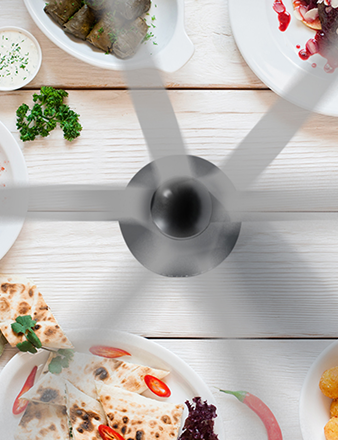
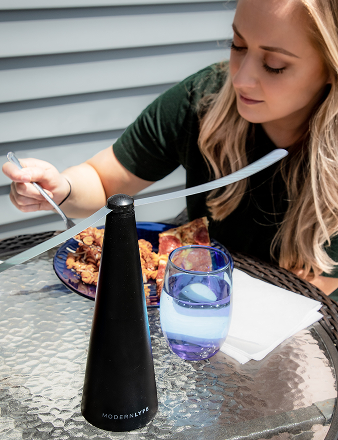
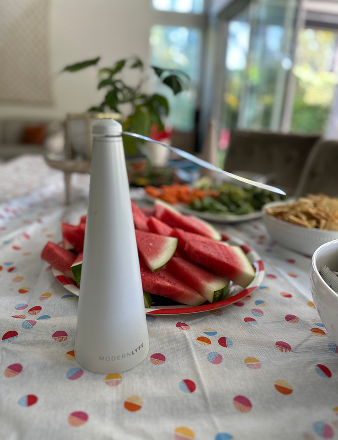
- Protect guest-facing food with a second method. For table service, buffets, and outdoor displays, a commercial fly fan can cover the immediate food zone while UV handles interception elsewhere.
Maintenance isn’t a side chore. On a UV trap, maintenance is part of performance.
UV Traps vs Other Fly Control Methods
No single method wins everywhere. The right question isn’t “Are UV traps good?” It’s “What problem am I solving, and in what kind of space?”
A prep kitchen, a loading corridor, a wedding buffet, and a rooftop bar all need different answers. That’s why side-by-side comparison matters more than brand claims.

Fly control methods at a glance
| Method | Best For | Key Limitation | Typical Setting |
|---|---|---|---|
| UV glue board trap | Indoor control in hygiene-sensitive areas | Less effective in open-air service and bright competing light | Kitchens, prep rooms, dining room perimeter |
| UV electric grid trap | Utility zones where fast kill matters more than presentation | Noise and debris make it a poor fit near exposed food | Back-of-house, waste areas, non-public work zones |
| Chemical sprays and baits | Targeted pest treatment away from food contact | Not ideal around active food service or guests | Exterior perimeter, non-service maintenance zones |
| Manual swatting or disposable traps | Small isolated issues | Inconsistent and reactive | Break rooms, temporary staff areas |
| Fly fans | Guest-facing food protection and landing deterrence | Doesn’t replace indoor interception or source control | Buffets, patios, outdoor receptions, table service stations |
Where UV traps do well
UV traps are strong when the environment is controlled. Enclosed interiors give the light a chance to stand out. Glue board models are especially useful where operators need discreet capture, clean monitoring, and non-chemical control.
They also help as part of a zone strategy. Put them where insects move through the building, not where guests are already eating, and they can lower pressure before the problem reaches the table.
Where they struggle
Outdoor and semi-outdoor service is the obvious weak spot. Product descriptions often blur this by claiming “indoor/outdoor,” but sunlight interference and lack of containment make open-air performance much less reliable in practice, especially in event settings and patios.
There’s also a service-timing issue. UV traps attract and capture. They do not physically stop a fly from approaching a plated appetizer before the trap has done its job.
Why hybrid control makes more sense in hospitality
Here, a combined setup earns its keep.
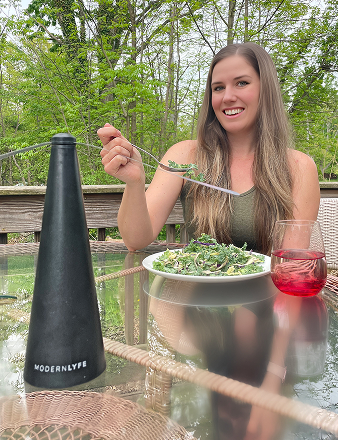
Use UV traps for what they do best. Indoor interception, background population reduction, and controlled-zone capture. Then use a mechanical deterrent where guests and food are exposed in real time. A battery-operated table or buffet fan changes the immediate landing environment around food, which is a different job from attracting insects across a room.
That’s why the hybrid approach is practical, not trendy. One tool lowers insect pressure in the building. The other protects the serving surface right now. For operators comparing options, Modern Lyfe is one example of a fly fan built for table and buffet use in hospitality settings, where quiet operation and flexible placement matter.
Good pest control separates the room into jobs. Intercept in one zone. Deter in another.
A Buyer's Checklist for Hospitality Professionals
If you’re choosing a uv light trap for flies, don’t start with wattage or product photos. Start with the room, the service style, and the guest exposure.
Product listings often imply outdoor versatility, but verified guidance warns that UV trap performance drops sharply outdoors because sunlight interferes with attraction and open space removes containment (outdoor limitations of UV trap use). That’s the question many buyers should ask first, not last.
Ask these questions before you buy
- Is this area enclosed or open-air? If it’s a patio, barbecue, tented event, or food truck service window, a UV trap may help elsewhere but shouldn’t be your only line of defense.
- Where are guests seeing the problem? If flies are around plated food or buffet service, you need a deterrent at the point of service, not only an attract-and-capture device in the background.
- Is the primary need hygiene-sensitive capture or utility-zone knockdown? Glue boards usually fit food-facing environments better than grid units.
- What light is competing with the trap? Decorative fixtures, daylight, and open doors can weaken performance.
- Who will maintain it every week? If no one owns board changes, cleaning, and routine checks, the trap will lose value.
- Will recurring consumables make sense at your pressure level? Traps with replaceable boards are predictable, but the cost rises with insect activity.
- Are you solving the source, the pathway, or the landing zone? The best setups usually handle all three.
A smart hospitality setup usually looks like this
For many operators, the practical answer is layered control.
- Inside the building: UV glue board traps in prep-adjacent or transition areas.
- At openings: Physical barriers and disciplined door management.
- At guest-facing food stations: Mechanical deterrents that stop landing behavior in real time.
If you’re reviewing physical exclusion as part of that plan, this guide for restaurant owners on fly screens is worth reading because it addresses one of the most overlooked parts of control, stopping insects before they enter the workflow at all.
The buyers who get the best result usually don’t ask, “Which trap is best?” They ask, “Which tool belongs in each zone of my operation?”
If you’re building a layered setup for patios, buffets, dining rooms, or event service, MODERN LYFE offers fly-control solutions designed for hospitality use, along with practical educational content to help you match the right tool to the right service environment.