Most buffet advice starts with linens, florals, and clever food displays. That's the wrong starting point. A buffet succeeds or fails on temperature control, contamination protection, serving speed, pest management, and guest movement. Decorative details matter, but they should sit on top of a reliable operating system, not substitute for one.
The right buffet table accessories keep food protected, hold dishes at safe temperatures, make utensils easy to reach, and prevent guests from crowding one another. They also help staff clean, replenish, and close down the station without turning service into a scramble. Treat the buffet as a working service line first, then make it beautiful.
The Hidden Infrastructure of Buffet Service
Many planners spend hours choosing a menu and only minutes deciding how that menu will be served. They add chafing dishes when the food arrives, place serving spoons wherever space remains, and install a sneeze guard because the venue requires one. That approach creates predictable problems: guests wait behind one slow dish, staff reach across hot pans, utensils disappear into food, and temperature checks become difficult.
Buffet table accessories are operational equipment. Chafing dishes protect hot food and support holding control. Covers reduce exposure. Risers improve visibility and free usable table space. Utensil rests reduce contact between handles and food-contact surfaces. Proper labels reduce questions that interrupt the line. Each item either removes friction or creates it.
Practical rule: If an accessory doesn't improve hygiene, access, temperature control, replenishment, or guest flow, it belongs in the styling budget, not the service plan.
This distinction doesn't mean the buffet should look clinical. A clean linen foundation, coordinated trays, restrained florals, and carefully chosen height can make a station feel intentional. But never allow an arrangement to block a pan, narrow the serving path, or place foliage where it can contact food. Hotels that want a stronger visual identity can separate floral design from the food zone, using specialists in floral installations for hotels to frame the setting without compromising access or sanitation.
What breaks during live service
A buffet line exposes weak planning quickly. A single oversized centerpiece can force guests to reach around it. A lid without a safe resting point can land on a tablecloth or serving utensil. A shallow warming tray can lose heat each time staff open it. A loose napkin stack can scatter across an outdoor table as soon as the wind changes.
The solution is to specify accessories by task, not by appearance. For every dish, decide how it will be protected, held, served, replenished, labeled, and cleaned. That simple inventory exposes gaps before guests arrive.
Buy for the service window
Quality matters most where staff and guests interact repeatedly. Choose smooth, non-porous surfaces that can be cleaned quickly, stable risers that won't shift, transparent guards that preserve visibility, and thermal equipment with controls staff can understand at a glance. A polished look is valuable, but reliable repetition is the true measure of a buffet accessory.
The Evolution of Self-Service Dining Equipment
The modern buffet didn't begin as a complete catering system. Its roots reach back to the Swedish brännvinsbord, a mid-16th-century side table used for drinks and small dishes. The format developed further in the early 18th century and took a more recognizable modern form around the beginning of the 19th century, according to FoodUnfolded's history of the buffet.
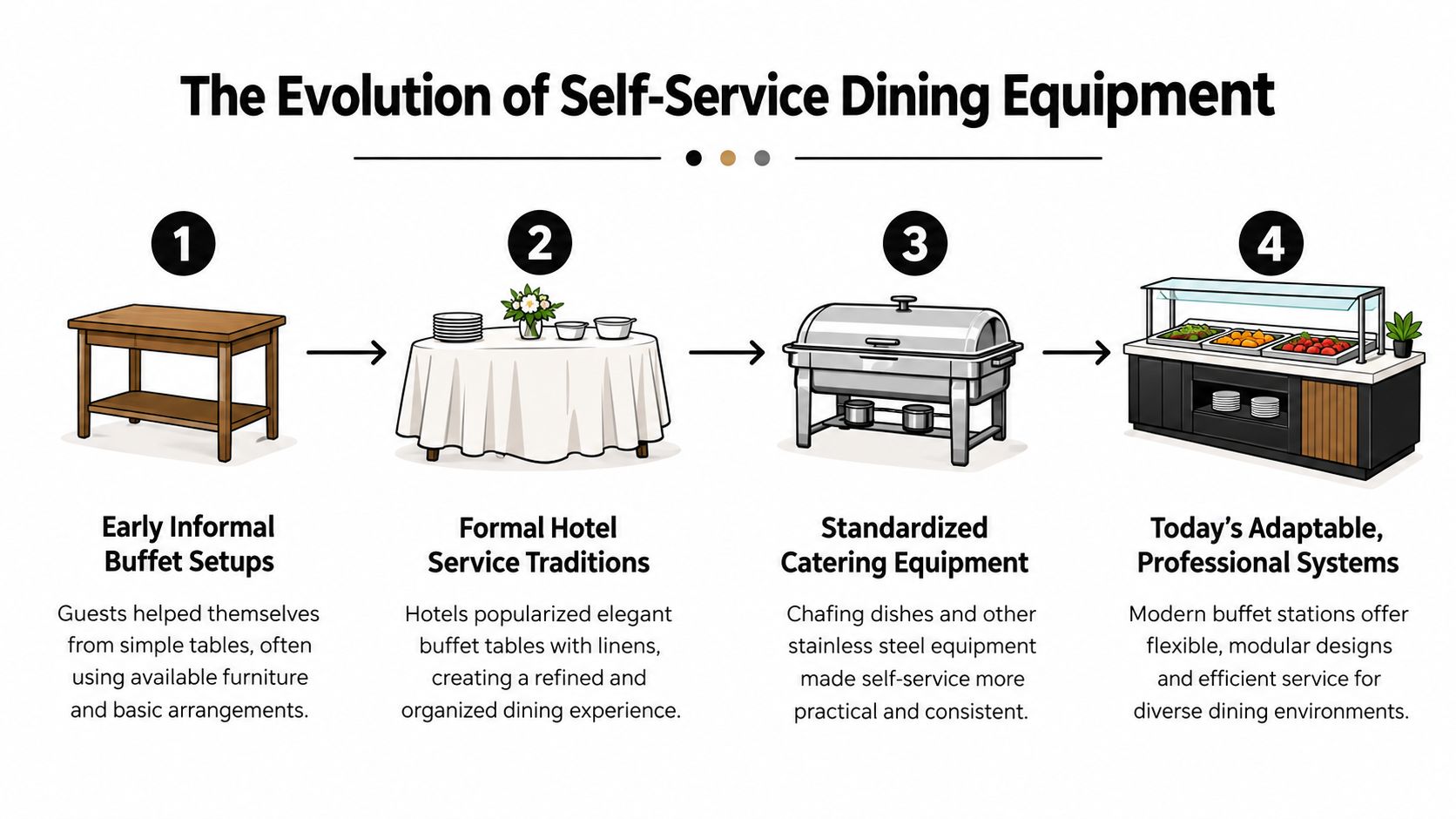
At first, the side table was a practical staging point. As hospitality became more formal, the table had to support more than display. It needed to hold dishes in sequence, make food accessible, and give staff a place to present a larger range of items without constant table movement.
The expansion of railroads across Europe helped smörgåsbord-style dining travel beyond local traditions. As hotels, stations, and large gatherings adopted self-service formats, the equipment around the table became more standardized. Buffet tables, chafing dishes, carving blocks, cutting boards, baskets, cake stands, floral accessories, and food warmers formed a recognizable support system.
Why standardization mattered
A carving block wasn't added just to make a roast look impressive. It gave staff a stable preparation surface and created a defined serving point. A cake stand lifted desserts into view. A warmer reduced the need to carry hot dishes back and forth. A basket contained bread or packaged items while preserving a deliberate presentation.
This is the important historical lesson for buyers today: accessories developed because the service format demanded them. Presentation and logistics grew together. A successful station had to display food attractively, protect it, and let guests serve themselves without constant staff intervention.
The modern interpretation
Today's modular buffet borrows that same logic while adding flexibility. A caterer may use the same induction-compatible warmer, transparent cover, stackable riser, and tray system at a wedding, hotel breakfast, corporate lunch, or outdoor reception. The visual theme changes, but the operational needs remain familiar.
Buyers should therefore ask a historical question with a modern answer: what problem does this piece solve? If a riser improves visibility and creates room below, it earns its place. If a decorative object only occupies the serving surface, it needs a strong reason to stay.
Essential Hygiene and Temperature Control Gear
Decoration does not rescue a buffet that loses temperature or exposes food. Build hygiene and thermal controls into the station before service begins. The FDA buffet guidance sets hot food at 140°F or warmer, cold food at 40°F or colder, and requires perishable food left at room temperature beyond 2 hours to be discarded. Above 90°F, the limit becomes 1 hour.
Venue and jurisdiction rules may set a different hot-holding threshold. Buffet operations commonly use 135°F, or 57.2°C, as the minimum for potentially hazardous food. Commercial warming trays may advertise adjustable ranges around 86 to 190°F, or 30 to 85°C, as shown in commercial buffet server and warming tray listings. A dial range proves little. Test whether the unit recovers heat after lids open, guests serve repeatedly, or drafts reach the station.
Temperature thresholds at a glance
| Food Type | Target Temperature | Maximum Holding Time |
|---|---|---|
| Hot food | 140°F or warmer, or 60°C or above in Hong Kong guidance | More than 2 hours at room temperature requires disposal, reduced to 1 hour above 90°F, per FDA guidance cited above |
| Cold food | 40°F or colder | More than 2 hours at room temperature requires disposal, reduced to 1 hour above 90°F, per FDA guidance cited above |
| Cooling food | From 60°C to 20°C within 2 hours, then to 4°C within the next 4 hours | Process benchmark from Hong Kong Centre for Food Safety buffet guidance |
Choose thermal gear for recovery
Inspect warming equipment under working conditions, not on an empty counter. Load the pans, open and close the lids, and expose the station to normal ambient conditions. Staff should use calibrated thermometers and record readings under the venue's food-safety procedure.
Cold service needs insulated ice bowls or chilled inserts with enough capacity to resist warming. Covers reduce exposure, but they do not replace temperature checks. A stylish cover that traps warm air around cold food has failed its primary function.
Sneeze guards require a design compromise
Exposed food needs a physical barrier against contamination. San Diego County's buffet guideline emphasizes sanitary, easy-to-clean guard materials. The guard must protect the food while leaving the rear pan and serving utensils accessible to staff and guests.
The placement creates a service geometry problem. Position the barrier to intercept a typical breathing path, often around 4.5 to 5 feet above the floor, without forcing guests to lean or slowing replenishment. Excessive height and overhang obstruct access. Transparent, smooth, non-porous material preserves visibility and gives staff a surface they can clean quickly.
Keep this explanation of the food safety danger zone in staff training materials. Buy discreet guards, reliable thermal units, and practical monitoring tools for the way guests serve, not for a showroom photograph.
Designing for Outdoor and Open-Air Events
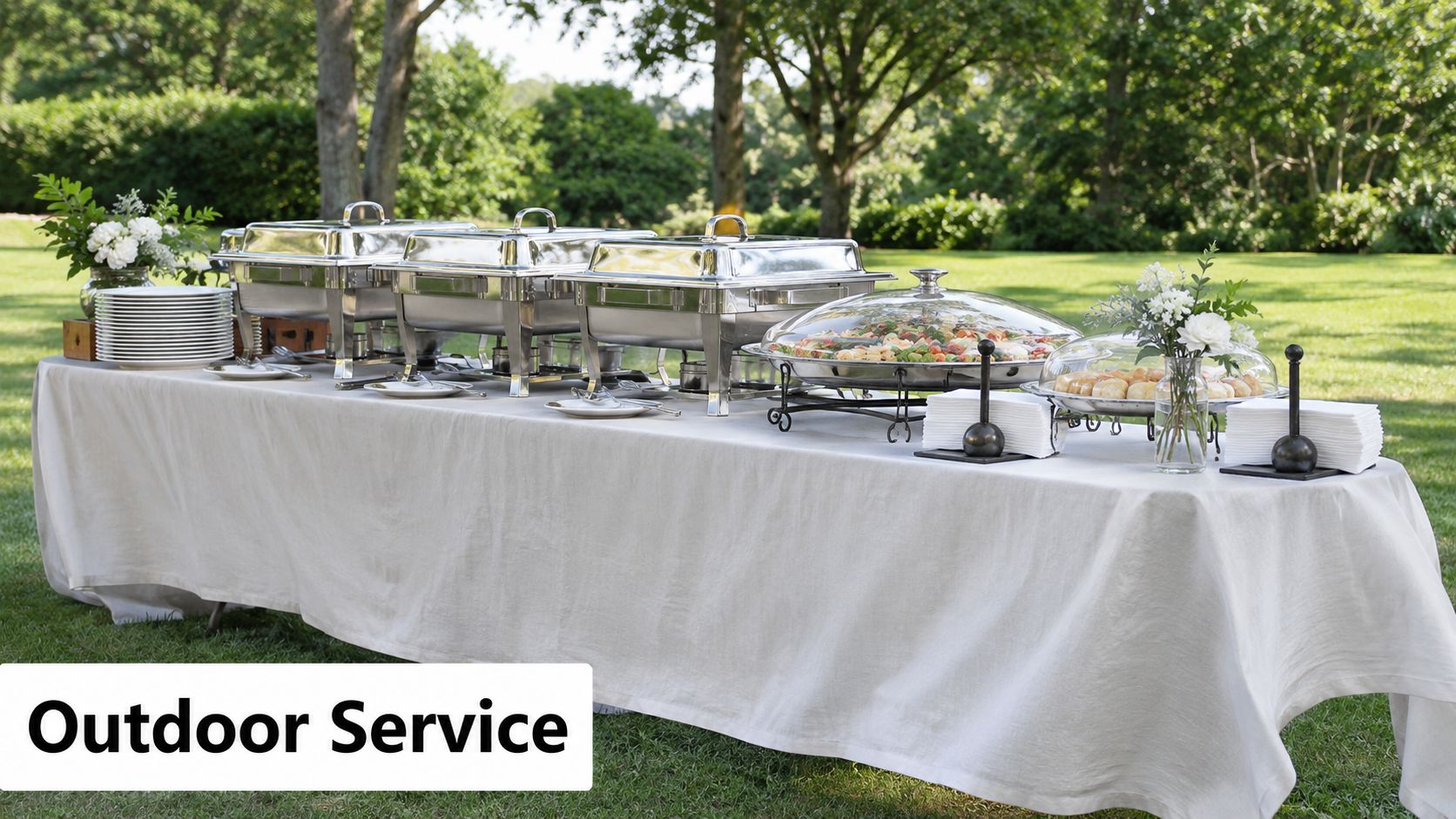
Outdoor buffets fail through small operational gaps. Wind shifts lightweight covers, heat reduces holding time, insects follow food aromas, and dust settles on exposed surfaces. Treat protection as part of the layout before the first tray reaches the table.
Build the station around protection
Use a stable table, weighted or secured serveware, fitted covers, and lids that staff can remove and replace without setting them face-down on the table. Keep dishes covered until service begins, then cover them again immediately after the rush.
Purdue Extension on food safety for buffets and parties recommends separate serving utensils for each dish, protection from insects, sanitation of food-contact surfaces before and during service, and portable handwashing stations within 25 feet of food areas. Put those controls on the floor plan. Do not wait for a spill, missing utensil, or hygiene complaint to expose the gap.
Place the handwashing station where staff can reach it without crossing the guest queue. Supply surface sanitizer, but require proper handwashing rather than treating hand sanitizer as a substitute. Assign one team member to check covers, spills, utensils, and temperatures at regular intervals.
Control flies without damaging the setting
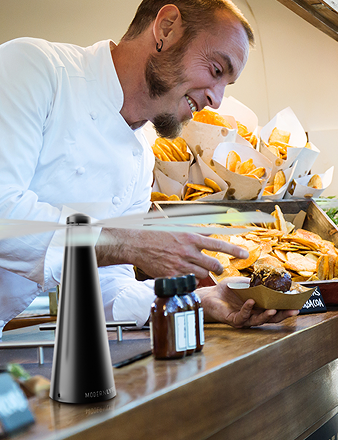
Fly control should be discreet and deliberate. A noisy unit beside the dessert tray distracts guests, while a visible device directly over food can weaken confidence in the service. Position insect-control equipment at the edge of the display, away from direct food contact, and keep the line clear of spills and residue.
Texas restaurant guidance recommends fly control lights and zappers and clean surfaces without spills, as described by the Texas Department of State Health Services fly-control guidance.pdf). Choose quiet, low-profile equipment for outdoor layouts where possible, then inspect the line frequently. No device protects uncovered food or compensates for sugary residue.
Use these outdoor buffet table ideas to plan shade, wind protection, covers, and guest access before the event setup begins.
Give every item a wind strategy
Choose heavier trays for sauces, salads, and cutlery. Secure menus and labels in broad-based holders, and keep napkins in covered containers instead of loose piles. Use clips or a fitted cover when the tablecloth can lift or drag against serving equipment.
Outdoor heat also requires a tighter replenishment schedule. Bring out smaller quantities and refill more often instead of placing the full supply on the table. That preserves quality, limits exposure, and lets staff remove a compromised dish quickly.
Modular Accessories for Modern Event Operations
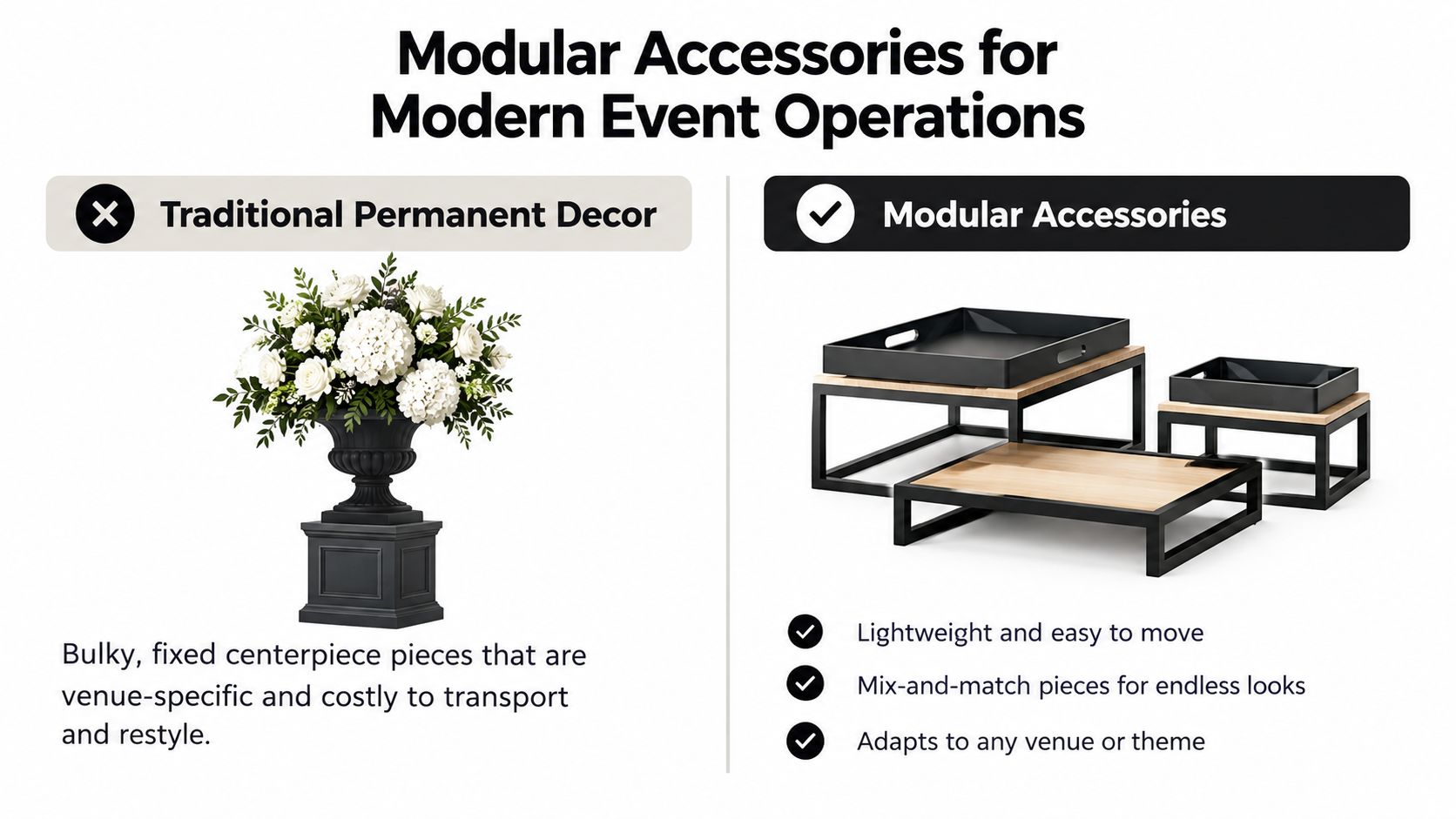
Permanent decor is attractive until a team has to transport it, store it, clean it, and adapt it to a different venue. Heavy centerpieces can dominate a table but provide little operational value. Modular accessories, by contrast, let one inventory support multiple layouts, guest counts, and themes.
Coverage of projected 2026 buffet styling trends points toward themed, nature-integrated, and lower-cost centerpieces, including paper-based honeycomb structures, as described in this buffet serving and styling overview. Treat that as a projection rather than a fixed rule. The useful idea is broader: buyers want flexible pieces that create atmosphere without adding transport and storage problems.
Compare the real operating costs
A fixed centerpiece may create a strong visual anchor, but it usually has one shape, one footprint, and one cleaning routine. A set of stackable risers, trays, baskets, and removable accents can be rearranged for a breakfast line, dessert display, cocktail station, or outdoor meal.
| Accessory approach | Setup behavior | Reuse potential | Operational trade-off |
|---|---|---|---|
| Permanent centerpiece | Fast to place when the venue suits it | Limited by size and theme | Can obstruct food access and consume table space |
| Stackable risers | Easy to configure around pans and platters | High across different layouts | Requires stability checks |
| Lightweight themed accents | Quick to replace or restyle | Useful across seasonal events | Must be kept away from food and secured outdoors |
| Modular thermal inserts | Adaptable to different dishes and stations | High when sizes are standardized | Staff need clear labeling and temperature procedures |
Spend first on invisible efficiency
A stackable riser that improves sightlines can reduce reaching and make replenishment easier. A nesting tray system can shrink storage needs and speed load-in. A removable sign holder can move from one menu station to another without tying the operation to one theme.
Use nature-based styling carefully. Greenery and floral elements can soften stainless steel, but keep them outside the food-contact zone and away from open pans. The strongest look often comes from repeating a small number of textures and colors rather than transporting a large decorative structure.
The accessory with the highest practical value may be the one guests barely notice because it keeps the line stable, clean, and easy to serve.
For restaurants and hotels, standardize the dimensions of trays, inserts, lids, and risers where possible. Standardization makes replacement easier and lets staff set up unfamiliar rooms without rebuilding the entire system from memory.
Styling and Placement Strategies for Guest Flow
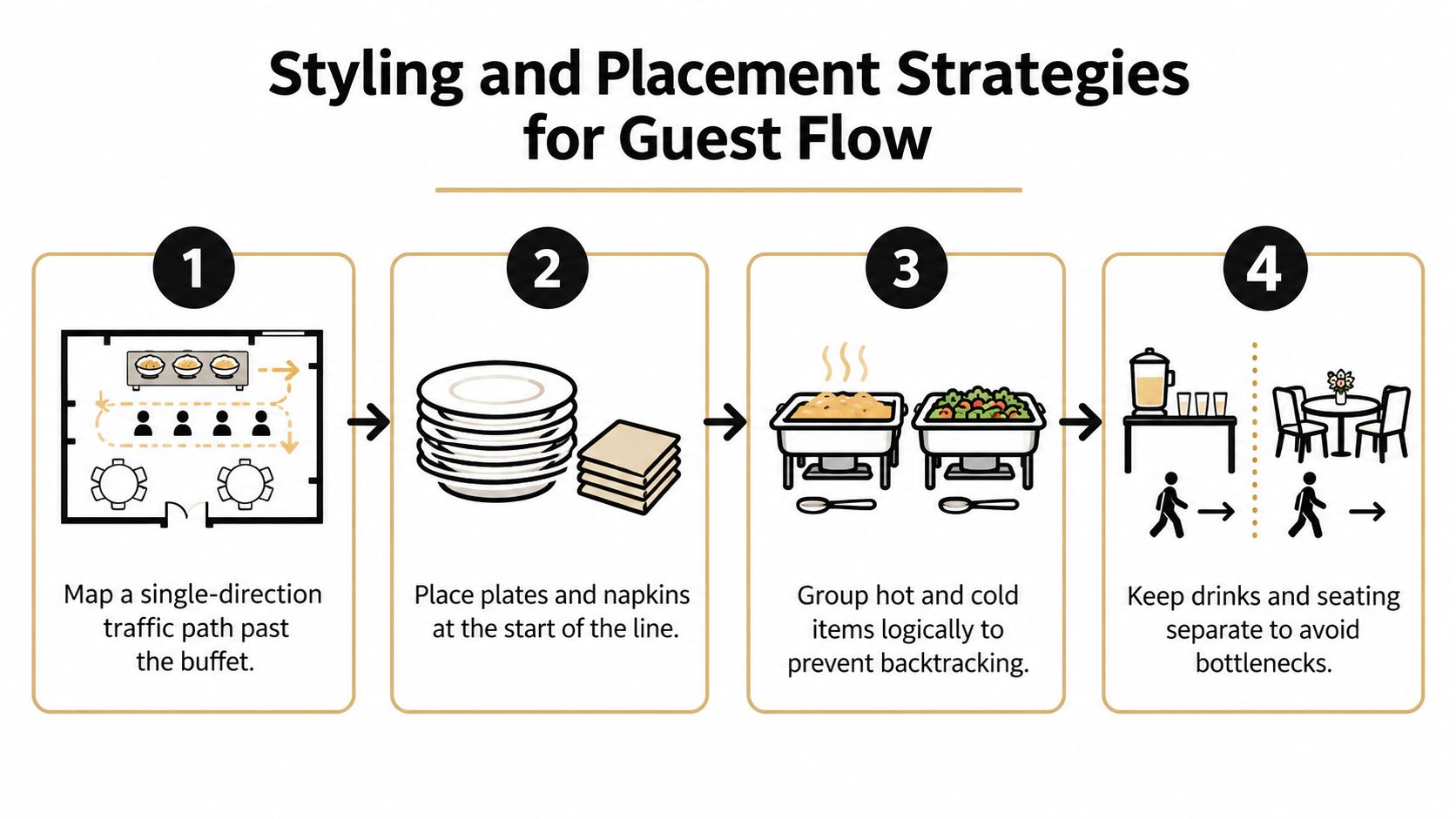
A buffet can be visually impressive and operationally poor. If guests must reverse direction, reach across one another, or stop at a narrow centerpiece, the display becomes a queue generator. Style the line so the eye moves forward and the guest moves with it.
Establish one clear direction
Place plates and napkins at the beginning. Put cutlery where guests can collect it without stopping the person behind them, or place it at the end if the venue's service style makes that easier. Keep drinks separate from the food line. A beverage station beside the buffet invites guests to stop in the worst possible location.
Group dishes according to how people build a plate. Salads and cold starters usually belong before hot mains, followed by sides, sauces, bread, and desserts in a separate area. Avoid forcing guests to backtrack for condiments or serving tools.
Use height to improve visibility, not decoration
Tiered risers help guests see dishes before they reach them. Put lower pans in front and taller items behind, but confirm that the rear pan and its utensil remain reachable through the sneeze guard. Never use height to create an unstable tower beside a hot dish.
A good arrangement also leaves staff a replenishment route. Keep frequently replenished pans near the edge that staff can access without crossing the guest path. Place reserve trays beneath or behind the station only when staff can retrieve them safely.
Protect the handles and the line
Every dish needs its own serving utensil. Provide utensil rests or a clean, designated landing surface so handles don't slide into food or rest on dirty cloth. Keep spoons, tongs, and ladles matched to the dish, especially where allergens or sauces are involved.
Leave enough space between hot vessels for lids, hands, and staff movement. Crowding several chafing dishes together may save table space, but it slows service and increases the chance of burns or spills. A polished line has visible breathing room.
Flow test: Walk the line carrying a plate. If you need to turn sideways, reach over another dish, or stop to ask where the next item is, change the layout before guests arrive.
Use labels with clear type and concise descriptions. Place them where guests can read them without leaning across food. Arrange centerpieces at the ends or in the gap between functional stations, never between a guest and a serving utensil.
This short buffet layout video can help teams visualize the relationship between placement and movement.
Building Your Complete Buffet Accessory Checklist
A buffet fails through missing infrastructure long before it fails through poor styling. Build the inventory around four operating questions: Will the food stay safe? Can guests serve themselves easily? Can staff replenish and clean it? Does the display suit the setting without blocking service? Use this checklist to prepare restaurant, catering, event, and home-host setups.
Thermal control
- Warming equipment: Choose chafing dishes, warming trays, or buffet servers with clear controls and capacity that matches your pan sizes.
- Cold-holding pieces: Select insulated bowls, chilled inserts, ice baths, or refrigerated equipment suited to the food and service environment.
- Lids and covers: Use covers staff can remove, store, and replace without touching food-contact surfaces.
- Thermometers and records: Keep calibrated thermometers available. Assign one person to take readings, record them, and act when temperatures fall outside the required range.
- Compatible pans: Standardize pan dimensions where possible. Matching pans make replacement and replenishment faster.
Hygiene and pest management
Food protection depends on small operational details. Make every tool, surface, and control device easy to identify and reset during service.
- Sneeze guards: Choose transparent, smooth, non-porous guards that protect exposed food without blocking access to rear pans or utensils.
- Serving utensils: Provide one utensil for each dish and keep replacements ready for tools that are dropped or contaminated.
- Utensil rests: Use washable rests or designated landing surfaces to keep handles off the table and out of food.
- Cleaning supplies: Stage food-safe sanitizer, clean cloths, disposable gloves where appropriate, and waste containers near the station.
- Insect protection: Plan discreet fly-control equipment for outdoor stations. Pair it with clean surfaces and fast spill removal.
- Handwashing access: For outdoor service, place a portable handwashing station within 25 feet of the food area, following Purdue Extension's buffet and party safety guidance.
Serving ergonomics
- Risers and stands: Use stable, washable risers to improve visibility and create accessible serving levels.
- Plate and napkin placement: Put plates at the start of the guest path. Position napkins where they do not interrupt serving.
- Labels: Use readable, wipe-clean holders that identify dishes without making guests reach across the line.
- Table spacing: Leave room for lids, utensils, hands, and staff replenishment. Dense layouts slow service and increase spills.
- Reserve stock: Keep replacement utensils, labels, napkins, and serving trays within staff reach, outside the guest path.
Styling and storage
- Linens: Choose fitted covers, runners, or skirts that support the theme and stay secure during service.
- Display pieces: Favor stackable trays, baskets, cake stands, and removable accents that can move between venues.
- Florals and greenery: Keep decorative elements away from food-contact areas and serving access.
- Lighting: Use stable lighting that creates no heat, glare, or trip hazard around the station.
- Transport containers: Store accessories in labeled bins so teams can load in, set up, and pack down without searching.
Use this catering equipment checklist to audit current stock, then run a complete dry setup. Staff should practice opening covers, replacing utensils, checking temperatures, replenishing pans, and clearing spills. If the line works only when one experienced person directs it, the equipment plan is incomplete.
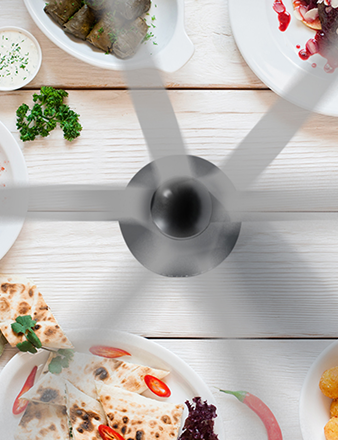
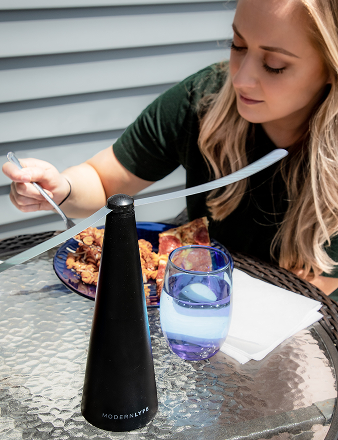
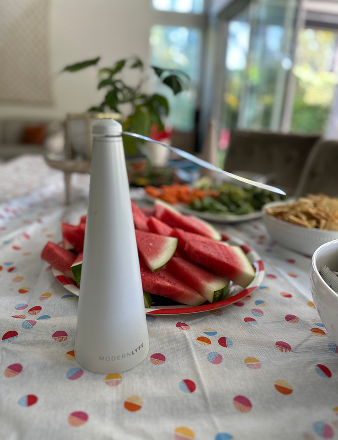
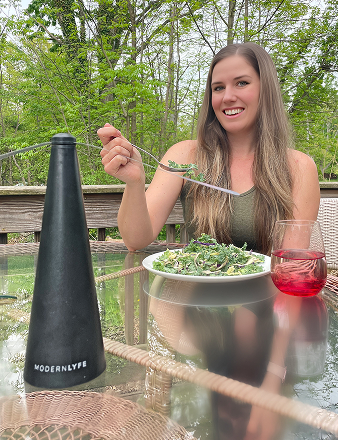
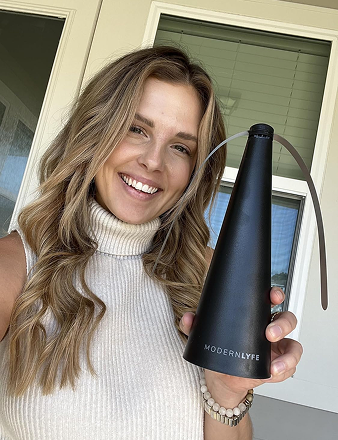
MODERN LYFE offers battery-operated fly fans for quiet, low-profile placement on buffet lines and dining tables. Review MODERN LYFE options for restaurant service, hotel events, catering, and outdoor gatherings, then select the fly-control setup that fits the table layout.