The food safety danger zone is 41°F to 135°F (5°C to 57°C), and inside that range bacteria can double in as little as 20 minutes. If you manage food for a restaurant, buffet, wedding, food truck, or backyard event, that range is where safe food starts turning into a liability.
This is often treated like a certification answer. That's the wrong mindset. Temperature control is one of the clearest lines between a smooth service and a sick customer, a complaint, or an inspector asking hard questions. And if you work outdoors, there's another problem standard guides often miss. Food can be at the right temperature and still become unsafe when flies, dust, and other insects land on it.
The High Stakes of Food Temperature Control
Food safety failures don't stay small. According to the 2026 World Health Organization update on food safety, 866 million people fall ill from contaminated food each year, and 1.52 million deaths occur annually. That's why the food safety danger zone matters. It isn't a technicality. It's one of the most basic control points in any operation that serves food to the public.
In practical terms, the danger zone is the temperature band where bacteria grow fast enough to turn routine mistakes into real risk. A tray left on a prep table, a buffet pan that isn't holding heat, a cooler lid opened too often during a summer event. These are the moments that cause trouble.
What managers need to understand
A lot of new managers focus on obvious failures like spoiled smell, bad color, or customer complaints. That's too late. Pathogens don't wait for food to look bad. The job is to control conditions before the food gives you any warning at all.
Practical rule: If your team is guessing about food temperature, they're already behind.
Operational discipline matters more than good intentions. You need cold food staying cold, hot food staying hot, and enough equipment capacity to support the menu you're serving. If you're staging outdoor service or transporting bulk product, your holding setup matters just as much as your recipe. For larger cold-holding jobs, a properly sized unit like a 100 qt cooler for catering and outdoor service can make the difference between stable holding and constant temperature drift.
Compliance is only the floor
Passing inspection matters. Protecting guests matters more. The best operators treat temperature control like line security. They build it into receiving, prep, cooking, cooling, transport, holding, and service. Once food starts bouncing in and out of the danger zone, recovery gets harder and the margin for error disappears.
Defining the Danger Zone and Why It Matters
The danger zone acts like a bacterial superhighway. In that range, common foodborne pathogens such as Salmonella, E. coli, and Listeria can multiply rapidly. The food may still look normal. That's what makes this dangerous in real kitchens.
To make the concept visual, use this as the basic map your staff should memorize.

What happens inside the range
The middle of the range is where food gets into trouble fastest. The danger zone overview compiled here is useful for training because it gives staff a plain-language reference point for why this range matters. Once people understand that bacteria don't grow in a neat, slow line, they stop treating time and temperature as flexible.
Two ideas matter more than anything else:
- Time adds up: Food doesn't get a fresh clock every time it moves. If it sits out during prep, transport, setup, and service, that exposure is cumulative.
- The middle range is brutal: In the optimal middle segment of the danger zone, 21°C to 47°C (70°F to 117°F), bacterial populations can double in as little as 20 minutes, reaching infectious thresholds within 2 hours, which is why reliable measurement is essential, as summarized in the danger zone reference).
That's the reason experienced kitchen managers don't say, “It was only out for a little while.” They ask how long it was out in total, what temperature it hit, and whether anyone measured it.
The time limits that actually matter
The most practical way to train a crew is simple. Keep food out of the danger zone whenever possible. If it enters that range, the clock starts.
The historical standard also explains why the modern definition is tighter than some older training materials. From 1962 to 1993, the lower limit was 45°F (7.2°C), but it was lowered to 41°F (5°C) in 1993 after research showed that some pathogens could multiply below 41°F if given enough time, according to The Danger Zone Reevaluated.
Food safety standards changed because the science changed. Old habits don't override current pathogen behavior.
The same source notes that ready-to-eat foods must not remain in the danger zone for more than 4 hours, and hot foods being cooled must drop from 135°F to 70°F within 2 hours, then to 41°F within the next 4 hours. Those aren't paperwork numbers. They reflect how fast growth can get away from you.
A quick visual explainer helps reinforce the point during training or pre-shift reviews.
What staff usually get wrong
New supervisors often confuse cooking with holding. Cooking can kill many pathogens when done correctly. Holding prevents growth after that point. Those are different jobs.
They also trust built-in unit displays too much. Displays can suggest the unit is fine while the food in the top pan, near the door, or at the buffet edge is drifting into the danger zone. If you don't probe the food, you don't know.
Mastering Measurement and Monitoring
A food safety plan falls apart fast when the thermometer drawer is a mess. You need working tools, a routine, and staff who know which tool answers which question.

Use the right thermometer for the job
A digital probe thermometer is the workhorse. Use it for internal temperatures in poultry, ground meat, casseroles, soups, sauces, and reheated items. It tells you what the food itself is doing, not just the air around it.
An infrared thermometer is useful for quick surface checks on pans, buffet wells, and receiving items, but it doesn't replace a probe. Surface temperature can look safe while the center of the food isn't. A refrigerator or freezer thermometer belongs in every cold unit, especially where door openings are frequent.
If you train to a formal system, tie this process into your HACCP food safety workflow. Temperature checks become more useful when they're part of a control plan instead of random spot checks.
Probe placement decides whether the reading means anything
The fastest way to get bad data is to check the wrong spot.
- Thick foods: Insert the probe into the thickest part.
- Thin foods: Insert sideways so the sensing area is fully covered.
- Liquids and soups: Stir first, then measure away from the pot wall and bottom.
- Bulk pans on buffets: Check more than one location. Edges and top layers often drift first.
If a cook tells me, “The oven was set right,” I still want the internal reading. Equipment settings don't prove food safety. Measurements do.
Calibration isn't optional
Thermometers get dropped, bumped, stored wet, and borrowed across stations. That's enough to knock readings off. A thermometer that reads wrong gives false confidence, which is worse than having no reading at all.
Build a routine your team can repeat:
- Check calibration on schedule: Put it into opening or weekly checks.
- Verify after impact: If a thermometer is dropped, test it.
- Clean between uses: Sanitation matters as much as accuracy.
- Replace bad tools fast: A sticky button or unstable display is a problem, not an inconvenience.
The reason this discipline matters is simple. In the most active part of the danger zone, bacteria can move quickly enough that small delays turn into unsafe exposure. That's why experienced operators log temperatures before service, during service, and whenever food changes location or equipment.
What works and what doesn't
Here's the plain version.
| Monitoring practice | What works | What fails |
|---|---|---|
| Cooking checks | Probe the food center | Trusting color or texture |
| Buffet checks | Repeated internal checks | Reading only the steam table setting |
| Cold storage | Thermometer inside the unit and food checks | Assuming the cooler display tells the whole story |
| Transport | Check on departure and arrival | Loading and hoping |
Good operators don't chase perfect paperwork. They build habits that catch drift early.
Safe Practices for Kitchens and Buffets
Indoor service gives you more control, but only if you use that control. Steam tables, prep rails, undercounter coolers, walk-ins, salad bars, and hot boxes all help. None of them fix food that was cooked wrong, cooled wrong, or loaded into the unit at the wrong temperature.
Hot holding and cold holding are separate disciplines
Hot holding means keeping food at or above the required holding threshold. Steam tables and chafers are holding tools, not cooking tools. If food goes into them below target, they may never bring it up safely.
Cold holding fails for different reasons. Overfilled pans, open lids, crowded salad bars, and constant replenishment from warm backup product all push temperatures upward. Use shallow pans, change pans in smaller batches, and keep backup stock cold until the last possible moment.
A practical rule for buffets is to reduce exposure, not just react to it.
- Smaller batches: Refill more often with properly held backup product.
- Lids and covers: Use them whenever service style allows.
- Dedicated utensils: They reduce hand contact and accidental cross-use.
- Frequent checks: Don't wait for the end of service to find out the line failed.
Minimum internal cooking temperatures
Cooking gets food out of the danger zone by bringing it to a safe internal temperature. The National Restaurant Association guidance on danger zone temperatures gives the benchmarks professionals need to memorize.
| Food Type | Minimum Internal Temperature |
|---|---|
| Whole cuts of beef, pork, veal, and lamb | 145°F (63°C) with a 3-minute rest |
| Ground meats | 155°F (68°C) |
| Poultry | 165°F (74°C) |
Those numbers matter because different foods create different risk profiles. Ground meat needs a higher temperature because bacteria can be distributed throughout the product, not just on the surface. Poultry needs the highest listed temperature here because of its pathogen risk.
Kitchen rule: Don't serve by appearance. Serve by measured internal temperature.
Cooling is where many operations lose control
Cooling hot food in deep containers is one of the most common management mistakes. Large volumes stay warm in the center while the outside cools first. That gives bacteria a long, comfortable window.
What works better:
- Shallow pans: More surface area, faster heat loss.
- Ice baths: Useful for sauces, soups, and cooked grains.
- Smaller portions: Divide large batches before cooling.
- Clear labeling: Mark time and temperature checks so everyone knows the product status.
Buffets need contamination control too
Even indoors, temperature alone isn't the whole story. Buffet lines create open exposure. Guests lean over pans, children handle utensils badly, and door traffic brings in outside contaminants. In facilities with frequent exterior door use, practical physical barriers matter. For service entries and back-of-house access points, guidance on installing chain screens for doors can help managers think more seriously about keeping flying pests out of service areas.
Good food safety in a buffet line is layered. Cook correctly. Hold correctly. Cover what you can. Replace pans before they fail. Protect the line from the environment around it.
Beyond Temperature The Outdoor Event Risk Zone
Outdoor catering changes the job. Wind, insects, dust, uneven power, transport delays, and open-air service all create exposure that a standard indoor checklist doesn't fully address.

Temperature control alone doesn't finish the job
Here's the blind spot. A tray can be held properly and still become unsafe if insects land on it. Recent outbreaks linked to mechanical contamination by flies and insects at outdoor events suggest that keeping food out of the temperature danger zone is insufficient if the food is physically contaminated by pathogens carried by insects, as discussed in this food danger zone overview.
That's the outdoor risk zone. It isn't a replacement for temperature control. It's the contamination layer that sits on top of it.
A lot of event teams learn this too late. They plan the chafers, ice, cambros, and coolers, then leave carving stations, garnish trays, dessert tables, or beverage fruit exposed because the temperatures seem under control. That's incomplete protection.
What flies change in the real world
Flies don't care about your prep sheet. If they can reach food, they can compromise it. The same goes for other insects and airborne debris in open service areas.
The practical trade-off is obvious. Open presentation looks elegant. Covered presentation is safer. Good event managers find ways to preserve the guest experience without leaving product exposed for long periods.
Consider the control options that help:
- Physical covers: Domes, lids, sneeze-style shields, and wrap during setup.
- Service timing: Uncover food as late as possible.
- Station placement: Keep food away from trash, standing water, and heavy guest traffic.
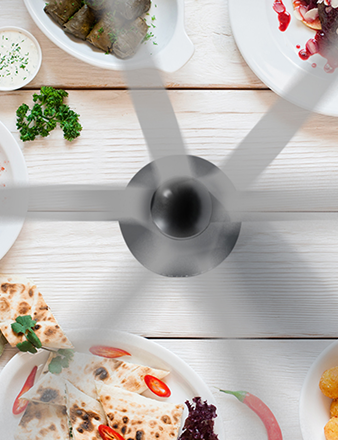
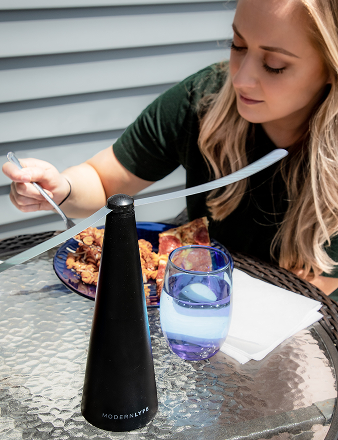
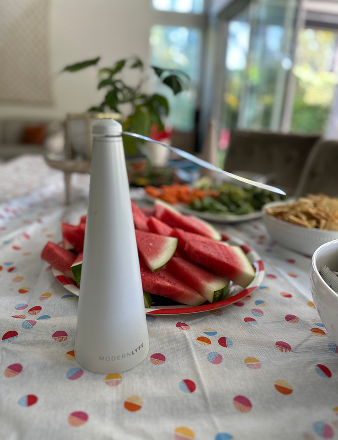
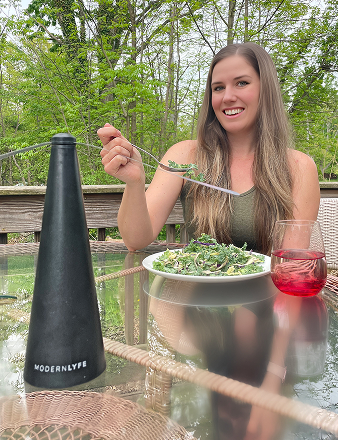
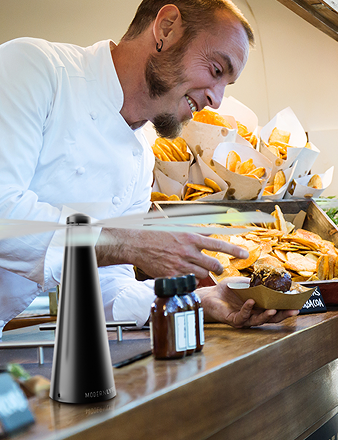
- Barrier tools: Use active insect-control measures where food is displayed outdoors.
If you're planning open-air service, this guide on how to keep flies away from outdoor food is a practical reference for adding physical exclusion to your event setup.
Outdoor food safety has two jobs. Hold food at safe temperatures, and stop contaminants from reaching it in the first place.
What works at events and what doesn't
Outdoor service punishes lazy setups. Some things consistently fail:
| Outdoor practice | What usually happens |
|---|---|
| Leaving lids off for appearance | Food stays exposed to insects and debris |
| Refilling large pans from backup stock | The whole pan spends longer in service |
| Setting food near garbage or drink stations | Pest activity increases around the line |
| Depending on one control only | A single failure compromises the setup |
Better operators use layers. They keep backup product protected, bring out smaller amounts, shield the service line, and assign one person to watch the food, not just the guests. That assignment matters. Unattended buffet lines drift fast, both in temperature and sanitation.
Your Essential Food Safety Action Checklist
Food safety works when the routine is simple enough to repeat under pressure. This checklist is the one I'd want a new kitchen manager, banquet captain, or catering lead to run before every service.

The service checklist
- Check food temperatures: Probe hot and cold items before service starts, during service, and whenever food moves from kitchen to transport or transport to line.
- Calibrate and clean thermometers: Don't trust a tool that hasn't been verified and sanitized.
- Respect cumulative time: Track how long food spends exposed during prep, setup, and service. Don't treat each stop as a new clock.
- Hit minimum cooking temperatures: Whole cuts, ground meats, and poultry each have different targets. Verify the center, not the surface.
- Cool deliberately: Use shallow pans, smaller portions, and active cooling methods instead of dropping deep hot containers into refrigeration and hoping for the best.
- Hold with purpose: Hot foods need real hot-holding equipment. Cold foods need ice, refrigeration, or insulated support that maintains safe conditions.
- Create a barrier outdoors: Covers, screens, controlled placement, and active fly deterrence matter as much as your chafers and coolers.
The management habit that prevents most problems
Don't wait until service is busy to decide who owns food safety. Assign responsibility in advance. One person checks hot holding. One checks cold holding. One monitors buffet exposure and replaces pans. When ownership is vague, everyone assumes someone else handled it.
For broader event prep, a structured template for event safety planning can help teams think through timing, layout, traffic flow, and environmental hazards before setup begins.
When in doubt, throw it out. Replacing food costs less than replacing trust.
The standard to hold your team to
Train staff to think in layers:
- Cook it right
- Measure it right
- Hold it right
- Protect it from contamination
- Discard it when the control fails
That's the working definition of professionalism in food service. Not fancy plating. Not speed alone. Control.
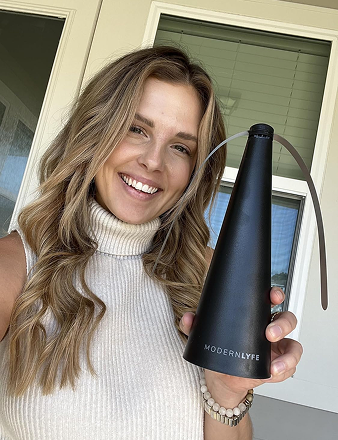
If you need a cleaner way to protect buffet lines, outdoor receptions, and open food displays from flies without disrupting presentation, MODERN LYFE offers practical insect-protection solutions built for hospitality, catering, and event service.