Getting rid of fruit flies requires more than a vinegar trap. For any restaurant, bar, or event space manager, it demands a real strategy: aggressive cleaning, smart prevention, and constant vigilance. This isn't just about swatting bugs; it's about protecting your business.
The Real Cost of a Fruit Fly Problem

Before diving into the "how," let's cover the "why." A few flies might seem like a minor annoyance, but they’re a serious threat to your reputation, revenue, and operations.
Protecting Your Brand and Bottom Line
In hospitality, perception is reality. One customer seeing a cloud of flies over the bar garnishes can ruin their entire experience.
Suddenly, you're not just dealing with pests; you're managing the fallout. A one-star review titled "Fruit Fly Invasion" can scare away hundreds of potential customers.
The damage doesn't stop there. A persistent infestation can lead to:
- Lost Inventory: Fruit flies spread bacteria and can contaminate fresh produce, garnishes, and open drinks, forcing you to discard expensive stock.
- Health Code Violations: A health inspector sees fruit flies and thinks "sanitation problem." This can lead to fines or, in a worst-case scenario, a temporary shutdown.
- Worn-Out Staff: No one wants to spend their shift fighting pests. It’s frustrating and pulls focus from taking care of guests.
A solid plan to control fruit flies isn’t just pest management—it’s a core part of running a successful business. You're protecting your brand, ensuring guest satisfaction, and safeguarding your finances.
The Global Economic Impact
While a fruit fly problem in your venue feels personal, it’s part of a massive global issue. These pests cause staggering damage to agriculture and economies worldwide, with losses in the hundreds of millions—sometimes billions—of dollars annually.
Some outbreaks have wiped out entire crops, leading to costly trade restrictions. The U.S. government alone maintains a network of over 160,000 traps just for detection. That puts into perspective how seriously this pest is taken. You can learn more about the global financial impact of fruit flies to understand why proactive control is so critical.
Finding Fruit Fly Hotspots in Your Venue
To get rid of fruit flies for good, you have to think like one. They aren't just hovering around the lemon bowl; they are constantly searching for moisture and fermenting organic matter to lay their eggs. Winning this battle means launching a full-scale investigation, far beyond typical surface cleaning.
That one fly buzzing around a cocktail isn't the problem—it's a symptom. The real source, the nest, is likely tucked away in a spot your team walks past a hundred times a shift.
The Undercover Investigation Checklist
First, target the places where moisture, sugar, and organic gunk collect. These are five-star resorts for fruit flies. A single female can lay up to 500 eggs that hatch in as little as 24 hours. A tiny, uncleaned spill can explode into a full-blown infestation overnight.
This inspection needs to be methodical. Arm your team with flashlights and a game plan. You're hunting for the entire life cycle, not just adult flies.
-
Floor Drains: This is ground zero. Don't just glance. Pull off the cover and shine a light inside. Look for the thick, dark, gelatinous film lining the pipes—a perfect nursery for larvae.
-
Beverage Stations: Check the drip trays under soda fountains and beer taps. The sticky residue is an irresistible invitation. Inspect hoses and nozzles, where sugary liquids get trapped.
-
Under Equipment: Pull out refrigerators and ice machines. The condensation pans underneath are almost always forgotten. The standing water mixed with dust is a prime breeding location.
-
Bar Mats & Garnish Trays: What’s lurking under your bar mats? Trapped moisture and sticky spills. Garnish trays need to be completely emptied and sanitized daily, not just topped off.
-
Waste & Recycling Bins: Even with liners, the bottom of a trash can collects sticky, foul-smelling liquid. This "garbage juice" is a powerful attractant and breeding source.
Your goal is to shift from reacting to flies you see to proactively destroying where they breed. Take away their ability to reproduce, and you break the cycle for good.
Beyond the Usual Suspects
Once you've cleared the main culprits, dig deeper. Fruit flies are resourceful and will make a home in the smallest, most unexpected places.
A forgotten mop bucket with dirty water is a breeding ground. A damp, sour-smelling bar rag left in a pile is an open invitation. Even a tiny crack in a floor tile where moisture collects is enough to start an infestation.
One of the most notorious breeding grounds is a drain clogged with grease and grime. For effective DIY solutions that work in commercial kitchens, check this guide on how to unclog kitchen sink grease.
To systematize your search, use this checklist. It turns a random hunt into a structured audit, helping you spot problem areas before they get out of hand.
Common Fruit Fly Breeding Grounds in Hospitality
This table breaks down the most common—and often overlooked—hotspots. Use it as a starting point for daily and weekly inspections.
| Location | What to Look For | Immediate Action |
|---|---|---|
| Floor Drains | Dark, slimy buildup on pipe walls and drain covers. | Physically scrub with a stiff brush and treat with a bio-enzymatic cleaner. |
| Soda Fountains | Sticky residue in drip trays and around nozzles. | Disassemble and thoroughly clean all parts with warm, soapy water. |
| Refrigeration Units | Standing water or slime in condensation pans. | Empty the pan, scrub it clean, and ensure it drains properly. |
| Bar Areas | Spilled liquids under bar mats; decaying fruit in garnish trays. | Wash mats daily; store garnishes in sealed, refrigerated containers overnight. |
| Waste Bins | Liquid residue at the bottom of the can, under the liner. | Wash and sanitize the interior of all bins weekly, not just when they look dirty. |
This detailed inspection process is the foundation of controlling fruit flies. By finding and eliminating their breeding sites, you stop fighting symptoms and finally solve the root cause.
Building an Unbeatable Sanitation Defense
Once you’ve pinpointed the hotspots, the real battle begins: making those areas completely inhospitable. A simple wipe-down won't cut it. To control fruit flies, you need a systematic, aggressive sanitation plan that robs them of food, water, and shelter. The goal is to stop their reproductive cycle dead in its tracks.
This isn't just cleaning; it's building a fortress. A female fruit fly can lay hundreds of eggs that hatch in as little as 24 hours. A tiny lapse in your cleaning protocol can lead to a full-blown infestation overnight. Your defense must be relentless and woven into your daily operations.
This visual guide breaks down the core process for tackling a fruit fly problem from discovery to elimination.
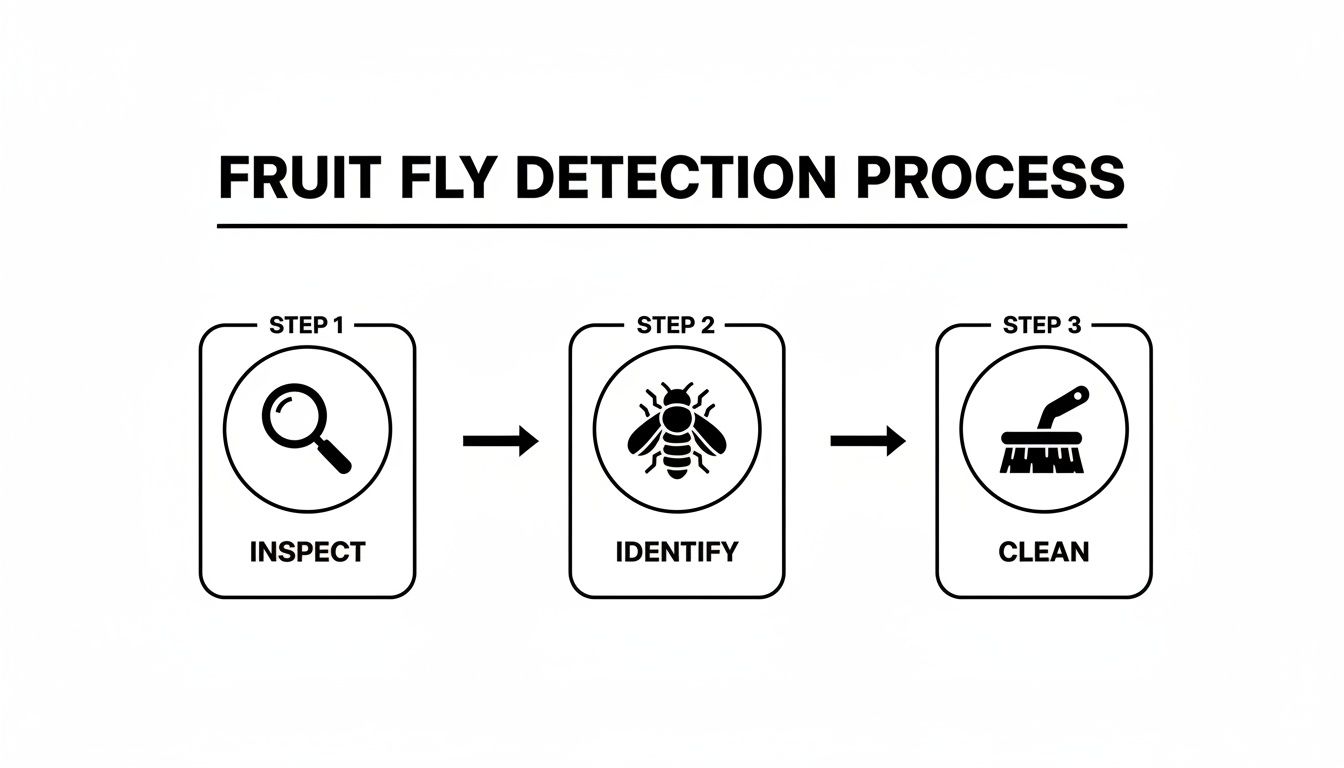
This simple flow—Inspect, Identify, Clean—is the foundation of an effective pest management strategy, emphasizing that action must follow discovery.
Master Your Drains
Floor drains are the number one breeding ground in most kitchens and bars. A common mistake is pouring bleach down them. Bleach flows too quickly to break down the thick, organic slime where fruit fly larvae thrive.
Instead, your team needs to get hands-on.
- Scrub Them Out: Pop off the drain cover. Use a stiff, long-handled brush to vigorously scrub the inside pipe walls and dislodge all accumulated gunk.
- Bring in the Enzymes: After scrubbing, treat the drain with a bio-enzymatic cleaner. These products use beneficial bacteria to digest the organic matter, eliminating the food source for larvae.
- Make it a Routine: This isn't a one-time fix. Drains in high-traffic areas should be scrubbed and treated weekly to prevent slime from building up again.
Think of your drains as potential incubators, not just plumbing. Keeping them clean is a core component of your pest control strategy.
Lock Down Bar and Beverage Stations
The bar is a buffet for fruit flies, offering a constant supply of sugar from spills, garnishes, and drips. Meticulous sanitation here is non-negotiable.
Your daily closing procedures must include a deep clean of the bar area—more than just wiping down the countertop. Maintaining a pristine bar is a critical part of your overall fly control for restaurants strategy.
Implement these strict protocols for your bar staff:
- Taps and Trays: Beer taps, soda guns, and their drip trays must be taken apart and cleaned thoroughly every night. The sticky residue is a magnet for pests.
- Garnish Management: Never leave fruit garnishes out overnight. Store all lemons, limes, and other fruits in sealed, refrigerated containers. Toss anything that's overripe.
- Bottle Discipline: Ensure every liquor, wine, and syrup bottle is capped or covered tightly. Use pour spout caps to keep flies from crawling inside.
- Spill Response: Create a "clean-as-you-go" culture. Any spill, no matter how small, must be wiped up immediately and completely with a sanitizing solution.
Daily, Weekly, and Monthly Checklists
To keep everyone on the same page, your sanitation plan needs structure. Vague instructions lead to missed spots. Arm your team with clear, actionable checklists they can follow and sign off on.
Daily Sanitation Checklist (End of Shift)
- Empty and sanitize all trash cans, including the inside.
- Clean all beverage station drip trays and nozzles.
- Wash all bar mats with hot, soapy water.
- Store fruit garnishes in sealed, refrigerated containers.
- Wipe down all countertops, shelves, and speed rails.
- Mop floors with a degreaser, ensuring corners and spots under equipment get completely dry.
Weekly Deep-Clean Checklist
- Scrub all floor drains with a brush and treat with an enzymatic cleaner.
- Pull out mobile equipment to clean the floors and walls behind and underneath.
- Empty and scrub out refrigerator and ice machine condensation pans.
- Inspect all storage areas for hidden spills or decaying produce.
For larger venues, keeping up this level of rigor can be a challenge. Consider bringing in professional restaurant cleaning services. These experts can help establish and maintain a baseline of cleanliness that makes your daily efforts more effective. This defense system transforms your venue from a breeding ground into an environment where fruit flies cannot survive.
Choosing the Right Traps and Control Tech

With your sanitation defenses locked down, you’ve eliminated their breeding grounds. Now it’s time to go on the offensive and eliminate the adult flies still buzzing around. Strategic trapping and modern technology give you a one-two punch to clear your space quickly.
The key is using the right tool for the right job. Some solutions are perfect for back-of-house, while others are designed for discreet use in front of guests. Combining these methods will help you get a handle on fruit flies across your entire venue.
The First Line of Defense: DIY Traps
The humble apple cider vinegar (ACV) trap is a remarkably effective and cheap place to start. It's a classic for a reason: fruit flies can't resist the smell of fermentation.
Here’s a simple recipe for a powerful DIY trap:
- Grab a small jar or bowl and pour in an inch of apple cider vinegar.
- Add a single drop of dish soap. This is the secret ingredient; it breaks the vinegar's surface tension, so flies sink and drown.
- Cover the container tightly with plastic wrap and secure it with a rubber band.
- Poke a few small holes in the plastic with a toothpick. The flies crawl in but can't find their way out.
Set these traps near hotspots—behind the bar, near sink drains, or by trash bins—but always keep them off direct food prep surfaces. For a deeper dive, our guide on choosing the right fruit fly trap for restaurants has more detailed strategies.
Stepping Up to Commercial Solutions
While DIY traps are great, a bustling restaurant often needs something more reliable and professional. Commercial traps deliver consistent performance and are built for specific environments.
Discreet Sticky Traps
These are non-toxic glue traps, often designed to look like small decorative objects or to be tucked out of sight under counters. They use a visual lure (like a bright yellow color) or a pheromone attractant to draw flies in.
- Pros: Silent, odorless, and can be hidden from guest view.
- Cons: Must be checked and replaced regularly as they fill up.
Baited Stations and Light Traps
For more stubborn infestations, it's time to upgrade. Baited stations use a potent, food-grade liquid to lure flies into a container they can’t escape. Modern light-based traps use a gentle UV light to attract pests onto a hidden glue board—a far cry from the old "zappers" that are a major health code violation in food service areas.
Choosing the right trap is about matching the solution to the environment. What works in the kitchen might not be suitable for the dining room.
Modern Tech: Fly Fans and Air Barriers
Sometimes, the best offense is a good defense. This is where modern fly control tech shines, especially for open-air patios, entrances, and buffet lines where you need to physically keep flies from landing.
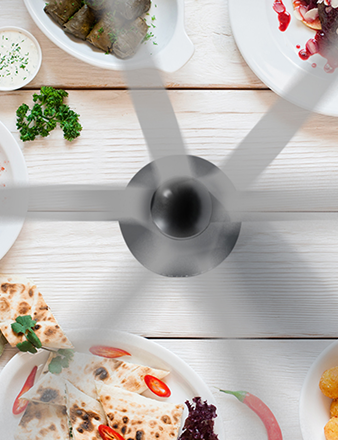
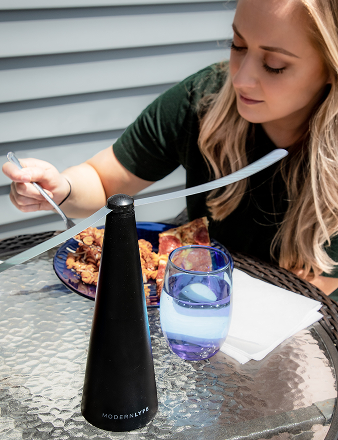
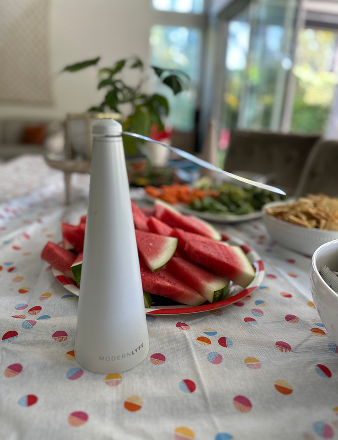
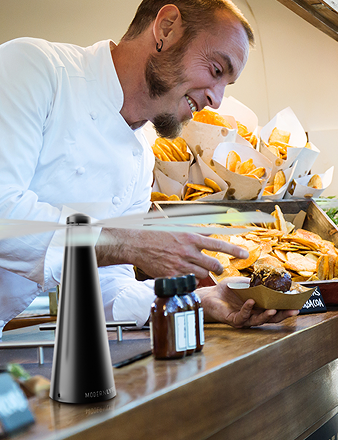
Stylish, bladeless fly fans are a game-changer for hospitality settings. Placed on a table, they create a gentle but persistent air current. This invisible barrier is surprisingly tough for tiny insects to fly through, keeping them away from food and guests without chemicals or noise.
For main entrances and delivery doors, air curtains are a more powerful option. They create a strong wall of air that stops flies dead in their tracks when a door is opened. This is a crucial exclusion tactic that chokes off the supply of new pests.
It's fascinating to see how these principles apply on a massive scale. Government programs sometimes use advanced tactics, such as releasing millions of sterile male insects to disrupt the breeding cycle in places like California. It shows how a well-planned strategy can tackle a pest problem at any level.
Keeping Flies Out with Exclusion Strategies
The best way to handle a fruit fly problem is to prevent it from starting. While sanitation and trapping are essential, the real game-changer is turning your venue into a fortress they can't breach by physically blocking their entry.
Think of your building's exterior as your first line of defense. Fruit flies can squeeze through the smallest cracks, so a thorough property walk-around is essential.
Sealing Every Entry Point
Your doors and windows are the most obvious weak spots. Start there. Ensure every exterior door closes flush, with no daylight peeking through. A high-quality door sweep is a cheap fix that blocks a common pest highway.
Once the doors are secure, hunt for other gaps.
- Window and Vent Screens: Any window that opens and every exterior vent needs to be covered with fine-mesh screens. Check them regularly for tears and patch them immediately.
- Structural Gaps: Take a slow walk around your building. Look for cracks in the foundation, gaps where utility lines enter, or any small holes in the walls. Use caulk to seal every potential entry point.
Exclusion is proactive, not reactive. Every gap you seal is one less battle you have to fight inside. It’s about shifting from pest elimination to pest prevention.
Reinforcing High-Traffic Entrances
Your main entrance and back delivery doors are always vulnerable because they're constantly in use. This is where you need bigger guns.
For guest entrances or busy patio doors, an air curtain is a fantastic investment. These units blast a powerful stream of air downward, creating an invisible wall that flies can't penetrate when the door opens. There's a reason they're in almost every commercial kitchen—they work.
Another great option, especially for delivery doors that are often propped open, is a dedicated fly fan. You can learn more about the benefits of an over-the-door fly fan that creates this crucial protective air barrier, keeping pests out without getting in your staff's way.
Internal Controls and Staff Training
Exclusion isn't just about the building; it's also about what you let through the door. Fruit flies often arrive as eggs or larvae on produce deliveries.
This is where your team becomes your most valuable asset.
Train your receiving staff to be vigilant. They need to inspect every box of produce, looking for overripe fruit, damage, or any visible fly activity. A quick look inside the delivery truck is also a smart move.
Empower your team to say no. Give them the authority to reject any shipment that looks suspicious or contains decaying produce. It’s better to turn away one bad delivery than to spend weeks fighting the resulting infestation.
Finally, enforce strict door discipline. Make it a hard rule: no propping doors open, especially between the kitchen, storage areas, and dining rooms. This simple rule can contain a minor issue before it spreads.
When to Call a Pest Control Professional
Your team's daily efforts will handle most minor fruit fly issues. But sometimes, you're fighting a battle you can't win alone. Knowing when to bring in an expert is a smart business decision, not a failure. It saves headaches, protects your reputation, and ultimately costs less than a prolonged infestation.
If you’ve scrubbed every drain, set countless traps, and sealed every crack, but the flies keep coming, you likely have a hidden breeding ground. It could be deep inside a wall void behind a leaky pipe or underneath a massive, unmovable ice machine.
A seasoned pest control technician has seen it all. They come with specialized gear and a trained eye to pinpoint out-of-reach sources your staff can't find.
Signs You Need an Expert
It's time to call a pro if you recognize any of these scenarios. These are red flags signaling a bigger problem.
- The Infestation Won't Quit: You’ve been cleaning and trapping for two weeks or more, and the fly population isn't shrinking—or it's getting worse.
- They're Everywhere: You're spotting flies in the main dining room, the back kitchen, and the bar. Flies in multiple, separate areas usually mean you have several breeding sites.
- The First Guest Complaint: The moment a customer mentions a fly, the problem has gone public. Your reputation is at stake.
- A Case of Mistaken Identity: Are you sure they're fruit flies? They could be phorid flies or drain flies, each requiring a different strategy. A pro can tell the difference instantly.
A true pest control professional won't just spray. They’ll work with you to build an Integrated Pest Management (IPM) plan. This is a long-term strategy that targets the root cause, uses targeted treatments, and sets up a monitoring system to prevent future outbreaks. It’s a sustainable solution that lets your team get back to creating amazing experiences for your guests.
Got Questions? Let's Talk Fruit Flies
Even with the best game plan, specific challenges will pop up. Here are straight answers to the most common questions from managers fighting fruit flies.
How Long Until They're Actually Gone?
The good news: if you find and destroy the main breeding ground, you'll see a massive reduction in adult flies in just 24 to 48 hours.
But don't declare victory yet. A fruit fly goes from egg to adult in about 8 to 10 days. To truly break the cycle and eliminate any stragglers, you need to maintain your cleaning and trapping routine for at least two full weeks. Anything less risks a comeback.
Should I Just Pour Bleach Down the Drains?
This is the biggest myth out there, and it simply doesn't work. Pouring bleach down a drain is a waste of time and product for fruit flies.
The bleach rushes past the slimy, organic buildup where the larvae are thriving. It moves too fast to do real damage. You might kill a few on the surface, but you won't touch the heart of the infestation buried in the gunk.
Here's what pros do instead: First, physically scrub the drain with a stiff brush to break up the grime. Then, follow up with a bio-enzymatic drain cleaner. This product uses special bacteria to eat away the organic sludge, completely removing the flies' food and breeding habitat.
Are Electric Fly Zappers Okay for a Restaurant?
Definitely not. Using an electric bug zapper in a food service area is a major health code violation waiting to happen.
When a zapper electrocutes a fly, it explodes, creating a fine mist of insect particles. That "fly spatter" can drift and settle on food, prep surfaces, and even guest tables. It's a huge sanitation risk.
There are much better, professional ways to handle them:
- Discreet Glue Traps: Tuck these under bars, behind equipment, or in other out-of-the-way spots. They work silently and contain the mess.
- Modern Light Traps: These aren't old-school zappers. They use UV light to lure flies to a hidden glue board inside the unit, keeping captured pests out of sight.
- Fan-Based Solutions: Sleek, modern fly fans are fantastic for outdoor patios or host stands. They create a gentle air barrier that flies can't penetrate.
Choosing the right equipment isn't just about getting rid of flies; it's about maintaining the high standards of hygiene your guests expect.
For an elegant and effective way to protect your guests and dining areas, explore the line of modern fly fans from MODERN LYFE. Our fans create a quiet, pest-free zone without chemicals or noise. Discover the perfect solution for your venue at https://modernlyfe.com.