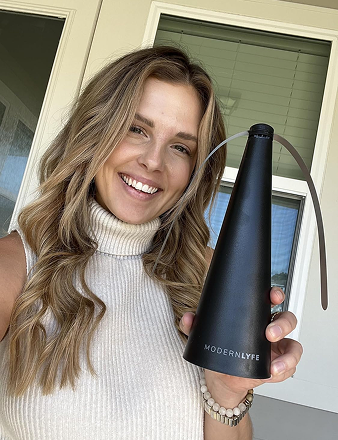
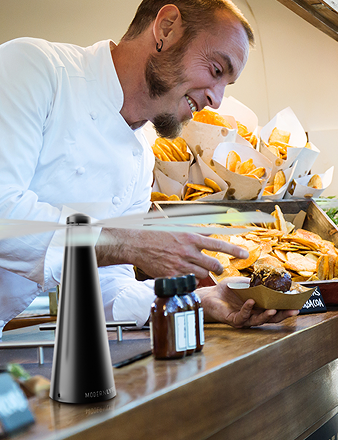
One fruit fly is a sign of a much bigger problem. The best fruit fly trap for restaurants isn't just a device—it's a system combining smart placement with strict sanitation. This guide will show you how to build a fortress against these pests, protecting your reputation and your health score.
Why Fruit Flies Are a Silent Threat to Your Restaurant
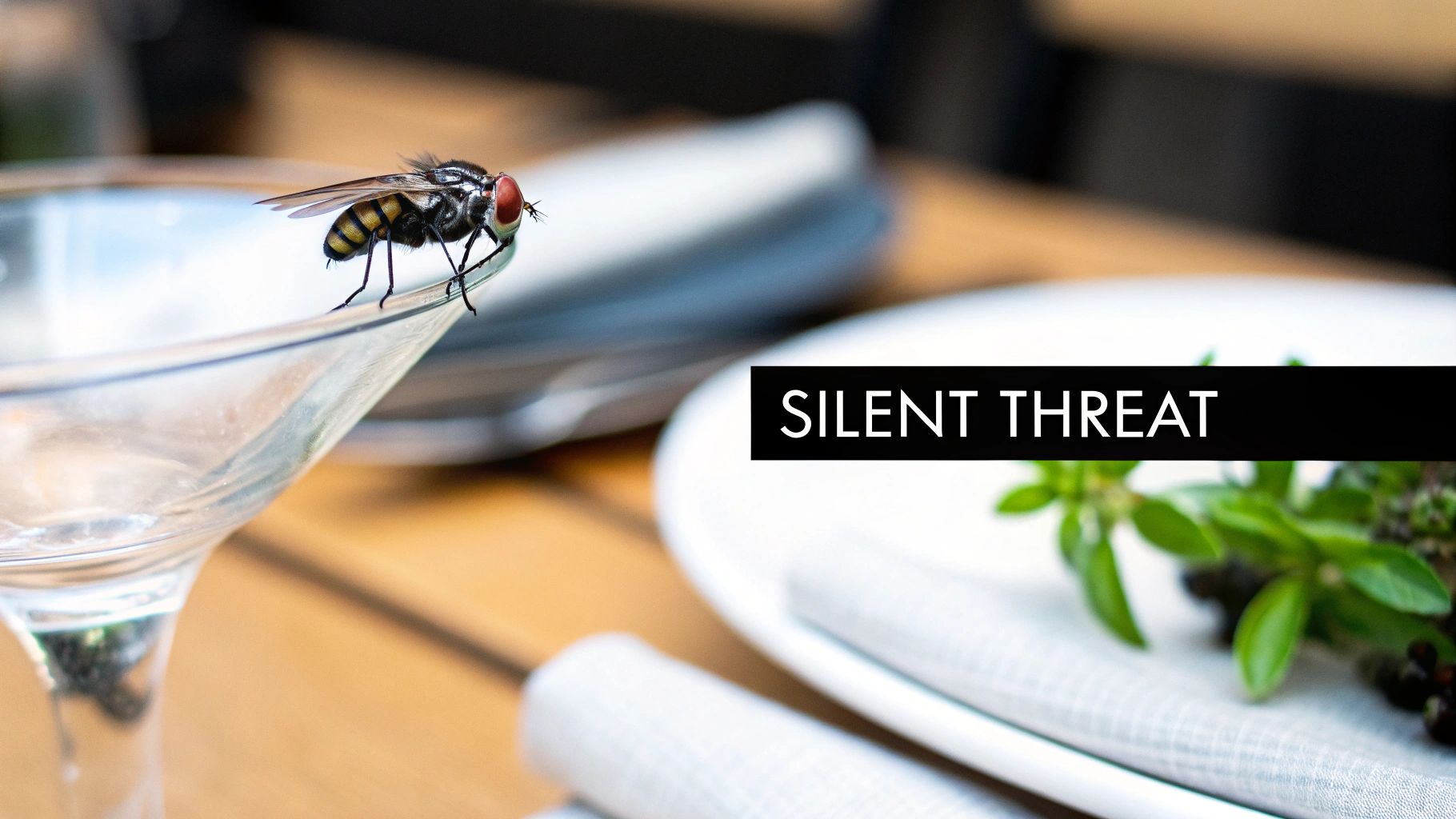
That fly buzzing near a customer’s plate isn't just an annoyance. It's a red flag hinting at a problem behind the scenes. In the high-stakes world of hospitality, where reputation is everything, a fruit fly problem can quietly drain your business.
Each fly is a buzzing negative review. It plants doubt in a customer’s mind about your kitchen's cleanliness—a perception that spreads faster than the flies themselves. Anyone in the restaurant industry knows that once customer trust is gone, it's hard to win back.
More Than Just a Nuisance
Don't underestimate these pests. They are active threats to food safety, your brand, and your bottom line. Their presence triggers a domino effect of serious consequences.
A visible infestation leads to customer complaints and bad reviews on Google or Yelp. Worse, it’s a beacon for health inspectors. Ignoring the problem can lead to common restaurant health code violations, fines, or even a temporary shutdown.
For restaurant owners, fruit flies are a direct risk to hygiene and stability. A proactive control strategy isn't just good practice—it's essential.
The demand for effective solutions is growing. The global market for fruit fly traps, valued at $540 million, is projected to hit $1.12 billion by 2033, driven by a greater focus on food safety and tougher regulations. This guide gives you the strategy to build a permanent defense.
Fruit flies in a restaurant aren't just a few pests; they're an invasion. The problem appears overnight, but it has been building right under your nose. By the time you see the smoke, the fire is already spreading.
Their lifecycle is incredibly fast. A single female can lay up to 500 eggs, which hatch in as little as 24 hours. In just over a week, those larvae become adults, ready to restart the cycle. A couple of stray flies can become a full-blown infestation before your staff even notices.
Where Are They Coming From?
Fruit flies don't just appear. They're drawn to the fermenting sugars and organic grime common in a busy restaurant. Your team's job isn't just setting traps—it's hunting down and destroying these breeding grounds. Traps catch the adults; sanitation stops the next generation.
The secret to beating fruit flies is to stop swatting what you see and get obsessed with why they're there. This moves you from damage control to a real, long-term solution.
Here are their favorite hangouts in restaurants:
- Drains and Garbage Disposals: The organic sludge inside your pipes is a five-star hotel for fruit flies.
- The Bar Area: This is ground zero. Spilled beer, sticky soda syrup, and forgotten garnishes are a paradise for them. Check drip trays, soda gun holsters, and damp bar mats.
- Sour Mops and Sponges: A forgotten mop in a bucket or a damp rag on a counter can start to ferment, creating a surprisingly common breeding spot.
- Produce Storage: One rotting tomato or bruised banana at the bottom of a case can start an infestation that contaminates everything else.
- Garbage Bins: Leaky trash bags and the sticky residue at the bottom of bins are a constant invitation. If they aren't cleaned religiously, you're ringing the dinner bell.
Spotting these areas is the first step toward taking back control. When your staff understands what attracts fruit flies, they become active defenders. This proactive mindset separates a clean restaurant from one constantly fighting fires—or flies.
Choosing the Right Trap for Your Restaurant
Not all fruit fly traps are created equal, especially for a restaurant. The right fruit fly trap for restaurants isn't a magic bullet; it's a specialized arsenal. A trap that works behind the bar might be an eyesore in the dining room, and a kitchen-grade solution could be overkill for dry storage.
Think like a chef choosing the right knife. You wouldn't use a cleaver to slice a tomato. The same logic applies here. Match the trap's strengths—effectiveness, appearance, and safety—to the specific zone you need to protect. This ensures you’re not just catching flies but doing it efficiently without bothering staff or guests.
Front-of-House vs. Back-of-House Traps
Your public areas have different needs than your kitchen. Upfront, discretion is key. Traps must be subtle, silent, and blend into the decor. Small liquid bait traps or decorative UV light traps are perfect because they work without drawing attention.
Back-of-house, however, is all about performance. In kitchens, dish pits, and garbage areas, you need heavy-duty solutions where power matters more than looks. This is where powerful UV light traps with large glue boards or industrial-strength liquid traps shine. They are built to handle a higher volume of pests right at the source.
Before placing a trap, find the source of the problem. This infographic walks you through a simple process for tracking down where fruit flies are coming from.
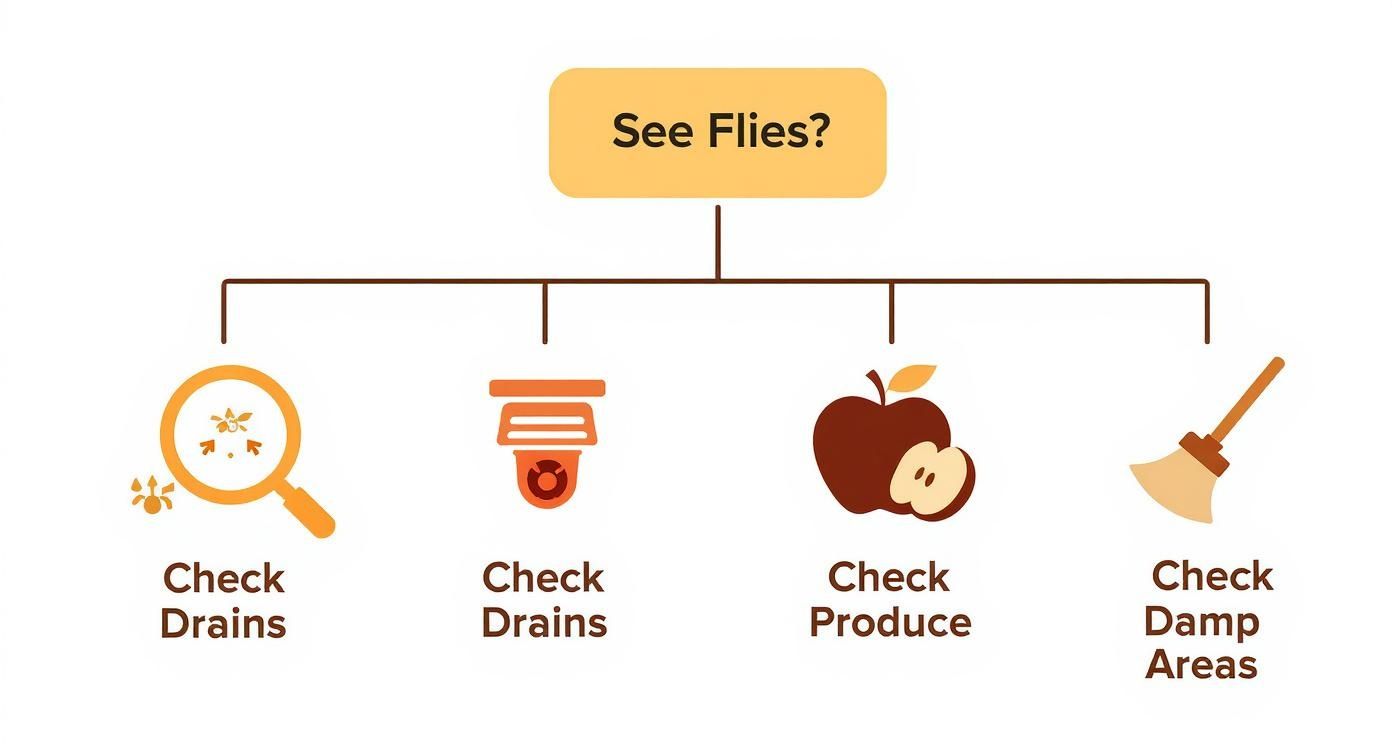
Use this as a quick-start guide for your team. It helps diagnose an issue by checking the most common breeding grounds first, which tells you where a trap will do the most good.
Comparing Commercial Trap Types
To make the right call, you need a clear breakdown of your options. Each trap type has its own pros and cons, from how well it works to how it looks and how much upkeep it requires.
Choosing a trap is an investment in your restaurant's hygiene. The best strategy often involves using a combination of traps, each placed where it will be most effective.
Let's break down the three most common commercial-grade options.
Commercial Fruit Fly Trap Comparison
This side-by-side look helps you decide which solution fits best for different areas of your establishment.
| Trap Type | Best For | Pros | Cons |
|---|---|---|---|
| Liquid Bait Traps | Dining areas, bars, host stands | • Very discreet and often decorative • Non-toxic and food-safe • Easy to deploy and replace |
• Needs frequent checks • Less effective for large infestations |
| UV Light Traps | Kitchens, prep areas, dish pits | • Highly effective for large volumes • Chemical-free and sanitary • Low daily maintenance |
• Higher initial cost • Bulbs need periodic replacement • Can be visually obtrusive |
| Sticky Traps | Dry storage, receiving areas, offices | • Inexpensive and simple to use • Captures flies silently • Good for monitoring activity |
• Looks unappealing • Fills up quickly in high-infestation areas • Less effective from a distance |
This comparison helps you build a smart trapping strategy. Use discreet liquid traps to protect the guest experience, powerful UV traps to guard the kitchen, and simple sticky traps to monitor low-traffic zones. It's all about using the right tool for the job.
Where to Place Traps for Maximum Impact
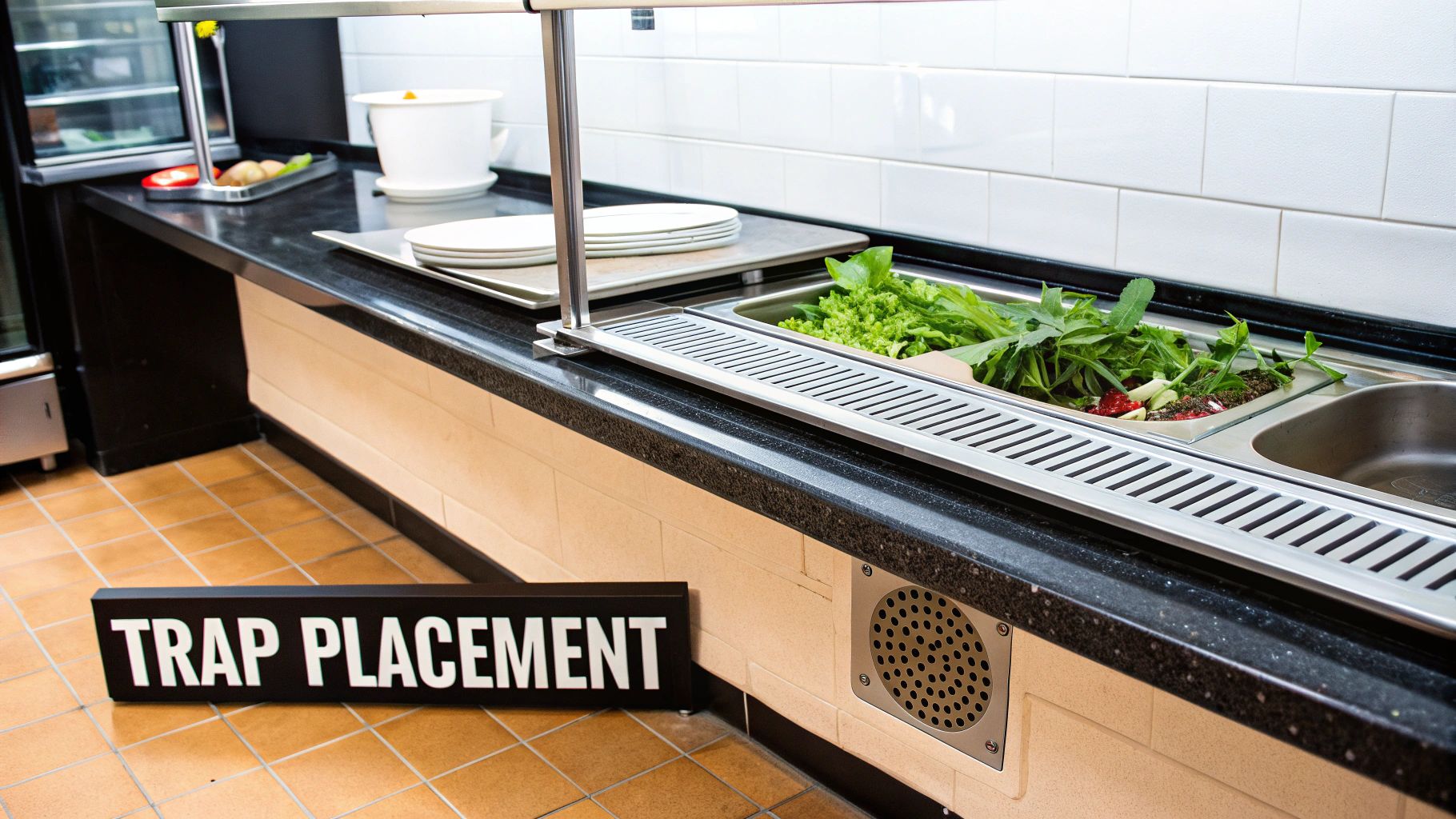
Even the best fruit fly trap for restaurants is useless in the wrong spot. Placement isn't guesswork; it’s a strategy. Think of it like security cameras—you place them where the action is.
You want to place traps directly in their flight path, catching them as close as possible to where they eat and breed. A common mistake is putting a trap in the middle of a room. It's far more effective next to a floor drain, garbage can, or under the bar.
This proactive placement creates an invisible line of defense, nabbing pests before they can migrate from the kitchen to the dining room. Your customers will never even know there was a potential issue.
Map Your Restaurant’s Hotspots
First, pinpoint the hotspots where fruit flies thrive—places with moisture, fermenting sugars, and organic grime. Focus your traps in these zones for a massive difference.
Key areas to target:
- Bar Stations: Ground zero. Set traps near soda guns, beer taps, fruit garnish trays, and under sticky bar mats.
- Kitchen Prep Areas: Place traps near sinks, produce-cutting stations, and anywhere food scraps collect.
- Dishwashing Stations: The moisture and food residue make the dish pit a five-star resort for pests. A trap here is essential.
- Garbage and Recycling Bins: Position traps right next to indoor trash cans to catch flies drawn to the smell.
- Storage Areas: Don't overlook dry storage. Areas with potatoes, onions, or other room-temperature produce can quickly become a problem.
The Financials of Smart Placement
Many restaurants now use an integrated pest management (IPM) approach, which means placing many traps in the right spots. That's why traps in the $10–$30 price range are so popular—they're affordable enough to deploy everywhere. This category recently generated over $198 million in global revenue because it hits the sweet spot between cost and effectiveness.
Think of trap placement as offense, not defense. The goal is to ambush fruit flies at the source, knocking down their population before they can multiply.
Once you understand how a simple fly trap with bait works, it's clear why placement is everything. You're putting the solution where the problem begins. This room-by-room strategy turns simple traps into a powerful, coordinated system.
Building Your Integrated Pest Management Plan
https://www.youtube.com/embed/_R0My-2ag94
Traps are your frontline soldiers, but they can't win the war alone. To get rid of fruit flies for good, you need a proactive Integrated Pest Management (IPM) plan.
IPM creates an environment where fruit flies can't thrive. It’s less about reacting to a swarm and more about making your restaurant an unwelcome place from the start.
An IPM system combines smart trapping with top-notch sanitation and consistent staff training. The trap's job is to catch any stragglers, while your daily operations eliminate breeding grounds.
Sanitation Is Your First Line of Defense
Your most powerful weapon is sanitation. A tiny film of organic gunk is enough for a fruit fly to lay hundreds of eggs, so a deep, consistent cleaning routine is non-negotiable. This is more than wiping down counters.
Effective pest control starts with how you clean and manage waste. Consider professional commercial waste management services to ensure your dumpster area stays clean and doesn't become a pest magnet.
An Integrated Pest Management plan treats your entire restaurant as a defense system. Every cleaning task is a crucial part of keeping pests out.
Create simple daily and weekly cleaning checklists for your team. These routines turn good intentions into solid habits, systematically wiping out potential breeding sites before they become a problem.
Actionable IPM Strategies for Your Team
Getting your staff on board is the final piece of the puzzle. When your team understands why they're doing these tasks, they become your greatest allies. Focus on building these three core habits:
- Daily Drain Cleaning: Scrub every drain daily with a stiff brush and follow up with a bio-enzymatic cleaner that breaks down organic buildup.
- Strict Produce Protocols: Check all incoming produce for ripeness or damage. Use a "First-In, First-Out" (FIFO) system to prevent spoilage.
- Train Staff to Spot Risks: Teach everyone to recognize hotspots like damp bar mats, sticky syrup spills, or a leaky trash bag. For more tips, check out our complete guide on fly control for restaurants.
This proactive approach is a global movement. The Asia-Pacific region is the fastest-growing market for fruit fly traps, with a forecasted 10.8% CAGR through 2030, largely driven by food safety campaigns pushing restaurants to adopt IPM strategies.
Common Questions About Restaurant Fruit Fly Control
Even with the best plan, questions will come up. Fruit flies can be stubborn, so clear answers are key to keeping your restaurant running smoothly. This section tackles the most frequent questions we hear from restaurant managers about using a fruit fly trap for restaurants.
How Quickly Will a Fruit Fly Trap Start Working?
You should see results quickly. Most commercial traps start luring flies within hours. Expect a noticeable drop in adult flies within 24 to 48 hours.
A trap's immediate success depends on two things: placement near breeding hotspots and the size of the infestation. For the best outcome, use several traps and pair them with a deep clean of problem areas. Traps catch the adults you see, but only aggressive sanitation stops new ones from hatching.
Are These Traps Safe to Use in Food Prep Areas?
Yes. The vast majority of fruit fly traps designed for restaurants are non-toxic and safe to use around kitchens.
To be extra cautious, stick with models that use food-grade liquid attractants, sticky paper, or UV light. These methods work without introducing harsh chemicals into your kitchen.
- Liquid and Sticky Traps: Perfectly safe, but place them where they won't get knocked over or touch food.
- UV Light Traps: A great choice for back-of-house. They are chemical-free, effective, and require little attention from staff.
Always double-check that any product you buy is rated for use in commercial kitchens. It’s a simple step that ensures compliance and peace of mind.
Why Do I Still Have Fruit Flies with Multiple Traps?
Seeing fruit flies even after setting out traps is a classic sign of one thing: an undiscovered breeding source is still active. This is the most common frustration for managers, but the solution is straightforward.
Traps control the population, not the source. If new flies keep appearing, they are still breeding successfully on site. Shift your focus from trapping to hunting down and destroying their nursery.
It's time for an aggressive inspection. Your traps have signaled a deeper issue. Now, conduct a top-to-bottom search of their favorite hiding spots:
- Check Every Drain: Drains are always suspect number one. Use a brush to scrub the inside of every floor and sink drain to clear out organic grime.
- Inspect Under Equipment: Look for hidden spills or moisture under bar mats, beverage dispensers, ice machines, and prep tables.
- Examine Produce Storage: One rotting potato or onion at the bottom of a bin can fuel a massive infestation.
- Investigate Damp Cleaning Tools: Don't forget damp mop heads, old sponges, or sour rags. They can easily become potent breeding grounds.
When you combine a smart trapping strategy with relentless cleaning, you can finally knock out the problem at its root for lasting control.
Ready to create a pest-free dining environment for your guests? MODERN LYFE offers elegant and effective fly fans that protect your establishment without compromising its style. Explore our solutions at https://modernlyfe.com and defend your restaurant's reputation today.