Winning the war against fruit flies requires understanding the enemy. Effective control isn't just about swatting; it's about breaking their rapid life cycle. This means getting serious about sanitation to eliminate breeding grounds while actively trapping the adults. It's a two-front battle, but one you can win.
Why Fruit Flies Are More Than a Nuisance
A few fruit flies are a red flag. They signal decaying organic material nearby—the perfect nursery for the next generation. In a home, it's an annoyance. In a restaurant or event space, it's a threat to your reputation and a health code risk.
The key is understanding their biology. Fruit flies operate on an accelerated timeline, allowing a small oversight—like spilled juice or a forgotten lemon wedge—to explode into a full-blown infestation.
The Alarming Speed of a Fruit Fly Infestation
The real challenge is their reproductive power. A single female lays hundreds of eggs, and the cycle repeats so quickly that casual control methods are useless.
The journey from egg to a reproductive adult is shockingly short.
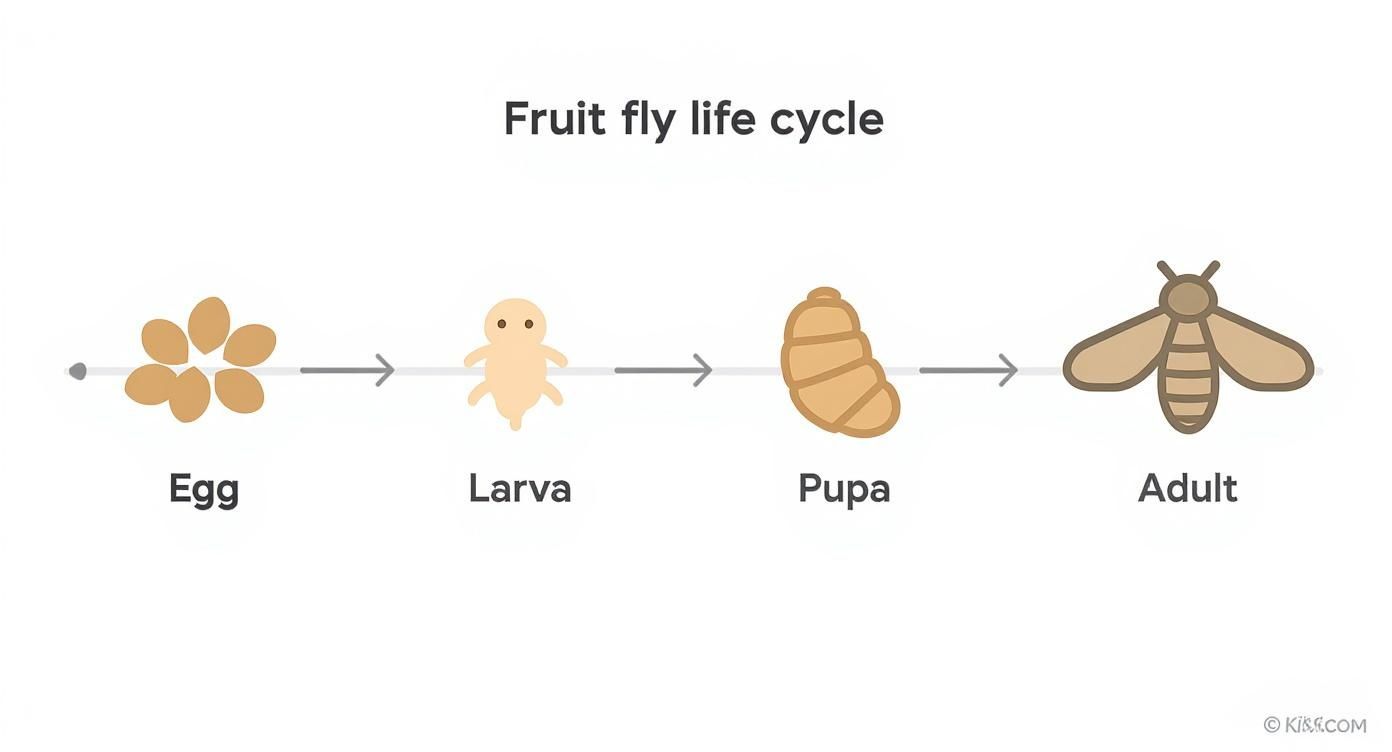
The entire process can take as little as eight days, which is why immediate, aggressive action is essential.
This table breaks down their rapid development.
Fruit Fly Lifecycle at a Glance
| Stage | Typical Duration | Key Characteristics |
|---|---|---|
| Egg | 24 hours | Laid in moist, fermenting organic matter like ripe fruit, drains, or spills. Nearly invisible. |
| Larva | 5-6 days | Maggots burrow into the food source, feeding constantly before finding a dry spot to pupate. |
| Pupa | 3-4 days | A hard, dark casing forms as the larva transforms into an adult fly. |
| Adult | 8-15 days | Emerges ready to mate within two days, starting the cycle all over again. |
There is no time to waste once you spot the first signs.
This isn’t just a local problem; it has major economic consequences. A single female can lay over 400 eggs that mature in under two weeks. This incredible speed has led to extensive eradication programs across the U.S., with states like California and Florida deploying over 160,000 traps to manage outbreaks.
The Impact on Health and Business
Beyond being an inconvenience, fruit flies pose real health risks. They move from unsanitary places like floor drains and garbage bins to your food prep surfaces, fresh fruit, and garnishes, transferring bacteria along the way.
For any food service business, a visible fruit fly problem is a disaster. It signals "unclean" to customers, leading to bad reviews, lost revenue, and potential health code violations.
The problem isn't just what customers see. The real fight happens in the hidden nooks of your kitchen or bar. To stop them for good, you need to know what they're looking for. Learn what is specifically attracting fruit flies to your space in our detailed guide. Once you identify and remove their food and shelter, you can cut the infestation off at the source.
Win the War with Aggressive Sanitation
Traps catch adult flies, but to win the war, you must stop the next generation. True fruit fly control is about strategic, aggressive sanitation that destroys the moist, fermenting environments where they lay eggs. This isn't a weekly wipe-down—it’s a targeted plan to make your space completely inhospitable.
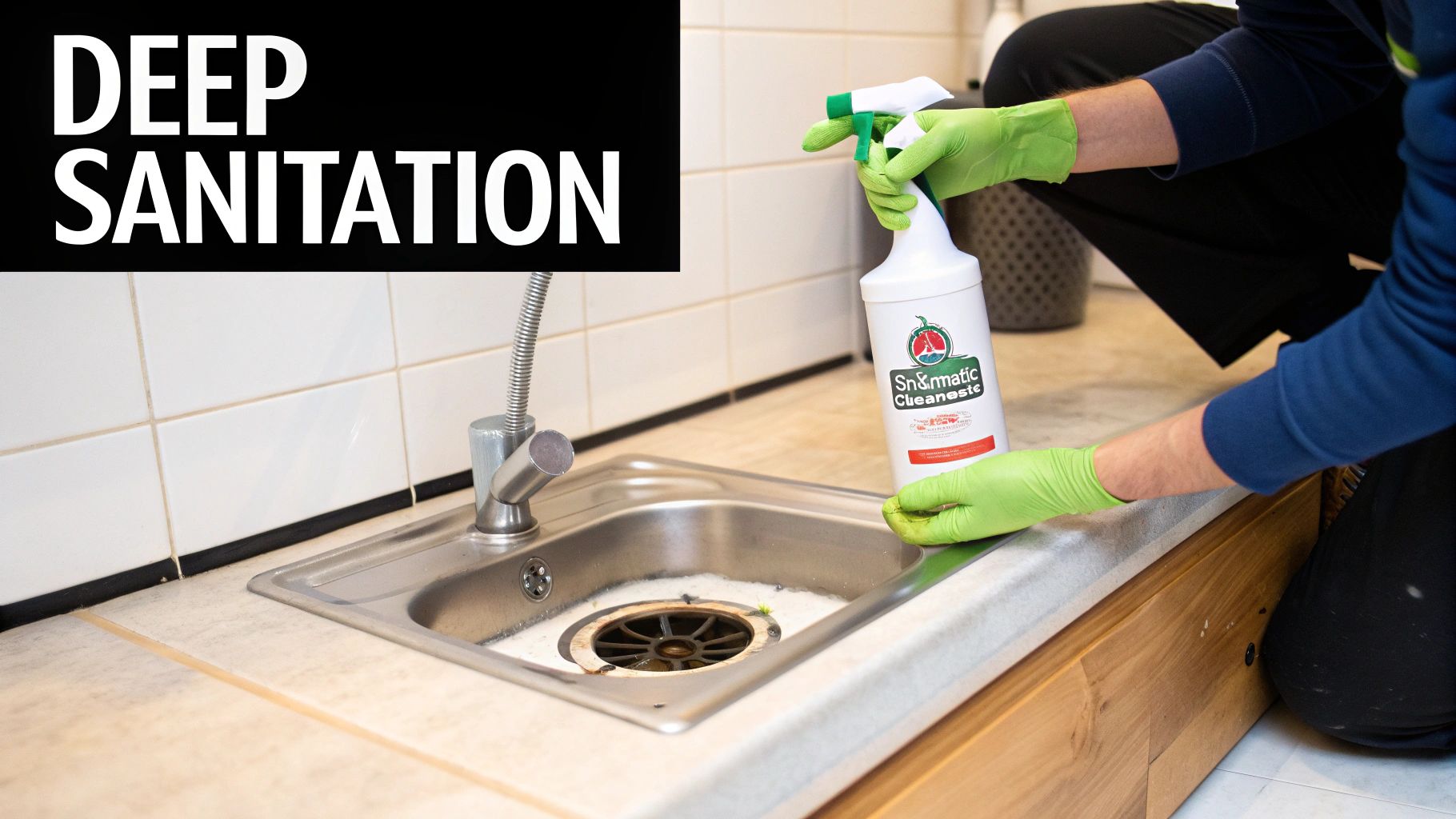
The principle is simple: no food, no breeding. A single sticky spill or grime in a drain is all a female needs to lay hundreds of eggs. Your mission is to find and eliminate these hidden nurseries before they hatch.
Target Unseen Breeding Grounds
Most people focus on countertops and fruit bowls, but the real problem is almost always out of sight. The battle is won in spots where moisture and organic gunk build up.
Your sanitation checklist must go beyond the obvious. Target these neglected hotspots:
- Floor Drains: These are public enemy number one. Pouring hot water down them isn't enough. You must physically scrub the drain and pipe walls with a stiff brush. Follow up weekly with an enzymatic drain cleaner, which uses beneficial bacteria to digest the slimy buildup where flies lay eggs.
- Bar & Soda Stations: The sticky residue on soda guns, beer taps, and in their holsters is a fruit fly magnet. Clean these thoroughly every day. Don't forget the drip trays and their drain lines—a single clogged tube can cause a huge infestation.
- Under & Behind Equipment: You must pull out refrigerators, ice machines, and prep tables. Condensation and tiny food scraps trapped in these dark, forgotten areas are perfect breeding zones.
The right equipment helps. Using durable and easy-to-clean stainless steel kitchen prep tables can significantly reduce the cracks where food residue hides.
Implement a Strict Produce Protocol
Fruit flies often arrive on fresh produce deliveries. A rigid inspection and storage routine is your first line of defense.
Inspect every case of fruit and vegetables upon arrival. Look for anything over-ripe, bruised, or damaged—spots where flies may have already laid eggs. If it looks suspicious, reject it.
The "First-In, First-Out" (FIFO) rule is more than good inventory management; it's a powerful pest control tactic. By rotating produce and using the oldest stock first, you prevent anything from sitting long enough to ferment.
Once produce is inspected, store it properly. Refrigerate ripe items immediately to slow fermentation. Anything left on the counter should be in airtight containers or used quickly. A single forgotten banana can restart an entire infestation.
Develop Daily Sanitation Habits
A one-time deep clean is not a long-term solution if your daily habits create new breeding grounds. Success comes from integrating key tasks into your closing routine until they become automatic.
Make these actions non-negotiable every day:
- Empty and Sanitize All Trash Bins: Taking out the trash is the first step. The critical part is washing the bins, inside and out, to remove any spilled liquids or sticky film.
- Wash Bar Mats and Rags: Dirty bar mats and damp cleaning cloths are prime breeding grounds. Wash them thoroughly with soap and hot water every night and let them dry completely.
- Wipe Down All Bottles and Containers: A quick wipe-down of liquor, syrup, and juice bottles prevents sticky drips that attract flies. Ensure everything is tightly capped overnight.
Build a Better Fruit Fly Trap
Once you've deep-cleaned, it's time to attack the adult flies. Sanitation cuts them off at the source, but trapping knocks down the current population and helps you get control quickly.
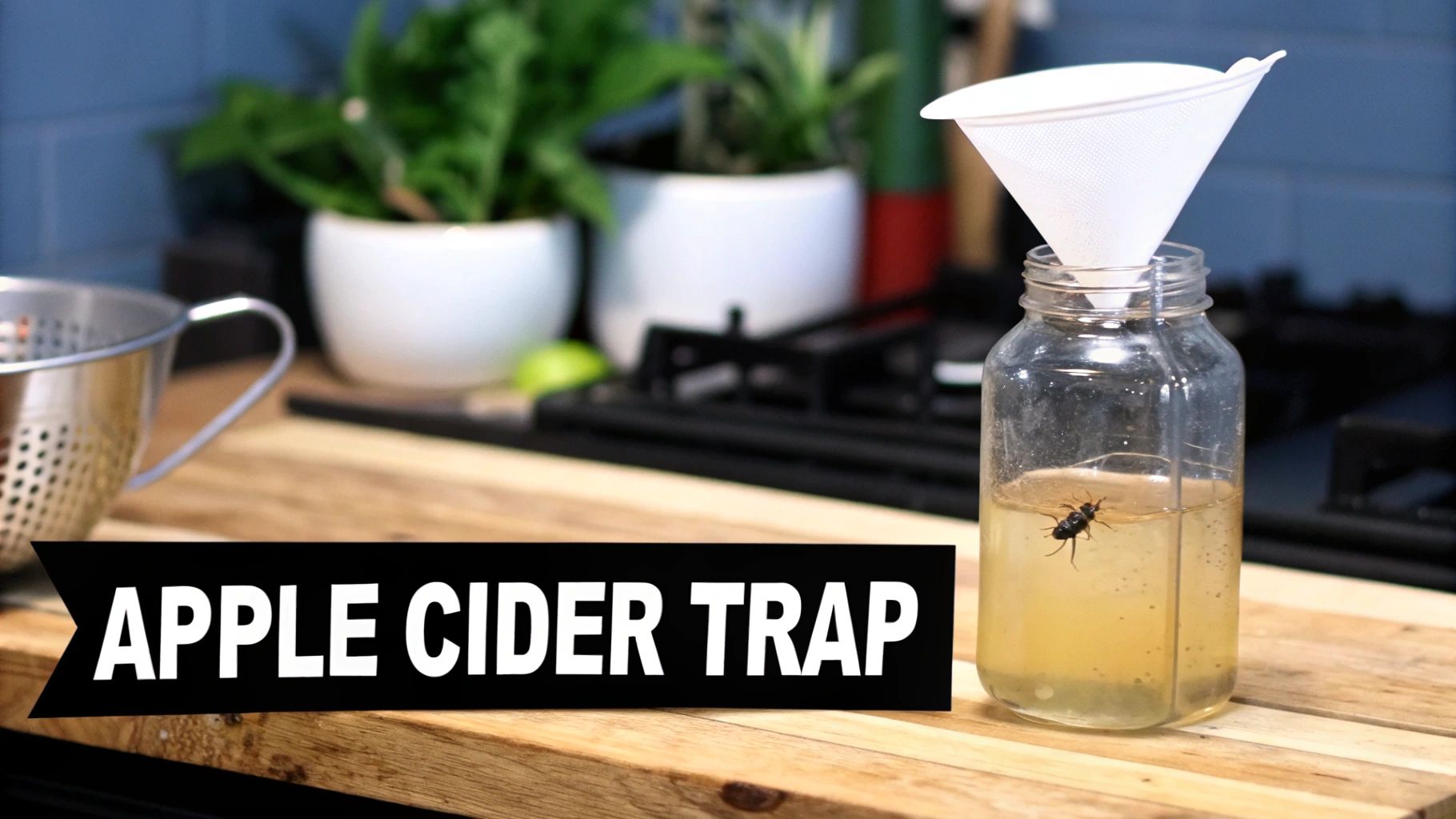
The classic apple cider vinegar (ACV) trap works because it mimics the scent of fermentation, a signal for food and a place to lay eggs, making it an irresistible lure.
Crafting the Classic ACV Trap
Building an effective trap is about the details. The goal isn't just to lure flies in; it's to ensure they can't get out.
Here’s how to build a trap that works:
- Choose a Container: A small jar, glass, or bowl will work.
- Pour the Bait: Add about an inch of apple cider vinegar. ACV is the most consistent and powerful attractant.
- Break the Surface Tension: This is the key. Add one drop of dish soap to the vinegar and stir gently. Without it, flies can stand on the liquid's surface and escape. The soap breaks the tension, so they fall in and drown.
- Cover It (Optional but Recommended): Stretch plastic wrap over the top and poke a few small holes with a toothpick. This lets the scent out but makes it nearly impossible for flies to escape.
For more creative baits and trap designs, explore this guide on the best fly trap for fruit flies.
Strategic Placement for Maximum Impact
Where you place your trap is as important as what's inside it. Position traps along the flies' daily commute—between their hangouts and food sources.
A trap’s effectiveness is multiplied by its proximity to a problem area. The goal is to intercept flies between their breeding grounds and their food sources, capturing them before they can reproduce.
Set up traps in these hotspots for the best results:
- Next to the Kitchen Sink: Drains offer moisture and organic matter.
- Beside the Fruit Bowl: Ground zero in most homes.
- Near Trash & Compost Bins: The ultimate buffet and breeding ground.
- Around Bar Areas: Place near liquor bottles, soda guns, and garnish trays.
DIY vs. Commercial Traps
While homemade traps are cheap and effective for minor issues, they may not be suitable for a business setting. Commercial options can be more discreet and powerful.
DIY Traps:
- Pros: Inexpensive, easy to make with household items, great for small-scale issues.
- Cons: Can look messy, need frequent refilling, not ideal for customer-facing areas.
Commercial Traps:
- Pros: Designed to be discreet, often use stronger, longer-lasting lures, and require less maintenance.
- Cons: Higher upfront cost and require refills.
The best strategy often combines both. Use DIY traps in out-of-sight areas like under sinks, and place sleeker commercial traps in customer-facing spots like bar tops. This two-pronged attack ensures you're hitting the problem from every angle.
Using Modern Solutions in High-Traffic Areas
In a busy commercial kitchen, restaurant, or event space, vinegar jars and sticky traps are insufficient. They look messy and lack the power for environments with constant traffic. Controlling fruit flies in these settings demands a professional approach that enhances the customer experience.
Modern, device-based solutions actively stop flies from reaching sensitive areas like buffet lines or food prep stations. They create a silent, chemical-free defense that keeps your presentation clean and your food untouched.
Creating Invisible Air Barriers
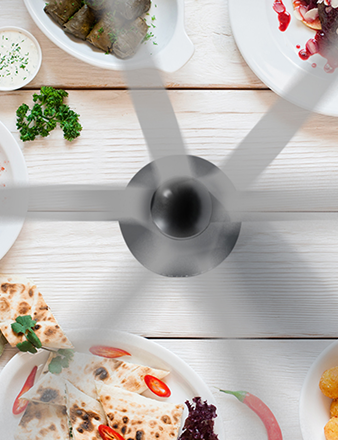
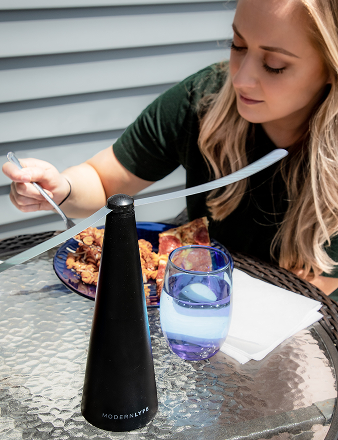
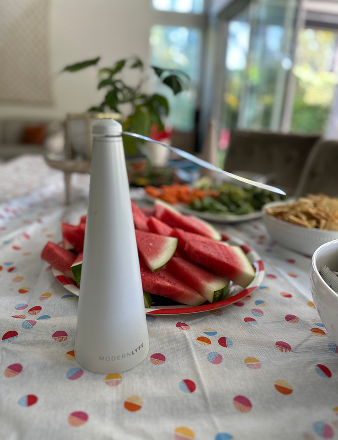
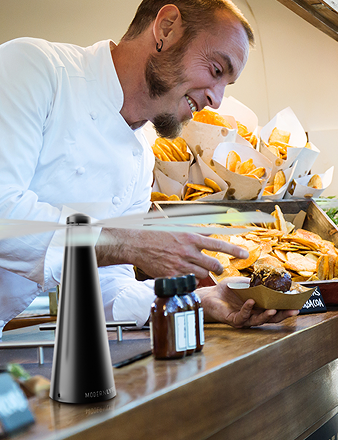
Specialized air-circulating fans are one of the most effective modern tools. These devices create a focused, invisible "air curtain." The gentle but consistent airflow is strong enough to disrupt a fruit fly's flight, making it nearly impossible for them to land on food or surfaces within the protected zone.
Think of it as a bouncer for your buffet. The flies can smell the food but can't get past the invisible wall of air to land on it.
This physical barrier works because fruit flies are incredibly weak fliers. Their small size makes them vulnerable to even subtle air currents, which they instinctively avoid.
Real-World Applications
This technology is incredibly practical for the food service and hospitality industries. It has been used successfully in various scenarios:
- Outdoor Wedding Receptions: Strategically placed fans keep the cake table and cocktail bar pest-free without chemicals or ugly traps.
- Restaurant Buffet Lines: A series of fans creates a continuous protected zone over an entire food display, ensuring a clean experience for guests.
- Commercial Kitchens: Fans over prep stations or near the pass-through window prevent flies from contaminating food as it’s plated.
This approach shifts the strategy from trapping flies after they're a problem to actively repelling them from the start. To learn more about how a fly repellent fan can elevate your sanitation standards, explore modern solutions for this persistent problem.
Create Your Long-Term Prevention Plan
Eliminating current fruit flies is just one battle. Winning the war means making your space a place they cannot thrive in. This requires shifting from a reactive to a proactive mindset, building sustainable habits that turn your home or business into a permanent no-fly zone.
A successful long-term strategy isn't about one massive deep clean. It's about small, consistent actions that become second nature. These routines systematically remove the food, moisture, and breeding grounds that fruit flies need to survive.
Build Sustainable Sanitation Routines
Break down prevention into daily, weekly, and monthly tasks to keep it manageable. When it comes to fruit flies, consistency is everything.
Here’s a practical breakdown:
- Daily Habits: These are non-negotiable. Wipe up spills immediately, sanitize trash cans after emptying, and wash bar mats and damp cloths. Before closing, ensure all food containers are sealed.
- Weekly Tasks: Go deeper. Use an enzymatic cleaner in all floor drains, pull out smaller equipment to clean underneath, and inspect all stored produce, discarding anything over-ripe.
- Monthly Checks: Take a big-picture view. Inspect the building for cracks or gaps around pipes and windows where pests could enter. For a permanent solution, consider installing bug screens to create a physical barrier.
Your First-Sighting Response Plan
The moment you spot a single fruit fly, the clock starts ticking. A fast, decisive response can stop a new population from establishing itself.
Think of a single fruit fly as an alarm bell. Your immediate actions can be the difference between a minor issue and a week-long battle.
Have a simple plan ready:
- Locate & Eliminate: Find the source immediately. It’s almost always a forgotten piece of fruit, a sticky spill, or a dirty drain. Remove it.
- Deploy Traps: Immediately set up a few ACV traps in that area to catch any other adult flies.
- Spot Sanitize: Thoroughly clean the source area and all surrounding surfaces.
Knowing When to Call a Professional
DIY methods are effective, but sometimes an infestation is too widespread or deeply hidden to handle alone. Knowing when you’re out of your depth is key.
Consider calling a professional pest control service if you see these red flags:
- You see flies in multiple, unconnected rooms.
- You’ve been cleaning and trapping for a week with no real improvement.
- You suspect the source is inaccessible, like inside a wall or deep within a plumbing system.
These situations often require specialized equipment and expertise. Professionals can pinpoint and resolve problems that are out of sight, bringing an industrial level of know-how to your door.
Common Questions About Fruit Fly Control
Even with a solid plan, questions can arise. Getting the right answers can mean the difference between winning and losing. Here are some of the most common issues.
Where Are These Fruit Flies Coming From?
Most infestations begin when you bring fruit flies home from the grocery store. Their tiny eggs are often already on the surface of fruits and vegetables.
They can also be lured in from outside by the scent of fermentation. Once inside, they will find any damp spot with a food source—a slow drain, a garbage disposal, or a forgotten grape under the fridge—and start a new population.
Are These Fruit Flies or Something Else?
Correctly identifying the pest is key, as different pests require different tactics.
Here’s a quick identification guide:
- Fruit Flies: Small, stout, tan-colored bodies with red eyes. You'll find them buzzing around fermenting fruit, open wine bottles, or trash cans.
- Fungus Gnats: Look like miniature mosquitos with long legs. Check houseplants, as they love damp soil.
- Drain Flies: Fuzzy, moth-like pests with heart-shaped wings. They stay close to sinks, showers, and floor drains, where they breed in the gunk inside pipes.
Why Aren't My Homemade Traps Working?
If your DIY traps are ineffective, it's usually due to a few common mistakes. First, ensure you're targeting fruit flies; fungus gnats are not attracted to apple cider vinegar.
Next, you may need to adjust your bait. Add a single drop of dish soap to the vinegar. This breaks the surface tension, causing flies to fall in and drown. Without soap, they can often stand on the surface and escape.
The most important reason traps seem to fail is that they only catch adults. If you haven't eliminated their breeding ground through sanitation, you're just catching adults while a new generation hatches. This frustrating cycle makes it feel like your traps are useless, even when they're working.
A stubborn fruit fly problem can be a major issue, especially for a restaurant or outdoor event. For a modern, chemical-free solution that protects your food and keeps guests happy, the stylish and effective fans from MODERN LYFE are a game-changer.
See how our fly fans can create a pest-free zone for any occasion by visiting our website: Explore MODERN LYFE Fly Fans.