When you light a fly deterrent candle, you’re doing more than setting a mood—you're creating a scent barrier. These candles release natural oils that smell great to people but overwhelm flies, effectively confusing their senses and driving them away. It's a simple, classic method for keeping outdoor dining areas and patios more comfortable.
How Fly Deterrent Candles Create A Scent Barrier

The idea is simple: instead of killing flies, you make the area unattractive to them.
Flies navigate the world by smell. Their sensitive receptors guide them to food and drinks. When a fly deterrent candle burns, it releases a cloud of aromatic compounds from its essential oils, creating an invisible "scent fence" around your tables.
The Power of Scent Overload
This scented cloud doesn't physically block flies, but it jams their sensory radar. The strong aromas from the candle mask the smells of food and drinks, making it hard for flies to find their target. Faced with this sensory chaos, most flies give up and find an easier meal elsewhere.
Common effective scents include:
- Citronella: The classic repellent. It masks the carbon dioxide and lactic acid that attract pests.
- Lavender: Pleasant for us, but offensive to many flying insects.
- Eucalyptus: Its sharp, clean scent is a powerful signal for flies to stay away.
- Peppermint: Another potent aroma that flies avoid because it's too strong for their senses.
The goal isn't to kill flies. It's to make an area so unappealing on a sensory level that flies leave on their own. This disruption turns your patio into a no-fly zone.
The demand for natural pest solutions is growing. The market for mosquito repellent candles, which work on the same principle as fly deterrent candles, was valued at US$ 1,493.6 million in 2023 and continues to climb. This trend shows a clear shift toward ambient, scent-based solutions over harsh chemicals.
For a deeper look, you can learn more about how citronella candles work against fruit flies.
Do These Candles Actually Work? A Realistic Look at Effectiveness

So, do the candles work? It's not a simple yes or no. The "scent fence" concept is solid, but real-world performance depends entirely on the environment.
Think of the scent from a candle as a small bubble of protection. Inside that zone, it's effective. But a breeze can easily pop that bubble, scattering the aroma and rendering the candle useless. High humidity can also weigh down the scented molecules, shrinking your coverage. For any business needing consistent results, this variability is a major drawback. One candle in the middle of a big table is more hope than strategy.
Understanding the "Bubble of Protection"
A single candle creates a tiny zone of protection, usually just a few feet. Placing one on a large patio and hoping for the best won't work. Flies will simply fly around the scent and land on the other side of the table.
To get real coverage, you need a deliberate strategy. This means creating an overlapping grid of protection with multiple candles to build a perimeter, not just lighting a single wick.
The good news is that formulations are improving. With growing interest in natural repellents, modern candles can achieve 60-80% fly repulsion over a 4-6 hour burn time. Since flies can infest 40% more outdoor spaces in peak season, a solution offering 20-30% better coverage than a temporary spray (in still air) is significant. You can find more data on the rise of natural fly repellents at Data Insights Market.
Setting Realistic Expectations for Your Space
Even with a perfect setup, it's important to set the right expectations. Fly deterrent candles are about reduction, not total elimination. They do a good job of discouraging casual flies and can significantly lower the pest count, but they won't create an impenetrable force field.
A common mistake is expecting a few candles to create a perfect barrier. In reality, they create pockets of deterrence that make an area less attractive to flies, encouraging them to go elsewhere.
Here are the real-world variables you need to consider:
- Wind Speed: A light breeze of 5 mph can blow the scent cloud away. Patios with walls or screens will see better results than open decks.
- Space Size: The larger the area, the more candles you'll need. A small four-top might only need two, but a long banquet table could require six or more.
- Fly Density: If you have a major fly problem, the sheer number of insects might overwhelm the deterrent effect.
Ultimately, these candles are one tool in your pest control arsenal. They are a great addition for improving the guest experience but aren't a standalone fix for a serious fly issue, especially when the weather isn't cooperating.
Navigating Safety And Health Codes In Business
Fly deterrent candles can improve ambiance, but using an open flame in a commercial space is a serious decision. For any hospitality business, guest safety and regulatory compliance are non-negotiable. Think of these candles as a managed risk, not just decor.
The most obvious danger is fire. On a busy patio, a gust of wind or a bumped table could tip a candle near napkins or a tablecloth. Your staff must be trained to place them securely, away from table edges, and far from children or clumsy guests.
Managing The Guest Experience
Beyond fire risk, burning candles produce smoke and scent, which can be a problem for your guests.
Even a small amount of smoke can irritate someone with asthma or allergies. A scent that is pleasant to one person might be overpowering to another.
Then there's the food. You work hard to create dishes with specific aromas. A heavy citronella or eucalyptus scent can clash with the flavors you've crafted, hijacking the culinary experience.
The bottom line: a solution for one problem (flies) shouldn't create a bigger one for your guests or your business. Prioritizing safety and comfort ensures you're enhancing the experience, not detracting from it.
Staying Compliant With Regulations
This is where it gets serious. Health and safety codes are not suggestions. Local fire marshals have specific rules for open flames in public venues, covering everything from candle holders to placement and supervision. A single mistake can lead to a heavy fine during an inspection.
Additionally, some health departments may flag strong, non-food scents as a violation, especially indoors. It's crucial to know what inspectors look for. A good starting point is a detailed restaurant health inspection checklist.
Before lighting a single wick, review these points:
- Fire Safety Protocols: Does all staff know how to handle a small candle fire? Are candles kept a safe distance from flammable items?
- Ventilation Assessment: Is your space well-ventilated enough to prevent smoke from bothering guests?
- Guest Sensitivities: What is your plan for guests who complain about the smoke or scent?
- Local Code Compliance: Have you checked with your local fire department and health inspector about their rules? You can learn more about common restaurant health code violations to avoid surprises.
Using fly deterrent candles in a business requires a proactive approach to risk management to protect your customers, staff, and reputation.
Comparing Fly Deterrent Candles To Modern Alternatives
Fly deterrent candles have their place, but they are just one option for pest control. For hospitality professionals, the best choice depends on effectiveness, safety, guest experience, and aesthetics.
It’s a balancing act. You need a welcoming atmosphere, but you also need fly management that is reliable.
Candles offer a low initial cost and add warm, flickering light. The problem is their inconsistency. A single gust of wind can eliminate their protective scent bubble, leaving guests to deal with flies.
This is where modern alternatives excel. They offer a level of reliability that candles can't match.
Fly Fans: The Professional Standard
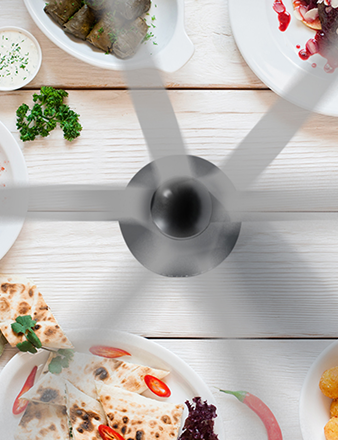
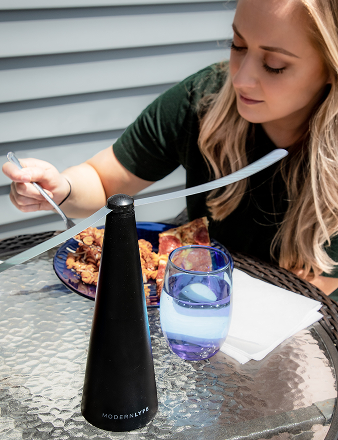
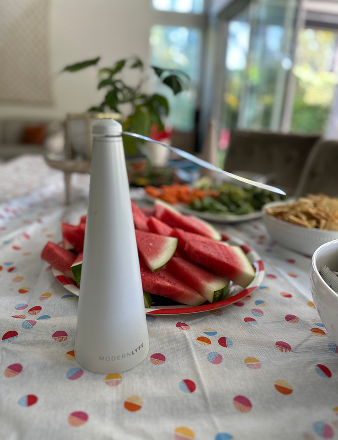
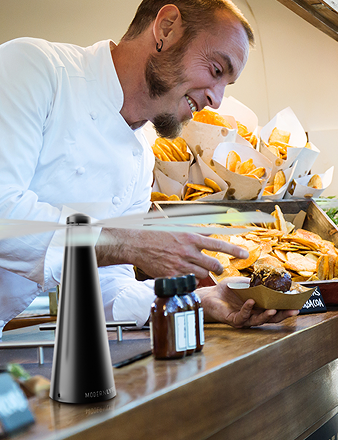
Fly fans have become the industry standard for smart restaurant owners and event planners. Unlike candles, a breeze doesn't stop them. They create a gentle, constant airflow that physically prevents flies from landing on tables or food.
Here’s why they are so popular:
- Consistent Performance: They work equally well in breezy or calm conditions, providing peace of mind.
- Enhanced Safety: No open flame means no fire hazard. They are safe around children, pets, and guests.
- Guest Comfort: They are whisper-quiet, odorless, and produce no smoke, ensuring they don't interfere with the dining experience.
The core difference is simple: candles create a passive chemical barrier that is easily broken, while fly fans create an active physical barrier that is always on. For more on the science, our guide on how fly fans work explains it all.
Other Alternatives: Bug Zappers and Chemical Sprays
To provide a full picture, let's briefly cover other common methods, though they are generally unsuitable for professional hospitality settings.
Bug zappers are not for guest-facing areas. The "zap" and sizzle are disruptive and unappetizing. The sight and sound of insects being electrocuted can ruin the ambiance. Keep them in back-of-house areas, far from customers.
Chemical sprays introduce other problems. While they kill flies, they risk contaminating food and triggering allergies. The lingering chemical smell doesn't complement a chef's menu.
When comparing options, especially candles versus a flameless alternative like a fly fan, safety must be a top priority.
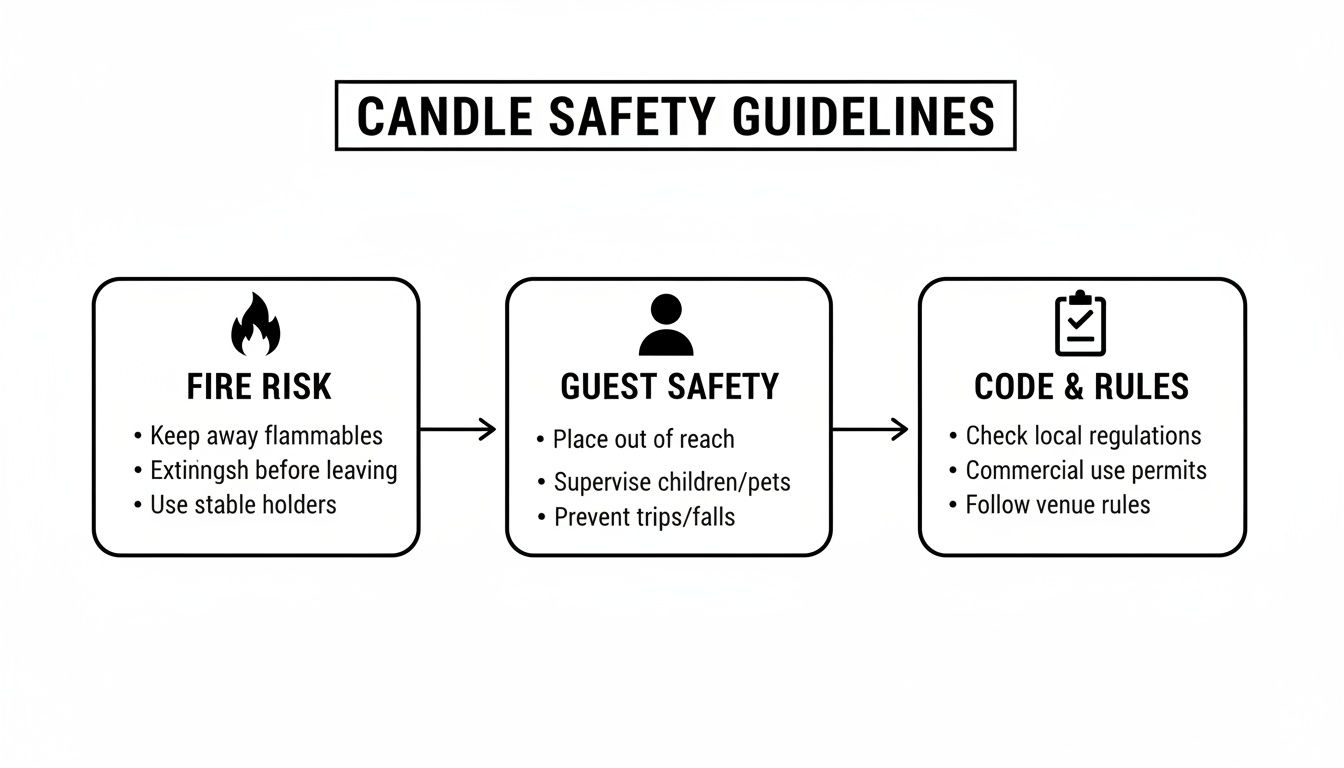
This graphic highlights the key issues. Using open flames in a commercial space means managing fire risk, guest safety, and local regulations—headaches that modern, flameless options help you avoid.
Choosing the right tool is crucial. Here's a direct comparison of the most common professional options.
Fly Control Methods Compared For Professional Use
| Feature | Fly Deterrent Candles | Fly Fans (Modern Lyfe) | Bug Zappers | Chemical Sprays |
|---|---|---|---|---|
| Effectiveness | Moderate (only in calm air) | High (works in any condition) | High (in a contained area) | High (short-term) |
| Guest Experience | Good (adds ambiance) | Excellent (silent, odorless) | Poor (noisy, disruptive) | Poor (odor, health concerns) |
| Safety | Low (open flame, fire risk) | High (flameless, kid/pet safe) | Moderate (shock hazard) | Low (toxic, risk of contamination) |
| Placement | Tabletop only | Versatile (tabletop, buffet) | Back-of-house, away from guests | Not for use in dining areas |
| Aesthetics | Can be decorative | Sleek, modern design | Industrial, unappealing | None (invisible but odorous) |
| Operating Cost | Ongoing replacement cost | Low (battery or rechargeable) | Moderate (electricity, bulb changes) | High (frequent reapplication) |
While candles can play a role, fly fans offer the most reliable and guest-friendly solution for a professional environment.
This matters because flies pose a real health risk; one study found E. coli on flies in 92% of urban samples. This has pushed 65% of U.S. hotels to adopt professional-grade repellents. While candles can be 85% effective in still air, pairing them with fly fans can boost that to over 95%, showing how modern and traditional methods can work together. You can find more industry data about the insect repellent market at Fact.MR.
So, you've weighed the options and decided to include fly deterrent candles in your strategy. To get real results safely, you need to be strategic.
This is about creating a protective bubble for your guests, not just adding ambiance. Placement is everything, which means considering your layout, foot traffic, and airflow.

Creating a Protective Perimeter
A common mistake is placing one candle on a large table and expecting it to work. A single candle only protects a small radius. The goal is to create a "scent fence"—an overlapping grid of aroma that covers the entire guest area.
Start by placing candles along the perimeter of your patio or tent on low, stable surfaces where they won't be knocked over. This helps stop flies before they reach the tables.
Next, bring the defense to the tables themselves. Don't place a large candle right next to the food. Instead, use smaller candles toward the corners of a square table or space them out evenly on long ones.
The golden rule for candle placement: stability and distance. Every candle must be in a sturdy, non-flammable holder and kept at least three feet from anything flammable, like napkins, menus, or dry floral arrangements.
This layered strategy—perimeter and tabletop—creates a more consistent scent barrier and turns a simple decoration into an active defense system.
Timing and Airflow Considerations
When you light the candles is as important as where you place them. Waiting until guests are seated and swatting at flies is too late. Light your fly deterrent candles 20-30 minutes before service begins to allow the scent to build up.
Be mindful of airflow. A steady breeze is your candle's worst enemy. If your patio is windy, use planters or screens as natural windbreaks to help contain the scent.
Follow these steps for an effective setup:
- Map Your Space: Walk the area and identify the best spots for candles—the perimeter, table corners, and high-traffic zones like buffets or host stands.
- Calculate the Right Number: A good rule of thumb is one candle for every 3-4 feet of the perimeter you want to protect. This provides enough overlap without overwhelming guests.
- Monitor Throughout Service: This isn't a "set it and forget it" solution. A designated staff member should periodically check that wicks are trimmed, flames aren't too high, and used candles are replaced safely.
This attention to detail is what separates a professional, effective setup from one that’s just for show. It shows guests you care about their comfort.
Choosing A Fly Solution That Matches Your Brand
Everything in your business, including how you handle pests, tells a story about your brand. Your approach to fly control communicates your standards for quality and guest experience.
Fly deterrent candles can offer a rustic charm, but in a professional setting, their drawbacks are clear. An open flame is a constant fire hazard, smoke can irritate guests, and a gust of wind renders them useless. Relying on them is a gamble.
Does Your Fly Control Fit Your Vibe?
When weighing your options, ask yourself these questions to ensure your choice aligns with your brand promise.
- Family-Friendly vs. Fine Dining: Is an open flame appropriate where children are present? Does the sleek, modern look of a flameless fan better suit a high-end atmosphere?
- Ambiance vs. Reliability: Can you afford for your fly protection to fail when a breeze picks up? Or do you need a solution that works consistently?
- Scent vs. Safety: Is a pleasant aroma more important than the non-negotiable safety of a flameless alternative?
Your brand is built on the promise of a consistent, high-quality experience. A professional-grade solution like a fly fan upholds that promise by ensuring a comfortable, fly-free environment without compromise.
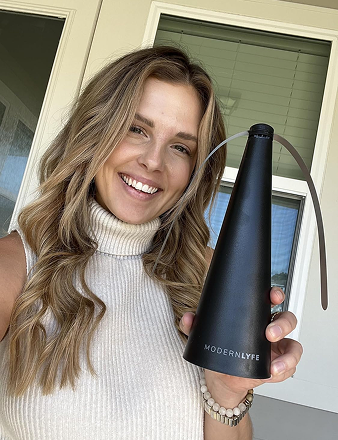
This is where modern alternatives like fly fans excel. They deliver consistent, silent, and odorless protection in any condition. They're safe, effective, and have a clean aesthetic that fits a contemporary brand.
Ultimately, choosing a dependable and discreet solution reinforces your commitment to excellence. It's a small detail that guarantees a better experience for every guest, every time.
Your Top Questions About Fly Deterrent Candles, Answered
We've covered the science, safety, and best practices for using fly deterrent candles. Here are answers to a few more common questions.
Are These Candles Actually Safe to Use Around Food?
Yes, with a major caveat: proper placement. A candle should never be so close that wax or soot could fall into a guest's dish. Use them to create a perimeter defense, keeping them a safe distance from food on tables or buffet lines.
And, of course, never leave an open flame unattended.
How Many Candles Should I Actually Buy For My Patio?
There's no single formula, as every space is different. A good starting point is one candle for every three to four feet of the area you want to protect.
For individual tables, one or two smaller candles are often sufficient. The key is to observe the airflow and adjust your setup as needed.
Think of it as creating an overlapping "scent fence" rather than relying on a single spotlight. A grid of scent provides much more reliable coverage than one large candle.
Can I Just Use These Inside If I Have a Fly Problem?
I strongly advise against it, especially in a commercial dining room. Indoor spaces trap smoke and strong scents, which can be a problem for guests with allergies and can clash with the aroma of your food.
Furthermore, local fire and health codes often have strict rules against open flames indoors. For an indoor fly problem, a flameless option like a quality fly fan is safer, more effective, and won't cause issues with inspectors.
Ready to move past the inconsistent results of candles and invest in a truly professional solution? See how MODERN LYFE fly fans can create a completely fly-free zone for your guests—safely, silently, and effectively. Check out the options at https://modernlyfe.com.