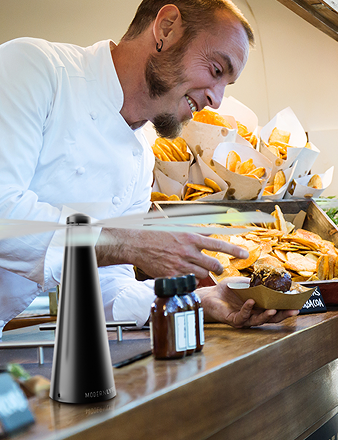
A DIY fruit fly trap is brilliant in its simplicity. It lures pests into a container with a sweet, fermented bait they can’t resist—and then can’t escape. It's a non-toxic, effective way to get an infestation under control by turning a fly's biology against it.
The best part? You can build one in minutes using items you already have.
Why Fruit Flies Are Drawn to Your Space
To win this battle, you need to think like a fruit fly. These tiny pests are wired to detect the faintest scent of fermentation, which signals a five-star review for a place to eat and lay eggs. Your clean kitchen or busy bar can quickly become their new favorite spot.
The main attractant is ethylene gas, a compound released by ripening fruit. That beautiful fruit bowl on your counter isn't just a healthy snack—it's a flashing neon sign for every fruit fly in the area. And since a single female can lay up to 500 eggs in her short life, a few flies can become a swarm in just over a week.
Common Fly Hotspots
Pinpointing breeding grounds is the first step to taking back control. At home or in a commercial kitchen, flies are always hunting for specific sources of food and moisture.
Keep an eye on these key areas:
- Ripening Produce: Bananas, tomatoes, and apples on counters are the usual suspects.
- Sugary Spills: A tiny drop of soda, wine, or juice is a feast.
- Damp Drains & Disposals: Gunk stuck in pipes creates the perfect dark, moist nursery.
- Wet Sponges & Mops: These can hold just enough moisture for flies to lay eggs.
This isn't just a minor annoyance; for the food service industry, it's a serious operational and financial headache. The global fruit fly trap market was valued at $368 million in 2024 and is projected to hit $682 million by 2033. This surge shows just how critical effective control is for businesses and homes.
Finding and eliminating these attractants does more than just clean up—it breaks the fruit fly life cycle. This proactive approach makes any trap exponentially more effective because you’re removing the competition.
Ultimately, your trap needs to be the most tempting offer on the table. When you know what draws these pests in, you can strategically remove their other options and guide them right where you want them. For a deeper dive into their behavior, check out our guide on what attracts fruit flies. This knowledge is your best weapon.
Assembling Your High-Performance DIY Trap
You don't need fancy gadgets or harsh chemicals to win the war against fruit flies. The most effective trap is one you can make in minutes with things from your kitchen. The goal is simple: create a scent they can't resist and a container they can't escape.
Whether you're battling a small swarm at home or protecting a catering spread, the principle is the same. It all starts with the right vessel.
Choose Your Container and Funnel
The trap's structure is just as critical as the bait inside. You’re building a one-way street for flies.
- Find a Container: A glass jar, a plastic bottle with the top cut off, or even a drinking glass works. It just needs an opening wide enough for a small funnel.
- Make a Paper Funnel: Roll a piece of paper into a cone. The magic is in the opening at the bottom—keep it small, about a quarter-inch wide. That’s big enough for a fly to crawl through but makes it nearly impossible to find their way out.
- Set the Trap: Place the paper cone into the container's opening. The tip of the funnel should point down, hovering about an inch above the bait. A bit of tape around the rim seals off any escape routes.
The funnel is the genius of the design. It exploits the flies' behavior. They follow the scent down through the wide opening, but once inside, they can't figure out how to fly back up through the tiny hole.
Mix the Perfect Bait
Now for the secret sauce. The bait is what makes this work, and thankfully, fruit flies aren't picky. They're drawn to anything that smells like fermentation, signaling a good meal and a place to lay eggs.
Get fantastic results with this simple three-part recipe:
- The Lure: Pour about an inch of apple cider vinegar into your container. That pungent, fermented smell is an open invitation. No apple cider vinegar? Red wine or even a splash of beer work, too.
- The Clincher: Add a single drop of dish soap. This is non-negotiable. The soap breaks the liquid's surface tension. Without it, flies can land, drink, and fly off. With it, they sink and are trapped for good.
- The Amplifier: To make your trap irresistible, add a small piece of overripe fruit. A mushy slice of banana or a few squashed grapes will release extra scent signals, making your trap the most appealing spot in the room.
This simple diagram shows why this bait works so well by highlighting where these pests come from.
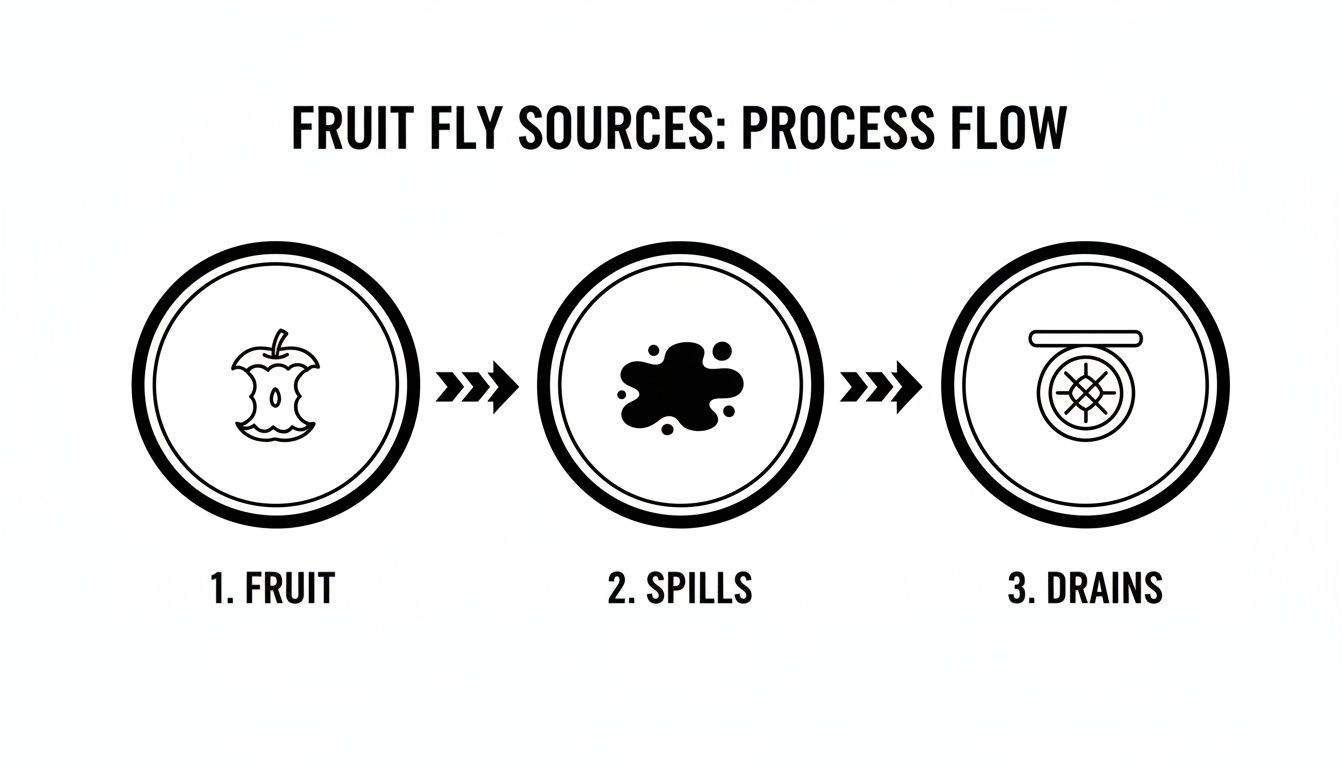
As you can see, ripening fruit, sugary spills, and gunky drains are the main culprits. Your bait perfectly mimics these attractants, which is the key to its success.
Effective Bait Combinations for Your Trap
While the apple cider vinegar recipe is a classic for a reason, sometimes you need to switch things up. Here’s a quick comparison of different bait recipes to help you find the most effective lure for your situation.
| Bait Combination | Primary Attractant | Best For | Pro Tip |
|---|---|---|---|
| Apple Cider Vinegar + Dish Soap | Fermented sugars | Kitchens, pantries, general use. A reliable, all-purpose solution. | Add a piece of overripe banana to supercharge the scent. |
| Red Wine + Dish Soap | Ethanol & fermentation | Bars, event spaces, or anywhere wine is served. Flies love it. | Use a cheap, fruity red wine; no need to waste the good stuff! |
| Beer + Ripe Fruit + Dish Soap | Yeast & sugars | Outdoor patios, breweries, and catering events where beer is present. | A stale lager or ale works better than a hoppy IPA. |
| Balsamic Vinegar + Sugar + Dish Soap | Acetic acid & sweetness | Areas with fewer fruit sources, like living rooms or offices. | The sweetness of the sugar gives this a broader appeal than vinegar alone. |
Experimenting with these combinations can make a huge difference, especially if one recipe isn't performing as well as you'd like. For an even deeper dive, learn more about creating a powerful fly trap with bait in our detailed guide.
Strategic Placement for Maximum Impact
A great fruit fly trap is only half the battle; where you put it makes all the difference. It’s tempting to just set it next to the fruit bowl, but for real results, you need to think like a fly. The trick is to intercept them where they hang out, long before they start buzzing around your food or family.
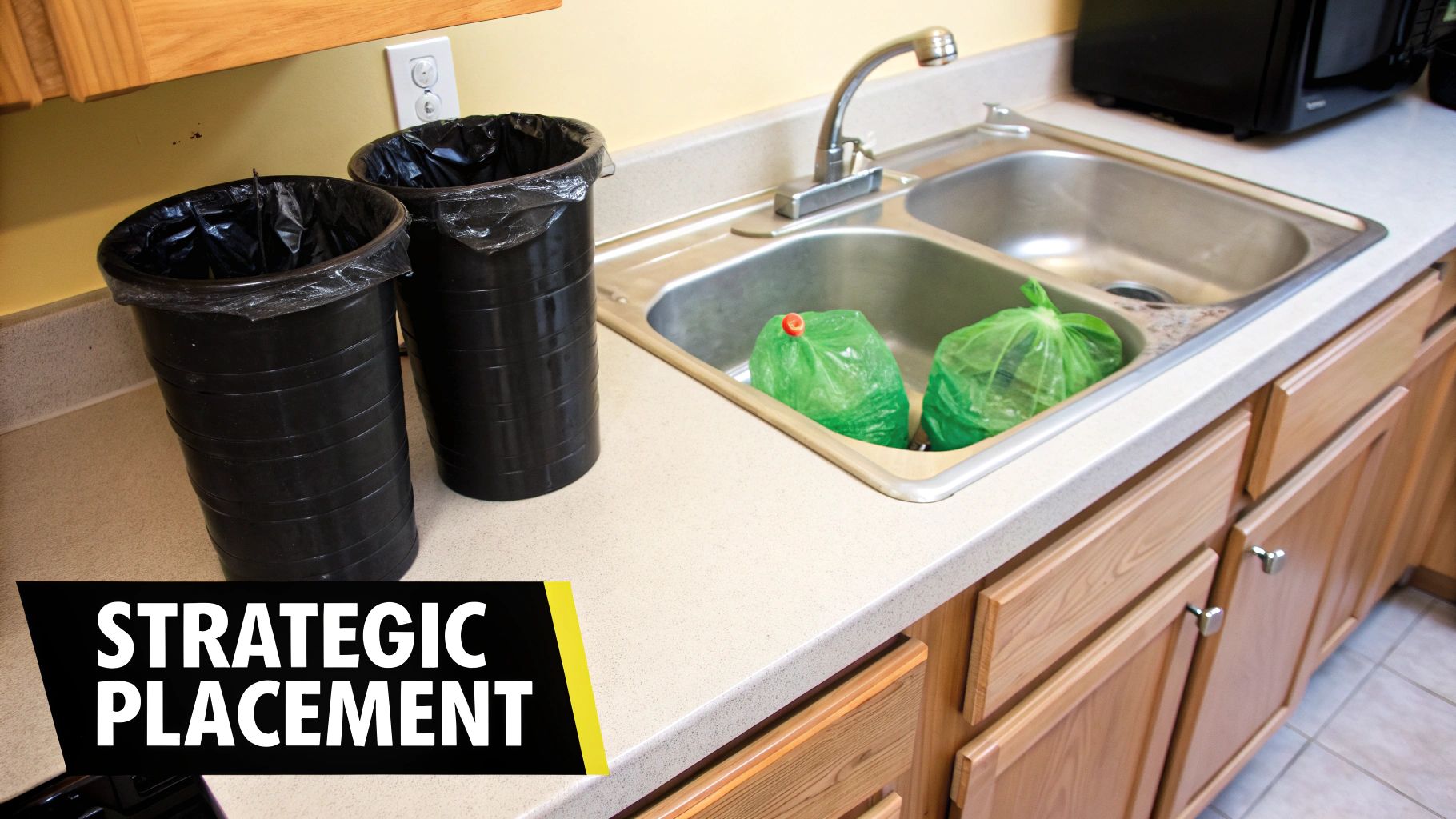
This means looking past the obvious and zeroing in on the hidden hotspots where flies feed and breed. Your goal is simple: put the trap where they'll find it first.
Prime Real Estate for Your Trap
Every kitchen, bar, or patio has magnets for fruit flies. If you can identify these high-traffic zones, your catch rate will skyrocket.
For a restaurant or bar, be discreet but deadly effective:
- Behind the Bar: Place traps near soda guns, under beer taps, and around liquor bottles with pour spouts.
- Bussing Stations: This is ground zero for dirty dishes—a fly buffet. A trap here is non-negotiable.
- Near Drains: Floor and sink drains are notorious breeding grounds. A well-placed trap can stop an infestation before it starts.
For homeowners or event planners, your focus is just as crucial:
- Beside the Sink: Your sink and garbage disposal are a perfect storm of moisture and food scraps. It’s a five-star resort for fruit flies.
- Next to the Trash Can: The main trash bin is a constant source of odors that flies can't resist.
- Near Compost Bins: If you have an indoor compost pail, a trap is a must to keep the population from exploding.
This goes beyond just being tidy; it's fundamental to food safety. In fact, it's a massive industry. The fruit fly trap market hit $540 million in 2024 and is expected to climb to $1.12 billion by 2033. For hotel coordinators and professional caterers, a single fly problem can spiral into costly health code violations. Strategic trap placement isn't just a good idea—it's smart business. You can learn more about fruit fly trap market trends and see why this is a growing concern.
Locations to Avoid
Knowing where not to put a trap is as important as knowing where to put one. You want to solve the problem quietly, not advertise it.
Key takeaway: Never place a fruit fly trap directly on a dining table, a buffet line, or any active food service area. It’s unappetizing for guests and can draw flies closer to the food you're trying to protect.
Instead, think about the periphery. Place traps on a nearby counter, a low shelf, or another out-of-the-way spot. This lets the trap do its job in the background, catching flies before they make it to the main event.
A Complete Fly Management Plan
While a DIY trap is a great first step, lasting control requires a bigger game plan. Think of your trap as one part of a larger strategy. An effective plan shifts your approach from just reacting to a fly problem to proactively making your space the last place they want to be.
The secret isn’t setting more traps—it’s removing the competition. When you get rid of other food sources and breeding spots, your trap becomes the most appealing thing in the room. This is critical in high-traffic spots like restaurants and event venues where a small problem can escalate quickly.
Build a Foundation of Sanitation
Fruit flies are on a simple mission: find fermenting material to eat and lay eggs in. Your first and best defense is making that mission impossible through obsessive cleanliness. This goes beyond wiping down counters; it means committing to a deep, consistent sanitation routine.
For any food business, a detailed commercial kitchen cleaning checklist is your best friend in creating a fly-free zone. It’s not just a list; it’s a system.
Here’s where to focus your efforts:
- Attack the Drains: Pour hot water or a drain cleaner down all sink and floor drains every night. This breaks up the gunk where flies breed.
- Wipe Up Spills Instantly: A small splash of wine or a sticky spot of soda is a five-star resort for a fruit fly. Clean it up right away.
- Seal Up Produce: Don’t leave ripening fruit out in the open. Store it in the fridge or in sealed containers.
- Manage Your Trash: Empty trash and compost bins daily, at a minimum. Just as important, wash out the actual cans regularly to get rid of any sticky residue.
A spotless kitchen forces fruit flies to actively hunt for food, making them far more likely to find—and enter—your trap. You're not just cleaning; you're directing traffic.
Maintain Your Traps for Peak Performance
Once your sanitation is dialed in, keep your traps working. Setting them and walking away isn’t enough. A trap is only as good as its bait.
Check your traps every day. This isn't just to see your success; it’s to gather intel. If the trap by the bar fills up twice as fast as the one in the kitchen, you’ve found a major hotspot that needs extra cleaning.
Most importantly, refresh the bait every 4-5 days. The sharp, fermented scent of apple cider vinegar is what lures the flies, but it fades as it evaporates. A fresh batch of bait keeps your trap irresistible and your fly management plan running at full strength.
Take Your Fly Defense to the Next Level with Fly Fans
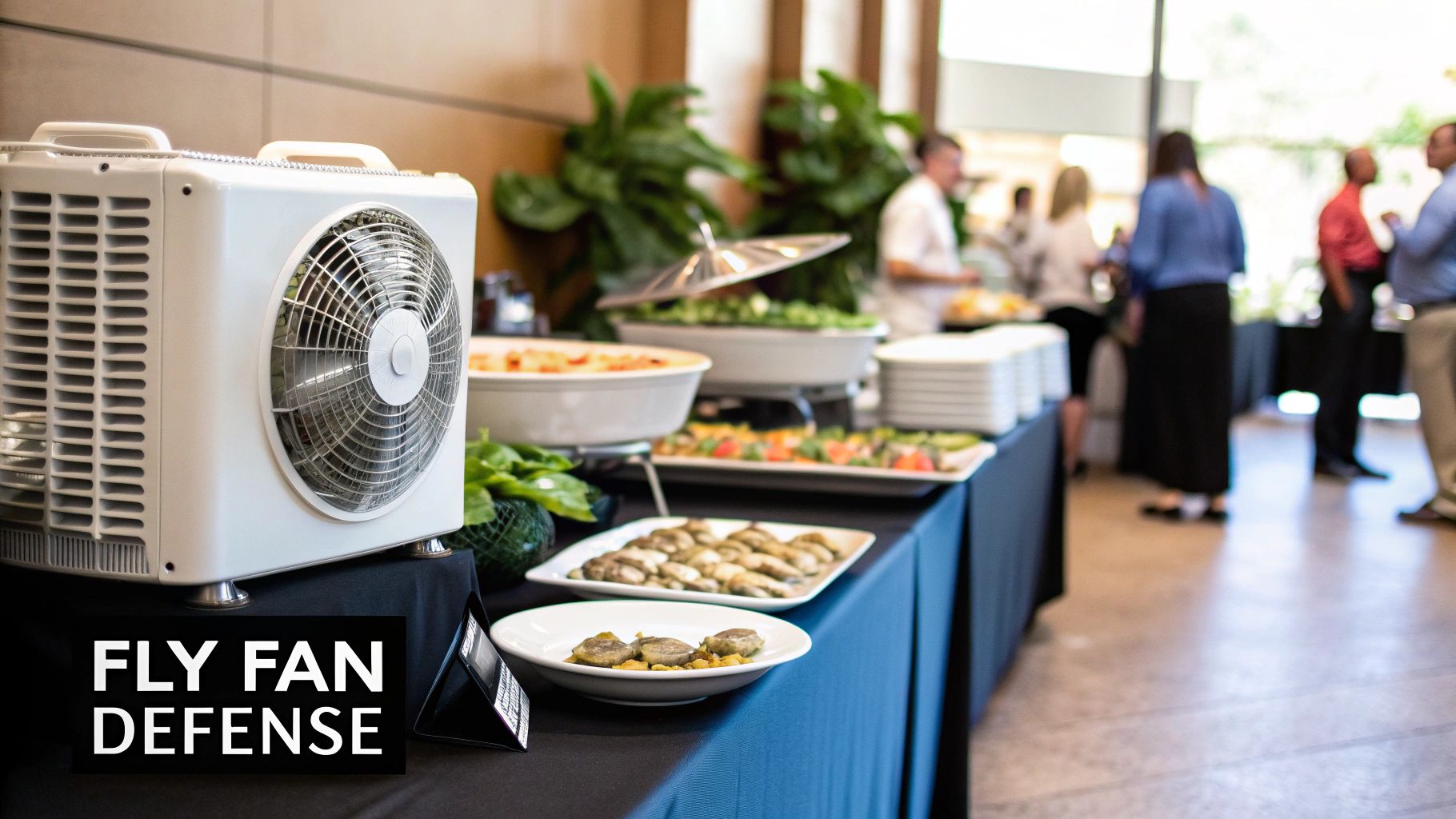
Your DIY fruit fly traps are fantastic for capturing pests that are already buzzing around. But what about high-stakes situations like a wedding buffet, a bustling patio, or an outdoor event? For those moments, you need to stop flies from ever reaching the food.
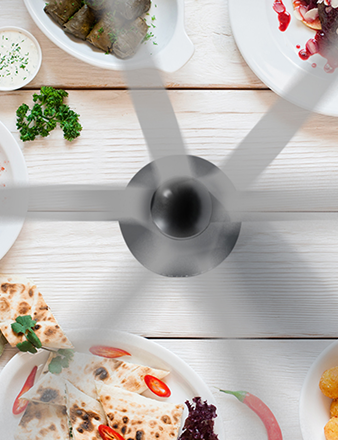
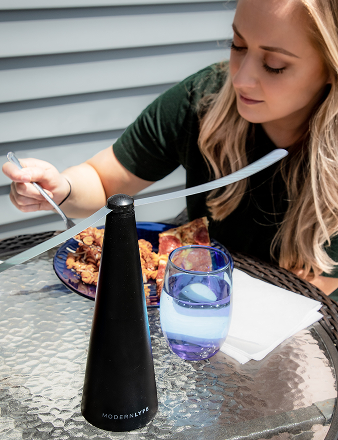
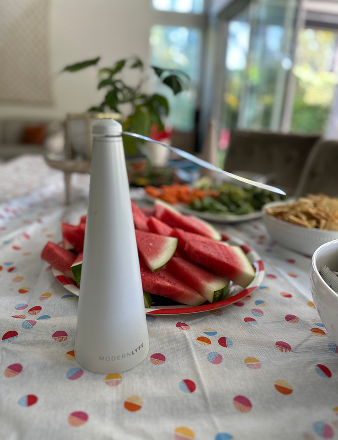
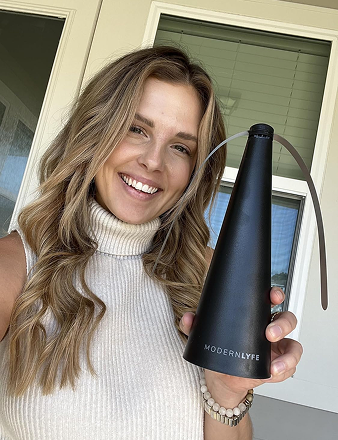
This is where an active approach makes all the difference. Instead of just luring flies away, you can create a gentle, invisible barrier they can’t get through. Modern Lyfe's fly fans are designed for this exact job. They’re quiet and elegant, but they create a consistent air current that makes it impossible for flies to land.
A Two-Pronged Attack on Pests
When you pair your DIY traps with fly fans, you create a comprehensive system that protects your entire space. You’re not just reacting to a problem; you’re proactively managing the environment.
Here’s how to combine them for the best results:
- Set Your Perimeter: Place your homemade fruit fly traps around the edges of your dining or event area. Think of them as your first line of defense—near doorways, behind serving stations, or next to trash cans to intercept flies as they enter.
- Guard the Food Directly: Put the Modern Lyfe fly fans right on buffet tables, next to the dessert spread, and on individual dining tables. The soft, reflective blades create a visual distraction, and the gentle breeze is a physical barrier that keeps them from landing on the food itself.
This one-two punch of passive capture (traps) and active defense (fans) elevates food safety and guest comfort. It’s no surprise that as outdoor dining and events become more common, the fly trap market is expected to grow from $415 million in 2025 to $623 million by 2030. People are looking for smart, effective solutions.
The magic is how they work together. Your traps quietly capture stragglers in the background, while the fans actively keep the most critical areas—the food and your guests—completely clear. It’s a complete system for a truly fly-free experience.
It's a simple principle. Air movement is a natural fly deterrent, as explained in this guide to the breezy benefits of fans. But for a solution designed to protect food with precision, a purpose-built fly fan is your best bet.
Your DIY Fruit Fly Trap FAQs
Even the simplest instructions can leave a few questions. When you're trying to get rid of these pests, the small details make all the difference. Let's tackle some common issues.
How often should I refresh the bait?
Swap out the bait every 4-5 days to keep your trap working at its best. The strong, fermented smell from the apple cider vinegar is the key, and that scent fades as the liquid evaporates.
For a high-traffic spot—like a busy restaurant bar or a weekend catering event—be more aggressive. In those situations, change the bait every 2-3 days to ensure your trap stays more appealing than anything else in the room.
Why isn't my fruit fly trap catching anything?
It's frustrating when a trap just sits there. If you're not seeing results, it almost always comes down to one of three things.
- The Bait Isn't Tempting Enough: Is your apple cider vinegar old or weak? It needs a potent smell. To give it a boost, toss in a small piece of overripe fruit. A mushy slice of banana works like a charm.
- Your Funnel Has an Escape Hatch: The funnel is the secret to this trap. Make sure the opening at the bottom is small enough—about a quarter-inch wide is perfect. If it's too big, flies can just wander back out.
- It's in the Wrong Spot: Your trap might be too far from where the flies are hanging out. Move it right next to a known hotspot, like the kitchen sink, garbage disposal, or trash can.
Put the trap directly in their flight path. Don't make them search for it; place it where they're already looking for a meal.
Can I use something besides apple cider vinegar?
Absolutely. While apple cider vinegar is the go-to for a reason, it's not your only option. Other things you have on hand will work just as well.
Leftover red wine or beer can be a fantastic lure; both have the fermented aroma that fruit flies can't resist. In a pinch, even a splash of fruit juice can work. The most important thing, no matter what liquid you use, is to always add that drop of dish soap. It breaks the surface tension and makes the trap effective.
Are these DIY traps safe around food?
Yes, and that’s one of their biggest perks. A homemade fruit fly trap is completely non-toxic and food-safe, making it ideal for sensitive places like kitchens and dining areas. You're just using pantry ingredients, so there are no worries about chemical sprays contaminating your food.
For the ultimate defense at a catered event, use a two-pronged approach. Place a few DIY traps nearby to lure and capture flies, but position a Modern Lyfe fly fan directly over the food. This creates a powerful, layered defense that keeps your food pristine and your guests happy—all without any chemicals.
When you need to combine passive trapping with active defense, the elegant and effective fly fans from MODERN LYFE are the answer. They create a gentle, fly-free zone right where it matters most, ensuring your events and meals are flawless. Discover how they work at https://modernlyfe.com.