You're standing inside a nearly finished food truck, surrounded by stainless steel, wiring, propane lines, and equipment invoices. Then inspection day arrives, and the inspector finds that the hand sink is wrong, the gray-water capacity doesn't match the plumbing setup, or the hood and suppression system weren't sized for the cooking line. Service stops before it starts.
A reliable food truck equipment checklist prevents that outcome by treating the truck as a connected operating system. Compliance, capacity, service flow, power, fire protection, and maintenance have to work together. Buying attractive equipment first and solving code issues later is one of the fastest ways to create rework, delays, and downtime.
Starting With the Right Equipment Mindset
Build the checklist in layers, not as a shopping list. Start with regulatory compliance, then establish production capacity, map the service flow, and finish with the daily maintenance rhythm. This order reflects how a mobile kitchen gets approved and how it operates under pressure.
The first layer answers whether the truck can legally and safely operate. The second asks whether the equipment can produce the menu during the busiest service period. The third places refrigeration, prep, cooking, holding, POS, and pickup where staff can move without crossing dirty and clean workflows. The fourth makes sure the unit can be opened, serviced, cleaned, and closed consistently.

Set capacity before choosing equipment
Write the menu down item by item. For each item, estimate the batch size, holding method, cooking time, recovery requirement, and expected demand during the busiest hour. You don't need false precision. You do need a defensible target that tells you whether a small griddle, a range, a fryer, or a combination line can keep up.
That capacity target also determines refrigeration volume, prep-table space, dry-storage access, and power demand. A truck that can cook quickly but can't hold prepared ingredients safely will still fail operationally.
Practical rule: Every item on the equipment list should have a job during prep, service, or breakdown. If it doesn't, question the purchase.
A useful checklist should work in all three phases. During prep, staff need clean access to ingredients and tools. During service, the line needs short movements and clear handoffs. During breakdown, grease, wastewater, food scraps, and cleaning chemicals need controlled paths. Accessories such as storage aids and service tools can support that workflow, and the food truck accessories guide can help organize those secondary needs.
The result is a compliance-first build. You confirm the physical limits of the truck and the local rules before committing to equipment whose dimensions, heat output, water demand, or electrical load could force expensive changes.
Compliance Items That Anchor Every Checklist
Build the compliance layer before selecting appliances. A mobile-unit baseline commonly includes a three-compartment sink, separate hand sink, potable-water and wastewater systems, refrigeration that holds food at 40°F or below, cleanable food-contact surfaces, thermometers, sanitizer test strips, and a dedicated food-grade potable-water hose. The mobile food unit inspection checklist summarizes these inspection points.
The sink needs integral drainboards or an equivalent clean staging area. Keep the handwash sink available for handwashing, with soap, towels, and hot water. It cannot become a utensil or storage shelf during service. One California-style rule set requires a potable-water tank of at least 30 gallons when the unit has a three-compartment sink, with gray-water capacity at least 15% larger than the potable-water tank, as outlined in that same checklist.
Fresh- and gray-water figures in a preliminary equipment plan are not universal code. Tank sizing depends on jurisdiction and service format. Confirm the local requirement before fabrication, including whether the tank must be fixed to the unit and sloped for complete drainage, as stated in this mobile food regulations guide.
Inspect the cooking line as a fire system
Grease-producing appliances generally require a Type I hood with compatible fire suppression where local rules regulate that configuration. Some guidance calls for inspection every 6 months and after activation, so keep the service tag and documentation accessible. The food truck fire safety guidance covers approved extinguishing systems, NFPA 10 extinguisher selection, secured propane, emergency shutoffs, and clearance from buildings or combustibles.
Specify a wet-chemical Class K extinguisher for cooking-oil fires and an ABC extinguisher for general fires. Label gas lines, place emergency shutoffs where staff can reach them, and position a suppression nozzle above each applicable appliance. Use NSF-certified or equivalent food-contact surfaces, a covered trash bin, tank slosh protection, and commercial appliances designed for mobile installation.
| Category | Minimum Spec | Common Failure |
|---|---|---|
| Sinks | Three-compartment sink with drainboards, plus a separate handwash sink | Hand sink used for utensils or missing soap and towels |
| Water system | Self-contained potable and wastewater tanks sized to local code | Insufficient capacity, poor drainage, or missing slosh protection |
| Cooking ventilation | Hood type and suppression matched to the cooking line | Undersized hood or incomplete nozzle coverage |
| Fire protection | Class K and ABC extinguishers, secured propane, labeled shutoffs | Missing tags, unlabeled lines, or unsecured cylinders |
| Food-contact areas | NSF-certified or equivalent cleanable surfaces | Residential finishes that can't be cleaned reliably |
| Waste handling | Covered trash container and approved wastewater disposal | Open waste, leaking tanks, or unsuitable dump arrangements |
Before construction, review permits and approvals with the physical build. Use this food truck permit requirements guide to organize jurisdiction-specific questions. The ANTS Trailers contractor guide can support broader discussions about fabrication, site work, and installation coordination. Confirm appliance dimensions, certification, utility connections, and service access before fabrication. Residential refrigerators, household ranges, unlabeled gas lines, and tanks that shift on the road commonly trigger re-inspection.
Cooking, Refrigeration, and Storage Gear
Cooking equipment should match the menu's bottleneck, not the truck's available counter space. A flat-top griddle gives burgers, tortillas, and sandwiches a broad production surface, but it creates a concentrated grease and heat load. A two-burner range offers flexibility for pans and pots, although staff must manage burners, cookware, and counter space at the same time. A convection oven adds controlled baking and roasting, but it consumes space and can increase electrical or ventilation demands.
For high-volume menus, a 24-inch flat-top and a 36-inch range can create a stronger production combination than relying on a salamander alone, provided the hood and suppression package are matched to the actual heat and grease output. The practical choice depends on recovery time, peak-hour demand, fuel availability, and whether the menu needs open-surface searing or enclosed baking. A hood contractor should size ventilation from the complete cooking line, not from one appliance in isolation.
Choose refrigeration for movement
Residential refrigerators are a poor fit for mobile kitchens because their compressors, shelves, doors, and mounting systems aren't designed around road vibration. Choose under-counter or reach-in units rated for mobile or commercial use, with NSF-7 certification, stainless interiors, secure door hardware, and a refrigerant specification such as R290 where appropriate for the approved installation.
Put a thermometer in each refrigeration unit and record readings as part of opening checks. A reach-in may offer more capacity, while an under-counter unit preserves aisle space and keeps frequently used ingredients near the line. That tradeoff affects staff movement just as much as storage volume.
The right refrigerator is the one that survives transport, holds temperature, and stays accessible during service.
For troubleshooting cooling equipment in mobile applications, a specialized resource such as RV refrigerator repair in Pipe Creek can provide useful context on mobile refrigeration problems, though food-service units still need to meet commercial sanitation and installation requirements. The mini fridge guide can also help with compact refrigeration considerations, but don't substitute a household mini fridge for approved food-service equipment.
Dry storage should use tiered shelving secured to the wall, latched bulk bins, and FIFO rotation bins sized to the prep sheet. Store ingredients where the prep cook can reach them without blocking the service line, and reserve lower areas for heavy containers that could become dangerous if they shift during travel.
| Equipment | Best For | Tradeoff |
|---|---|---|
| Flat-top griddle | Burgers, tortillas, sandwiches, high-contact cooking | Grease load and hood demand |
| Two-burner range | Sauces, pans, boiling, flexible batch cooking | Less continuous surface area |
| Convection oven | Baking, roasting, enclosed cooking | Space and electrical or heat load |
| Mobile-rated under-counter refrigerator | Fast access beside the line | Lower total capacity |
| Commercial reach-in refrigerator | Larger ingredient inventory | Uses more aisle and floor space |
| Secured dry shelving | Bulk ingredients and packaging | Requires careful anchoring and weight control |
Daily Pack-Out and Setup Workflow
A good workflow turns the checklist into a repeatable inspection pass. Use the same sequence before every service, then adapt the quantities to the menu and route.
Start at the utility side of the truck. Check the propane valve, labeled shutoffs, hood power, suppression tag, extinguisher pin, and pressure gauge. Test the carbon-monoxide and LP detector buttons, inspect the generator oil sight glass, and confirm that cylinders and equipment are secured before anyone lights an appliance.
Next, verify that the hot-water tank is filled and that the freshwater and wastewater gauges show a workable relationship for the service period. Check the potable-water hose and fittings, then inspect the sinks for drainage. A self-contained water system must support handwashing, equipment cleaning, and food-contact sanitation, not just beverage preparation.
Run the line in service order
Start refrigeration early enough for the units to stabilize. Check each reach-in thermometer and calibrate it when readings are questionable. Prepare sanitizer, verify its concentration with test strips, and stage clean containers, utensils, cutting boards, towels, and gloves at their points of use.
Then connect the POS, test cellular connectivity, and confirm that the printer or kitchen display can receive an order. Load holding bins with menu-specific batches only after checking the prep sheet. This avoids filling scarce refrigerated space with ingredients that won't sell on that route.

During service, use the mid-service reset to clear scraps, wipe high-touch areas, rotate containers, and check temperatures. At close, pour off grease according to the approved handling routine, dump and sanitize water tanks, disconnect propane, and wipe the interior thoroughly. That nightly wipe-down removes food residue that can attract pests and gives the opening crew a clean baseline.
Power, Ventilation, and Fire Safety Load
A truck can pass a menu review and still fail when several systems start together. Build the power plan from the actual service load, then verify ventilation and fire protection against the appliances installed.
Start with a load sheet. Record running watts for refrigeration, pumps, POS equipment, lighting, fans, and electric cooking equipment. Add startup surge from compressors and motors. A generator may handle steady demand yet trip when a refrigerator starts while another appliance is operating.
Propane and diesel generators respond differently to operating conditions, and altitude can reduce available output. Ask the installer to document expected capacity at the truck's operating locations rather than relying on the nameplate. Shore power and battery-backed accessories can reduce generator runtime, but the connected load still needs a complete calculation.
Match ventilation to the line
Size hood capacity to the appliances, grease production, and heat pattern. Fryers, griddles, grills, and salamanders need careful placement and suppression coverage. Where local code requires protection for grease-laden vapors, install a Type I hood with a certified suppression system.
Use a Class K extinguisher for grease-fire risk. Check that suppression nozzles cover every protected appliance, including each fryer where the system design requires individual coverage. The same MTFPD fire-safety guidance referenced earlier addresses extinguisher selection, cooking-system protection, secured propane, and emergency shutoffs.
| Appliance | Running Watts | Startup Surge | Notes |
|---|---|---|---|
| Refrigeration | Confirm from the equipment nameplate | Confirm from the manufacturer | Compressor startup can trip an undersized generator |
| Water pump | Confirm from the equipment nameplate | Confirm from the manufacturer | Include pump cycling during handwashing and cleaning |
| POS and networking | Confirm from the equipment nameplate | Usually limited | Protect connectivity with a tested backup path |
| Electric cooking appliance | Confirm from the equipment nameplate | Confirm from the manufacturer | Add to the hood and heat-management review |
| Generator accessories | Confirm from the equipment nameplate | Confirm from the manufacturer | Include battery charging and control systems |
Finish the electrical installation with appropriate ground-fault protection and bonding. Have qualified professionals review LP-cylinder mounting and shutoff arrangements. Keep hood-cleaning certificates, the suppression semiannual tag, and the generator maintenance log in the inspection documentation pack.
For adjacent fire-alarm and detection questions, DLG Electrical's smoke alarm installer guide for Brisbane shows how specialist installation work can be documented. Local food-truck requirements still control the final setup.
Tailored Checklists for Different Service Days
The core checklist shouldn't change, but the service-day layer should. A festival, a route stop, and a commissary operation expose the truck to different pressures, so each needs its own additions.
Festival and event days
Events create longer queues, less predictable resupply, and more public contact around the truck. Add extra propane cylinders, backup water capacity, weatherproof exterior signage, a canopy and stake kit, crowd-line barriers, and larger waste bins with a defined pump-out schedule.
The event pack should include a count-back for every cylinder, water container, holding bin, and packaging case before departure. Confirm the truck's final position, ground condition, customer queue direction, and access for waste removal. A canopy that isn't secured properly becomes a hazard, while undersized waste handling creates a sanitation problem during the busiest period.
Daily route stops
A route-day checklist should prioritize mobility and communications. Test POS cellular failover, run the compass and GPS pre-check, confirm the parking surface can support the truck, and reduce inventory to the minimum resupply lines matched to the day's ticket forecast.
Run the route dry-run before the first paid stop. Check travel time, access points, turning space, parking restrictions, and the order in which equipment must be deployed. This prevents staff from discovering that a carefully packed service station can't be reached from the chosen parking position.
Multi-truck and commissary operations
Shared equipment creates handoff risk. Use shared-gear handoff tags, coordinate satellite internet drops, maintain a refrigerated transport log, and document sanitation handoffs between trucks and the commissary. Each transfer should identify who packed the item, its condition, its temperature record where applicable, and who accepted it.
The morning commissary walkthrough should verify that every truck received the correct ingredients, tools, clean containers, and paperwork. Use the same labels across the fleet so a missing item is visible before departure rather than during service.
Maintenance Rhythm and Final Takeaways
A one-time build checklist becomes useful only when it turns into a recurring log. Record inspections by date, mileage, service hours, and technician, then keep the records in a binder or digital maintenance system that staff can access during opening checks.
Weekly, inspect propane fittings, clean grease filters, check refrigerator door gaskets, review the water pump for leaks, and examine the generator oil level. Monthly, review hood grease accumulation, suppression-system documentation, extinguisher condition, and pump performance. Before every event, run a full system test covering power, refrigeration, water, cooking equipment, POS, detectors, and emergency shutoffs.
The most common mid-service failures are small components that staff ignored during opening. A loose propane fitting, worn door gasket, low generator oil level, overdue suppression charge date, or failing water-pump diaphragm can stop a line even when the major appliances look fine.
Keep the log practical: If a check doesn't lead to a recorded pass, repair, replacement, or follow-up date, it isn't controlling the risk.
The strongest food truck equipment checklist rests on three pillars: capacity sizing, code-anchored infrastructure, and scenario-specific operating layers. Build those pillars into purchasing, installation, opening, service, closing, and maintenance, and the truck stays ready for inspection instead of scrambling for approval after the build is complete.
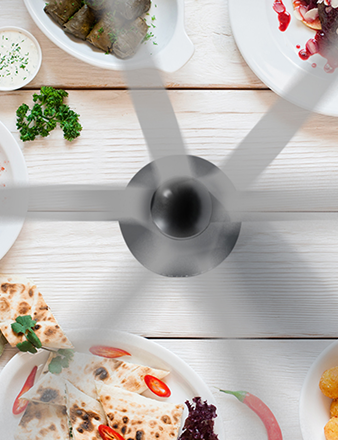
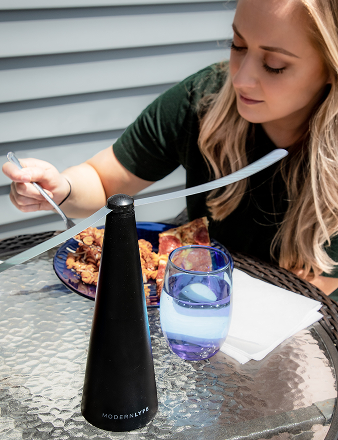
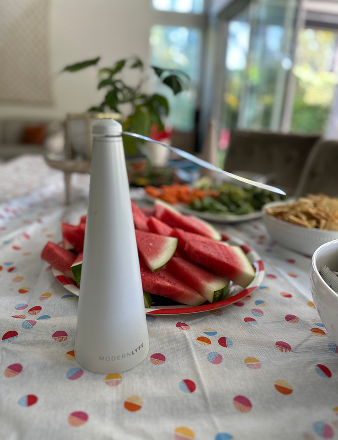
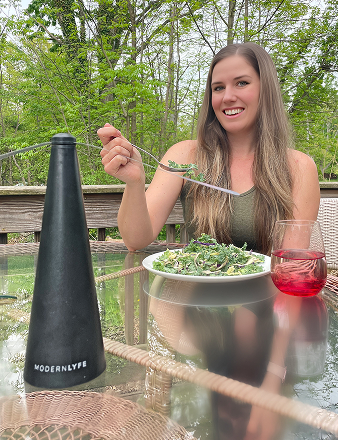
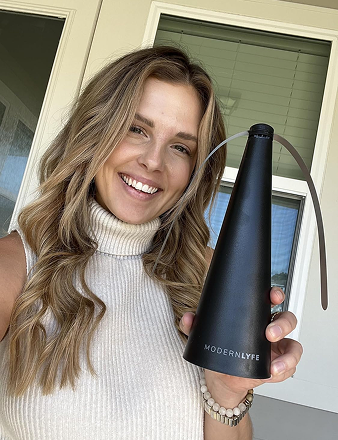
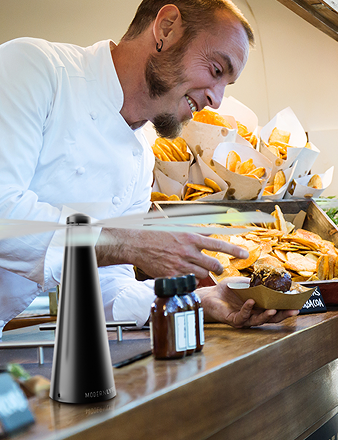
MODERN LYFE offers quiet, battery-operated fly fans designed for food areas, buffet lines, outdoor events, and food truck or al fresco café settings. Visit MODERN LYFE to review practical insect-protection options that can support a cleaner, more comfortable service environment around your mobile kitchen.