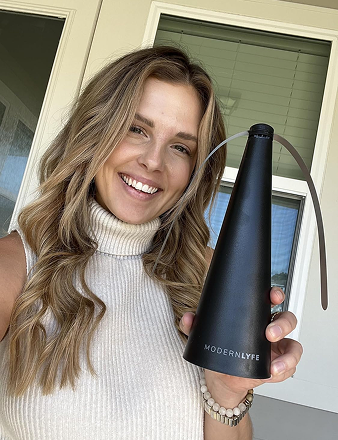
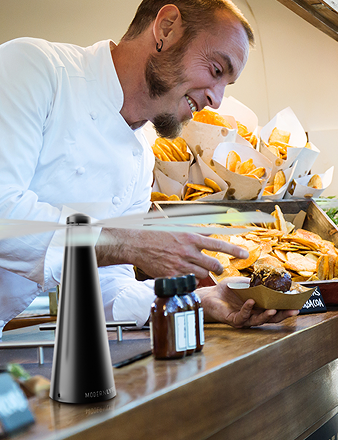
Fruit fly bait traps are a critical tool for any hospitality manager. They’re not just about catching flies; they're about stopping a small problem from damaging your reputation.
The Hidden Cost of a Fruit Fly Problem
In hospitality, perception is everything. You can have a five-star menu, but a single fruit fly in a guest's wine glass can ruin the entire experience. It's a tiny pest that sends a huge message.
The moment a customer sees a fly, they question your cleanliness. They wonder about the kitchen, the ingredients, and your overall standards. That one bad experience can lose a customer for good—or worse, earn a negative online review.
More Than a Nuisance, It's a Business Liability
What starts as a few flies can quickly become a real threat to your business. The ripple effects are costly.
- Negative Online Reviews: A review mentioning "flies" is a major red flag for potential customers, directly hitting your bottom line.
- Health Code Violations: Health inspectors see fruit flies as a sign of sanitation issues, which can lead to fines or even a temporary shutdown.
- Damaged Brand Image: A persistent pest problem undermines the trust your brand is built on, making it hard to maintain a premium reputation.
Investing in good fruit fly bait traps isn’t just pest control—it’s proactive brand protection. It shows you're serious about cleanliness and the guest experience.
The Growing Demand for Solutions
The global market for fly traps, including bait traps, was valued at USD 310 million in 2024. It’s projected to hit USD 478.42 million by 2030.
As food safety rules get stricter and customer expectations rise, businesses know they can't afford to ignore the small stuff. You can learn more about the fly trap market trends on deepmarketinsights.com.
Choosing the Right Fruit Fly Trap for Your Space
Not all fruit fly traps are the same. A heavy-duty trap for the kitchen would look out of place on a polished bar. Choosing the right one means balancing aesthetics, power, and the time your team can dedicate to maintenance.
Front-of-House vs. Back-of-House
In guest-facing areas like lounges, cafes, or reception desks, discretion is key. You need a trap that blends in and protects the atmosphere. Stylish, reusable traps are perfect for this. Many are designed to look like modern decor, so they can sit on a counter without attracting attention.
Behind the scenes, it's all about performance. In kitchens, dishwashing areas, and storage rooms, you need raw power and high capacity. This is where powerful, often disposable, fruit fly bait traps come in. They’re built to handle larger problems near breeding hotspots—like floor drains and compost bins—without needing constant attention.
This flowchart breaks down the critical choice you face when fruit flies appear. It's a direct path to either protecting your reputation or watching it suffer.
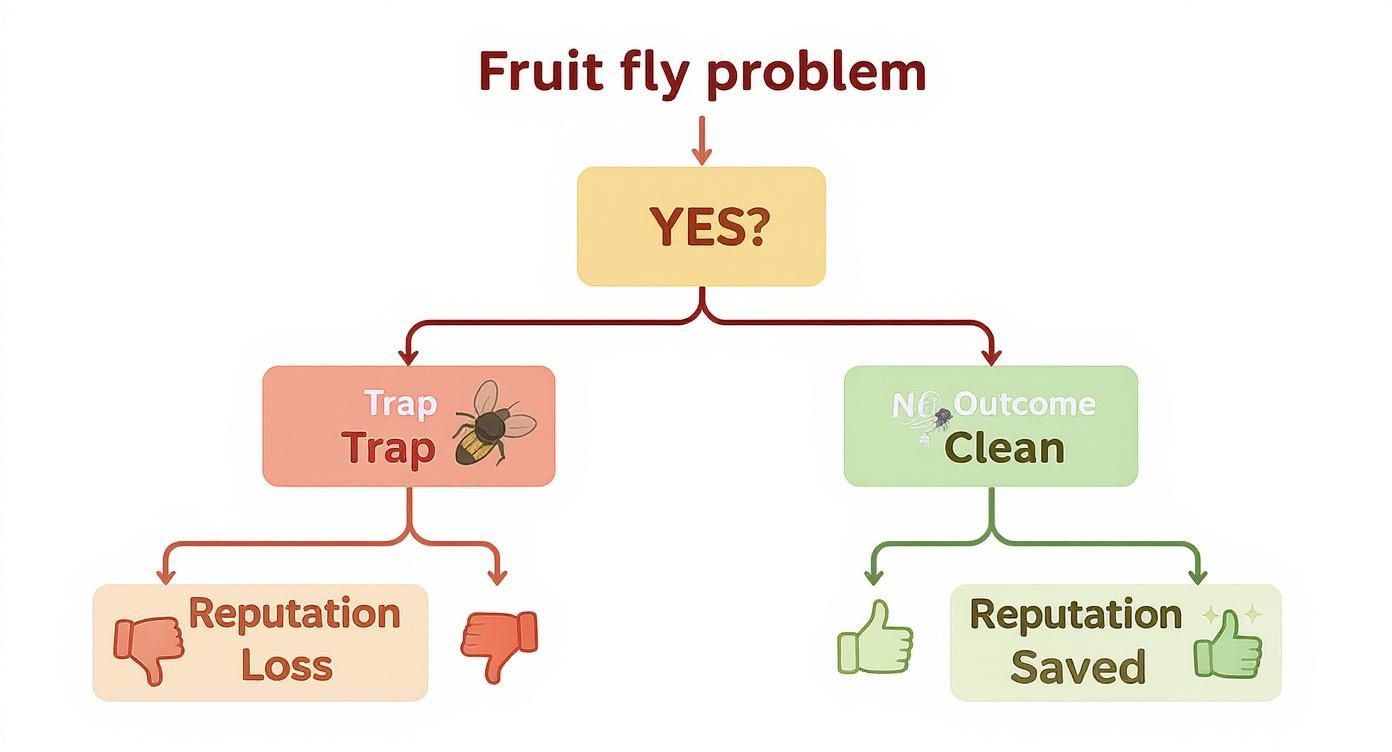
The message is clear: being proactive with traps saves your reputation. Doing nothing is a recipe for disaster.
Weighing Your Options: Reusable vs. Disposable Traps
So, what's the practical difference? Reusable traps are a great long-term investment. They cost more upfront, but you save money over time by just buying refills. They're also built to last and usually look much better, making them ideal for visible areas.
Disposable traps are all about convenience. They come pre-baited and ready to go. When it's full or the bait is spent, you just toss it. This eliminates cleaning and rebaiting, which is a huge time-saver for a busy crew.
My Go-To Strategy: I recommend a hybrid approach. Place sleek reusable traps in your dining rooms and bar areas. Then, use high-capacity disposable units in the back-of-house—kitchens, dish pits, and loading docks. You get great aesthetics for your guests and brute force where you need it most.
Comparing Fruit Fly Trap Types for Hospitality Venues
To make the choice easier, here’s a quick comparison of common fruit fly trap options. Use this to find the perfect fit for every part of your business.
| Trap Type | Best For | Pros | Cons |
|---|---|---|---|
| Decorative Reusable Traps | Guest-facing areas like bars, dining tables, host stands, and cafes. | - Aesthetically pleasing and discreet - Cost-effective over time (refillable) - Durable and long-lasting |
- Higher initial cost - Requires regular cleaning and rebaiting |
| High-Capacity Disposable Traps | Back-of-house areas: kitchens, dishwashing stations, garbage areas, storage rooms. | - Extremely convenient (no cleaning) - High capacity for bigger problems - Simple to deploy and replace |
- Ongoing replacement costs - Less discreet or attractive |
| DIY Traps (e.g., Jar with ACV) | Quick, temporary fixes in non-guest areas or when waiting for a supply order. | - Very low cost - Uses common kitchen ingredients - Easy to make in a pinch |
- Can be unsightly and messy - Less effective than commercial baits - Needs frequent replacement |
| Sticky Traps (Ribbons/Pads) | Areas with low guest traffic, like near windows, storage closets, or above prep stations. | - Visibly shows effectiveness - Catches a variety of flying insects - No liquids or chemicals |
- Visually unappealing when full - Can get stuck on unintended surfaces |
Ultimately, a mix of these tools is the smartest move. It lets you tailor your defense to the specific needs of each area.
Key Factors to Guide Your Decision
Before you buy, run through this checklist:
- Looks & Discretion: Is it critical that guests don't see the trap? For customer-facing spots, appearance is everything.
- Capacity & Infestation Level: Are you dealing with a few stragglers or a full-blown invasion? Match the trap’s capacity to the problem.
- Maintenance: How much time can your staff realistically spend checking, cleaning, and refilling traps? Be honest.
- Cost-Effectiveness: Look at the big picture. Compare the initial price with the long-term cost of refills or replacements to find what fits your budget.
Thinking through these points ensures your fruit fly traps will be an effective part of your operation. For a detailed look at specific models, check out our complete guide on picking the best fruit fly trap for restaurants.
Creating Baits That Actually Attract Fruit Flies
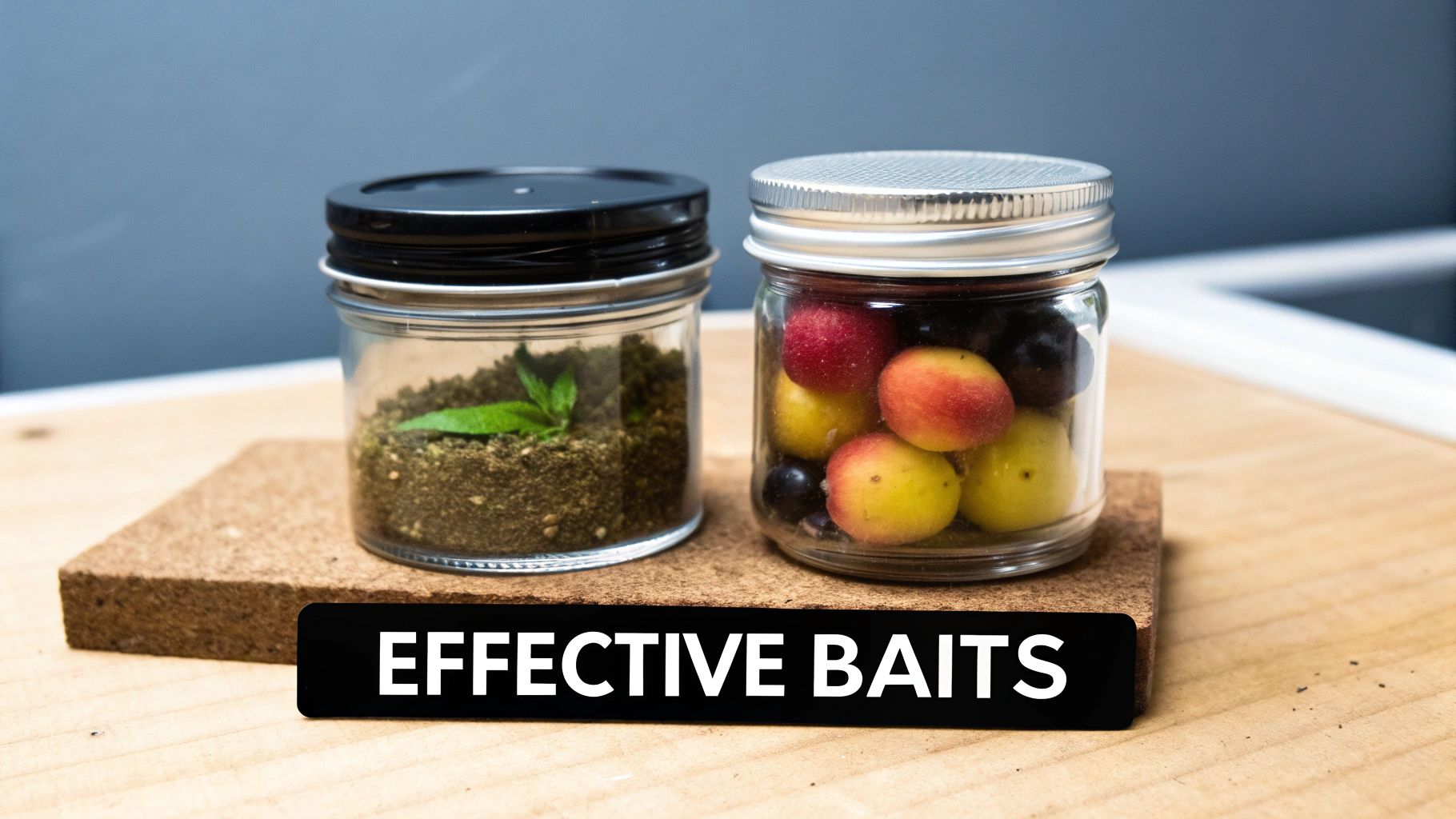
A fruit fly trap is only as good as its bait. While apple cider vinegar is a classic, effective bait taps into what fruit flies crave: fermentation and sugar. You're creating a scent trail so alluring they can't resist.
Consider the smells in your environment. A bait with a splash of red wine might be perfect for a bar, where flies are already attracted to spilled drinks and garnishes. In a kitchen, a bait with fermenting fruit will mimic odors from a compost bin, drawing flies away from their source.
Field-Tested DIY Bait Recipes
You can mix a potent attractant with ingredients you already have. The trick is to combine a fermented liquid with a dash of science to ensure the flies can't escape.
- The Classic Enhancer: Start with apple cider vinegar. Its fermented scent is a proven winner.
- The Critical Addition: Add a single drop of dish soap. This is a non-negotiable step. The soap breaks the liquid's surface tension, causing flies to sink and drown instead of floating.
- The Power-Up: To supercharge the trap, add a small piece of overripe fruit. A slice of banana or a mushy strawberry amplifies the fermentation signal.
The Case for Commercial Baits
While DIY mixes work, commercial baits offer serious advantages in a busy setting. Their formulas are scientifically engineered for maximum potency and a longer shelf life, meaning less maintenance for your team. This effectiveness is why traps accounted for 55% of global adoption in 2023.
Liquid formulations, making up 35.1% of the market in 2024, are especially powerful because their scent disperses so well. Newer gel baits are also gaining popularity for their ability to stick to surfaces, giving you targeted control near problem spots like floor drains. You can dive deeper into the growth of the fruit fly trap market on dataintelo.com.
Pro Tip: Whether using a DIY or commercial bait, freshness is key. Refresh your traps every few days, or as soon as the scent fades. A weak bait can't compete with the other smells in your venue.
Maintaining Peak Trap Performance
Setting the trap is just the start. Regular maintenance delivers consistent results and stops a small fly problem from becoming an infestation.
- Check and Refresh: Make it routine to check traps every 2-3 days. If a trap is full or the bait has evaporated, clean it out and refill it.
- Clean Thoroughly: When replacing bait, rinse the trap with hot water. This removes old residue and ensures the new bait's scent is pure and strong.
- Rotate Locations: If a trap is still empty after 48 hours, the spot might be the problem, not the bait. Move it closer to a suspected hotspot, like under a soda gun or near a sink.
When you pair a potent bait with diligent upkeep, your traps become an incredibly effective line of defense. For more tips on baiting, check out our guide on how to build a fly trap with bait.
Strategic Trap Placement for Maximum Impact
An effective fruit fly bait trap in the wrong spot is a wasted effort. Placement is the difference between catching a few stragglers and stopping a problem before guests notice.
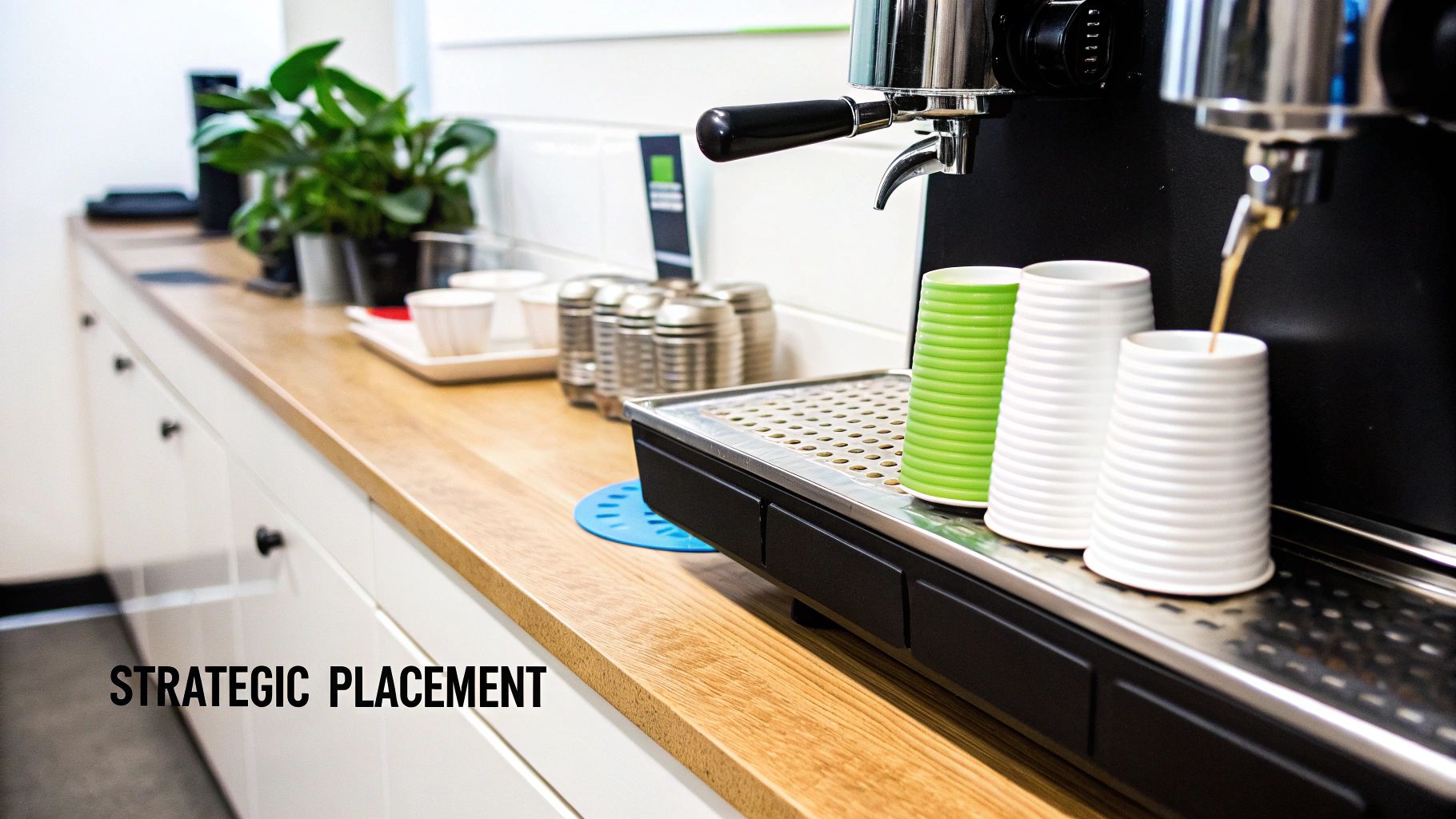
Think like a fruit fly. They want sugar, moisture, and fermenting organic material. This is why certain areas of a restaurant or bar become breeding hotspots. Your first move is to identify these zones.
Identifying Fruit Fly Hotspots
From my experience, a few areas are magnets for fruit flies. Focus your traps here for the biggest impact.
- Behind and Under Bar Equipment: The dark, damp spaces around soda guns, beer taps, and espresso machines are prime real estate for spills and drips.
- Near Bussing Stations: This is ground zero for dirty dishes and food scraps. A nearby trap can intercept flies before they reach the dining room.
- Around Floor Drains and Sinks: The gunk inside drains is a five-star hotel for fruit flies. Place traps low to the ground near these spots to catch them as they come and go.
- Next to Garbage and Compost Bins: Don't just put a trap in the same room; place it right beside the bin to catch flies at their main hangout.
Positioning traps in these locations hits fruit flies where they live and breed. They are weak flyers, so they hover close to their food source. A female can lay up to 500 eggs in her short life, so catching them at the source is essential.
The Art of Discreet and Effective Placement
In hospitality, ambiance is key. You need to get rid of pests without advertising that you have them. Luckily, the best placement is often the most discreet.
The most effective trap locations are almost always out of sight. Think low, dark, and damp—under counters, behind equipment, or near floor-level plumbing. These are the exact spots where fruit flies thrive and where your guests are least likely to look.
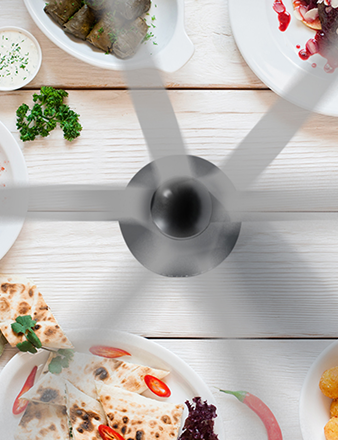
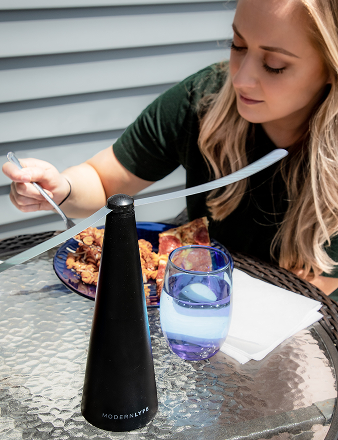
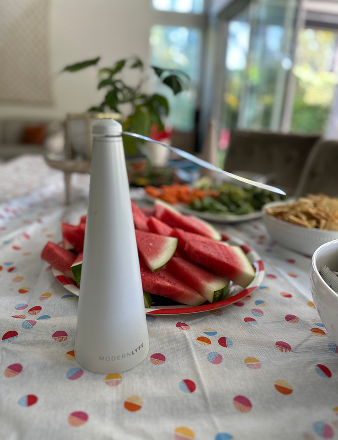
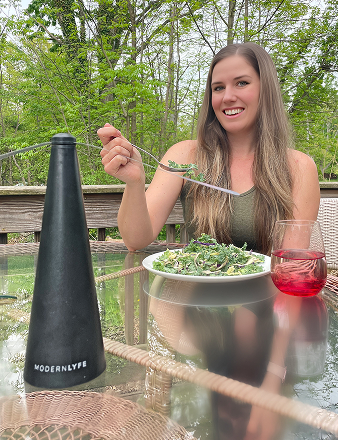
One more pro tip: keep traps out of direct airflow. A trap under an AC vent or in the path of a powerful Modern Lyfe fly fan will have its scent trail scattered, making it nearly impossible for flies to find it.
Fine-Tuning Your Placement Strategy
Finally, don't be afraid to experiment. If a trap is still empty after 24-48 hours, the location is likely the problem, not the bait.
Try moving the trap a few feet. Shift it from on top of the counter to the shelf below it. A small adjustment can place the trap squarely in the flies' natural flight path and make all the difference.
Building a Long-Term Fly Control Strategy
Even the best fruit fly bait traps are a defensive measure. They react to a problem that already exists.
To keep your establishment fly-free for good, you need to shift from defense to offense. A sustainable solution makes traps one piece of a larger Integrated Pest Management (IPM) strategy.
This is about creating an environment where flies can't thrive. The secret to long-term control isn't a better trap—it's better sanitation. You have to cut flies off at the source by eliminating their food and breeding grounds.
The Foundation of Prevention: Sanitation
Fruit flies only need two things: a little moisture and some fermenting organic material. Your daily cleaning routine must deny them both. This is more than wiping down counters at closing.
-
Daily Drain Duty: Every night, pour hot water or a specialized drain cleaner down all floor and sink drains. This breaks up the slimy buildup where flies lay eggs. A single female can lay up to 500 eggs, so disrupting that cycle is critical.
-
Waste Management Discipline: Don't let organic waste sit around. Empty garbage and compost bins constantly. Just as important, clean the bins themselves regularly to remove sticky residue.
-
Secure Storage: Ensure all produce, syrups, and liquor bottles are properly sealed. A tiny, forgotten spill or a bottle with a loose pour spout can become a fly nursery overnight.
And it goes without saying, but fix any persistent moisture—a leaky pipe or a condensation drip—immediately. It's non-negotiable.
A proactive sanitation plan is your most powerful weapon. It transforms your space from a fly-friendly buffet into a hostile environment, making your traps a final checkpoint, not your primary line of defense.
Integrating Traps into Your Strategy
So, where do traps fit in? Within this larger strategy, traps act as your monitoring system and cleanup crew, catching any stragglers that get in.
Choosing the right tool is key. The medium-priced fly trap segment generated the most revenue globally in 2023. Why? These traps hit the sweet spot for businesses, offering solid performance without the premium price tag. You can dig into more fly trap market trends on kbvresearch.com if you're curious.
When you combine rigorous sanitation with well-placed traps, you create a comprehensive defense. It’s a one-two punch that ensures your venue stays clean, professional, and pest-free. To keep that defense strong, stay stocked. Our guide on fruit fly trap refills has everything you need to know.
Got Questions About Fruit Fly Traps? We've Got Answers.
When you're running a busy restaurant or bar, you need straight answers. Here are some of the most common questions managers ask about making traps work.
How Fast Should I See Results?
You should see flies investigating your trap within a few hours. A good trap with fresh bait gets to work almost immediately.
After 24-48 hours, you should notice a real difference. If a full day passes and your trap is empty, it's time to investigate. The bait may have lost its potency, or the trap could be in a drafty spot or too far from where the flies are active.
Are Store-Bought Baits Really Better Than a DIY Vinegar Trap?
Both have their place. For a small, localized issue, a quick DIY trap with apple cider vinegar can work. It's cheap, easy, and great for a quick fix.
But for a larger infestation or a commercial space, commercial baits are the way to go. They are engineered with powerful attractants that last longer and create a stronger scent trail. For a busy team, that means more reliable results with less effort.
In a professional setting, the reliability of a commercial bait is almost always worth the small investment. You get consistent performance that a simple vinegar mix can't always guarantee.
Will Putting Out Traps Just Invite More Flies In from Outside?
This is a common myth. The scent from an indoor fruit fly trap is designed to attract the pests already inside your building.
The aroma doesn't have the range to drift outside and pull in a new crowd. The goal is to capture the population that's already breeding in your drains, under floor mats, or in the bussing station.
To stop flies from coming in, focus on the outside.
- Keep it clean out back: Make sure your dumpster area is spotless, with no sticky spills or overflow.
- Create a barrier: Use air curtains, fly fans, and screens on doors and windows as your first line of defense.
Pairing smart indoor trapping with solid outdoor prevention builds a defense that actually works.
Ready to build a complete, proactive pest control system? Modern Lyfe offers innovative fly fans that work hand-in-hand with your trapping strategy to create a truly pest-free environment for your guests. Explore our solutions at https://modernlyfe.com.