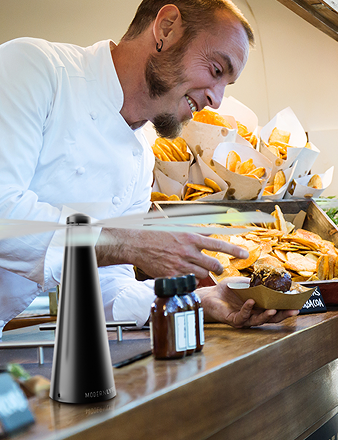
Dealing with fruit flies? The secret to winning isn't just reacting when you see them—it's getting ahead of the problem with a solid lure and trap strategy. This is your first line of defense.
A fruit fly lure uses a scent they can’t resist, like fermented apple cider vinegar, to draw them into a trap they can't escape. It's a simple concept with a powerful impact on protecting your home or, more critically, your business.
Why a Proactive Lure Strategy Is Your Best Defense

It’s easy to ignore one or two fruit flies. But in a food service environment, those few flies are a massive red flag for hygiene and your reputation.
Here's a hard truth: a single female fruit fly can lay up to 500 eggs in her short life. Those eggs mature into adults in about a week. Suddenly, that "minor nuisance" is a full-blown infestation. If you wait until you see a swarm, you're already behind.
A proactive lure strategy is non-negotiable. It flips the script from swatting flies to capturing them before they breed. This isn’t just about being clean; it’s about maintaining control.
The Real Cost of a Fruit Fly Problem
Don't underestimate the financial damage these tiny pests can cause. In the U.S. alone, fruit flies are responsible for an estimated $500 million in damages each year. It’s a global issue, too. The fruit fly control market was valued at USD 1.23 billion and is projected to hit USD 1.85 billion by 2033. These aren't just abstract numbers; they represent spoiled inventory, lost customers, and damaged reputations.
Know Your Lure Options
To build an effective defense, you need to know your tools. Different lures tap into the specific biological triggers fruit flies can't resist. Once you understand the science of attracting fruit flies, you can pick the right solution for your space.
Here’s a quick breakdown of the main lure types and how they work in a professional setting.
Quick Guide to Fruit Fly Lure Types
| Lure Type | How It Works | Best For | Key Ingredient Example |
|---|---|---|---|
| Food-Based | Mimics fermenting or rotting fruit, signaling a food source and breeding site. | General trapping in kitchens, bars, and dining areas. The go-to for most situations. | Apple Cider Vinegar, Acetic Acid |
| Pheromone | Uses synthetic versions of chemicals flies release to attract mates. Highly species-specific. | Targeted monitoring and trapping of a specific fruit fly species, often in agricultural settings. | Cuelure, Methyl Eugenol |
| Kairomone | Mimics chemical cues from host plants, tricking flies into thinking a perfect food source is nearby. | Advanced monitoring programs where early detection is critical. | Ammonia-based attractants |
As you can see, what starts with a simple vinegar trap can evolve into a highly scientific approach. The key is to match the tool to the job.
By deploying the right fruit fly lure before an infestation takes hold, you're not just trapping pests—you're protecting your inventory, your customers, and your brand's reputation from a preventable threat.
Choosing Your Lure: DIY vs. Commercial Solutions
Got fruit flies? The first question is always: are you dealing with a minor annoyance or a serious operational threat? The answer tells you which lure to choose.
For a few flies in your home kitchen, a simple Do-It-Yourself (DIY) lure is a great start. It’s cheap, easy, and usually effective. But in a restaurant, bar, or any professional setting, the stakes are much higher, and DIY solutions often fall short.
The classic DIY trap is a classic for a reason: take a jar, add apple cider vinegar, and a few drops of dish soap. The fermented vinegar scent is irresistible to fruit flies, and the soap breaks the liquid's surface tension, so they drown on contact. Simple and effective—to a point.
But DIY traps fail. A common mistake is using the wrong vinegar. White vinegar won't work; it lacks the fruity, fermented profile fruit flies crave. Another problem is forgetting about it. The potent apple cider vinegar scent fades fast, losing its power within a couple of days.
When a Homemade Trap Isn't Enough
For a business, relying only on DIY methods is risky. These traps require constant maintenance—checking, cleaning, and replacing the mixture every few days. That’s another task for an already busy team.
If you’re seeing fruit flies daily, especially near your bar, prep stations, or customer seating, it’s a clear sign you've outgrown the homemade solution.
The moment a fruit fly problem goes from a rare sighting to a daily nuisance, it's time to get serious. A commercial fruit fly lure offers the consistency, potency, and longevity that a simple vinegar trap just can't deliver.
The Power of Commercial-Grade Attractants
This is where professional-grade solutions shine. Unlike simple baits, commercial lures are engineered for maximum performance. They use highly concentrated attractants to create a scent plume that travels farther and lasts much longer. For a deep dive, check out our guide on setting up a professional food fly trap.
These advanced lures fall into a few key categories:
- Enhanced Food-Based Lures: Think of these as supercharged DIY traps. They use potent, slow-release formulas that stay effective for 30 days or more.
- Pheromone Lures: These use synthetic versions of the chemicals fruit flies release to attract mates, making them a highly specific and powerful draw.
- Kairomone Lures: This is where the technology gets impressive. These lures mimic the chemical signals of ripening fruit, tricking flies into thinking they've found the ultimate food source.
There's a reason kairomone lures are a cornerstone of a USD 458 million global market—they work. By using the precise scents of prime fruit, they attract target pests without bothering beneficial insects. New slow-release versions can last up to 120 days and have been shown to capture 90% more flies than traditional baits. You can read more about these kairomone lure market trends on dataintelo.com.
Ultimately, choosing between DIY and commercial comes down to the scale of your problem. A homemade trap can handle a small issue, but a commercial solution provides the reliable, long-lasting defense needed to protect your business.
Strategic Trap Placement for Maximum Impact
A great fruit fly lure is useless if it’s in the wrong spot. You can have the best attractant on the market, but if it's not where the flies are, it won't catch anything. Think like a fruit fly and put your traps right in their path.
Forget placing traps in the open. Fruit flies prefer quiet, undisturbed areas near food and moisture. A trap tucked behind the espresso machine or near dry goods storage will always outperform one on an open counter.
Identifying High-Traffic Fly Zones
Every kitchen and bar has hotspots that are magnets for fruit flies. They're looking for moisture and fermentation. Your job is to find where those two things meet.
Pay close attention to these areas:
- Near Drains and Sinks: Floor drains, garbage disposals, and damp corners under sinks are fruit fly nurseries.
- Bar Fermentation Points: Spill mats, soda gun holsters, and sticky residue on liquor pourers are five-star dining for fruit flies.
- Produce and Dry Goods Storage: One overripe banana is all it takes. Check anywhere you store onions, potatoes, or fruit.
- Waste Stations: Garbage cans, recycling bins, and compost buckets are the ultimate fruit fly buffets.
This chart helps you choose a lure based on what you’re seeing in these zones.
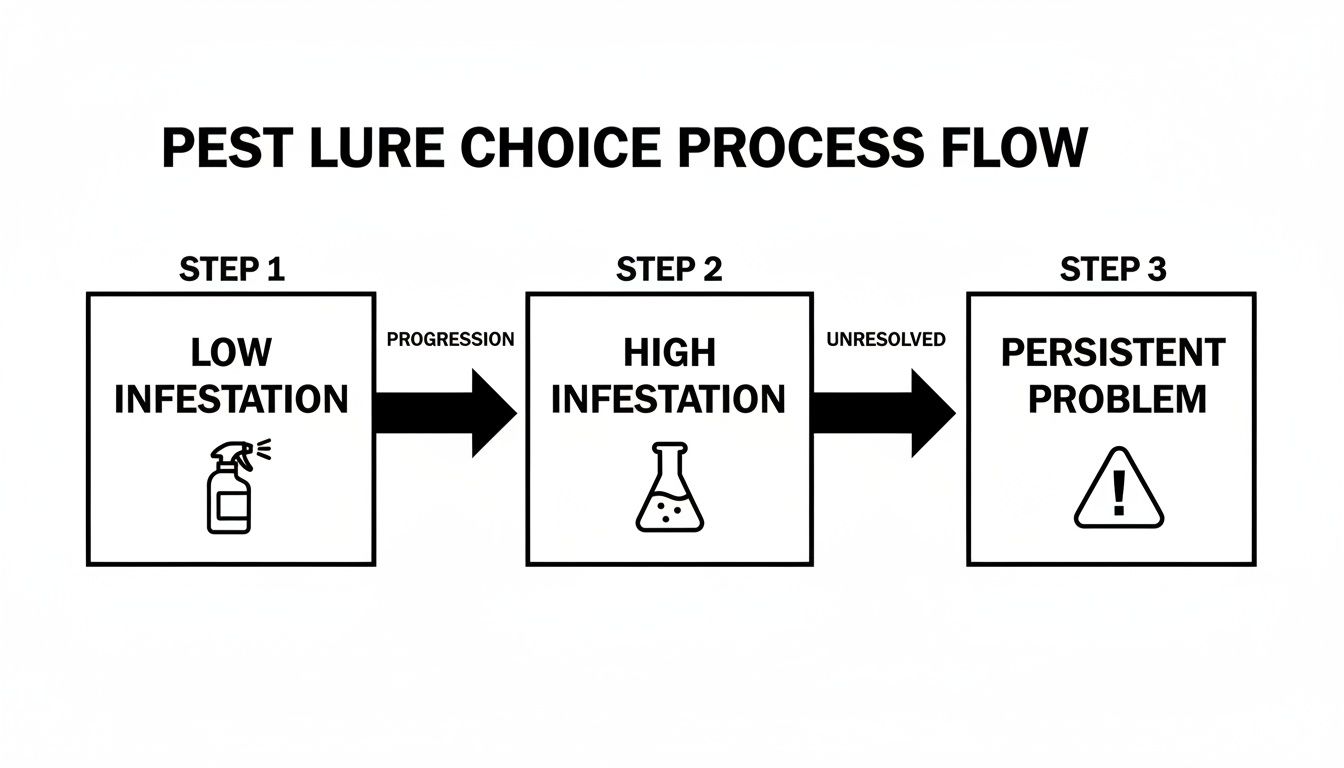
A few stray flies might only need a DIY trap, but a persistent problem demands a robust, professional solution.
Optimizing Lure Performance with Smart Placement
Once you've found your hotspots, deploy your traps to create an active defense grid.
A well-placed fruit fly lure does more than just catch the flies you see. It intercepts them along their favorite routes, stopping them before they can get to your food and find a place to lay eggs.
For a typical bar, don't just put one trap on the counter. Place one near the floor drain and another behind the garnish station. You’ve just created a multi-layered defense. In the kitchen, a trap by the main trash can and another near the mop sink tackles two major problem areas at once. This is how you make your traps work smarter, not harder.
Keeping Your Traps Working: Maintenance and Monitoring
Setting out a fruit fly lure is the first step, not the last. To keep your defenses strong, you need a consistent maintenance routine. An old, dried-up lure is useless, so regular checks are essential for peak performance.
If you’re using a DIY vinegar trap, its scent fades within 2-3 days. After that, its ability to attract flies plummets. Refresh the mixture at least twice a week to keep it effective.
This is where commercial lures have a clear advantage. Their slow-release formulas are designed to last much longer, often up to 30 days. In a busy kitchen, that extended lifespan saves time and ensures your traps are always working.
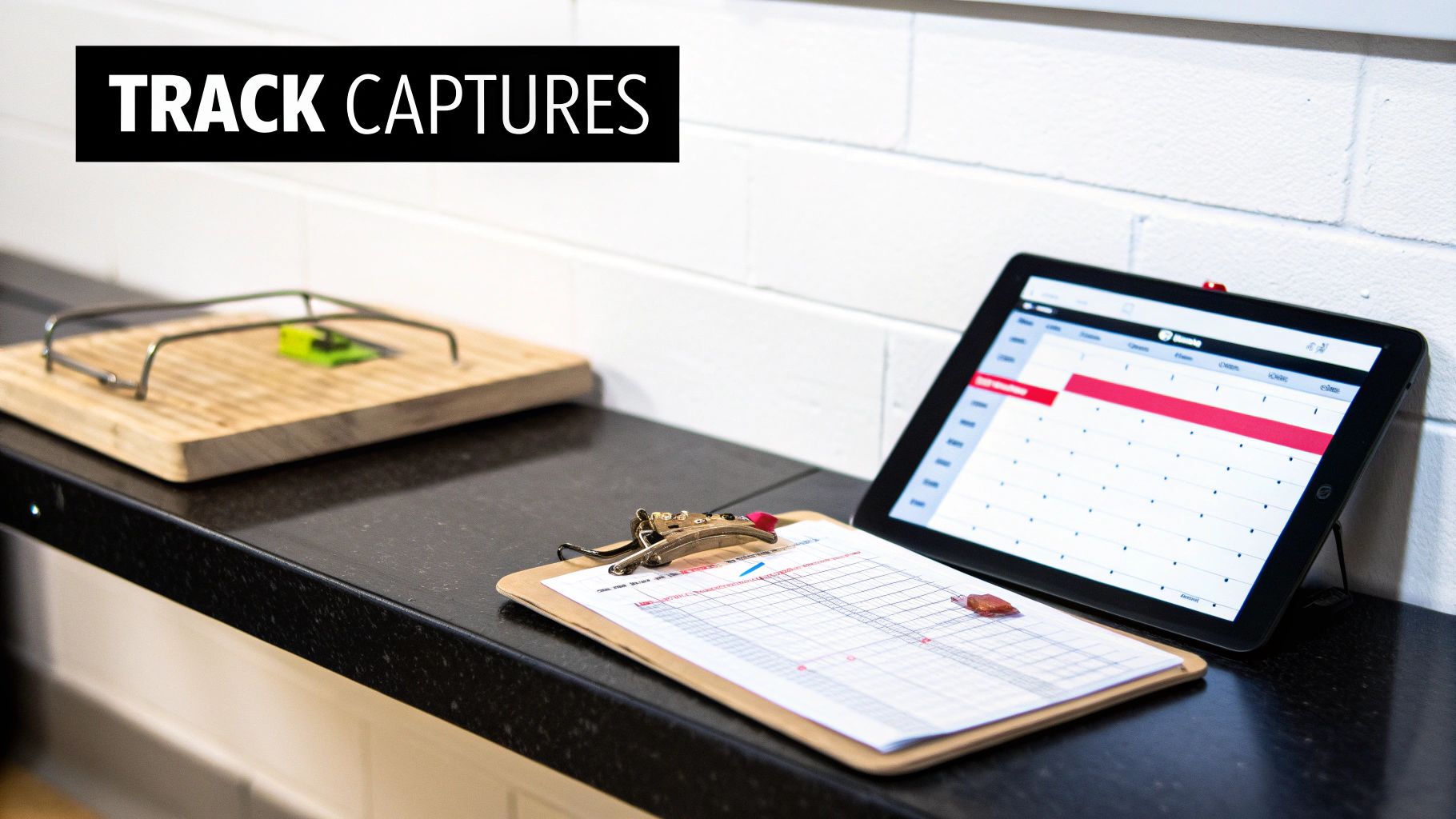
Think of your fruit fly lure as more than just a trap; it's a data collection tool. By tracking what you catch, you can transform pest control from a reactive chore into a proactive strategy. You'll start to see trends, pinpoint new problem areas, and actually measure the impact of your efforts.
Setting Up a Simple Monitoring System
Don't just dump full traps. Start counting. A basic log sheet placed near each trap is all you need.
Check the traps at the same time each day or week, and write down how many flies you’ve captured. This simple routine replaces guesswork with hard data.
Your log can be as simple as this:
- Location: (e.g., "Behind bar," "Mop sink")
- Date:
- Flies Captured:
After a couple of weeks, you'll see clear patterns. Is the trap near produce storage suddenly catching more flies? That’s a red flag to inspect the area for a new breeding source, like fruit that fell behind a shelf.
Using Data to Sharpen Your Strategy
This data-driven approach is a core part of modern pest management. The global fruit fly trap market has grown to USD 564.2 million for a reason. Studies show container trap designs are 3x more effective than open baits, and their pheromone lures can detect an outbreak two weeks earlier than visual inspection—a critical head start. You can learn more about the growth of the fly trap market on deepmarketinsights.com.
A sudden spike in your trap count is an early warning. It means a new breeding site has appeared or an existing one is getting worse. This lets you find and fix the root cause—a clogged drain, a hidden spill—before a few flies become an infestation.
On the other hand, a steady decline in captures is proof that your sanitation and trapping efforts are working. A log also makes it easy to know when you need new attractant. Our guide on fruit fly trap refills can help you streamline that process.
Integrating Solutions When Lures Are Not Enough
Your traps are working. Maybe a little too well. If they're constantly full but you’re still swatting flies, that's a sign you're only treating the symptom, not the source.
Even the best fruit fly lure only catches adult flies. It does nothing to stop the next generation from hatching. When you’re caught in this cycle, it's time to upgrade from simple trapping to a comprehensive strategy.
This is where you adopt an approach called Integrated Pest Management (IPM). It's a smart, layered strategy combining sanitation, exclusion, and targeted control to solve the root problem. You shift your focus from just catching flies to building an environment where they can't survive.
The Foundation: Sanitation and Source Removal
Fruit flies need two things to breed: moisture and decaying organic matter. Your mission is to take those away. This isn't just about wiping down counters; it's about becoming a sanitation detective.
You have to hunt down and eliminate every potential breeding ground. In a food-service environment, the culprits are always the same:
- Drains and Plumbing: Grime in a floor drain can breed thousands of flies. Get on a strict schedule with enzymatic drain cleaners that eat the organic buildup.
- Moisture Control: Look for small things. A dripping faucet, condensation under a fridge, or a damp mop left in a bucket are all five-star resorts for fruit flies. A dry kitchen is a hostile one for pests.
- Hidden Spills: The real enemy is what you can't see. Pull out equipment, look behind storage racks, and check dark corners for old spills. These forgotten messes are ground zero for an infestation.
Remember, a solid hygiene plan is about more than just flies. For example, effective ice machine cleaning and sanitization protocols not only keep your ice safe but also eliminate another moist environment for pests.
An aggressive sanitation program is the single most effective long-term solution. A fruit fly lure is a tool for control, but a clean, dry environment is your ultimate weapon for prevention.
Creating a Physical Barrier with Exclusion
Once the inside is clean, your next job is to stop new flies from getting in. This strategy is called exclusion, and it’s about physically blocking their entry points.
Walk around your building. Are your window screens torn? Do doors have gaps at the bottom? See any cracks in the walls? Seal them. Caulk, weather stripping, and new screens are cheap investments that make a huge difference.
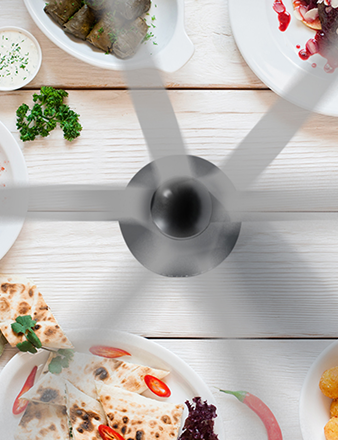
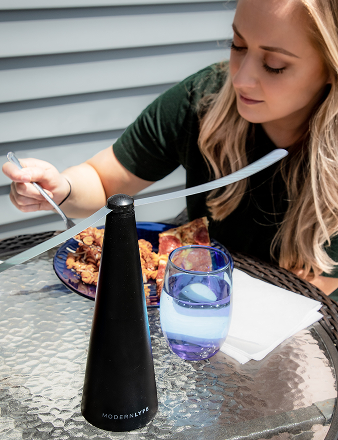
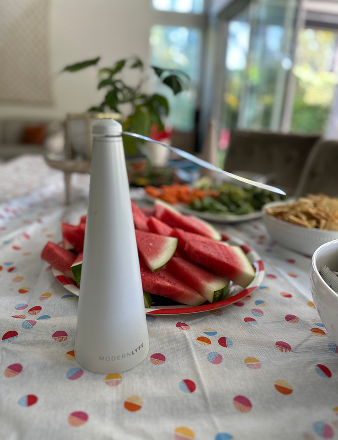
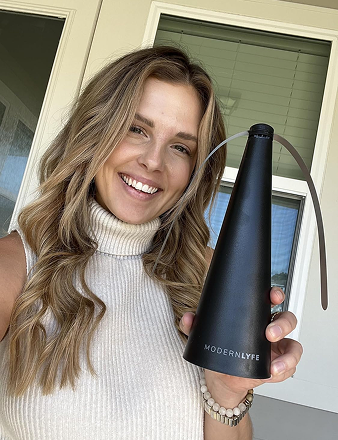
You can also use air as a weapon. Tools like Modern Lyfe fly fans create a powerful curtain of air over doorways and pass-through windows. For a tiny fruit fly, flying through that is like trying to walk through a hurricane. It creates an invisible barrier that keeps them out without disrupting staff or customers, perfect for high-traffic spots where doors are always opening.
By combining a relentless sanitation plan with smart exclusion tactics, you build a powerful, multi-layered defense. Your traps then become the final piece of the puzzle, catching any stragglers that sneak through. This integrated approach doesn't just manage an infestation—it creates a permanently pest-free operation.
Common Questions About Fruit Fly Lures
Even with a solid plan, questions pop up. When you're fighting fruit flies, you need fast answers. Here are a few common ones.
How Quickly Should a Lure Start Working?
A good lure starts working fast, attracting flies within a few hours. You should see the first captures within 24 hours.
This depends on the lure's potency and trap placement. If 48 hours pass and you've caught nothing, it's time to adjust. Move the trap to a new location or check if your lure has lost its scent.
Will a Fruit Fly Lure Work for Other Flies?
No. Fruit fly lures are specifically formulated to attract flies from the Drosophila family, which are drawn to fermentation.
Other pests like house flies, drain flies, or fungus gnats are attracted to completely different smells, like garbage or damp soil. A fruit fly lure won't work on them. You need a specific trap for each type of pest.
Key Takeaway: A full trap means your lure is working, but it's also a warning sign. If you're catching adults but still see new flies daily, your real problem is the breeding source. Make that your top priority.
Why Are My Traps Full but I Still See Flies?
This is a classic sign that you're winning battles but losing the war. It means your lure and placement are effective at trapping adults, but you haven't found where they're laying eggs.
A full trap signals an active breeding ground is pumping out new flies faster than you can catch them.
When this happens, switch from trapping to search-and-destroy mode:
- Inspect Drains and Crevices: Scrub your floor drains, sink pipes, and any nooks under equipment where gunk collects.
- Check Garbage Areas: Empty trash cans often and, more importantly, clean the bins themselves. The sticky residue at the bottom is a prime breeding spot.
- Examine Produce Storage: A single forgotten piece of fruit is all it takes. Check for overripe produce, a fallen grape under a shelf, or wet onion skins.
Until you find and eliminate their nursery, you'll be stuck trapping an endless supply of new flies. Traps manage the adults; sanitation solves the problem for good.
A proactive approach combines effective lures with physical barriers. For an elegant solution that keeps flies away from your tables and food displays, trust Modern Lyfe. Discover our line of stylish and quiet fly fans at https://modernlyfe.com.