Those tiny gnats swarming your fruit bowl or buffet? People often call them "fruit mosquitoes," but they're actually fruit flies. While they don't bite, having a smart strategy to control them is essential for protecting your food, your event, and your reputation.
This isn't about swatting bugs. It's about getting ahead of a problem that can instantly ruin a five-star experience.
Why Fruit Flies Are Your Most Unwanted Guests

Let's be clear: "fruit mosquito" is a common nickname for the fruit fly, Drosophila melanogaster. They’re drawn to the sweet scent of ripening and fermenting produce. In any hospitality setting, their presence sends a loud, unwelcome message about hygiene.
Imagine you've spent weeks planning an elegant outdoor wedding. The fruit platters are gorgeous, the cocktails are perfect—and then a cloud of fruit flies descends on the buffet. Just like that, the beautiful scene is ruined. Guests start questioning the food and the cleanliness of the entire event.
The Real Cost of a Fruit Fly Invasion
A fruit fly problem is more than an ugly nuisance. For restaurants, caterers, and event planners, the damage to your finances and reputation can be severe. These pests aren't just hovering; they're actively contaminating food.
A single female fruit fly can lay up to 500 eggs on ripening fruit or in a spilled drink. In as little as 24 hours, those eggs hatch, quickly ruining fresh ingredients and beverages.
This forces you to toss out good inventory, hitting your bottom line. But the damage doesn't stop there. In a world where one bad photo or online review can go viral, "flies all over the food" is a brand disaster.
A small pest problem can quickly become a major crisis:
- Food Contamination & Waste: Tossing produce and garnishes drives up costs and shrinks profit margins.
- Negative Guest Perception: A guest who sees fruit flies will instantly link your brand with poor sanitation, no matter how clean your kitchen is.
- Damaged Reputation: Bad word-of-mouth and negative online reviews can scare away future clients.
- Health Code Violations: A persistent infestation can attract health inspectors, leading to fines or even a forced closure.
Protecting Your Brand and Your Bottom Line
The first step is seeing the risk for what it is: a threat to your business. A proactive fruit fly control plan isn't just pest management—it's essential quality control.
By keeping these pests from ever crashing the party, you safeguard your food, your guests' experience, and the reputation you've worked so hard to build. The goal is a flawless atmosphere where everyone is focused on the fantastic food and impeccable service you provide.
Understand How Fruit Flies Think and Act
To beat an enemy, you have to know them. For fruit flies, that means understanding their simple, powerful instinct: they are masters at sniffing out sugar and fermentation.
Think of them as highly specialized drones. Instead of heat, they're programmed to lock onto the sweet, vinegary scents from ripening or decaying organic matter. That’s why they seem to materialize out of thin air the moment a banana gets a few brown spots.
The Scent of Opportunity
A fruit fly’s world is driven by smell. Their sensitive antennae can detect the faintest trace of fermentation from across a room, signaling a perfect spot for feeding and breeding.
They aren't just after fruit. Their target list includes many common items in any kitchen or café:
- Overripe Produce: Bananas, peaches, tomatoes, and melons are magnets as they soften.
- Spilled Beverages: A sticky ring from a glass of wine, beer, or soda is an open invitation.
- Damp Cleaning Tools: Sponges, mops, and dishcloths can develop a sour smell that draws them in.
- Garbage and Recycling Bins: Lingering food bits or unrinsed cans are a five-star resort for fruit flies.
This powerful attraction leads them straight to the best places to lay eggs. For a deeper dive, learn more about what specifically attracts fruit flies in our detailed guide.
The Shockingly Fast Lifecycle
Here’s why a few fruit flies can become a full-blown infestation overnight. Swatting one or two feels productive, but it’s a losing battle when hundreds more are on the way.
A single female fruit fly can lay up to 500 eggs in her short life, often directly on ripening fruit or in a damp drain. These eggs hatch into larvae in just 24-30 hours, and the flies become breeding adults in about a week.
This exponential growth is staggering. By the time you notice a few flies, a new generation is likely already developing out of sight. That’s why a proactive strategy is far more effective than a reactive one.
The economic fallout from these pests is huge. Fruit flies, or 'fruit mosquitoes,' are a global headache. The Asia-Pacific mosquito control market alone grew from USD 1.27 billion in 2021 and is projected to hit USD 1.58 billion by 2025.
Closer to home, reports show that 37% of restaurants see fruit fly infestations spike by 50% in the summer. This costs the average venue USD 5,000 annually in spoiled inventory and customer complaints.
Comparing Your Fruit Mosquito Killer Options
When dealing with fruit mosquitoes, it's easy to get lost in the "solutions." Do you grab a chemical spray? Set up old-school traps? Or try a modern approach? The right choice depends on what matters in a food environment: effectiveness, safety, and the guest experience.
Let’s cut through the noise and compare the three main ways to control fruit flies. We'll look at the real-world pros and cons to give you a clear picture of what works best for your situation.
First, make sure you know your enemy. Effective control starts with proper identification.

The key takeaway is that fruit flies are driven by fermentation. Understanding this is the first step to beating them.
Here’s a quick comparison of the most common methods.
Fruit Mosquito Killer Method Comparison
| Method | Effectiveness | Food Safety | Aesthetics & Guest Experience | Best For |
|---|---|---|---|---|
| Chemical Sprays | High for immediate knockdown, but not a long-term solution. | Very Poor. Unsafe for use near food or dining areas. | Poor. Lingering chemical smells and visible spraying can ruin a guest's appetite. | Emergency situations in non-food prep areas only. |
| Physical Traps | Moderate. Catches existing flies but doesn't prevent more from arriving. | Good. Generally non-toxic, but the bait itself can become a new attractant. | Poor. Sticky traps are unsightly, and liquid traps can look unhygienic. | Low-traffic home kitchens or back-of-house monitoring. |
| Airflow Repellents | Excellent. Proactively prevents flies from landing on and contaminating food. | Excellent. 100% chemical-free and completely food-safe. | Excellent. Sleek, quiet fans blend into decor and enhance comfort. | Restaurants, caterers, buffets, and any setting where food is displayed. |
As you can see, what works in one scenario is a disaster in another. Let's dig deeper.
Chemical Sprays: The Quick Fix with a Catch
Chemical insecticides offer instant knock-down power. A quick spritz eliminates the pests you see on contact. No wonder people reach for them for a fast solution.
But that speed comes at a serious cost, especially near food. Most aerosol sprays contain chemicals that are unsafe to use on or around serving counters, fruit displays, or dining tables. The lingering odor and risk of residue can ruin the guest experience and even pose a health risk.
- Pros: Fast-acting for an immediate reduction in visible flies.
- Cons: Unsafe near food, leaves unpleasant smells, and only kills the flies it touches—it doesn't solve the core problem.
Physical Traps: Old-School Methods with Mixed Results
Physical traps take a more passive approach. They lure fruit flies in with bait and then capture them. Compared to chemicals, they're a much safer bet.
You'll see two main kinds: sticky traps and liquid bait traps. Sticky traps—those bright yellow strips of glue-coated paper—are gruesome. They work, but they quickly become a morbid display of dead and dying insects, which is the last thing guests should see.
Liquid bait traps, whether store-bought or a DIY mix of apple cider vinegar and dish soap, use fermentation scents to draw flies in. The pests dive into the container and get trapped.
While safer than sprays, traps are reactive, not preventative. They only catch flies that are already in your space. They do little to stop new ones from arriving or to protect a clean food display from the ones still flying free.
A vinegar trap on a buffet might catch a dozen flies, but it won't stop their friends from landing on the fresh strawberries right next to it. Traps help you manage an existing problem, not prevent one.
Airflow Repellents: The Modern, Invisible Shield
The third option works on a completely different principle. Airflow repellents, like fly fans, don't kill or trap pests. Instead, they create an environment where fruit flies simply can't function. This is a preventative fruit mosquito killer strategy.
A gentle but consistent breeze creates turbulent air that makes it impossible for small, weak fliers like fruit flies to navigate. It's like trying to land a paper airplane in a crosswind. The airflow also disperses the fermentation scents that flies use to find food, effectively making your buffet invisible to them.
This is where this method excels in food settings:
- Food-Safe: It's 100% chemical-free. You're just using air to protect your food.
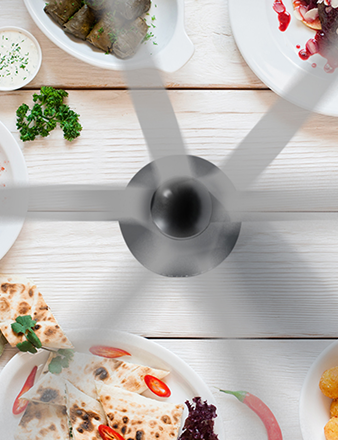
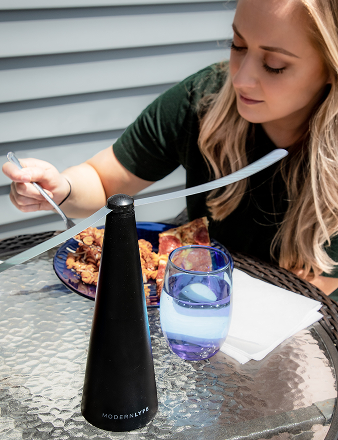
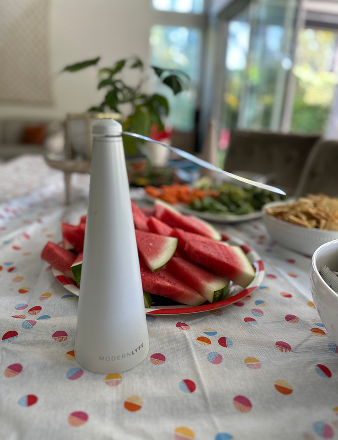
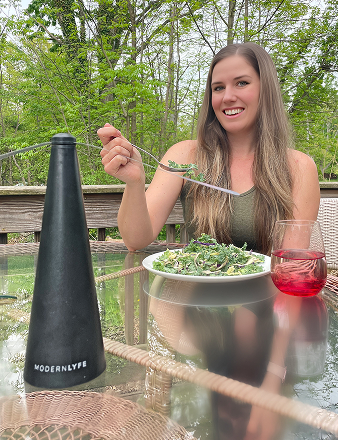
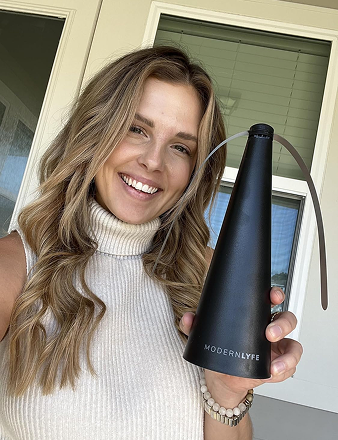
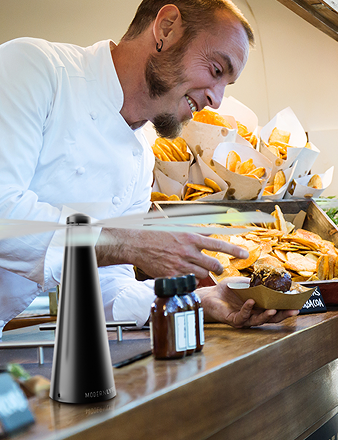
- Aesthetically Pleasing: Modern fly fans, like those from Modern Lyfe, are designed to be sleek and quiet, blending into a table setting instead of standing out.
- Guest-Friendly: They're whisper-quiet, and the gentle breeze can be pleasant in warmer settings.
Unlike sprays and traps, which signal an existing pest problem, a stylish fan just looks like part of the decor. It stops the problem before it's visible, protecting the quality of the dining experience.
How Airflow Creates an Invisible Shield Against Pests

What if you could stop fruit flies without smelly sprays or ugly traps? The solution is simple and uses a natural force: moving air. Modern fly repellent fans use this principle to create an invisible barrier that weak fliers like fruit flies can't cross.
Imagine trying to land a tiny drone in a windstorm. The turbulent air would make it impossible to stay on course. That’s exactly what a "fruit mosquito"—a fruit fly—faces when it encounters the gentle current from a fly fan.
The Science of Disruption
Airflow acts as a powerful fruit mosquito killer by disrupting pests in two key ways. First, it physically knocks them off course. Fruit flies are weak fliers, evolved for still air, not a mild breeze. A fan's consistent airflow overpowers their wings, preventing them from landing on your food.
Second, the air current scrambles their main navigation tool: smell. Fruit flies find your buffet by homing in on the scents of ripening fruit and sugary drinks. A fan’s breeze disperses these scent molecules, effectively cloaking your food and making it undetectable.
By creating an invisible zone of turbulent air, fly fans don't just repel pests—they make the area completely unnavigable. It’s a proactive defense that stops an infestation before a single fly can land.
This preventative strategy is what separates airflow repellents from reactive methods like sprays or traps. If you're curious, you can dive deeper into how fly fans work to create this protective shield.
Why Airflow Is the Gold Standard for Food Environments
In any setting where food is served, guest experience and food safety are non-negotiable. Airflow solutions excel on both fronts in a way other methods can't. They're silent, non-toxic, and blend right in.
The impact of these pests is staggering. In 2022, fruit flies caused over $10 billion in annual losses for the fresh produce market. Restaurants and caterers discarded up to 15% of their fruit displays. In contrast, stylish battery-operated fly fans can create a 360-degree air barrier with up to 95% effectiveness, while sticky traps catch only about 30% of pests. Read the full research about these market insights on IntelMarketResearch.com.
Here’s why airflow is the superior choice for food environments:
- Completely Food-Safe: With zero chemicals, it’s the only solution that is 100% safe to use directly over food.
- Enhances Guest Comfort: Instead of a chemical odor or the grim sight of a trap full of bugs, guests feel a gentle, cooling breeze. It adds to the ambiance instead of ruining it.
- Protects Brand Reputation: A sleek fan looks intentional. A sticky trap or the smell of bug spray tells guests you have a pest problem.
Integrating Airflow with Physical Barriers
An airflow shield is your best defense, but it's even more powerful when paired with basic prevention. Keeping pests from getting inside in the first place is a core part of any smart pest control plan. Use effective air sealing techniques to block potential entry points and create a physical barrier.
When you combine an external physical barrier with an internal airflow shield, you build a layered defense system. This ensures that even if a few pests sneak inside, they still can't get anywhere near your food. It's an elegant, modern approach that guarantees a flawless, pest-free dining experience.
Mastering Placement for Maximum Pest Protection

Having a good fly fan is one thing, but knowing where to put it makes all the difference. To get the most out of your fans, think strategically. Proper placement turns them into an invisible shield that keeps pests away without guests even noticing.
Think of each fan as creating a pocket of turbulent air that’s impossible for a tiny fruit fly to navigate. Your goal is to arrange these fans so their "no-fly zones" cover every inch of your food displays. When you get this right, pests simply can't land.
This isn't just about appearances; it's about your bottom line. Fruit flies are a serious issue, especially outdoors. In fact, 60% of outdoor buffets report problems with fruit fly infestations. This leads to 25% guest dissatisfaction and causes caterers to lose up to 12% of their annual profits from wasted food.
Creating Overlapping Zones of Protection
For a long buffet table, one fan won't be enough. The secret is to create overlapping zones of airflow, leaving no gaps for a determined fly to slip through.
- A good rule of thumb: Place one fan for every 3-4 feet of table space.
- How to position them: Arrange the fans so the breeze from one meets the breeze from the next. This creates a continuous, invisible barrier across the entire food spread.
- Focus on hotspots: Give extra attention to fruit platters, sweet desserts, and open drink carafes.
This setup gives you complete coverage, turning your display into a protected space. For more placement ideas, see our guide on using fly fans for tables.
By overlapping the airflow, you're not just placing fans; you're engineering a complete air curtain. It’s the difference between having a few guards and a fully secured perimeter.
Simple Maintenance for 'Set It and Forget It' Convenience
The last thing you need during a busy event is more complicated equipment. Modern, battery-operated fly fans are designed to be incredibly low-maintenance—a true "set it and forget it" solution.
For anyone in hospitality, this simplicity is a lifesaver. Here’s all you need to do:
- Charge the batteries. Before an event, make sure your fans are fully charged. A quality model will easily last all day.
- Wipe the blades. A quick wipe with a damp cloth keeps dust off the soft blades so they run smoothly.
- Store them properly. When you're done, tuck them away in a dry spot until next time.
That's it. No messy traps to empty, no sticky residues to clean, and no chemical bait to refill. This easy routine lets your team focus on what they do best: creating a fantastic guest experience.
Elevating Your Brand with a Flawless Guest Experience
In the hospitality business, your brand is the feeling people get when they walk through your doors. Every detail adds up—including how you handle something as small as fruit flies.
Choosing the right fruit mosquito solution is more than a chore; it’s a reflection of your commitment to quality. A clean, pest-free environment tells guests you’re serious about their comfort and dedicated to your reputation.
For anyone running a restaurant or catering an event, the little things are the big things. A modern, quiet solution like a fly fan sends a powerful message: you’ve thought of everything. It’s a small investment that protects the entire guest experience.
The Power of Perception
When guests see a proactive and stylish pest solution, they see a business that anticipates needs and cares about hygiene. This is how you build the trust that fuels glowing online reviews and keeps people coming back.
A comfortable, hygienic setting separates a good event from a great one. It’s the thoughtful details that guests remember, turning a one-time visit into genuine loyalty.
This attention to detail proves you deliver on your promises. It reinforces that your standards are high in every part of your operation, from the food on the plate to the air your guests breathe.
Great service turns first-time visitors into regulars. To take it further, explore effective loyalty strategies for small businesses and discover how to build a dedicated customer base.
A Strategy That Reflects Your Standards
Ultimately, your pest control approach says a lot about your brand. Sticky traps and chemical sprays are reactive; they signal an existing problem. They're also an eyesore that can ruin the ambiance you’ve worked so hard to build.
A modern airflow solution is both preventative and discreet. It blends into your setup, protecting food and guests without becoming a focal point. It shows you’re a forward-thinking business that uses effective, modern methods.
- Builds Trust: It’s a clear signal that you prioritize cleanliness and guest comfort.
- Encourages Positive Reviews: A pest-free experience is a detail people notice, appreciate, and mention online.
- Drives Repeat Business: When guests feel cared for, they’re far more likely to return and recommend you.
Don't let a preventable issue like fruit flies damage your hard-earned reputation. It’s time to adopt a fruit mosquito strategy that matches your high standards. Choose a solution that protects your food, elevates the guest experience, and reinforces your brand’s message of quality and care.
Your Questions Answered
If you're considering airflow to keep fruit flies away, you probably have a few practical questions. It's a smart approach, but how does it work in the real world? Here are the most common questions people ask.
How Many Fans Do I Need for a Long Buffet Table?
For a big spread, one fan isn't enough. Each fan creates an invisible "air shield" in a three- to four-foot circle. To protect a long buffet table, you need to overlap these shields to form an unbroken barrier.
A good rule of thumb is one fan for every 3-4 feet of table space. Position them so their air currents meet, leaving no gaps for fruit flies to sneak through.
Won't the Fans Be Noisy or Annoying for Guests?
A valid concern—ambiance is everything. Quality fly fans are designed for dining environments. Models from brands like Modern Lyfe, for example, run on a whisper-quiet motor you'll barely notice.
The blades are also subtle. They're soft and holographic, creating a gentle shimmer that flies hate but people find easy to ignore. The fan works in the background, keeping guests comfortable and focused on their food, not a buzzing motor.
The best pest solutions are the ones your guests never notice. A great fly fan should blend in and work so quietly that everyone forgets it's there.
Can I Use These Fans Both Indoors and Outdoors?
Absolutely. This is where battery-operated fly fans excel. Since they're portable and don't need an outlet, you can use them anywhere.
- Indoors: Perfect for a dessert bar, a kitchen island during food prep, or a restaurant dining table.
- Outdoors: A lifesaver for patio dining, picnics, BBQs, and any catered event where you're exposed to pests.
How Long Will the Batteries Last Through an Event?
Nothing's worse than gear dying mid-event. A fully charged, high-quality fly fan is built to last. A modern unit can run continuously for up to 30 hours on a single set of batteries.
This long runtime means you can switch them on at the start of your event and know they'll keep running all day and into the night. It's one less thing for a busy host to worry about.
Ready to protect your events with a stylish, effective solution? The Modern Lyfe fly fan creates an invisible shield against pests, ensuring a flawless experience for your guests. Discover the difference and shop now at modernlyfe.com.