The most popular hotel hygiene advice is also the least reliable: if a room looks clean, it must be hygienic. It doesn't. Folded toilet paper, polished taps, and neatly arranged cushions create a useful impression, but they don't prove that staff followed the cleaning sequence, respected disinfectant contact time, checked food temperatures, or recorded a pest-control response.
Real hotel hygiene standards work as a process-verification system. Managers need evidence: completed logs, temperature readings, chemical checks, linen-handling records, equipment inspections, and corrective actions. The most serious failures often happen where guests can't see them, in service corridors, food-storage rooms, laundry areas, waste rooms, and buffet holding equipment.
Guest perception still matters. 78% of travelers say they sleep better when they know their room is clean, 84% wouldn't return if the room felt unclean, and 78% check online reviews for cleanliness comments, according to hotel cleanliness research published by Stockton University. But perception is only the front end of the problem. A hotel earns trust when the visible result matches a controlled operation behind the scenes.
Why Hotel Hygiene Is Failing the Guests Who Think They Know Better
Guests commonly judge hygiene by visible surfaces. Operations directors should judge it by whether the hotel can prove what happened, when it happened, who checked it, and what staff did when a limit was missed.
A spotless bathroom says little about whether a housekeeper used the correct product or allowed the disinfectant to remain wet for the required contact time. A fresh-looking buffet can still present a risk if the steam table is running too cool, serving utensils are shared between dishes, or staff are topping up old trays instead of replacing them. Visual presentation is the output. It isn't the control system.
Where the process breaks
The recurring failures are predictable:
- Linen rotation: Staff follow inconsistent change cycles, especially when occupancy rises or stayover service becomes less automatic.
- Back-of-house cleaning: Teams clean guest-facing areas while frequencies in corridors, storage rooms, waste areas, and staff facilities remain undocumented.
- Buffet holding: Food looks presentable while temperature checks are missing or steam tables are operating below the hotel's defined safe limit.
- Pest monitoring: Logs appear complete, but inspections don't cover service corridors, loading areas, waste rooms, or delivery routes where activity begins.
The World Health Organization's hotel guidance established a clear pandemic-era baseline, including at least 1 metre of physical distance between guests, regular hand hygiene, respiratory hygiene, and frequent cleaning and disinfection of high-touch surfaces. It also called for hand hygiene after exchanging objects such as money or credit cards, a direct reminder that front-desk and payment interactions are contamination points. The WHO hotel guidance remains useful because it connects hygiene to specific behaviors, not decorative presentation.
Practical rule: If a supervisor can't produce the record, the task wasn't controlled.
The regulatory baseline is only the floor. Strong operators add verification through calibrated probes, chemical-dilution checks, documented corrective action, and targeted inspections such as ATP swabs where appropriate. Trust returns when the hotel can show auditable evidence rather than stage a performance for the next guest.
The Regulatory Baseline Every Hotel Hygiene Program Starts From
Every property needs a clear hierarchy of obligations. Start with local health-department food codes and sanitation inspections. Add workplace-safety requirements for chemical handling, bloodborne-pathogen exposure, personal protective equipment, and employee training. Then apply brand standards and association guidance, including the American Hotel and Lodging Association's Safe Stay recommendations.
The AHLA guidance says surfaces touched by multiple people should be cleaned and disinfected at least daily, while high-touch areas in high-traffic zones should be disinfected at least twice per day. Its examples include front-desk counters, bell desks, elevator buttons, door handles, public bathrooms, vending machines, ice machines, room keys, ATMs, stair handrails, gym equipment, shower areas, and pool seating. Those examples matter because they expose the weakness in room-only cleaning programs.
Document the frequency, not just the policy
A workable register should identify the zone, the required action, the person responsible, and the evidence retained.
| Zone | Minimum Frequency | Target Risk |
|---|---|---|
| Shared high-touch surfaces | At least daily | Transfer through repeated contact |
| High-traffic touchpoints | At least twice daily | Higher contact intensity in public areas |
| Guest rooms | Per the property's documented room-service policy | Missed surfaces, odors, linen and amenity failures |
| Food preparation areas | According to the food-safety plan and service activity | Cross-contamination and unsafe food handling |
| Public bathrooms | Daily cleaning with additional checks based on traffic | Odor, surface contamination, and guest confidence |
| Back-of-house zones | Documented schedule based on use and risk | Waste, pest harborage, and unnoticed buildup |
The hotel hygiene requirements resource from Modern Lyfe can help operators organize regulatory obligations, but no generic schedule replaces local inspection requirements. The Hong Kong Centre for Health Protection provides a useful concrete benchmark: all surfaces should be cleaned at least daily with detergent, while shared surfaces touched by multiple people should be cleaned at least twice each day, as stated in its hotel infection-control guideline.
Treat the baseline as a minimum
There isn't one universal frequency for every hotel, room type, or public area. The Global Wellness Institute's reopening guidance specified some public-area surfaces at no less than every two hours and others every four hours during the day, showing why traffic level and area type must shape the schedule. Use the hotel reopening hygiene guidance from the Global Wellness Institute as a risk-based reference, then align the final program with local requirements.
Daily housekeeping also needs transparent communication. AARP's reporting on post-pandemic housekeeping notes that service varies by brand and segment, with some properties cleaning rooms every third day or every other day and others offering full daily service. The policy isn't the problem. The problem is failing to tell guests what service they'll receive and failing to maintain the same hygiene controls in the room, restaurant, lobby, and back-of-house.
Food Safety Systems That Make Hotel Kitchens Auditable
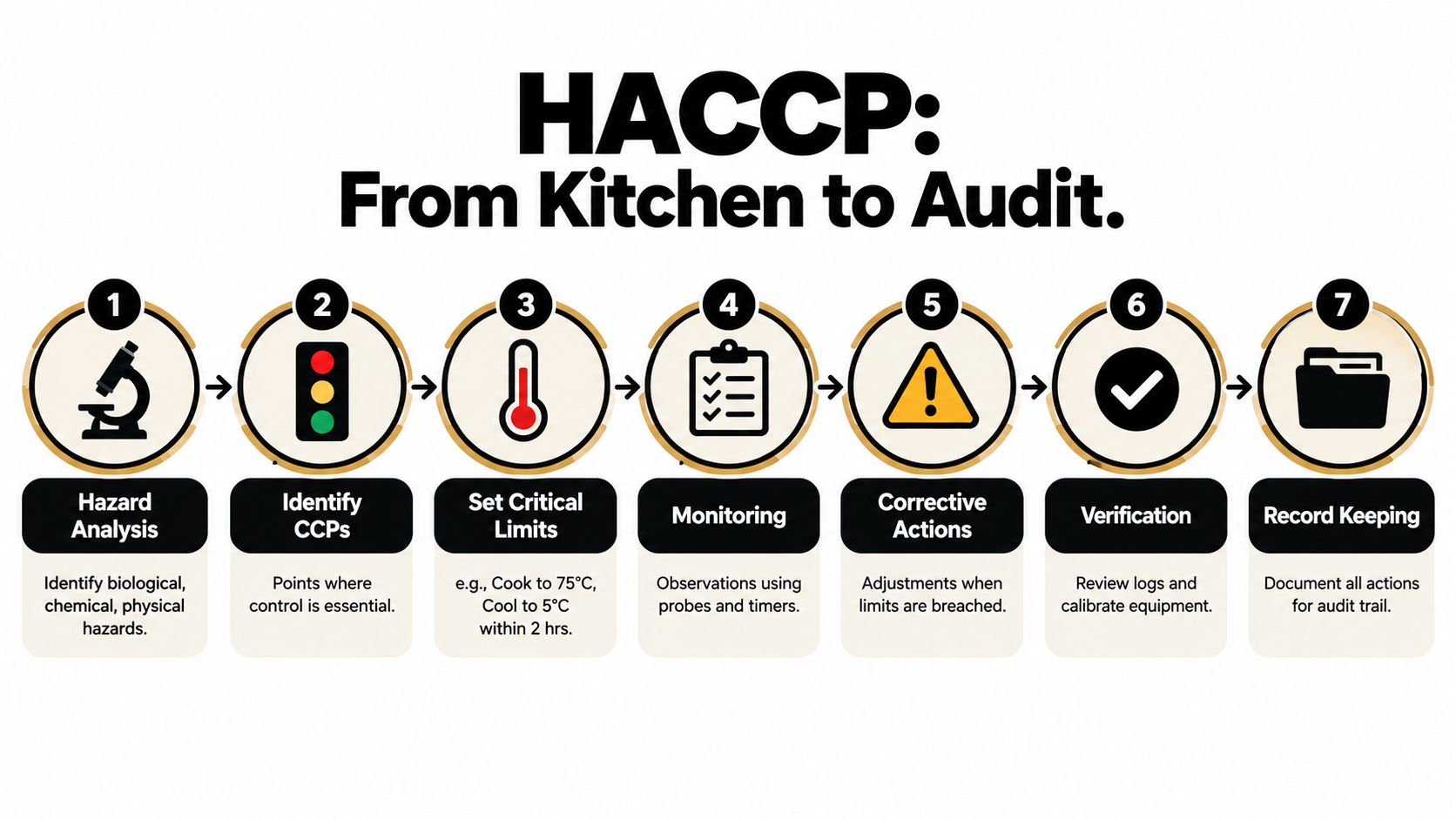
A hotel kitchen becomes defensible when staff stop treating hygiene as a general housekeeping task and start managing it as a critical control system. HACCP provides the structure. The Four C's, cleaning, cross-contamination control, cooking, and chilling, turn that structure into daily kitchen behavior.
HACCP follows seven connected principles:
- Hazard analysis, identify biological, chemical, and physical hazards.
- Critical control points, locate where control is essential.
- Critical limits, define acceptable boundaries.
- Monitoring, record observations using probes, timers, and checks.
- Corrective actions, specify what happens after a breach.
- Verification, review records and confirm equipment accuracy.
- Record-keeping, preserve the audit trail.
For a practical introduction, operators can use this HACCP food-safety guide alongside the Safety Space GMP guide. Both are useful starting points for turning broad food-safety expectations into repeatable procedures.
Build the record chain
A line cook should record the check at the point of control. The chef de partie or supervisor should review exceptions during the shift. The executive chef or duty manager should verify that corrective actions were completed, not just initial the page.
That record should show the equipment used, the reading taken, the time, the staff member, and the response to any deviation. Calibrated thermometers matter because an inaccurate probe creates false confidence. Sanitizer concentration also needs verification against the product label and the kitchen's approved operating range, not a guess based on smell or appearance.
The Sustainable Hospitality Alliance's food safety guidance for hotels explains why HACCP and the Four C's work together. They force managers to control storage, preparation, service, and sanitation at defined points instead of relying on visual cleanliness. That discipline is what makes buffet operations auditable.
Buffet and Dining Area Hygiene From Set Up to Service
A buffet isn't a row of dishes. It's a timed operating system with multiple exposure points. Guests touch serving utensils, food remains on display, open dishes face respiratory exposure, and staff must maintain temperature and presentation without losing control of the line.
Start before guests arrive. Clean and sanitize sneeze guards, trays, counters, handles, and food-contact surfaces. Check equipment with a calibrated probe. The hotel food-safety plan should keep hot food at 63°C or above, while cold food must remain cold, as recommended in hotel food-safety guidance for buffet operations.
Run the line by time
Batch-label every pan and record its service or discard time. Replace trays with fresh pans instead of topping up old food. Topping off hides the age of the original batch and makes it difficult to reconstruct what was served.
Use sneeze guards and keep serving utensils assigned to their dishes. Rotate or replace utensils when they're dropped, visibly soiled, or otherwise compromised. Maintain a dedicated allergen area with separate utensils and clear signage. One staff member should monitor the line, remove used plates, wipe table edges, and reset stations while another person handles replenishment where staffing allows.
A buffet should be recoverable from the log. If the team can't show the readings and replacements, the operation depends on memory.
Probe readings belong in the service record with timestamps and initials. When a reading falls outside the defined limit, staff should identify the affected batch, remove or correct it according to the food-safety plan, sanitize the relevant area, and record the decision. The goal isn't paperwork for its own sake. It's a reliable chain of evidence.
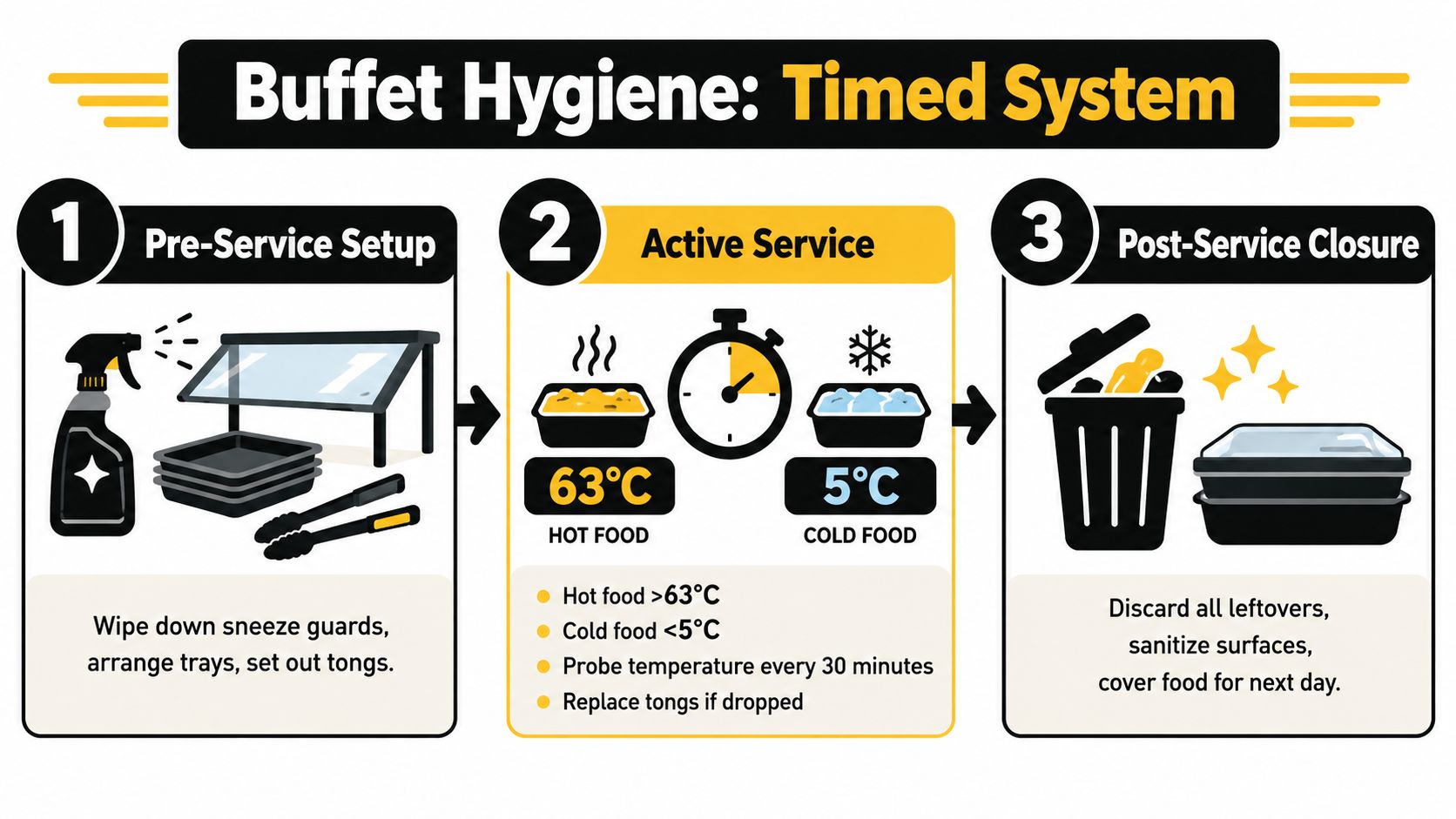
At closure, discard food according to the property's food-safety policy, empty ice baths, clean and sanitize surfaces, and document deviations. The buffet hygiene demonstration can support staff training, but it shouldn't replace a property-specific procedure and signed service record.
Pest Control Approaches Hotels Use to Stay Audit-Ready
Pest control fails when hotels treat it as an occasional contractor visit. A credible program combines prevention, monitoring, response, and documentation. Compare every method against three questions: what does it cost to deploy, how visible is it to guests, and what evidence does it leave behind?
| Approach | Upfront Cost | Guest-Facing Discretion | Audit Trail Strength |
|---|---|---|---|
| Preventive integrated pest management | Usually requires planned maintenance and monitoring investment | High, because sealing, sanitation, and discreet stations are mostly invisible | Strong when inspections, findings, and corrective work are logged |
| Targeted chemical control | Varies with contractor scope, treatment area, and frequency | Moderate to low, depending on product and placement | Strong when licensed contractors provide treatment records and product details |
| Physical or electronic controls | Varies by equipment type and installation | High when units are quiet, compact, and appropriately positioned | Moderate to strong when device checks, servicing, and incidents are recorded |
Use a layered program
Preventive integrated pest management should come first. Seal service-door gaps, repair screens, control waste, remove standing water, clean spills quickly, and inspect deliveries. Monitoring stations then show where activity is occurring. They're not a substitute for sanitation. They're an early-warning system.
Chemical control has a role, especially in waste rooms, loading areas, and other back-of-house locations. Use licensed contractors, follow label requirements, protect food and food-contact surfaces, and keep treatment records accessible. Spraying without addressing entry points or food sources only shifts the problem.
Physical and electronic controls can support dining areas when they don't interfere with service or create a guest concern. Fly-killing units, air curtains, and discreet barriers should be selected for placement, maintenance, and suitability around food. The hotel hygiene coverage from Hotel Management Network reflects the broader shift toward documented protocols, touchpoint control, air-quality attention, and process verification.
The right answer for most hotels is a hybrid: perimeter prevention, targeted contractor treatment where justified, and discreet physical controls in guest-facing dining spaces. Every intervention should produce a record that shows the date, location, finding, action, and follow-up.
Fly Control as a Compliance and Experience Layer
Flies belong inside the food-safety conversation, not in a housekeeping complaint queue. A fly landing on an exposed buffet item can trigger a guest complaint, damage confidence, and require a documented response even when no illness occurs. The operational question is simple: what did staff do before, during, and after the incident?
Start outside the buffet. Keep waste rooms sealed and clean. Fit service doors with effective screens or air-control measures. Manage delivery routes and refuse storage so insects don't move directly from waste and loading areas into food-service spaces. Dining rooms also need fast spill response, clean drains, controlled lighting, and doors that don't remain open unnecessarily.
Add a measurable air barrier
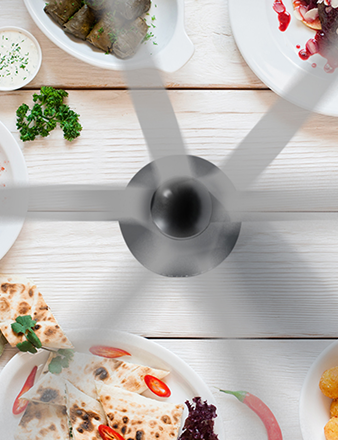
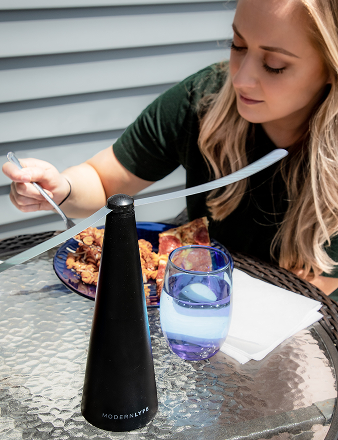
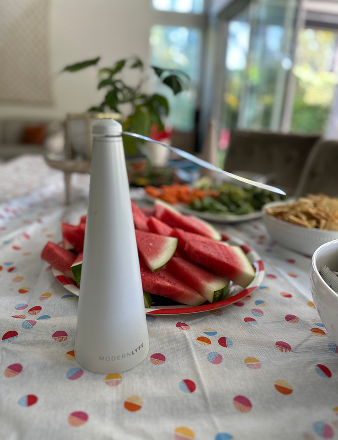
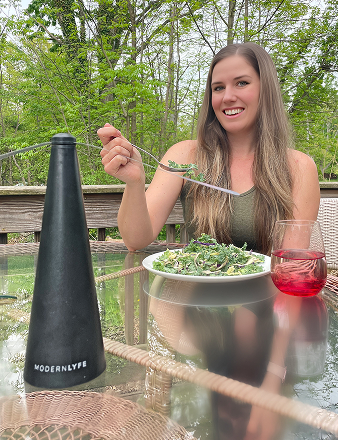
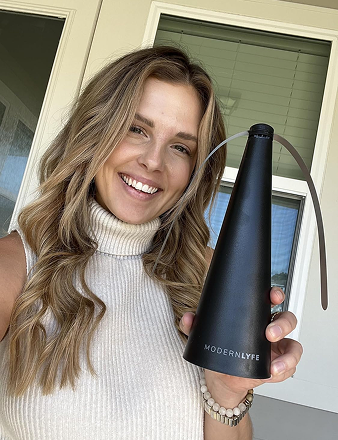
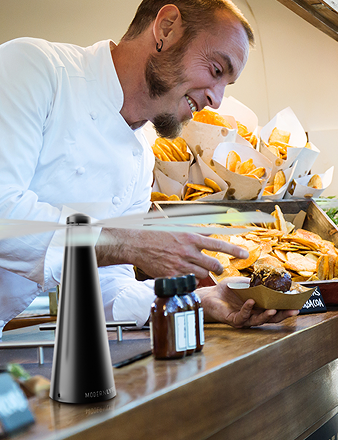
Table-mounted fans can create directed airflow across exposed food and serving zones, making it harder for flies to cross into the presentation area. They don't replace screens, sanitation, covers, or professional pest management. They add a visible, repeatable control that staff can inspect before service and record during the shift.
The same logic applies to discreet fly-control units positioned away from food-contact surfaces. Check that devices are operating, correctly placed, clean, and included in the service log. If a unit fails, staff should record the failure, notify the responsible manager, and apply the backup response rather than treating the device as decoration.
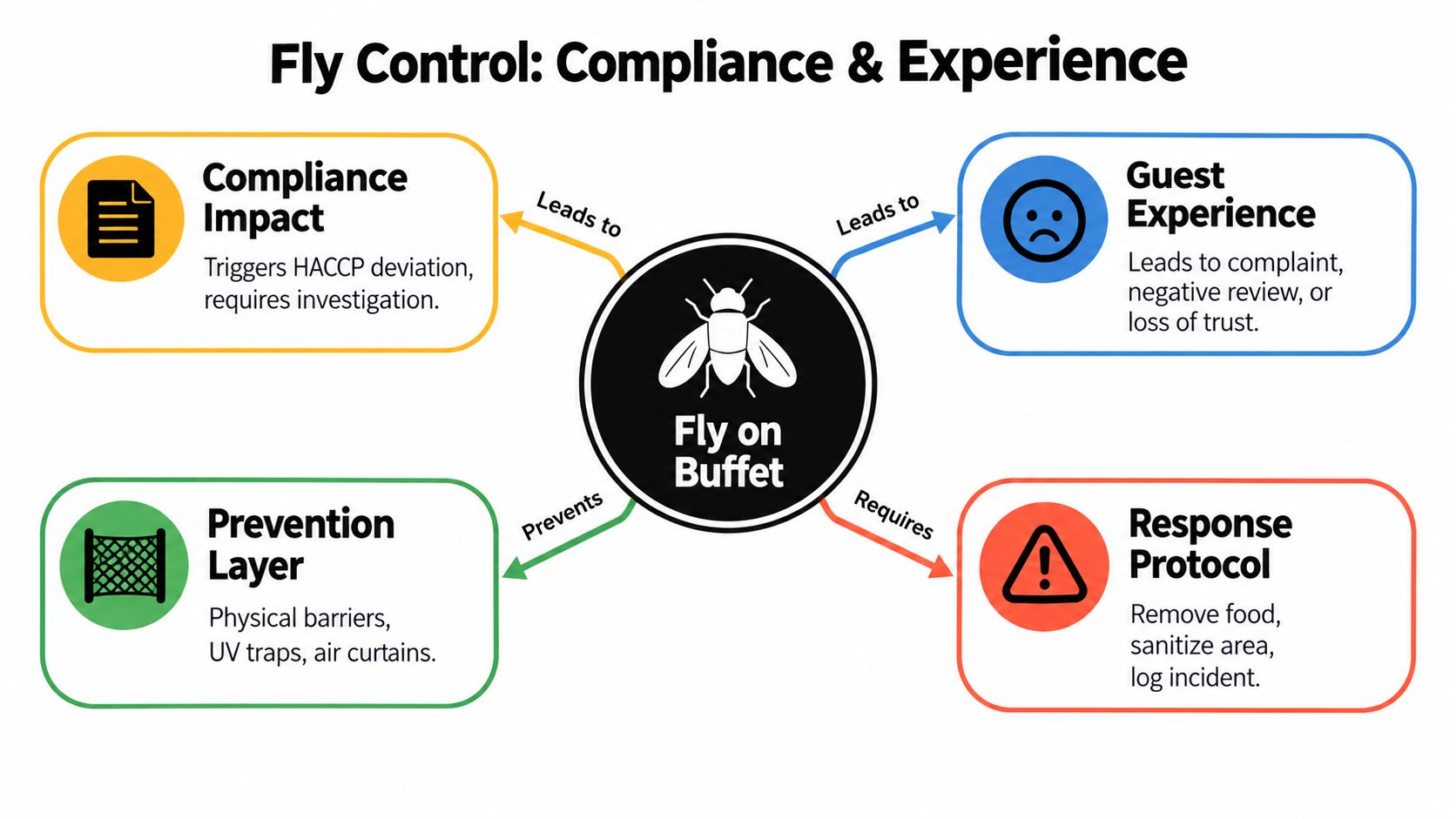
A fly incident should trigger a defined sequence: remove the affected food, isolate the service area, sanitize the relevant surfaces, inspect nearby controls, notify the food-safety lead, and document the decision. The fly-control guidance for restaurants offers useful context for integrating physical fly prevention with dining operations.
This turns fly control into a compliance-adjacent control point. The hotel can show that it anticipated the risk, installed a barrier, checked the barrier, and responded consistently when the barrier was challenged. Guests see a cleaner dining experience. Auditors see a process.
A Practical Daily Checklist Operators Can Actually Run
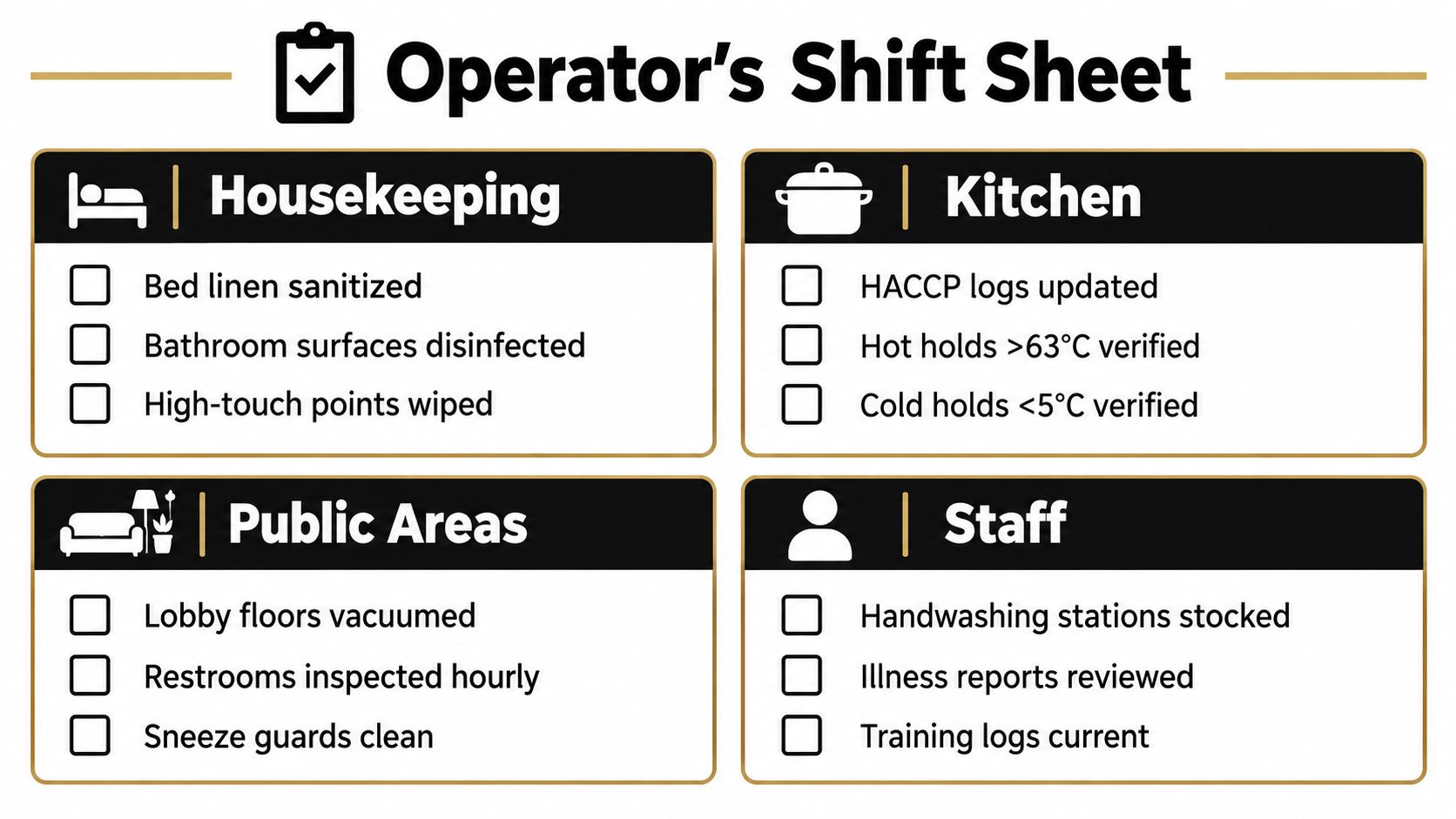
A checklist only works when someone can execute it during a busy shift without calling a consultant. Give each block to a named owner. Require a timestamp, a reading or observation, and a signature or digital identity. A tick without evidence is decoration.
Housekeeping owns room and public-area release
Housekeeping should verify room status before release, inspect bathrooms, disinfect high-touch points, check odors and visible damage, and separate clean supplies from used linen and waste. Public-area staff should record inspections of reception, elevators, corridors, gyms, restrooms, handrails, and other high-contact zones according to the property's risk-based schedule.
Kitchen owns measurable controls
The kitchen shift sheet should include receiving checks, storage observations, hot-hold readings, cold-hold readings, sanitizer verification, equipment condition, and corrective actions. Staff should record the actual reading, not write “OK.” If a limit is missed, the record must identify the affected food or equipment and the action taken.
Dining owns the guest-facing line
Dining staff should inspect sneeze guards, buffet surfaces, serving utensils, food labels, and fly-control devices before service. During service, they should record temperature checks, utensil changes or replacements, spill response, and any fly activity. The person assigned to the buffet must have authority to remove a dish, not merely report a problem to someone else.
Engineering closes the hidden gaps
Engineering should inspect pest stations, waste-room conditions, grease traps, exhaust systems, refrigeration alarms, ventilation equipment, leaks, and door seals. These checks prevent the back-of-house conditions that eventually appear as odors, insects, moisture, or food-safety failures in guest areas.
Audit rule: Supervisors must not sign an entire shift sheet from memory at the end of the day.
Store completed records in a controlled digital folder or labeled physical file accessible to operations, food safety, engineering, and inspectors. Retention should follow local regulation, brand policy, insurer requirements, and the hotel's food-safety plan. For a broader view of how visible standards support confidence, see this guide to hotel hygiene standards that earn trust.
What Modern Hotel Hygiene Standards Should Look Like Next
The next improvement isn't another slogan about cleanliness. It's a move from scheduled activity to risk-based verification.
High-touch and high-throughput areas should receive attention based on use, occupancy, events, dining volume, and observed incidents. A quiet meeting room and a crowded buffet line shouldn't automatically receive the same treatment. Managers need a schedule that changes when the risk changes, with the reason recorded.
Paper logs also need to evolve. Timestamped digital verification can show who completed a check, where it occurred, what reading was taken, and whether a manager reviewed an exception. Digital tools don't make a weak process stronger by themselves. They make accountability harder to hide when the process is well designed.
Make controls visible without turning hygiene into theater
Guests should be able to recognize sensible controls:
- Protected food: Sneeze guards, covered dishes, separated utensils, and clear allergen handling.
- Managed insects: Discreet fly barriers and functioning control devices that don't disrupt the dining experience.
- Maintained touchpoints: Clean elevators, handles, counters, restrooms, and shared equipment.
- Consistent room service: Clear housekeeping communication and a room-release inspection that matches the promised standard.
These measures should be evidence of real controls, not props installed for a photograph. Suppliers, laundry providers, pest contractors, waste teams, and maintenance vendors must meet the same documentation standard as hotel employees. The weak link is often an outsourced process that no department owns.
The final test is uncomfortable and useful. An unexpected inspector, journalist, corporate client, or guest should find the same operation as a prepared audit. If the records are current, the buffet readings are real, the pest controls work, and staff know how to respond, the standards are genuine. If the hotel needs advance notice to look hygienic, the program is still a performance.
Modern Lyfe offers quiet, battery-operated fly fans for buffet lines, dining tables, outdoor receptions, and other exposed-food settings, adding a practical physical barrier to a wider hotel hygiene program. Visit MODERN LYFE to review the available fly-control options and choose a setup your team can inspect, use, and document during service.