To get rid of fruit flies, you need a two-part attack: eliminate their breeding grounds and trap the adults. This means cleaning relentlessly—from overripe fruit to slimy drains—while setting effective traps using baits they can't resist, like apple cider vinegar. It's a simple strategy that breaks their life cycle and clears them out for good.
Why Fruit Flies Love Your Kitchen
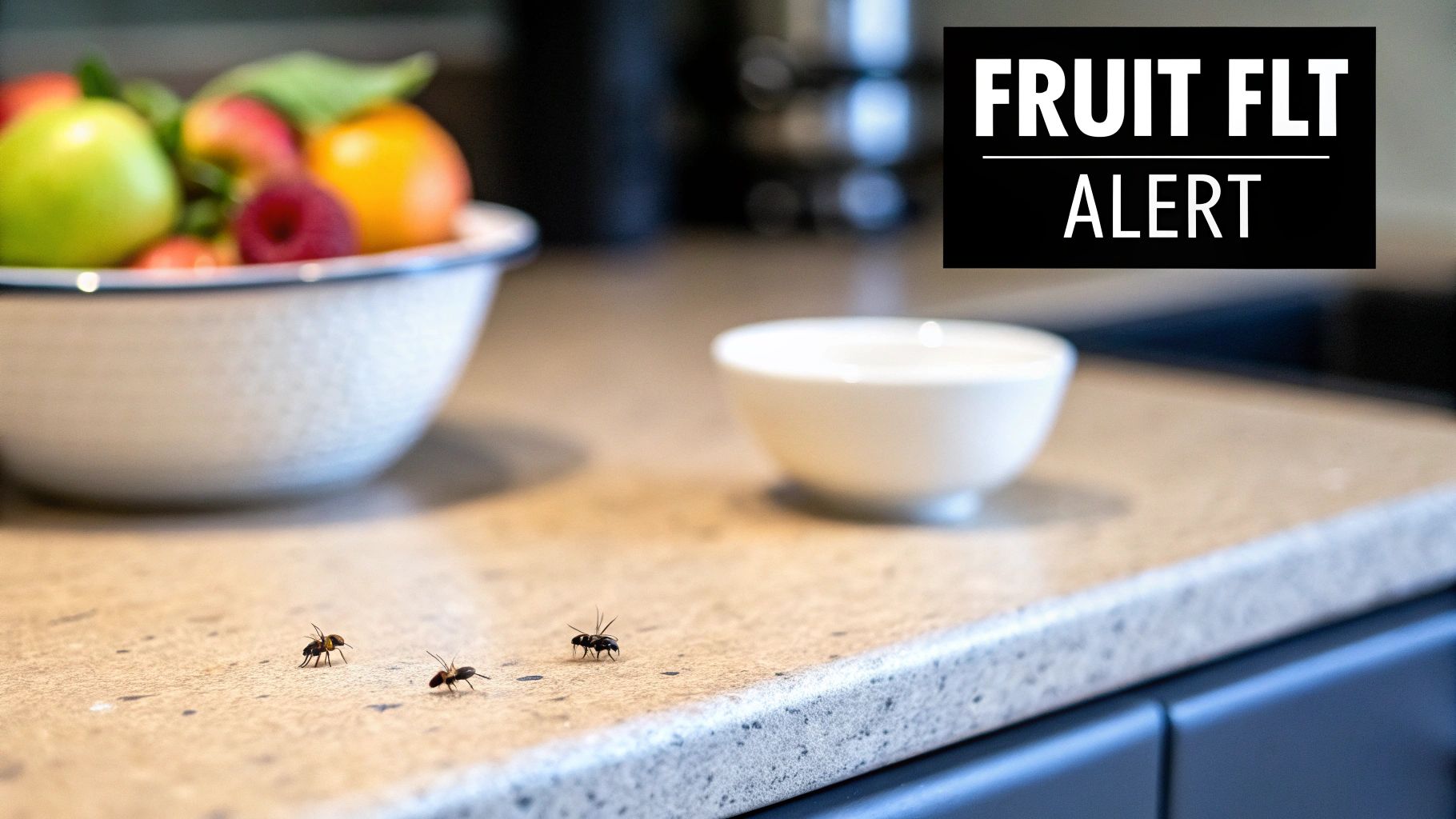
It starts with one. A tiny speck over the fruit bowl. The next day, there are ten. Soon, a cloud of them has claimed your kitchen. That population explosion isn't your imagination—it's the result of the fruit fly's rapid life cycle, making them one of the most stubborn household pests.
The problem is more than just annoying. Fruit flies are drawn to any fermenting organic material, meaning they’re just as happy in your garbage disposal as on your fresh peaches. This makes them a genuine hygiene issue.
The Speed of an Infestation
The real issue is how fast they breed. One minute, you're hosting a barbecue for 20 guests, and the next, fruit flies are swarming the fruit platter. These tiny invaders, no bigger than a sesame seed, multiply at a staggering rate. A single female can lay up to 500 eggs in her short 30–50 day lifespan. A forgotten banana can fuel a full-blown infestation in just days.
For restaurants or event planners, this isn't just irritating—it's a health risk that can ruin buffets and drive away customers. Experts at DrKilligans.com have more insights on this.
This guide moves past temporary fixes. We’ll outline a clear strategy to eliminate your current fruit fly problem and ensure a new one never starts.
Key Takeaway: Real fruit fly control isn't just about setting a trap. It’s about understanding their biology and systematically removing everything they need to survive and multiply in your home.
Here, you’ll learn how to control fruit flies with proven sanitation methods and modern, chemical-free tools. Whether you're a homeowner or a caterer, these steps will help you reclaim your space. For more background, see our guide on what attracts fruit flies to your home to better understand their behavior.
Our Proven 3-Step Plan for a Fly-Free Home
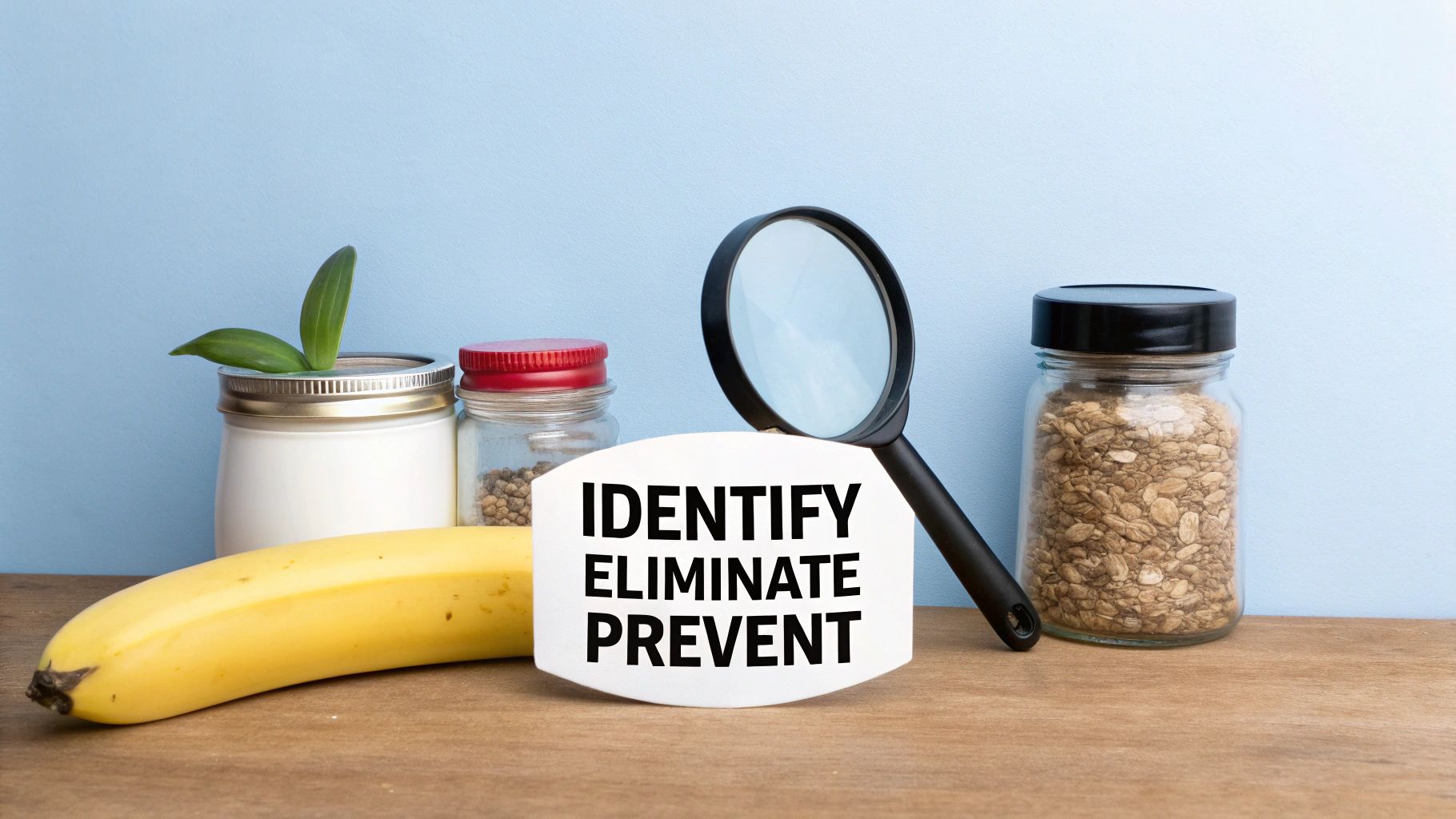
Winning the war against fruit flies requires a strategy, not just frantic swatting. The most effective method is a simple three-phase framework: Identify, Eliminate, and Prevent.
Think of it as a tactical mission. First, you locate their hidden headquarters. Next, you neutralize the current invaders. Finally, you fortify your home so they never get a foothold again.
This approach shifts you from reacting to swarms to proactively dismantling the system that allows them to thrive.
Identify The Hidden Breeding Grounds
This is the most critical phase. The adult flies you see are just symptoms of a larger problem. To get rid of fruit flies for good, you must find and destroy their breeding grounds, where one female can lay hundreds of eggs.
Most people check the fruit bowl and stop there. That's a mistake. Fruit flies are resourceful and will breed in any moist, fermenting organic material. You need to expand your search beyond the obvious.
Start with a thorough inspection of your kitchen and other problem areas. Your mission is to find the unexpected spots that serve as a perfect nursery for fruit fly larvae.
Common Overlooked Breeding Hotspots:
- Sink Drains & Garbage Disposals: A slimy layer of organic gunk, or biofilm, inside pipes is a prime breeding ground.
- Damp Sponges & Dishcloths: That sour-smelling sponge is a five-star resort for fruit flies.
- Bottom of Trash Cans: Sticky residue from leaky garbage bags creates a breeding puddle.
- Recycling Bins: Unrinsed soda cans, wine bottles, and juice cartons offer a sugary feast.
- Refrigerator Drip Pans: The condensation tray under your fridge collects moisture and grime, becoming a hidden nursery.
- Forgotten Produce: That lone potato or onion that rolled to the back of the pantry is a perfect target.
By finding and sanitizing these specific spots, you cut the infestation off at the source. This single step is more effective than any trap.
Eliminate The Existing Fly Population
Once you've destroyed their breeding cycle, it's time to deal with the adult flies. This is where traps come in. The goal is simple: capture and kill the adult population before they can find new places to lay eggs.
You have two main options: DIY traps made from household items or professionally designed commercial products. Both work well when used correctly.
The science is simple: lure the flies with the irresistible scent of fermentation, then trap them.
Effective DIY Trap Recipes:
- Apple Cider Vinegar (ACV) Trap: Pour an inch of ACV into a small jar and add a single drop of dish soap. The soap breaks the liquid's surface tension, causing flies to sink and drown.
- Red Wine Trap: Leftover red wine works just as well as vinegar. Leave a small amount in the bottle—the narrow neck makes it nearly impossible for flies to escape.
- Overripe Fruit Funnel Trap: Place a piece of mushy banana in a jar. Roll paper into a funnel and place it in the jar's opening. Flies can get in but can't find their way out.
For a more hands-off approach, commercial traps offer convenience and powerful attractants. Look for sticky traps for discreet placement or liquid bait traps that work like the DIY versions.
The best elimination strategy combines deep cleaning with trapping. When you remove breeding grounds and capture adults simultaneously, the infestation collapses.
Don't just place one trap in the middle of the room. Position them where you see the most activity—near the sink, fruit bowl, and trash can—for maximum impact.
Prevent Their Inevitable Return
With the immediate threat gone, your focus shifts to prevention. This final phase is about building sustainable habits and making small environmental tweaks to make your home unappealing to fruit flies. Prevention is an ongoing effort, not a one-time fix.
The key is to remove the three things fruit flies need: food, water, and shelter. Consistently managing these elements creates a long-term barrier.
Start with food storage. Don't leave fruit sitting on the counter, especially once it’s ripe. The refrigerator is your best defense.
Key Prevention Habits to Adopt:
- Daily Wipe-Downs: Clean spills and crumbs immediately, especially sugary messes from juice or soda.
- Smart Waste Management: Use a trash can with a tight lid and take it out frequently.
- Routine Drain Maintenance: Once a week, pour boiling water down your kitchen drain to break up potential gunk.
- Seal Entry Points: Check window and door screens for tiny holes. Fruit flies can squeeze through the smallest gaps.
By integrating these three steps—Identify, Eliminate, and Prevent—into your routine, you can reclaim your kitchen and keep it pest-free.
Mastering Sanitation to Eliminate Breeding Grounds
Traps are great for catching adult flies, but they're just a band-aid. To win the war, you have to attack their nurseries. Lasting fruit fly control is all about sanitation—going far beyond just wiping down counters.
You have to think like a fruit fly. They are on a mission to find any moist, fermenting organic matter to lay their eggs—up to 500 at a time. Your job is to make your home completely inhospitable by systematically destroying every potential breeding spot. This isn't just cleaning; it's a strategic operation.
When you remove their ability to reproduce, the infestation collapses. Getting this part right makes every other method you use far more effective.
The Deep Clean Your Kitchen Is Crying For
Most people clean the obvious surfaces, but fruit flies thrive in the places we overlook. You need to become a detective, investigating the grimy, hidden corners where a single crumb can fuel an entire generation of flies.
Instead of viewing your kitchen as one big room, see it as a collection of hotspots. Go through this list methodically.
- Under Appliances: This is a big one. Pull out your refrigerator, stove, and microwave. You'll likely find old spills, crumbs, and a sticky film—a five-star resort for fruit flies. A deep clean here is non-negotiable.
- Sticky Bottles and Jars: That jam dribbling down the side of the jar or the sticky ring under the honey bottle is a feast. Wipe down every condiment container.
- Cabinet and Pantry Floors: Spilled flour, a stray onion skin, or a forgotten potato can quickly become a problem. Empty your pantry and lower cabinets, vacuum them out, and wipe down all surfaces.
This may seem like overkill, but this level of detail is what it takes to break their life cycle for good.
Conquering Kitchen Drains and Disposals
Your sink drain is the most common—and stubborn—fruit fly headquarters. It’s dark, moist, and constantly collects a slimy layer of organic gunk called biofilm. This sludge is heaven for fruit flies.
They are drawn to the decaying matter in neglected drains, turning your sink into a non-stop breeding ground. To eliminate this major attractant, you need to fix bad smells coming from your kitchen drain with the right method. Pouring bleach down the drain is a common mistake; it flows past too quickly to break down the grime where eggs hide.
You need something that actively scrubs the inside of the pipes.
A Natural Drain Cleaner That Actually Works
- Pour a half-cup of baking soda down the drain.
- Follow with a half-cup of white vinegar. The fizzing action provides a physical scrub.
- Let it sit and work for at least 15-20 minutes.
- Finish by flushing the drain with a pot of boiling water to wash away the loosened debris.
Do this weekly during an active infestation, then monthly as a preventative measure. It’s a simple habit that removes their favorite breeding spot.
Establish a Weekly Sanitation Sweep
To stay on top of things, you need a routine. Random cleaning blitzes won't cut it. A "Sanitation Sweep," a dedicated weekly ritual focused on fruit fly prevention, is the answer.
Your goal isn’t just to clean, but to create an environment where pests can't survive. A consistent weekly sweep transforms cleaning from a reactive chore into a powerful pest prevention tool.
Here’s a sample routine you can adapt:
| Day of Week | Task | Why It Matters |
|---|---|---|
| Sunday | Waste & Recycling Deep Clean | Take out all trash. Rinse the bins with hot, soapy water to remove any sticky residue where larvae hide. |
| Wednesday | Drain Maintenance | Use the baking soda and vinegar method to clear out any gunk that’s built up mid-week. |
| Friday | Appliance & Hotspot Check | Do a quick wipe-down of condiment bottles. Check under the toaster. Glance at the floor under the fridge for any new spills. |
This proactive approach ensures that even if a few scout flies get inside, they won’t find anywhere to set up shop. When you master sanitation, you're not just getting rid of fruit flies—you're building a fortress they can’t breach.
Choosing the Right Trap for Your Situation
Once you’ve scrubbed away their breeding grounds, it’s time to deal with the adult fruit flies. This is where traps come in. Think of them as your cleanup crew, catching stragglers and ending the invasion.
But not all traps are created equal. The best choice depends on the location and severity of the problem, plus how much effort you want to put in. A discreet sticky trap might be perfect for a home bar, while a busy kitchen needs something more robust. Let's break down the options so you can pick the right tool for the job.
This decision tree gives you a quick visual guide to help pinpoint your fruit fly problem's source.
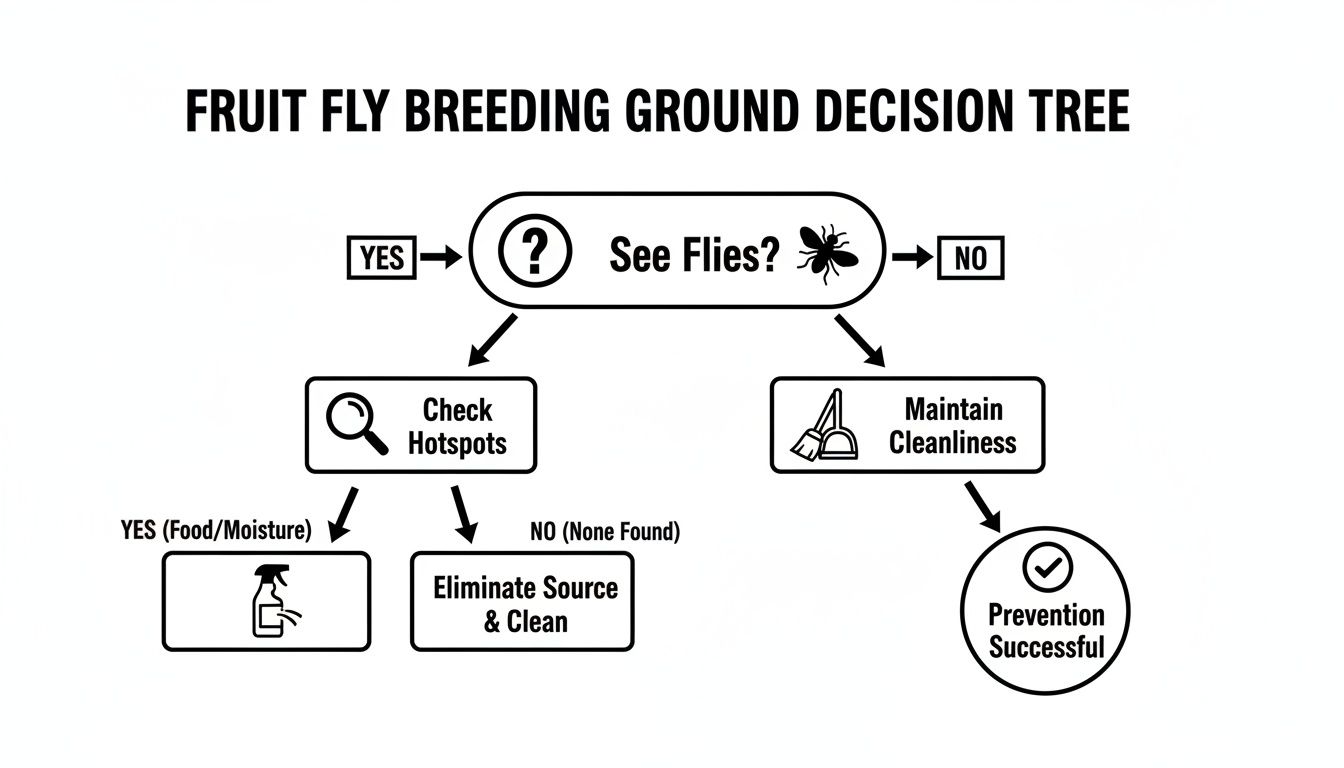
As you can see, finding and eliminating the source is always the first and most critical step.
Building the Perfect DIY Fruit Fly Trap
The classic apple cider vinegar (ACV) trap is a go-to for a reason: it's cheap, simple, and effective. Fruit flies can't resist the smell of fermentation, and ACV mimics their favorite meal—rotting fruit.
The basic recipe is a solid start: a little ACV in a jar with a drop of dish soap. The soap breaks the surface tension, so when flies land to drink, they sink. It’s that simple. But a few small tweaks can make this homemade trap even more potent.
Pro Tips for a Better DIY Trap:
- Warm it up. A quick 10 seconds in the microwave warms the vinegar, releasing more of its scent and making it a more powerful beacon.
- Add a sweetener. A tiny piece of overripe banana or a single drop of honey can supercharge the bait.
- Try the paper funnel method. Instead of soap, roll a piece of paper into a cone and place it in the mouth of a jar containing the ACV. Flies can easily get in but are rarely smart enough to find the tiny exit.
For a deeper dive, check out our guide on the best fly traps for fruit flies to get more ideas.
Evaluating Commercial Trapping Solutions
If you're not the DIY type, plenty of excellent commercial options are ready to go out of the box. These products prioritize convenience, often using powerful, slow-release attractants that last longer than a bowl of vinegar.
Sticky traps are a fantastic choice for discreet placement. They come in subtle shapes, like clear window clings or small stakes you can tuck into a potted plant. They lure flies onto a glue-covered surface and are silent, odor-free, and perfect for areas where you don’t want liquid spills.
UV light traps are another popular commercial solution. These devices use ultraviolet light to attract fruit flies and other pests, capturing them on a hidden sticky board. They are extremely effective but tend to be larger and pricier, making them a better fit for severe infestations.
Expert Insight: Placement is everything. Don't just stick one trap in the middle of the kitchen. Identify the "fly highways"—the paths between the fruit bowl, sink, and trash can—and place traps directly in those high-traffic zones for maximum impact.
Fruit Fly Trap Comparison Guide
To simplify your decision, here’s a quick comparison of the most common trapping methods.
| Trap Type | Effectiveness | Average Cost | Maintenance Level | Best For |
|---|---|---|---|---|
| DIY ACV Trap | High | Very Low | High (refresh every 2-3 days) | Quick, budget-friendly kitchen control. |
| Sticky Traps | Moderate to High | Low | Low (replace when full) | Discreet placement near plants or windows. |
| Pre-Made Liquid Traps | High | Low to Medium | Low (replace every 3-4 weeks) | A convenient, set-and-forget solution. |
| UV Light Traps | Very High | High | Medium (replace sticky board) | Severe infestations or larger spaces. |
By understanding these differences, you can arm yourself with the right combination of traps to eliminate the current adult population and get your home permanently fly-free.
Protecting Food and Guests With Modern Solutions
Once you've cleaned the drains and set your traps, your defense is solid. But what about when you're hosting? For a backyard barbecue, an outdoor wedding, or a busy food truck, you need a proactive way to protect food and keep guests happy. It’s time to go on offense.
Instead of reacting to fruit flies after they appear, you can create a protective barrier around your food without chemical sprays or loud zappers. Modern tools offer an elegant and effective way to guard food and elevate the hosting experience. This isn't just pest control; it's modern hospitality.
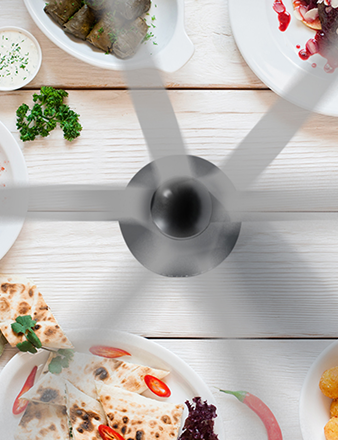
The concept is simple: by creating a gentle but consistent airflow, certain devices make it nearly impossible for weak fliers like fruit flies to land on your food, forming an invisible shield over your buffet.
The Power of Disruptive Airflow
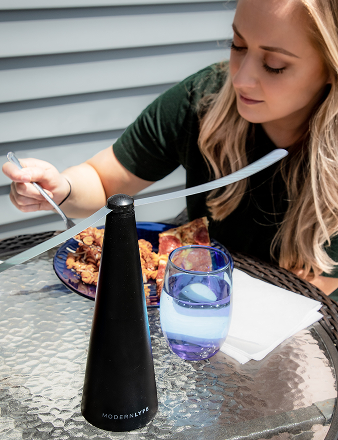
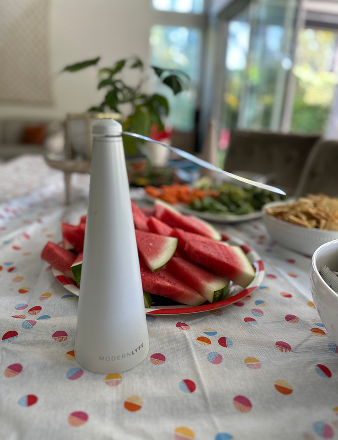
Imagine a dessert table at an outdoor wedding. The last thing you want is a swarm of fruit flies crashing the party. This is where a table fly fan becomes essential. These devices use soft, reflective blades to generate a gentle, continuous breeze.
This constant air movement does two things:
- It creates turbulence, making the air currents too difficult for the flies' tiny wings to navigate, preventing them from landing on the food.
- The holographic patterns on the blades reflect light, which disorients and repels the flies’ sensitive compound eyes.
The result is a fly-free zone created silently and safely. With quiet operation and sleek, portable designs, these fans blend in and do their job without ruining the atmosphere.
For a homeowner grilling in the backyard or a resort coordinator managing a 100-guest event, traditional sprays are inadequate—they only kill 20-30% of eggs hidden in produce. Modern Lyfe's innovative fly fans are a game-changer. They're compact, battery-powered, and have simple controls, creating an invisible shield over platters that blocks 95% of flies, according to independent airflow studies. This makes them perfect for outdoor markets or wedding receptions. You can dive deeper into the science with this in-depth entomology research.
Fly Fans in the Real World
The true test is how these devices perform in real-life situations. They offer a targeted solution that keeps food pristine and guests comfortable.
Here are a few practical examples:
- The Family Barbecue: Place a couple of fly fans on the picnic table to guard burgers, salads, and fruit platters. Your family can eat in peace.
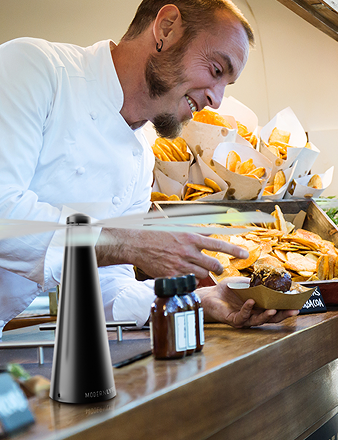
- The Food Truck Counter: A fan near the service window keeps flies away from customers and fresh ingredients, upholding hygiene standards.
- The Catered Buffet: Spacing several fans along a buffet line creates a continuous protective barrier, ensuring every dish stays untouched. Find out more about how a fly fan enhances any dining setup in our detailed guide.
Key Insight: A fly fan isn't just a pest control gadget; it's an essential piece of hosting equipment. It demonstrates a commitment to hygiene and guest comfort, making any gathering feel more professional and enjoyable.
Of course, the best defense is a layered one. To truly protect food, it's also critical to use smart food storage techniques. Combining good storage habits with modern tools like fly fans creates a powerful strategy for keeping your home and events pest-free.
Got Questions? Let's Talk Fruit Fly Control
Even with a solid plan, you'll likely have questions when fighting a fruit fly infestation. Getting straight answers can mean the difference between a quick victory and weeks of frustration. Here are the most common questions, answered.
This is the practical advice you need to understand the timeline, risks, and whether those online gadgets are actually worth it.
How Long Does This Actually Take?
The honest answer: it depends on how thoroughly you tackle the problem. If you are serious about removing every breeding source and setting effective traps, you will see a massive reduction in adult flies in just 3-4 days.
But that's just the visible adults. To break the entire life cycle and stop new flies from hatching, you're looking at one to two weeks. The key is consistency. Don't let up on cleaning and trapping, or they'll bounce back.
Are Fruit Flies Dangerous, or Just Really Annoying?
Mostly, they're an incredible nuisance. But there is a hygiene risk you can't ignore. A fruit fly doesn't distinguish between a rotting onion in the trash and the fresh fruit salad you're about to serve. They hang out in gross places like garbage disposals and grimy sink drains.
From there, they can land on your food, potentially carrying bacteria like E. coli and Salmonella.
If you run a restaurant, catering business, or any food service operation, a fruit fly problem is a direct threat to food safety, your reputation, and your customers' health.
Do Those Little Tabletop Fly Fans Actually Do Anything?
Yes, they work surprisingly well for creating a protected zone around a specific area like a dining table, kitchen prep counter, or buffet line. Devices like the fly fans from MODERN LYFE work on a simple principle: they create a gentle, steady air current.
Fruit flies are weak fliers and simply can't navigate through that moving air to land on your food. As a bonus, the shiny, holographic patterns on the fan blades disrupt their vision and deter them. It's a silent, chemical-free way to create a "no-fly zone" right where you need it.
I've Put Away All the Fruit, So Why Are They Still Here?
This is a classic fruit fly mystery. If you've secured all your produce and still have flies, it's because their name is misleading. They're not just after fruit; they're after any fermenting organic matter.
It's time to play detective and find the real culprit.
- Start with your sink drains and garbage disposal. They are notorious for trapping tiny food particles.
- Check for soggy sponges, forgotten mop heads, or sour-smelling kitchen rags.
- Look inside your recycling bin. A small amount of leftover beer, wine, or soda is a paradise for them.
- Search for a rogue potato that rolled to the back of the pantry or a bit of spilled juice under the fridge.
You must find and eliminate the true source. A deep clean of these hidden spots is the only way to shut down their breeding operation for good.
Ready to create a protected, fly-free zone for your next meal or event? The innovative fly fans from MODERN LYFE offer an elegant and effective solution to keep your food safe and your guests comfortable. Explore our collection and reclaim your space today!