That cloud of fruit flies in your kitchen isn't just annoying—it's a warning. A few can become an infestation overnight. The only way to win is with a simple, three-part strategy: clean aggressively to destroy breeding grounds, use smart traps to catch the adults, and be proactive to keep them from coming back. This is your no-nonsense plan to reclaim your space.
Your 3-Step Plan for a Fly-Free Space
Whether you're running a restaurant or just trying to enjoy your kitchen, fruit flies instantly ruin the vibe. They appear out of nowhere, multiply like crazy, and make a clean space feel dirty. Since the average person wastes about 238 pounds of food per year, even a forgotten scrap can kickstart a major problem.
This guide is more than "wipe your counters." We'll show you how to think like a fruit fly, hunt down their hidden breeding spots, and eliminate them for good.
Your Fruit Fly Defense Strategy at a Glance
Here’s the core strategy to eliminate and prevent fruit flies effectively.
| Strategy | Objective | Key Actions |
|---|---|---|
| Aggressive Sanitation | Eliminate breeding sites. | Deep clean drains, wipe up spills, and remove all fermenting organic matter. |
| Effective Trapping | Capture existing adult flies. | Set up DIY or commercial traps to reduce the current population. |
| Proactive Prevention | Create a long-term barrier. | Use smart storage and tools like fly fans to keep them away for good. |
By tackling the problem from all three angles, you create a system that not only solves your current issue but also prevents it from happening again.
Break the Fruit Fly Life Cycle
To win, you have to understand your enemy. A single female fruit fly can lay 500 eggs in her short life, and they hatch in as little as 24 hours. That’s why one forgotten banana turns into an army of flies in less than a week.
Our plan attacks every stage of their life:
- Sanitation: This is your non-negotiable first defense. Eliminate the damp, fermenting gunk fruit flies need to lay eggs. No food source, no babies.
- Trapping: Once you've cut off their breeding supply, you still have adult flies to deal with. We’ll show you simple, effective ways to trap them.
- Prevention: This is the final step. Creating a permanent barrier with chemical-free tools like the Modern Lyfe fly fan makes it physically impossible for flies to land on your food, disrupting their entire pattern.
This isn't about swatting flies. It's about building a defense system that makes your space a permanent no-fly zone.
These principles work everywhere, from a commercial kitchen to a backyard barbecue. Combine these strategies, and you’ll get the peace of mind that comes from a clean, pest-free environment.
Step 1: Build Your Defense with Proactive Sanitation
The best way to keep fruit flies out is to make your space a place they hate. This is more than a simple counter wipe-down. Real prevention means hunting down and eliminating the hidden breeding grounds where their populations explode.
Think like a fruit fly. They aren't just looking for an overripe banana. They want any trace of fermenting organic matter—the sticky film under bar mats, the gunk in a floor drain, or a damp mop left in a corner. These are their nurseries.
And a small problem gets out of hand, fast. In California alone, over 350 cities fight fruit fly outbreaks each year, which can cause millions in agricultural losses. It’s a reminder that what happens in your kitchen has a bigger impact.
Target the Hidden Hotspots
To build a solid defense, get methodical about cleaning the spots fruit flies love. These are usually the out-of-sight places missed during a standard cleaning rush.
Here’s where to focus:
- Drains: Floor and sink drains are public enemy number one. These dark, damp pipes collect food bits and moisture, creating the perfect slime for larvae.
- Beverage Stations: Look under soda fountains, beer taps, and espresso machines. Every tiny spill builds up into a sugary buffet.
- Wet Mops and Sponges: A damp mop left in a bucket is an open invitation. The same goes for a wet sponge. Always wring them out and let them air dry completely.
- Trash Cans: Even with liners, the gunk and sticky residue at the bottom is a major magnet. Wash and dry them regularly.
Managing inventory and waste is just as important. Seriously, reducing food waste in restaurants isn’t just good for your bottom line—it removes the primary food source these pests need to survive.
Your Daily Sanitation Checklist
Consistency is everything. By adding a few critical tasks into your daily routine, you can completely disrupt the fruit fly life cycle. It's not about adding hours to your day; it's about being smarter with your time. To get a better sense of their habits, see our guide on what draws fruit flies in.
A sparkling counter means nothing if your floor drains are a five-star resort for fruit flies. Real prevention is wiping out every potential food source, no matter how small.
Follow this simple, powerful checklist daily:
- Flush Your Drains. At the end of the day, pour boiling water or a drain cleaner down every floor and sink drain.
- Inspect All Produce. Check fruits and vegetables for rot or damage. Anything getting ripe goes in the fridge.
- Wipe Down Bottles. Don't forget condiment and liquor bottles. The sticky residue on syrup dispensers, ketchup bottles, and bar mixes is a feast.
- Manage Your Bins. All trash, recycling, and compost goes out every single night. Make sure the lids are on tight.
When you make these actions a non-negotiable part of your routine, you're not just cleaning—you're destroying the foundation fruit flies need to thrive.
Step 2: Get Rid of Existing Fruit Flies with Traps
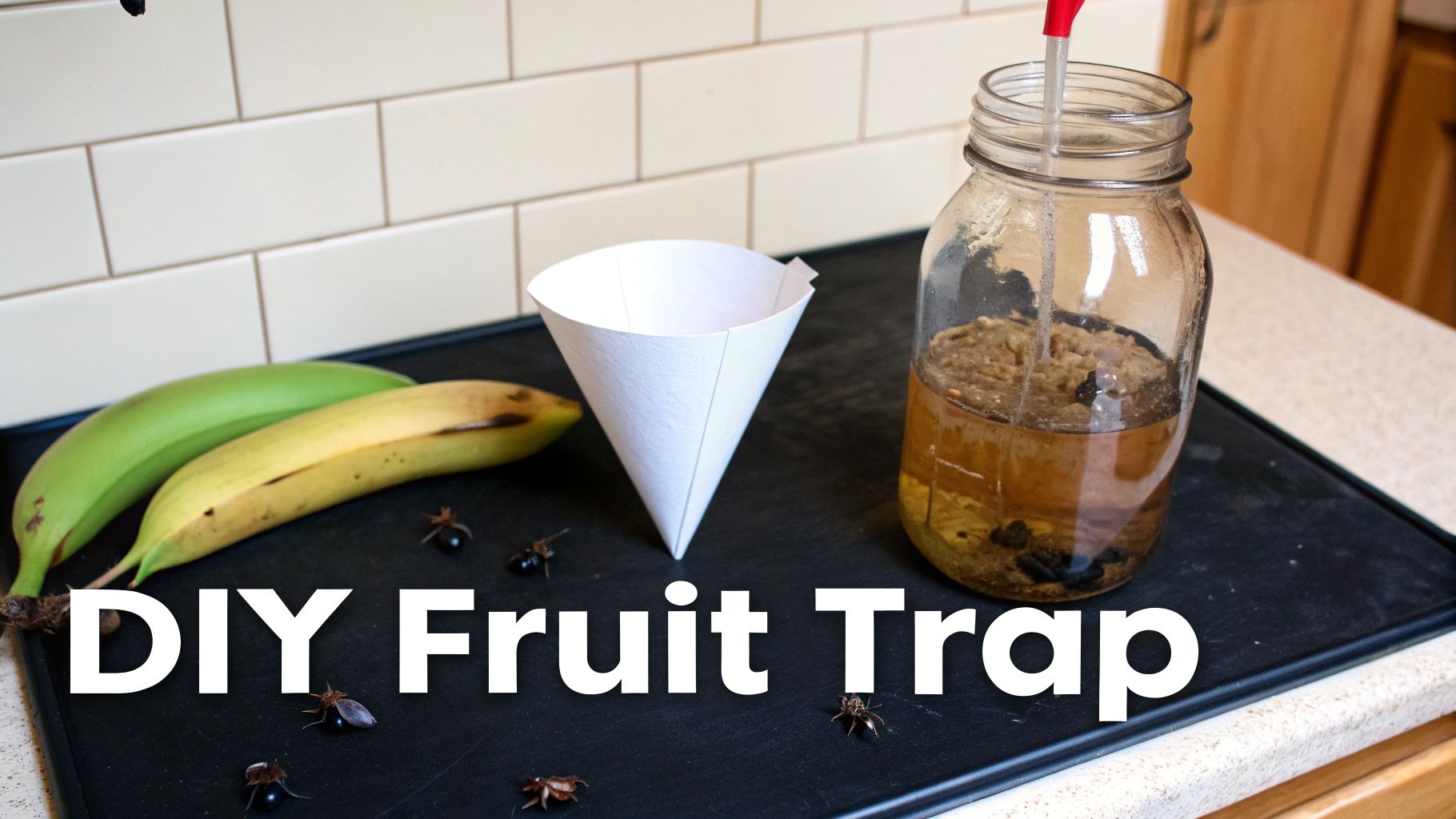
You’ve scrubbed everything and cut off their food supply. Great start. But you still have adult flies buzzing around. The next move is aggressive trapping to knock down their numbers fast.
Skip the flimsy store-bought traps. The most effective solutions are the ones you can make yourself with common household items. The trick is a lure so tempting they can't resist, paired with a design they can't escape.
It's a bigger battle than you might think. We're dealing with over 5,000 species of fruit flies globally, and 200 of those cause major economic headaches. They are incredibly adaptable, which is why a few flies can turn into a full-blown infestation overnight. Trapping is how you stop that. For a deeper dive, check out this research on the global impact of fruit flies on Annual Reviews.
The Perfect Bait and Trap Design
For bait, nothing beats apple cider vinegar. Its fermented scent perfectly mimics the decaying fruit they seek. But vinegar alone isn't enough—add a single drop of dish soap. This breaks the surface tension, so when a fly lands to drink, it sinks and drowns.
Building a powerful trap is easy. You need:
- A small jar or glass
- Apple cider vinegar and one drop of dish soap
- A piece of paper rolled into a tight cone
Pour about an inch of vinegar into the jar, add the soap, and swirl gently. Stick the paper cone into the jar like a funnel, making sure the opening at the bottom is small. Flies will easily find their way in, but they're not clever enough to get back out. We've got a complete guide that breaks this down on how to build the ultimate fruit fly catcher.
Pro Tip: Want to make your trap irresistible? Drop a small piece of overripe banana into the vinegar. This combo boosts the capture rate significantly.
Strategic Placement for Maximum Impact
Where you put your traps matters. Don't just stick one on the counter and call it a day.
In a restaurant, the hot spots are near the bar well, under the soda fountain, and by the dish pit. For homes, focus on areas next to the fruit bowl, near the sink drain, and beside the trash can.
Placing several traps in these key locations intercepts flies where they live and breed. It’s the fastest way to wipe out an existing population and get your space back.
Step 3: Use Fly Fans for Advanced Prevention
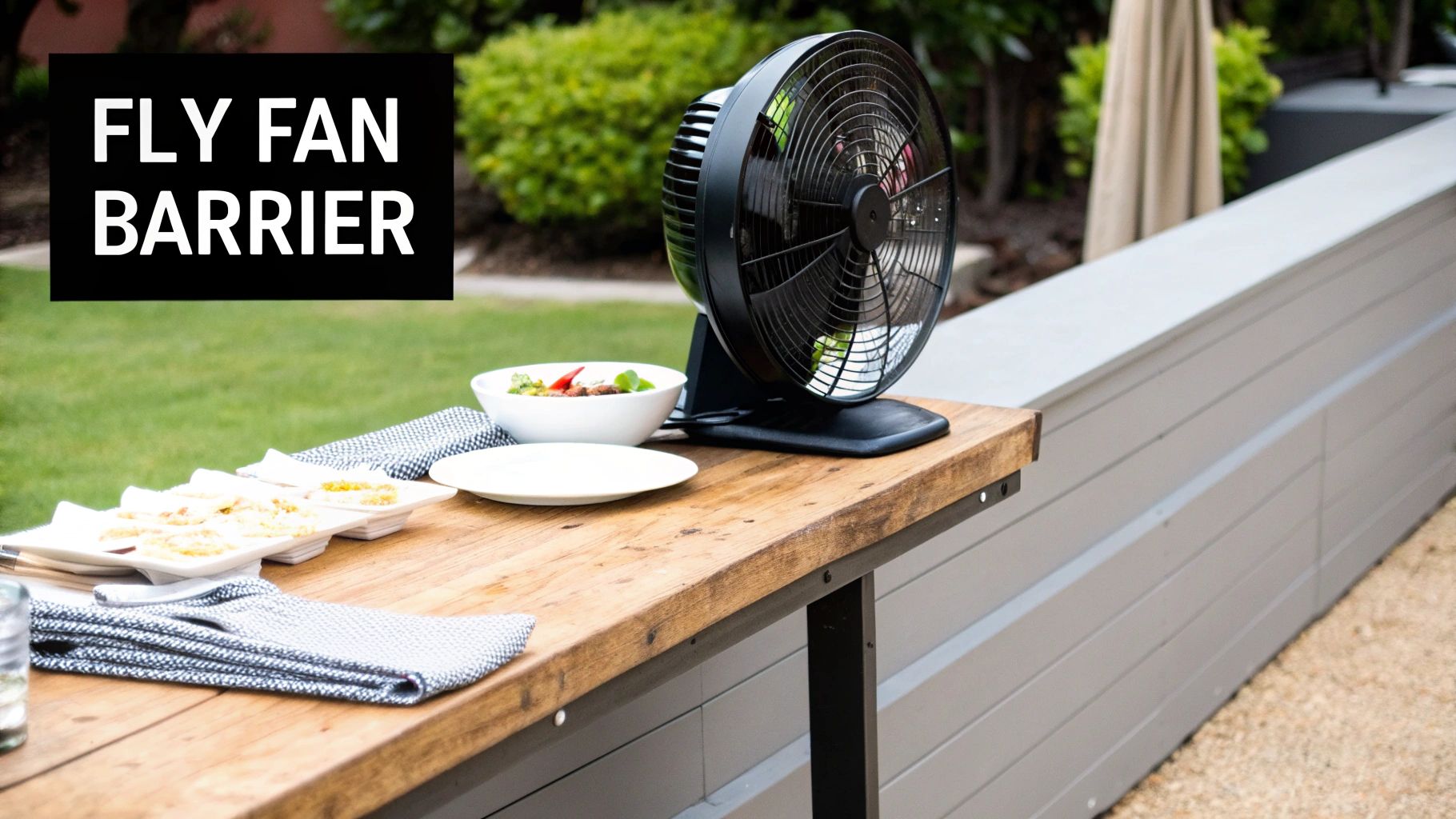
Cleaning and trapping are reactive. To get rid of fruit flies for good, you need to be proactive. That means creating a protective shield around your food that stops flies before they even land.
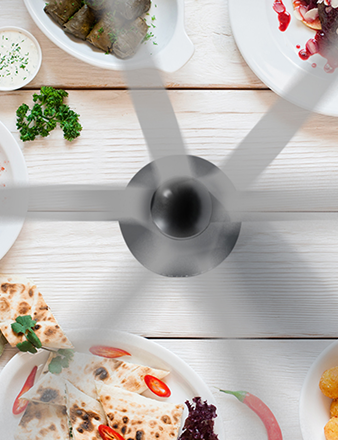
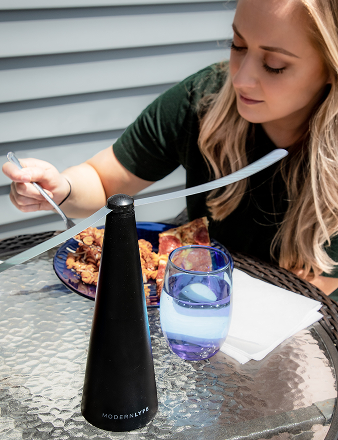
This is where a simple, chemical-free tool like the Modern Lyfe fly fan comes in. It's the final layer of your defense. The science is simple: fruit flies are terrible flyers. The gentle breeze from the fan’s soft blades disrupts their flight path, making it physically impossible for them to land on or contaminate your food.
This isn't a powerful gust that blows napkins off the table. The movement is subtle but incredibly effective, creating an invisible no-fly zone that protects your space without disturbing you or your guests.
How Fly Fans Create a Protective Barrier
Think of the air around your food as a still pond. A fruit fly can easily skate across its surface. A fly fan introduces a gentle, constant current to that pond, making it impossible for a tiny insect to navigate. They can't fight the breeze, so they stay away.
This approach is powerful because it stops the problem at the most critical point: the moment of contact. Even if a lone fly gets past your sanitation and traps, it’s completely blocked from your food.
The beauty of a fly fan is its simplicity. It doesn’t kill or trap anything. It just creates an environment where fruit flies physically can’t operate, giving you a peaceful, permanent solution.
Smart Placement in Real-World Scenarios
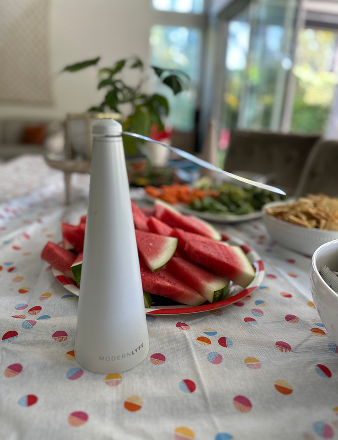
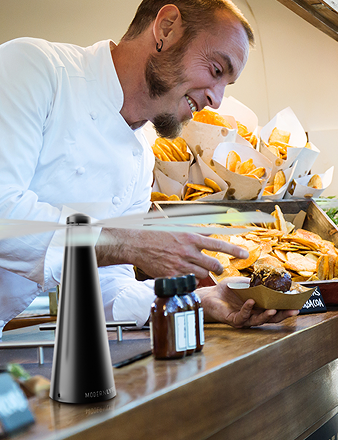
Getting the most out of a fly fan is all about smart placement. Position them strategically to protect everything from a single plate to an entire buffet line by creating overlapping zones of gentle airflow.
Here are a few examples:
- Restaurant Patios: Place one fan in the center of each four-person table. For longer tables, use two fans spaced out for full coverage.
- Catering Buffets: Set up a line of fans along the buffet, placing one every three to four feet to create a continuous curtain of air.
- Home Barbecues: Put one fan next to the main food platters and another near the drink station or fruit bowl.
The threat is bigger than most people realize. Invasive pests like the Oriental fruit fly attack hundreds of crops, causing $44 million to $176 million in potential damage annually in a state like California. Just as agricultural agencies use large-scale trapping to protect crops, a Modern Lyfe fly fan gives you targeted, proactive defense for your personal space. You can read more about the impact of invasive pests from UC Riverside News.
Adding these fans to your toolkit means you're not just reacting to a problem—you're preventing it from ever starting. For more ideas, check out our guide on the Modern Lyfe fly fan.
Creating Your Year-Round Action Plan
Winning the war against fruit flies isn't about one frantic cleaning session. It's about building a simple routine that makes your space a permanent no-fly zone. When prevention becomes a habit, you keep them away for good.
This plan pulls together sanitation, trapping, and prevention into a schedule that works. The key is to match the intensity to your environment. A few deliberate actions, done consistently, will always beat one massive effort.
Daily Routines for Immediate Control
Your daily habits are your front line. These are the non-negotiable tasks that stop the fruit fly life cycle before it starts.
For Restaurants, Bars, and Venues:
- Flush All Drains: Pour boiling water or a professional cleaner down every sink and floor drain at closing.
- Inspect and Store Produce: Move any ripening fruit and vegetables into the fridge immediately.
- Wipe Down Bottles and Taps: Clean sticky gunk from liquor bottles, syrup dispensers, and beer taps.
- Empty and Clean Bins: All trash, recycling, and compost bins must be emptied and wiped down.
For Homeowners:
- Manage the Fruit Bowl: Move ripe fruit into the refrigerator or a sealed container.
- Clean the Sink: A blast of hot water down the drain does wonders. Make sure no food scraps are left.
- Wipe Spills Immediately: That splash of juice or wine is an open invitation. Clean it up right away.
- Seal the Trash: Your kitchen trash can needs a tight-fitting lid. No exceptions.
Weekly and Monthly Maintenance Tasks
Daily actions keep threats at bay, but weekly and monthly tasks target deeper breeding grounds.
A fruit fly problem that suddenly reappears is almost never random. It's a sign that a hidden breeding ground has been missed. Your job is to find it.
Weekly Checklist:
- Deep Clean Bins: Scrub the inside of trash and recycling cans with soap and water.
- Fridge Clean-Out: Wipe down shelves and drawers to find stray grapes or spilled juice.
- Inspect Dry Storage: Check your pantry for forgotten potatoes or onions that may have started to rot.
Monthly Checklist:
- Under-Appliance Cleaning: Pull out refrigerators and stoves to clean the grime underneath.
- Bar Mat Deep Soak: For commercial bars, deep soak rubber bar mats in a cleaning solution to dissolve buildup.
- Check for Leaks: Inspect pipes under your sinks. Even a slow drip creates the damp conditions fruit flies love.
By weaving these steps into a simple routine, you create an environment where fruit flies can't get a foothold. It’s not about adding more work; it’s about making your efforts smarter and more effective.
Common Questions About Fruit Fly Control
Even with a solid plan, questions come up. Let’s tackle some of the most common issues when you're trying to get rid of fruit flies for good.
Why do fruit flies suddenly appear in my clean kitchen?
It’s frustrating. You scrub everything, but a swarm materializes over the fruit bowl. What gives?
Fruit flies are masters of sneaking in. They often hitch a ride into your home on produce from the store. Once inside, it only takes a single drop of spilled wine, a forgotten crumb under an appliance, or sticky residue in the recycling bin. That’s all a female needs to lay up to 500 eggs. Your kitchen might look clean to you, but they find the tiniest messes.
How long does it take to get rid of an infestation?
This depends on how thorough you are. The fruit fly life cycle is incredibly fast—as short as 8-10 days from egg to adult.
If you attack the problem head-on by eliminating their food sources and trapping, you'll see a huge reduction in 3-4 days. By staying consistent, you can usually wipe out the entire problem in a week or two.
The secret isn't one marathon cleaning session; it's consistent daily action. Keeping up with your routine prevents them from ever getting a foothold again.
Are commercial fruit fly sprays safe to use around food?
In a word: no. Most aerosol insect sprays are not safe where food is prepped or served. The chemicals can land on counters, cutting boards, and food, creating a health risk.
This is why non-toxic solutions are the way to go:
- Good sanitation removes their breeding sites.
- Smart trapping catches the existing adults.
- Physical barriers, like Modern Lyfe fly fans, create a no-fly zone without chemicals.
These methods tackle the root of the problem instead of just spraying chemicals in your space.
Do Modern Lyfe Fly Fans work for other bugs?
Yes. While they're engineered to be a fruit fly's worst nightmare, the gentle air currents also deter other flying pests like house flies, gnats, and even mosquitoes. The constant breeze makes it tough for any of them to fly and land where they want, making the fan a fantastic all-around tool for keeping indoor and outdoor areas pest-free.
Ready to make your home or business a permanent pest-free zone? The Modern Lyfe fly fan is the final, crucial layer of defense, giving you a stylish and chemical-free way to protect your food and let your guests relax. Take a look at our collection at https://modernlyfe.com and get some peace of mind.