Don't dismiss fruit flies as a minor kitchen pest. For anyone in the food and beverage industry, they're a direct threat to your reputation and your bottom line. A single swarm signals sanitation problems to guests, leading to negative reviews, lost inventory, and real financial damage.
Proactive control isn't just another chore—it's a core business strategy.
Why Fruit Flies Are More Than Just an Annoyance
Seeing fruit flies in your establishment is a red flag. For restaurants, caterers, and event planners, these tiny pests are a tangible business risk that can spiral out of control, chipping away at the reputation you've worked so hard to build.
Imagine you’re running a busy restaurant or catering a beautiful outdoor wedding. Your food displays are perfect. Then, a cloud of fruit flies descends on your beautifully plated dishes. In an instant, guest delight turns to disgust.
Globally, these tiny invaders cause staggering economic losses. Africa alone loses over $2 billion annually from infestations that destroy crops and halt exports. In the U.S., California is ground zero, with 17 different fruit fly species found in more than 350 cities. Some species, like Tephritid fruit flies, attack over 400 types of plants, causing 10-30% production losses worldwide.
For your business, this means spoiled buffets, contaminated food, and the threat of health code violations. You can learn more about the economic impact of fruit flies and even read up on the worst outbreak in 70 years.
The Real Cost to Your Brand
A sudden swarm at a high-end event doesn't just ruin the food; it ruins the experience. People remember these things. In an age where everyone's a critic, one bad moment can spawn a dozen damaging online reviews that live forever. The perception of uncleanliness is incredibly difficult to shake.
This threat also hits your inventory and revenue directly. Fruit flies are drawn to ripening produce, syrups, and alcohol. They contaminate valuable stock, forcing you to throw it out.
The costs add up quickly:
- Spoiled produce: Fruits and vegetables become unsellable.
- Contaminated beverages: Open wine bottles, liquor pourers, and juice containers become breeding grounds.
- Wasted labor: Staff are pulled from serving guests to deal with pest problems.
A fruit fly problem is a silent revenue killer. It chips away at your profits through wasted inventory, deters repeat customers, and tarnishes the brand you've worked so hard to build.
From Farm to Table: A Persistent Threat
The problem often starts long before ingredients reach your kitchen. Widespread agricultural damage from fruit flies means rising produce costs and supply chain headaches. When farmers fight infestations, you feel the ripple effect through higher prices and lower-quality ingredients.
Keeping fruit flies away is a critical operational priority. It’s about protecting your inventory, preserving your brand, and ensuring guests have an exceptional experience. A proactive strategy isn't just good practice—it's essential for survival.
Your First Line of Defense Is Impeccable Sanitation
The single best way to keep fruit flies out is to make your space a terrible place for them to live. Before you think about traps or repellents, get relentless about sanitation. This isn't just wiping down a counter—it's about systematically eliminating every possible food source and breeding ground.
Fruit flies have an incredible sense of smell. They can zero in on fermenting organic material from impressive distances. A single sticky spot, a damp rag, or gunk in a floor drain is a giant "vacancy" sign. Since their entire life cycle can complete in about a week, one small slip-up can explode into a full-blown swarm.

Creating a No-Fly Zone with Daily Habits
Consistency is your secret weapon. When you build specific cleaning jobs into your daily routine, you constantly interrupt the fruit fly life cycle. Think beyond obvious surfaces and get into the hidden nooks where moisture and organic grime collect.
Soda guns and bar mats are notorious hotbeds for fruit fly activity. Every night, soak the nozzles in sanitizer and scrub the mats before letting them air dry completely. The same goes for any moisture that pools around ice wells or beer taps—it's a perfect breeding ground.
The goal isn't just cleaning up messes. It's about proactively creating an environment where fruit flies can't get a foothold. A dry, sanitized space is their worst nightmare.
Using a detailed restaurant cleaning schedule template is a game-changer. It turns these critical tasks into non-negotiable habits, ensuring nothing gets missed. To better understand their behavior, check out our guide on what attracts fruit flies.
To make this easier, here's a quick checklist of daily tasks that make a huge difference.
Daily Sanitation Checklist for Fly Prevention
This isn't just about looking clean; it's about systematically removing what fruit flies need to breed. Following a checklist like this every day is your best defense.
| Area/Task | Why It Matters | Pro Tip |
|---|---|---|
| Bar Tops & Soda Guns | Sticky residue from spills and drips is a primary food source. | Soak nozzles in sanitizer overnight. Use a dedicated brush for the holster. |
| Floor Drains | The organic film lining the pipes is a prime spot for laying eggs. | Flush with hot water at the end of the night. Avoid just pouring bleach down. |
| Trash & Recycling Bins | Fermenting waste is a powerful attractant. | Empty all bins nightly, then rinse and allow them to dry completely. |
| Sinks & Disposals | Food particles get trapped, creating a constant source of decay. | Run the disposal with ice cubes and citrus peels to scrub the blades and deodorize. |
| Spills & Standing Water | Moisture is essential for eggs to hatch. | Wipe up all spills immediately and ensure mops and rags are hung to dry. |
Making these tasks a non-negotiable part of your closing routine builds a powerful, proactive defense against infestations.
Targeting High-Risk Areas for Deep Cleaning
Daily habits are your foundation, but some spots need a more aggressive, deep-cleaning approach. These are the places where hidden gunk can become a five-star resort for pests.
-
Floor Drains: Pouring bleach down the drain won't cut it—it moves too fast. Instead, use an enzymatic drain cleaner once a week. This product clings to pipes and breaks down the organic sludge where fruit flies lay their eggs.
-
Underneath Equipment: Once a month, pull out heavy gear like refrigerators, ice machines, and ovens. You’d be amazed at the sugary spills and food debris that accumulate back there.
-
Grout and Crevices: Look closely at your floor and wall tiles. Any cracked or missing grout is a tiny, hidden breeding ground that holds moisture and food particles. Seal these gaps as soon as you spot them.
By making these sanitation protocols the backbone of your operation, you stop fighting infestations and start preventing them.
Mastering Storage and Waste Management
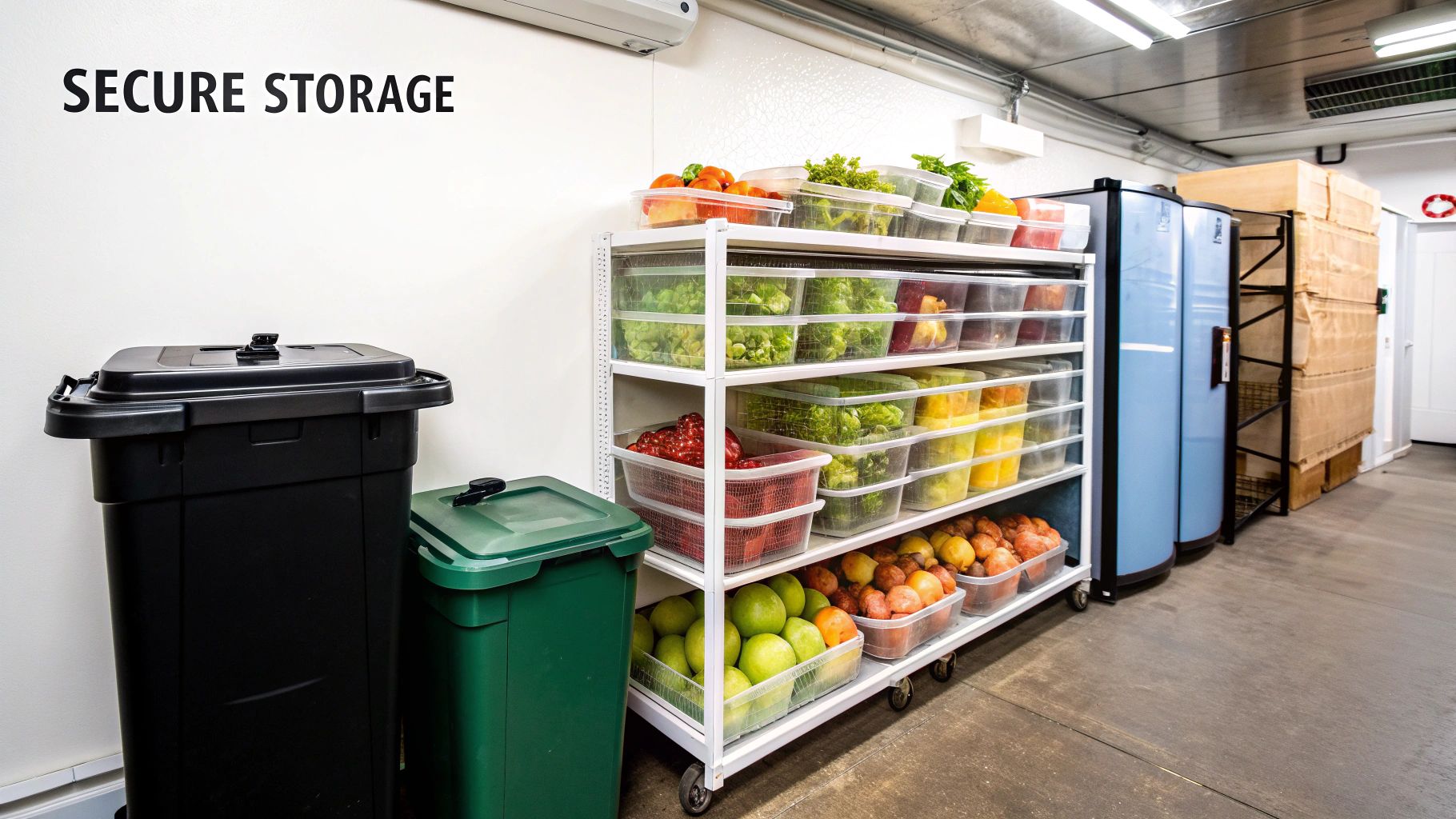
Keeping your space spotless is a great start, but fruit flies are persistent. They have a knack for finding the smallest hint of ripe fruit and will quickly turn your inventory into their new home. To cut them off at the source, you have to get serious about your storage and waste management.
This goes beyond a quick tidy-up. You need to build a fortress. Every piece of fruit, every sticky bottle, and every trash can is a potential beacon for these pests. A forgotten banana or a tiny leak in a garbage bag can undo all your cleaning efforts in hours.
Smart Storage Is Your First Barrier
Treat your storage areas like a high-security vault. The sweet smell of fermentation is what draws fruit flies in, so your mission is to lock those scents down.
As soon as produce is perfectly ripe, get it into the refrigerator. For anything kept at room temperature, like onions or tomatoes, inspect them daily. The moment you see a soft spot, it has to go.
When it comes to liquids, airtight is non-negotiable.
- Syrups and Juices: Pour them into sealed containers with tight-fitting lids at the end of the day.
- Alcohol: Pop caps or covers on your liquor pour spouts overnight. A small piece of plastic wrap and a rubber band works in a pinch.
- Bar Garnishes: The fruit caddy must be emptied, washed, and refilled fresh every single day. Leaving cut fruit out overnight is a welcome mat for flies.
Making these habits second nature will make your space far less inviting to pests.
Executing Flawless Waste Disposal
Your trash system is the last line of defense. If it's not managed well, it’s a constant invitation for pests.
Every indoor trash and recycling bin needs a tight-fitting lid. No exceptions. They should also be lined with strong bags that won’t rip and leak. Make it a rule to empty these bins nightly, even if they aren't full.
Proactive storage and waste management is a smart business move. A fruit fly problem can contaminate food and drive away as much as 30% of potential repeat customers who perceive the establishment as unhygienic.
Don't forget the area around your outdoor dumpsters. Keep them as far from your doors as possible, and ensure the ground around them is clear of trash. Periodically, pressure wash the dumpsters and the concrete pad they sit on to remove the caked-on gunk that flies love.
A solid waste management plan also includes good recycling habits. For coffee shops, understanding how to manage recyclable coffee cups is crucial, as sugary residue is a major pest attractant. When you manage storage and waste with this level of detail, fruit flies simply can't gain a foothold.
Going on Offense: From Traps to Tech
Even with the best prevention, fruit flies can show up. When that happens, shift from defense to offense. A few flies can become a swarm overnight, so you need a solid plan to get rid of them fast.
You have options, from simple DIY traps to modern, non-toxic technology that's perfect for professional settings. The key is to act fast. Don't wait them out; actively reduce their numbers while making your space a place they want to avoid.
DIY Traps: A Simple and Proven Fix
One of the best ways to get rid of fruit flies is to use their instincts against them. They are hardwired to find the smell of fermentation, which is why a good trap works so well.
The classic apple cider vinegar trap is a go-to for a reason—it’s incredibly effective. The sharp, sweet smell of the vinegar mimics their favorite meal: rotting fruit.
- How to make one: Pour about an inch of apple cider vinegar into a jar or small bowl. Add a single drop of dish soap. The soap is the secret weapon; it breaks the vinegar's surface tension. When flies land for a drink, they sink and drown.
It's a low-tech but powerful way to capture the flies already buzzing around. If you want to dive deeper into trapping methods, we've put together a complete guide on how to build a fly trap for fruit flies. This trap is ideal for back-of-house areas where you need a cheap, set-it-and-forget-it solution.
Modern Solutions for Guest-Facing Areas
DIY traps are fantastic for kitchens, but they don't exactly scream "fine dining" on a buffet line. They can look messy and sometimes smell, which can kill the vibe.
This is where modern technology comes in.
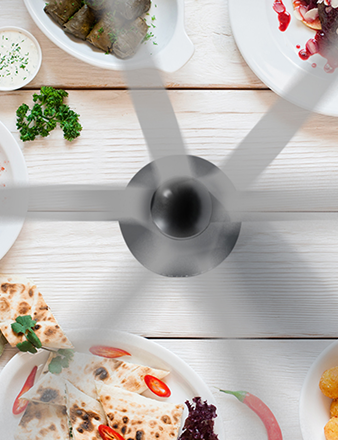
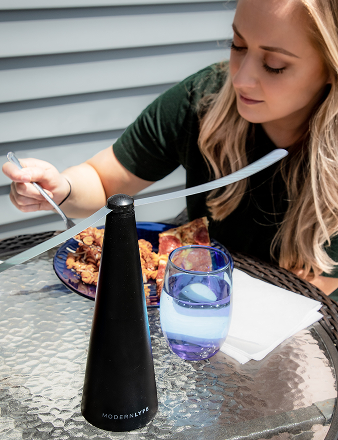
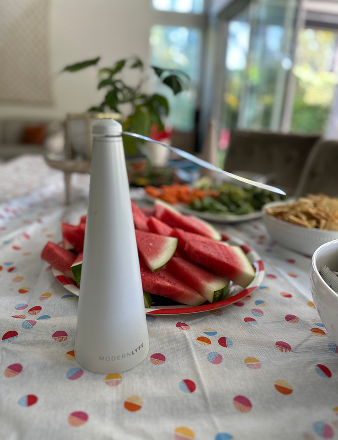
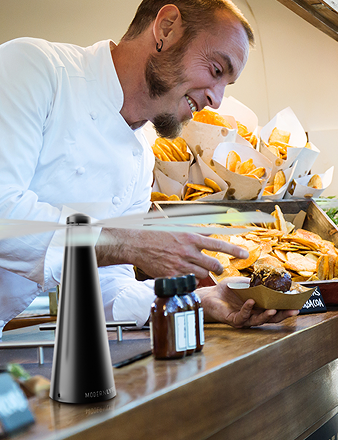
Fly fans, like the ones from Modern Lyfe, offer a sophisticated and effective way to create a protected, no-fly zone. They aren't bug zappers. They don't kill anything. They simply use a gentle, continuous breeze to keep flies away.
The soft blades on a fly fan create a subtle but persistent air current that tiny insects like fruit flies find impossible to fly through. It’s an invisible shield over your food displays, keeping everything pest-free without chemicals, smells, or annoying sounds.
This approach is a game-changer in professional settings:
- They're Quiet: The fans blend right into the background without spoiling the ambiance.
- They Look Good: Modern fly fans are sleek and unobtrusive, complementing your setup.
- They're Portable: Being battery-operated, you can place them exactly where they're needed most—on a buffet, next to a dessert station, or on an outdoor dining table.
The need for tools like this isn't new. Historically, fruit fly invasions have caused billions in economic damage. For example, the Mediterranean fruit fly once caused $192 million in losses in the eastern Mediterranean. Modern Lyfe fans bring a proactive defense strategy right to your tabletop, elegantly protecting your space before a few flies can ruin an event. You can learn more about the global impact of fruit fly infestations to see just how serious these tiny pests can be.
How to Strategically Place Fly Fans for Maximum Effect
Owning a fly fan is the first step, but deploying it like a pro is what makes the difference. The right placement transforms this simple device into the cornerstone of your strategy for keeping fruit flies away. It’s not just about flicking a switch—it’s about creating smart, overlapping zones of protection that guard your food without getting in the way.
Think of each fan's airflow as an invisible shield. Your mission is to arrange these shields to form a continuous barrier over every vulnerable spot. A random approach leaves gaps for pests, but a thoughtful layout guarantees complete coverage.
The goal is to repel pests before they become a problem, which is a critical part of a larger fly-elimination strategy.
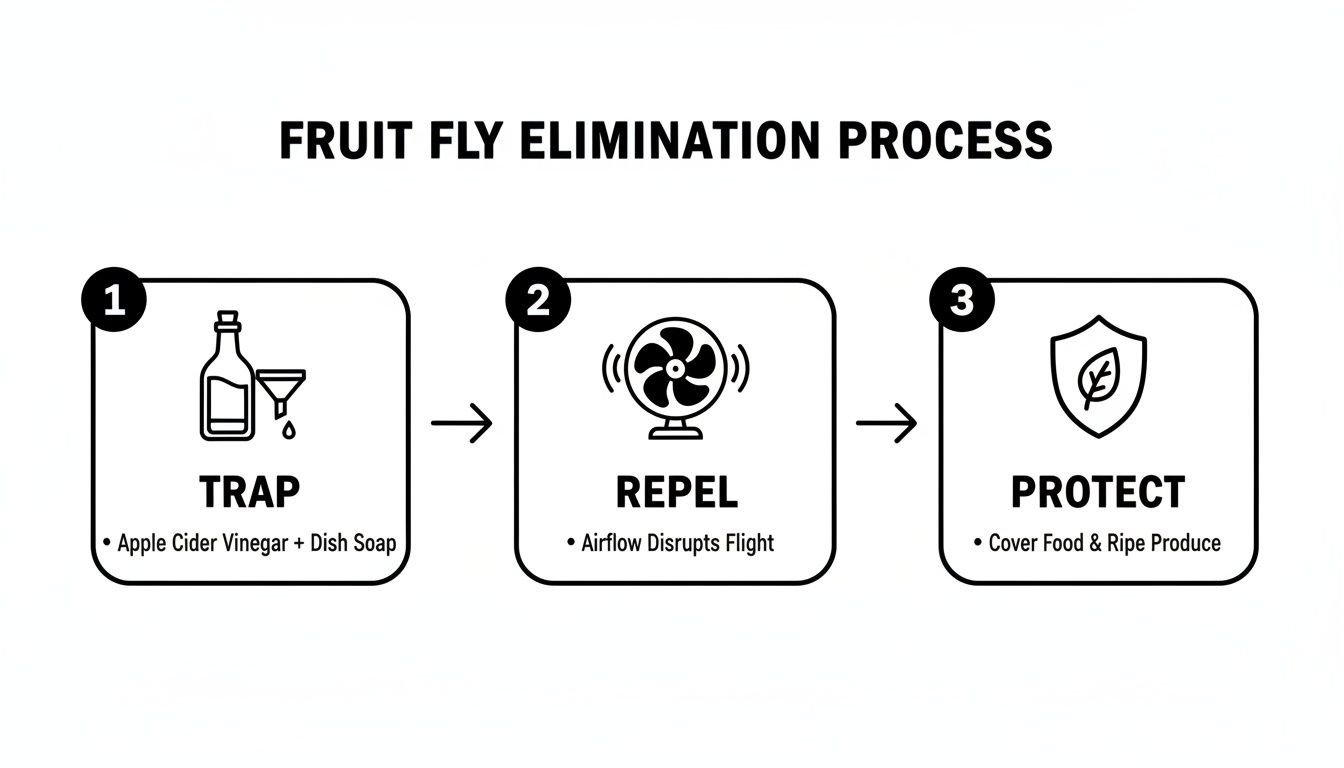
As you can see, a fly repellent fan isn't a standalone solution. It works best as part of a complete system that includes trapping existing flies and keeping surfaces meticulously clean.
Mastering Different Setups
Every space is different. A long buffet line demands a different strategy than a cluster of patio tables. The skill is in adapting your fan placement to the unique design of each area.
Here’s how to handle common scenarios:
-
The Long Buffet Line: A good rule of thumb is one fan for every four to five feet of table. Place them down the center so their blades create an overlapping curtain of air across all the food.
-
Outdoor Dining Tables: For most round or square tables, a single fan placed right in the middle does the trick. It creates a 360-degree protective zone.
-
The Busy Service Counter: Place fans at both ends of the counter. Pay special attention to hotspots like the cash register or drink station where sugary spills are a magnet for flies. This setup creates a constant cross-breeze that makes it impossible for them to land.
The secret is to create zones of overlapping airflow. Eliminate any calm pockets of air where a fly could land. That’s how you build a reliable, pest-proof barrier.
Integrating Fans into Your Workflow
The best tools are the ones you set and forget. Make fly fan placement a standard part of your setup checklist so your defenses are running before the first guest arrives.
Train your team to spot high-risk areas—the dessert table, a fresh fruit platter, the cocktail garnish station—and get fans there before service begins.
For caterers and event planners, this means doing a little homework. Scout the venue ahead of time, see where the food will be, and map out your fan layout. A little forethought turns these fans from a reactive fix into a proactive, indispensable part of your toolkit.
Your Questions About Fruit Fly Control Answered
Even with the best plan, questions come up. Let’s tackle some of the most common ones we hear from hospitality pros and event planners.
How Quickly Can a Fruit Fly Problem Escalate?
Faster than you think. A few fruit flies can become a full-blown infestation in days.
A single female can lay up to 500 eggs in her short life. In the warm, moist conditions of a kitchen, the entire lifecycle—from egg to adult—can complete in about a week. The two flies you saw on Monday could easily become a swarm of hundreds by the following weekend. This is why daily prevention is non-negotiable.
Are Fly Fans Safe to Use Around Food and Guests?
Absolutely. Modern fly fans are designed with safety as a top priority. The blades are soft and flexible, engineered to stop spinning the instant they touch anything. This makes them completely harmless, even if a child touches one.
They offer a huge advantage over chemical sprays or unsightly zappers by being non-toxic and quiet. They're the perfect fit for any environment where guest comfort and safety are paramount.
Think of your strategy as a one-two punch. Traps and sanitation form your defense by reducing the fly population. Fly fans are your offense, creating an active, protective barrier that keeps key areas clear.
Should I Combine Fly Fans with Other Control Methods?
Yes. An integrated approach always delivers the best results. There's no single magic bullet for pest control, but layering methods creates a defense that’s tough for fruit flies to beat.
Here’s how the pieces fit together:
- Sanitation: This is your foundation. No food sources, no breeding grounds.
- Traps: These actively reduce the population you already have.
- Fly Fans: These are your localized shields, creating a no-fly zone right where you need it most.
When you use these tactics together, you're hitting the problem from every angle. It's the most reliable way to guarantee a pest-free experience for your guests.
Ready to create a protected, pest-free zone for your guests? Modern Lyfe offers a sleek, effective, and safe solution to keep flies away from any event. Discover how our fly fans can elevate your service and protect your reputation.