A room can look flawless and still feel wrong the second an off-note hits the air. In hospitality, guests notice that disconnect fast. One drain near the bar, one overloaded trash station behind a buffet, one wave of fryer exhaust drifting toward a wedding reception, and the experience starts to unravel.
That's why odor control methods deserve the same operational attention as lighting, music, and service flow. Smell changes how guests judge cleanliness, food quality, and professionalism. If you're running a restaurant, hotel event space, catering operation, food truck, or outdoor service setup, you can't afford to rely on a last-minute spray and hope for the best.
The bigger mistake is treating odor as a fragrance problem. It usually isn't. In most venues, bad smells come from a small set of repeat sources: waste, drains, grease, damp linens, food residue, poor airflow, or holding areas that were never designed for peak volume. Masking might buy a few minutes, but it rarely holds up through a lunch rush, a banquet turn, or a humid patio service.
The most reliable odor control methods combine prevention, airflow, containment, filtration, and selective treatment. Some options are simple and cheap. Others need capital and tighter operating discipline. All of them work better when you match the method to the source instead of reaching for the same scented product every time.
Here are 10 methods that matter in hospitality.
1. Air Circulation and Fan Technology
A patio opens for service, the food is plated on time, and then a pocket of fryer exhaust or trash-room odor drifts straight into the guest area. That is where air movement earns its place. Fan technology does not neutralize odor at the molecular level, but it does control where that odor travels, how long it lingers, and whether it reaches the table before staff can fix the source.
In hospitality, that matters because odor problems often start as airflow problems. Dead zones form near host stands, buffet edges, service corridors, bar wells, and outdoor dining setups with uneven cross-breezes. If air sits still, smells concentrate fast. If you move air with purpose, you buy time to clear the source and protect the guest experience.
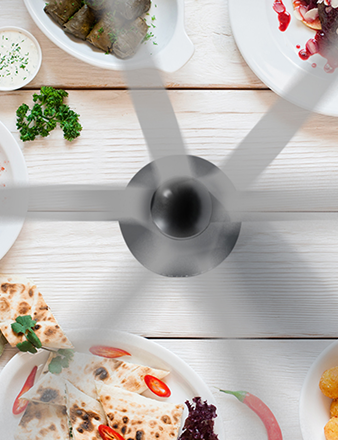
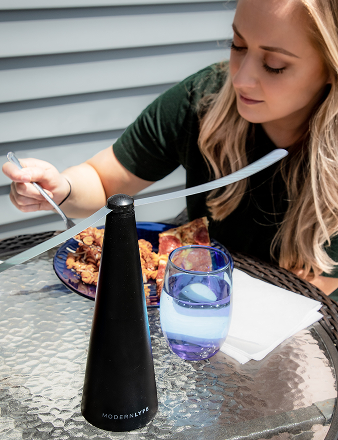
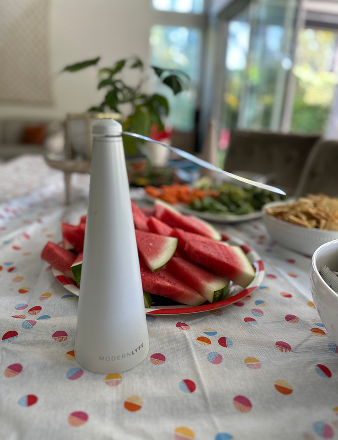
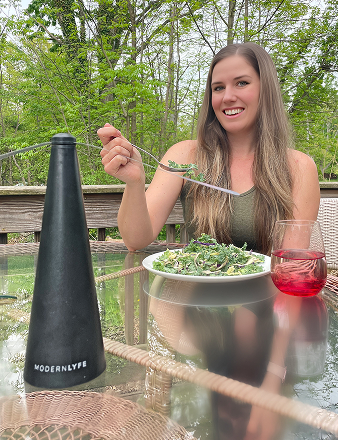
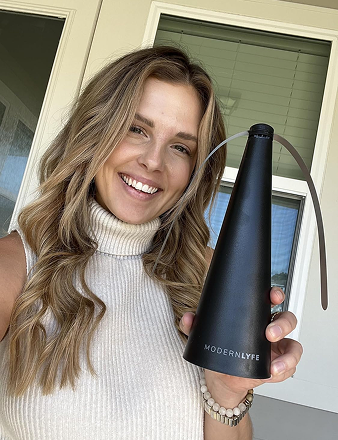
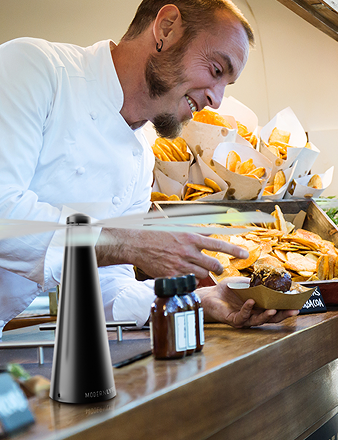
Portable fans are especially useful in catering, patios, pop-up bars, and other layouts where fixed ventilation is limited. Modern Lyfe offers hospitality fly fans and portable airflow solutions that fit well on tables, buffet lines, and food presentation areas without adding much operational complexity.

Where fan placement helps most
Placement decides whether fans solve a problem or spread it. A fan aimed across the room can carry restroom drift, drain odor, or kitchen exhaust from one zone into another. The better approach is to create controlled airflow at pressure points where odors first cross into guest-facing space.
Focus placement on these areas:
- Transition points: Expo lines, service alleys, and doorways between back-of-house and dining areas.
- Food display zones: Buffet edges, carving stations, garnish areas, and dessert tables where still air lets odors hang over food.
- Outdoor seating: Tables near waste cans, smoking areas, nearby traffic, or cooking equipment.
- Temporary service setups: Banquet rooms, tents, and off-site events where HVAC coverage is weak or inconsistent.
Use gentle airflow. Strong blast fans can disturb linens, dry out plated food, and create guest discomfort. Quiet, directional units usually perform better in dining environments because they move enough air to break up odor pockets without calling attention to themselves.
Modern Lyfe's guide to the modern fly fan is a useful reference if you're comparing compact, battery-operated units for food service tables and buffet applications.
Practical rule: Use fans to contain and redirect odor while staff remove the source. Do not treat airflow as the fix for drains, grease, trash, or spoiled product.
The trade-off is straightforward. Fans are fast to deploy, easy to reposition, and inexpensive compared with installed ventilation upgrades. Their limit is just as clear. They improve odor control only when the source is being managed, the airflow path is intentional, and the room layout supports the direction you need.
2. Activated Charcoal Filters
Activated charcoal is one of the most practical odor control methods because it captures odor compounds instead of covering them up. In industrial odor control, activated carbon adsorption is highly effective for medium and low concentrations of VOCs and sulfur-containing compounds, and it's the most commonly employed adsorbent material in industrial settings for capturing volatile organic compounds, according to Torch-Air's overview of industrial odor control systems.
That matters in hospitality because many stubborn venue odors fall into exactly that range. Think prep room smells, beverage storage funk, dry storage mustiness, restroom drift near entry corridors, and enclosed waste holding areas. Carbon works well when air passes through it consistently or when the problem is confined to a smaller space.

Best hospitality uses
Passive charcoal bags can help in lockers, linen rooms, under-counter cabinets, and closed storage. Cartridge-based carbon filters are the stronger option for HVAC tie-ins, under-sink vent points, and localized extraction systems.
- Choose the right format: Bags and boxes suit small enclosed spaces. Cartridges suit moving air.
- Replace on schedule: Once carbon saturates, performance drops sharply.
- Keep aesthetics in mind: Visible bags near guests can cheapen the room if placement isn't discreet.
Charcoal is food-safe, quiet, and easy to hide. The trade-off is coverage. Passive units won't solve a large dining room problem, and they won't overcome heavy airflow issues without mechanical support.
3. Enzymatic Odor Neutralizers
Enzymatic products are the right call when the smell comes from organic residue. That's common in hospitality. Mop water left too long, food waste seepage, floor mats, drain buildup, soiled soft goods, bar spill zones, compost bins, and dish areas all produce odors that keep returning unless someone breaks down the material feeding them.
Here, enzyme-based neutralizers outperform fragrance sprays. They work on the source. In practical terms, that means fewer "it smelled fine when we opened" surprises because the residue itself is being degraded instead of perfumed.
Where they earn their keep
Use them on drains, grout lines, dumpster pads, loading areas, trash can interiors, grease-adjacent flooring, and fabric surfaces that hold food or beverage odors. They're also a strong fit for banquet operations where table linens, service carts, and transport bins cycle through repeated exposure.
A few implementation rules matter:
- Match product to surface: Some formulas are made for drains, others for fabrics or hard surfaces.
- Give dwell time: Enzymes usually need time to work. A quick wipe and immediate rinse often reduces the benefit.
- Build it into closing work: These products perform best when staff apply them consistently, not just after a complaint.
The downside is speed. They don't deliver the instant sensory hit of a strong fragrance system. But for recurring organic smells, they're one of the smartest odor control methods you can put into standard operating procedures.
If the smell keeps returning after cleaning, the residue probably isn't gone. It's just wet, diluted, or temporarily covered.
4. Ozone Generation Systems
Ozone is a serious tool, not a casual add-on. Chemical odor control can use oxidizing agents like ozone, and Alantech's wastewater odor control technology summary notes that ozone is a potent oxidizer that decomposes odorous compounds and is often used as a secondary treatment step to significantly enhance overall odor removal efficiency when combined with other technologies. It transforms odor-causing molecules into non-volatile, odorless by-products.
For hospitality, that makes ozone useful for deep remediation in unoccupied spaces. Think smoke intrusion in a private room, severe spoilage odor in a walk-in after equipment failure, lingering mustiness after water damage, or a guest room taken offline for intensive turnover. This isn't a dining-room-hours solution. It's a controlled treatment for shutdown periods.
When to use ozone, and when not to
Use ozone between events, after hours, or during full isolation of the treated area. Don't use it as a shortcut for active occupied service. Staff need clear protocols, signage, ventilation follow-up, and equipment operators who understand the limits.
The main benefit is power. Few methods hit embedded odors as hard. If you're considering heavy-duty odor removal equipment, treat it like specialized remediation gear, not a plug-and-play fragrance device.
- Good fit: Severe enclosed-space odor problems.
- Bad fit: Live service, guest-facing areas in use, or teams without safety discipline.
- Best role: Secondary treatment after cleaning and source removal.
Ozone works. Misused ozone creates a different problem. Hospitality teams need to respect that distinction.
5. Natural Plant-Based Air Fresheners
Natural fragrance has a place in hospitality, but it needs restraint. Botanical sprays, reed diffusers, and essential oil systems can make a room feel intentional, especially in restrooms, spa-adjacent spaces, boutique lobbies, and low-food-aroma environments. They can also clash badly with plated service if someone gets heavy-handed.
The bigger issue is expectations. Plant-based fresheners usually improve the perception of air. They rarely solve the underlying odor source. That doesn't make them useless. It just means they belong in ambiance strategy, not primary remediation.

How to use scent without creating a new problem
Choose scents that won't fight your menu. Citrus, herb, and light mint profiles usually behave better than sweet or powdery blends in food environments. If you want a sharper, cleaner aromatic, Modern Lyfe's peppermint oil guide is a useful starting point for understanding intensity and use cases.
For teams that want the mood benefits of aromatics, simple calming essential oil rituals offer ideas that translate better to hospitality waiting areas and relaxation spaces than to dining rooms.
- Use scent selectively: Entry lounges and restrooms are safer choices than dining tables.
- Keep intensity low: Guests should notice freshness, not a product.
- Watch for sensitivities: Even natural ingredients can bother some guests and staff.
This is the gentlest option on the list. It's also one of the easiest to misuse.
6. Photocatalytic Air Purification
Photocatalytic systems are attractive when you want something more active than basic filtration but less intrusive than a heavy chemical program. These units typically use UV light and a catalyst surface to oxidize odor compounds as air moves through the system. In hospitality terms, that can make sense in back-of-house corridors, restrooms, prep-adjacent zones, and HVAC-integrated air treatment where the goal is steady background cleanup.
The biggest advantage is continuity. Once installed properly, these systems can work in the background without staff remembering to spray, replace pouches, or move portable units around. That's valuable in venues where consistency falls apart during busy service.
The trade-off operators should understand
This method depends on design quality and airflow. If the unit is undersized or installed in the wrong place, results can feel underwhelming. Operators sometimes blame the technology when the underlying issue is poor air path, weak dwell time, or unrealistic expectations.
Photocatalytic purification usually makes the most sense in venues that already maintain their HVAC well and want another treatment layer. It is less useful as a desperate fix for a severe source problem that staff still haven't addressed.
Good odor control systems usually fail for boring reasons: poor placement, missed maintenance, or using the wrong method for the source.
If you want quiet, continuous performance and minimal visual footprint, this option deserves consideration. Just budget for proper installation and lamp maintenance.
7. Baking Soda and Powder Absorbers
Some odor control methods stay relevant because they're cheap, safe, and hard to mess up. Baking soda is one of them. It won't replace carbon filtration, source capture, or mechanical ventilation, but it's still useful in enclosed hospitality trouble spots where odors linger on surfaces or in containers.
Think reach-ins, bus tubs, trash can bottoms, dry storage corners, shoe lockers, linen hampers, mop closets, and shelf liners under chemical-safe storage. In those spaces, baking soda can provide a simple buffer against sour or stale smells without introducing another scent.
Best use cases for service teams
This is not a glamour method. It's a housekeeping method. Teams get the best results when they use it as part of routine reset work, not as an emergency response in the middle of guest service.
- Apply where odors settle: Closed bins, cooler shelves, and low-airflow corners.
- Remove and refresh regularly: Old powder loses usefulness and starts looking neglected.
- Keep it off show surfaces: Dark counters and guest-facing finishes will make it obvious.
The upside is safety and cost control. The downside is scale. Powder absorbers don't have the reach for open dining rooms, patios, or event halls, and visible residue can quickly look sloppy.
8. Scent Masking and Air Fragrance Systems
This is the category hospitality buyers often reach for first, and it's the one I trust least as a standalone strategy. The problem isn't that fragrance systems never help. The problem is that many teams ask them to do work they aren't built to do.
The CDC's archived odor control guidance states that odor modification, including masking and counteracting, has effectiveness that is uncertain and isn't a reliable control method in most situations, according to the CDC odor control overview. That's exactly what hospitality teams run into during peak traffic. Fragrance seems fine until ventilation shifts, doors open, fryer load spikes, or trash volume doubles.
Where masking belongs
Use scent systems as a supporting layer when the venue is already clean, ventilated, and source-managed. They can help standardize brand feel in lobbies, corridors, and restrooms. They usually perform poorly when asked to overpower food waste, grease, sewage-adjacent smells, or overloaded event turnover.
A few practical boundaries help:
- Don't place fragrance near food service: It competes with menu aromas and can cheapen the experience.
- Calibrate lightly: Guests should read the room as clean, not perfumed.
- Pair with real control: If the source remains active, scent eventually loses.
Masking has a role. It just shouldn't be your main plan.
9. Source Control and Containment
If you only change one thing, change this. In industrial odor control, the most effective strategy is preventing the production of odorous compounds at the source, and providing oxygen to the system is identified as the most effective method to inhibit odor generation in wastewater and organic waste environments in this ScienceDirect summary on odor prevention.
Hospitality teams can apply that principle directly even without industrial infrastructure. Stop odor before it forms, or at least before it escapes into guest areas. That means sealed waste handling, clean drains, tight lid discipline, fast bussing, cleaner mop protocols, better outdoor trash placement, and enough airflow in back-of-house wet zones to keep conditions from turning stale.
What strong source control looks like
The best operators treat odor as a layout and routine problem, not just a product problem. They separate waste from service paths, cover buffet support bins, isolate soiled linen staging, and move compost or refuse pickups away from guest arrival routes. They also train staff to notice the conditions that attract pests and odors together, which is why this fruit fly prevention article from Modern Lyfe is worth sharing with front- and back-of-house leads.
- Seal waste early: Open liners and half-closed lids undo everything else.
- Protect wet zones: Drains, dish pits, and mop sinks need disciplined cleaning and airflow.
- Design for separation: Guests shouldn't share air paths with prep refuse and soiled storage.
This is the least glamorous method on the list. It's also the one that saves the most frustration.
10. Negative Ion Generation and Electrostatic Odor Removal
Negative ion and electrostatic systems target particles and airborne contaminants that carry odor through a space. In hospitality settings, that can help where the issue isn't one obvious trash can or drain, but a constant low-level haze from cooking, traffic, textiles, and fine particulate buildup.
These systems are often positioned as all-in-one air quality upgrades. Sometimes that's fair. They can improve the feel of the room while reducing suspended material that contributes to stale air. They make the most sense in spaces with long operating hours and steady occupancy, such as hotel common areas, lounge zones, or enclosed event spaces with recurring turnover.
Where caution matters
Some systems may produce small amounts of ozone as a byproduct, so specification and vendor quality matter. Operators should ask direct questions about byproducts, maintenance, filter support, and sensor calibration before installation. That's especially important in hospitality, where guest safety and comfort matter more than flashy technical claims.
A smart buying approach looks like this:
- Ask for the air path plan: Where does air enter, pass, and exit the treatment zone?
- Confirm maintenance needs: Plates, filters, and sensors still need scheduled attention.
- Use it as one layer: Electrostatic treatment works best with source control and ventilation, not instead of them.
This method can be effective, but it isn't a substitute for cleaning discipline. If grease, drains, waste, and soft goods are unmanaged, no advanced air device will rescue the operation for long.
10-Method Odor Control Comparison
| 🔄 Implementation Complexity | ⚡ Resource Requirements | ⭐ Expected Outcomes | 📊 Ideal Use Cases | 💡 Key Advantages |
|---|---|---|---|---|
| Low–Moderate: plug‑and‑play units; placement and tuning important | Fans (battery/plug), multiple units for large spaces, low power | Immediate odor dispersal; reduces concentration but not chemical neutralization | Outdoor buffets, poolside events, table/buffet lines | Continuous non‑chemical control; quiet, portable; complements HVAC |
| Low: passive placement with scheduled replacements | Charcoal pouches/filters, periodic replacement (30–90 days), no power for passive models | Strong local adsorption of odor molecules; limited coverage per unit | Storage/prep areas, transport containers, small enclosed spaces | Highly effective adsorption; food‑safe; reusable/reactivable options |
| Moderate: requires correct application and dwell time | Enzymatic liquids/sprays, consumables, occasional reapplication | Eliminates organic odors at molecular level; works on surfaces and fabrics | Trash/compost areas, prep surfaces, fabrics | Biodegradable enzyme action; safe near food; eliminates rather than masks |
| High: professional setup and strict safety protocols | Specialized ozone generators, ventilation, trained operators | Very powerful oxidation and antimicrobial action in sealed spaces | Deep cleaning between events, enclosed kitchens, overnight treatment | Fast, comprehensive odor removal with no chemical residue when used safely |
| Low: simple placement or diffusers | Essential oils/diffusers/sachets, frequent topping up | Masks odors and adds pleasant aroma; mild antimicrobial effects | Dining rooms, boutique hotels, events seeking signature scent | Natural, guest‑friendly, affordable; enhances atmosphere |
| Moderate–High: HVAC integration or standalone units; lamp maintenance | UV lamps, TiO2 catalysts, electrical power, occasional lamp replacement | Continuous breakdown of odors and pathogens; sustained air quality improvement | Integrated restaurant HVAC, hotel event spaces, commercial kitchens | No consumable filters; sustainable long‑term performance; safe for continuous use |
| Low: manual application and removal | Baking soda powder/shakers, frequent replenishment, labor | Local neutralization of acidic odors; limited range and duration | Trash bins, compost, transport containers, back‑of‑house areas | Extremely inexpensive, food‑safe, proven and simple method |
| Low–Moderate: dispenser setup and scent calibration | Automated dispensers or diffusers, fragrance cartridges, ongoing cost | Masks odors and shapes guest perception; does not eliminate source | Luxury hotels, event lobbies, brand‑themed venues | Customizable signature scents; automated consistency; enhances guest experience |
| Moderate–High: design changes and staff protocols; possible retrofits | Sealed containers, layout redesign, ventilation modifications, training | Prevents odor spread at source; reduces need for reactive methods | Restaurant design, catering logistics, venues prioritizing hygiene | Most cost‑effective long‑term; improves hygiene and reduces downstream controls |
| High: engineered systems and professional installation; ozone risk management | Ion generators, electrostatic filters, power, regular maintenance | Continuous removal of particles and associated odors; may produce trace ozone | Premium conference centers, high‑end restaurants, HVAC integration | Improves air quality and allergen removal; no consumables; continuous operation |
Your Odor Control Implementation Checklist
The best hospitality spaces don't just smell good. They stay stable through prep, service, cleanup, and reset. That's the standard. A room that smells clean at 4 p.m. but turns sour halfway through a reception doesn't have an odor solution. It has a timing problem.
Start with source mapping. Walk the property before service, during peak traffic, and after breakdown. Check drains, mop storage, dish return, trash staging, grease zones, linen holding, delivery entrances, and any corridor that connects back-of-house air to guest areas. Most operators already know their problem zones. What they often haven't done is rank them by frequency, severity, and guest exposure.
Then build layers. Source control and containment come first. Air movement, carbon filtration, enzymes, or photocatalytic systems come next depending on the odor type and layout. Fragrance only belongs on top of a clean operation. If you're relying on scent to make a loading dock-adjacent ballroom feel fresh, you're solving the wrong problem.
Use practical standards your team can follow:
- Identify recurring sources: Note whether the odor comes from waste, moisture, food residue, grease, or stagnant air.
- Assign the right method: Enzymes for organic residue, carbon for confined airborne odors, airflow for stagnant pockets, ozone for deep remediation in unoccupied spaces.
- Protect guest zones first: Entryways, bars, buffets, host stands, and restroom approaches need the fastest intervention.
- Train for daily discipline: Lid closure, drain treatment, linen handling, and end-of-night resets matter more than fancy products.
- Review after peak periods: Odor issues often show up when the room is full, doors are opening, and HVAC load shifts.
For teams handling severe restoration-level odor events, broad Marion County odor removal tips can help frame the cleanup sequence, but hospitality operators should still adapt those steps to food safety, guest traffic, and service timing.
If you're managing a high-stakes environment, don't chase one perfect product. Use odor control methods the way strong operators use every other system in hospitality. Match the tool to the problem, standardize the routine, and remove the source before guests ever notice it. That's what works.
If you want a cleaner, more comfortable dining or event setup without adding chemicals or bulky equipment, Modern Lyfe is a smart place to start. Their quiet, battery-operated fly fans help protect food, improve table comfort, and support better airflow in restaurants, hotels, catered events, patios, and outdoor gatherings.