Ten tables are due in fifteen minutes. Two tickets are firing, the pass is crowded, and a cook reaches for a sauce spoon that's still wet from the sink. The food may be well seasoned, but the finished plates will look rushed unless the kitchen has prepared for presentation before the first order arrives.
Plating and presentation is more than arranging garnish at the end. It's a service system that connects prep, portioning, plate size, temperature, timing, cleanliness, guest flow, and the practical limits of indoor and outdoor dining. A neatly presented dish can be liked more than the same food arranged messily, even when the recipe doesn't change, as shown in consumer research summarized in this food presentation study.
How Better Plating Starts Before Service
The cook with the wet spoon has a choice. They can wipe it, search for a clean bottle, and improvise the sauce placement, or they can reach to a station where every tool is dry, labeled, and ready. That small difference affects more than speed. It changes whether the sauce lands in a controlled pool, whether the rim stays clean, and whether the plate matches the one before it.
A reliable plating result begins with the prep list. Proteins should be portioned into matching pieces, sauces should be held in labeled bottles at serving viscosity, garnishes should be cut and sorted, and plates should be staged where the team can reach them without crossing the pass. If a garnish requires a trip to the walk-in, it isn't ready for service.
Build the station around the ticket
The station layout should follow the assembly sequence. Put plates within easy reach, then arrange the main components in the order they'll be used. Keep wiping cloths clean and separate from food-contact tools. A cook shouldn't need to turn away from the plate to find tweezers, a spoon, or a fresh herb container.
Review the menu before service and identify which dishes share components. That briefing lets the kitchen decide where sauces, vegetables, and garnishes belong, while the floor team learns which plates need immediate pickup and which can wait briefly at the pass.

Rehearse the final handoff
The pass needs a clear signal between the cook, expediter, and server. When the protein is ready, the sauce and garnish should arrive in the same sequence every time. A calm pre-service routine produces cleaner plates because each component reaches the plate at the right temperature and in the right order.
Practical rule: If the team can't describe the assembly sequence without looking at a recipe card, the dish isn't ready for high-pressure service.
The visual result also depends on what happens after plating. Servers need to know which side of the plate faces the guest, how to carry unstable stacks, and how quickly a hot dish must leave the window. Presentation is finished only when the guest receives the plate as intended.
Core Principles for Balanced Plate Design
A balanced plate gives the eye somewhere to land. It doesn't need elaborate decoration, but every component should support the focal point, the eating experience, and the practical movement of the dish from pass to table. Research on hospitality presentation links color harmony, symmetry, structural height, and texture contrast with perceived freshness, taste intensity, emotional response, and satisfaction, while excessive complexity can weaken the visual result. See the findings in this hospitality plating research.
Five decisions at the pass
Balance weight and color. Place the main protein slightly off-center, then counter its visual weight with a vegetable, purée, or starch. If the plate is dominated by brown or beige components, add one deliberate contrasting vegetable instead of scattering several unrelated colors.
Add height only when the structure can carry it. A stable lean or low stack creates dimension. Fragile greens, crisp shards, and soft starches shouldn't support heavy components. Build upward from a firm base, and test whether the plate can survive the walk to the table.
Protect negative space. The clean rim frames the food and gives the composition room to breathe. Avoid overcrowding, and use the rule of thirds so the focal point isn't trapped in the center. A basic food presentation guide also recommends simplicity and edible garnishes only.
Place sauce with intention. A sauce should either support the main component or guide the eye toward it. Use a squeeze bottle for dots and lines, or a plating spoon for a controlled pool. Don't smear sauce across the entire plate to fill empty space.
Create a clear focal point and texture contrast. The main ingredient should read immediately. Pair a crisp surface with something creamy, or a firm vegetable with a soft purée, but keep the plate legible rather than crowded.

Use a repeatable layout
For classic composed plates, the clock-face method gives cooks a practical starting point. One widely used version places vegetables between 12 and 3 o'clock, meat between 3 and 9 o'clock, and starches between 9 and 12 o'clock, as described by Escoffier Online's plating principles. The exact arrangement can change with the menu, but the value is consistency. A server or expediter can spot a misplaced component quickly, and every cook has the same visual map.
Tools and Mise en Place for Efficient Plating
A plating station should feel more like a cockpit than a drawer of utensils. Set tongs, tweezers, offset spatulas, plating spoons, microplanes, ring molds, squeeze bottles, small bowls, and wiping cloths in a consistent left-to-right order. The arrangement matters because repeated searching creates hesitation, extra handling, and uneven plates.
Keep the tools closest to the hand that uses them most. Tongs can handle larger components, tweezers can place delicate herbs, and an offset spatula can move fragile items without crushing their edges. Use plating spoons in different sizes for sauces, quenelles, and small portions, rather than forcing one spoon to perform every task.
Prepare the food and the vessel
Pre-portion proteins into identical mounds or pieces. Sort garnishes by dish, and cut them before the rush so every plate receives the same size and shape. Hold sauces in labeled bottles, and test their consistency before service. A sauce that's too thin will run, while one that's too thick will drag or break when applied.
Temperature starts with the plate. Hot food belongs on preheated plates, and cold food belongs on chilled plates, according to this culinary presentation standard/04:_Food_Presentation_Standards_and_Grilling/4.01:_Food_Presentation). The same guide notes that cold plates can be placed in a freezer for 10 minutes before use. Keep the method practical for the operation, and never let chilling interfere with safe food handling.

Follow one assembly order
Use a fixed sequence:
- Set the anchor: Place the protein or primary component first.
- Add the supporting elements: Position starches and vegetables with the approved layout.
- Apply the sauce: Spoon, bottle, or quenelle it where it won't soften crisp food.
- Finish delicately: Add herbs, grated cheese, sugar dust, or edible flowers last.
- Wipe and inspect: Clean the rim, check stability, confirm portion clarity, and send the plate.
For teams building a broader service setup, this catering equipment checklist can help identify gaps before an event. If the finished setting also needs visual documentation for a menu, event gallery, or client record, operators can browse event media tools that support that workflow.
A short visual demonstration can help new staff understand tool placement and movement. Use it during training, not during the middle of a ticket rush.
Plating Workflows for Appetizers, Mains, and Desserts
Each course has its own service constraints. An appetizer must read clearly in a small format and survive pickup or passing. A main needs a stable focal point, visible portion boundaries, and enough separation for the guest to understand the plate. Dessert depends on temperature and texture contrast, both of which can weaken quickly after assembly.
Appetizers
For a one- or two-bite appetizer, choose the smallest plate that still leaves a clean rim. Set the base first, add the protein or filling vertically only when it stands securely, then use concentrated sauce dots or a small pool. Finish with one fresh herb tip or another edible element, wipe the rim, and release the plate.
Height must earn its place. A tall stack may photograph well, yet it can shift when a server carries several plates or when guests take pieces from a passed tray. A low, layered arrangement usually travels better for passed service and outdoor receptions, where movement and exposure are harder to control.
Mains
Build the main around its protein or principal vegetable. Rest the protein as needed, place it slightly off-center, and arrange the starch and vegetables with the clock layout from the plate design section. Keep the portions distinct enough that sauce, garnish, and side items do not make the serving look larger or smaller than intended.
Choose the sauce position according to texture. Spoon it under the protein when the crust should stay dry, or place it beside the protein when the guest needs a clearer dip or separation. Add fresh herbs, crisp elements, or grated cheese at the end. Preheated plates help retain heat, but every hot plate still needs a short, disciplined route from pass to table.
Desserts
Chill the plate for chilled desserts, then place the firmest component first. Use a ring mold for layered preparations and a quenelle for soft creams. Apply sugar or cocoa only after the structure is stable. Add fruit, crisp pieces, and edible flowers at the last practical moment, because moisture can soften them and cold desserts can begin to melt during a delayed pickup.
| Element | Appetizers | Mains | Desserts |
|---|---|---|---|
| Focal point | One or two bites, usually a filling or small protein | Protein or principal vegetable | Molded, quenelled, or layered centerpiece |
| Layout | Compact, vertical, or low horizontal arrangement | Off-center composition with clock-style sides | Open negative space with deliberate contrast |
| Sauce | Dots, a small pool, or a controlled brush | Under, beside, or around the protein | Coulis, cream, caramel, or sauce added with restraint |
| Finishing | Herb tips, small pickles, delicate crunch | Garnish added last to protect color and texture | Sugar dust, microplane chocolate, fruit, or edible flowers |
| Main risk | An unstable stack or crowded rim | Temperature loss and sauce softening | Melting, weeping, or loss of crisp texture |
Test hold times along the actual service route, including carrying distance, table delay, and outdoor exposure where relevant. A plate that looks precise at the pass may lose height, crispness, temperature, or sauce definition before reaching the guest. Redesign the composition when it cannot tolerate that handoff.
Timing and Presentation for Events and Buffets
A buffet is a moving presentation, not a single plated photograph. Guests disturb portions, lids open and close, servers replenish pans, and hot or cold conditions change the appearance of food over time. The operator's job is to preserve the approved look while controlling temperature, portion behavior, and replenishment.
Start with a pre-service walk-through. Check chafing fuel, ice levels, sneeze guards, label cards, serving utensils, and the readiness of garnish stations. Stage backup food in labeled pans, and keep refill trays prepared so a replacement looks like part of the original display rather than an emergency patch.

Design for guest movement
Use height variation across tiers, but keep the layout stable and accessible. Put labels where guests can read them without reaching across food, and keep serving utensils matched to their pans. Hot wells, induction equipment, and ice baths can support temperature management, while staff should monitor dishes rather than relying on appearance alone.
Plate size also changes behavior. A Wageningen University research summary notes that people serve themselves more from larger bowls and plates than from smaller ones, making vessel choice a portion-control decision as well as a visual one. In broader foodservice research, a 2024 systematic review and meta-analysis identified distribution type and food service type as the factors with the greatest impact on plate-food-waste percentage, as summarized in this journal research on plate waste.
Buffet rule: Replenish before a pan looks abandoned, but remove food when its quality has visibly declined. A full display isn't successful if the last guests receive dried edges, broken sauces, or tired garnishes.
Set a clear signal between kitchen and floor staff for batch releases. Align production with guest arrival waves, rotate pans rather than repeatedly topping up one tired layer, and assign one person to check presentation, utensils, labels, and cleanliness throughout service. For operators planning a vineyard reception or private gathering, hosting an event at Viansa can provide useful context for coordinating food presentation with the wider venue environment.
A detailed layout plan can also help teams place stations, signs, and serviceware consistently. Use this guide to setting up buffet tables as a planning reference, then adapt it to the guest flow and equipment available on site.
Outdoor Service Hygiene and Fly Protection
An attractive outdoor display can still fail the guest the moment flies gather around an uncovered sauce, garnish, or dessert. Open-air presentation isn't automatically safe or polished. Sun, wind, heat, dust, insects, and repeated guest contact can undo careful plating faster than an indoor team expects.
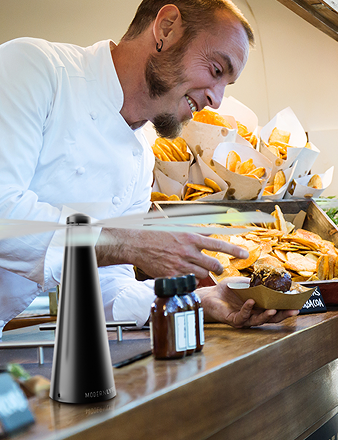
Protect the food without hiding it. Use shielded stations, weighted covers, food-safe mesh, sneeze guards, and domes that stay in place until service. Position electric insect-control units away from guest sightlines and food-contact areas, and remove waste, spilled liquids, and standing water that attract insects.
Keep the presentation visible and protected
Shade matters because direct sun can warm cold items, dry proteins, and cause sauces to split or lose their clean finish. Keep delicate dishes under appropriate covers, monitor the display, and rotate items when quality begins to drop. In windy settings, low arrangements and weighted vessels are safer than tall garnish structures that shift or scatter.
Staff hygiene has to remain visible in the routine. Change gloves when moving between tasks, use clean utensils, protect exposed ready-to-eat food, and keep sneeze guards correctly positioned. A clean rim and fresh garnish don't compensate for an unprotected display.
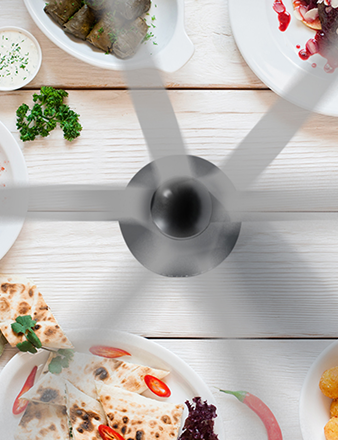
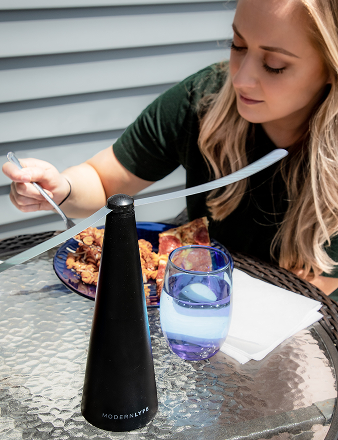
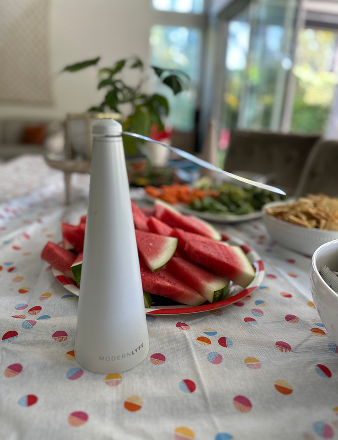
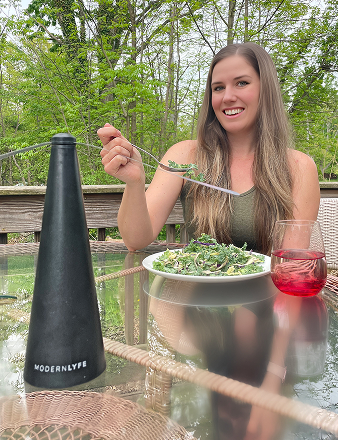
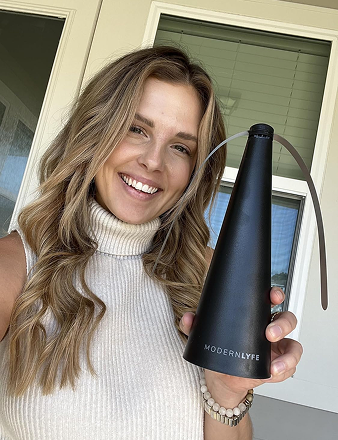
For discreet fly deterrence, consider airflow-based devices designed for hospitality spaces. MODERN LYFE's battery-operated fly fans are one option for placing quiet insect protection near buffet lines, outdoor receptions, patios, and casual gatherings without adding a large visual obstruction. Operators comparing approaches can also review this non-toxic fly control guide.
Set a clear monitoring duty for staff. One person should check covers, utensils, spills, waste, and dish condition at regular service intervals, while the kitchen controls replenishment and the floor team reports guest contact or pest activity immediately.
Common Plating Mistakes and a Service Checklist
A plate can leave the pass looking polished and still fail in service. The usual causes are a rim mark, a collapsing stack, a tired garnish, or food arriving at the wrong temperature. Assign the final inspection to a specific person, then give that person a short list of physical checks rather than an open-ended style decision.
Correct the defect before adding decoration. Wipe away an overworked sauce smear and reapply less. Replace a drooping herb instead of pushing it back into place. If hot food reaches a cold vessel, transfer it to the correct plate. Separate crisp elements from wet sauces until the last practical moment, and rebuild unstable stacks low enough to travel safely.
Quick corrections at the pass
- Clean the rim: Use a fresh, dry towel to remove every visible smear.
- Replace tired garnish: Discard wilted herbs, softened crisps, or discolored pieces.
- Stabilize the stack: Reduce the height or anchor it against a firm component.
- Control the sauce: Remove excess sauce and reapply it beneath or beside the focal point.
- Check the plate temperature: Use a preheated plate for hot food and a chilled plate for cold food.
- Restore separation: Keep wet sauces away from crisp components until final assembly.
The correction routine must fit between tickets. A cook, expediter, or server should be able to act immediately without debating presentation preferences.
The service-ready checklist
- Plate temperature: Confirm that the vessel suits the food.
- Portion clarity: Check that the serving matches the approved plate.
- Color contrast: Keep the main ingredient visually distinct from the surrounding components.
- Negative space: Leave the rim clean and remove unnecessary clutter.
- Texture protection: Add delicate garnishes and crisp elements at final assembly.
- Garnish freshness: Remove anything wilted, broken, or unrelated to the dish.
- Structural stability: Confirm that the plate can travel without collapsing.
- Final inspection: Wipe the rim, confirm orientation, and send only a deliberate-looking plate.
Presentation also affects the commercial side of service. A restaurant-customer study reported a standardized beta of 0.851, with the relationship between food presentation and customer retention significant at the 5% level, as detailed in the food presentation and waste research. The operational takeaway is simple: consistent composition supports the guest's perception of quality and gives the team a repeatable standard.
Portion size affects what returns to the kitchen. Plate waste figures in the same research show that some diners leave no food, while others leave substantially more, so portion control should be reviewed alongside plate design. A smaller, well-composed serving can protect food cost and reduce waste when it still feels complete to the guest.
MODERN LYFE offers quiet, battery-operated fly fans for restaurants, hotels, caterers, outdoor events, and home gatherings where food presentation and guest comfort need to work together. Visit MODERN LYFE to review fly-protection options that support cleaner outdoor service without turning the buffet or dining table into an equipment display.