A fly drifting past the host stand can undo a lot of hard work. The room looks sharp, the kitchen is moving well, and the first tables are enjoying service. Then a guest notices that one insect circling near the entrance or hovering near a plate. In restaurants, that moment doesn't stay small. It turns into a complaint, a comp, a bad review, or a conversation with the health inspector.
That's why a restaurant door fly fan deserves a more serious look than it usually gets. In practice, this isn't a gimmick. It's an air curtain. Used properly, it becomes part of your sanitation plan, your HVAC strategy, and your guest experience management.
The Professional Solution to a Pesky Problem
Most operators first shop for a restaurant door fly fan when they're already irritated. Staff are propping doors open during prep. Deliveries keep coming through the back entry. The kitchen smells are pulling insects in. Someone tries a box fan, then a zapper, then more spraying around the dumpster. None of that solves the underlying doorway problem.
A specialized air curtain is built for that problem. It creates a temporary, invisible barrier of air when a walk-through or overhead door opens, helping keep insects and environmental elements out while also retaining conditioned indoor air, as outlined by Airtecnics on insect-control air curtains. That matters in restaurants, food processing spaces, and shipping or receiving areas where open doors are part of normal operations.
What changes when you treat it as infrastructure
Operators often treat fly control as a cleaning issue only. Cleaning matters, but doorway control is separate. If insects are entering through active traffic points, the fix has to meet the traffic pattern.
A good air curtain does three jobs at once:
- Blocks entry at the opening instead of chasing insects after they're already inside
- Protects brand perception at the exact point guests and inspectors notice first
- Cuts temperature loss every time the door opens
Practical rule: If your team is fighting flies after they enter the building, you're already paying too late.
Installation quality matters just as much as unit selection. These aren't plug-anywhere appliances. The motor, power supply, switch control, and mounting location all affect whether the unit works. That's why it helps to involve people experienced in selecting qualified electrical experts before the unit goes above a busy entry or service door.
If you're comparing doorway systems with tabletop or food-zone options, Modern Lyfe's guide to fly control for restaurants is a useful companion. The key is matching the tool to the problem. For open doorways, an air curtain is the professional answer.
How an Invisible Wall of Air Stops Insects
An air curtain works like an invisible waterfall dropped across the full width of a doorway. Insects don't hit a blade or a screen. They hit a fast, continuous sheet of moving air that interrupts their flight path and pushes them away from the opening.

Coverage matters more than the label on the box
The technical definition is useful here because it removes a lot of bad assumptions. ASHRAE's air door definition describes an air door as a continuous, broad stream of air circulated across a doorway of a conditioned space, reducing the penetration of insects and unconditioned air by forcing an air stream over the entire entrance. That last part is the one buyers miss. Partial coverage isn't enough.
If the stream doesn't cover the full opening, insects find the gap. If the unit is too weak for the door height, the stream breaks before it reaches the floor. If the airflow is aimed poorly, the barrier looks active but performs badly.
Three conditions have to line up:
- The stream has to be continuous
- The airflow has to span the full opening
- The velocity has to be strong enough for insect control, not just comfort
Why a normal fan won't do the job
A standard comfort air curtain or a regular fan may move air, but insect control requires a stronger and more deliberate air pattern. The difference is velocity and direction. Insect-control units are designed to create a concentrated barrier at the opening itself.
A good way to understand this is:
- A box fan stirs the room
- A climate-only air curtain helps separate indoor and outdoor temperatures
- An insect-control air curtain creates a focused barrier intended to stop flying pests at the threshold
That's also why placement and sizing matter so much. The goal isn't “more breeze.” The goal is a stable air wall insects can't easily cross while people can still move through without obstruction.
A quick product demonstration helps make that concept more tangible.
If the air stream doesn't fully wash the doorway from top to bottom, it's not acting like a barrier. It's just moving air near a door.
Key Specifications to Evaluate Before You Buy
Buyers get overwhelmed because spec sheets list numbers without context. In restaurants, the right unit is the one that matches your opening, your traffic, and the part of the building where it's installed. The wrong unit still turns on, still makes noise, and still wastes money.
One commercial example helps anchor the discussion. A restaurant door air curtain can use a 1/2 horsepower direct-drive motor, produce a wind speed of 12.10 m/s, deliver 1030 CFM, and operate at 56 to 58 decibels (A), according to this restaurant air curtain product listing. Those numbers don't mean every restaurant needs that exact unit. They do show what a serious insect-control setup looks like in real product terms.
Start with airflow and coverage
CFM matters because airflow has to match the size of the opening. If you're rusty on the term, this overview of Facility Management Insights' guide to CFM is worth a read before you compare models.
What matters in practice is simple. More opening width and more opening height demand more effective airflow. If the unit can't maintain a solid stream across the full door, insects exploit the edges or the lower section.
| Specification | What to Look For | Why It Matters |
|---|---|---|
| Airflow | Enough output to cover the full doorway from side to side and top to bottom | Insect control fails at the gaps, not in the middle |
| Motor power | A motor matched to mounting height and traffic demands | More demanding openings need stronger delivery |
| Noise | Lower sound levels for guest-facing entries, more tolerance at service doors | Front-of-house noise can damage ambiance |
| Mounting type | A unit intended for insect control, installed in the right position | Placement affects both performance and inspection outcomes |
Motor power is a practical sizing clue
Motor horsepower is one of the few specs operators can use quickly when sorting serious units from light-duty ones. Commercial air curtain units typically operate with 1/6 horsepower motors for insect control up to 7 feet and 1/2 horsepower motors for control up to 8 feet, based on this restaurant and grocery air curtain guide.
That doesn't replace full sizing, but it gives you a practical screen. If you're dealing with a taller opening, heavy use, or a difficult back door near waste handling, undersized power is where many bad purchases start.
Noise is not a side issue
A front door unit that sounds fine in a warehouse can feel completely wrong in a dining room. This is the blind spot in most buying decisions. Operators focus on airflow and ignore acoustics until the first service.
For a guest-facing entrance, ask these questions before purchase:
- Where will customers stand or wait? Noise lands differently at a vestibule than next to banquette seating.
- Is the room open to the host stand? Open layouts expose mechanical sound more directly.
- Does the spec sheet list decibels at all? If it doesn't, ask.
The example unit above operates at 56 to 58 dBA. That may be acceptable in some settings, especially where the door area has background activity. In a quiet front entry, you should still confirm whether the sound profile fits the room.
Buyer check: Don't let a salesperson reduce the decision to motor size alone. In restaurants, sound and placement change whether the unit feels invisible or intrusive.
Power and controls affect maintenance reality
Voltage compatibility, switching, and service access don't show up in glossy marketing, but they matter to the team that has to live with the unit. If the controls are awkward, staff won't use them correctly. If the electrical setup is poorly planned, maintenance becomes more expensive than it should be.
Look for a setup your facilities team can support. The right restaurant door fly fan should be strong enough for the opening, quiet enough for the zone, and simple enough to keep running.
Critical Installation Rules for Health Code Compliance
Most installation mistakes happen because buyers assume any overhead air curtain is good enough for fly control. It isn't. The biggest error is confusing climate separation with insect exclusion.

Exterior mounting is the compliance issue many teams miss
For insect control, mounting location is not a cosmetic choice. It changes airflow direction and barrier performance. A 2024 audit by the National Environmental Health Association found that 41% of restaurants using interior-mounted air curtains for back-door insect control received code violations due to improper airflow direction, and exterior mounting is mandatory for insect exclusion under many health codes, as noted in this commercial air curtain placement guide.
That's the expensive mistake. The unit is installed, powered, and visible. Everyone assumes the problem is handled. Then inspection day comes, or flies still work their way through the opening because the stream is directed for climate control rather than pest exclusion.
Mounting an insect-control unit on the wrong side of the door can leave you with the cost of installation and none of the protection you thought you bought.
Pressure problems can defeat a good unit
A restaurant with negative pressure pulls outside air inward. In kitchens, that suction effect can draw flies toward service doors and back entries. Before an air curtain can do its job properly, the building pressure has to be reasonably balanced.
A kitchen-focused guide from Powered Aire explains that negative pressure in commercial kitchens attracts flies and should be corrected first, often with an air make-up kit, before the air curtain can create an effective barrier at doors used for breaks, trash access, or freezer traffic. It also stresses exterior-side mounting for insect control and keeping the surrounding area clean by moving dumpsters farther away, covering trash cans, and removing standing water. That's covered in their article on negative pressure and fly control in kitchens.
What compliant installs usually get right
In the field, the strongest installs usually share the same basics:
- They match unit type to purpose. Climate-control units and insect-control units aren't interchangeable.
- They mount for full opening coverage. Off-center installs or bad height choices create weak spots.
- They solve surrounding conditions. Pressure imbalance, trash placement, and moisture still matter.
- They keep the equipment serviceable. Dirty grilles and blocked airflow reduce effectiveness.
If you want a quick reference on doorway-specific units, Modern Lyfe's article on the over-the-door fly fan gives a useful overview of the category. Just make sure the unit you choose is installed for insect control, not solely because it fits above a door.
Don't let the electrician guess the operating purpose
This happens more than it should. A contractor gets told to install “an air curtain over the back door.” If nobody specifies insect exclusion, the install may default to the wrong orientation or setup.
Give the installer a direct brief:
- This unit is for insect control
- It must cover the full opening
- It must be mounted in the correct position for compliance
- The kitchen pressure condition must be considered
That level of clarity prevents callbacks and failed expectations.
Air Curtain Strategies for Hospitality Spaces
The right air curtain setup changes depending on where people stand, how often the opening is used, and what's happening on the other side of the door. That's why a restaurant door fly fan for a tasting-menu entrance shouldn't be chosen the same way as one above a receiving door.

Fine dining front entry
At a fine dining entrance, acoustics matter almost as much as insect control. Guests are waiting near the host stand, the room may be relatively quiet, and a harsh mechanical sound can cheapen the arrival experience. In that environment, managers should prioritize a unit with documented sound performance and avoid overbuilding the solution if the doorway doesn't require it.
Busy back-of-house door
A receiving or kitchen exit is different. Power, durability, and sanitation compliance come first. For these areas, NSF 37-certified air curtains are essential for chemical-free insect control in back-of-house restaurant entries, with available sizes ranging from 25 inches for drive-thrus to 192 inches for large roll-up doors, according to Berner's restaurant air curtain benchmarks.
That size range matters because hospitality properties rarely have one standard opening. A single operator might need a compact unit for a concession window and a much larger one for a loading door.
Hotel service corridors and event spaces
Hotels and resorts often face mixed-use traffic. Banquet operations move carts through one opening while guests circulate nearby through another. In those spaces, facilities teams need to coordinate pest control, airflow, aesthetics, and maintenance access. That broader planning mindset lines up with many of the recommendations in Covenant Aire Solutions' look at top facility management practices 2026, especially the emphasis on preventive planning instead of reactive fixes.
Operational takeaway: Match the unit to the doorway's role, not just its dimensions.
Food trucks and smaller service windows
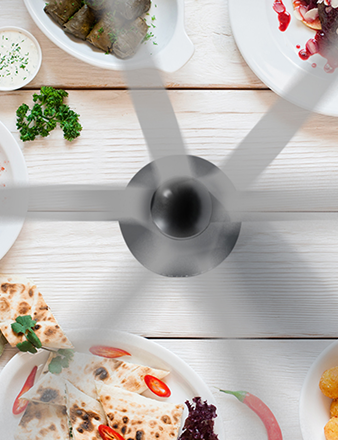
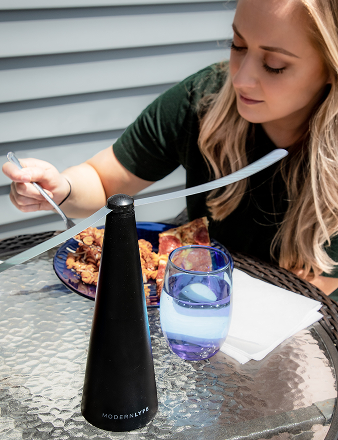
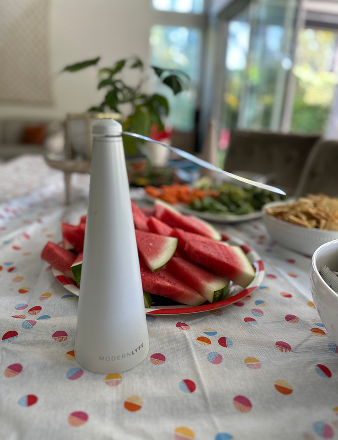
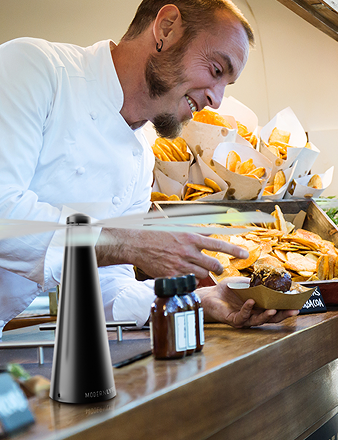
Smaller openings still benefit from an air barrier, especially where food is exposed near pickup windows or service hatches. In some cases, a doorway air curtain is the right answer. In others, operators combine it with localized food-protection tools. For example, MODERN LYFE offers fly fan products designed to create an air stream around food and dining setups, which can make sense as a complementary measure in hospitality environments where doorways and exposed service surfaces both need attention.
The point isn't to buy every control method available. It's to apply the right layer in the right place.
Calculating the ROI of a Restaurant Air Curtain
The ROI case for a restaurant door fly fan usually starts with pest control, but it shouldn't end there. Air curtains also help hold conditioned air inside when doors open, which means they support HVAC efficiency while reducing insect entry. That dual purpose is what makes them easier to justify than single-purpose pest devices.
The simple business case
Start with three buckets of value:
- Direct operating protection from fewer insect-entry incidents at active doors
- HVAC retention because the unit helps keep cool or warm air indoors when openings are in use
- Brand protection tied to guest perception of cleanliness at entrances and near service zones
Some returns are easy to spot immediately. If staff stop fighting recurring fly problems at one problem door, you reduce service disruption and sanitation headaches. If the dining room or kitchen loses less conditioned air during traffic, the HVAC system doesn't have to work as hard to recover those conditions.
Costly mistakes affect ROI more than the purchase price
The fastest way to kill return is buying the wrong unit or installing it badly. An undersized machine, a noisy front-door setup, or a noncompliant mount creates a second round of spending. That can mean repositioning, replacing, rewiring, or managing around a unit nobody likes using.
Use this practical filter when you evaluate the investment:
- Does it solve an actual doorway problem you've observed?
- Is it right for that zone, guest-facing or back-of-house?
- Will it be installed to perform as intended?
- Will your team maintain and use it correctly?
The intangible return matters too. A clean, controlled entrance supports reputation. Fewer visible pests mean fewer awkward guest interactions, fewer complaints tied to sanitation, and fewer moments where managers have to recover a dining experience that shouldn't have gone off track in the first place.
If you're explaining the business case internally, frame it as operational risk reduction, not just equipment spend. Modern Lyfe's article on business impact is a helpful reminder that small front-line problems often carry bigger downstream costs than they first appear to.
Frequently Asked Questions
How much noise is too much for a front entrance
Front-door noise tolerance depends on how close guests are to the unit and how quiet the space is. A 2025 National Restaurant Association study found that 68% of upscale diners report hearing discomfort from mechanical noise near seating areas, and some air curtains now offer quiet mode features for front entrances, according to Air Door Distributors' discussion of noise concerns. For practical buying, always check the listed decibel level and think about where people wait, talk, and dine.
How much maintenance does a restaurant door fly fan need
It needs regular cleaning and inspection, not neglect. Dust, grease, and blocked grilles reduce performance. In restaurants, maintenance teams should treat it like any other active doorway equipment. If the air stream weakens or the unit gets louder, don't assume it's normal. Inspect it before the problem turns into a service call or a pest complaint.
Can an air curtain replace all other fly control methods
No. It's one of the strongest doorway controls you can install, but it won't compensate for bad exterior sanitation, standing water, or trash stored too close to the entrance. Doorway protection works best when the surrounding area is clean and the building pressure isn't working against the unit.
Are air curtains only for back doors
No. They can work at front entries, service windows, drive-thrus, kitchens, and loading areas. The trick is choosing the right model for the environment. A guest-facing opening usually needs more attention to sound and appearance. A back-of-house opening usually needs more attention to power and compliance.
If you're reviewing options for cleaner entries, quieter guest areas, or layered fly control around food service, MODERN LYFE offers practical solutions designed for hospitality environments where presentation and protection both matter.